Disclosure: As an Amazon Associate, dailyhomedecorating.com earns from qualifying purchases. Links to Amazon on this page are affiliate links; they cost you nothing extra. Prices and availability change often, so check the current Amazon listing before you buy.
The search for the best rugs for desk chairs usually starts with a sound: the scrape of casters on hardwood, the drag of a chair fighting its way across carpet, or the sight of a floor slowly wearing a pale track where you roll between desk and shelf fifty times a day. A desk chair is the most mobile piece of furniture in any home, and the surface under it takes more concentrated wear than any walkway in the house. The right rug solves three problems at once — it protects the floor, it lets the chair roll the way it was designed to, and it defines the workspace visually — while the wrong rug creates a fourth problem: a soft, high-pile trap that makes every movement feel like rolling through sand.
This guide covers both sides of the purchase. The buying sections explain how to choose a rug that survives casters: pile height, density, backing, size, and material, with the thresholds that separate a rug a chair glides on from a rug a chair chews up. The reviews cover six desk chairs chosen with floor life in mind — chairs whose caster types, weights, and rolling behavior pair well with a rug — because rug and chair are one system, and shopping for them separately is how floors get ruined. For the chair side of the system, Best Place To Shop For Office Chairs explains how to verify caster types before you buy, and Best Task Chairs For Home Office compares chairs by workspace.
Where to Buy
Every chair reviewed below is sold on Amazon, where you can check the current price, configuration, and caster options before you buy. Rugs and chair mats are also listed there with pile, size, and backing details — read those specifications as carefully as the chair’s, because they decide how the pair performs together.
- SIHOO M18 Ergonomic Office Chair — Check on Amazon
- Steelcase Series 1 Ergonomic Office Chair — Check on Amazon
- HON Ignition 2.0 Ergonomic Office Chair — Check on Amazon
- Ticova Ergonomic Office Chair — Check on Amazon
- FLEXISPOT ErgoX Premium Ergonomic Office Chair — Check on Amazon
- Hbada P5 Ergonomic Office Chair — Check on Amazon
In this guide
Quick Picks
| Pick | Badge | Why it earns its place |
|---|---|---|
| SIHOO M18 Ergonomic Office Chair | Best Overall | Breathable mesh chair with adjustable lumbar support and a stable rolling base that tracks predictably on low-pile rugs. |
| HON Ignition 2.0 Ergonomic Office Chair | Best Budget | Commercial mesh task chair built for offices — and office floors — with a durable rolling base and a full warranty. |
| FLEXISPOT ErgoX Premium Ergonomic Office Chair | Best Premium | Deep-adjustability ergonomic chair on a class 4 lift, for buyers pairing a serious chair with a serious rug. |
| Steelcase Series 1 Ergonomic Office Chair | Best for Carpeted Rooms | This configuration is specified for carpet floors, with casters chosen to roll on soft surfaces instead of digging in. |
| Ticova Ergonomic Office Chair | Best for Long Workdays | High-back mesh chair with two-axis lumbar adjustment for people whose chair — and rug — see eight hours a day. |
| Hbada P5 Ergonomic Office Chair | Best Compact | Small-footprint mesh chair with a footrest, sized for apartment workspaces where the rug defines the office. |
Key Takeaways
- Low, dense pile is the rule: a rug under a desk chair should be flat enough that casters roll on it rather than sinking into it.
- Size the rug to your rolling range, not your desk — the chair’s full travel, including recline and side trips, should stay on the rug.
- Backing matters: a rug that creeps and bunches under a rolling chair is worse than no rug, so choose a backing or pad that grips the floor.
- Match casters to the surface: carpet casters and hard-floor casters behave differently on rugs, and the chair listing tells you which you are getting.
- On delicate hardwood, a dedicated chair mat over — or instead of — a rug is the safest protection; the rug alone must be dense and fully backed to do that job.
How These Picks Were Chosen
The pool for this guide contains chairs rather than rugs, so the picks were chosen as the chair half of the chair-and-rug system, and the rug guidance is given as buying criteria in prose — pile, density, backing, and sizing — rather than as invented product claims. Chairs were favored when their listings state caster or floor information, when their bases are stable enough to track straight on a rug edge, and when their weight and footprint suit home offices where a rug defines the work zone. Chairs with no floor information at all were deprioritized, because a shopper protecting a floor needs that fact before anything else.
Comfort criteria were not sacrificed to the floor question. Every chair here offers genuine ergonomic adjustment — lumbar support that moves, armrests that adapt, mesh or quality foam seating — because a rug-friendly chair you cannot sit in all day solves the wrong problem. The set spans commercial, premium, mid-range, and compact options so that readers at different budgets can apply the same rug rules to a chair that fits their body and room.
One method note, stated plainly: rug recommendations in this article are category guidance based on how casters interact with pile and backing, which is well-established and testable in any home. No specific rug product is linked or rated here, because the verified pool for this guide contains chairs. Where a rug claim would require a specific product, the article gives you the measurement or test to apply to any rug you are considering instead.
The 6 Best Best Rugs for Desk Chairs — Reviewed

SIHOO M18 Ergonomic Office Chair
Our badge: Best Overall
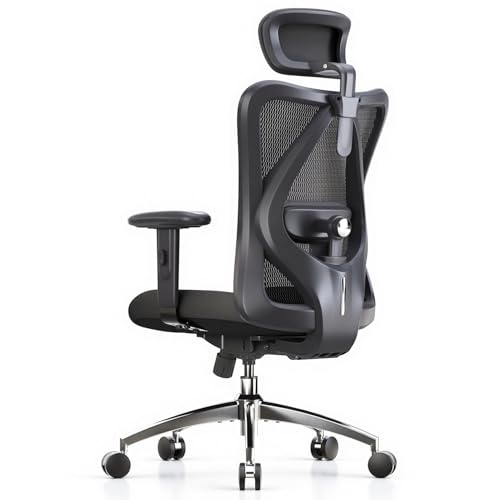
The SIHOO M18 Ergonomic Office Chair leads this guide because it is the balanced home-office chair most rug shoppers are actually pairing: a breathable mesh back, adjustable lumbar support and headrest, 2D armrests, a wide cushion, and a stable rolling base that tracks predictably instead of wandering. Predictability matters on a rug — a chair that rolls straight stays in the rug’s protected zone, while a chair with a loose base constantly climbs the rug’s edge and folds it.
Strengths
- Stable, tested base rolls in a straight, controllable line on low-pile surfaces.
- Adjustable lumbar support, headrest, and armrests fit a wide range of users and desks.
- Breathable mesh back suits warm rooms where a rug adds insulation underfoot.
Trade-offs
- Best for users roughly 5’6″ to 6’2″; shorter users may find the seat deep.
- As with any chair, confirm the caster type on the current listing for your floor-and-rug combination.
- Assembly is an eight-step process — straightforward, but not instant.
| Color | Charcoal |
| Size | Pack of 1 |
| Dimensions | 27.5 x 21 x 11 inches |
| Weight | 31.526103466 pounds |
The M18 passed BIFMA testing and a static pressure test and supports up to 150 kg, which speaks to the base quality that rug life depends on: cheap casters develop flat spots and wobble, and a wobbling caster concentrates its load on one edge, digging into pile and backing. On a properly chosen low-pile rug, the M18’s rolling is quiet and even, and its tilt lock lets you park at a working angle without the small constant corrections that wear a track into a rug’s center.
As a sitting chair, it covers the home-office essentials — four support points, a mesh back that does not trap heat, and adjustments that let different household members share it across a week. Pair it with a dense, low-pile rug sized to your full rolling range and a non-slip pad, and you have the default setup this guide recommends for most people.
Choose the M18 if you want the all-round chair-and-rug combination for a home office. Skip it if you are well outside its height range or if your room is wall-to-wall deep carpet, where the Steelcase configuration below is the more deliberate choice.
Best for: Most home offices pairing an ergonomic mesh chair with a low-pile rug / Not suited for: Very petite users or deep-pile carpeted rooms

HON Ignition 2.0 Ergonomic Office Chair
Our badge: Best Budget
The HON Ignition 2.0 Ergonomic Office Chair comes from the commercial world, where chairs roll on office carpet and hard floors for years under facilities managers who track every failure. Its mid-back mesh promotes airflow, its lumbar support encourages alignment, its arms adjust in height and width, and its stable rolling base is built for exactly the constant small movements that test a rug. It supports up to 300 lb and carries the HON Full Warranty.
Strengths
- Commercial-grade rolling base designed for years of daily movement.
- Breathable mesh back and alignment-focused lumbar support for full workdays.
- Full manufacturer warranty and a 300 lb capacity back the purchase.
Trade-offs
- Mid-back design offers no head support for reclining.
- Corporate styling will not anchor a designed room.
- Adjustment set is practical rather than extensive.
| Color | Black |
| Size | Oversized |
| Dimensions | 28.5 x 27 x 44.5 inches |
There is a useful shopping insight in the Ignition’s pedigree: commercial chairs are specified alongside commercial flooring, so their bases and casters are engineered to be floor-kind over enormous rolling distances. At home, that translates to a chair that treats a good rug gently. The standard tilt encourages the small posture shifts that spread rolling wear across the rug instead of engraving one track, and the chair’s moderate weight keeps caster pressure reasonable on pile and backing.
For a household furnishing a first real home office — chair, desk, and rug all in one season — the Ignition keeps the chair budget honest without giving up durability, which leaves room in the budget for the dense, well-backed rug this guide insists on. That allocation is the right way around: floors and rugs outlast chairs, and they are harder to replace.
Choose the Ignition if you want commercial durability at a household price and a chair that is easy on the surface beneath it. Skip it if you need a headrest or deep recline for calls and reading.
Best for: Budget home offices that want a floor-kind, durable task chair / Not suited for: Users who recline and want head support

FLEXISPOT ErgoX Premium Ergonomic Office Chair
Our badge: Best Premium
The FLEXISPOT ErgoX Premium Ergonomic Office Chair is the premium end of the pairing: dynamic lumbar support, a five-level adjustable back, 3D headrest and armrests, adjustable seat depth and height, recline and tilt, a nap footrest, and a class 4 gas lift, for users roughly 5’1″ to 6’2″ with a stated maximum of 400 lb. A chair adjusted this precisely also rolls with intent — you move because you decide to, which keeps rolling wear deliberate rather than constant.
Strengths
- Dynamic lumbar support and five-level back adjustment track your posture through the day.
- Seat depth, height, headrest, and armrests all adjust for a precise personal fit.
- Class 4 gas lift and premium materials suit genuinely all-day use.
Trade-offs
- The footrest and recline sweep a large floor area; size your rug to the full footprint.
- Setup takes real time to dial in.
- Premium positioning in the range.
| Color | Black |
| Size | Overall Depth 44″ |
| Weight | 38 pounds |
The ErgoX raises the one rug consideration cheaper chairs do not: footprint. Between the recline arc and the extended footrest, the chair’s working area is generous, and a rug that only covers the desk zone will leave the chair’s rear casters on bare floor at full recline — the exact half-on, half-off rolling that curls rug edges. Size the rug to the reclined footprint and the combination is superb: a chair fitted to your body, rolling on a surface chosen for it, in a workspace that feels deliberate.
FLEXISPOT’s mesh build keeps the sitting surface breathable, and the choice between mesh airflow and cushioned support in the range lets you match the chair to your climate and preference. For the buyer building a long-term workstation — chair, rug, desk, light — the ErgoX is the chair that justifies planning the rug around it rather than the other way around.
Choose the ErgoX if you sit all day and will invest in both the chair’s setup and a properly sized rug. Skip it if your workspace is a tight nook; the Hbada below was designed for that constraint. Deep-dive ergonomic shoppers may also want Best Chairs For Back Posture.
Best for: All-day sitters building a planned workstation with a generously sized rug / Not suited for: Small nooks where the recline and footrest cannot deploy

Steelcase Series 1 Ergonomic Office Chair
Our badge: Best for Carpeted Rooms
The Steelcase Series 1 Ergonomic Office Chair earns its place here for one explicit reason: this configuration is specified for carpet floors. Its casters are chosen to roll on soft surfaces rather than skate on them, which makes it the deliberate pick for a bedroom office with wall-to-wall carpet or a thick rug setup. Around that floor decision sits a chair with weight-activated controls, flexible edges, adaptive bolstering, and two-minute tool-free assembly, at a light 29 pounds.
Strengths
- Carpet-specified casters roll on soft surfaces without digging or skating.
- Weight-activated controls give immediate comfort with no setup learning curve.
- Light, space-efficient frame is easy to move when you clean or rearrange.
Trade-offs
- The carpet configuration is the wrong choice for bare hardwood; order the matching version for your floor.
- Automatic controls offer less manual fine-tuning than some buyers want.
- Restrained, professional styling.
| Color | Graphite |
| Size | Carpet (Pack of 1) |
| Dimensions | 23.75 x 27 x 41.25 inches |
| Weight | 29 pounds |
The Series 1 teaches the central lesson of this guide from the chair side: casters are a floor decision. A carpet caster has a different tread and diameter behavior than a hard-floor caster, and using the wrong one on a rug means either resistance and pile wear or uncontrolled rolling. Steelcase makes the choice explicit at purchase, and every chair shopper should demand the same clarity from any listing. On the right surface, the Series 1 rolls smoothly and quietly, and its light weight reduces the caster pressure that compresses pile over time.
As a chair, it disappears under you in the best way — back and arm support that move with you, a pressure-free sit from its flexible edges, and a setup so fast that the chair is working before a rug is even unrolled. For a carpeted spare room becoming an office, it is the lowest-friction upgrade in this guide.
Choose the Series 1 if your workspace floor is carpeted or your rug is on the thicker side of low-pile. Skip it for bare hardwood in this configuration, and skip it if you want a deeply cushioned seat.
Best for: Carpeted rooms and thicker rugs that need carpet-specified casters / Not suited for: Bare hardwood floors in this configuration

Ticova Ergonomic Office Chair
Our badge: Best for Long Workdays
The Ticova Ergonomic Office Chair is the long-hours entry: lumbar support adjustable in height and depth, a curved foam headrest adjustable in height and angle, 3D armrests with thick padding, a back that rocks to 130 degrees with adjustable resistance, and a 3.4-inch high-density foam seat with a W-shaped, waterfall-edge design. For a rug, long hours are the real test — thousands of small rolls a week — and a chair whose adjustments keep you settled reduces the fidget-rolling that wears a rug’s center first.
Strengths
- Two-axis lumbar adjustment settles your posture, reducing constant repositioning rolls.
- 3D armrests and a curved headrest support long sessions at and away from the desk.
- Breathable high-tensile mesh back with a pressure-spreading foam seat.
Trade-offs
- Many adjustments mean a multi-day dialing-in period.
- Foam seat softens over years of use.
- High-back recline needs rug and floor depth behind the desk.
| Color | Black |
| Size | 70D x 26W x 54H cm |
| Weight | 17.5 Kilograms |
Ticova’s design connects comfort and floor care in a way worth spelling out: most rug wear under a desk chair is not travel, it is micro-movement — the hundred small shifts an uncomfortable sitter makes every hour. A chair fitted precisely, with lumbar depth you can change and armrests that meet your arms where they actually rest, cuts that micro-movement dramatically. The rug under a Ticova lives an easier life because the person above it is settled.
The chair passed BIFMA testing and a static pressure test, and its mesh is specified for tensile strength, so the back panel holds its shape through the same long service. Pair it with the densest low-pile rug your budget allows and a gripping pad, and the workstation is equipped for years of full-time use.
Choose the Ticova if your workdays are long and your lower back decides your comfort. Skip it if you want a two-lever chair or your desk nook is shallow. For more back-focused options, see Best Work From Home Chairs For Back Pain.
Best for: Long-hour workers whose settled posture will spare their rug / Not suited for: Minimalists or shallow workspaces

Hbada P5 Ergonomic Office Chair
Our badge: Best Compact
The Hbada P5 Ergonomic Office Chair is the small-space answer, and small spaces are where rugs do their most visible work: in a studio or bedroom corner, the rug is the office — the boundary that turns floor into workspace. The P5’s compact footprint, S-shaped mesh back, adjustable lumbar support, swiveling 2D headrest, desk-clearing armrests, 135-degree recline, and retractable footrest all operate inside a modest rolling range, which means a modest rug can genuinely contain it.
Strengths
- Compact rolling range lets a smaller rug protect the whole work zone.
- S-shaped back and adjustable waist support suit smaller users properly.
- Footrest and recline add break comfort without extra furniture.
Trade-offs
- Sized for users roughly 5′ to about 5’10”; taller users should look elsewhere.
- Firmer mesh seating feel than thick foam chairs.
- The footrest deploys forward, so the rug should extend in front of the desk line.
| Color | Black |
| Size | 27.56 x 27.56 x 49.41 inches |
| Weight | 44 pounds |
In an apartment workspace, the P5-and-rug combination solves the two recurring problems: the chair must tuck fully under the desk to return the room to living space, and the floor — often a landlord’s hardwood — must survive the tenancy. The P5’s armrests lower to clear the desk, its footprint is honest, and a dense low-pile rug sized a little beyond its travel gives you a defined, protected, and genuinely comfortable work corner that disappears at the end of the day.
The chair has passed SGS certification and BIFMA testing, and its headrest adjusts through a useful range with up to 40 degrees of swivel, so the small chair does not ask its owner to accept a small fit. For students and first-apartment workers, this is the pairing that respects both the body and the deposit.
Choose the P5 if your office is a corner and your rug needs to be the boundary. Skip it if you are tall or want a full-size executive footprint. Small-space planners may also appreciate Best Sofas And Chairs For Small Room.
Best for: Apartments and dorms where the rug defines a compact office / Not suited for: Tall users or full-size executive setups
Comparison Table
| Pick | Color | Dimensions | Weight | Check price on Amazon |
|---|---|---|---|---|
| SIHOO M18 Ergonomic Office Chair | Charcoal | 27.5 x 21 x 11 inches | 31.526103466 pounds | Check price on Amazon |
| HON Ignition 2.0 Ergonomic Office Chair | Black | 28.5 x 27 x 44.5 inches | — | Check price on Amazon |
| FLEXISPOT ErgoX Premium Ergonomic Office Chair | Black | 10.0787401472 x 10.0787401472 x 20.6299212388 inches | 38 pounds | Check price on Amazon |
| Steelcase Series 1 Ergonomic Office Chair | Graphite | 23.75 x 27 x 41.25 inches | 29 pounds | Check price on Amazon |
| Ticova Ergonomic Office Chair | Black | 27.165354303 x 9.842519675 x 20.866141711 inches | 17.5 Kilograms | Check price on Amazon |
| Hbada P5 Ergonomic Office Chair | Black | 27.56 x 27.56 x 49.41 inches | 44 pounds | Check price on Amazon |
How to Choose the Best Rugs for Desk Chairs
Keep the pile low and dense
Pile is the whole game. A desk-chair rug should be low-pile — think flatweave or a tight, short pile you cannot sink a fingertip into — and dense, so the fibers support the caster instead of parting around it. High-pile and shag rugs trap casters, multiply rolling effort, and shed fibers into the caster axles until the wheels stop turning freely. A simple home test: press the ball of your foot hard into the rug and twist. If the pile moves and piles up, a chair will do worse to it every day. If it feels firm and barely gives, casters will roll on it for years.
Size to the rolling range, not the desk
Measure where the chair actually goes: forward to the desk, back to your recline limit, and sideways to the shelf or printer you roll to without standing. The rug should contain all of it, with a margin, because the damaging moment is the caster climbing on and off the rug’s edge — that is what curls edges and cracks backing. As a working rule, extend the rug well beyond the desk’s footprint on the chair side, and if you recline with a footrest, count the deployed footprint, as the FLEXISPOT review above explains.
Choose a backing that grips — or add a pad
A rug under a rolling chair experiences constant lateral force, and a rug that creeps will eventually bunch, and a bunched rug under a caster is a tripping and tipping hazard. Look for rugs with a rubberized or otherwise gripping backing, and on smooth floors add a rug pad cut slightly smaller than the rug: the pad grips the floor, protects it from the rug’s backing, and adds a thin layer of cushion that reduces caster noise. Felt-and-rubber pads are the usual best choice under workspaces because they grip without sticking to the floor finish.
Pick a fiber that survives abrasion and cleans easily
Desk zones collect coffee drips, snack crumbs, and the gray dust of daily life, ground in by rolling. Synthetic fibers — nylon and polypropylene are the common workhorses — resist that abrasion, shrug off most stains, and can be vacuumed and spot-cleaned without drama. Wool low-pile rugs are durable and beautiful and cost more; they suit a permanent office where the investment is justified. Avoid delicate flatweaves with loose ends near the rolling zone, and avoid anything with a long fringe anywhere a caster travels — fringe and casters are natural enemies.
Decide honestly between a rug and a chair mat
On brand-new or delicate hardwood, on heated floors, or in a rental where the deposit matters, a rigid chair mat is the most protective surface, and many people layer one over a rug for looks plus protection. A mat gives effortless rolling and total floor coverage; a rug gives warmth, sound damping, and style. The honest answer depends on your floor’s value and your room’s needs, and combining both is a legitimate, common solution rather than an indecision.
How Do You Set Up and Maintain a Rug Under a Desk Chair?
Unroll the rug and let it relax flat for a day before the chair goes on it; corners that start curled will be trained flat by the pad and the chair’s traffic, but a rug forced into service while still curling will fight its edges for weeks. Position the pad first, centered on your measured rolling range, then the rug over it, aligned to the desk rather than the wall — your eye reads the desk line every day. Roll the chair across every edge slowly the first time and watch for lifting; an edge that lifts under a slow roll will catch under a fast one, and a few strips of rug tape at that corner, or a slightly larger pad, usually ends the problem.
Maintenance is mostly vacuuming, done more often than the rest of the room: grit under casters is sandpaper, and the desk zone grinds it in daily. Vacuum the rolling range weekly, lift the rug every few months to vacuum beneath it and check the floor and the backing, and rotate the rug 180 degrees if your rolling pattern is wearing one side — most desk setups wear a crescent in front of the desk, and rotation spreads it. Spot-clean spills immediately, because a stain ground in by a caster becomes a permanent part of the pattern.
Problem: The rug creeps sideways across the floor — The backing is not gripping. Add or replace the rug pad, and confirm the pad is sized close to the rug so its grip reaches the rolling zone.
Problem: The chair will not roll freely — The pile is too high or too soft, or the casters are clogged with fiber. Clean the caster axles first; if rolling is still heavy, the rug itself is the problem and a denser, lower rug is the fix.
Problem: The rug edge curls and catches the casters — Weight the edge flat for a few days, add rug tape at the corner, and check that the rug is large enough that the casters are not constantly crossing that edge.
Problem: A visible track is wearing into the pile — Rotate the rug, vacuum the track thoroughly to lift crushed pile, and consider a chair mat over the highest-traffic crescent for the long term.
Problem: Casters are marking the floor beyond the rug — Your rolling range exceeds your rug. Resize the rug to the real range, or fit hard-floor casters that are kinder when they do leave the rug.
Rugs, Sound, and the Feel of a Home Office
A desk rug earns part of its keep acoustically. Casters on bare hardwood are loud — loud enough to carry through a floor to the room below and to punctuate every movement on a video call. A dense low-pile rug with a pad absorbs that rolling noise almost completely, softens footfall, and takes the echo out of a spare room with hard surfaces. In apartments and shared houses, that sound damping is not a luxury; it is the difference between an office other people can live with and one they endure.
The visual effect matters too, especially in rooms that are not dedicated offices. A rug gives the workspace edges: it tells your eye, and everyone else’s, where work happens, and it lets the rest of the bedroom or living room stay itself. Choose a color and pattern that hide the realities of a rolling zone — mid-tones and small patterns forgive crumbs and wear far better than pale solids — and the rug will look intentional long after a plain light rug would look tired. The same zoning logic, applied to seating, is what makes Best Sofas For Homes With Kids and family-room guides emphasize defined areas in shared rooms.
Protecting Delicate Floors: The Layered Approach
Some floors deserve a belt-and-suspenders strategy: newly refinished hardwood, soft pine boards, vintage parquet, or any floor whose repair would cost more than every chair in this guide combined. The layered approach is pad, rug, and — in the highest-traffic crescent — a low-profile chair mat on top. Each layer has a job: the pad grips and cushions, the rug provides the look and the sound control, and the mat takes the caster abrasion at the exact spot where you roll a thousand times a week.
Layering also solves the rental dilemma elegantly. Nothing adhesive touches the floor, the whole system lifts out at the end of the tenancy, and the floor underneath emerges exactly as it was. If you take one idea from this guide, take this one: the cost of protecting a floor is always a small fraction of the cost of refinishing it, and the protection, chosen well, makes the room quieter and better-looking at the same time.
Caster Care: The Other Half of Rug Life
Even the perfect rug will suffer under neglected casters, and caster maintenance is the most skipped chore in the home office. Wheels collect hair, thread, and rug fiber around their axles; a caster that no longer spins freely stops rolling and starts dragging, and a dragging caster is a small plow that tears pile and scores floors. Every few months, turn the chair over, pull the accumulated wrap from each axle with tweezers, and spin each wheel to confirm it turns silently and stops slowly rather than instantly. A wheel that wobbles on its axle or has developed a flat spot should be replaced — casters are inexpensive, standardized on most chairs, and far cheaper than the rug and floor they protect.
While the chair is upside down, check the base itself. A cracked caster socket or a bent stem changes the chair’s rolling geometry and concentrates load on the remaining wheels, which is how a rug develops one mysteriously deep wear spot. Tighten what can be tightened, replace what is damaged, and the chair returns to distributing its weight — and yours — across five healthy wheels. This ten-minute routine, done twice a year, is worth more to your floor than any single product decision in this guide, because it keeps the whole system working the way the rug choice assumed it would.
Color and Pattern Strategy for a Working Rug
A desk rug is looked at more than any rug in the house — it is in your field of view at the start of every workday — so its appearance strategy deserves a moment of thought. The rolling zone will inevitably lighten and compress slightly compared with the rug’s edges, and the design question is whether that difference reads as patina or as damage. Small-scale patterns, heathered blends, and mid-tone colors absorb the difference gracefully, because the eye cannot track a precise shade across a busy surface. Pale solids and very dark solids show every crumb, fiber, and shade shift, and they will look tired in the desk zone while the rest of the rug still looks new.
Pattern also solves the boundary problem in shared rooms. A rug with a defined border or a clear geometric structure draws a visual line around the workspace that a plain rug cannot, which helps a bedroom or living room keep its identity outside office hours. Coordinate the rug’s tones with the room’s fixed elements — flooring, desk finish, chair color — rather than with accessories you may change, and the workspace will look designed rather than installed. The goal is a rug that still looks intentional in year three, under a chair that still rolls like it did in week one.
Rugs in Rented Homes and Shared Rooms
Renters face a specific version of this decision: the floor is someone else’s asset, the lease may forbid adhesives, and the workspace is usually a corner of a bedroom or living room rather than a dedicated office. The rug-and-pad system in this guide is naturally renter-friendly — nothing sticks, nothing is installed, and the whole arrangement lifts out at the end of the tenancy with the floor beneath it unchanged. Choose a pad that grips by friction rather than adhesive, photograph the floor before you set up and after you lift the rug at move-out, and you have both protection and evidence. In shared rooms, the rug also negotiates peace: it marks the work zone visually, muffles the rolling that roommates hear through thin floors, and gives the chair a home position so it does not migrate across the shared space through the week.
Common Buying Mistakes
Choosing a plush rug for a rolling chair
High pile feels luxurious underfoot and functions like a brake under casters. Rolling effort climbs, fibers wind into the axles, and the pile crushes into permanent tracks. Keep plush for the reading corner; the desk zone needs low and dense.
Sizing the rug to the desk instead of the chair
A rug that ends where your recline begins guarantees edge damage and annoying half-on rolling. Measure the chair’s real travel and buy for that footprint, with margin.
Skipping the pad on a smooth floor
An unpadded rug on hardwood will creep, bunch, and eventually slide at the worst moment. A gripping pad is a small purchase that makes the whole system safe and quiet.
Forgetting to check the chair’s caster type
The rug is only half the system. Carpet casters on a low-pile rug over hardwood can still mark the floor at the rug’s edge, and hard casters on carpet fight you. Confirm what your chair ships with — the Steelcase listing in this guide shows how clearly a good listing states it.
Buying a pale, delicate rug for a coffee zone
Desk chairs live where drinks live. A light, delicate rug under a rolling chair with a morning coffee is a stain timeline, not a design choice. Mid-tones, patterns, and cleanable synthetics forgive real life.
Final Recommendation
Choose the rug by the rules — low, dense pile; sized to your rolling range; gripped by a pad — and pair it with a chair whose base and casters respect the surface. For most home offices, that chair is the SIHOO M18 Ergonomic Office Chair, whose stable base tracks predictably and whose ergonomics cover the full workday. On carpeted floors, the deliberate alternative is the Steelcase Series 1 in its carpet configuration; check its Check on Amazon listing for the caster details. Protect the floor first and the room gets quieter, warmer, and better defined as a bonus.
Frequently Asked Questions
What type of rug is best under a desk chair?
A low-pile, dense rug — flatweave or tight short pile — with a gripping backing or a rug pad beneath it. Density lets casters roll on the surface instead of sinking and grinding, and low pile keeps fibers out of the caster axles. Size it to your chair’s full rolling range, not just the desk footprint.
Will a desk chair damage a rug?
It will wear any rug eventually, but the right rug wears slowly and evenly. Damage accelerates with high pile, soft backing, grit left unvacuumed, and casters constantly crossing the rug’s edge. Weekly vacuuming of the rolling zone, a pad, and occasional rotation keep a good rug looking right for years.
Is a chair mat better than a rug?
For pure floor protection and effortless rolling, a rigid mat wins. For warmth, sound damping, and defining the workspace visually, a rug wins. Many people layer a mat over a rug in the highest-traffic area and get both. On delicate or newly refinished floors, the mat — alone or layered — is the safer recommendation.
How big should a rug under a desk chair be?
Big enough that every caster stays on it through your full range: forward to the desk, back through your recline, and sideways to anything you roll to. Measure that travel in your actual chair before ordering, and add margin. Half-on, half-off rolling is the main cause of curled edges and floor marks at the boundary.
What rug material handles chair casters best?
Dense synthetic fibers such as nylon and polypropylene are the practical champions: abrasion-resistant, stain-tolerant, and easy to clean. Low-pile wool is also durable and more beautiful, at a higher price. Avoid loose weaves, long fringe in the rolling path, and delicate fibers that cannot be spot-cleaned.
Why does my chair roll poorly on my rug?
Usually the pile is too high or too soft, or the casters are clogged with fiber and hair. Clean the caster axles thoroughly first. If rolling is still heavy, the rug is the mismatch — a denser, lower-pile rug, or a chair mat over it, restores the glide the chair was designed for.


