Disclosure: As an Amazon Associate, dailyhomedecorating.com earns from qualifying purchases. Links on this page are affiliate links; they cost you nothing extra. Prices and availability change often, so check the current Amazon listing before you buy.
Knowing how to use an electric pressure washer well is the difference between a patio that looks professionally restored and a deck that looks like it survived an argument. The machine itself is simple; the craft is in the sequence. Prepare the area, set up with water before power, test on a hidden patch, let detergent do the loosening, work in even lanes at a learned distance, rinse with intention, and shut down with a drain-and-store ritual that protects the pump. This guide teaches that sequence step by step, surface by surface, with the safety rules treated as part of the technique rather than fine print, because with pressurised water the safe way and the effective way are the same way.
Key Takeaways
- Prime with water before power, purge the air, and start every unfamiliar surface on a hidden patch with the wide fan.
- Detergent first, dwell, then rinse: chemistry loosens, water carries, force finishes, in that order.
- Keep the wand moving in overlapping lanes at a steady distance; stripes and scars are both pace problems.
- Never point the jet at people or pets, never work from a ladder, and always use a ground fault circuit interrupter protected outlet with eye protection and closed shoes.
- Drain everything, every time: the shutdown ritual is what makes the machine survive winters.
In this guide
What You Need
Required: the washer with its lance and nozzle set; a sound garden hose connected to an outdoor tap; a ground fault circuit interrupter protected outlet within the machine’s intended reach; eye protection; closed shoes with grip; and the surface-appropriate detergent if the job calls for it. Strongly recommended: hearing awareness for long sessions, a stiff broom for the pre-sweep, a brush for agitating stubborn algae, and a bucket for small parts and nozzles so nothing migrates into the grass. Optional but genuinely useful: a surface cleaner for large paving, a foam cannon for vehicles, and an extension brush for furniture. Gather everything before setup; a session that pauses mid-job with a live machine and a wet operator wandering indoors is a session whose discipline has already slipped.
choose the right supply hose from the best garden hoses
Safety and Before-You-Start
Read this section as technique, because it is. The jet from a pressure washer can cause serious injury to skin and eyes and can drive grit and chemicals into broken skin, so the wand is never pointed at people or pets, at any distance, for any reason, including rinsing mud from boots that are being worn. The operator never stands on a ladder, a chair, or a wall while washing, because trigger recoil can unbalance you and wet rungs finish the job; high areas are worked from the ground or left to professionals. The work area is closed: children and animals elsewhere, helpers briefed, and nobody walking through the jet’s line. Electrically, the machine runs only from a ground fault circuit interrupter protected outlet, with connections dry, the cord routed out of standing water and out of the spray path, and the jet never directed at outlets, electrical boxes, light fittings, or the machine itself. Footwear is closed and gripping, eye protection is on before the trigger is first pulled, and any damaged cord, hose, or fitting ends the session until it is repaired. With those rules set, the rest of this guide is pure craft.
How to Use an Electric Pressure Washer: The Core Technique, Step by Step
Step 1: Prepare the area
Sweep the surface thoroughly so the jet cleans the material rather than sandblasting it with its own grit. Move furniture, pots, and vehicles out of the work zone, close windows and doors near the work, and note anything that must not be sprayed: electrical fittings, vents, delicate planting, the neighbour’s washing. Pre-wet nearby plants with plain water and plan your drainage, deciding where the dirty water will go before it starts moving. Choose your starting corner and your exit, so you never paint yourself into a wet corner or drag the cord through finished, soaking lanes. Preparation feels slow exactly once; after that it feels like professionalism.
Step 2: Set up and prime
Place the machine on level ground near the tap. Connect the garden hose, then the high-pressure hose and lance, and fit your starting nozzle, the wide fan for anything unfamiliar. Turn the tap on and squeeze the trigger with the machine still off, letting water flow through until it runs steady; this primes the pump with water rather than air and purges the line. Only then connect power through the protected outlet and switch on, purging again briefly until the stream is clean and even. Skipping the water-first order is the commonest setup error in the category and the cause of much mysterious pulsing; the pump wants to move water, and your first job is to make sure it has some.
Step 3: The test patch
On every unfamiliar surface, choose a hidden patch, behind a planter, at a fence’s far end, on the drive’s least-seen corner, and wash it at a generous distance with the wide fan, moving steadily. Inspect the result dry-eyed: on wood, look for raised fibres; on paint, for lifting edges; on paving, for an even tone without etching. Adjust distance and, if needed, pattern until the patch cleans without complaint, and memorise that distance as today’s setting for that surface. Thirty seconds here is the entire insurance policy for the hours that follow, and experienced operators do it even on surfaces they know, because age and weather change materials between seasons.
Step 4: Apply detergent and let it dwell
For film, algae, grease, and traffic grime, detergent is the main event and the jet is the rinse. Switch to the soap setting or fitted tank, and apply solution evenly, working from the bottom up on vertical surfaces so the cleaner does not streak clean lines down dirty walls. Coat, do not flood; the surface should glisten, not swim. Then wait, for the dwell time the product directs, keeping the surface damp if sun or wind tries to dry it, because dried detergent stops working and can mark. Use the waiting well: agitate stubborn algae or wheel grime with a brush, which multiplies the chemistry’s effect at zero risk to the surface. Impatience at this step is repaid with force later, and force is the expensive currency; dwell is the cheap one.
Step 5: Wash in lanes
Return to a washing nozzle, the medium fan for hard surfaces, the wide fan for delicate ones, and work in lanes the width of your pattern, overlapping each pass slightly. Hold the wand at your tested distance and a slight angle, so the jet sweeps dirt away from the surface rather than driving it in, and move at the steady pace your test patch approved. Start each lane off the edge where possible and finish off the edge, so start-stop marks land where nobody sees them. Rinse each lane fully before moving on; dirty water left standing dries into tide marks that look like failure even when the cleaning succeeded. On vertical work, wash detergent off from the top down, letting gravity assist the rinse instead of fighting it.
Step 6: Detail, edges, and the stubborn spots
Edges, corners, steps, and the lines along walls collect what lanes miss. Slow down, narrow your focus rather than your nozzle, and work these zones deliberately at the tested distance. Stubborn spots get a second detergent application and brush agitation before they get any increase in aggression, and they get that increase, if at all, as a small step closer with the same fan, never as a switch to the pinpoint jet on anything softer than sound paving. On paving joints, accept that loose jointing material may lift with the dirt and plan to brush it back afterwards. The detail pass is what separates a washed surface from a finished one, and it is mostly patience wearing a nozzle.
Step 7: Final rinse and inspection
Rinse the whole area once more with a wide, sweeping fan to carry off loosened residue and detergent, working toward your planned drainage. Walk the surface at a low angle to the light, which reveals striping, missed patches, and tide marks while correction is still easy. Check delicate neighbours of the work, window seals, planting, painted trim, for splash effects and rinse them with plain water if needed. Only when the inspection passes do you shut down; the machine is still set up, and a two-minute correction now is worth an hour of re-setup next weekend.
Step 8: Shutdown, drain, and store
Flush detergent from the system with clean water until the discharge runs clear. Switch off, turn off the tap, and squeeze the trigger to release pressure safely into a safe direction. Disconnect in reverse order, then drain everything: tip the lance, coil the hose so water leaves it, and follow the manual’s pump-draining method for your model until no more water emerges. Wipe the machine, return nozzles to their places, coil the hose without kinks, and store the unit dry, indoors, where frost cannot reach any trapped remainder. This ritual is the maintenance programme of the entire category in miniature, and the owners who perform it are the ones whose machines greet them willingly every spring.
Surface Clinics
The car clinic
Rinse loose grit first with the wide fan at distance. Apply foam or vehicle detergent, dwell, and let a wash mitt or soft brush do any contact work on stubborn film while the surface is lubricated. Rinse top-down with the wide fan, keeping distance from badges, trim, sensors, and stone chips, and never direct the jet into the engine bay or at door seals at close range. Wheels and arches may take the medium fan and a firmer hand. Dry the car as you normally would; the washer’s job ended at the rinse, and it did the part paintwork cares about, removing grit without dragging it.
The decking clinic
Wet the boards, apply a wood-suitable cleaner, dwell, and brush the worst algae along the grain. Rinse with the wide fan along each board’s full length at your tested distance, starting and finishing strokes beyond the board ends where the design allows, and never stopping the jet mid-board. If fibres lift, you are too close or too narrow; correct immediately and note the new distance. Leave the deck to dry thoroughly, days in fair weather, before any oil or stain, because sealing damp wood undoes the entire clinic in one coat.
The paving clinic
Sweep, treat dark patches and oil spots, dwell, then lane the area with the medium fan or a surface cleaner, pacing for evenness over speed. Rinse lanes completely, manage the runoff toward your planned drain, and expect to re-brush jointing sand on block paving once dry. Judge the result in evening light, the strictest critic paving has, and spot-correct any striped lane while your notes about pace are still fresh.
Troubleshooting and Common Mistakes
Pulsing or uneven delivery usually means air or starvation: re-prime with water before power, check the tap is fully open, unkink the supply hose, and rinse the inlet filter, which is the quiet culprit in a surprising share of cases. Stripes on paving mean pace or overlap: slow down, overlap more, and hold a constant height. Fuzzy wood means distance or pattern: step back, widen the fan, and let detergent carry more of the load. Detergent not drawing usually means the wrong mode or nozzle is fitted, or residue has gummed the pickup; consult the manual’s sequence and flush the system. Water where it should not be, behind siding, in a light fitting, means angle discipline failed; stop, let it dry, and change the approach rather than the volume. A machine that will not start after winter storage is very often a frost story, which is why the shutdown ritual exists and why this guide will mention it once more before ending.
The behavioural mistakes repeat across households: starting on the most visible surface instead of a test patch; choosing the narrow jet because it was already fitted; creeping closer instead of re-applying detergent; washing toward oneself so the cord and feet live in the spray zone; and abandoning the machine wet in a cold shed in October. Each has the same cure, which is the sequence itself, followed in order, without improvisation at the steps that feel slow.
if the machine is not chosen yet, start with how to choose an electric pressure washer
Gear That Helps This Guide Work
Four machines whose handling suits the method above, in prose-first form with qualitative tiers; check current listings for exact included kit.

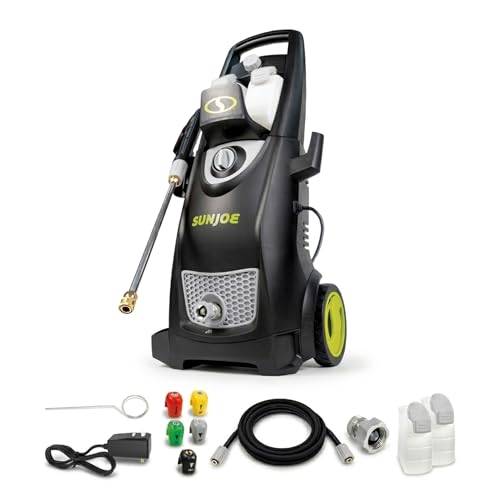
Sun Joe SPX3000 — the teaching machine
Mid-tier upright with quick-connect tips that make the nozzle discipline in this guide easy to practise, and dual detergent tanks that make step four a pleasure. Best for learners with mixed lists; not suited to shelf-only storage.

Greenworks Electric Pressure Washer Range — the accessory partner
Mid-tier uprights that welcome surface cleaners and foam gear, extending steps five and the car clinic respectively. Best for households whose areas or vehicles justify the add-ons; read each listing’s configuration carefully.
Kärcher K5 — the long-session instrument
Premium composure for users whose sessions run long and whose lanes must stay even in hour two. Best for frequent, extensive work; more machine than a balcony will ever need.
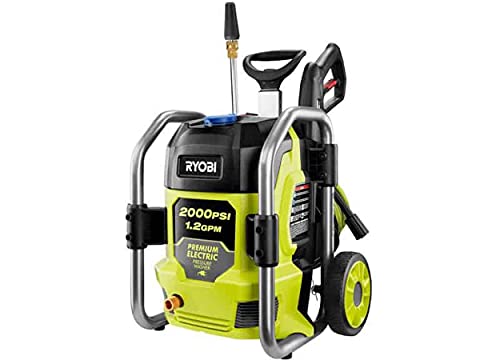
Ryobi Electric Pressure Washer Range — the small-space practitioner
Compact designs that run this guide’s sequence perfectly at balcony, bike, and furniture scale. Best for small homes; paving epics will ask patience of it.
see how the models compare in electric pressure washer reviews
Maintenance and Keeping It Working
Between sessions, ownership is three habits. Keep the inlet filter rinsed and the nozzle tips clear, using only the maker’s method with the machine off, depressurised, and never with a wire forced through a tip. Keep detergent systems flushed so residues never set into valves. Keep the machine drained, dry, and indoors, with its hose coiled kindly and its accessories aboard, so the next session starts with setup rather than archaeology. Seasonally, inspect hose and cord along their whole length, check fittings for weeping, and run the machine briefly on plain water if it has slept for months, listening for the smooth note of a healthy pump. That is the entire maintenance liturgy of the category, and its brevity is the point: minutes per session, in exchange for years of willing service.
protect paving joints and furniture with patio furniture cushion care
More Surface Clinics
The siding and brick clinic
Work in vertical sections a comfortable width, from the ground only. Apply detergent from the bottom of the section upward, dwell, then rinse from the top downward with the fan held at a downward-sweeping angle that sheds water off the face rather than driving it behind boards or into vents. Keep the jet off window and door seals, away from external lights and electrical boxes, and patient around ageing mortar, which deserves the wide fan and extra distance. Green shade-side algae may need a second detergent pass rather than a closer one; give it the pass. When a whole elevation is finished, rinse the ground below, where the section’s dirt has landed, so the house does not wear its own runoff as a skirt.
The furniture, bins, and odds-and-ends clinic
Outdoor furniture responds to detergent, a brush on frames and straps, and a wide-fan rinse; cushions themselves are usually hose-and-hand items, so check their care guidance before any pressure is involved. Bins are the clinic nobody wants and everybody appreciates: detergent inside and out, dwell, a thorough rinse at a distance that keeps splash-back off the operator, and a sunny drying spot with the lid open. Bicycles get the gentle car treatment with extra restraint around bearings, chains get re-lubricated afterwards as part of normal bike care, and garden tools get a rinse and, more importantly, a dry, because water left on steel is an invitation. These small jobs are where the machine earns its weekly keep, and running them through the full sequence, test distance, detergent, lanes, drain, keeps small jobs from teaching sloppy habits that big jobs will punish.
Working With a Partner, and Working Alone
Two-person sessions can be efficient and safe when roles are explicit: one operator owns the trigger and the jet’s direction absolutely, while the partner manages hose and cord slack from behind the work, moves furniture, and watches drainage, communicating by agreed words rather than by stepping into the work zone. The partner never holds workpieces steady in the jet’s path and never crosses in front of the wand, moving or not. Solo sessions demand the same discipline from one brain: plan hose slack before starting each lane, park the machine where the cord stays dry, and take the extra walk to move an obstacle rather than stretching the jet around it at a bad angle. Fatigue deserves a rule of its own in both cases: when the operator’s distance discipline starts to wander, the session is over, because tired technique is how test patches get skipped and surfaces get stories.
Three Session Plans
The quick rescue, twenty minutes: one small job, the bins, a bike, a furniture set. Full sequence, no shortcuts, because the sequence is what makes it quick next time too; setup and shutdown are most of the session and all of its virtue. The Saturday standard, a morning: patio or drive as the main act, one secondary job, detergent dwell used to stage the second job’s preparation. Stage furniture to be rinsed while paving dwells; let chemistry parallel-process your morning. The spring campaign, a full day with breaks: elevations or fences as the main act, deck preparation as the second, the car as the finale when technique is at its most practised, and a shutdown ritual performed like a ceremony, because this session’s pack-away decides whether October’s machine is the same willing tool. Plans like these turn a guide into a household rhythm, which is where pressure washing results actually come from across a year.
Advanced Technique Notes for Practised Hands
Once the sequence is automatic, refinement lives in small places. Feathering the fan’s edge across a boundary, where clean meets dirty on a visible wall, prevents the hard line that announces amateur work; overlap into the dirty side and let the pattern’s soft edge do the blending. Reading water is a skill: a fan that sheets evenly is cleaning, a fan that bounces and mists is too close or too angled, and a fan that leaves a dark centre stripe is moving too fast for its width. Sound is information too; a pump note that stays level through a lane is a healthy system, while hunting and surging ask for the supply checks in the troubleshooting section. On large paving, chalking faint lane guides in advance, or using the paving’s own joints as lane boundaries, converts willpower into geometry. On wood, planning stroke direction before the first trigger pull, so every pass runs with the grain and ends beyond the board, turns the decking clinic from advice into choreography. None of this is required for good results; all of it is how good results become repeatable ones, which is the actual definition of technique.
Teaching Someone Else: Passing the Craft On
Sooner or later the machine’s second operator appears, a partner, a teenager, a neighbour returning a favour, and the quality of that handover decides the machine’s safety record more than any feature it owns. Teach in the guide’s order, out loud, at the machine: the closed work area, the protected outlet, the water-before-power priming, the test patch on something that does not matter, the wide fan as the default home, detergent before force, and the drain at the end performed by the student’s own hands, because rituals learned by doing survive. Supervise the first full session without taking the wand away at the first imperfection; correct distance and pace verbally, and save intervention for safety, which should be instant and unembarrassed. A household with two competent operators has doubled the machine’s usefulness and halved the chance that its one expert’s absence turns a simple job into an improvisation.
Runoff, Neighbours, and the Social Technique
Technique includes where the water goes after it has done its work, because a beautifully cleaned patio that sends detergent runoff into a neighbour’s pond garden or across a shared path has failed socially what it passed technically. Before the first lane, walk the drainage: slopes, drains, borders, and the route dirty water will actually take, which is not always the route the paving suggests when dry. Pre-wet planting you care about, keep detergent choices appropriate for outdoor use and use the least that works, and never wash oily or paint-laden residues toward storm drains. Timing is social technique too: the electric machine’s relative quiet permits civilised hours, and a word to close neighbours before a long elevation session costs nothing and buys goodwill that survives the season. Water thrift belongs here as well: work in triggered sections, release between lanes, and let the jet’s efficiency, not its duration, do the cleaning. A household known for clean surfaces and considerate sessions will find its machine welcomed, borrowed politely, and returned with thanks, which is the social version of the same craft.
The Beginner’s First Three Sessions, Scripted
Session one is school: the patio’s least important corner, the full sequence at half speed, test patch, detergent on a single square, lanes you can count on one hand, and a shutdown ritual performed from a written list. The goal is not cleanliness; it is choreography, and the corner will be clean anyway as a side effect. Session two is production at small scale: the whole patio or the path, with the session-one distances written on a card taped inside the storage spot, detergent staged before setup, and the inspection walk done in evening light without mercy. Session three is range: a delicate job, the car or a fence panel, wide fan throughout, with the explicit rule that any uncertainty returns the operator to the test patch rather than to a closer distance. After these three sessions the guide’s sequence will feel less like instructions and more like how your household simply does this job, which is the moment technique has actually been learned, and the moment the machine starts repaying its shelf space in earnest.
When Not to Pressure Wash: The Restraint List
Mastery includes a list of refusals. Do not pressure wash asbestos-containing materials, lead-painted surfaces, or anything whose coating’s age and composition you cannot vouch for; those are specialist and safety matters, not cleaning jobs. Do not wash electrical equipment, engine bays, or the machine itself. Do not wash soft, crumbling mortar, flaking historic render, or shingles and roofing from any position, and never from a ladder. Do not wash screens, soft cushions, or delicate garden ornaments with anything stronger than a hose and a hand, and do not chase oil contamination into drains. Do not wash when you are tired, hurried, or supervising children with the other half of your attention. Every refusal on this list protects either a person, a surface, or a waterway, and observing them is not a limitation on the craft; it is the craft, in its most experienced form.
Records Worth Keeping
Experienced households keep a small, unglamorous record with the machine: the tested distance for the deck, the pace that leaves the drive even, the detergent that the fence prefers, the date of the last filter rinse and the last full winterise. Five lines a year, written on the card inside the storage spot, convert memory into method and make the second operator’s learning curve, the replacement machine’s calibration, and the spring restart all dramatically shorter. It is the same instinct that makes pilots use checklists in machines they could fly in their sleep: the list is not there because the task is hard, but because the cost of one skipped step, a wet pump in a freezing shed, a narrow jet on soft paint, is out of proportion to the seconds the list takes to read.
A Final Word on Craft
Every guide in this cluster circles the same truth from a different side, and the using guide states it most plainly: the machine provides energy, and the operator provides judgement, and results are the product of the two multiplied together. Judgement is trainable, which is the good news this whole article exists to deliver. It trains fastest in the order given here, preparation before power, water before electricity, test before territory, chemistry before force, lanes before details, draining before storage, and it decays fastest when any of those orders is reversed for the sake of a saved minute. Keep the orders, and an electric pressure washer becomes what its best owners describe with a shrug that undersells decades of clean patios: simple. The shrug is earned. Earn yours the same way, one unhurried, well-sequenced session at a time, and let the surfaces around your home keep the score.
One more practical encouragement belongs before the questions, for the reader who has absorbed the rules and feels the job has become intimidating. It has not; it has become legible. The first session will take twice as long as the fifth, the distances will feel cautious until they suddenly feel obvious, and the shutdown ritual will go from a written list to a motion your hands perform while your mind is already on tea. Every experienced operator you have ever watched looking effortless was once reading a guide like this one with the same mixture of respect and impatience. The impatience is fuel; the respect is steering. Keep both, start with the patio corner, and begin.
And a last note on confidence, because technique guides can accidentally teach fear along with craft. The rules in this article are few, bright-lined, and easy to keep: protected power, protected eyes, closed area, no ladders, no aiming at living things, water before electricity, drain before storage. Inside those lines lies a wide, forgiving field of practice where mistakes cost a re-rinse rather than a repair, and where every session visibly improves the home. Work inside the lines, enjoy the field, and let the questions below handle the edges that your first sessions have not reached yet.
Readers arriving from the choosing guide will find their three test-session notes requested again here, deliberately: distance, pace, and pack-away time are the bridge between buying a machine and knowing it. Readers arriving from the reviews will recognise the personalities behind the clinics. And readers who started here, wand metaphorically in hand, are encouraged to visit both companions after their first session, when the questions those articles answer have become personal rather than theoretical, and when the whole cluster clicks into a single, practical education in one of the home’s most satisfying tools.
It remains only to say that the sequence scales. The same eight steps that clean a balcony clean a farmyard’s worth of paving, with lanes multiplied and breaks added; the same clinic logic that protects a cherished car protects a fleet; the same drain that saves a compact in a cupboard saves a flagship in a garage. Learn the sequence once, at the scale of your own home, and you own a skill that transfers to every property you will ever live in, which is a return on an hour’s reading that few household guides can honestly promise and this one, on the evidence of millions of bright patios, comfortably can.
So take the guide outdoors, where it belongs. Print the step order if paper helps, tape the safety lines inside the storage door if that helps more, and give the first session the unhurried respect that every later, faster session will be built on. The machine is ready when you are, the surfaces have been patient all winter, and the difference between the home you have and the home a single well-run morning reveals is, as a generation of owners keeps discovering with undiminished surprise, mostly a matter of sequence.
One small, final discipline ties the guide together: end every session by putting the machine away completely, even when a second session is planned for tomorrow. The fully stored machine is inspected by default, its nozzles counted by their empty places, its hose seen along its length, its shelf kept dry and claimed. Half-stored machines breed the category’s small tragedies, the lost tip, the kinked hose, the forgotten drain, and they do it quietly, between sessions, where no guide can follow. Complete the ritual, close the door, and let tomorrow’s session begin from order rather than from archaeology.
With order restored and the ritual complete, the questions below are the ones real first sessions actually generate, the close-nozzle question, the pulsing question, the winter question, answered in the same plain order the guide has used throughout, so that a reader mid-learning can find a specific answer without re-reading the whole craft to reach it.
They are also, not coincidentally, the questions whose answers protect the machine as much as the operator, because in this craft the two protections are the same habits viewed from different ends: the priming that steadies the stream also saves the pump, the distance that spares the paint also spares the skin, and the draining that prevents the injury of a burst fitting in spring is the draining that prevents the expense of one.
Keep that unity in mind as the answers unfold, and keep the guide itself somewhere it can be consulted with wet hands in spirit if not in fact, near the machine, with the manual, where the next operator, who may be a future, forgetful version of yourself, will find both the method and the reasons woven through it at the exact moment they are needed.
That placement, guide with machine, is the last technique in the article and the easiest to perform: knowledge stored where the work happens gets used, and knowledge used becomes the habit that every section above has been trying, from its own angle, to install in the household that owns the wand.
Everything is now in its place: the machine on its shelf, the method in its guide, the safety lines on the storage door, and the home outside the window already looking, after even one properly sequenced session, measurably more like the place its owners always intended it to be.
The questions that follow are written for that exact moment, after the first session or before the second, when general method has become specific curiosity and the operator wants a single point settled quickly, safely, and without reopening the whole apprenticeship to find one paragraph inside it.
Settle those points, then close the guide and open the storage door, because the craft is now yours in the only form that finally matters, a sequence your hands remember, a set of lines your household respects, and a home that shows the evidence every single time the sun comes out after rain has washed the street and left your own paving brighter than all of it.
That closing image, sun on clean paving, is not decoration; it is the audit every technique in this article must pass, and the standard against which each answer below should be read, used, and, where your own surfaces teach you something better, respectfully improved upon next season and every season after that, for as long as the machine serves your home well and safely, year after year, in all weathers and lights, without exception, on every surface it is ever asked to clean, anywhere. That is the promise the craft makes, and keeps, for operators who learn it in order.
Improvement, after all, is the guide’s final lesson: surfaces teach, seasons vary, and the operator who keeps careful notes, respects the bright safety lines, and adjusts distances with real evidence will end each year slightly better at this than the year before, which is all that mastery has ever meant in any craft practised honestly at home, in any season, on any surface.
Getting More From a Electric Pressure Washer: Technique, Sequencing and Troubleshooting in Use
This section exists to turn the advice into a sequence you can follow with a tape measure, a phone for notes, and ten unhurried minutes before you commit. It adds a layer that a feature list cannot give you, grounded in the home cleaning context this electric pressure washer will actually live in. Where this guide names examples such as Sun Joe SPX3000, Greenworks Electric Pressure Washer, Karcher K5, use them as test cases for the checks below rather than as shortcuts past them.
Pay close attention to the recurring friction points, because they compound. With a electric pressure washer, owners tend to run into filters forgotten until performance drops, attachments that live in a different room from the machine, and parts that are awkward to rinse and dry. None of these is dramatic on its own, and that is exactly why they get underestimated at buying time. Ask how the design you are considering handles each one: can the wearing part be replaced, can the awkward part be reached without tools, does the job take two minutes or twenty. A electric pressure washer that makes its own upkeep easy gets maintained; one that makes upkeep a project gets neglected, and neglected products perform badly in ways that then get blamed on the original purchase.
Use the listings as a checklist rather than as entertainment. For each electric pressure washer you shortlist, note the exact variant, the included parts, what is sold separately, and which photographs show the item in a setting like yours rather than in a studio. If a model named elsewhere in this guide catches your eye, treat it as a worked example for this process: run it through the same measurements, the same weekly rehearsal and the same friction list before letting familiarity turn into preference. Consistency is the whole trick. Shoppers go wrong not by choosing the objectively weaker electric pressure washer, but by judging one contender on features, the next on looks and the third on a single enthusiastic anecdote.
Think about who else has a vote. A electric pressure washer is usually shared, moved, cleaned or complained about by more than one person, and the second user’s priorities are often the ones that surface after the return window closes. Check height, weight, reach, noise, heat, sharp edges or sheer visual presence, whichever apply, against the smallest, oldest or least enthusiastic person who will live with it. If you are buying for a household that includes children, pets, elderly relatives or lodgers, run the clumsy scenario too: the spill, the knock, the curious tug, the door left open. A robust electric pressure washer choice survives other people; a fragile one only survives its buyer.
Consider the edge cases that sit just outside normal use, because a electric pressure washer will meet all of them eventually. The unusually large load, the unusually small task, the day you are in a hurry, the day something else in the room is broken and this has to cover for it. Versatility is not about a long feature list; it is about behaving predictably when conditions are imperfect. Where a design offers settings, modes, attachments or configurations, ask what each one is actually for in your home, and be suspicious of flexibility you cannot attach to a real occasion. One well-judged configuration used weekly beats five clever ones used once, and the honest electric pressure washer for your home is the one whose strengths line up with your most frequent edge case, not your rarest.
Build a simple decision checklist and score it in writing. Five lines are enough: fit in the space, fit with the routine, ease of cleaning or upkeep, quality of the parts that move or wear, and how the electric pressure washer will be stored or will look when it is not the centre of attention. Score each contender quickly, then look only at the lowest scores, because purchases are usually ruined by their weakest point rather than saved by their strongest. If two options tie, choose the one whose weakness is cheapest or easiest to live with. This sounds mechanical, and it is meant to: a written checklist is the best defence against the very human habit of falling for the last photograph you looked at.
Finally, plan the first fortnight. Decide where the electric pressure washer will live from day one, what it replaces, what accessory or companion it needs straight away and what small job you will use to learn its habits while returning it is still simple. Keep the packaging until that learning period is over, note anything that surprises you, and deal with a mismatch early rather than adapting yourself around a poor fit for years. The households that end up happiest with a electric pressure washer are rarely the ones that researched longest; they are the ones that checked fit honestly, bought for the ordinary week, and paid attention during the first days instead of assuming the decision ended at checkout.
One more angle is worth your time: the second-order costs. A electric pressure washer changes what happens around it. It can demand a different cleaning product, a new storage habit, a moved piece of furniture, a rearranged cupboard or a standing arrangement with the people you live with. List those knock-on effects before you buy and decide whether you accept them as part of the deal. Sometimes the answer is an easy yes, and the electric pressure washer earns its place by improving the whole routine around it. Sometimes the honest answer is that the supporting changes are the real project, and the purchase should wait until you are ready for them. Either answer is useful; the only bad outcome is discovering the knock-on effects by accident, one irritation at a time, after the decision can no longer be revisited.
Frequently Asked Questions
Why must water run through the machine before I switch it on?
Because the pump is built to move water, and running it dry or full of air makes it pulse, strain, and wear. Flowing water through with the trigger squeezed, before power, primes the pump and purges air so the first powered stream is steady and the pump starts its life in every session doing the job it was designed for. It takes under a minute and prevents the commonest performance complaint in the category, which makes it the highest-value habit in this entire guide.
How close should the nozzle be to the surface?
As far away as still cleans, discovered on your test patch rather than prescribed here, because surfaces vary in age, material, and finish. Begin at a generous distance with the wide fan and walk in slowly until dirt lifts evenly; that distance, memorised for the session, is your setting. If the surface shows any complaint, fibres lifting on wood, edges lifting on paint, etching on soft stone, you have passed the correct distance, and the remedy is always backwards, never a steadier nerve at the wrong range.
Can I use hot water or add my own chemicals?
Use cold supply water unless your manual explicitly says otherwise, because seals and pumps in home electric machines are specified for ordinary tap temperatures. For chemicals, use detergents made for pressure washers and for the surface in front of you, at the directed dilution; improvised mixtures can damage seals, surfaces, planting, and the operator’s confidence in that order. The detergent shelf for this category is wide and specific, paving, vehicle, wood, siding, so there is rarely a reason to improvise.
What should I do if the stream starts pulsing mid-job?
Stop washing and diagnose in order: tap fully open, supply hose unkinked and not crushed under the machine or a wheel, inlet filter rinsed, and the system re-primed with water before power if air has entered. Most pulsing surrenders to that sequence. If it persists with a clean filter and a full supply, consult the manual’s troubleshooting before continuing, because running a starved pump converts a small supply problem into a large pump problem, and patience at this step is cheaper than parts later.
Is it safe to wash a car engine bay or electrical items?
No. Keep the jet out of engine bays, away from electrical boxes, outdoor lights, outlets, and any fitting where driven water can reach connections. The same rule protects the machine itself, which should never be sprayed. For engine bays and electrical equipment there are specialist methods and products that do not involve pressurised water, and using them is not a failure of pressure washing enthusiasm; it is the boundary that keeps the enthusiasm safe to repeat.
How do I winterise the machine properly?
Follow step eight with extra thoroughness at season’s end: flush all detergent, drain pump, hose, and lance until no water remains, using the manual’s specific method for your model, then store the machine dry indoors where temperatures stay above freezing. If your storage cannot promise that, the machine should live in a warmer part of the home for the winter months. Frost damage is silent, total, and entirely preventable, which is why winterising gets its own question in every guide in this cluster.
Related Guides
start from the top with the electric pressure washer buying guide
check the ownership case in is an electric pressure washer worth it