Disclosure: As an Amazon Associate, dailyhomedecorating.com earns from qualifying purchases. Links on this page are affiliate links; they cost you nothing extra. Prices and availability change often, so check the current Amazon listing before you buy.
An electric pressure washer buying guide should start with a simple truth: the right machine is not the most powerful one on the shelf, it is the one that matches the surfaces around your home, the water supply you actually have, and the way you like to work. Most homeowners do not need maximum force. They need a washer that cleans a driveway without etching it, rinses a car without threatening the paint, strips green algae from a fence without shredding the wood, and then rolls back into a garage corner without a fight. This guide walks through every decision that matters, in the order you will actually face them, so that by the end you can choose with confidence rather than guesswork.
Key Takeaways
- Match cleaning force to your most delicate regular job, not your toughest one-off job, because excess force damages surfaces faster than patience does.
- Water flow matters as much as pressure: flow is what carries loosened dirt away, and a washer that feels weak often simply moves too little water.
- Nozzle choice changes the force at the surface more than most settings do, so a good selection of included nozzles is worth more than headline numbers.
- Plan for safety from the start: a ground fault circuit interrupter protected outlet, eye protection, closed shoes, and a firm rule to never point the wand at people or pets.
- Storage, hose handling, and winter care decide whether the machine still works well in its third year, so buy for the life you will give it, not only the first weekend.
In this guide
What an Electric Pressure Washer Does and the Main Types
At its heart, the machine is a pump driven by an electric motor. It takes ordinary garden hose water and pushes it through a narrow nozzle, which concentrates the stream so it can lift dirt, mildew, pollen film, and loose paint preparation debris from hard surfaces. The electricity does the work a petrol engine would do in a larger machine, but with push-button starting, no fuel to store, no exhaust in the garage, and far less noise for neighbours. For houses, flats with patios, and most suburban gardens, that trade is usually the right one.
Compact upright washers
The classic home format is an upright unit on two wheels, with a handle you pull like a small trolley. The pump and motor sit low, the hose wraps or hangs on hooks, and the wand clips into a holster. These machines suit driveways, paths, fences, and decking because they are stable while you work and easy to move between jobs. If you picture one machine that does a bit of everything around a house, this is the shape to picture first.
Small portable and cube-style washers
Smaller cube or carry-style models trade some stability and onboard storage for a tiny footprint. They shine in flats, townhouses, and homes where storage is a shelf rather than a garage bay. Owners use them for balconies, bicycles, outdoor furniture, bins, and quick car rinses. The compromise is that you carry or set down the unit more often, the hose tends to be shorter in feel even when it is not, and accessories have fewer places to live between jobs.
Wall-mounted and reel-focused designs
A smaller group of designs centres on a hose reel, either on the machine or as part of a wall-mounted setup near an outdoor tap. These reward households that wash cars or patios very frequently, because setup becomes a two-minute ritual instead of a small project. The trade-off is commitment: you are organising part of your garage or utility space around the washer, which only pays off if you genuinely use it often.
Corded is the norm, and that is fine
Nearly every electric pressure washer for home use is corded, and for good reason: pressure washing pairs electricity with a continuous water supply, so you are already tethered to a tap. A cord that reaches a protected outdoor outlet is simply part of the same working radius. Judge a machine by its combined working reach, hose plus cord plus wand, rather than by either number alone, and never solve a short reach with an unsuitable extension lead near water.
our roundup of the best electric pressure washers
Top Picks at a Glance
The shortlist below is written prose-first on purpose: each model family is described by the kind of owner it suits, in qualitative tiers, so you can shortlist by fit. Check the current listing for the exact configuration, included nozzles, and current terms before you buy.
| Pick | Badge | Tier | Best for |
|---|---|---|---|
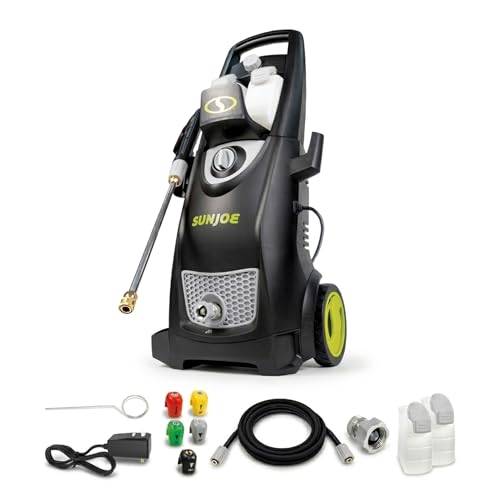
| Sun Joe SPX3000 | Best Overall | Mid tier | All-round home cleaning with a dual detergent tank layout many owners love |
| Greenworks electric pressure washer range | Best for Frequent Car Washing | Mid tier | Owners who value a wide accessory ecosystem and upright convenience |
| Ryobi electric pressure washer range | Best Compact Options | Entry to mid tier | Smaller homes, balconies, bikes, and furniture |
| Kärcher K5 | Best Premium Feel | Premium tier | Owners who want refined handling and water-cooled motor designs in the range |
| Westinghouse ePX series | Best Space Saver | Entry to mid tier | Four-wheel compact designs that follow you as you work |
| AR Blue Clean range | Best Quiet, Pump-Led Choice | Mid tier | Buyers who prioritise pump heritage and smooth delivery |
How Much Cleaning Force Do You Actually Need?
Force at the surface is a combination of the pressure the pump produces and the spray pattern you choose. A narrow jet concentrates energy into a small area and can mark concrete, cut into wood grain, or lift paint; a wide fan spreads the same energy so it rinses rather than carves. This is why experienced owners talk about working distance and nozzle angle before they talk about machine size. Stand further back and the stream softens. Angle the spray and it sweeps dirt away instead of driving it in. Choose a wider fan and delicate surfaces stay safe.
For most home surfaces, technique beats raw output. Cars, painted wood, outdoor furniture, and screens want the gentlest approach that still moves the dirt, often with detergent doing the real work while the water simply rinses. Concrete, block paving, and stone can accept a firmer hand, but even there a turbo or rotary nozzle used patiently in overlapping passes usually cleans more evenly than a needle jet used close. If your regular jobs are vehicles, decking, fencing, and siding, buy in the comfortable middle of the electric range. If your regular jobs are large stained driveways and masonry, buy toward the stronger end of electric, and accept that truly heavy restoration work is a rental or professional conversation, not a reason to oversize the machine you store all year.
Why Does Water Flow Matter as Much as Pressure?
Pressure loosens; flow removes. Imagine scrubbing a muddy path with a thimble of water at a time: each pass is intense and almost nothing gets cleaner. A washer with healthy flow lays a moving sheet of water across the surface, floating grit away so the jet is not grinding it into the finish. Flow also decides rinsing speed on cars and siding, where you are moving soap and foam off large panels. When two machines feel different in real use despite similar headline pressure, flow is usually the reason. Prioritise balanced output rather than a single heroic number, and remember that your home supply matters too: a kinked, narrow, or very long garden hose can starve any pump, so pair the washer with a sound hose in good condition.
garden hoses that feed a washer properly
Which Nozzles and Accessories Should Come in the Box?
Nozzles are not garnish; they are the controls you actually use. A sensible kit includes a very narrow jet for tiny stubborn spots used sparingly and at distance, a medium fan for general hard surfaces, a wide fan for vehicles and delicate work, and a soap or low-pressure setting for detergent application. Quick-connect tips that swap with a positive click save time and reduce the temptation to force the wrong pattern onto a job. A rotary or turbo nozzle is a genuinely useful extra for paving, because it sweeps a small jet in a circle and cleans evenly without striping.
Beyond nozzles, judge the lance and trigger gun for comfort, because you will hold them for the whole session. A trigger that is tiresome to squeeze, a wand that is too short for tall users or too long for close work, and a hose that fights you with memory coils all turn a satisfying job into a chore. Surface cleaner attachments, the disc-shaped tools that glide over paving, are worth considering if you have a large driveway or patio; they keep the spray contained, reduce splash-back, and produce an even finish. Foam cannon compatibility matters to car enthusiasts who want thick detergent dwell time. Brush attachments help on decking and furniture where agitation, not force, is what the dirt responds to.
How Far Will You Work From the Tap and the Outlet?
Working radius is the quiet specification that decides whether a washer feels convenient. Map your real jobs: where is the outdoor tap, where is the protected outlet, and what is the furthest corner of the driveway, patio, or fence line? Your hose length, cord length, and willingness to reposition the unit should cover that map without strain. Remember the safety frame for every metre of that plan. Use a ground fault circuit interrupter protected outlet whenever electricity works near water, keep connections dry and off the ground where the manual requires it, inspect the cord before use, and never spray toward the outlet, the machine itself, or any electrical fitting. A slightly longer hose is a better answer than a stretched cord, every time.
What About Detergent Systems?
Detergent is what turns pressure washing from blasting into cleaning. Traffic film on a car, algae on a fence, and grease near a barbecue all respond to chemistry and dwell time far better than to extra force. Machines offer detergent through onboard tanks, suction tubes that draw from a bottle, or foam attachments. Onboard tanks are tidy and suit households that switch between plain rinsing and soaped cleaning often. Suction systems are simple and flexible. Foam cannons are the enthusiast choice for vehicles. Whichever system you choose, use detergents made for pressure washers and for the surface in front of you, follow dilution guidance, apply from the bottom up on vertical surfaces so streaks do not set, let it dwell without drying, and rinse from the top down. Keep detergent off planting you care about by pre-wetting nearby foliage with plain water and rinsing it again afterwards.
How to Prioritise by Use Case
The car and bike household
Your enemy is not dirt, it is damage: clear coat, badges, seals, and bearings all dislike a close narrow jet. Prioritise a wide fan nozzle, a good foam option, a comfortable lance, and smooth, controllable delivery over headline force. Work at a respectful distance, keep the spray moving, and never chase a stubborn spot by creeping closer with a tight pattern. For this household the mid tier of electric washers is the sweet spot, and the money is better spent on nozzles and a surface-safe detergent than on extra output you must constantly hold back.
The patio, path, and driveway household
Your jobs are area jobs. Prioritise flow, a rotary nozzle, and compatibility with a surface cleaner, because evenness and speed matter more than peak force. Upright machines with stable wheels and generous hose length make long sessions less tiring. Plan your drainage before you start: you will move a surprising amount of dirty water, and it should go where your household and local rules expect it to go, not into a neighbour’s flower bed or a storm drain carrying detergent where it should not.
The decking and fencing household
Wood rewards restraint. Prioritise control: a fan nozzle you trust, easy pressure management through distance and angle, and brush attachments for algae in the grain. Clean along the grain, keep the wand moving, and test in an inconspicuous corner first, because raised, furry grain from an over-close pass cannot be un-raised. Many owners find the washer’s real value here is preparation: a gentle clean before re-oiling or re-staining transforms how evenly the finish takes.
The small-space household
Balconies, courtyards, bins, and furniture are your list. Prioritise footprint, weight, and tidy onboard storage over everything else. A compact Ryobi-style or cube design that lives on a shelf and sets up in minutes will be used ten times more than a larger machine that requires a garage expedition. Be extra careful with runoff on balconies, protect the flooring beneath, and keep spray well away from doors, vents, and any electrical fitting on the wall.
cleaners for patio furniture cushions
Recommended Models in Detail

Sun Joe SPX3000 — Best Overall for Most Homes
The SPX3000 earned its place in countless garages by being easy to understand: an upright layout, a selection of quick-connect tips, and a dual detergent tank idea that lets owners keep two solutions ready. It suits the mixed list most homes actually have, from paving to vehicles with the right nozzle and distance. Best for: households wanting one recognisable all-rounder in the mid tier. Not suited for: buyers who want the smallest possible storage footprint. Strengths include approachable controls and a broad owner community, which makes advice and accessories easy to find. The trade-off is size: it is a proper upright machine, so measure your storage corner.

Greenworks Electric Pressure Washer Range — Best for Accessory Fans
Greenworks builds its electric washers around the same design language as its garden tools, which appeals to owners who like a coherent kit. Upright models in the range emphasise convenient handles, onboard storage, and compatibility with surface cleaners and foam attachments. Best for: car-and-patio households that expect to add accessories over time. Not suited for: minimalists who want the bare machine and nothing else. The strength is ecosystem thinking; the trade-off is that the range spans several tiers, so read the exact configuration of the listing you choose rather than assuming every model shares the same kit.
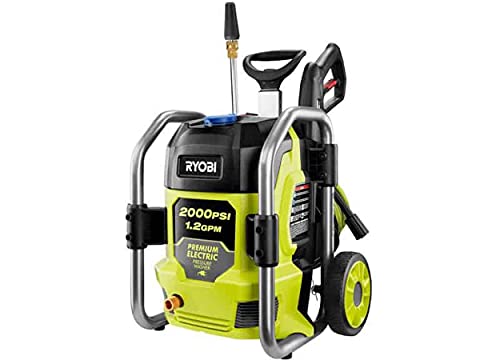
Ryobi Electric Pressure Washer Range — Best Compact Choices
Ryobi’s electric line is known for compact, friendly designs, including smaller units that suit flats and townhouses as well as upright models for houses. Owners like the approachable handling and the way the machines store without drama. Best for: small-space households and anyone whose jobs are vehicles, bikes, furniture, and patios rather than vast paving. Not suited for: buyers whose main job is a very large, heavily stained driveway every month. The strength is usability; the trade-off is that compact convenience always asks you to be a little more patient on the biggest area jobs.
Kärcher K5 — Best Premium Feel
The K5 sits toward the premium end of home electric washing, with the brand’s long pressure-washing heritage showing in the details: composed handling, tidy hose management in the range, and a motor design philosophy built around durability. Best for: owners who wash often and notice handling quality, and who plan to keep the machine for years. Not suited for: occasional users whose washer will come out twice a year, where a simpler tier makes more sense. The strength is refinement; the trade-off is that premium feel sits in the premium tier, so buy it because you will use it, not because the badge flatters the garage.
Westinghouse ePX Series — Best Space Saver
The ePX idea is a compact unit on four small wheels that follows behind you as you work, which removes the tip-over annoyance of tall machines on uneven ground. It is a clever answer for crowded garages and for users who move around a vehicle or patio constantly. Best for: space-limited homes and mobile working styles. Not suited for: buyers who prefer a tall upright with a long pull handle for long straight driveway passes. The strength is the form factor; the trade-off is that a low, following unit asks you to manage its hose and cord path with a little more awareness.
AR Blue Clean Range — Best Pump-Led Choice
AR Blue Clean comes from a pump-making tradition, and its home washers appeal to buyers who care about what is inside the casing: smooth delivery and a composed sound under load. Best for: owners who keep machines long-term and value mechanical feel. Not suited for: buyers who want the widest high-street accessory shelf. The strength is the pump heritage; the trade-off is a smaller range, so confirm the included nozzles and detergent arrangement match your job list before choosing.
First Setup and Care Essentials
Setup is a ritual worth learning once. Place the machine on level ground, connect the garden hose and run water through it before switching on so the pump primes with water rather than air, attach the lance and your starting nozzle, then connect power through a ground fault circuit interrupter protected outlet. Squeeze the trigger to purge air until the stream runs steady, and only then begin. Work in sections, keep the wand moving, hold a consistent distance, and overlap passes slightly so you do not leave stripes. On vertical surfaces, wash detergent from the bottom up and rinse from the top down.
Safety is not a section to skim. Never point the wand at people or pets, not even as a joke and not even at a distance: a pressurised stream can cause serious injury, including to eyes and skin. Never use the washer while standing on a ladder, because the recoil when the trigger is pulled can throw you off balance. Wear eye protection and closed shoes with grip, keep children and animals well away from the work area, and never spray into electrical outlets, junction boxes, light fittings, or the machine itself. If the cord, plug, or hose is damaged, stop and have it put right rather than working around it.
Care is simple and decisive. Flush detergent from the system after use, drain water from the pump, hose, and lance before storage, and protect the machine from frost, because trapped water that freezes is the classic silent killer of home washers. Coil the hose without kinks, store nozzles where they will not be lost, and wipe the unit down before it goes away. A washer that is drained, dry, and stored indoors will greet you in spring like an old friend; one left full of water in a freezing shed may not greet you at all.
pressure washer pumps explained
Mistakes to Avoid
The most common mistake is buying by headline number and then spending every job holding the machine back from damaging something. The second is starting close with a narrow jet on an unfamiliar surface; always test on a hidden patch, at distance, with a wide fan, and walk in slowly. The third is ignoring the water supply: a starved pump cavitates, pulses, and wears early, so check taps, hoses, and inlet filters. The fourth is detergent misuse, spraying strong solutions onto hot, sun-baked surfaces where they dry into marks, or onto planting without pre-wetting and rinsing. The fifth is storage neglect, especially frost. The sixth, and the one with real consequences, is casual safety: sandals, no eye protection, a quick rinse aimed toward a helper, or a ladder for the high siding. Every one of those is avoidable with thirty seconds of thought.
how to choose an electric pressure washer step by step
read our hands-on style electric pressure washer review
Understanding Motors, Pumps, and Noise in Plain Language
Inside the casing, two components decide how a washer feels and how long it lasts. The motor turns electrical energy into rotation. Many home machines use universal motors, which are light, compact, and entirely adequate for typical household sessions; some ranges use induction motors, which tend to run more quietly and are built for longer, steadier work. Neither label should be a fetish. What you will actually notice is sound, weight, and how composed the machine feels during a long patio session, and those qualities track with the overall tier of the design as much as with the motor type printed on the box.
The pump converts that rotation into pressurised water. Pump construction is where experienced buyers quietly focus, because seals, pistons, and housings live a hard life of vibration, pressure cycles, and the occasional gulp of air when a hose kinks. A well-made pump delivers a smooth stream without pulsing, holds up across seasons, and tolerates the real-world imperfections of home water supplies. This is one reason pump-led brands have loyal followings, and one reason the cheapest possible machine can be a false economy if it will be used every fortnight rather than twice a year.
Noise deserves a practical word. Electric washers are dramatically easier to live with than engine-driven machines, both for you and for neighbours, but they are not silent: there is motor whine, pump rhythm, and the hiss of the jet itself. If you wash early on weekend mornings, a quieter-running design is a genuine courtesy feature. Hearing protection is still a sensible habit for long sessions, and it costs nothing to keep the machine on a surface that does not drum, such as grass or a mat, rather than a hollow deck that amplifies every vibration.
A Seasonal Calendar for Pressure Washer Jobs
Thinking seasonally turns a washer from a spring panic purchase into a year-round tool. In spring, the list is awakening work: algae and winter film on paths and patios, fences ready for treatment, outdoor furniture coming out of storage, and the first proper car wash after months of road grime. This is when most owners earn back the purchase in a single weekend, because every surface in the garden seems to be wearing the same grey-green coat.
Summer is maintenance rhythm: quick patio refreshes before gatherings, bicycle and paddleboard rinses, bin washing that nobody enjoys but everybody appreciates, and gentle siding rinses where pollen and dust dull the paintwork. Short, frequent sessions suit summer, and they suit electric machines perfectly, because there is no fuel, no pull start, and no reason not to do a twenty-minute job.
Autumn is preparation: clearing leaf stain and early algae before winter makes surfaces safer underfoot, cleaning decking before it sits damp for months, and washing down furniture before it is stored. It is also the moment to think about the machine itself: a thorough flush, a full drain, and a dry indoor home before the first frost. Winter, for most households, is rest, apart from the occasional careful rinse of a muddy car on a mild day, with extra attention to draining everything afterwards because cold nights follow mild afternoons without asking permission.
How to Read a Listing Without Being Misled
Listings compete on numbers, so read them like an editor. Ask which nozzles are actually in the box, because the pattern set matters more than the pump headline. Ask how detergent is delivered, because a missing tank or tube changes your routine. Ask about hose and cord length together, because working radius is the sum of the system, not a single figure. Ask what the machine weighs and how it stores, because you will carry and shelve it far more often than you will admire its specifications. And ask what happens in year two: are spare nozzles, lances, and seals easy to obtain from the brand? A washer is a small appliance with moving water under pressure; the brands that support their machines with parts and clear manuals are the brands whose products are still working when the novelty has long worn off.
Finally, sanity-check the fit against your own job list one last time. Write down the five jobs you will actually do this year. If the machine in front of you suits all five, with the right nozzle and a safe technique for each, it is the right machine even if another model advertises a bigger number. If it suits three and endangers two, no discount fixes that. Proportion is the whole philosophy of electric pressure washing: enough force, delivered controllably, by a machine you will store happily and maintain without resentment.
A Surface-by-Surface Playbook
Concrete and block paving
Start dry: sweep grit and leaves away first so the jet is cleaning the surface, not sandblasting it with its own debris. Pre-treat dark algae patches and oil spots with a suitable detergent and give it dwell time. Work in lanes the width of your fan pattern, overlapping slightly, moving at a steady walking pace, and keep the nozzle at a consistent height so the finish is even. Rinse each lane fully before moving on, because dirty water left standing will dry back into tide marks. Weeds between blocks will be blasted out along with the jointing material if you linger, so accept that a firm clean may mean brushing fresh jointing sand back in afterwards; that is maintenance, not damage, as long as you plan for it.
Wooden decking and fences
Wood asks for the gentlest version of everything. Wet the surface, apply a wood-suitable cleaner, let it work, then rinse with a wide fan held at a steady, generous distance, moving along the grain in long strokes that start and finish off the board ends where possible. Feathering, where the jet raises fibres into a fuzzy nap, is the warning sign that distance or pattern is wrong. Work a whole board at a time rather than stopping mid-board, because stop marks show. Afterwards, let the wood dry thoroughly, which can take days of fair weather, before oil or stain goes on; sealing damp wood is the classic way to turn a good clean into a peeling disappointment.
Siding, render, and brick
Vertical surfaces collect algae on shaded sides and traffic film near the ground. Apply detergent from the bottom up so it does not streak clean lines down a dirty wall, dwell, then rinse from the top down with a fan kept at an angle that sweeps water away rather than driving it behind boards or into vents. Keep the jet away from window seals, door thresholds, external light fittings, and any electrical box, and never aim upward under lap siding where water does not belong. Brick is tougher, but mortar is the weak point: an ageing, crumbly joint deserves a soft approach, and forcing water into it helps nobody.
Vehicles, boats, and outdoor gear
For vehicles, think of the washer as a rinsing tool with a detergent stage, not a scrubbing tool. Foam or detergent first, dwell, then a wide fan rinse at distance, working top down, keeping away from badges, trim, stone chips, and open bearings on bicycles. Wheels and arches tolerate a firmer hand than paintwork. The same philosophy suits boats, kayaks, and garden furniture: chemistry and soft brushes loosen, water carries away. Delicate items such as outdoor cushions, screens, and solar lights are often better with a hose and a cloth; knowing when not to pressure wash is part of owning one wisely.
Glass, screens, and delicate fixtures
Greenhouse glass, conservatory panels, and window screens tempt owners because the dirt is so visible. Resist the narrow jet entirely here. A wide, distant rinse after a detergent soak is the limit for sturdy glass in frames, and screens are usually happier removed and washed gently by hand. Solar panel cleaning should follow the panel maker’s own guidance, which generally means soft water and soft tools, not pressure. When in doubt, the garden hose is not a failure; it is the correct tool that the washer was never meant to replace.
Budgeting in Tiers Without Chasing Numbers
Since prices move constantly, think in tiers and in cost of ownership rather than in a single figure. The entry tier buys honest light-duty cleaning for small homes, and its real limits are convenience and longevity under frequent use. The mid tier is where most households belong: better hoses, better nozzle sets, sturdier pumps, and handling that makes fortnightly use pleasant. The premium tier buys refinement, quieter running, and durability for owners who wash often and keep machines for years. Across all tiers, reserve a little of the budget for the unglamorous essentials: eye protection, a sound garden hose, suitable detergents, and eventually spare seals or a replacement nozzle. A mid-tier machine with good accessories and safe electrics will outperform a premium machine plugged into an unprotected outlet with a perished hose feeding it, every single weekend.
Environmental and Neighbourly Considerations
Pressure washing moves dirt from your surfaces into the wider world, so a thoughtful owner plans where the water goes. Plain water runoff from a patio is one thing; detergent-laden runoff heading for a fish pond, a vegetable bed, or a storm drain connected to a stream is another. Choose detergents labelled for outdoor use, use the least that does the job, keep them off soil and planting where you can, and never wash engine oil or paint residues into drains. If you are cleaning something genuinely contaminated, such as a workshop floor with oil history, treat the runoff as a disposal question first and a cleaning question second.
Noise and timing are the social side of the same coin. Electric machines are considerate by category standards, but a Sunday dawn session will still announce itself. Mid-morning starts, reasonable session lengths, and a quick word with close neighbours before a big spring clean keep goodwill intact. Water use is worth a thought too: a pressure washer, used in short triggered bursts on target, generally uses less water than an open hose left running for the same job, but only if you work in sections and release the trigger between them rather than treating the jet as a broom that never stops.
When Electric Is the Wrong Answer
Honesty completes any buying guide. If you have no outdoor water supply or no protected electrical outlet within a sane working plan, an electric washer will frustrate you; solve the infrastructure first or choose another cleaning method. If your property includes very large areas of stained concrete, long farm-style drives, or masonry restoration, the working speed of home electric machines may make the job a multi-day project, and hiring equipment or a professional for the restoration, then maintaining with your own electric washer afterwards, is often the smartest sequence. And if the surfaces you care about most are delicate, historic, or fragile, the correct purchase may be no purchase at all: soft washing methods, brushes, and patience exist precisely for those materials. A good buying guide should sell you the right tool, not just a tool.
One more honest case deserves naming: the household that simply will not use the machine. If your honest pattern is that outdoor cleaning happens once a year under protest, a washer of any kind becomes garage furniture, and paying a local professional for that single annual visit, or borrowing through a tool library, is the rational choice. The guides in this cluster assume a home with recurring outdoor jobs across the seasons. If that is your home, read on through the companion pieces: the step-by-step choosing guide turns this overview into a checklist, the review examines how these machines behave in real use, and the worth-it analysis stress-tests the decision itself. If it is not your home, you have saved money by reading a buying guide, which is a perfectly good outcome.
A Worked Example: One Saturday, One Machine, Four Jobs
Picture a typical spring Saturday with a mid-tier upright machine. The session begins with setup discipline: machine on level ground by the tap, water running through before power, a ground fault circuit interrupter protected outlet, eye protection and closed shoes on, children and the dog indoors or behind the gate. First job is the patio, detergent down, dwell, then fan passes in lanes and a full rinse, with dirty water swept toward the drain you chose in advance. Second is the fence panel test patch, wide fan, along the grain, distance adjusted until algae lifts without the wood fuzzing. Third is the car: foam, dwell, wide rinse at distance, wheels last and slightly firmer. Fourth is the quick one that makes owners smile: the wheelie bins, detergent, a thorough rinse, and a sunny spot to dry. Then the shutdown ritual: detergent flushed, everything drained, hose coiled without kinks, nozzles back in their slots, machine wiped and wheeled into its corner. Total active washing is well under two hours, nothing was damaged, nobody was at risk, and the house looks like it has been cared for. That rhythm, repeated across a year, is exactly what the right electric pressure washer is for, and it is the standard your purchase should be judged against: not a specification sheet, but a Saturday that goes well.
Before You Commit: A Hands-On Fit and Compatibility Check for Electric Pressure Washer
This section exists to treat this as the final check before money changes hands, the point where a shortlist stops being a list of features and becomes a decision about one specific home. It adds a layer that a feature list cannot give you, grounded in the home cleaning context this electric pressure washer will actually live in. Where this guide names examples such as Sun Joe SPX3000, Greenworks Electric Pressure Washer, Ryobi Electric Pressure Washer, use them as test cases for the checks below rather than as shortcuts past them.
One more angle is worth your time: the second-order costs. A electric pressure washer changes what happens around it. It can demand a different cleaning product, a new storage habit, a moved piece of furniture, a rearranged cupboard or a standing arrangement with the people you live with. List those knock-on effects before you buy and decide whether you accept them as part of the deal. Sometimes the answer is an easy yes, and the electric pressure washer earns its place by improving the whole routine around it. Sometimes the honest answer is that the supporting changes are the real project, and the purchase should wait until you are ready for them. Either answer is useful; the only bad outcome is discovering the knock-on effects by accident, one irritation at a time, after the decision can no longer be revisited.
It also helps to separate the problems a electric pressure washer can solve from the problems it merely moves. If the underlying difficulty is space, the answer may be a smaller format or a different location rather than a more elaborate model. If the difficulty is time, look for the option that removes steps rather than the one that performs each step slightly better. If the difficulty is that several people want different things, a compromise design that everyone rates as good enough will usually outlast a specialist design that one person loves and everyone else avoids. Naming the real problem in one sentence, out loud, before you order, is a surprisingly powerful filter, and many shoppers find that the sentence itself points at a different electric pressure washer than the one they started out researching.
Start with the unglamorous measurements. For a electric pressure washer, the numbers that decide satisfaction are rarely the headline ones in a listing; they are cupboard space between uses, cord or hose reach, noise in a real room and how heavy the job feels on the second flight of stairs. Write the real dimensions of your space down, including the awkward constraints you normally work around without thinking, and hold every contender up against that sheet rather than against a showroom photograph. Then walk the route the electric pressure washer will take on delivery day and during normal use. A choice that fits on paper but fights you every time it is moved, opened, cleaned or stored will lose its shine quickly, however strong its other qualities look in a comparison table.
Next, rehearse the week, not the ideal day. Picture the electric pressure washer inside a rushed weekday tidy, a deep weekend clean and the unexpected mess that arrives five minutes before guests. Most disappointment comes from buying for the best-case scenario: the tidy version of the household, the motivated version of yourself, the weather or the guest list you hope for rather than the one you usually get. If the electric pressure washer only makes sense when everything goes to plan, it is the wrong size, the wrong format or the wrong purchase for now. If it still looks useful on the tired, rushed, slightly chaotic version of the day, it has passed the most honest test there is, and the remaining questions are about detail rather than direction.
Pay close attention to the recurring friction points, because they compound. With a electric pressure washer, owners tend to run into filters forgotten until performance drops, attachments that live in a different room from the machine, and parts that are awkward to rinse and dry. None of these is dramatic on its own, and that is exactly why they get underestimated at buying time. Ask how the design you are considering handles each one: can the wearing part be replaced, can the awkward part be reached without tools, does the job take two minutes or twenty. A electric pressure washer that makes its own upkeep easy gets maintained; one that makes upkeep a project gets neglected, and neglected products perform badly in ways that then get blamed on the original purchase.
Use the listings as a checklist rather than as entertainment. For each electric pressure washer you shortlist, note the exact variant, the included parts, what is sold separately, and which photographs show the item in a setting like yours rather than in a studio. If a model named elsewhere in this guide catches your eye, treat it as a worked example for this process: run it through the same measurements, the same weekly rehearsal and the same friction list before letting familiarity turn into preference. Consistency is the whole trick. Shoppers go wrong not by choosing the objectively weaker electric pressure washer, but by judging one contender on features, the next on looks and the third on a single enthusiastic anecdote.
Think about who else has a vote. A electric pressure washer is usually shared, moved, cleaned or complained about by more than one person, and the second user’s priorities are often the ones that surface after the return window closes. Check height, weight, reach, noise, heat, sharp edges or sheer visual presence, whichever apply, against the smallest, oldest or least enthusiastic person who will live with it. If you are buying for a household that includes children, pets, elderly relatives or lodgers, run the clumsy scenario too: the spill, the knock, the curious tug, the door left open. A robust electric pressure washer choice survives other people; a fragile one only survives its buyer.
Consider the edge cases that sit just outside normal use, because a electric pressure washer will meet all of them eventually. The unusually large load, the unusually small task, the day you are in a hurry, the day something else in the room is broken and this has to cover for it. Versatility is not about a long feature list; it is about behaving predictably when conditions are imperfect.
Frequently Asked Questions
Is an electric model strong enough for a driveway?
For ordinary household driveway grime, algae, and tyre marks, yes, a mid or stronger electric washer with a rotary nozzle or surface cleaner handles the job well. What it asks in return is patience: overlapping passes and detergent dwell time rather than one heroic blast. Heavily oil-stained or very large commercial-style areas are the exception, where rental or professional equipment earns its keep. For the driveways most homes actually have, electric is not the weak option; it is the proportionate one.
Can I use one on my car safely?
Yes, with the wide fan nozzle, a respectful distance, and constant movement. Apply detergent or foam first, let it dwell, and rinse rather than blast. Keep the stream away from badges, trim edges, stone chips, and engine-bay electrics, and never close in on a stubborn spot with a narrow jet. Owners who wash cars weekly often choose electric precisely because its delivery is easier to keep in the gentle zone than a big engine-driven machine.
What outlet should I plug into?
Use an outdoor or indoor outlet protected by a ground fault circuit interrupter, keep the connection dry, and follow the manual’s guidance about extension leads, which is restrictive for good reason where water is involved. If your outdoor socket is not protected, have an electrician advise you before the washer becomes a regular habit. This is a small, one-time piece of home infrastructure that protects every future session.
How do I stop it damaging decking?
Use a wide fan, work along the grain, keep the wand moving at a steady distance, and test first in a corner. Let detergent lift the algae so the water only has to rinse. If the surface starts to look fuzzy or the grain raises, you are too close or too narrow; step back immediately. Cleaned gently, a deck comes up bright and ready for oil or stain; cleaned aggressively, it needs sanding before anything else can happen.
What maintenance actually matters?
Three habits cover almost everything: flush detergent after use, drain all water before storage, and protect the machine from frost. Add an occasional check of the inlet filter, hoses, and cord, and a wipe-down so grit does not live in the connections. None of this takes long, and together these habits are the difference between a washer that lasts a couple of seasons and one that lasts many years.
Should I buy accessories now or later?
Start with the included nozzles and learn what your surfaces respond to. Add a surface cleaner when area work proves slow, a foam cannon when car washing becomes a ritual, and brushes when you find yourself fighting algae with force instead of agitation. Buying accessories in response to real jobs keeps the garage tidy and the spending honest, and it means every attachment you own has a job with your name on it.
Related Guides
is an electric pressure washer worth it