Disclosure: As an Amazon Associate, dailyhomedecorating.com earns from qualifying purchases. Links on this page are affiliate links; they cost you nothing extra. Prices and availability change often, so check the current Amazon listing before you buy.
Learning how to choose an electric pressure washer is mostly learning how to describe your own home accurately. The machine itself is the easy part: pumps, nozzles, hoses, and detergent tanks are well understood, and the leading designs are more alike than their packaging admits. The variables that actually decide satisfaction are yours, your surfaces, your storage, your tap and outlet positions, your session habits, and your temperament around powerful tools. This guide turns those variables into a sequence of steps you can complete in one sitting, with a tape measure, a honest job list, and a cup of something, and it ends with worked examples so you can watch the method make decisions for three different households before trusting it with yours.
Key Takeaways
- The deciding criteria, in order, are: your job list, your surfaces’ delicacy, your working radius, your storage, and only then machine specifications.
- Choose cleaning force for your most delicate regular job; rent or hire for the rare heroic one.
- Nozzle set and detergent system matter more day to day than headline output.
- Safety infrastructure comes first: a ground fault circuit interrupter protected outlet is step zero, not an accessory.
- Buy the tier your calendar justifies: frequent use rewards mid and premium; rare use is honestly served by less.
The short answer, for readers who want it before the steps: most houses should choose an upright mid-tier machine with a full fan nozzle set and a workable detergent system, sized to their driveway and stored indoors. Every step below exists to confirm or correct that default for your particular home.
In this guide
What You Need to Know Before Comparing
Three ideas carry the whole method. First, cleaning force at a surface is a recipe, not a number: pump output, nozzle pattern, distance, and dwell time combine, and you control three of the four from behind the trigger. That is why a modest machine in patient hands out-cleans a strong machine in hurried ones on most home surfaces, and why choosing is really about control features rather than peaks. Second, detergent is a force multiplier that costs no risk: chemistry loosens algae, film, and grease so water can stay gentle, which means a good detergent system effectively upgrades every surface you own. Third, ownership is a rhythm, not an event: setup, work, drain, store, repeated across seasons, and any choice that makes that rhythm pleasant will beat a theoretically stronger choice that makes it a chore.
Hold one safety frame across everything that follows. Electricity and water are partners in this tool, so the outlet must be protected by a ground fault circuit interrupter, connections stay dry, and the jet never goes near fittings, outlets, or the machine itself. The jet can seriously injure, so it is never pointed at people or pets, never used from a ladder, and always paired with eye protection and closed shoes. These are not cautions appended to the method; they are the ground the method stands on, and a home that cannot provide them should solve that before choosing any model.
browse the field in the best electric pressure washers roundup
How to Choose an Electric Pressure Washer in 8 Steps
Step 1: Write the real job list
Take a pen and list the outdoor cleaning jobs your home generated in the last twelve months, not the jobs in a catalogue. For most readers it reads: driveway and paths, patio, fences or decking, the car’s weekly or monthly wash, outdoor furniture in spring, bins when they demand it, siding on the shaded side, bicycles and gear as needed. Now mark each job with its frequency. This list, with its frequencies, is the single most valuable document in the choosing process, because every later step reads from it. The commonest choosing failure in this category is buying for a job that appears once a decade, a vast stained slab, a restoration project, while the jobs that appear monthly get a machine that suits them badly. Let the frequent jobs choose; let the rare job be rented, hired, or simply done slowly.
Step 2: Identify your most delicate regular surface
Find the most delicate surface on the frequent list, because it sets your control requirements. Car paint with badges and stone chips, softwood decking, painted siding, and older mortar all ask for a wide fan, smooth delivery, and distance discipline. If your frequent list contains such a surface, and most do, then your machine must excel at the gentle end: a proper wide fan nozzle, a trigger that modulates without drama, and delivery without pulsing. If your frequent list is all modern paving and masonry, you may weight area speed higher. Either way, this step converts a vague worry about damage into a concrete specification: control quality at low aggression, tested by you in the first session on a hidden patch of the very surface you identified.
Step 3: Measure the working radius
Walk the property with a tape or a long stride. Note the outdoor tap, the protected outlet, and the furthest point of every frequent job. Your machine’s system, hose plus cord plus your willingness to reposition the unit, must cover that map without strain, stretched leads, or a cord dragged through the puddles you are creating. Compact properties forgive everything; long gardens and wraparound drives punish short hoses and reward either generous hose length or a light machine that moves happily. Write the furthest distance down. It is a choosing fact, and guessing it is how good machines end up hated for a layout they never stood a chance in.
Step 4: Audit storage before admiring machines
Decide where the machine will live, drained and dry, indoors, safe from frost, with its hose coiled and its nozzles aboard. Measure that space. A garage corner suits an upright; a utility shelf suits a compact; a low cupboard may suit a following design and nothing else. This step feels premature and is in fact decisive, because storage determines survival: the frost that kills these machines finds them in sheds, stored wet, in exactly the homes that never audited storage. Choose the form factor your measured space flatters, and let glamorous machines that do not fit eliminate themselves without regret.
Step 5: Choose the form factor
Now the shapes can be matched to the facts. Upright trolley: the default for houses, stable, capacious, easy to move between jobs, needs its corner. Compact or cube: the small-home answer, shelf-stored, quick to deploy, patient on big areas. Low following design: the mobile answer for car-centred households and crowded garages. Wall or reel-centred setups: the frequent user’s optimisation, rewarding commitment with two-minute setups. Read your steps one to four back and the form usually chooses itself; if two forms survive, prefer the one whose storage story is stronger, because storage is forever while sessions are occasional.
Step 6: Specify the nozzle set and detergent system
Require, at minimum, a wide fan for delicate work, a medium fan for general hard surfaces, a narrow jet for rare pinpoint use, and a low-pressure soap mode. Value a rotary tip highly if paving area is large. Then match detergent to your list: dual or onboard tanks for mixed sessions, suction feed for long single-product runs, foam compatibility if vehicles are a ritual. This step is where experienced choosers spend their attention, because these are the parts your hands touch every session and the parts that decide whether cleaning is chemistry-led and gentle or force-led and risky.
Step 7: Set the tier by calendar, not aspiration
Count last year’s outdoor cleaning sessions honestly. A handful a year is served by the entry tier and by compact designs. Monthly or more justifies the mid tier, where pumps, hoses, and fittings stop feeling like compromises. Fortnightly or weekly long sessions justify premium, where comfort and durability compound. This calibration prevents the two classic errors: the flimsy machine bought for a heavy rhythm, and the flagship bought for a rhythm that never materialises. Your calendar is a choosing instrument; use the real one.
Step 8: Check spares, manual, and the returns path
Before committing, confirm that spare nozzles, a lance, and seals are obtainable, that the manual is readable and specific, and that you understand the seller’s returns terms if the machine’s handling disappoints in the first session. A brand with a visible parts trail is making a promise about year three; a brand without one is making a different promise. This step takes minutes and is the closest thing choosing offers to insurance.
Gear for This Guide
Four representatives of the decisions above, described prose-first in qualitative tiers so you can map them to your steps and check current listings for exact configuration.

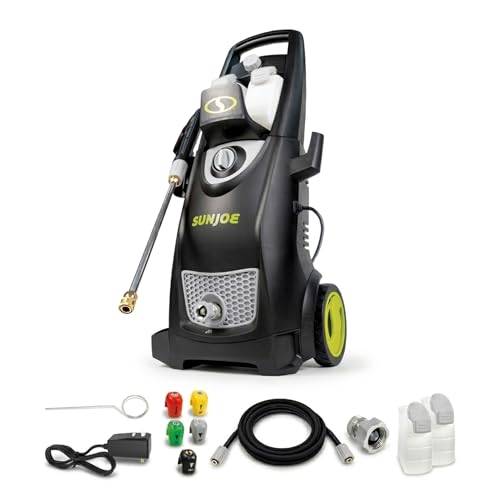
Sun Joe SPX3000 — where the steps land for most houses
Upright, mid tier, full quick-connect tip set, dual detergent tanks. Choose it when your job list is mixed, your storage is a garage corner, and your calendar is monthly or better. Not the answer when the shelf is the only storage you have.
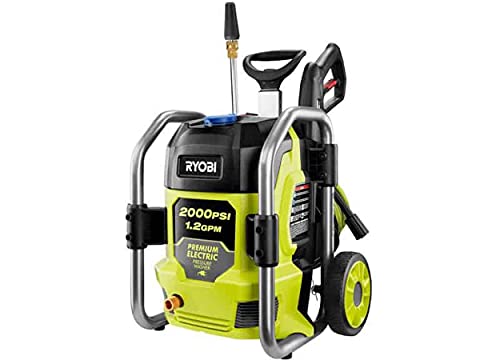
Ryobi Electric Pressure Washer Range — where the steps land for small homes
Compact-friendly designs across entry and mid tiers. Choose from this range when storage and quick deployment dominate your steps, and your areas are modest. Not the answer for a vast drive cleaned weekly.
Kärcher K5 — where the steps land for frequent washers
Premium upright with composed delivery and durability thinking. Choose it when step seven’s calendar is heavy and long sessions are your norm. Not the answer for a twice-yearly rhythm.
Westinghouse ePX Series — where the steps land for crowded garages and car rituals
Low following design in the entry-to-mid tiers. Choose it when storage geometry is awkward and your work moves constantly around vehicles and patios. Not the answer if you simply love a tall trolley, which is a legitimate preference.
compare all six personalities in electric pressure washer reviews
Common Mistakes
The first mistake is choosing by headline output, which buys risk for delicate surfaces and bulk for storage, in exchange for a number that technique makes mostly irrelevant. The second is skipping the radius measurement and discovering, wand in hand, that the far corner of the drive belongs to another machine’s geography. The third is treating detergent as an accessory rather than a system, then compensating with force for the rest of the machine’s life. The fourth is storing by hope: no measured space, no drain ritual, and a shed that freezes. The fifth is ignoring the human factor, choosing a machine whose trigger, weight, or hose behaviour the least confident household user cannot manage, because that user defines the machine’s safety and usage record. The sixth is buying the heroic job: oversizing for a restoration that will happen once, and paying for it in every ordinary session thereafter. Each mistake is a skipped step in disguise, which is convenient, because it means the cure is simply to go back and do the step.
Pro Tips
Choose the machine whose wide fan you trust, because you will live in that nozzle. Photograph your storage space with the tape measure visible and take the photograph shopping, physically or digitally; it ends arguments with optimism. If two finalists remain, pick the one with the better hose behaviour and onboard storage, the qualities you will feel every session, over the one with the better brochure. Plan the first session when you buy: patio first for learning, delicate surfaces later, so the machine’s debut is a success that teaches. And keep the manual with the machine, not in a drawer of unrelated paperwork, because the drain and filter instructions you need in November are written in it.
read the full case in the electric pressure washer buying guide
Worked Examples
Profile one: the semi with a drive, a deck, and a family car
Job list: monthly drive and patio, spring deck preparation, fortnightly car, bins as needed. Delicate surface: the deck and the car’s paint. Radius: tap at the side wall, far corner of the drive a healthy walk away. Storage: a garage corner, measured and real. Calendar: monthly-plus. The steps land exactly on the default: an upright mid-tier all-rounder with a full fan set and dual detergent capacity, the SPX3000 pattern. A rotary tip joins at purchase because the drive is the biggest single area. Decision time, honestly spent, is under an hour, and most of it was the walk with the tape.
Profile two: the flat with a balcony and a bicycle habit
Job list: balcony tiles and furniture monthly, bicycles weekly in season, a small car in a shared area where permitted. Delicate surface: none truly, but space is the binding constraint everywhere. Radius: tiny. Storage: one utility shelf, measured in centimetres of headroom. Calendar: frequent but short. The steps reject every upright without sentiment and land on a compact design from the Ryobi pattern, entry-to-mid tier, with the wide fan as its working home. The money not spent on size goes to a brush set and good detergent, which this profile will use more than any specification.
Profile three: the keen detailer with a long fence and a big patio
Job list: weekly car ritual, monthly patio, spring fence preparation for staining, long sessions as a norm. Delicate surface: cherished paintwork. Radius: generous hose territory. Storage: organised garage with a chosen bay. Calendar: heavy. Step seven does the decisive work here and lands on the premium upright pattern of the K5, with foam compatibility treated as a requirement in step six and spares checked in step eight. A follower design tempts on car mobility and loses, correctly, on long straight patio lanes, which is the profile’s second job and the tie-breaker the steps were built to supply.
Deep Dive: What Motor and Pump Language Means for a Chooser
Listings will offer you motor and pump vocabulary as if it were decisive, so here is the chooser’s translation. Motor type mostly predicts sound and stamina: lighter universal motors keep machines affordable and portable, while induction-style designs tend to run quieter and suit longer sessions. Neither is a moral category; match them to step seven’s calendar. Pump language mostly predicts smoothness and service life: what you want to hear, in reviews and owner accounts, is a stream described as even and a brand whose seals and spares are listed for sale. Hose and lance language predicts your Saturdays: a hose praised for uncoiling flat and a lance praised for balance are worth more than a paragraph of output figures. Inlet filters, thermal protection, and automatic stop behaviour are the quiet guardians; their presence signals a maker who has thought about year three. Read specifications in that order, guardians, delivery, sound, and you will be reading like an owner rather than a browser.
The First-Session Test Protocol
Choosing does not end at the till; it ends at the end of a first session run as a test. Choose a low-stakes order: a paving lane first, to learn pace and striping; a hidden patch of your most delicate frequent surface second, wide fan, generous distance, examined closely afterwards; the detergent system third, on a small area, to learn its rhythm before a whole car depends on it. Note three things in writing: the distance at which your delicate surface cleaned without complaint, the pace that produced an even lane, and the total setup and pack-away time. Those three notes are your household’s real manual, and they convert a generic purchase into a calibrated tool. If the test surfaces a problem, a pulsing stream, a weeping fitting, handling your household cannot manage, the returns window is the final step of choosing, and using it promptly is competence, not failure.
Choosing When the Home Is Shared, Rented, or Borrowed
Shared homes add chooser’s constraints that solo buyers never meet. In a rental, favour machines that need no installation, leave no marks, and store in the tenant’s own space; confirm any rules about water use in shared areas before the car becomes a Saturday issue. In a family home, choose for the least experienced regular user: clear nozzle markings, a trigger that cannot be misunderstood, and storage that puts the machine away completely, because a half-stored pressure washer in a home with children is a safety conversation waiting to happen. In a borrowing culture, and every street has one, consider whether you are choosing a machine you are willing to lend, with the manual and the eye protection travelling with it, or a machine whose lending you will decline; both are respectable, but they point to different tiers of robustness. These social facts are choosing facts, as real as any hose length.
Choosing Second-Hand Without Regrets
The used market in this category is active and can be kind, provided the chooser tests for the category’s known failure modes. Ask why the machine is being sold and whether it was stored indoors and drained; a vague answer about a shed is information. Inspect the hose for kinks and perishing, the cord for damage, the nozzle set for completeness, because a missing wide fan quietly converts a bargain into a risk. Run the machine if at all possible: priming willingly, a stream that is smooth rather than pulsing, fittings that stay dry, and a detergent system that draws are the four signs of a pump that has been respected. Price in the consumables you may need, seals, a tip, perhaps a lance, and favour brands whose spares your step eight already verified. A respected mid-tier machine second-hand will out-serve a neglected premium one, which is the used market’s whole lesson in a sentence.
A Chooser’s Walk Around One Real Property
To see the steps breathe, walk a composite property: a three-bedroom house, drive for two cars at the front, patio and lawn at the back, fences on both boundaries, a shaded side path, one car washed with pride, bicycles in a lean-to, and a garage whose right-hand corner is theoretically free. The job list writes itself in five minutes and confirms the usual suspects, with the side path promoted to first-class status because its algae is a genuine slip hazard in winter. The delicate audit names the car’s paint and the older fence panels. The radius walk finds the tap at the back, the protected outlet in the garage, and the front drive reachable only by repositioning the machine once, which the owner accepts and plans for rather than discovers. Storage evicts a broken strimmer from the garage corner and claims the space honestly. Form: upright. Nozzles: full fan set plus a rotary tip for the drive. Detergent: dual capacity for car and paving. Tier: mid, because the calendar says monthly-plus and the fence is a spring project, not a weekly one. Spares: verified in minutes. Total elapsed choosing time, including the walk: less than the length of the first patio session the machine will ever run. That is the method’s promise, not brilliance, just sequence.
What to Do When Two Steps Disagree
Sometimes the steps argue: the job list wants an upright, the storage audit wants a compact; the calendar wants premium, the budget conversation wants mid. Resolve disagreements by asking which step describes a fact and which describes a preference. Storage dimensions are facts; form romance is a preference, and facts win. Calendar counts are facts; tier aspiration is a preference, and facts win, with the rider that a heavy calendar can justify saving toward premium rather than buying flimsy now. Radius measurements are facts; the hope that a hose will stretch is not a plan. Where two facts genuinely conflict, a large area and a tiny shelf, the resolution is usually a sequence rather than a compromise: the compact now for the frequent small jobs, and the heroic area handled by rental or a professional until the property or the storage changes. Choosing well includes choosing in instalments.
The Specification Sheet, Translated Line by Line
Since the steps end at a listing, here is the listing, translated. Where it advertises cleaning power, read: sufficient for home surfaces, subject to the nozzle in your hand. Where it lists hose length, add the cord and your stride, and compare the sum with step three’s furthest corner. Where it lists weight, imagine the machine at the end of a session, wet, being carried to step four’s shelf, not lifted once in a showroom. Where it photographs a nozzle set, count patterns, not pieces, and look for the wide fan by name. Where it shows a detergent tank, ask what happens when it empties mid-car and how it flushes afterwards. Where it promises quiet, translate: quieter than an engine, still a machine, still deserving hearing awareness on long runs. Where it lists accessories in the box, separate the ones your job list will touch monthly from the ones auditioning for a drawer. A listing read this way stops being an advertisement and becomes evidence, which is the final skill this guide exists to teach.
After the Choice: The First Month Plan
A good choice deserves a good first month, because habits set then persist for years. Week one: the test protocol, patio lane, hidden delicate patch, detergent rehearsal, and the three notes written down. Week two: the first full easy job, usually the patio or the path, run at the noted pace, ending with the full shutdown ritual performed slowly enough to become choreography. Week three: the delicate job, car or deck, with the wide fan and the noted distance, and a close inspection afterwards that either confirms the calibration or adjusts the notes. Week four: the storage audit revisited, nozzles home, hose coiled as it will be coiled in November, shelf claimed. A machine that has lived this month is no longer a purchase; it is a member of the household’s staff, with a place, a routine, and a record, and the choosing process can be declared complete with the confidence that the steps, the test, and the month have all agreed.
Choosing for Climate, Water, and Other Local Facts
Local conditions quietly edit the steps. In a frost-hard climate, step four grows teeth: indoor storage stops being a preference and becomes the machine’s survival plan, and the easiest-draining designs gain real value. In a hard-water area, step eight expands to include filter access, because you will rinse that filter often and should be able to do it in seconds. In a drought-conscious region, the choosing virtue is efficiency of method: a machine and nozzle set that clean in triggered sections, plus detergent that works at sensible dilution, respects both the rules and the resource. In a leafy, shaded street, algae is the standing job and the detergent system climbs the priority list. In a coastal property, rinsing salt film is a frequent gentle job that flatters compacts and wide fans. None of these change the method; they change the weights, and a chooser who names their local facts out loud will find the steps re-ranking themselves with very little argument.
The Psychology of the Purchase, Briefly Faced
Choosing guides pretend buyers are calculators, but the honest ones admit the weather inside the decision. There is the spring optimism that overbuys, imagining a household that pressure washes like a council crew. There is the bargain gravity that underbuys, mistaking the cheapest ticket for the wisest one while planning a heavy calendar. There is badge weather, the pull toward the name a neighbour praised, which is not foolish, owner satisfaction is data, but becomes foolish when it overrides your own tape measure. And there is the quietest force of all, the desire to be finished choosing, which pushes readers to crown the first plausible machine. The steps in this guide are designed as shelter from that weather: facts gathered in a fixed order, so that when the feelings arrive, as they should, they are choosing among finalists that all fit the property, rather than smuggling an unsuitable machine past an unmeasured shelf. Let the feelings pick the colour. Let the steps pick the machine.
A Note on Choosing With the Planet in the Room
Environmental choosing in this category is mostly durability choosing. The longest-lived machine is the greenest one, so the steps that favour build quality, available spares, and storage that prevents frost death are also the environmental steps. Beyond longevity, prefer the machine whose detergent system encourages measured dosing rather than flooding, plan runoff like an owner rather than a bystander, and treat water as a resource the method respects by working in triggered sections. If your honest calendar is nearly empty, the greenest choice may be the professional’s annual visit or a tool library membership rather than a manufactured object that will mostly sit. The steps already contain that possibility in their willingness to answer no, and a guide that can say no is a guide whose yes means something.
The Ten-Minute Version for Readers in a Hurry
If the full method must be compressed, it compresses to this. List your monthly jobs on one line. Name your most delicate among them. Pace out your furthest job from tap and outlet. Measure the shelf or corner the machine will live in, indoors. Choose the form that fits the shelf, the nozzle set that includes a true wide fan and a soap mode, the detergent arrangement that matches your commonest session, and the tier your real calendar justifies, entry for rare, mid for monthly, premium for weekly. Confirm spares exist. That paragraph is the whole guide in miniature, and it will produce a good purchase unaided; the longer version exists to produce a confident one, and to catch the unusual properties, the wraparound drives, the frost-hard sheds, the cherished cars, the shared courtyards, where the miniature’s assumptions need the full method’s care.
How This Method Ages With You
Properties change, and a final virtue of the step method is that it reruns gracefully. A house move invalidates steps three and four and asks for a fresh walk, nothing more. A new deck raises the stakes of step two. A second car, a caravan, a boat, or a growing patio rewrites step one in a minute. A machine approaching the end of its life sends you back to step eight’s spares question before it sends you shopping. Owners who keep their original job list, radius notes, and test-session distances in the manual’s cover own a choosing system for life, not a one-off article, and each subsequent purchase in the category takes them twenty minutes of updating rather than a weekend of fresh research. Write the notes. Future you, standing in a different garden with the same questions, will be grateful in the precise, practical way this whole guide has aimed to deserve.
One last encouragement, addressed to the reader who has done the steps and still feels the pull of a bigger, shinier machine than the method selected. That pull is normal, and it is occasionally even right, when it is really step seven speaking, a calendar quietly heavier than the one first admitted. Test it honestly: name the extra sessions, the extra surfaces, the extra years the bigger machine would serve, in writing, the way step one taught you. If the writing holds up, follow it with a clear conscience, because the method was never a rationing system. If the writing dissolves into adjectives, let the method’s choice stand, and spend the difference on the accessories, detergents, and protected electrics that this guide has argued, at some length and from some experience, will matter every single session.
And if the method selected a modest machine and the pull is toward embarrassment rather than excess, the same paragraph applies in mirror image. A compact chosen by honest steps for an honest small home is not a lesser purchase; it is the method working perfectly at a smaller scale, and it will likely be used more, stored better, and kept longer than a flagship exiled to a damp shed by a household it never fitted. Choosing well is a property of the match, not of the price tag, and every worked example in this guide, from the balcony to the detailer’s garage, was written to make that sentence feel true rather than merely sound wise.
So the guide closes where it began: with your home, described accurately, doing the choosing. Machines will keep arriving with new colours and new claims, and none of them will know about your shaded side path, your car’s stone chips, your shelf’s exact headroom, or the way your household actually spends its Saturdays. You know all of that, and now you have a sequence for turning the knowledge into a specification, a test for confirming it, and a first month for settling it into habit. Choose once, choose by the steps, and then go and enjoy the deeply disproportionate pleasure of a patio coming back to its true colour, lane by even lane, behind a machine that fits your life because your life is what selected it.
Before the questions, one practical promise about the steps themselves: none of them requires expertise you do not already have as the person who lives in your home. You know where the algae grows, which fence panel is oldest, how the drive drains, and where a machine could honestly live. The guide has merely arranged that knowledge into an order that prevents the loudest fact, usually a number on a box, from shouting down the quieter facts that will still be true in five years. Trust the arrangement, keep the notes with the manual, and let the machine you choose be the most boringly well-matched purchase of your spring.
Readers who have followed the whole cluster will notice this guide’s steps quietly agreeing with the buying guide’s philosophy and the reviews’ personalities, and the agreement is intentional. Three different doors, overview, comparison, and method, open into the same room: a home described honestly, a machine matched to it without drama, and a set of habits that keep both safe and effective for years. If you enter through this door, the method, you may never need the others; if you entered through theirs, this is the room’s floor plan, worth keeping long after the purchase it produced has been forgotten in the best possible way, by becoming routine.
Keep the floor plan, then, and the three notes from your first session, and the job list that started everything, together in the front of the manual. They are the difference between owning an appliance and understanding a system, and they will make every future decision in this category, repair, replace, upgrade, lend, or hand down, a ten-minute reading of your own handwriting rather than a fresh expedition into other people’s opinions.
That is the whole method, and it is deliberately unglamorous: paper, tape, honesty, sequence. Glamour in this category belongs to the results, the bright patio, the calm deck boards, the car rinsed clean in the evening light, and those results are reliably produced by households whose glamour budget was spent on outcomes rather than on the box the machine arrived in.
One sentence, then, to carry away if the eight steps blur: describe your home truthfully, in writing, with measurements, and let that description outrank every advertisement you will ever read about these machines, because your home is the only specification sheet that was ever written specifically for the machine you are about to buy.
Everything after that sentence is execution: the walk, the list, the test session, the first month, each simple, each already described, and each waiting patiently for the Saturday you decide to begin it with a tape measure in one hand and a pen in the other.
Begin it, then, and let the questions below settle the last remaining details that the steps may have left open for your particular combination of surfaces, storage, calendar, and climate, before the choosing becomes a purchase and the purchase becomes your first bright, even, deeply satisfying lane of clean paving this spring, exactly as planned, measured, tested, and calmly carried out from start to finish, without a single regret. The steps will still be there, in your notes, when the next property asks the same questions in a different garden.
Measuring and Checking Before You Order: A Pre-Purchase Walkthrough for a Electric Pressure Washer
This section exists to turn the advice into a sequence you can follow with a tape measure, a phone for notes, and ten unhurried minutes before you commit. It adds a layer that a feature list cannot give you, grounded in the home cleaning context this electric pressure washer will actually live in. Where this guide names examples such as Sun Joe SPX3000, Ryobi Electric Pressure Washer, Karcher K5, use them as test cases for the checks below rather than as shortcuts past them.
Finally, plan the first fortnight. Decide where the electric pressure washer will live from day one, what it replaces, what accessory or companion it needs straight away and what small job you will use to learn its habits while returning it is still simple. Keep the packaging until that learning period is over, note anything that surprises you, and deal with a mismatch early rather than adapting yourself around a poor fit for years. The households that end up happiest with a electric pressure washer are rarely the ones that researched longest; they are the ones that checked fit honestly, bought for the ordinary week, and paid attention during the first days instead of assuming the decision ended at checkout.
One more angle is worth your time: the second-order costs. A electric pressure washer changes what happens around it. It can demand a different cleaning product, a new storage habit, a moved piece of furniture, a rearranged cupboard or a standing arrangement with the people you live with. List those knock-on effects before you buy and decide whether you accept them as part of the deal. Sometimes the answer is an easy yes, and the electric pressure washer earns its place by improving the whole routine around it. Sometimes the honest answer is that the supporting changes are the real project, and the purchase should wait until you are ready for them. Either answer is useful; the only bad outcome is discovering the knock-on effects by accident, one irritation at a time, after the decision can no longer be revisited.
It also helps to separate the problems a electric pressure washer can solve from the problems it merely moves. If the underlying difficulty is space, the answer may be a smaller format or a different location rather than a more elaborate model. If the difficulty is time, look for the option that removes steps rather than the one that performs each step slightly better. If the difficulty is that several people want different things, a compromise design that everyone rates as good enough will usually outlast a specialist design that one person loves and everyone else avoids. Naming the real problem in one sentence, out loud, before you order, is a surprisingly powerful filter, and many shoppers find that the sentence itself points at a different electric pressure washer than the one they started out researching.
Start with the unglamorous measurements. For a electric pressure washer, the numbers that decide satisfaction are rarely the headline ones in a listing; they are cupboard space between uses, cord or hose reach, noise in a real room and how heavy the job feels on the second flight of stairs. Write the real dimensions of your space down, including the awkward constraints you normally work around without thinking, and hold every contender up against that sheet rather than against a showroom photograph. Then walk the route the electric pressure washer will take on delivery day and during normal use. A choice that fits on paper but fights you every time it is moved, opened, cleaned or stored will lose its shine quickly, however strong its other qualities look in a comparison table.
Next, rehearse the week, not the ideal day. Picture the electric pressure washer inside a rushed weekday tidy, a deep weekend clean and the unexpected mess that arrives five minutes before guests. Most disappointment comes from buying for the best-case scenario: the tidy version of the household, the motivated version of yourself, the weather or the guest list you hope for rather than the one you usually get. If the electric pressure washer only makes sense when everything goes to plan, it is the wrong size, the wrong format or the wrong purchase for now. If it still looks useful on the tired, rushed, slightly chaotic version of the day, it has passed the most honest test there is, and the remaining questions are about detail rather than direction.
Pay close attention to the recurring friction points, because they compound. With a electric pressure washer, owners tend to run into filters forgotten until performance drops, attachments that live in a different room from the machine, and parts that are awkward to rinse and dry. None of these is dramatic on its own, and that is exactly why they get underestimated at buying time. Ask how the design you are considering handles each one: can the wearing part be replaced, can the awkward part be reached without tools, does the job take two minutes or twenty. A electric pressure washer that makes its own upkeep easy gets maintained; one that makes upkeep a project gets neglected, and neglected products perform badly in ways that then get blamed on the original purchase.
Use the listings as a checklist rather than as entertainment. For each electric pressure washer you shortlist, note the exact variant, the included parts, what is sold separately, and which photographs show the item in a setting like yours rather than in a studio. If a model named elsewhere in this guide catches your eye, treat it as a worked example for this process: run it through the same measurements, the same weekly rehearsal and the same friction list before letting familiarity turn into preference. Consistency is the whole trick. Shoppers go wrong not by choosing the objectively weaker electric pressure washer, but by judging one contender on features, the next on looks and the third on a single enthusiastic anecdote.
Think about who else has a vote. A electric pressure washer is usually shared, moved, cleaned or complained about by more than one person, and the second user’s priorities are often the ones that surface after the return window closes. Check height, weight, reach, noise, heat, sharp edges or sheer visual presence, whichever apply, against the smallest, oldest or least enthusiastic person who will live with it. If you are buying for a household that includes children, pets, elderly relatives or lodgers, run the clumsy scenario too: the spill, the knock, the curious tug, the door left open. A robust electric pressure washer choice survives other people; a fragile one only survives its buyer.
Frequently Asked Questions
What is the single most important step in choosing?
Step one, the honest job list with frequencies. Every later decision, force, form, detergent, tier, is a reading of that list, and most choosing failures trace back to a list that described a catalogue fantasy instead of a real home. Spend the ten minutes with the pen. If the list says monthly patio, seasonal fences, and a fortnightly car, the machine has practically chosen itself, and the remaining steps are confirmation and calibration rather than guesswork.
How do I know if a machine is too powerful for my surfaces?
Ask the question the other way: does it offer a genuine wide fan, smooth trigger control, and delivery without pulsing, so its gentle end is truly gentle? Any home electric machine used with that fan, at distance, with detergent, is safe for ordinary paint and wood in patient hands. The danger configuration is not a badge or a tier; it is a narrow jet, a short distance, and a hurry. Choose for control quality and the power question mostly dissolves.
Should I choose a compact or an upright if I am between sizes?
Let storage and area vote. If the machine must live on a shelf or in a cupboard, compact wins regardless of romance, because a stored-properly compact outlives a badly stored upright. If you have a garage corner and a full-size driveway or patio, upright wins on session comfort and pace. Households genuinely between the two should weight the driveway: it is the job where the difference is felt in the body, in passes and in time, every single session.
Does the detergent system really matter that much?
Yes, because it decides your method. With a workable system you clean chemistry-first, which is gentler, faster on film and algae, and kinder to every surface you own. Without one you clean force-first, which is slower on exactly the dirt homes grow and riskier on exactly the surfaces homes value. Treat detergent delivery as a core specification beside the pump, choose the arrangement that matches your session shape, tanks for mixed work, suction for long runs, foam for vehicles, and the machine will feel a class above its tier.
When should I deliberately choose not to buy?
When the steps return honest negatives: no protected outlet and no plan to arrange one, no indoor storage in a frost climate, a job list dominated by delicate or historic surfaces, or a calendar so empty that a professional’s annual visit costs less in money and space than ownership. The steps are a decision tool, not a sales funnel, and a no they produce is a successful use of them. Revisit after the infrastructure or the job list changes, and the same steps will likely say yes with equal clarity.
How long should choosing take?
About an hour, most of it walking and measuring rather than reading. The job list takes ten minutes, the radius and storage audit twenty, and the specification steps are quick once the facts exist. Readers who skip the measuring report choosing processes that take weekends and end in returns. The tape measure is the shortcut; everything else in this guide is commentary on its readings.
Related Guides
put the choice to work in how to use an electric pressure washer
check the value case in is an electric pressure washer worth it