Disclosure: As an Amazon Associate, dailyhomedecorating.com earns from qualifying purchases. Links on this page are affiliate links; they cost you nothing extra. Prices and availability change often, so check the current Amazon listing before you buy.
Asking is an electric pressure washer worth it is really asking whether your home generates enough of the right kind of dirt, often enough, in places a machine can safely clean, to justify a shelf, an outlet, and a new household ritual. For many homes the answer is an emphatic yes: the patio, the drive, the fences, the car, and the bins form a recurring cast that a washer handles better than any alternative. For some homes the answer is an equally honest no. This article separates the two with profiles, costs counted in more than money, alternatives weighed fairly, and a decision checklist you can complete in five minutes, so that whichever answer you reach, you reach it on evidence rather than on a spring morning’s enthusiasm.
Short Answer and Key Takeaways
Worth it if: your home has hard outdoor surfaces that green, grey, or film over each year; you own a car, bikes, or outdoor furniture you actually clean; you have a tap, a ground fault circuit interrupter protected outlet, and dry indoor storage; and someone in the household will enjoy, or at least willingly perform, a simple setup and drain ritual. Not worth it if: your outdoor space is tiny or mostly delicate, your cleaning calendar is genuinely annual, your storage is a freezing shed with no alternative, or the safety discipline, never aim at people or pets, eye protection, closed shoes, no ladders, feels like an imposition rather than common sense.
- The value is frequency: a washer used monthly is a bargain at almost any tier; a washer used yearly is furniture.
- The real costs are space, ten minutes of ritual per session, and learning gentle technique, not the purchase alone.
- Alternatives are not enemies: professionals, rentals, and the hose-and-brush each win specific situations outright.
- The decision checklist at the end converts this article into a yes or no in seven questions.
In this guide
Is an Electric Pressure Washer Worth It: What You Actually Get
What you get, first, is transformation on demand. The grey-green film that accumulates on paving, fencing, and siding across a wet season is not a cosmetic detail; it is the difference between a home that looks maintained and one that looks tired, and it is slippery underfoot besides. A washer removes that film evenly, in lanes, at a pace no hand method approaches, and it does so the weekend you notice it rather than the month you book someone. Owners consistently describe the first full spring clean as the moment the purchase justified itself, because several surfaces at once return to their true colours and the whole property seems to exhale.
Second, you get preparation quality that changes other projects. Decking cleaned gently and evenly drinks oil or stain the way it was meant to; fences prepared properly take treatment uniformly; a car rinsed free of grit before any contact wash is a car whose paint ages more slowly. The washer is secretly a supporting tool for half the outdoor maintenance calendar, and its value compounds through every project it prepares.
Third, you get the small jobs, which nobody lists and everybody feels: bins that no longer offend, bicycles rinsed in minutes, furniture rescued from storage grime an hour before guests, a shaded path made safe the same day it is noticed. Professional services will never be booked for these, and hand methods make them chores; the washer’s instant, quiet readiness converts them into errands. Counted across a year, the small jobs are often the largest part of the value, precisely because they were previously not being done at all.
Fourth, you get independence and timing. Weather windows, visitors, a house viewing, a photograph for a listing, a barbecue announced on Thursday: the washer lets a household respond to its own calendar. That responsiveness has a value that never appears in comparisons of cleaning power, and owners who have lived with it rank it surprisingly high, sometimes first.
see the machines in the best electric pressure washers roundup
The Real Costs Beyond Money
The purchase tier is the least interesting cost. The real ones are these. Space: a corner, a shelf, or a cupboard, claimed permanently, indoors, because frost and trapped water are this category’s one true predator. Time: roughly ten minutes of setup and shutdown around every session, forever, which is trivial per session and decisive in aggregate, because households that resent the ritual stop washing and start storing a regret. Learning: one careful first session, a test patch, a learned distance for wood and paint, after which the craft is yours. Attention: the safety culture, a closed work area, protected power, protected eyes, the wand never treated casually, must become household habit rather than one person’s knowledge. Water and runoff: a plan for where dirty water goes and a detergent habit that respects planting and drains. None of these costs is large. All of them are real, and the worth-it question is answered by whether your household will pay them cheerfully, because a washer whose costs are resented is a washer whose value never arrives.
Who It Pays Off For
Profile one: the family house with hard surfaces and a car
This is the textbook yes. A drive and patio that green annually, fences that grey, a car that films, children whose bikes and scooters live outdoors, bins that serve a full household: the job list is long, recurring, and perfectly inside the machine’s brief. Used monthly in season, the washer’s cost per session falls toward nothing within the first year or two, while the home’s baseline appearance rises permanently. The ritual fits family logistics, one adult washes while the work area stays closed to children, and the storage is a garage corner that exists already. If this profile is yours, the remaining question is not whether but which, and the cluster’s choosing guide answers it in eight steps.
Profile two: the keen gardener and refinisher
Also a strong yes, for a different reason: preparation. This household’s calendar is projects, deck oiling, fence staining, furniture restoration, path safety, and the washer is the tool that makes each project’s first stage fast and even. Its value is measured in finish quality as much as in cleanliness, and in the projects that get done at all because their preparation stopped being a weekend of scrubbing. The technique investment is willingly made, the storage is organised, and the machine’s shelf is earned many times over by midsummer of the first year.
Profile three: the small home with a balcony, a bike, and a car
A yes at compact scale. The job list is short but weekly in season, and a small machine that lives on a shelf and sets up in minutes converts balcony tiles, railings, furniture, bicycles, and a permitted car wash into light errands. The value test here is frequency again: small jobs done constantly beat large jobs contemplated annually. The cautions are water management on the balcony and any shared-space rules, both solvable in advance. This profile should buy the smallest honest machine and spend the difference on detergents and brushes, and it will extract more value per session than almost any other profile in this article.
Who Should Skip It
Profile four: the once-a-year household
If outdoor cleaning genuinely happens once a year, under mild protest, ownership arithmetic turns against the machine: twelve months of storage and ritual for one session is a poor trade against a professional’s visit or a rental weekend, either of which arrives with bigger equipment and leaves with the problem. This household is not lazy; it is simply honest, and the worth-it framework honours the honesty by saying skip, and spending the shelf on something the household actually reaches for.
Profile five: the delicate or historic property
Where the surfaces that matter most are soft, old, or fragile, old mortar, historic render, ageing paint, delicate stone, the correct cleaning philosophy is soft washing, brushes, and patience, and a pressure washer spends its life being held back from the work it was bought for. Such properties may still keep a small machine for modern paving and vehicles, but as the main character of outdoor care it is miscast, and the honest verdict is skip, or buy small and secondary with eyes open.
Profile six: the home without the infrastructure
No protected outlet within a sane plan, no practical tap access, no dry indoor storage in a frost climate: any one of these can be solved, but until it is solved the machine will frustrate or quietly die. This profile’s correct purchase order is infrastructure first, an electrician’s visit, a storage solution, and the washer second, at which point it may become profile one or three in disguise. Buying the machine first and the infrastructure never is how the category earns its few genuinely unhappy owners.
Strengths and Trade-Offs of Owning One
- Strength: Transformation on demand, patios, paths, and fences restored in hours rather than booked in weeks.
- Strength: Preparation quality that upgrades every staining, oiling, and painting project on the calendar.
- Strength: The small jobs, bins, bikes, furniture, finally get done, because the tool is ready in minutes and quiet enough for ordinary hours.
- Trade-off: A permanent indoor storage claim and a drain ritual that winter punishes without exception when skipped.
- Trade-off: A safety culture the whole household must share, because pressurised water can seriously injure and respects no one’s good intentions.
- Trade-off: A ceiling on heroic work: vast or heavily stained areas will still, occasionally, want a professional or a rental.
weigh these in full in electric pressure washer pros and cons
Alternatives to Consider
The professional service wins the one-off restoration, the neglected property, the high elevation, and the household whose scarcest resource is time rather than money; its weakness is rhythm, because no service will ever attend to the monthly small jobs. The rental machine wins the single heroic weekend, a vast stained drive before a sale, a renovation’s aftermath, and pairs beautifully with owning a modest electric washer for maintenance afterwards. The hose, brush, and detergent win the delicate, the tiny, and the precious, and remain the correct answer for screens, cushions, soft planting, and anything whose value is its fragility. A neighbourly borrow wins exactly once, as a trial: one borrowed session on your own patio teaches more about your worth-it answer than any article, including this one, provided the machine returns with its manual’s safety lines honoured and its pump drained as a courtesy. Judge the alternatives as a portfolio rather than as rivals and the washer’s place in it, default for the recurring middle, becomes obvious.
compare ownership against the field in electric pressure washer reviews
How to Get the Most Value If You Buy
Value is extracted by rhythm, so build one. Anchor the machine to the calendar: a spring campaign that resets every surface, short summer maintenance sessions before gatherings and after storms, an autumn clean that sends surfaces into winter safe and sends the machine into storage drained and dry. Buy accessories in response to friction, a surface cleaner when the drive feels long, foam when the car becomes a ritual, brushes when algae laughs at chemistry alone, and never in anticipation of a personality you do not have. Learn the craft from the cluster’s using guide in your first three sessions, test patch, detergent dwell, lanes, drain, and write your household’s three numbers, delicate distance, even pace, pack-away time, inside the storage door. Lend reluctantly and completely, manual and eye protection included, or not at all. And treat the protected outlet and the dry shelf as part of the purchase, because they are: they are the two line items that decide whether year five resembles year one.

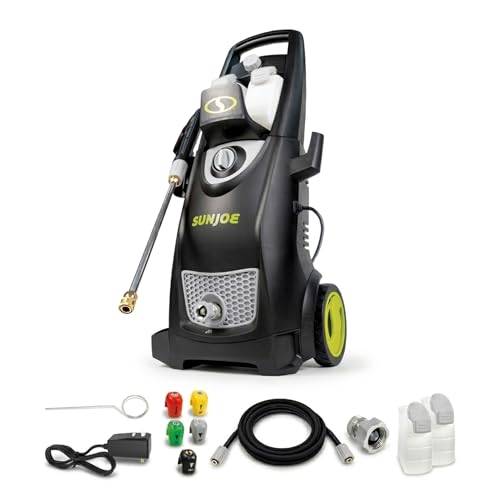
The value default: Sun Joe SPX3000
For the profile-one household, the mid-tier upright all-rounder is where value concentrates: versatile enough for every recurring job, approachable enough for every adult operator, and priced in the tier where cost per session collapses fastest. Best for mixed lists; not suited to shelf-only storage.
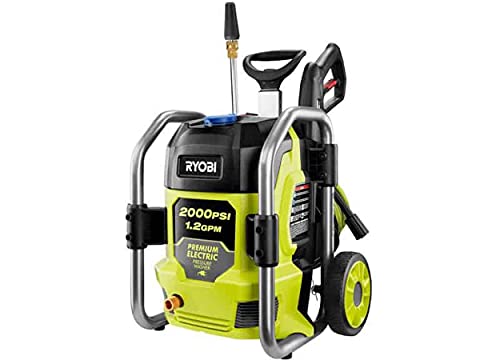
The small-home value play: Ryobi Electric Pressure Washer Range
For profile three, compact designs deliver the highest value per session in this entire analysis, because their sessions actually happen weekly. Best for flats and townhouses; not suited to vast paving.
The long-horizon value play: Kärcher K5
For profile two and other heavy calendars, the premium tier’s comfort and durability convert directly into years of willing service, which is value in its purest form. Best for frequent washers; not suited to annual rhythms.
run the eight steps in how to choose an electric pressure washer
The Decision Checklist
Answer honestly, yes or no. One: does your home have hard outdoor surfaces that visibly dirty every year? Two: do you clean a car, bikes, or outdoor furniture at least monthly in season? Three: do you have a tap and a ground fault circuit interrupter protected outlet, or a plan to arrange one? Four: do you have dry indoor storage the machine can claim permanently? Five: will someone perform a ten-minute setup and drain ritual without resentment? Six: will the whole household respect the safety lines, closed area, eye protection, no ladders, never aim at people or pets? Seven: is your cleaning rhythm at least monthly in season, rather than a single annual event? Five or more yes answers: buy, and buy the tier your frequency justifies. Three or four: buy small, or solve the missing infrastructure first. Two or fewer: skip with confidence, hire the professional, and revisit the checklist if the property or the rhythm changes.
The Arithmetic of a Single Spring
Abstractions aside, watch one spring do the arguing. In March the patio emerges from winter wearing algae that makes it treacherous and grey. In April the fences ask for preparation before their treatment weekend, and the car carries a season of road film that hand washing has been politely ignoring. In May the furniture comes out of storage grey, the bins announce themselves, and guests are announced for the bank holiday. A household with a washer handles that entire season inside its own calendar, in sessions that fit around everything else, and arrives at summer with a property that looks a full category better than the one that entered March. A household without one either books help for the items that justify it, tolerates the rest, or spends the same hours with brushes and diminishing enthusiasm. Multiply the spring by the years a household stays in a home and the worth-it question stops being about a machine at all; it becomes a question about which baseline appearance a family wants to live inside, and what recurring effort it prefers to pay for it.
The Resale, Repair, and Hand-Me-Down Ledger
Ownership value does not end when a household’s rhythm changes. A well-kept machine from a known range, drained every winter, nozzles complete, manual in the drawer, retains genuine usefulness to the next owner, whether that is a buyer, a sibling setting up a first home, or the same family at a new address. That afterlife belongs in the worth-it arithmetic, and it belongs almost exclusively to machines that were stored properly, which is the checklist’s quiet argument again. Repairability feeds the same ledger: brands with listed spares turn a worn lance or a lost tip into a small errand, while sealed bargains turn them into a replacement purchase, and over a decade that difference can be worth more than the original tier gap the buyer agonised over. Worth-it, calculated honestly, is a whole-life figure, and the households that calculate it that way tend to buy once, in the sensible middle, and then stop thinking about the purchase for years, which is the surest sign the calculation was right.
Three Households, Three Verdicts, Revisited a Year Later
The first household bought the mid-tier upright in a fit of spring optimism and then, to its own surprise, kept the rhythm: monthly sessions, a spring campaign, a drained machine on a claimed shelf. A year later its verdict is not really about the washer at all; it is about the patio that never became treacherous, the fence that took its stain like a magazine photograph, and the car that gets compliments. The second household bought the same class of machine and stored it wet in a shed behind a lawnmower it also neglects. Its verdict, delivered at the first spring trigger pull to a leaking, pulsing pump, is that the category is fragile, and its verdict is really a storage report wearing a product opinion. The third household read a checklist like this one, counted two yes answers, hired a professional for its one annual clean, and reports complete satisfaction with a purchase it never made. All three verdicts are correct, and together they are the whole thesis of this article: worth-it is a property of the match between a machine, a property, and a household’s habits, and it is knowable in advance to anyone willing to answer seven honest questions before the spring sales begin.
The Opportunity Cost of the Shelf
Every stored object taxes the home that stores it, and a fair worth-it analysis charges the washer its rent. The rent is one corner or one shelf, plus the mental rent of a ritual owed. Against that rent, charge the alternatives their own: the professional’s fee is money but also scheduling, the rental is a journey and a deposit and a machine whose history you cannot know, the hose-and-brush is hours of labour priced at whatever your weekends are worth to you. Households that think in total rent, rather than in purchase price, usually find the washer’s tenancy cheap for exactly the profiles this article has identified, and extortionate for the annual household, whose single session must carry a year of rent alone. There is no universal answer because there is no universal shelf, calendar, or set of knees; there is only the arithmetic of your own, which the checklist exists to perform.
What Changes the Answer Over Time
The checklist is a snapshot, and homes move. A new patio adds a recurring job and can flip a borderline no into a clear yes. A house move can flip it back, or solve the storage question that blocked it. Children arriving change both the job list, more bikes, more mess, and the safety conversation, in opposite directions at once. A car upgrade raises the vehicle stake; a deck installation raises the preparation stake; retirement changes the time ledger entirely, often in the washer’s favour, because hours become more available while the desire for a manageable home grows. The practical advice is to rerun the seven questions at any of these life events rather than treating the verdict as a lifetime sentence in either direction. The households that get the most from this category are not the ones that answered correctly once; they are the ones whose answer stayed current as their home changed around the machine, or ahead of it.
The Environmental Side of Worth It
For many households, worth-it includes a values ledger alongside the financial one, and the electric washer’s entries there are respectable when ownership is done properly. No fuel stored or burned at the point of use, no exhaust in the garden, water used in metered, triggered bursts rather than an open hose’s continuous flow, and detergent that can be chosen considerately and dosed modestly. Against those entries stand the manufacture and eventual disposal of an appliance, and the runoff that any cleaning produces. The balance is decided, as so much in this article is decided, by longevity: a machine kept for a decade through drainage and dry storage is a modest footprint amortised over hundreds of cleans, while a machine killed in its second winter and replaced is the same footprint spent twice. Buying once, in the right tier, and keeping the ritual is therefore not only the financial answer; it is the environmental one, and the rare alignment of the two is part of why this category, chosen well, satisfies people beyond its price.
The Gift, the Borrow, and the Trial Run
Three side doors into ownership deserve a verdict each. As a gift, a washer is unusually well judged for a new homeowner, because its jobs are visible, its ritual is teachable in one shared session, and its value arrives within weeks; gift it with the eye protection and the first session together, and the safety culture transfers with the machine. As a borrow, it is a fair trial and a social contract: the borrower honours the protected outlet, the closed area, and returns the machine drained and complete, and the lender learns whether lending this tool suits their temperament, which is also data. As a trial before purchase, a borrowed or rented session on your own surfaces is the single most informative step a hesitant household can take, because it converts every abstraction in this article, the ritual’s length, the lanes’ pace, the storage’s reality, into personal measurements. Many a confident yes, and a few relieved nos, have been produced by one borrowed Saturday, and the checklist’s answers sharpen noticeably afterwards.
Worth It, One Year On: What Owners Actually Report
Ask owners a year later what the machine was worth and their answers rarely mention cleaning power. They mention the path that is no longer slippery for an elderly parent, the deck that took its oil like a professional job, the car that gets washed at home now instead of queued for, the barbecue rescued by a patio cleaned that morning, and the strange civic pride of a front drive that looks awake. They mention, when pressed for negatives, the shelf it owns, the ten minutes it charges, and the winter they nearly forgot the drain. In other words, the lived value of the machine is a collection of small, recurring dignities rather than one dramatic transformation, and the lived costs are exactly the unglamorous ones this article priced at the start. That convergence between the prediction and the reports is the strongest evidence a worth-it analysis can offer: the framework is not selling the machine, it is describing, in advance, the experience of the households that buy it for the right reasons.
The Counterfactual Home
One more thought experiment sharpens the verdict. Imagine your home five years from now in the two futures. In the first, the machine was bought well and kept well: the paving has been reset every spring and never crossed into the stained, joint-eroded state that demands heroics; the deck has been oiled on schedule because its preparation was never a deterrent; the car has been washed gently at home throughout; and the machine, older now, still starts with the same composed note because its winters were dry. In the second, the machine was never bought: the same jobs were done by hand in the energetic years and quietly stopped being done in the busy ones, the deck’s treatment slipped a season and then two, and the property’s baseline settled a visible notch lower, not from neglect of character but from friction of method. Neither future is a morality tale; busy households make rational trades constantly. But the comparison isolates what the purchase actually buys, which is not cleanliness, available by many routes, but the removal of friction from cleanliness, repeated weekly, across years. Priced as friction removal, the washer is worth it for exactly the recurring households this article has profiled, and priced any other way the question was never really about the machine.
A Note to the Household That Is Still Split
Many purchases are decided by a household, not a person, and split households deserve a method rather than a tiebreaker argument. Let each person answer the seven checklist questions independently and compare the disagreements, because the disagreements are the information: one partner counts the calendar generously, the other counts the storage honestly, and the truth is the average with the storage answer weighted, since storage is a fact and calendars are hopes. If the split persists, run the trial: one borrowed session, jointly attended, with the ritual timed and the shelf measured in the same afternoon. Households that decide this way rarely relitigate the purchase afterwards, whichever way it falls, because the decision was made from shared measurements rather than won by the more enthusiastic debater on a spring morning. A washer bought by a united household gets used by both, stored by both, and defended by both, and that unity is itself a large, unpriced part of the machine’s eventual value.
The Small Print of This Verdict
Every verdict in this article carries conditions, and honesty requires collecting them in one place. The yes assumes the safety culture is adopted whole, because a machine that injures a household member is not worth any number of clean patios, and the rules, protected power, eye protection, closed shoes, closed area, no ladders, never a jet toward people or pets, are the price of the yes rather than a footnote to it. The yes assumes drainage and detergent are handled as an owner’s responsibility, because value extracted by exporting dirty water to a neighbour or a waterway is not value, it is borrowing. The yes assumes the tier matches the calendar, because both directions of mismatch manufacture regret from good equipment. And the no, where this article delivers one, assumes nothing permanent: properties change, rhythms change, infrastructure gets built, and a no recorded this year should be revisited with the same seven questions whenever the facts that produced it move. Verdicts with conditions are the only kind worth trusting, in buying guides as in everything else.
With the conditions stated, the article can end as it began, with the short answer, now earned rather than asserted. For the recurring household with hard surfaces, a vehicle or two, a protected outlet, a dry shelf, and a willing ritual, an electric pressure washer is worth it, clearly and repeatedly, in the currency of a home that stays visibly cared for without drama. For the annual, the delicate, and the infrastructure-poor household, it is not, yet, and the alternatives will serve with honour until the facts change. Everything between those poles is the checklist’s territory, and the checklist, answered honestly on an ordinary evening rather than a sales weekend, will not steer a household wrong.
The worth-it version of good decision-making is shorter and harder than the choosing version: count your sessions before you count your savings, measure your shelf before you admire a machine, and let the household that will live with the ritual cast the deciding vote, because value in this category is a habit before it is a number, and habits are exactly what the seven questions were designed to predict.
One Final Profile: The Reader Still Deciding at the Kitchen Table
If you have read this far, you are probably the household this article was written for: not impulse-buying, not dismissive, genuinely uncertain whether the machine earns its shelf. That uncertainty is itself a good sign, because the households that regret this purchase are almost never the ones that asked the question carefully. So ask it in its final, practical form tonight. Walk outside and look at your hardest-working surface in the last light. Count the jobs standing between you and a property that looks the way you want it to. Open the cupboard or pace the garage corner where a machine would live, and look at the outlet you would actually use. If those three inspections produce a list, a space, and a socket, the answer has already formed and the checklist merely notarises it. If they produce a shrug, a cluttered corner, and a cable puzzle, that is an answer too, and an honourable one. Either way, you will have decided the way the satisfied owners and the satisfied skippers both decided: from the evidence of your own home, which was the only witness this article ever intended to call.
What the Machine Teaches a Household
There is a final, unpriced return worth naming before the questions, because owners mention it with surprising consistency: the washer teaches a household to see its own surfaces. After one season of lanes and test patches, you know which corner of the patio holds water, which fence panel is ageing fastest, where the path turns treacherous first, and how the drive drains in a storm, knowledge that improves every other maintenance decision the home will ever need. That literacy has value beyond cleaning; it is the difference between a property that is reacted to and a property that is understood. It cannot be bought directly, hired reliably, or downloaded; it accrues to the person behind the wand, session by session, and it stays when the machine eventually retires. Count it, quietly, on the worth-it side of the ledger, alongside the bright paving and the rescued furniture, as one more reason the recurring households in this article tend to answer the title’s question the way they do.
The Verdict Restated for the Last Time
Everything in this article reduces, finally, to a respect for rhythm. Homes are not cleaned once; they are kept, in small repeated acts that either fit a household’s life or fight it. The electric pressure washer is the rare tool whose entire design, instant starting, quiet running, compact storage, gentle controllability, exists to fit the act of outdoor cleaning into ordinary life at ordinary frequency. Where that fit exists, the machine is worth it in the way a good door handle is worth it: unnoticed daily, indispensable in aggregate, and missed immediately in its absence. Where the fit does not exist, no specification can manufacture it, and the honest alternatives wait with their own virtues intact. Decide by fit, buy by checklist, keep the ritual, and the question that brought you to this article will not need asking again for many years, because your own bright, safe, well-kept surfaces will keep answering it every time you come home.
And if the verdict, once reached, is yes, let the purchase be the calm end of the process rather than a new beginning of doubt: the tier chosen by the calendar, the model chosen by the property, the outlet arranged before the box is opened, the shelf claimed before the machine arrives, and the first session planned as a lesson rather than a performance. Households that buy this way speak of the machine afterwards the way they speak of a good roof or a reliable car, as a settled matter that quietly improves everything beneath it, which is the final and most convincing form the worth-it answer ever takes.
Settled matters are underrated in home ownership, where so much is provisional, ageing, or awaiting a tradesperson’s diary. A tool that settles, that takes a recurring category of worry off the household’s list and keeps it off for years, returns something larger than clean surfaces: it returns attention, the scarcest resource any home runs on, to the people and projects that actually deserve it.
Attention returned is, in the end, the deepest answer this article can give to its own title, deeper than the paving, the preparation, or the arithmetic of sessions, because every household that answered yes and meant it was, whether it knew the words or not, buying back a small piece of its own mind from the recurring problem of outdoor dirt, for good. That is a large promise for a modest machine on a garage shelf, and it is kept, quietly, every season it serves. Few purchases of any size can say as much, and fewer still can prove it on the driveway outside, in clean even lanes, whenever anyone cares to look.
The Break-Even Question in Real Life: When an Electric Pressure Washer Pays Its Way
This section exists to ask the break-even question honestly, counting not just the purchase but the space, upkeep and attention the item will claim for as long as it is owned. It adds a layer that a feature list cannot give you, grounded in the home cleaning context this electric pressure washer will actually live in. Where this guide names examples such as Sun Joe SPX3000, Ryobi Electric Pressure Washer, Karcher K5, use them as test cases for the checks below rather than as shortcuts past them.
Finally, plan the first fortnight. Decide where the electric pressure washer will live from day one, what it replaces, what accessory or companion it needs straight away and what small job you will use to learn its habits while returning it is still simple. Keep the packaging until that learning period is over, note anything that surprises you, and deal with a mismatch early rather than adapting yourself around a poor fit for years. The households that end up happiest with a electric pressure washer are rarely the ones that researched longest; they are the ones that checked fit honestly, bought for the ordinary week, and paid attention during the first days instead of assuming the decision ended at checkout.
One more angle is worth your time: the second-order costs. A electric pressure washer changes what happens around it. It can demand a different cleaning product, a new storage habit, a moved piece of furniture, a rearranged cupboard or a standing arrangement with the people you live with. List those knock-on effects before you buy and decide whether you accept them as part of the deal. Sometimes the answer is an easy yes, and the electric pressure washer earns its place by improving the whole routine around it. Sometimes the honest answer is that the supporting changes are the real project, and the purchase should wait until you are ready for them. Either answer is useful; the only bad outcome is discovering the knock-on effects by accident, one irritation at a time, after the decision can no longer be revisited.
It also helps to separate the problems a electric pressure washer can solve from the problems it merely moves. If the underlying difficulty is space, the answer may be a smaller format or a different location rather than a more elaborate model. If the difficulty is time, look for the option that removes steps rather than the one that performs each step slightly better. If the difficulty is that several people want different things, a compromise design that everyone rates as good enough will usually outlast a specialist design that one person loves and everyone else avoids. Naming the real problem in one sentence, out loud, before you order, is a surprisingly powerful filter, and many shoppers find that the sentence itself points at a different electric pressure washer than the one they started out researching.
Start with the unglamorous measurements. For a electric pressure washer, the numbers that decide satisfaction are rarely the headline ones in a listing; they are cupboard space between uses, cord or hose reach, noise in a real room and how heavy the job feels on the second flight of stairs. Write the real dimensions of your space down, including the awkward constraints you normally work around without thinking, and hold every contender up against that sheet rather than against a showroom photograph. Then walk the route the electric pressure washer will take on delivery day and during normal use. A choice that fits on paper but fights you every time it is moved, opened, cleaned or stored will lose its shine quickly, however strong its other qualities look in a comparison table.
Next, rehearse the week, not the ideal day. Picture the electric pressure washer inside a rushed weekday tidy, a deep weekend clean and the unexpected mess that arrives five minutes before guests. Most disappointment comes from buying for the best-case scenario: the tidy version of the household, the motivated version of yourself, the weather or the guest list you hope for rather than the one you usually get. If the electric pressure washer only makes sense when everything goes to plan, it is the wrong size, the wrong format or the wrong purchase for now. If it still looks useful on the tired, rushed, slightly chaotic version of the day, it has passed the most honest test there is, and the remaining questions are about detail rather than direction.
Pay close attention to the recurring friction points, because they compound. With a electric pressure washer, owners tend to run into filters forgotten until performance drops, attachments that live in a different room from the machine, and parts that are awkward to rinse and dry. None of these is dramatic on its own, and that is exactly why they get underestimated at buying time. Ask how the design you are considering handles each one: can the wearing part be replaced, can the awkward part be reached without tools, does the job take two minutes or twenty. A electric pressure washer that makes its own upkeep easy gets maintained; one that makes upkeep a project gets neglected, and neglected products perform badly in ways that then get blamed on the original purchase.
Use the listings as a checklist rather than as entertainment. For each electric pressure washer you shortlist, note the exact variant, the included parts, what is sold separately, and which photographs show the item in a setting like yours rather than in a studio. If a model named elsewhere in this guide catches your eye, treat it as a worked example for this process: run it through the same measurements, the same weekly rehearsal and the same friction list before letting familiarity turn into preference. Consistency is the whole trick. Shoppers go wrong not by choosing the objectively weaker electric pressure washer, but by judging one contender on features, the next on looks and the third on a single enthusiastic anecdote.
Think about who else has a vote. A electric pressure washer is usually shared, moved, cleaned or complained about by more than one person, and the second user’s priorities are often the ones that surface after the return window closes. Check height, weight, reach, noise, heat, sharp edges or sheer visual presence, whichever apply, against the smallest, oldest or least enthusiastic person who will live with it. If you are buying for a household that includes children, pets, elderly relatives or lodgers, run the clumsy scenario too: the spill, the knock, the curious tug, the door left open. A robust electric pressure washer choice survives other people; a fragile one only survives its buyer.
Frequently Asked Questions
How many times a year do I need to use one for it to be worth it?
As a working rule, monthly use in season is where ownership clearly beats the alternatives, because the machine’s fixed costs, storage, ritual, the purchase itself, are divided by enough sessions that each one becomes trivial, while the home’s appearance is held at a permanently higher baseline. A handful of uses a year sits on the border and should be decided by the checklist’s other answers, storage and infrastructure especially. Once a year belongs to rentals and professionals, and no honest arithmetic in this article will pretend otherwise.
Is it worth it for a small flat or rental?
It can be the best value in the whole analysis, provided three conditions hold: a compact machine that stores on the tenant’s own shelf, outdoor space or a permitted area to wash in, and water use that respects the tenancy and the neighbours below the balcony. Renters gain an extra return at the end of a tenancy, handing back patios and paths in visibly better condition. Where any condition fails, the same money serves better as an occasional professional clean, and the checklist will tell you so without sentimentality.
Will it save me money compared with hiring help?
For recurring work, yes, in the plain sense that a machine bought once replaces fees that recur every season, and it covers the small jobs no one would ever hire out at all. The saving is not automatic, though: it depends on the machine surviving, which depends on draining and dry storage, and on it being used, which depends on the ritual feeling light. Households that keep both habits describe the purchase as one of the clearer bargains in home maintenance; households that keep neither have bought an expensive shelf ornament, which is why this article counts habits as costs from the start.
What if I only really care about my car?
Then judge the purchase as car equipment. A washer with a good foam option and a kind wide fan becomes the centre of a contact-light washing method that paintwork prefers, and for an owner who washes weekly or fortnightly, that alone can justify a compact or mid-tier machine even if the patio never gets a lane. Add the occasional bike, bin, and furniture session that every car household discovers within a month, and the car-only case usually turns into the general case. If the car is washed twice a year, though, the honest answer returns: skip, and let a valeting service keep the ritual.
Is a cheap one worth it, or should I save for mid tier?
Match the tier to the calendar rather than to hope. For light, occasional lists, an honest entry-tier or compact machine is worth it and a premium one is not, because unused refinement has no value. For monthly or heavier rhythms, the mid tier is where worth-it concentrates, since hoses, pumps, and fittings that stop fighting you are what keep the rhythm alive for years. The only genuinely poor value in the category is the mismatch: flimsy equipment on a heavy calendar, or flagship equipment on an empty one.
What is the biggest reason owners end up saying it was not worth it?
Storage, in two acts. Act one is the machine exiled to a freezing shed because no indoor home was planned, where a wet pump meets winter and loses. Act two is the machine buried behind other clutter because its corner was never really claimed, so every session begins with archaeology and soon stops beginning at all. Both acts are prevented by the checklist’s fourth question, which is why a question about a shelf carries as much weight in this article as any question about cleaning power.
Related Guides
start the purchase properly with the electric pressure washer buying guide