Disclosure: As an Amazon Associate, dailyhomedecorating.com earns from qualifying purchases. Links on this page are affiliate links; they cost you nothing extra. Prices and availability change often, so check the current Amazon listing before you buy.
Reading electric pressure washer pros and cons is the fastest way to decide whether this tool belongs in your home at all, because the honest answer is genuinely two-sided. On one side sits a quiet, push-button machine that makes patios look new, strips algae from fences, and turns car washing into a small pleasure. On the other sits a tool that can damage wood, paint, and skin if it is used carelessly, that ties you to a tap and a cord, and that will quietly die in a freezing shed if you store it wet. This article gives both sides their full weight, explains what the trade-offs mean for different households, and shows how smart buying and simple care shrink the cons list considerably.
Quick Verdict and Key Takeaways
The short verdict: an electric pressure washer suits most houses, flats with outdoor space, and car-owning households, because its advantages, convenience, control, low running fuss, align with the jobs homes actually generate. It suits impatient restorers of vast stained concrete and owners of delicate historic surfaces much less. If your job list is patios, paths, fences, decking, siding, vehicles, bikes, bins, and furniture, the pros will almost certainly win. If your list is a single enormous annual restoration, read the cons carefully before you commit.
- Biggest pro: push-button, low-fuss cleaning power that is easy to control on home surfaces.
- Biggest con: the same concentrated stream that cleans can injure people and damage surfaces when technique slips.
- Most pros grow with accessories and detergent; most cons shrink with technique, storage discipline, and the right nozzle.
- Safety is non-negotiable: ground fault circuit interrupter protection, eye protection, closed shoes, no ladders, and never aim the wand at people or pets.
In this guide
The Pros
Pro: Push-button starting and almost no running fuss
An electric motor starts the instant you switch it on and stops the moment you release the trigger on many designs, with no fuel to buy, store, mix, or spill, no oil changes, no spark plugs, no pull cord, and no exhaust fumes drifting through the garage. For the way homeowners actually work, in twenty-minute bursts between other jobs, this matters enormously. A tool that is ready in the time it takes to connect a hose gets used; a tool that needs fuelling and coaxing gets postponed. Owners consistently find that the electric machine’s readiness is what turns outdoor cleaning from an annual event into a light seasonal rhythm, and that rhythm is where the real value lives, because surfaces cleaned little and often never reach the state that needs heroic effort.
Pro: Controllable force that suits home surfaces
Home surfaces are mostly delicate by industrial standards: car paint, decking boards, fence panels, painted siding, outdoor furniture, screens. Electric washers live in the force range those surfaces can accept, and their delivery is easy to modulate with nozzle choice, distance, and angle. That controllability is a genuine safety feature for your property. You are far less likely to etch a driveway, strip paint unintentionally, or carve a fence into fuzz with a machine whose whole design brief is domestic work. The ceiling of an electric machine protects beginners from the worst beginner mistakes, while still giving experienced users enough output for paving, masonry, and preparation work before painting or sealing.
Pro: Quiet enough to be a good neighbour
Compared with engine-driven machines, an electric washer is dramatically quieter, and the difference is social as much as personal. You can hold a conversation near it, hear a child calling from the garden, and work on a weekend morning without declaring war on the street. There is still motor and pump noise, and hearing protection remains wise for long sessions, but the absence of a small petrol engine screaming at full throttle changes the character of the job completely. For dense housing, shared courtyards, and anyone who cleans in short evening sessions after work, this pro alone can be the deciding one.
Pro: Compact storage and tidy ownership
Most electric models are upright trolleys or small cubes that occupy a garage corner or a utility shelf, with the wand, hose, and nozzles stored on the machine itself. There is no fuel can to accommodate, no venting requirement, and no reason the washer cannot live indoors in a cupboard, which also protects it from frost. For flats and townhouses, a compact model on a shelf is the difference between owning a washer and not owning one at all. Tidy ownership sounds like a small thing until you have tripped over a badly stored machine for the third winter in a row; the electric format makes the tidy outcome the easy outcome.
Pro: Detergent does the work, so water can stay gentle
Electric washers pair naturally with detergent systems, onboard tanks, suction feeds, and foam attachments, and that pairing transforms their effectiveness. Traffic film, algae, barbecue grease, and mildew are chemistry problems wearing a dirt disguise; once the right solution has dwelt on them, a gentle rinse finishes the job. This is why experienced electric owners clean surfaces that headline numbers say they should not be able to: they are not out-pressuring the dirt, they are out-thinking it. The pro compounds over time, because detergent-led cleaning is kinder to surfaces, which means your decking, paintwork, and paving age more slowly than they would under repeated brute force.
Pro: Lower running burden and predictable costs
Without inventing figures, the shape of the running costs is simple: electricity for the minutes you actually wash, water you would mostly have used anyway, detergent, and occasional seals, nozzles, or a hose over the machine’s life. There is no fuel degrading in a can, no engine servicing ritual, and no carburettor to gum up over winter, which is the quiet killer of small petrol tools. Predictability matters to households: the washer asks for a protected outlet, a sound hose, and a dry shelf, and in return it asks for almost nothing else. Owners who keep machines for many years usually point to this uneventful ownership, rather than any single cleaning triumph, as the reason they would buy electric again.
Pro: Instant suitability for renters and smaller homes
Renters and small-home households often cannot store fuel, cannot modify electrics beyond plugging in, and cannot justify a large machine. An electric washer fits those constraints exactly: plug into a protected outlet, connect to the tap, clean, drain, and shelve it. Landlords generally care about the state of patios and paths at the end of a tenancy, and a tenant with an electric washer can hand back outdoor spaces in visibly better condition with a single weekend of work. The same logic serves adult children helping parents, community groups maintaining shared spaces, and anyone whose cleaning territory is real but modest.
The Cons
Con: A hard ceiling on the biggest jobs
The limitation is real and should not be spun. Very large areas of stained concrete, heavily soiled masonry, paint stripping at scale, and commercial-style work will expose the working speed of home electric machines. You can clean a big driveway; you will simply spend longer doing it, in more passes, than a heavy engine-driven machine would take. Households whose main job is genuinely large should weigh rental or professional help for the restoration and perhaps an electric washer for maintenance afterwards. Pretending the ceiling is not there leads to the classic disappointment: a good machine blamed for being asked to do a different category of work.
Con: The cord and the hose define your world
An electric washer works inside a radius set by its cord, its hose, and your tap and outlet positions. Awkward houses, long gardens, and jobs around corners can mean repositioning the unit several times, managing two lines that both dislike kinks and crossings, and planning the work so you are not dragging a live cord through puddles of your own making. None of this is dangerous when handled properly, connections dry, protection in place, leads in good condition, but it is undeniably less free than a self-contained engine machine. Measure your property honestly before buying, and treat a too-short working radius as a genuine con for your layout, not a detail to discover on the first Saturday.
Con: It can seriously hurt people if treated casually
This is the con that outranks all others. A pressurised jet can cause serious injury to skin and eyes, can drive dirt and chemicals into a wound, and is absolutely not a toy, a shower, or a way to rinse mud off boots while wearing them. Never point the wand at people or pets, at any distance, ever. Never use the machine from a ladder, because trigger recoil can unbalance you. Wear eye protection and closed, gripping shoes; keep children and animals out of the work area; and treat the trigger with the respect you would give any powered tool. The machine is safe in disciplined hands and unforgiving in careless ones, and no convenience pro on this page outweighs that fact.
Con: It can damage the very surfaces you are cleaning
The same concentration that lifts algae can etch concrete, raise wood grain into fuzz, strip soft paint, force water behind siding, and mark vehicle clear coat if the nozzle is narrow, the distance is short, or the wand lingers. Damage usually happens in the first minutes on an unfamiliar surface, when enthusiasm outruns testing. The mitigation is technique: wide fan first, hidden test patch, generous distance, constant movement, and detergent doing the heavy lifting. But the con is honest: this is a tool with a learning curve, and the tuition for ignoring the curve is paid in surfaces. Owners who are unwilling to learn the gentle end of the machine’s range should choose brushes and a hose instead.
Con: Frost and storage neglect can kill it quietly
Water left inside a pump, hose, or lance expands when it freezes, and the damage is done silently in a shed in January, discovered in April when the machine leaks, pulses, or refuses to build pressure. Electric washers are small enough to store indoors, which removes the risk, but only for owners who actually drain and shelve them. Add the lesser storage sins: hoses coiled tightly into permanent kinks, nozzles lost in a drawer of unrelated hardware, detergent left to gum up a tank. None of these require money to prevent, only a five-minute shutdown ritual, yet they account for a large share of early machine deaths. If your household’s honest pattern is to abandon tools where they were last used, count this con at full weight.
Con: Electricity and water demand respect and infrastructure
The machine needs a suitable outlet, ideally outdoors, protected by a ground fault circuit interrupter, with connections kept dry and leads undamaged. Homes without protected outdoor power face a real preliminary question, and solving it may mean an electrician’s visit before the washer’s first use. You must never spray into outlets, junction boxes, or light fittings, and you must route the cord so it does not lie in standing water or cross the jet’s path. For most homes this is a one-time arrangement and then a habit; for some properties it is a genuine obstacle. Either way, it is not optional garnish: the electrical discipline is part of the product.
Con: Cheap models can feel flimsy and pulse
At the very bottom of the market, thin hoses kink, lances flex, fittings weep, and pumps deliver a pulsing, uneven stream that makes even cleaning hard work. The con is not electric power itself but the temptation to buy the category at its floor and judge the whole idea by the result. A washer that fights you will be used reluctantly, stored badly, and replaced early, which is the most expensive outcome of all. The mid tier exists precisely because it removes most of these irritations; households that will wash monthly or more should read flimsiness as a false saving and step up one level of build quality.
What the Trade-Offs Mean for You: Electric Pressure Washer Pros and Cons in Practice
For the car-focused household, the balance is strongly positive: control, detergent, and quiet running are exactly your needs, and the cons are mostly technique, which you will enjoy learning. For the patio-and-driveway household, the balance stays positive for ordinary areas, with the working-speed con appearing only when the paving is vast or the staining is old and oily; a surface cleaner accessory moves the balance further in your favour. For the decking household, the pros and cons meet head-on: the machine is the best preparation tool you can own, and also the tool most capable of fuzzing your boards, so your verdict depends on your patience. For the small-space household, portability pros dominate and the ceiling con barely applies, because your jobs were never the huge ones. For the rural or large-property household, weigh the radius and speed cons at full strength; a hybrid plan, professional restoration plus electric maintenance, often beats either extreme.
compare models in the best electric pressure washers roundup
the full electric pressure washer buying guide
How Electric Compares With the Alternatives
| Option | Strengths | Trade-offs | Suits |
|---|---|---|---|
| Electric pressure washer | Quiet, push-button, controllable, compact | Cord and hose radius; ceiling on huge jobs | Most homes and regular maintenance |
| Petrol pressure washer | Self-contained, fast on very large areas | Noise, fumes, fuel storage, engine upkeep | Large properties and heavy restoration |
| Hose, brush, and detergent | Gentlest possible, almost no storage or risk | Slow, physical, limited on algae and staining | Delicate surfaces and tiny areas |
| Professional cleaning service | No ownership, experienced hands, big equipment | Recurring cost, scheduling, less spontaneity | One-off restorations and time-poor owners |
The table hides one nuance worth stating: these options combine well. Many satisfied owners use a professional once for a neglected driveway, maintain it electrically for years, and still keep a brush and hose for the delicate jobs. Choosing electric does not exile the alternatives; it gives you a default for the middle of the job spectrum, which is where most home cleaning lives.
How to Buy Smart
Buying smart means choosing the configuration that neutralises the cons you care about. If storage is your worry, look at compact designs first. If working radius is your worry, compare hose and cord as a system and plan your tap-to-corner map before ordering. If surface damage is your worry, prioritise the nozzle set and detergent system over headline output. If longevity is your worry, step into the tier where pumps, hoses, and fittings stop feeling like apologies, and confirm that spare nozzles and seals are easy to obtain. Three model families illustrate the spread, described here prose-first so you can shortlist by fit and check the current listing for exact configuration.

Sun Joe SPX3000 — the balanced all-rounder
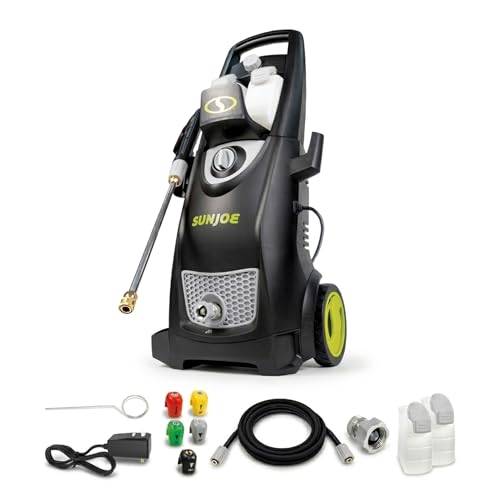
An upright mid-tier machine with quick-connect tips and a dual detergent tank arrangement. Its pro profile is approachability and versatility; its con profile is a full-size footprint. Best for mixed home job lists; not suited to the smallest shelves.
Kärcher K5 — the premium, composed option
A premium-tier machine whose strengths are handling and durability thinking. Its con is simply its tier: occasional users will not extract the value. Best for frequent washers; not suited to twice-a-year minimalists.
Westinghouse ePX Series — the space-saving answer
A compact four-wheel design that follows you as you work, directly answering the storage and stability cons. Its trade-off is a low profile that asks for tidier hose awareness. Best for crowded garages and mobile car washing; not suited to buyers who want a tall trolley for long straight passes.
step-by-step help in how to choose an electric pressure washer
Setup and Care That Reduce the Cons
Most cons shrink under a short list of habits. Set up on level ground, run water through the machine before power so the pump primes, connect through a ground fault circuit interrupter protected outlet, and purge air with the trigger until the stream is steady. Start every unfamiliar surface with a wide fan at a distance on a hidden patch. Keep the wand moving, work in lanes, and let detergent dwell instead of creeping closer. Never work from a ladder, never aim at people or pets, keep the jet away from electrical fittings, and wear eye protection and closed shoes every session, not just the long ones.
Afterwards, flush detergent, drain the pump, hose, and lance completely, coil without kinks, return nozzles to their places, and store the machine dry indoors where frost cannot reach trapped water. Check the inlet filter and the cord’s condition occasionally. These rituals take minutes and they directly cancel the frost con, the flimsiness experience, most surface damage, and a good part of the electrical worry, because a household with a setup and shutdown routine is a household that notices problems while they are still small.
learn the full routine in how to use an electric pressure washer
Bottom Line
Weigh it plainly. The pros are convenience, control, quiet, compactness, detergent-led effectiveness, and calm ownership costs. The cons are a real ceiling on huge work, a tethered working radius, genuine injury and damage potential in careless hands, frost vulnerability when stored wet, and an electrical discipline that must be arranged and kept. For the majority of homes, the pros describe weekly reality and the cons describe avoidable mistakes, which is why electric has become the default home format. For very large or very delicate properties, the cons describe weekly reality instead, and the alternatives deserve the win. Your job list, written honestly, already knows the answer; this article just gave it the vocabulary.
Pros and Cons Surface by Surface
On the driveway and patio
The pro here is transformation speed relative to any hand method. A season of algae, leaf tannin, and tyre tracking that would take a day of scrubbing becomes a morning of methodical lanes, and the result is even in a way hand work rarely achieves, because the fan pattern does not tire the way arms do. The con is runoff and jointing: you will move a lot of dirty water, and on block paving you may lift loose jointing material along with the dirt, which then needs brushing back. Neither is a reason to avoid the job; both are reasons to plan drainage and keep a bag of jointing sand in the shed if your paving uses it. The balance on hard landscaping is the most favourable of any surface, which is why the driveway clean is the demonstration every new owner performs for the neighbours.
On wood
On decking and fences the pro and the con are the same property viewed from two sides: the jet reaches into grain and texture that brushes skim over, lifting algae and grey weathering beautifully, and it can also raise fibres, scar softwood, and strip a tired finish unevenly if your distance discipline slips. The deciding factor is temperament. A patient owner who tests, keeps the fan wide, and works along the grain gets preparation quality that transforms staining results. An impatient owner gets fuzz and regret. If you know your household contains only impatient cleaners, score wood as a con and plan to clean timber by softer means.
On vehicles
For cars and bicycles the pro is rinse quality: a wide fan lifts foam and grit off panels without contact, which is exactly what paintwork wants, since most swirl damage comes from dragging dirt across a surface with a sponge. The cons are precision demands: badges, seals, stone chips, number plate fixings, and bicycle bearings all require distance and restraint, and the engine bay is a place the jet should simply not go. Owners who enjoy car care find the electric washer becomes the centre of a pleasant ritual; owners who want a two-minute splash should note that setup and pack-away are part of every session, however short the wash itself.
On the house itself
Siding, render, and brickwork collect shade algae and splash-back grime that make a house look tired beyond its years, and the pro is reach and evenness: a fan at a sweeping angle restores whole elevations in an afternoon. The cons are water management and fittings: water must never be driven behind boards, into vents, or toward electrical boxes and outdoor lights, and windows need their seals respected. The balance is positive for confident users and genuinely negative for anyone tempted to climb a ladder with the wand, which is forbidden outright; high work belongs to professionals with proper access equipment, or to long-reach methods used from the ground within the manual’s guidance.
The First Year of Ownership, Honestly Told
Month one is honeymoon and hazard together: everything gets washed, including one thing that should not have been, which is how most owners learn the test-patch rule. By month three, the household has a rhythm: a setup spot by the tap, a coil habit for the hose, a detergent for the car and another for algae, and a growing suspicion that the machine has quietly become the most borrowed tool on the street. Summer brings the social jobs, patios before barbecues, furniture rescued from storage grime, bins dealt with at arm’s length and with relief.
Autumn is where the ownership con either dies or takes root. The owner who flushes, drains, and shelves the machine indoors spends ten minutes and forgets about it until spring. The owner who wheels it into the shed still full of water has made a decision without noticing. Winter tests nothing but that choice. Spring then delivers the verdict in the first pull of the trigger: a steady, willing stream for the disciplined, or leaks, pulsing, and a repair conversation for the other household. This is why so many long-term owners describe the machine as reliable while a minority call the category fragile: they are often describing two different storage habits more than two different products.
The other first-year lesson is accessory gravity. Almost nobody needs the full catalogue, and almost everybody ends up with one or two additions that exactly match their property: a surface cleaner where the driveway is wide, a foam cannon where the car is loved, a brush where the decking is shaded. Bought in that order, in response to real friction, the accessories feel like bargains. Bought all at once on day one, half of them become garage archaeology. The pros list grows best when it grows slowly.
Myths That Distort the Balance
Myth one: more force is always better. In home cleaning, excess force mostly buys risk; the surfaces are finite, and dirt responds to chemistry and coverage. Myth two: the jet is a harmless garden toy because it is only water. The injury record of pressurised water says otherwise, which is why this article repeats its safety rules without apology. Myth three: electric means weak. Electric means domestic-scaled, which is a different claim; within its category, a good electric machine cleans everything a house ordinarily grows, films, and spills. Myth four: maintenance-free means storage-proof. No machine that moves water is immune to frost, and the phrase refers to the absence of engine servicing, not the absence of care. Myth five: one nozzle does everything. The nozzle set is the gearbox of the machine; using only the tightest jet everywhere is like driving everywhere in first gear, loudly and with consequences.
Household Profiles: Where the Balance Lands
The young family with a patio and two cars
Pros dominate almost completely. The machine cleans the patio where children play, rinses bikes and scooters, washes cars on the drive, and deals with the bins, all in short sessions squeezed between other commitments, which is exactly the electric format’s home ground. The cons to manage are supervision and storage: the wand is never a toy, the work area is adults-only while the trigger is live, and the machine lives drained on its shelf. With those two disciplines in place, this household will use the washer more than almost any other tool it owns outdoors, and the cost per use falls to nearly nothing within the first year of weekends.
The retired gardener with decking and a long fence
The balance is favourable with a technique caveat. The washer prepares decking and fencing for treatment better than any hand method, keeps paths free of slippery algae, which is a genuine safety benefit in its own right, and rinses tools, pots, and furniture at season’s end. The caveats are physical and procedural: long sessions with a squeezed trigger tire hands, so a comfortable lance and regular breaks matter; wood demands the patient technique described earlier; and high fence panels must be cleaned from the ground, never from steps or a ladder. Chosen in a manageable size and used in shorter, planned sessions, the machine earns its shelf easily here.
The flat dweller with a balcony
The smallest version of the story, and a happy one if the property cooperates. A compact machine cleans balcony tiles, railings, outdoor furniture, and the car in a shared parking area where rules allow it. The cons are water management, because balcony runoff becomes a neighbour-relations issue, and storage, which the compact format directly answers. The pros are independence and satisfaction: no waiting for building maintenance cycles to deal with green tiles. This household should choose the smallest honest machine, keep sessions short, protect the doorway threshold and any wall fittings, and check any tenancy rules about water use and shared spaces before the first session rather than after a complaint.
The large rural property
Here the cons finally take the lead for primary cleaning: distances are long, areas are big, outbuildings multiply the job list, and a tethered machine spends its life being repositioned. Many such owners still keep an electric washer, but as the secondary tool: the one by the house for the patio, the vehicles, and the paths near the door, while heavy yard work belongs to self-contained equipment or contractors. That division of labour is not a failure of the electric format; it is the format being used inside its design brief, which is precisely what a pros and cons analysis is supposed to produce.
The Environmental Ledger
On the credit side, an electric washer has no exhaust at the point of use, no fuel storage or spillage risk, and it typically uses less water than an open hose for the same cleaning because the trigger meters delivery and the jet’s efficiency shortens the job. Detergent use can be modest and targeted, especially with foam application that clings instead of running straight to the drain. On the debit side, the machine is a plastic-and-metal appliance whose manufacture and eventual disposal carry the usual footprint, its runoff still carries whatever it removed, including detergents, into your drainage, and electricity has its own upstream sources. The honest summary is that electric pressure washing is a comparatively considerate way to clean, provided the owner treats runoff and detergent choice as part of the job, buys a machine built to last rather than a disposable one, and maintains it so its service life stretches. Longevity is the greenest specification on the box, even though it is never printed there.
Repairability, Spares, and the Second Owner Test
A fair pros and cons account should look past the first owner. Electric washers score well here when they come from brands that sell spare lances, hoses, nozzles, and seal kits, because the parts that wear are mostly the parts that touch water, grit, and sunlight. A machine whose consumables are available stays in service across changes of owner, which is why certain models circulate happily second-hand while no-name equivalents vanish after one lost nozzle renders them awkward. The con mirror-image is the sealed, spares-free bargain machine: fine while perfect, landfill when a small part fails. If you care about the cons list at the level of the object’s whole life, ask the spares question before purchase, keep the manual, and store the accessories with the machine so the second owner, even if that is just future you, inherits a complete tool.
Safety Around Children, Pets, and Helpers
Because this con decides real outcomes, it gets its own section rather than a paragraph. The rules are simple enough for a child to recite and strict enough that adults must model them without exception. The wand is never pointed at a person or an animal, not in play, not to rinse, not at a distance, not with the machine off and the line still pressurised. The work area is a closed set while washing happens: children watch from behind a door or gate, dogs are indoors, and helpers communicate by agreed signals rather than walking into the jet’s line to talk. Nobody holds a surface steady with a hand or foot near where the jet is working. Footwear is closed and grippy because the ground you are making clean is also wet. Eye protection is worn by the operator every time, because grit leaves surfaces at speed and does not ask permission. When the session ends, the machine is depressurised, drained at pack-away, and stored where small hands cannot experiment with it. Households that treat these as the culture of the tool, rather than fine print, report the same thing year after year: the dangerous con simply never materialises, while all the pros do.
How the Balance Shifts With Accessories
It is worth closing the analysis by noting that the pros and cons are not fixed at purchase; accessories move them. A surface cleaner directly attacks the biggest performance con, working speed on flat areas, while also reducing splash-back and striping, which softens the mess con at the same time. A foam cannon strengthens the detergent pro, letting chemistry dwell on vehicles so the jet can stay gentle, which in turn softens the damage con. An extension of good hose, chosen within the maker’s guidance, softens the radius con for awkward plots. Brushes soften the wood con by substituting agitation for force. Even storage accessories, a simple wall hook, a labelled box for nozzles, attack the neglect con. The practical lesson is to buy the base machine for its pump, handling, and nozzle set, then let your property tell you which con to buy your way out of first. That sequence keeps spending honest and turns this article from a verdict you read once into a checklist you can revisit each season.
There is one accessory category to treat with suspicion: anything that promises to multiply the machine’s force beyond its design. The pump and seals were built for a range, and forcing beyond it trades the longevity pro for a brief, damaging thrill. The balanced machine, used inside its brief, is the whole point of choosing electric in the first place.
One final, often missed consideration is resale and hand-me-down value within a family. A well-kept electric washer from a known brand, with its nozzles complete and its manual in the drawer, is a genuinely useful gift to a first-home buyer in the family, and it tends to be accepted with more enthusiasm than most second-hand tools because its jobs are so visible. That quiet afterlife is a pro that never appears on packaging: the machine keeps cleaning houses long after its first owner’s job list has changed. It is also one more argument for the shutdown ritual, because the difference between a hand-me-down and a skip trip is, almost every time, whether the pump was drained before the winters.
Scoring the whole page in one line: the pros are structural, built into what an electric machine is, while most of the cons are behavioural, built into how it might be used or stored. Structural advantages cannot be added later to a tool that lacks them, but behavioural disadvantages can be trained away in a single careful weekend. That asymmetry is the deepest reason the balance tips positive for most households, and it is also the fair warning for the minority: if the behaviours will not change, the cons will not either, and the honest verdict for that household flips with them.
Keep that asymmetry in mind as you read the companion pieces in this cluster: the buying guide shows you where the structural pros are strongest, the choosing guide turns them into a practical checklist for your own plot and job list, and the worth-it analysis asks whether the balance survives contact with your actual calendar and storage habits over the coming seasons.
Where the Trade-Offs Show Up in Daily Use: Electric Pressure Washer in Practice
This section exists to move past the tidy two-column summary and watch where each advantage and disadvantage actually appears during an ordinary week. It adds a layer that a feature list cannot give you, grounded in the home cleaning context this electric pressure washer will actually live in. Where this guide names examples such as Sun Joe SPX3000, Karcher K5, Westinghouse ePX Series, use them as test cases for the checks below rather than as shortcuts past them.
Finally, plan the first fortnight. Decide where the electric pressure washer will live from day one, what it replaces, what accessory or companion it needs straight away and what small job you will use to learn its habits while returning it is still simple. Keep the packaging until that learning period is over, note anything that surprises you, and deal with a mismatch early rather than adapting yourself around a poor fit for years. The households that end up happiest with a electric pressure washer are rarely the ones that researched longest; they are the ones that checked fit honestly, bought for the ordinary week, and paid attention during the first days instead of assuming the decision ended at checkout.
One more angle is worth your time: the second-order costs. A electric pressure washer changes what happens around it. It can demand a different cleaning product, a new storage habit, a moved piece of furniture, a rearranged cupboard or a standing arrangement with the people you live with. List those knock-on effects before you buy and decide whether you accept them as part of the deal. Sometimes the answer is an easy yes, and the electric pressure washer earns its place by improving the whole routine around it. Sometimes the honest answer is that the supporting changes are the real project, and the purchase should wait until you are ready for them. Either answer is useful; the only bad outcome is discovering the knock-on effects by accident, one irritation at a time, after the decision can no longer be revisited.
It also helps to separate the problems a electric pressure washer can solve from the problems it merely moves. If the underlying difficulty is space, the answer may be a smaller format or a different location rather than a more elaborate model. If the difficulty is time, look for the option that removes steps rather than the one that performs each step slightly better. If the difficulty is that several people want different things, a compromise design that everyone rates as good enough will usually outlast a specialist design that one person loves and everyone else avoids. Naming the real problem in one sentence, out loud, before you order, is a surprisingly powerful filter, and many shoppers find that the sentence itself points at a different electric pressure washer than the one they started out researching.
Start with the unglamorous measurements. For a electric pressure washer, the numbers that decide satisfaction are rarely the headline ones in a listing; they are cupboard space between uses, cord or hose reach, noise in a real room and how heavy the job feels on the second flight of stairs. Write the real dimensions of your space down, including the awkward constraints you normally work around without thinking, and hold every contender up against that sheet rather than against a showroom photograph. Then walk the route the electric pressure washer will take on delivery day and during normal use. A choice that fits on paper but fights you every time it is moved, opened, cleaned or stored will lose its shine quickly, however strong its other qualities look in a comparison table.
Next, rehearse the week, not the ideal day. Picture the electric pressure washer inside a rushed weekday tidy, a deep weekend clean and the unexpected mess that arrives five minutes before guests. Most disappointment comes from buying for the best-case scenario: the tidy version of the household, the motivated version of yourself, the weather or the guest list you hope for rather than the one you usually get. If the electric pressure washer only makes sense when everything goes to plan, it is the wrong size, the wrong format or the wrong purchase for now. If it still looks useful on the tired, rushed, slightly chaotic version of the day, it has passed the most honest test there is, and the remaining questions are about detail rather than direction.
Pay close attention to the recurring friction points, because they compound. With a electric pressure washer, owners tend to run into filters forgotten until performance drops, attachments that live in a different room from the machine, and parts that are awkward to rinse and dry. None of these is dramatic on its own, and that is exactly why they get underestimated at buying time. Ask how the design you are considering handles each one: can the wearing part be replaced, can the awkward part be reached without tools, does the job take two minutes or twenty. A electric pressure washer that makes its own upkeep easy gets maintained; one that makes upkeep a project gets neglected, and neglected products perform badly in ways that then get blamed on the original purchase.
Use the listings as a checklist rather than as entertainment. For each electric pressure washer you shortlist, note the exact variant, the included parts, what is sold separately, and which photographs show the item in a setting like yours rather than in a studio. If a model named elsewhere in this guide catches your eye, treat it as a worked example for this process: run it through the same measurements, the same weekly rehearsal and the same friction list before letting familiarity turn into preference. Consistency is the whole trick. Shoppers go wrong not by choosing the objectively weaker electric pressure washer, but by judging one contender on features, the next on looks and the third on a single enthusiastic anecdote.
Think about who else has a vote. A electric pressure washer is usually shared, moved, cleaned or complained about by more than one person, and the second user’s priorities are often the ones that surface after the return window closes. Check height, weight, reach, noise, heat, sharp edges or sheer visual presence, whichever apply, against the smallest, oldest or least enthusiastic person who will live with it. If you are buying for a household that includes children, pets, elderly relatives or lodgers, run the clumsy scenario too: the spill, the knock, the curious tug, the door left open. A robust electric pressure washer choice survives other people; a fragile one only survives its buyer.
Frequently Asked Questions
What is the single biggest advantage of electric over petrol?
Readiness. The electric machine starts instantly, runs quietly, needs no fuel or engine care, and stores indoors in a small footprint. That combination means it gets used in short, frequent sessions, which is how home surfaces actually stay clean. Petrol keeps an advantage in self-contained power for very large areas, but for the rhythm of ordinary household jobs, the electric machine’s lack of friction is the advantage owners feel every single time.
What is the most serious disadvantage?
The injury potential of the jet when the machine is treated casually. A pressurised stream can seriously harm skin and eyes, which is why the rules are absolute: never point the wand at people or pets, never work from a ladder, wear eye protection and closed shoes, and keep bystanders away. Followed consistently, these habits make the risk manageable; treated as optional, they make the tool a bad idea in that household regardless of its other virtues.
Will an electric washer damage my decking or car?
It can if you use a narrow jet, work too close, or let the wand linger, and it will not if you use a wide fan, a sensible distance, constant movement, and detergent to do the loosening. The machine gives you both possibilities in the same trigger, which is why a test patch and a patient first session matter. Owners who learn the gentle end of the range clean cars and decks for years without a mark; the damage stories almost always involve the tight nozzle and a hurry.
Is the limited power a problem for driveways?
For ordinary household driveways, no: detergent, a rotary nozzle or surface cleaner, and overlapping passes handle algae, grime, and tyre marks well. The limitation appears on very large or heavily oil-stained areas, where the job becomes slow rather than impossible. Many owners solve that edge case once with a rental or professional visit and then maintain the result electrically, which keeps the convenience pros and removes the one job where the ceiling con truly bites.
How long will one last if I look after it?
Longevity is mostly decided by water and frost management. A machine that is flushed, fully drained after use, stored dry indoors, and fed through a clean inlet filter can serve for many seasons; a machine left full of water in a freezing shed can be ruined in one winter. Motor and pump quality set the ceiling, but storage habits decide how close you get to it, which is good news, because habits are free.
Who should not buy one at all?
Households with no protected outlet and no practical tap access, owners of mainly delicate or historic surfaces that need soft washing only, and anyone who knows they will not follow the safety and storage routines. In those cases the honest alternatives, a hose and brush, a professional service, or infrastructure first, serve better than a machine that will frustrate or endanger its owner. A pros and cons list that never says no is just advertising; this one says no when no is the right answer.
Related Guides
is an electric pressure washer worth it