Disclosure: As an Amazon Associate, dailyhomedecorating.com earns from qualifying purchases. Links on this page are affiliate links; they cost you nothing extra. Prices and availability change often, so check the current Amazon listing before you buy.
Stainless steel food containers vs glass food storage containers is the material decision underneath nearly every food-storage purchase, and it is usually made badly — by habit, by aesthetics, or by whichever set is photographed better. Made well, it is made by routine: how food is reheated, how far it travels, who carries it, and how the household washes and stores. This comparison scores the two materials criterion by criterion, prints a verdict under each, and ends with a decision method and the hybrid answer that, in practice, most thoughtful kitchens eventually choose.
The quick verdict: choose steel if your food travels — commutes, school bags, bicycles, building sites — and if reheating happens on plates or in pans. Choose glass if your food is reheated in the container it stored in, especially in a microwave, and if seeing contents at a glance keeps your fridge honest. Choose both, deliberately allocated, if your household does a lot of each — which is more households than either material’s marketing admits. One fact must lead everything: stainless steel must never go in the microwave, because metal reflects microwave energy and can spark; glass exists, in large part, to win exactly that moment.
Key Takeaways
- Reheating decides first: microwave-in-container means glass; plate-and-pan reheating frees you to choose steel.
- Steel wins transport, durability and weight; glass wins visibility and reheating.
- Both are flavour-neutral and clean thoroughly; both have lids and gaskets that need washing and full drying.
- Steel hides contents, so it needs labels; glass shows contents, so it needs careful handling.
- The hybrid — steel for the road, glass for the reheat — is a legitimate final answer, not a compromise.
Stainless Steel Food Containers vs Glass Food Storage Containers: The Side-by-Side
| Criterion | Stainless Steel | Glass |
|---|---|---|
| Microwave reheating | Never — decant onto a plate or bowl first | Yes — reheat in the container in suitable designs |
| Oven use | Varies by design and lid; check the maker | Oven-safe bodies in many designs; lids usually not |
| Visibility | Opaque — labelling required | Transparent — contents visible at a glance |
| Drop survival | Dents, survives | Can chip, crack or shatter |
| Weight in a bag | Moderate | Heaviest of the common materials |
| Stains and odours | Resists both | Resists both |
| Lid and seal care | Gaskets washed and fully dried, or mould in the seam | Same gasket discipline on sealed lids |
| Fridge stacking | Straight sides, calm grids | Good, with more care against chipping |
| Longevity | Years; soft parts replaceable | Years, ended suddenly by the wrong drop |
| Best habitat | Bags, bikes, school runs, prep | Fridge-to-microwave and oven pipelines |
Read the table as a map of two different excellences rather than a league table. Steel’s column is a traveller’s column — light enough, unbreakable in practice, indifferent to abuse. Glass’s column is a homebody’s column — visible, reheat-ready, oven-capable, and fragile in exactly the situations steel treats as weather. The criteria sections that follow take each row in turn, because households do not buy tables; they buy Tuesdays, and each criterion below is a Tuesday in disguise. Keep one habit while reading them: after each verdict, ask which side of it your own household stands on, and keep a running tally. By the final criterion the tally will have made the decision the table only framed — and a decision made from your own tally, criterion by criterion, is one you will still trust when the containers are a year old and the marketing is long forgotten.
In this guide
Reheating: The Criterion That Decides First
Everything in this comparison is downstream of reheating, so it goes first and without diplomacy. Stainless steel food containers must never go in the microwave: the metal reflects microwave energy, which can spark and damage the oven and the container, so every reheated meal in steel begins with decanting onto a plate or into a microwave-safe bowl. Glass, in its suitable designs, reheats in place — fridge to microwave to desk in one vessel, no decanting, no extra washing. For a household whose lunches and leftovers are designed around that pipeline, this is not a preference but a workflow, and glass wins it outright. For a household that reheats on plates, in pans or in an oven dish — or eats its packed food cold by design — steel’s prohibition costs one small step and nothing more. Oven behaviour is murkier on both sides: many glass bodies are oven-safe while their lids are not, and steel designs vary by lid and seal, so the specific maker’s guidance governs in both materials. Criterion verdict: glass, decisively, for microwave-centred households; a draw for plate-and-pan households.
Durability and the Drop Test
Here the traveller’s column earns its name. Steel dropped on tile dents and continues; glass dropped on tile may chip, crack or shatter, and even when it survives, the household’s trust in it quietly resets. The difference compounds in the environments where containers actually live violent lives — school bags, bicycle panniers, site cabins, the boot of a family car — and it is the main reason transport-heavy households migrate to steel and stay. Glass’s defenders answer fairly that a home fridge is not a building site, and that careful adults can run glass for years without incident; that is true, and it defines glass’s safe territory precisely: the house, handled by adults, on a short fridge-to-table journey. The moment the journey lengthens or the carrier gets younger, the drop test stops being hypothetical. Criterion verdict: steel, by the widest margin in this comparison.
Visibility and the Honest Fridge
Glass’s home-turf criterion is just as lopsided in the other direction. A glass fridge is a readable fridge: leftovers announce themselves, portions are judged at a glance, and the food most in need of eating identifies itself without a lid being lifted. A steel fridge, unlabelled, is a row of identical mysteries, and the households that graze, share and improvise feel that friction at every opening. Steel’s answer is a system rather than a property — tape and a marker in the cupboard, a label on every filling, oldest at the front — and households that adopt it report the disadvantage mostly evaporating. But a system that must be adopted is a real cost, and this comparison scores the criterion as it is lived on day one, not as it is lived by the disciplined. Criterion verdict: glass, clearly — with steel’s labelling habit as a genuine, effortful equaliser.
Weight and the Daily Carry
Glass is the heaviest common food-storage material, and the difference is not subtle across a day: a glass lunch plus food, in a bag, on a shoulder, over a commute, taxes its carrier in a way steel does not and plastic never will. Steel sits in the middle — noticeably present, rarely resented — and its rigidity means the weight it does have is at least protecting the meal rather than merely accompanying it. For car commuters and fridge-bound storage, this criterion shrinks to irrelevance for both materials. For cyclists, walkers, schoolchildren and anyone whose lunch shares a bag with a laptop and a long platform, it is a daily tax with only one sensible payer. Criterion verdict: steel, for any household whose food genuinely travels.
Cleaning, Stains and the Seal Question
This criterion surprises shoppers who expect a winner, because on the bodies there is none: both materials are non-porous, both resist stains and odours completely, and both scrub genuinely clean — the curry test that plastic fails, both pass without discussion. The real content of this criterion lives in the lids, and there the materials tie again, instructively. A sealed glass container and a sealed steel container share the same silicone gasket, the same hidden seam, and the same fate when that seam is stored damp: mould, and a musty smell that no amount of body superiority prevents. Both materials therefore demand the identical routine — gasket out, washed in hot soapy water, every part dried completely in open air before reassembly, groove inspected weekly, lids stored ajar or separate. Households sometimes choose glass imagining it is the low-maintenance option; on sealed designs it is not, and the honest comparison says so. Where the bodies do differ is in the tools of cleaning: steel asks owners to avoid scourers that scratch its finish, while glass asks owners to avoid the thermal shocks and impacts that its nature dislikes — small, different courtesies, easily paid. Criterion verdict: a genuine draw, decided by lids both materials share.
Storage, Stacking and the Cupboard
In the cupboard and fridge, steel’s straight sides and shared footprints turn shelves into grids, and its nesting sets store a whole system into a fraction of its working spread. Glass stacks well too, but its owners stack it more carefully — rims and corners are chip-prone, and a glass tower is a tower built with respect. Glass repays the care with visibility at rest: a stored glass container shows whether it is empty, clean and ready, while steel must be opened to confess. Freezer behaviour follows the same pattern — both materials serve, both need headroom for expansion and the maker’s guidance checked for lids, and steel adds its indifference to the brittle cold that makes some materials crack at the corners. Criterion verdict: steel, narrowly, on geometry and nesting; glass keeps a visibility point even here.
Strengths and Trade-Offs of Each Side
Stainless steel — strengths: survives drops and bag life indefinitely; moderate weight; flavour-neutral and stain-proof; stacks and nests into calm grids; bodies last for years with replaceable soft parts. Stainless steel — trade-offs: never microwaves, so reheating means decanting; opaque, so labelling is a required habit; gaskets need the wash-and-dry routine; a higher starting outlay repaid only through frequent use.
Glass — strengths: reheats in the container, microwave and often oven; fully visible contents; flavour-neutral and stain-proof; feels at home from fridge to table. Glass — trade-offs: heaviest to carry; chips, cracks or shatters when dropped; sealed lids carry the same gasket routine as steel’s; longevity is excellent right up until the single drop that ends it.
Who Each Option Suits, and Who Should Skip Each
Steel suits the commuter, the cyclist, the school run, the meal prepper with a plate-based reheat, and the household tired of replacing cracked and stained storage. It should be skipped by the microwave-centred household, the graze-by-eye fridge manager unwilling to label, and the occasional user whose containers would sleep in a cupboard. Glass suits the fridge-to-microwave pipeline, the oven-to-table cook, the visibility-first household, and the careful adult home where drops are rare and journeys are short. It should be skipped by households packing for young children, long carries, rough transport, or anyone whose last glass container died on tiles and whose next one would too. Neither material suits a household that will not wash and dry its seals — that household should choose plain lids in whichever material, and let the menu decide the rest, with stainless steel food containers pros and cons as its ledger.
Notice what the two suitability lists share: they are written in routines, not demographics. There is no age, income or kitchen size at which one material simply wins, because the variables that decide — reheating architecture, carry distance, drop exposure, labelling temperament — cut across every demographic line. A retired couple with a bicycle habit belongs on the steel list; a young professional with a microwave queue belongs on the glass list; and both would be mis-served by any comparison that sorted by anything simpler than the week they actually live. That is why this article has asked its five questions in the same order from the first page to this one, and why it trusts your answers more than its own verdicts.
How to Decide: Questions That Branch Honestly
Ask, in order. One: when your food is reheated, where does the reheating happen — in the container, or on a plate or in a pan? In the container ends the debate for glass as the main material. Two: how far, and in whose bag, does the food travel? Far, roughly, or in a child’s bag argues steel as the transport material. Three: does your household label, or does it graze by eye? Grazing argues glass at home; labelling makes steel’s opacity a non-issue. Four: who washes the seals, and will they dry them? Nobody, honestly answered, argues for plain lids in either material. Five: how often will these containers be opened in a week? Rarely argues for spending less on either. Most households that answer all five find their answer is not a material but an allocation — and the next section names the allocation this comparison sees succeed most often, with the shortlists in the stainless steel food containers buying guide and the method in how to choose stainless steel food containers to build it.
If the five questions produce a tie — and in households with genuinely mixed routines they often do — break it with the calendar rather than the catalogue. Look at next month: the school term starting, the job changing, the kitchen being refitted, the baby arriving. Routines in motion should be bought for at their destination, not their departure point, because both materials will outlast the transition and serve whichever life is on its far side. A tie broken by the calendar is a decision about your household’s future; a tie broken by a discount is a decision about a retailer’s present. The comparison knows which one it recommends, and by now, so does its reader.
The Hybrid Answer: Steel for the Road, Glass for the Reheat
The allocation that wins in practice deserves its own heading, because shoppers often treat it as indecision when it is actually the comparison’s correct output. Steel takes the transport jobs — the packed lunch, the school bag, the bicycle, the picnic — where its durability, weight and rigidity are decisive and its microwave rule never arises, because food eaten from a lunch tray is rarely reheated at all. Glass takes the home jobs — the leftovers that will be microwaved tomorrow, the oven dish that goes from fridge to table, the visible fridge row that a grazing household manages by eye. Each material is thereby used only where it wins, and each of its trade-offs is routed around rather than endured. The hybrid’s only real cost is owning two systems, and even that is softened by the fact that most households already own half of one. Readers who want the steel half chosen well will find the field compared in our stainless steel food containers reviews and the single deep treatment in our stainless steel food containers review; the value framing for the whole decision sits in are stainless steel food containers worth it.
Running a hybrid well asks for one discipline the pure systems do not: a shared administration. The labels, the oldest-first rule and the seal routine must apply across both materials, or the household ends up with two fridges’ worth of habits in one fridge. In practice this is easier than it sounds, because the habits were never material-specific — tape works on glass as happily as on steel, a gasket dries the same under either body, and a fridge arranged by date rather than by material is simply a fridge arranged well. Households that unify the administration report that the two materials stop feeling like two systems within a month; what remains is a single, well-run storage department with two kinds of vehicle, each dispatched to the journeys it was built for. That is the mature end-state of this entire comparison, and it is available to any household willing to decide by job rather than by loyalty.
Where to Buy: Representative Options for the Steel Side
For the steel side of the decision, six families represent the shapes this comparison has discussed, presented in prose with a marker where the publishing pipeline will attach the verified listing and photograph. Glass equivalents — the familiar snap-lidded glass sets sold for fridge and microwave duty — are best chosen by the same lid logic: sealed for liquids, plain for dry storage, and always with replacement lids available. A note on symmetry is warranted here, because shoppers often compare a premium steel finalist against an entry glass finalist, or the reverse, and call the result a material verdict. Compare like with like — sealed with sealed, plain with plain, tier with tier — and the differences that remain are the materials’ own. Most of the criteria in this article survive that discipline unchanged, which is how the reader can tell they were material differences all along, and not merely the sound of two price points arguing.
LunchBots Large — steel’s generalist
The plain-lidded workhorse for lunches and leftovers, mid-tier, with no gasket to maintain. The steel side’s default starting point for households whose reheating happens on plates.

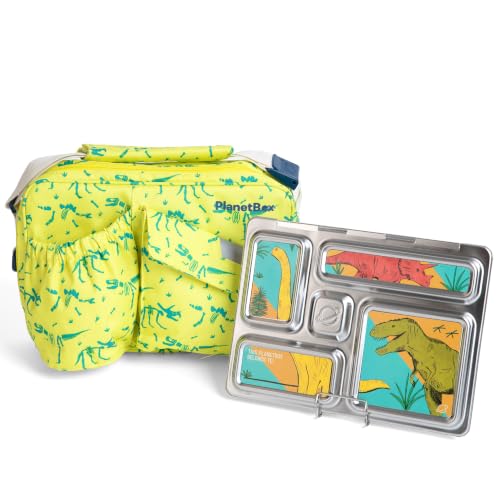
PlanetBox Rover — steel for the school run
The premium compartment system whose drop-survival and organisation make glass’s fragility irrelevant for children’s lunches. Daily use is its justification, as with all premium steel.
Ecozoi Container Set — steel for the whole cupboard
The graduated nesting set for households allocating their storage — not their reheating — to steel. Measure portions first; the pattern is the product.
Klean Kanteen Food Box — steel for wet transport
The silicone-sealed option for soups and stews on the move, bought with the gasket routine understood. Glass cannot ride a bicycle with soup the way this can.
U Konserve Round Container — steel for the edges
The small pots that carry dressings and dips in any allocation, hybrid or pure. The cheapest way to make either material’s system work better.
Bentgo Stainless — steel’s familiar on-ramp
The mid-tier compartment box for households upgrading a plastic bento habit to a material that survives it. A fair test of the format before premium money follows.
Final Recommendation by Use Case
For packed lunches that travel: steel, in the shape the menu dictates. For leftovers that reheat in place: glass, without a second thought. For schoolchildren: steel, for the drop test alone. For batch cooking eaten at home: glass for the reheat pipeline, steel for the freezer grid — or either, honestly labelled. For the household that does all of the above, which is most households that cook seriously: the hybrid, allocated by job, with labels on the steel and care with the glass. And for the household still torn, the tie-breaker this comparison trusts most is the reheating question asked about next month rather than today — routines drift toward convenience, and the material that fits the drift is the one that will still be loved when the novelty has gone. Choose for the routine you are becoming, keep the seals of both materials clean and dry, and the containers — whichever you choose — will repay you in the only currency either material deals in: meals that arrive, store and reheat exactly as intended.
A closing word on confidence. Shoppers sometimes leave a comparison like this one less certain than they arrived, because both materials have been praised and both have been faulted. That uncertainty is not the comparison failing; it is the comparison working — the honest shape of this decision really is two excellences divided by routine, and any article that hides that shape behind a crown is selling something. What you should leave with is not doubt but a decision procedure: five questions, asked in order, about reheating, travel, visibility, seals and frequency. Run them against your real week — or better, against a week of tallies on the fridge door — and the answer they produce will be yours in a way no verdict printed here could be. Then buy lean, in whichever material or mixture the answers name, and let a month of lunches confirm it. Kitchens are not improved by perfect choices. They are improved by chosen systems, honestly matched and lightly maintained, and on that standard both of these materials, in their right places, are excellent.
Children, Elders and the Hands That Open the Box
Materials are also chosen by hands. For children, steel’s case strengthens beyond the drop test: compartment trays organise a school lunch into a single open-and-eat event, the packed weight stays manageable in the lighter designs, and the container forgives the term’s worth of bag violence that would retire glass by half-term. The tests that matter are the child’s own — can they open the lid at speed, in noise, without rescue — and both materials can fail that test in particular models, so it must be run per product, not per material. For older hands, the comparison inverts in interesting ways: glass’s weight counts against it for carrying but its visibility counts for it at the fridge, while tight gasketed lids in either material can defeat stiff fingers, making plain lids the elder-friendly choice in both camps. The criterion’s lesson is that households are not averages — the right material for the family’s strongest hands may be wrong for its smallest or stiffest, and federations exist precisely because hands differ. Criterion verdict: steel for children’s transport, plain lids in either material for elders, and per-hand testing above all.
Value Over Time, Argued Without Prices
Prices change too quickly for a comparison to print, but the shapes of the two value curves are stable enough to describe. Steel’s value is a flat line held for years: a higher starting outlay, then almost nothing — a gasket here, a replacement lid there — while the body delivers the same service in year five as in week one. Glass’s value is a high plateau with a cliff in it: superb service, equal neutrality, easy reheating, until the drop that ends a given container’s story and restarts its cost. Plastic, the silent third party in this comparison, is a sawtooth — cheap, frequent, forgettable. Which curve suits a household depends on its accident rate and its reheating rate, the two variables this entire article keeps circling: high travel and low microwave use draw steel’s flat line as the obvious bargain; low travel and high microwave use make glass’s plateau the rational buy even with the cliff priced in. The comparison’s only firm rule is that frequency disciplines both — a container of either material, bought for a routine that does not exist, is the worst value on this page. Criterion verdict: steel for high-use transport households, glass for high-use reheating households, and honest frequency counts above both.
Two Households, Two Verdicts: The Comparison at Work
The cycling couple with a soup habit
Their food travels daily, roughly, in weather; their reheating happens in a workplace kitchen with plates and a sink. Run the criteria: reheating is a draw for them, durability and weight go heavily to steel, visibility is solved by the labels their prep habit already uses, and the seal routine is a fair price for soup that arrives. Verdict: steel as the main material, in sealed designs for the soup and plain for the rest, with perhaps one glass dish at home for the weekend bake that goes fridge-to-oven-to-table. The comparison’s table predicted this household in its first two rows.
The studio household with a microwave queue
Their food travels from a small fridge to an office microwave and back; reheating in the container is not a preference but the architecture of their lunch. Run the criteria: reheating decides immediately for glass, weight barely matters across a short carry, visibility helps a small fridge stay honest, and drops are rare in an adult, careful routine. Verdict: glass as the main material, with a single steel lunch box kept for weekend excursions where its toughness earns its shelf space. This is the hybrid in its most lopsided form, and it is correct — the proportions of a hybrid should follow the proportions of a life.
The family of five with a term-time machine
Their week contains everything: school runs, office commutes, batch Sundays, a grazing fridge and a grandparent who visits on Fridays. No single material survives contact with that week unscathed, and this household is the hybrid’s natural citizen — compartment steel for the children, sealed steel for the commuting soup, glass rows at home for the leftovers that will be microwaved, plain lids where small or stiff hands need them. Their fridge, photographed, would look like this comparison’s table made edible. Verdict: allocate by person and by job, label the steel, dry every seal in the house, and let each material win the matches it was built for.
The Freezer and the Oven, in Detail
Two appliances deserve a slower pass, because both materials claim them and both claims need qualifying. In the freezer, steel and glass both serve well as bodies: steel brings its indifference to cold brittleness and its stacking geometry, glass brings visibility of the frozen contents — a real advantage when five similar soups are sleeping. Both need headroom for expansion, both need their lids checked against the maker’s cold guidance, and both emerge anonymous without labels, glass merely less so. The freezer verdict is the comparison’s closest: a draw, with steel ahead on toughness and glass ahead on identification. In the oven, the asymmetry reverses. Many glass bodies are designed to bake and roast, then travel to the table looking like serving dishes — a pipeline steel does not generally attempt, since lids and seals set low limits and designs vary. Households whose cooking runs oven-to-table should weight this heavily toward glass; households whose oven work already lives in dedicated bakeware will find the criterion barely arises. Criterion verdict: freezer, a draw; oven-to-table, glass.
What This Comparison Asks You to Ignore
Comparisons are also about refusing evidence, so here is what to ignore, in both materials’ marketing. Ignore health superlatives in either direction — the defensible ground is that both are non-porous, flavour-neutral, food-contact materials with long household histories, and anything more precise belongs to sources with laboratories. Ignore leakproof as a material claim; it is a lid claim, and it must be tested per design, with water, over your own sink. Ignore piece counts in sets of either material; patterns matter, counts photograph. Ignore the idea that one purchase must settle the question forever — routines drift, households change, and the correct response to drift is reallocation, not loyalty. And ignore, finally, any version of this comparison that ends with a single winner for all kitchens. The two materials have divided the kitchen between them for good reasons, along lines this article has tried to draw exactly: travel versus reheat, toughness versus transparency, the bag versus the microwave. Your household lives somewhere on those lines, probably not at either end, and the best outcome available — steel where it wins, glass where it wins, seals of both kept clean and dry — is not a compromise between the two answers. It is the answer.
Aesthetics, the Table and the Fridge Door Moment
It would be evasive to end the criteria without the one shoppers actually feel in the shop: how the materials look and present. Glass presents food — that is its quiet superpower beyond reheating. A glass container of leftovers looks like a serving dish, travels from fridge to table without a decanting for appearance’s sake, and lets a cook survey a fridge the way a shopkeeper surveys shelves. Steel presents equipment: composed, uniform, calm on an open shelf, and at a desk it lends a packed lunch an organised dignity that a stained tub cannot. Neither presentation is trivial. Households eat with their eyes long before lunch, and a fridge that looks abundant and readable genuinely changes what gets cooked and what gets wasted. The criterion cuts both ways within the same household at different hours — glass for the fridge door moment and the table, steel for the desk and the picnic — which is one more reason the hybrid keeps winning this comparison’s household scenarios. Criterion verdict: glass for presentation of the food, steel for presentation of the system; most households value one clearly more, and should let that preference speak.
Switching Costs: Moving Between the Materials Later
One consideration rarely appears in comparisons and often decides real kitchens: what it costs to change your mind. Moving from glass to steel, or steel to glass, is cheaper than shoppers fear, for three reasons. First, the supporting habits transfer almost completely — labelling, oldest-first fridge discipline, gasket washing and drying, portion knowledge — so the second material is adopted by a household already trained by the first. Second, the containers themselves are durable enough to be reassigned rather than discarded: the steel set demoted from lunch duty becomes the freezer and picnic fleet; the glass set demoted from transport becomes the home reheat fleet. Third, the hybrid is always available as a destination, so a switch is rarely total — it is a reallocation of proportions as routines drift, children age, jobs change and kitchens move. Households should therefore buy the material their current routine dictates without treating the decision as a marriage. The comparison’s verdicts are strong because the criteria are strong, not because the choice is irreversible. Choose for the routine you have, keep the habits that transfer, and let the proportions follow your life. That flexibility, in the end, is the best argument for taking this decision seriously but not anxiously — the kitchen will correct you gently if you let it, and both materials are forgiving of households that learn.
The Tie-Breaker Tests: Stainless steel food containers or Glass Food Storage Containers, Judged in Five Real Situations
Specification tables rarely settle the stainless steel food containers question, because most households do not live at the extremes where one option dominates. What settles it is a handful of ordinary situations, repeated weekly, in which one design quietly fits better than the other. Run both candidates through the five situations below — honestly, with your own rooms, habits and household in mind — and the choice usually stops being a coin toss. Keep score as you go; a candidate that wins three situations clearly is almost always the right purchase, even if the other wins on paper.
Situation One and Two: The Busy Weekday and the Crowded Weekend
First, picture the stainless steel food containers — or its alternative — at seven on a weekday morning, when everyone is in a hurry and nobody is being careful. Which design forgives haste? Which one can be used half-asleep, one-handed, or by the least patient person in the house without a workaround? Then picture the weekend version: guests, extra loads, longer sessions, and the stainless steel food containers in continuous rather than occasional use. Designs that shine in short bursts sometimes annoy over long stretches, and the reverse is also true. A candidate that handles both rhythms without complaint has passed the two hardest tests in everyday life.
Situations Three to Five: Small Spaces, Shared Users and the Bad Day
Next, shrink the setting: imagine the same choice in the smallest room it might ever serve, or after a future move to a smaller home. Versatility across spaces is a hidden form of value that rarely appears in listings. Then multiply the users: children, guests, an older relative, a pet. A stainless steel food containers that only works for one careful adult is a fragile purchase in a shared home. Finally, imagine the bad day — something spills, breaks, clogs, overheats or simply refuses to cooperate. Which option is easier to clean up, work around, repair or replace a part for? The answer to that last question is the one owners remember longest.
Score each candidate out of five against these tie-breakers before you decide:
- Haste test: the stainless steel food containers can be used correctly by a rushed, distracted person with no instructions and no damage done.
- Endurance test: it stays comfortable, stable and pleasant through the longest session your household realistically gives it.
- Shrink test: it would still earn its place if you moved somewhere noticeably smaller next year.
- Sharing test: every regular user in the household can operate it safely and without a personal workaround.
- Bad-day test: the most likely failure can be cleaned, fixed or worked around in under half an hour with ordinary household tools.
Keep the receipt, delivery note and a photograph of the label together, because warranty conversations go smoothly when dates and model details are at hand. If two people in the household disagree about the stainless steel food containers, let the person who will use or maintain it most have the deciding vote on practical questions. Beware of buying for the household you hope to become; the stainless steel food containers that serves the household you already are will be used this week, not someday. A tape measure, a spirit level and ten patient minutes prevent more stainless steel food containers regrets than any amount of comparison shopping after the fact. When a listing is vague about a dimension, material or included part that matters to you, treat the vagueness itself as information and look for a clearer seller. Photograph your room at the time of day you will use the stainless steel food containers most, and compare candidates against that light rather than against bright midday photographs. Small households should weight compactness and easy storage more heavily, while large households should weight durability and simple operation, because the failure modes differ. If the stainless steel food containers will serve children or older relatives, test the key actions with the weakest grip and the shortest reach in the house in mind. Leave a little capacity unused — in size, storage or power — because a stainless steel food containers run permanently at its limit ages faster and annoys sooner than one with headroom. Notice which parts are replaceable and which are not; a stainless steel food containers whose wear parts can be swapped cheaply often outlasts a sealed design twice its price in spirit, if not in years. Consider the stainless steel food containers from the perspective of the person who cleans around it, because designs that trap dust, block access or demand special products quietly tax every week of ownership. Think about noise, light and heat as neighbours of the stainless steel food containers, not afterthoughts, since a choice that performs well but disturbs the room around it rarely stays popular for long.
If the scores end level, choose on the factor you cannot change later — footprint, capacity or core construction — and let accessories settle the rest. And if one candidate wins the situations but loses your heart, notice that too: a stainless steel food containers is looked at and lived with daily, and liking the thing is a legitimate, durable advantage. What this method removes is the worst outcome of all — choosing by headline feature and discovering, a month later, that your real life preferred the other one.
Frequently Asked Questions
Which is better overall, stainless steel or glass food containers?
Neither, in the abstract — they are better at different halves of a kitchen’s life. Steel is better wherever food travels, drops are likely, or weight matters; glass is better wherever food is reheated in its container or managed by eye. The household asking the question usually has a dominant routine, and that routine, not a league table, should pick the material. Households with both routines in strength should not force a winner at all: the hybrid allocation outperforms either pure answer. If a single sentence must be carried away, let it be the decision order this comparison has used throughout — reheating first, transport second, visibility third, everything else after — because a household that answers in that order will find the overall question answering itself, and will understand, as a bonus, exactly which criteria its own answer sacrificed and why the sacrifice was worth it.
Can stainless steel containers really never go in the microwave?
Really never. Metal reflects microwave energy, which can spark and damage the oven and the container, in every model and at every tier. Reheating in steel always means decanting onto a plate or into a microwave-safe bowl first. This single fact is glass’s strongest argument and the reason the comparison leads with reheating: for a household built around the microwave, it settles the material question before any other criterion is heard. Two clarifications keep the rule honest rather than frightening. First, the rule is about the microwave specifically — steel’s behaviour in other reheating routes, pans and the maker’s stated oven guidance, is a separate question answered per design. Second, the rule’s cost is often miscounted: households imagine a daily ordeal and discover, in plate-equipped kitchens, a step so small it disappears into the routine within a fortnight. The rule is absolute; its burden is not. Both halves of that sentence matter, and this comparison has tried never to print one without the other.
Which material is safer for storing food?
Both are sound, conventional food-contact materials, and this comparison keeps the question qualitative on purpose: both are non-porous, neither absorbs odours or flavours, and both clean thoroughly. Precise health claims for either material should be treated with caution wherever they appear. Your actual protection, in both materials, is ordinary food hygiene — cool cooked food promptly, refrigerate leftovers without delay, reheat thoroughly, and avoid long room-temperature storage regardless of how sturdy or transparent the container is. It is worth adding what safety does differ between them, because it is practical rather than chemical: glass’s safety question is mechanical — chips and breakage, managed by inspecting rims and retiring damaged pieces — while steel’s is procedural — the microwave rule, managed by the decanting habit. Both are manageable, neither is zero, and a household choosing between them on safety grounds is really choosing which small discipline it would rather keep: inspecting for chips, or remembering the plate.
Which lasts longer, steel or glass?
Steel, in expectation — because glass’s lifespan, however long in careful hands, is ended by a single bad drop, while steel’s bodies continue through drops indefinitely. The honest complication is lids: both materials’ sealed lids use silicone gaskets that tire and need washing, drying and eventual replacement, so both lifespans are really a durable body plus a maintained closure. Steel’s edge is that its body cannot be the sudden cause of death; glass’s counterpoint is that in a careful, adult, home-bound routine, that edge may never be tested. Put in the language of risk: steel’s longevity is a certainty purchased at the price of a routine, glass’s longevity is a probability that careful households can push very high. Neither framing insults the other material — they are simply different kinds of promise, and households know, usually correctly, which kind of promise their own floors and carriers allow them to rely on.
Which is better for meal prep?
It depends on where the prepped food is eaten. Prep eaten at home, reheated in its container, belongs in glass — the fridge-to-microwave pipeline is its home turf. Prep that travels to work and is decanted onto a plate, or eaten cold, belongs in steel, whose identical stacking boxes make the neatest freezer and fridge grids. Many preppers run both: glass rows for home dinners, steel rows for work lunches, one labelling habit governing the whole fridge. The prepper’s tie-breaker, when the eating location is mixed, is the freezer: a big batch session fills whichever material’s identical sizes the household owns more of, and the grid — labelled, dated, oldest forward — matters more to the week’s success than the material the grid is made of. Buy the rows your eating locations dictate, and spend the energy this question usually consumes on the labels instead.
Do glass containers need the same gasket care as steel ones?
Yes — this is the comparison’s most useful surprise. A sealed glass lid and a sealed steel lid share the same silicone gasket and the same hidden seam, and both grow mould in that seam if stored damp. The routine is identical: gasket out, washed in hot soapy water, every part dried completely in open air before reassembly, groove inspected weekly, lids stored ajar or separate. Choosing glass does not buy an exemption from seal care; it only changes what the body underneath the seal can survive. Households sometimes migrate materials hoping to escape the routine, and discover — one musty lid later — that they have changed everything except the thing that was bothering them. The routine belongs to sealed lids as a class, and the only true exemption, in either material, is the plain lid: no gasket, no seam, no routine, and no soup in the bag. Choose the exemption knowingly if you want it, and pay its price in menu rather than in maintenance.
Related Guides and Next Steps
Build the steel side with the stainless steel food containers buying guide, compare its families in our stainless steel food containers reviews, and weigh the material in stainless steel food containers pros and cons. For the kitchen around both materials, the best storage baskets for corralling packets and odd shapes and organic kitchen towels for the wash-and-dry routine serve either camp equally. Whichever side of this comparison your household lands on — or whichever mixture of the two — land there by the five questions, buy lean enough to change your mind cheaply, and keep every seal in the house washed and dry. The materials will do the rest, each in the half of your kitchen where it has always belonged.


