Disclosure: As an Amazon Associate, dailyhomedecorating.com earns from qualifying purchases. Links on this page are affiliate links; they cost you nothing extra. Prices and availability change often, so check the current Amazon listing before you buy.
Learning how to choose reusable silicone bags is really learning to read your own kitchen, because the bags themselves are the easy part: a handful of honest designs, two seal families, three size roles. The households that choose well are not the ones who researched longest — they are the ones who audited their actual week, matched sizes and seals to real jobs, and planned the unglamorous infrastructure of washing and drying before spending anything. This guide walks that process in seven steps, with the mistakes and worked examples that make it stick. Follow it and the set you buy will be the set you use, which is the only definition of a good purchase this category recognises.
The short answer, for readers in a hurry: count your week’s bag jobs, weight your set towards mediums, choose the seal your busiest morning hands can verify, buy coverage over prestige, and install a drying spot before the bags arrive. The long answer — why each of those works, and how to adapt them to batch cookers, lunch families and tiny kitchens — is the rest of this page.
Key Takeaways
- Step one is an audit, not a purchase: one honest week of bag jobs decides sizes and counts.
- Mediums are the daily infantry and the size most sets under-buy; larges turn over slowly.
- Seal choice is ergonomic: pick the closure your household will verify properly every time.
- Coverage converts households to reusables; a single token bag changes nothing.
- Washing is easy, drying is the discipline — plan the drying spot as part of choosing.
- Keep exceptions honest: disposables for raw proteins if you prefer, wraps for wrapping, vacuum for months-long freezes.
What You Need to Know Before Comparing
Three ideas frame every good choice in this category. The first is that a silicone bag is equipment, not supplies. Supplies are consumed thoughtlessly; equipment is chosen, kept and maintained. That shift explains both the benefits — years of service, a drawer that works like a toolkit — and the duties: washing, drying, storing. If your household is ready to treat storage as equipment, silicone will reward you; the steps below assume that readiness and test it honestly at step six.
The second idea is allocation. Silicone does not need to win every storage job to transform your kitchen; it needs to win the high-turnover centre — leftovers, produce, lunches, marinades, weekly freezer work — while beeswax wraps keep the wrapping jobs and, if you wish, disposables keep raw proteins and vacuum keeps the longest freezes. Choosers who demand total replacement set the product an impossible exam and then flunk it unfairly. Choosers who allocate get a system where each material does what it is best at.
It helps to place silicone on the wider map before judging it, because the real contest is three-way. Single-use plastic bags are the convenience baseline: feather-light, sterile-fresh every time, shaped by decades of optimisation, and gone in a week — every use a small withdrawal from the waste stream’s patience and your household budget’s quiet drip. Beeswax wraps and fabric food covers occupy the natural-fibre corner: charming, compostable at end of life, excellent for wrapping cheese, bread and halved produce, but not liquid-tight, not freezer-robust for long stretches, and not heat tolerant. Silicone sits between and beyond them: heavier and dearer than plastic per unit, more capable than wax wraps by a wide margin, washable for years, and tolerant of freezer, fridge and gentle heat in a way neither rival matches. Choosing silicone is really choosing to move storage from a consumable you rent to a tool you own, with everything that ownership implies — washing, drying, storing, and a drawer that works like equipment rather than supplies.
The third idea is that seals and sizes, not brands, are the real variables. Brands bundle those variables differently, and the picks at the end of this guide map them for you — but a buyer who knows they need verified-seal mediums in depth and two trustworthy larges cannot be sold the wrong set, whatever the badge.
In this guide
How to Choose Reusable Silicone Bags in 7 Steps
Step 1: Audit One Honest Week of Bag Jobs
For seven days, note every time anyone reaches for a storage bag: what went in, what size it truly needed, where it went — fridge, freezer, lunchbox, counter — and what happened to the bag afterwards. Do not tidy the data; the chaotic Tuesday with three half-vegetables and a marinade is the data. Most households discover a pattern they did not expect: medium fridge jobs dominate, freezer jobs cluster on one batch day, and a long tail of small jobs — halves, snacks, ends — quietly consumes a third of all bags. This audit is the foundation every later step builds on, and skipping it is how prestige sets in wrong sizes happen.
Step 2: Sort the Jobs by Material Honesty
Now divide the audit into three piles. Pile one, silicone’s centre: fridge storage, produce, leftovers, lunches, snacks, marinades, weekly freezer portions, liquids. Pile two, allocated elsewhere by preference: raw meat and fish if your household would rather not wash after them, months-long freezer storage for the vacuum sealer, wrapping jobs for beeswax. Pile three, the genuine edge cases — travel you will not return from, giveaway portions, the chaotic week — where a small kept stock of disposables is a tool, not a failure. Your silicone set only needs to cover pile one completely. That word, completely, is step three’s subject.
Step 3: Size the Set to the Audit — Mediums First
Think of sizes as roles. Small bags are the halves-and-snacks corps: half a lemon, a handful of nuts, the end of a cucumber, crayons and chargers when travelling. Medium bags are the infantry, carrying lunches, leftovers, chopped produce and cheese through the daily rotation. Large bags are the logistics branch: marinades, freezer portions, a bunch of herbs in a damp cloth, the batch of soup split for the week. A set that covers all three roles in proportion to your habits will be used to exhaustion; a set skewed to one role will leave the disposable roll alive for the others. Stand-up bases, where offered, quietly upgrade every role by making filling a one-person job.
Translate the audit into counts with one bias: when in doubt, add a medium. Mediums are used in parallel — the lunch bag, the leftover bag and the produce bag are all out at once — while larges rotate serially through batch day. Smalls are cheap coverage; a handful ends the tyranny of the giant bag holding one lemon half. If your audit shows heavy liquid work, weight one size towards stand-up designs; if it shows heavy freezer stacking, weight towards flat designs that freeze into slabs.
Step 4: Choose Your Seal Family by Hands and Habit
Every silicone bag lives or dies by its seal, and the designs divide into two families. Pinch-press seals close under your fingers, track by track, and give immediate tactile confirmation — you can feel an unclosed section and fix it before it matters. Slider and bar closures trade that feedback for speed and a mechanical confidence some users prefer, especially with large bags and full hands. Whichever family you choose, build the verification habit: after closing, run your fingers along the full length once more, and for liquids, hold the bag briefly over the sink and give it a gentle squeeze. A two-second check is the entire difference between a leak-proof reputation and a spilled fridge shelf, and it is a habit worth more than any single brand’s marketing.
Run the morning test before committing: the person who packs lunches, half-awake, must be able to close the seal and verify it without thinking. If small hands or reduced grip are in the picture, lean slider-assisted or stand-up. If tactile certainty is what your household trusts, lean pinch-press. One family first — fluency in a single closure beats vague familiarity with two — and add the second family later only for a specific role, such as larges for batch day.
Step 5: Set Your Tier in Words Before You Look at Listings
Decide, in words, what this purchase is: an entry-tier conversion set to cover the drawer, a mid-tier working fleet, or a premium backbone you expect to serve for years — or, the pattern this guide recommends most, a hybrid: value coverage for the many, premium heroes for liquids and freezer leadership. Deciding the tier before browsing protects you from both directions of error: the prestige set bought where coverage was needed, and the flimsy set bought where a decade of service was the point. When you do browse, check price on Amazon for the configurations you shortlist, and compare sets by role coverage, not by headline count alone — a set of twenty tiny bags is not coverage.
Step 6: Plan the Wash-and-Dry Infrastructure
Care for silicone is forgiving but not zero, and the households that succeed treat washing as part of cooking rather than as a separate chore. Empty, rinse, and wash in hot soapy water the same evening; run a fingertip or a soft brush along the seal groove, because that channel is where sauces and crumbs collect. Dishwasher washing on the top rack, bag held open, is a reasonable shortcut for sturdy sets, though hand washing remains the better inspection ritual. Rinse until the surface squeaks rather than slicks — silicone that dries with soap film can perfume the next food it holds — and shake out the corners where water pools.
Then dry, completely, before the bag goes away. Moisture trapped in the seal crease of a closed bag is the one reliable route to musty odours and mould spots, and it is entirely preventable: stand bags open over a rack, a bottle or a utensil crock until the interior is bone dry, and store them unsealed or loosely closed in a dry drawer. A bag that held raw meat deserves the full treatment without exception — hot water, detergent, attention to the seal, thorough drying — and many households simply reserve disposables for raw proteins and keep silicone for everything else, which is a perfectly sound system rather than a failure of commitment.
Treat this step as a purchase decision, because it is one: where will washed bags dry, fully open, every day? A small rack by the sink, a row of bottles, a peg rail — the object matters less than its permanence. Households that improvise drying on day one are improvising still, damp, in month three. Choose the spot now, while you are choosing bags, and the care routine the next sections describe becomes the easiest habit in the kitchen.
Step 7: Buy, Water-Test, and Assign Roles on Day One
When the set arrives: wash every bag, run the water test on each size — fill, seal, fingertip check, gentle squeeze over the sink — and assign roles out loud: these are freezer larges, these are lunch mediums, these smalls live by the fruit bowl. Role assignment sounds fussy and works like magic, because it ends the daily micro-decision that erodes systems. Then move the disposable roll to the back of the drawer for its allocated jobs, and let the new default be the easy reach.
Gear for This Guide
Four roles cover the method above for most households — a premium backbone, a stand-up filler, a coverage fleet and a starter or travel contingent. All are presented prose-only; check the current listing for set details.

Stasher Silicone Bags
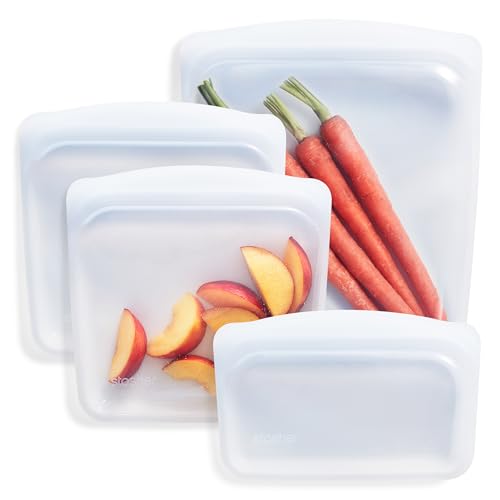
Positioning: premium tier — the benchmark pinch-press design. Stasher is the name most people picture first, and the reputation rests on the seal: a pinch-press closure that runs the full width of the opening and gives clear tactile feedback as it closes, section by section, under your fingers. The silicone body is thick and supple rather than rigid, so the bag flexes around odd shapes — a halved onion, a wedge of cheese, a tangle of herbs — instead of forcing food into a fixed geometry. Sizes run from small snack formats up to generous half-gallon styles suited to marinades and freezer batches, and the colours are genuinely useful rather than decorative, because a consistent colour-per-size habit makes a crowded freezer drawer readable at a glance. In daily use the bags wash up well, dry best propped open, and hold their seal integrity over long service. Best for: households building a core set they expect to keep for years. Not suited for: anyone who wants the absolute lightest bag for travel, where thinner reusable designs travel flatter.
W&P Porter Silicone Bags
Positioning: premium tier — the design-led, stand-up option. Porter bags are what happens when a design studio treats a storage bag as tableware: calm colours, a matte finish that looks at home on an open shelf, and a stand-up base that lets the bag sit open on the counter while you fill it — a small thing that changes the whole experience of portioning soup or decanting grains. The silicone is substantial, the seal closes with a confident press, and the overall feel is closer to a soft container than to a bag, which is precisely the appeal for people who disliked the floppiness of earlier reusables. They photograph beautifully, but the substance underneath is real: thick walls for freezer duty, a shape that stacks and stands rather than slumping, and a surface that releases food cleanly. Best for: design-conscious kitchens, countertop-visible storage and soup portioning. Not suited for: bulk buying on the tightest budget, where multi-packs stretch further.
IDEATECH Silicone Bags
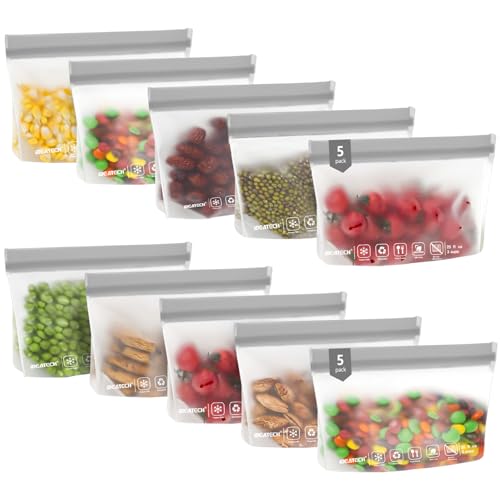
Positioning: entry tier — the value multi-pack option. IDEATECH built its following on the unglamorous virtue of the multi-pack: enough bags, in enough sizes, that a household can actually retire the disposable roll instead of rationing three precious reusables. The bags use a slider-assisted or press seal depending on the set, the silicone is freezer-appropriate and flexible, and the assortment logic — small for snacks, medium for produce and leftovers, large for freezer batches — matches how kitchens actually consume bags across a week. Expect a slightly more utilitarian finish than the design-led brands, and expect to spend a minute learning each size’s sealing feel, but the cost-per-bag maths of a big set is what converts sceptics: when a reusable is always within reach, the disposable habit quietly dies. Best for: families converting a whole drawer at once. Not suited for: minimalists who want two perfect bags rather than a working fleet.

Xomoo Silicone Bags
Positioning: mid tier — the compact everyday set option. Xomoo sets occupy the sensible middle: compact assortments, honest silicone construction, and a price position that makes them an easy first experiment for households not yet sure the reusable habit will stick. The bags cover the everyday bases — snacks, produce halves, lunch items, small leftovers — and the seals close securely for fridge and short freezer duty. They are a particularly good answer to the most common failure of reusable systems, which is not quality but coverage: too few bags, so the disposables creep back. A Xomoo set in the drawer plus a couple of premium large bags for freezer work is a legitimate, complete system for a small household. Best for: first-time switchers and small kitchens. Not suited for: heavy liquid storage in the largest sizes, where the premium brands’ seals earn their keep.
Common Mistakes
The audit skipped, the set guessed. The prestige token bought instead of coverage. Larges over-bought because they photograph like value, mediums under-bought though they do the daily work. A seal chosen for the reviewer’s hands rather than the household’s. No drying spot, then a musty crease, then the false conclusion that silicone smells. Liquids sealed without the fingertip check, then a spill, then the false conclusion that silicone leaks. Notice the pattern: in this category, most product failures are process failures wearing the product’s name. The steps above are the process; follow them and the products in this guide will not let you down.
Pro Tips
Colour-code by size or role if your chosen brand allows it, and keep the code ruthlessly consistent — a readable freezer is a rotated freezer. Freeze liquids flat in their bags on a tray, then file the slabs like books. Keep one small bag permanently in the lunch-packing zone and one in the car, so the system is present where decisions happen. Label with a simple date habit from day one; future you, facing two identical soups, sends thanks. And demote rather than discard: a bag whose seal tires after long service becomes a dry-goods and travel organiser, still earning its space.
Worked Examples
The Sunday batch cooker audited forty-one bag jobs, over half on batch day: larges for soup portions and marinades, mediums for prepped vegetables. Her set: a workhorse fleet weighted to larges, premium seals for the liquid work, flat designs for slab freezing. Result: the disposable roll now serves raw proteins only. The school-lunch family audited a river of mediums and smalls, almost no larges. Their set: deep mediums, a handful of smalls, a lightweight contingent for lunchboxes, two premium larges for the weekly stew. Result: coverage ended the morning scramble. The two-person fresh cook audited mostly produce and halves, little freezing. Their set: stand-up mediums for fridge order, smalls for halves, beeswax wraps alongside for cheese and bread, no larges at all until month three proved a marinade habit. Three audits, three different right answers — which is the entire point of choosing this way. Compare the value side of the decision in whether reusable silicone bags are worth it.
Choosing for Special Situations
Choosing for a Household With Children
Children change the choosing maths in three ways. Volume: lunch and snack turnover multiplies, so mediums and smalls go deeper than the adult audit suggests. Hands: the seal must be closable and verifiable by the smallest packer in the house, which pushes the choice towards slider-assisted designs and towards teaching the fingertip check as a game rather than a rule. And migration: bags will leave the kitchen — for school, sports, sleepovers, the car — so choose a roster with a lightweight contingent you will not mourn tracking, and assign the premium heroes to home duty where their service is longest. Colour coding, in a children’s household, stops being a nicety and becomes the roster’s operating system.
Choosing for a Small or Shared Kitchen
Space discipline rules here. Measure the drawer before the audit, and let stand-up designs compete for it on double duty: a stand-up medium is simultaneously a bag, a fridge tub and a filling vessel, and in a small kitchen every object must hold at least two jobs. Shared kitchens add a social specification: choose one seal family only, post the wash-and-dry routine where the bags dry, and keep the allocated disposables visible and legitimate, because a system that shames flatmates gets sabotaged by physics — damp bags, vague seals — within a month. Compact rosters, clearly owned, survive shared kitchens; sprawling ones do not.
Choosing for Travel, Camping and the Second Home
Travel inverts the home priorities: weight and flatness lead, liquid heroics recede. The lightweight zip contingent becomes the main purchase, with one or two silicone mediums for the jobs — marinating at the rental, sealing the cooler — where toughness pays. Campers should note that silicone’s tolerance and seal make it an excellent dry-bag for food and small kit inside a pack, washed at the sink and dried on a line like everything else outdoors. Second homes deserve their own compact roster rather than a travelling one; a set that lives in the drawer gets used, and a set in a suitcase gets forgotten, which is the whole audit principle wearing a holiday shirt.
The Audit Worksheet, in Words
Readers who want the step-one audit made concrete can run it as a tally on paper across seven days, with five columns: the job, the size it truly needed, the destination (fridge, freezer, lunch, counter, travel), the material you would allocate it to after step two, and a tick for every repetition. At week’s end, three numbers fall out of the tally and they are the entire purchase specification: how many mediums must exist simultaneously at your busiest moment, how many smalls the week consumed, and how many larges batch day truly required. Add one spare to each count for the wash cycle — a bag in the wash is a bag out of service — and the roster is specified to the bag. Choosers who buy to that worksheet almost never return, supplement in panic, or write the one-note lament of the mismatched set; the worksheet is boring, and boring is what working systems are made of.
When Your First Choice Is Wrong: The Correction Protocol
Sometimes, despite the steps, the first set misses — the seal fights the household’s hands, the sizes skew large, the stand-ups will not fit the fridge shelf they were bought for. The correction protocol is: diagnose by role, not by regret. Run two weeks and log which bags are always out, which never move, and which job keeps reaching for a disposable. Then correct surgically — supplement the missing role, demote the tourists to dry and travel duty where most ‘wrong’ bags serve happily for years, and adjust the seal family only for the specific job whose hands it failed. What not to do is abandon the system at the first mismatch: the audit method expects a correction round, budgets for it, and treats it as calibration rather than failure. A roster is not bought; it is tuned — and a tuned roster, as every worked example in this guide shows, is the one that finally retires the roll.
Deep Dive: Reading Your Audit Like a Professional
Most audits reveal four patterns worth naming, because each one rewrites the purchase in a different direction. The first is the parallel peak: the audit’s busiest moment — usually a Sunday evening or a weekday morning — when the most bags are simultaneously in service. That peak, not the weekly total, sets your minimum roster, because a set sized to the average fails precisely at the peak, and failures at peaks are what drive households back to the roll. Count the peak honestly and add the wash-cycle spare. The second pattern is the size lie: jobs recorded as ‘large’ that were really two mediums wearing a trench coat — a marinade that would have portioned better, produce that rattled in an oversized bag. Re-sorting the size lie usually moves two larges’ worth of budget into mediums, where it works harder. The third is the invisible third: the small jobs — halves, ends, snacks — that nobody remembered until the tally showed them consuming a third of all bags; households that discover their invisible third buy smalls with new respect and end the daily waste of a big bag on a small job. The fourth is the allocated leak: jobs the household swore were silicone’s — the raw proteins, the giveaway portions — that on honest inspection belong to the exceptions pile, shrinking the roster to what it must cover perfectly rather than everything it might cover approximately. Read your tally for those four patterns before you spend anything, and the set you choose will fit like it was measured — because it was.
The Seal Laboratory You Can Run in Your Own Sink
Choosing between seal families deserves better than reviews, including this cluster’s: it deserves ten minutes at your own sink. Borrow or buy one bag of each family you are considering and run three tests. The water test: fill halfway, seal, hold over the sink, squeeze gently — you are feeling for certainty, and for whether your hands trust the closure without looking. The morning test: repeat it one-handed, then with damp hands, because that is the condition seals actually live in. The reopening test: open and reseal five times and notice whether the closure gets easier to read or vaguer — good seals teach your fingers; poor ones argue. Then run the household test: hand each bag to the other people who will pack lunches in your house and watch, without coaching, whether the fingertip check happens naturally. Choose the family that passes socially, not just hydraulically. This small laboratory has settled more choosing arguments than any comparison table, and it costs nothing but a sink and ten honest minutes.
Choosing the Second Wave: When the Roster Grows Up
The first roster is a hypothesis; the second wave is knowledge. Expect it at one to three months, and expect it to be specific in ways browsing could never have predicted: a third large because batch day grew, stand-ups because the fridge shelf proved their worth, a travel contingent because a trip exposed the gap, a second seal family for the one pair of hands the first family failed. Buy the second wave by the same rules — role first, seal by hands, tier in words — and perform the demotions in the same pass, so the drawer stays at fighting weight. A roster that grows by evidence and shrinks by demotion stays lean for years; a roster that only grows becomes the jumble the audit was invented to prevent. Choosing, in this category, is not an event but a light-touch practice — and that, more than any single step, is the professional secret this guide exists to hand over.
Choosing With a Partner, a Family, a Household Meeting of One Agenda Item
Choosing silicone bags is a household decision wearing a product decision’s clothes, and the choosers who treat it that way succeed at a rate the solo optimisers do not. The method that works is a fifteen-minute kitchen meeting with the audit tally on the table. Present the week’s evidence first — the counts, the parallel peak, the invisible third — because evidence ends most arguments before they start; nobody can dispute a tally they helped create. Agree the allocations second: which jobs are silicone’s, which stay disposable, which belong to wraps and vacuum, written down where the bags will live. Agree the routine third: who washes (the answer that survives is ‘the cook, as part of cooking’), where bags dry, and what happens to a bag found damp — it gets rewashed and aired, without blame, because systems that punish honesty get lied to. Choose the roster last, together, by the steps in this guide, and let every regular user run the sink test on the seal family before the order goes in. Fifteen minutes of this prevents the three classic household failure modes — the unilateral prestige purchase resented by its washers, the routine nobody agreed to quietly lapsing, and the allocation disputes re-litigated at every raw chicken — more reliably than any product feature ever sold. Choosing well is a social technology; the bags are merely its occasion.
The Chooser’s Glossary: Terms That Actually Matter
Pinch-press seal: twin tracks closed by finger pressure along the opening; the tactile-feedback family. Slider or bar closure: a mechanical element that draws the tracks together; the low-pinch-force family. Stand-up base: a shaped bottom that lets the bag stand open for filling and upright in storage. Flat or lay-flat design: a bag that freezes into slabs and stores in a file; the batch cook’s friend. Role: the job a bag is assigned — freezer large, lunch medium, halves small — the unit in which rosters are planned. Parallel peak: the maximum number of bags in simultaneous service in your week; the number your roster must cover. Demotion: moving a tired bag down the duty ladder — liquids to fridge to dry to travel — instead of discarding it. Allocation: the household’s written division of jobs among silicone, disposables, wraps and vacuum. The ceremony: fill sensibly, expel air, close fully, fingertip-check, brief sink test — the five-beat routine that makes liquids safe. A chooser fluent in these nine terms can read any listing, run any audit and correct any roster in this category without further instruction — which is, of course, the point of a how-to guide.
Case Files: Three Choosing Mistakes, Dissected
Case one: the prestige pair. A keen cook bought two premium larges — beautiful, certain, expensive in commitment — and nothing else. Within a week the pattern was set: the larges were magnificent on batch day and irrelevant Monday to Friday, while the daily mediums and smalls continued to consume disposables at the old rate. Diagnosis: role coverage inverted; the household bought its rarest job first. Correction: a value fleet for the daily sizes, the heroes retained for theirs, system saved. Case two: the damp drawer. A family bought a complete roster, chose well by every step in this guide — and skipped step six. Bags were washed willingly and filed damp in a closed drawer; by week five the set smelled, trust collapsed, and the household concluded that silicone was a fraud. Diagnosis: infrastructure, not product. Correction: a rack, a store-open rule, one rehabilitative wash-and-air for the whole set; the same bags serve still. Case three: the wrong hands. A household chose pinch-press throughout for its certainty, not reckoning with a grandparent’s grip, which could not verify the seals; lunches leaked, confidence followed. Diagnosis: step four skipped — the seal was chosen for the chooser’s hands. Correction: slider-assisted bags for the lunch roles, pinch-press retained where strong hands work, harmony restored. Three cases, three different steps skipped, one moral: the method in this guide is not decoration around the purchase. The method is the purchase, and the bags are merely what it delivers.
Read those cases once more and notice what none of them contains: a bad product. Every design in this cluster’s guides performed as described, in failure and in success alike. The failures were fits — of role, of infrastructure, of hands — and fits are choosable in advance, which is the most encouraging conclusion a how-to guide can honestly reach. Your household’s version of these cases is preventable, tonight, with a tally sheet, a sink and fifteen honest minutes. That is the whole offer of this page, and it is enough.
The Pre-Purchase Checklist, Printable in Spirit
Everything in this guide compresses into a checklist short enough to run standing in the kitchen, tally sheet in hand. One: the audit is done — seven days, honest, with the parallel peak counted. Two: the jobs are allocated — silicone’s centre listed, the exceptions assigned to disposables, wraps and vacuum without guilt. Three: the sizes are specified — mediums weighted, smalls respected, larges honest, one spare per role for the wash cycle. Four: the seal family is chosen by the household’s hands, sink-tested if possible, one family first. Five: the tier is set in words — entry coverage, mid fleet, premium backbone, or the hybrid this guide recommends. Six: the drying spot exists — named, permanent, ready before the bags arrive. Seven: the day-one ritual is agreed — wash, water-test, assign roles, exile the roll. Run those seven and the purchase that follows is not a gamble but a formality, which is the highest compliment a choosing guide can pay its reader: by the time you spend anything, the decision has already been made correctly, in the only place it could be — your own kitchen, on your own evidence.
And if the checklist cannot be run — if the week is too chaotic for an audit, the household too divided for a meeting, the drawer too unmeasured for a roster — then the guide’s final advice is to wait. Silicone bags keep; sales recur; the category is not going anywhere. A purchase postponed until it can be chosen properly will outperform a purchase rushed tonight on every measure this page has used, because in this category the choosing is not the prelude to the value. The choosing is the value, and the bags are simply how it arrives.
A Worked Tally, Start to Finish
To make the method undeniable, here is one household’s audit, anonymised and complete. Seven days produced thirty-eight bag jobs. The parallel peak arrived Sunday evening: eleven bags in service at once — four larges freezing the batch, five mediums holding prepped vegetables and leftovers, two smalls with the week’s first halves. The invisible third was real: thirteen of the thirty-eight jobs were smalls. The size lie appeared twice, both times a large doing a medium’s job. The allocated leak was honest: six jobs — raw proteins and one giveaway — left the silicone roster entirely. Specification, straight from the tally: five larges (four plus the wash spare), eight mediums, six smalls, one seal family, stand-ups specified for two of the mediums because the fridge shelf demanded it. That roster, bought in one order with a drying rack, has not been supplemented since — not because the household is disciplined, but because the tally was. Your tally will differ in every number and agree in every principle, which is exactly what a method is for.
Keep the tally sheet. Pin it inside the storage cupboard door when the roster arrives, and glance at it at the one-month review: it is the baseline every correction is measured against, the evidence that ends household debates before they warm up, and — in more than one kitchen that followed this guide — a small piece of domestic history, marking the week the drawer changed from a subscription into a system. Methods fade from memory; artefacts persist. Let the tally persist.
The Careful Way Through: Checks That Keep a Reusable Silicone Bags Task on Track
The main steps for the reusable silicone bags are covered above; what follows is the working discipline around those steps, covering preparation, order of work, the checks that catch mistakes early and the small follow-up habits that keep the result sound. It is written for real homes, where interruptions and imperfect spaces are normal.
Start With Your Space and Your Routine
Where the reusable silicone bags has moving parts, work them through their full range during your first checks, listening and feeling for roughness that a photograph cannot show. A good test is the two-week question: imagine the reusable silicone bags after a fortnight of ordinary use, with no special effort from you, and ask whether you would still choose it. If the reusable silicone bags will be seen every day, its proportions matter as much as its function, so hold the listing dimensions up against a familiar piece nearby to judge the visual weight honestly. Recheck any adjustable part of the reusable silicone bags after the first week of use, once materials have settled and the household has stopped being careful with it.
Check your work from a distance as well as up close, because proportions, levels and alignment in Food Storage & Organization tasks are far easier to judge from across the room. Finally, judge the reusable silicone bags against the life you actually lead this year, not the tidier or more ambitious life in the listing photographs, and the choice will usually make itself. Apply the same checks to each shortlisted example, whether that is the IDEATECH Silicone Bags; the Xomoo Silicone Bags; the Stasher Silicone Bags, because consistent testing is what makes the differences between models visible. Households with children or pets put different demands on a reusable silicone bags than the listing photographs suggest, so judge edges, stability and cleanability against your real household, not a styled one.
When Small Problems Appear
Ask how the reusable silicone bags will be cleaned on an ordinary week, with the products and time you actually have, not with a special routine you are unlikely to keep up. A return is easiest when you have kept the packaging until you are sure, so give the reusable silicone bags a fair trial period in its real position before you break down boxes and dispose of padding. Think about the end of the reusable silicone bags’s life with you as well, including whether it could move to another room, be passed on, or be stored without damage when your needs change. Equally, list what your old reusable silicone bags did well, because replacements sometimes quietly lose a virtue you relied on, such as a size, a shape or a simplicity the new model has redesigned away.
If you shop with someone else, agree the must-haves together before looking, so that the reusable silicone bags you choose is a shared decision rather than one person’s compromise discovered later. Keep the area around the reusable silicone bags clear while you work and for a short while afterwards, so that nothing is knocked, spilled or leaned on before everything has settled, dried or been secured. When something about the reusable silicone bags starts to annoy you, note whether the cause is the product itself, its position, or the way it is being used, since each cause has a different and usually cheaper fix. Beware of choosing a reusable silicone bags for a rare occasion, such as a large gathering once a year, if that choice makes everyday use worse for the other fifty-one weeks.
Storage is part of ownership, so decide now where the reusable silicone bags, its accessories and its seasonal extras will go when they are not in use, and measure that space too.
A Short Decision Checklist
- What your current arrangement does badly that the reusable silicone bags must fix
- What your current arrangement does well that the reusable silicone bags must not lose
- Who will use the reusable silicone bags most, and any limits they have
- Delivery path, from the door to the final position
- Packaging kept until the reusable silicone bags has passed its first trial in place
- The measured space, including clearance to use and clean around the reusable silicone bags
- The material and finish, matched to light, moisture and wear in its spot
- Where the reusable silicone bags and its accessories will be stored when not in use
Taken together, these checks take only a little time, yet they answer the questions that decide whether the reusable silicone bags suits your home, your household and your routine, and they do so before money changes hands rather than after.
Frequently Asked Questions
How many reusable silicone bags should I buy first?
Let your audit decide, but most households land on a spine of mediums in depth, a handful of smalls, and two to four larges. The commonest first-purchase error is too few mediums, because mediums are used in parallel across lunch, leftovers and produce at the same time. Buy complete coverage of your audited week rather than a token set, then expand only where a gap repeats.
Which seal type is easiest for children or older hands?
Slider-assisted closures and stand-up designs generally ask for the least pinch force and are the easiest to verify with small or less strong hands. Pinch-press seals give the clearest tactile feedback for those who trust their fingers. Test with the actual users if you can: the right seal is the one your household closes properly on a rushed morning, verified with a fingertip check every time.
Do I need different bags for freezer and fridge?
Not strictly — silicone serves both — but roles help. Flat designs freeze into stackable slabs and suit batch portions; stand-up designs shine in the fridge and at filling time. Many households assign their thickest larges to freezer leadership and their stand-ups to fridge order, using mediums across both. The material is the same; the ergonomics are what you are allocating.
What if my household will not wash bags properly?
Then be honest at step six: silicone’s one real duty is prompt washing and complete drying, and a household that will not do it will retire any reusable in quiet disgust within a season. Options: assign washing to the cook as part of cooking, choose dishwasher-suitable designs and a top-rack routine, or keep disposables for the jobs nobody will wash after and silicone for the rest. A partial system that survives beats a pure one that collapses.
Can silicone bags really hold soup without leaking?
Yes, with the ceremony: fill sensibly, expel air, close along the full track, fingertip-check the whole seal, and hold the bag over the sink with a gentle squeeze before it goes horizontal. Keep the seal track clean and dry before closing — crumbs and moisture in the groove cause most leaks attributed to bags. Stand-up designs make liquid filling easiest; flat designs travel flattest once frozen.
Should I choose silicone bags or beeswax wraps?
Choose by job, and ideally keep both. Silicone seals liquids, freezes portions, marinates and reheats; beeswax wraps wrap cheese, bread and halved produce and fold away to nothing. If the audit shows mostly liquid, freezer and leftover work, silicone first. If it shows mostly wrapping, start with wraps and add silicone for the liquid jobs. The audit in step one answers this question with your own data.
Related Guides
The buying guide and full reviews in this cluster apply this method to specific sets.
our full reusable silicone bags review our comparative reusable silicone bags reviews the reusable silicone bags buying guide whether reusable silicone bags are worth it reusable silicone bags pros and cons in full For wider kitchen organisation, see also the best storage baskets the best under-bed storage the best closet organizer shelves the best mini fridges the best vacuum storage bags.


