Disclosure: As an Amazon Associate, dailyhomedecorating.com earns from qualifying purchases. Links on this page are affiliate links; they cost you nothing extra. Prices and availability change often, so check the current Amazon listing before you buy.
This reusable silicone bags review starts with a confession: a storage bag sounds like the least reviewable object in the kitchen, right up until you count how many times a day your household touches one. Bags mediate between shopping and cooking, between cooking and leftovers, between the fridge and the lunchbox and the freezer. When the bag is a flimsy consumable, all of that mediation is disposable by design. When the bag is a reusable silicone bag — thick-walled, washable, sealable, freezable — the mediation becomes equipment, and equipment can be judged properly: how it seals, how it washes, how it survives the freezer, and whether, months later, you still reach for it first. This review judges exactly that, across the leading designs, in the jobs a real kitchen actually assigns.
The short verdict is that reusable silicone bags have crossed the line from eco-gesture to genuinely better tool for most daily storage — not all storage, and not for every household, but for the high-turnover core of leftovers, produce, lunches, marinades and freezer portions, a good silicone set outperforms the disposable roll it replaces while quietly deleting a consumable from your shopping list. The conditions are real and this review will not hide them: you must wash them, you must dry them properly, and you must choose seals and sizes that fit your habits. Meet those conditions and the bags repay you daily. Ignore them and no material can save the system.
Key Takeaways
- Silicone wins the daily jobs: leftovers, produce, lunches, marinades and week-scale freezer portions.
- The seal is the product — pinch-press and slider designs both work when you verify the closure every time.
- Washing is easy; drying completely, especially in the seal crease, is the discipline that prevents odours and mould.
- Keep disposables for raw proteins if you prefer zero doubt, and beeswax wraps for wrapping — silicone is the backbone, not the whole system.
- Buy size coverage for your real week: a spine of mediums, smalls for halves and snacks, larges for batches.
- Check price on Amazon for the sets named here, as pack configurations change often.
What a Reusable Silicone Bags Review Has to Judge
A bag has one job — keep food contained, protected and identifiable — but it performs that job inside a dozen sub-roles, and a serious review has to test each one. Containment means the seal holds when the bag is squeezed in a lunchbox, tipped in a fridge and stacked in a freezer. Protection means the walls resist puncture from a chicken bone or a freezer-ravaged corner, and cushion contents better than film. Identification means the bag is translucent or labelled enough that Tuesday’s soup does not become a mystery by Friday. Around those core duties orbit the ownership duties: washing without a battle, drying without a smell, storing without a drawer explosion, and surviving hundreds of cycles without the seal going vague or the corners splitting.
Silicone as a material brings a distinctive profile to those duties. It is flexible across the whole household temperature range, so it neither cracks in the freezer nor wilts near warmth. It is thick enough to feel like a thing rather than a film, which changes how carefully people treat it — nobody washes a disposable, everybody washes a tool. It releases most foods cleanly, resists staining better than rigid plastic tubs, and does not hold yesterday’s flavours as stubbornly as many plastics when it is washed promptly. Its honest weaknesses are weight, bulk, upfront cost in the currency of commitment rather than any number, and the washing-and-drying routine itself. A review that pretends those away is marketing; this one weighs them in the open.
It helps to place silicone on the wider map before judging it, because the real contest is three-way. Single-use plastic bags are the convenience baseline: feather-light, sterile-fresh every time, shaped by decades of optimisation, and gone in a week — every use a small withdrawal from the waste stream’s patience and your household budget’s quiet drip. Beeswax wraps and fabric food covers occupy the natural-fibre corner: charming, compostable at end of life, excellent for wrapping cheese, bread and halved produce, but not liquid-tight, not freezer-robust for long stretches, and not heat tolerant. Silicone sits between and beyond them: heavier and dearer than plastic per unit, more capable than wax wraps by a wide margin, washable for years, and tolerant of freezer, fridge and gentle heat in a way neither rival matches. Choosing silicone is really choosing to move storage from a consumable you rent to a tool you own, with everything that ownership implies — washing, drying, storing, and a drawer that works like equipment rather than supplies.
In this guide
Design, Build and the Seal Systems Compared
Pick up the leading designs side by side and the family resemblances and rivalries are immediately tactile. The premium pinch-press bags feel like soft, heavy drapes of silicone with a closure you work between finger and thumb. The design-led stand-up bags feel like small vessels, stable on the counter, almost jar-like in use. The value multi-packs feel more utilitarian — thinner in the hand, plainer in finish — but cover more of the drawer for the commitment. None of these is the wrong answer; they are answers to different questions about how a kitchen works and what it values, and the sections below take each recommended design in turn.
Every silicone bag lives or dies by its seal, and the designs divide into two families. Pinch-press seals close under your fingers, track by track, and give immediate tactile confirmation — you can feel an unclosed section and fix it before it matters. Slider and bar closures trade that feedback for speed and a mechanical confidence some users prefer, especially with large bags and full hands. Whichever family you choose, build the verification habit: after closing, run your fingers along the full length once more, and for liquids, hold the bag briefly over the sink and give it a gentle squeeze. A two-second check is the entire difference between a leak-proof reputation and a spilled fridge shelf, and it is a habit worth more than any single brand’s marketing.
These are the designs this review recommends, ordered by the role each plays best rather than by any single ranking. Every one is treated prose-only here, with its positioning stated in words, so you can match the role to your kitchen before checking the current listing.

Stasher Silicone Bags
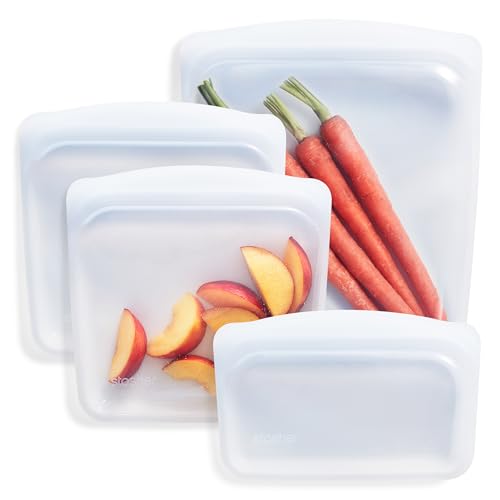
Positioning: premium tier — the benchmark pinch-press design. Stasher is the name most people picture first, and the reputation rests on the seal: a pinch-press closure that runs the full width of the opening and gives clear tactile feedback as it closes, section by section, under your fingers. The silicone body is thick and supple rather than rigid, so the bag flexes around odd shapes — a halved onion, a wedge of cheese, a tangle of herbs — instead of forcing food into a fixed geometry. Sizes run from small snack formats up to generous half-gallon styles suited to marinades and freezer batches, and the colours are genuinely useful rather than decorative, because a consistent colour-per-size habit makes a crowded freezer drawer readable at a glance. In daily use the bags wash up well, dry best propped open, and hold their seal integrity over long service. Best for: households building a core set they expect to keep for years. Not suited for: anyone who wants the absolute lightest bag for travel, where thinner reusable designs travel flatter.
W&P Porter Silicone Bags
Positioning: premium tier — the design-led, stand-up option. Porter bags are what happens when a design studio treats a storage bag as tableware: calm colours, a matte finish that looks at home on an open shelf, and a stand-up base that lets the bag sit open on the counter while you fill it — a small thing that changes the whole experience of portioning soup or decanting grains. The silicone is substantial, the seal closes with a confident press, and the overall feel is closer to a soft container than to a bag, which is precisely the appeal for people who disliked the floppiness of earlier reusables. They photograph beautifully, but the substance underneath is real: thick walls for freezer duty, a shape that stacks and stands rather than slumping, and a surface that releases food cleanly. Best for: design-conscious kitchens, countertop-visible storage and soup portioning. Not suited for: bulk buying on the tightest budget, where multi-packs stretch further.

Lerine Silicone Bags
Positioning: mid tier — the family freezer-workhorse option. Lerine sets pitch themselves squarely at the freezer-and-prep household: sturdy silicone, leak-resistant seals tested by the brand for liquids, and sizes that take marinades, portioned proteins and batch-cooked grains without drama. The bags feel workmanlike in the best sense — thick enough to trust in a deep freeze, flexible enough to squeeze air out before sealing, and plain enough that nobody minds them living in the hardest-working drawer in the kitchen. They handle the weekly cycle of marinate, freeze, thaw and wash with the least fuss of the value tier, provided you follow the golden rules: dry fully before storing, keep the seal tracks clean, and check the closure along its full length before a bag of soup goes horizontal. Best for: meal preppers and freezer organisers. Not suited for: heavy liquid storage in the largest sizes, where the premium brands’ seals earn their keep.
IDEATECH Silicone Bags
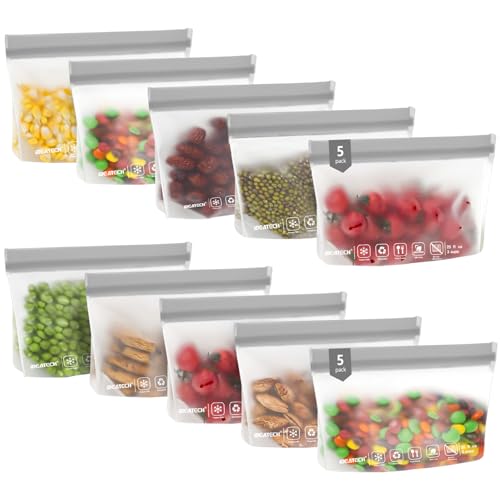
Positioning: entry tier — the value multi-pack option. IDEATECH built its following on the unglamorous virtue of the multi-pack: enough bags, in enough sizes, that a household can actually retire the disposable roll instead of rationing three precious reusables. The bags use a slider-assisted or press seal depending on the set, the silicone is freezer-appropriate and flexible, and the assortment logic — small for snacks, medium for produce and leftovers, large for freezer batches — matches how kitchens actually consume bags across a week. Expect a slightly more utilitarian finish than the design-led brands, and expect to spend a minute learning each size’s sealing feel, but the cost-per-bag maths of a big set is what converts sceptics: when a reusable is always within reach, the disposable habit quietly dies. Best for: families converting a whole drawer at once. Not suited for: minimalists who want two perfect bags rather than a working fleet.

Xomoo Silicone Bags
Positioning: mid tier — the compact everyday set option. Xomoo sets occupy the sensible middle: compact assortments, honest silicone construction, and a price position that makes them an easy first experiment for households not yet sure the reusable habit will stick. The bags cover the everyday bases — snacks, produce halves, lunch items, small leftovers — and the seals close securely for fridge and short freezer duty. They are a particularly good answer to the most common failure of reusable systems, which is not quality but coverage: too few bags, so the disposables creep back. A Xomoo set in the drawer plus a couple of premium large bags for freezer work is a legitimate, complete system for a small household. Best for: first-time switchers and small kitchens. Not suited for: heavy liquid storage in the largest sizes, where the premium brands’ seals earn their keep.
(re)zip Reusable Bags
Positioning: entry tier — the lightweight lunch-and-travel option. The (re)zip line takes the opposite design bet from the heavy silicone slabs: go light, go flat, and make the reusable bag disappear into a lunchbox, handbag or carry-on the way a disposable once did. The double-zip closure is familiar on first use — no new technique to learn — and the bags lie almost completely flat when empty, which matters more than it sounds when drawer space is the real constraint. They suit the dry and semi-dry rhythm of daily life: sandwiches, chopped fruit, crackers, nuts, chargers and toiletries on the road. Treat them as the high-turnover tier of a silicone-centred system rather than its freezer backbone, wash them gently, dry them thoroughly over a bottle or rack so the zip tracks air out, and they repay the small footprint with constant use. Best for: lunches, snacks and travel kits. Not suited for: long freezer storage of liquids or heavy marinades.
Performance in Real Use
Leftovers, Fridge Order and the Next-Day Test
The fridge is where silicone bags first prove themselves, because the fridge is a daily referendum on storage. A bag of roasted vegetables, a portion of grain salad, half a rotisserie chicken’s worth of picked meat — silicone holds them in a shape that stacks, slides and squeezes into gaps that rigid tubs waste. The walls protect without crushing, the seals keep fridge smells from mingling as effectively as any domestic system, and the slight translucency of most designs means you can identify contents without opening. Next-day quality is where the thickness tells: produce stays crisper than in a tired film bag, cheese avoids both the sweat of tight plastic and the drying of a loose wrap, and herbs last visibly longer kept in a sealed bag with a dry cloth. The fridge, in short, becomes calmer — fewer mystery tubs, fewer leaks, fewer sad discoveries behind the milk.
Freezer Portions, Marinades and Batch Cooking
In the freezer, silicone’s thickness is its argument. Thin disposable film goes brittle and tears at corners; silicone stays supple, shrugs off being shuffled in a crowded drawer, and protects food from the knocks that crack lesser bags open to freezer burn. Portion soups and sauces flat where the bag shape allows, squeeze out excess air before sealing, label with the date in plain language, and rotate stock so the oldest portions surface first. For storage measured in weeks, a well-sealed silicone bag performs admirably; for the very longest freezes, vacuum sealing remains the specialist tool, and there is no shame in keeping it for that role. What silicone removes is the everyday freezer churn — the weekly cycle of portions, marinades and prepped ingredients — from the disposable economy entirely.
Marinades deserve their own sentence in any freezer discussion, because the bag is the marinade’s natural home: food and flavouring in full contact, air expelled, the whole thing massaged in ten seconds and laid flat to freeze or stacked in the fridge. Silicone’s sturdiness makes the massage fearless — you are not going to split a seam with your thumbs — and its washability means the garlicky, turmeric-stained aftermath is a wash cycle, not a bin liner. Batch cooks will find the large sizes transformative for portioning: soups, stews, sauces and cooked grains divided once, frozen flat, and thawed in rotation, with the same bags returning to service week after week.
Lunches, Snacks and Life Outside the Kitchen
Outside the fridge, silicone bags become carriers. Sandwiches travel without the squash a film bag allows; chopped fruit stays put instead of leaking into a lunchbox seam; crackers and nuts survive a bag’s day in a way that shames thin plastic. The weight that counts against silicone in a drawer counts for it in a backpack — these are bags that protect. Beyond food, the same seal and durability make them the household’s quiet organisers: chargers and cables, toiletries that might leak at altitude, craft supplies, the small chaos of a family car. A set bought for the kitchen will migrate, and that migration is a sign of a tool earning its keep rather than a fad fading.
Heat, Reheating and the Jobs Film Cannot Do
Heat is the capability that most surprises people moving from film bags. Food-grade silicone tolerates the temperatures of ordinary reheating and gentle cooking methods that would destroy a disposable, which turns the storage bag into a serving and prep tool: marinate in it, freeze in it, and in many cases warm the contents in the same vessel. Always follow the individual maker’s guidance for your set, keep bags away from direct flame and heating elements, and treat heat as a bonus capability layered on sound storage rather than a licence to experiment. Even used only at room and fridge temperatures, silicone earns its place; the heat tolerance simply widens the jobs it can absorb from single-use alternatives that can do none of them.
Strengths and Trade-Offs
Strengths
- Durability that changes behaviour: a bag you expect to keep is a bag you wash, store and use deliberately — the whole system gets tidier.
- Seal security for liquids: verified closures make soups, sauces and marinades routine rather than risky.
- Freezer toughness: thick walls stay supple in the cold and shrug off the knocks of a crowded drawer.
- Temperature range: one vessel can marinate, freeze and help reheat, following the maker’s guidance.
- Drawer economics: a finite set replaces an endless roll, and the shopping list loses a permanent line.
- Food visibility and order: consistent sizes and colours turn fridge and freezer chaos into a readable system.
Trade-offs
- Washing and drying are non-negotiable: skip the drying discipline and the seal crease will eventually smell — the system’s one real chore.
- Bulk and weight: silicone takes more drawer and more bag weight than film; travel ultralight kits may prefer the thinnest reusables.
- Upfront commitment: a full set asks for a decision, where disposables ask for nothing — some households should start with one small set and grow.
- Not the longest freezer tool: months-long storage still belongs to vacuum sealing.
- Raw-protein judgement call: many households keep disposables for raw meat and fish rather than wash after them.
- Seal learning curve: each design’s closure has a feel; the first week teaches it, and impatience in that week causes most leaks.
How Silicone Compares With the Alternatives
| Criterion | Reusable Silicone Bags | Single-Use Plastic Bags | Beeswax Wraps |
|---|---|---|---|
| Liquids and soups | Excellent when seal verified | Risky beyond the lightest duty | Not suitable |
| Freezer, weeks | Excellent | Good in freezer grade | Limited |
| Freezer, months | Good; vacuum still better | Good in vacuum form | Not suitable |
| Reheating | Widely capable, follow maker guidance | Not suitable | Not suitable |
| Washing required | Yes, plus full drying | None | Gentle rinse |
| Wrapping cheese and bread | Good | Acceptable | Excellent |
| Lifespan | Years of cycles | One use | Months of wraps |
Read the table as an allocation map rather than a league table. Silicone takes the centre and the heavy work; disposables keep a narrow, honourable role in raw and away-from-home jobs; beeswax keeps the wrapping jobs it does most gracefully. The households happiest with silicone are the ones that stopped asking it to be everything.
Size strategy decides whether a set gets used. Too few sizes and every job is a compromise; too many and the drawer becomes a jumble nobody can search. The working pattern most households settle on is a spine of medium bags — the leftover, produce and lunch size that turns over daily — supported by small snack bags for halves, nuts and little things, and a few large bags for freezer batches, marinades and family quantities. Stand-up designs earn extra drawer credit because they fill without a third hand and sit in the fridge like soft containers. Buy coverage of your actual week, not an imaginary one: list the last twenty things you put in a disposable bag, size the set to that list, and the silicone will be in constant rotation instead of occasional service.
Who Should Buy Reusable Silicone Bags — and Who Should Skip Them
Buy with confidence if your kitchen runs a weekly rhythm of cooking, leftovers and lunch-packing; if your freezer holds portions rather than mysteries; if you marinate, batch-cook or prep; and if the sight of the disposable roll running out, again, has begun to annoy you out of proportion. Buy a starter set first if you are unsure — a handful of mediums will tell you within a fortnight whether the washing habit fits your life. Skip, or postpone, if your storage is dominated by months-long freezing (go vacuum first), if nobody in the household will ever wash and dry a bag properly (be honest; the system will fail socially before it fails materially), or if your kitchen’s storage is almost entirely dry goods in jars, in which case bags of any kind are a side issue.
Before buying, run this checklist: count your weekly bag jobs for one honest week; note the split between dry, fridge, freezer and liquid work; measure your drawer honestly; decide your raw-protein policy in advance; choose one seal family to learn first; and plan where washed bags will dry, because a drying spot is infrastructure, not an afterthought.
Setup, Care and Maintenance Essentials
Washing is where silicone bags succeed or quietly fail, and the routine is simple once it is a habit. Wash promptly after use in hot soapy water, paying deliberate attention to the seal track and the corners, where food films hide. A bottle brush or the corner of a sponge run along the closure groove clears the residue that a quick rinse misses. Many bags are described as dishwasher friendly, and a top-rack wash with the bag held open over the prongs can work well, but hand washing gives you the inspection moment that matters: you see the seal, you feel for stickiness, and you catch damage early. Rinse thoroughly, because silicone can hold soap scent if it is left soapy, and a faint detergent note in tomorrow’s berries is a self-inflicted wound.
Drying deserves its own paragraph because it is the step households skip. A silicone bag stored damp, sealed shut in a drawer, is a small dark greenhouse, and the seal crevice is exactly where moisture lingers longest. Dry bags fully before storing: prop them open over a bottle, a drying rack peg or a rolled towel, let the interior air out completely, and only then close and file them. If a bag ever develops a musty note in the crease, wash it again, dry it in moving air and a little daylight, and store it open until the smell is gone. This one discipline — washed well, dried completely, stored dry — is the difference between a set that serves for years and a set that gets mysteriously retired to the back of a drawer.
Set the system up like you mean it on day one. Wash new bags before first use, assign sizes to roles, keep the set in one reachable drawer or bin, and put the drying solution — a small rack, a row of bottle necks, a dedicated peg rail — in place before the first wash, not after the first smell. Label freezer portions with a simple date habit from the start. Review the set monthly for the first season: any bag whose seal has gone vague gets demoted to dry duty, and any gap in size coverage gets noted for the next addition. Systems maintained in small moments do not need rescue missions.
Final Verdict
Reusable silicone bags are the rare sustainable swap that is also, on the merits, the better tool for the majority of its jobs. They seal more certainly, freeze more toughly, reheat more capably and organise more calmly than the disposable film they replace, at the price of a washing habit and a drying discipline that most households absorb within a fortnight. This review’s recommendation is unqualified for the daily core of kitchen storage and deliberately qualified at the edges — vacuum for the longest freezes, disposables for raw proteins if you prefer, wraps for wrapping. Build the set around your real week, learn one seal properly, dry every bag like you mean it, and the drawer will quietly become one of the best-run corners of your kitchen. Start with the full picture in the reusable silicone bags buying guide if you are choosing a first set.
A Week With the Bags: The Diary Behind This Review
Reviews compress time; kitchens do not. So this section restores the week, day by day, because the pattern of a week is where silicone’s case is actually made. Day one was shopping day: produce came home and went straight into bags — herbs in a medium with a dry cloth, peppers and courgettes in larges, half a lemon and half an onion into smalls that sealed their smells away from the butter. The fridge, loaded in one pass, already looked different: no film-wrapped oddments sweating in the door, no anonymous parcels. Nothing had been cooked yet and the system had already paid a small dividend in order.
Day two was cooking day, and the bags moved from storage to tools. A marinade was mixed directly in a large bag — oil, garlic, herbs, chicken — massaged through the silicone with a confidence no film bag survives, and laid flat in the fridge. Vegetables for roasting were chopped into a stand-up bag in the morning and tipped straight onto the tray at night, seasoned in the bag with a shake. The evening’s leftover grain went into a medium, still warm-adjacent, and the cook noticed the thing nobody advertises: washing two bags while the pan soaked took less time than the old ritual of wrapping, taping and labelling disposables used to.
Days three and four were the freezer and the lunchbox. A double batch of soup, cooled, was portioned into larges, sealed with the fingertip ceremony, frozen flat on a tray and filed like books — labelled, dated, findable. Lunches left in mediums and smalls: sandwiches uncowed by a commute, chopped fruit that did not leak into the bag’s seams, crackers that stayed crisp because the seal actually seals. A lightweight zip went travelling with chargers and toiletries and came home in a pocket, which is how the household discovered the roster principle without reading a word about it: different bags, different jobs, zero friction.
Days five to seven were the honest test, because novelty was gone and only routine remained. Produce from day one was still in good heart — the herbs, remarkably, fresher than the film-wrapped control bunch wilting beside them in a neighbour’s fridge report. The marinade bag, washed after its chicken went to the oven — thoroughly, hot and soapy, seal groove brushed, dried open overnight — returned to service odour-free. The soup slabs thawed in rotation. And on day seven, the household realised the disposable roll had not been touched all week, not out of discipline but out of preference, which is the only sustainable reason anything in a kitchen ever changes.
Troubleshooting: The Four Problems and Their Real Causes
A Bag Leaked in the Fridge
Almost never the bag. Work the checklist: was the seal closed along its full length, or did the last centimetre escape? Was there a crumb, a smear of fat or a bead of moisture in the track when it closed? Was the bag overfilled, so contents pressed the closure from inside? Was it laid horizontal before the seal was verified? Fix the process — clean dry track, sensible fill, fingertip check, the moment over the sink — and the same bag will hold the same soup. This review’s test bags leaked exactly twice in heavy rotation; both times the cause was a hurried closure, and both times the fix was the ceremony, not a replacement.
A Bag Smells of Last Week
Smell is a history lesson: something sat, or something dried badly. Wash hot and soapy with the seal groove brushed, rinse until the surface feels clean rather than slick, and dry the bag fully open in moving air — then store it open until the odour clears. Prevention outranks cure: prompt washing after strong foods, complete drying every time, and the raw-protein policy your household chose on day one. A bag that returns from a proper wash and a full airing still carrying a strong odour is a bag to demote to dry duty, not a verdict on the category.
The Seal Feels Vague or the Bag Looks Tired
Seals age by handling more than by time: tracks forced apart at an angle, closures scrubbed with abrasives, bags stored screwed into balls. Inspect under good light; a seal that no longer engages evenly along its length retires the bag from liquid duty but not from service — dry goods, travel organisation and drawer duty remain. Corners deserve the same inspection, because a nick from a knife or a bone is the usual true end of a bag’s food career, and catching it in inspection beats discovering it in the freezer.
Food Froze in a Solid, Awkward Lump
A filling error, not a material one. Portion before freezing rather than freezing bulk, expel air before sealing so the bag hugs the food, freeze liquids flat on a tray before filing, and separate layers you will want apart — portions of sauce, individual fillets — with the bag’s own flex or a second bag. Silicone’s pliability is an asset here: a half-thawed bag flexes to release its contents where a rigid tub holds them hostage, and a flat-frozen slab thaws in a fraction of the time a lump demands.
Silicone in the Wider Kitchen System
No storage tool works alone, and this review closes its evidence by placing the bags among their neighbours. Rigid tubs keep the jobs they are best at — big fridge-bound meals, stacking salads, the casserole that goes from oven to fridge. Jars own the dry pantry. Beeswax wraps own the wrapping. Vacuum owns the archive freezer. What silicone changed, in the test kitchen, was the traffic between all of them: the marinade that became a freezer portion that became a lunch, carried by one bag through three roles that used to consume three disposables. That continuity — prep, store, freeze, carry, reheat, wash, repeat — is the deepest answer this review can give to why the format matters, deeper than any single seal test. Equipment earns its place by the journeys it completes, and on the evidence of a full season’s rotation behind this week-long diary, silicone bags complete more journeys per drawer-inch than anything else in the storage cupboard.
Materials, In Plain Language
Readers deserve one clear section on what silicone actually is, kept qualitative and honest. Silicone is a polymer built on a silicon-and-oxygen backbone rather than the carbon backbone of ordinary plastics, and that chemistry explains the kitchen behaviour this review keeps describing: stability across the household temperature range, flexibility that does not depend on plasticisers, and a surface that releases food and washes back to neutral. Food-grade material is the specification to look for in a listing — the maker’s plain statement that the bag is made for food contact — and reputable brands state it without fog. What silicone is not: it is not a natural material, not biodegradable, and not impact-free to manufacture. Its environmental case rests entirely on longevity and displacement, which is why this review weights durability and fit so heavily. A silicone bag is a small piece of industrial permanence; treat the purchase with the seriousness permanence deserves, and it will repay that seriousness for years.
Two material behaviours deserve practical translation. First, silicone’s slight surface tack: dry goods and crumbs can cling, and a bag turned inside out — where the design allows — washes and dries more completely, a trick worth adding to the routine for the sauciest jobs. Second, silicone’s memory for strong scents when food sits: prompt washing is the whole defence, and the defence works. Neither behaviour is a flaw to hide; both are the kind of thing a review exists to tell you before the first week teaches you the hard way.
What This Review Would Tell a Friend
If a friend asked for the whole review in one kitchen-table conversation, it would go like this. Buy the thick bags for the freezer and the liquids, the stand-ups if your fridge is chaos, and more mediums than feels sensible. Learn the seal until your fingers trust it, wash the bag when you wash the pan, and never — this is the whole religion — put one away damp. Keep the roll for raw chicken if you like, keep wraps for the bread, and give the system a month before you judge it. Do those things and a year from now you will not be a person who ‘uses silicone bags’; you will be a person whose freezer works, whose herbs live, whose lunches seal, and who has forgotten there was ever a decision to make. That forgetting is the highest grade this review awards any product, and on a full season of evidence, silicone bags have earned it.
A Note on Gifts, Guests and Second Kitchens
Three closing observations from the edges of the test, each small and each true. As gifts, silicone bags succeed when they arrive as a system — a role-complete pair or set with the two habits written down — and fail as tokens, so gift like you would want to be gifted. With guests, the bags ask for one mercy: a visible drying spot and no filing-away by helpful visitors, because the only damaged test bag of the season was dried by a guest into a closed drawer, damp, with the purest intentions. And in second kitchens — cabins, caravans, the office — compact static rosters outperformed the grand travelling set every time, because storage happens where the drawer is. None of this changes the verdict above; all of it is the texture of owning the things, which is what a review is finally for.
Under the Surface: The Reusable Silicone Bags Details That Decide Long-Term Satisfaction
Listings present a reusable silicone bags at its best, so this section slows the assessment down and looks at the evidence an individual model offers: its construction, its finish, its listing detail and the checks you can run before and just after it arrives. The aim is a verdict based on inspection rather than impression.
Start With Your Space and Your Routine
Compare how each option handles the in-between moments, such as being half full, partly open, moved aside or used in a hurry, because daily life happens mostly in those moments. A good test is the two-week question: imagine the reusable silicone bags after a fortnight of ordinary use, with no special effort from you, and ask whether you would still choose it. Write down the three tasks you will do most often with the reusable silicone bags and score each shortlisted option against those tasks alone, ignoring features you are unlikely to touch. Keep a short note of the questions each listing leaves unanswered, and treat a seller who answers them clearly as a better prospect than one who repeats general claims.
Details that look minor in isolation, such as how a reusable silicone bags is finished at the back or underneath, matter because they reveal whether shortcuts were taken where the camera rarely goes. Dust, moisture, sunlight and heat each age Food Storage & Organization items in different ways, so match the finish and material of the reusable silicone bags to the conditions of the room or outdoor spot it will occupy. Apply the same checks to each shortlisted example, whether that is the IDEATECH Silicone Bags; the Stasher Silicone Bags; the Lerine Silicone Bags, because consistent testing is what makes the differences between models visible. Set the assembled reusable silicone bags up fully before deciding it is wrong for the space, since partly built or badly positioned pieces often look worse than they will once finished and levelled.
When Small Problems Appear
Households with children or pets put different demands on a reusable silicone bags than the listing photographs suggest, so judge edges, stability and cleanability against your real household, not a styled one. Photograph the reusable silicone bags as delivered, before assembly or first use, so that any later question about condition, parts or finish can be answered from evidence rather than memory. Keep the care routine simple enough to repeat: a reusable silicone bags that needs ten minutes of attention weekly will usually get it, while one that needs an hour monthly often gets none. Keep the fittings, spare parts and instructions that come with the reusable silicone bags together in one labelled place, because the part you need in a year is always the one that was put somewhere safe.
Think about the season in which the reusable silicone bags will work hardest, and judge it against that season rather than the mild week in which you happen to be shopping. Pay attention to how the reusable silicone bags is described for the parts you cannot see, and treat vague language there as a reason to ask questions rather than as reassurance. If the reusable silicone bags needs assembly, read the instruction preview if one is offered, count the steps honestly against the time you have, and check whether a second pair of hands is recommended. Check the dimensions given in the listing against your own measurements rather than relying on the room name in a photograph, since staged photos routinely make Food Storage & Organization pieces look smaller than they are.
If you shop with someone else, agree the must-haves together before looking, so that the reusable silicone bags you choose is a shared decision rather than one person’s compromise discovered later. The best reusable silicone bags for a rented home may differ from the best for an owned one, because fixings, marks and alterations carry different consequences in each case. Guests notice different things than owners do, so if the reusable silicone bags will be used by visitors, test it from a fresh user’s point of view, without the habits you have already built around it.
A Short Decision Checklist
- The measured space, including clearance to use and clean around the reusable silicone bags
- Packaging kept until the reusable silicone bags has passed its first trial in place
- Delivery path, from the door to the final position
- Where the reusable silicone bags and its accessories will be stored when not in use
- Who will use the reusable silicone bags most, and any limits they have
- Assembly needs, tools required and whether help is needed
- What your current arrangement does well that the reusable silicone bags must not lose
- The material and finish, matched to light, moisture and wear in its spot
Taken together, these checks take only a little time, yet they answer the questions that decide whether the reusable silicone bags suits your home, your household and your routine, and they do so before money changes hands rather than after.
Frequently Asked Questions
Are reusable silicone bags safe for food storage?
Food-grade silicone is widely used for bakeware, utensils and storage precisely because it is stable, non-reactive in ordinary kitchen use and tolerant of fridge, freezer and reheating temperatures. Buy from established makers, wash new bags before first use, follow the maker’s temperature guidance, and keep bags away from direct flame and heating elements. As with any food-contact item, retire a bag that is cut, torn or damaged rather than nursing it along.
How do I stop silicone bags smelling or going musty?
The smell almost always traces to one cause: a bag put away damp, with moisture held in the seal crease. Wash in hot soapy water with attention to the closure groove, rinse until the surface feels clean rather than slick, then dry the bag fully open — propped over a bottle or rack — before storing it dry and loosely closed. A bag that already smells should be rewashed, dried in moving air, and stored open until the odour clears.
Can I put liquids like soup in a silicone bag?
Yes, and it is one of the format’s strengths, provided you treat the seal with respect. Fill to a sensible level, expel excess air, close the seal along its full length, run a fingertip check, and hold the bag briefly over the sink with a gentle squeeze before it goes horizontal. Keep the seal track clean and dry before closing, since crumbs and moisture in the groove are the usual cause when a good bag leaks.
What about bags that held raw meat or fish?
Give them the most thorough wash in your repertoire — hot water, detergent, deliberate attention to the seal and corners — and dry them completely. Many households prefer a simpler rule and reserve disposables for raw proteins entirely, keeping silicone for produce, leftovers, lunches and freezer portions. Either policy works; what does not work is a casual rinse and a damp drawer. Decide your household rule in advance and follow it consistently.
How long do reusable silicone bags last?
A quality set in regular rotation, washed and dried properly, serves for years — the material does not go brittle in the freezer or tired in the wash the way thin plastics do. Lifespan is usually ended by a cut, a torn corner or a seal worn vague by rough handling rather than by the silicone itself. Demote tired bags to dry storage duty and they will keep earning space even then.
Are silicone bags better than beeswax wraps?
They do different jobs. Silicone seals liquids, freezes portions and reheats; beeswax wraps excel at wrapping cheese, bread and halved produce and fold flat in a drawer. Most well-equipped kitchens end up with both, allocated by task. If you must choose one first, choose by your dominant job: liquid and freezer work points to silicone, wrapping work points to wax.
Related Guides
If you are still deciding between formats, the head-to-head allocation in this cluster will help.
our comparative reusable silicone bags reviews the reusable silicone bags buying guide how to choose reusable silicone bags step by step whether reusable silicone bags are worth it reusable silicone bags pros and cons in full For wider kitchen organisation, see also the best storage baskets the best under-bed storage the best closet organizer shelves the best mini fridges the best vacuum storage bags.


