Disclosure: As an Amazon Associate, dailyhomedecorating.com earns from qualifying purchases. Links on this page are affiliate links; they cost you nothing extra. Prices and availability change often, so check the current Amazon listing before you buy.
Plural matters: reusable silicone bags reviews is a different exercise from reviewing any single bag, because the honest answer to “which silicone bag should I buy?” is “it depends which job you are hiring it for” — and a roundup that crowns one winner for every kitchen is lying to at least half its readers. So these reviews are organised by job and by household instead. Six designs were assessed across the work a real kitchen assigns in a real week: fridge leftovers, produce care, lunch packing, marinades, freezer portions, liquid storage, washing and drying, and the drawer test — whether the set stays findable and usable when life is busy. What follows is where each design genuinely shines, where each one asks for compromise, and how to assemble a set from them that matches your household rather than a podium.
The headline finding across all six: the gap between the best and the rest is not sealing power — every design here seals adequately when its closure is verified — it is fit. The thick premium bags dominate freezer and liquid work and feel indestructible; the design-led stand-up bags transform countertop filling and fridge order; the value multi-packs win the conversion war by sheer coverage; the featherweight reusables own lunch and travel. Households that bought by role were delighted. Households that bought by brand loyalty alone usually ended up supplementing within a season. Buy the roster, not the logo.
Key Takeaways
- There is no single best bag — there are best bags per job, and sets assembled by role outperform single-brand sets.
- Premium pinch-press designs lead on freezer, liquids and longevity; stand-up designs lead on filling and fridge order.
- Value multi-packs are the fastest route to retiring the disposable roll, because coverage kills the old habit.
- Lightweight reusable zips are the lunch-and-travel specialists inside a silicone-centred system.
- Every design shares the same two duties: wash promptly, dry completely — especially in the seal crease.
- Treat all picks here as prose-only guidance and check price on Amazon before choosing, as sets change often.
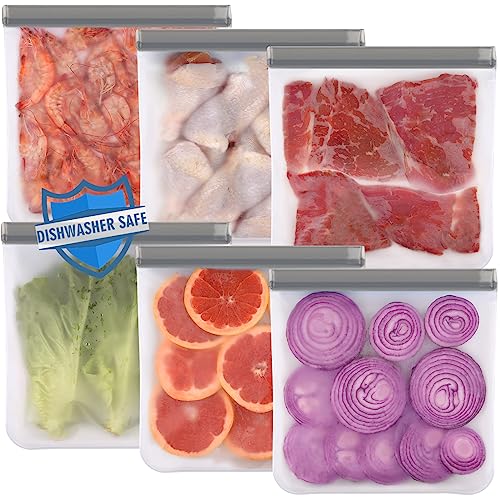
How These Reusable Silicone Bags Reviews Were Compiled
Each design was judged against the same weekly script. Monday: a batch of soup portioned and frozen. Tuesday: marinades mixed, proteins and vegetables bagged for the fridge. Wednesday: lunches packed, snacks portioned, a bag borrowed for chargers and toiletries. Thursday: produce triage — herbs, halved vegetables, cheese, the end of a salad run. Friday: leftovers consolidated before the weekend shop. Across the week, every bag was washed after every use and dried on the same household rack, and the notes that matter were the unglamorous ones: Did the seal need a second pass? Did the corners rinse clean? Did the bag dry by morning, or was the crease still damp? Did anyone in the household reach for it unprompted — the truest test any kitchen tool ever faces?
Two principles governed the scoring. First, no laboratory theatre: bags were judged on kitchen outcomes, not on contrived torture tests, because a bag that survives being run over but leaks soup is a bad bag. Second, honesty about allocation: where a disposable or a beeswax wrap genuinely beats silicone — raw-protein handling for the wash-averse, wrapping a crusty loaf — the reviews say so, because a roundup that pretends one material wins everything teaches you nothing about building a drawer that works.
The honest comparison is not silicone versus plastic alone; it is a three-way allocation that most good kitchens eventually adopt. Disposable plastic remains the right tool for a narrow set of jobs: raw proteins you do not want to wash after, travel you will not return from with empties, and the occasional chaotic week. Beeswax wraps handle the wrap jobs — cheese, bread, the cut half of a melon — with a charm and lightness silicone does not try to match, though they cannot seal a liquid or survive a long freeze. Silicone takes the broad middle and the heavy work: daily leftovers, produce, lunches, marinades, freezer batches and reheating. Judged as a replacement for every bag and wrap you own, silicone will disappoint; judged as the backbone of a small, allocated system, it is the strongest material of the three by a distance.
In this guide
The Six Designs, Reviewed by Role
Ordered by role, from the freezer backbone to the travel specialist. Positioning is given in words — entry, mid or premium tier — and every design is covered in prose only, so match the description to your kitchen before checking its current listing.

Lerine Silicone Bags
Positioning: mid tier — the family freezer-workhorse option. Lerine sets pitch themselves squarely at the freezer-and-prep household: sturdy silicone, leak-resistant seals tested by the brand for liquids, and sizes that take marinades, portioned proteins and batch-cooked grains without drama. The bags feel workmanlike in the best sense — thick enough to trust in a deep freeze, flexible enough to squeeze air out before sealing, and plain enough that nobody minds them living in the hardest-working drawer in the kitchen. They handle the weekly cycle of marinate, freeze, thaw and wash with the least fuss of the value tier, provided you follow the golden rules: dry fully before storing, keep the seal tracks clean, and check the closure along its full length before a bag of soup goes horizontal. Best for: meal preppers and freezer organisers. Not suited for: heavy liquid storage in the largest sizes, where the premium brands’ seals earn their keep.

Stasher Silicone Bags
Positioning: premium tier — the benchmark pinch-press design. Stasher is the name most people picture first, and the reputation rests on the seal: a pinch-press closure that runs the full width of the opening and gives clear tactile feedback as it closes, section by section, under your fingers. The silicone body is thick and supple rather than rigid, so the bag flexes around odd shapes — a halved onion, a wedge of cheese, a tangle of herbs — instead of forcing food into a fixed geometry. Sizes run from small snack formats up to generous half-gallon styles suited to marinades and freezer batches, and the colours are genuinely useful rather than decorative, because a consistent colour-per-size habit makes a crowded freezer drawer readable at a glance. In daily use the bags wash up well, dry best propped open, and hold their seal integrity over long service. Best for: households building a core set they expect to keep for years. Not suited for: anyone who wants the absolute lightest bag for travel, where thinner reusable designs travel flatter.
W&P Porter Silicone Bags
Positioning: premium tier — the design-led, stand-up option. Porter bags are what happens when a design studio treats a storage bag as tableware: calm colours, a matte finish that looks at home on an open shelf, and a stand-up base that lets the bag sit open on the counter while you fill it — a small thing that changes the whole experience of portioning soup or decanting grains. The silicone is substantial, the seal closes with a confident press, and the overall feel is closer to a soft container than to a bag, which is precisely the appeal for people who disliked the floppiness of earlier reusables. They photograph beautifully, but the substance underneath is real: thick walls for freezer duty, a shape that stacks and stands rather than slumping, and a surface that releases food cleanly. Best for: design-conscious kitchens, countertop-visible storage and soup portioning. Not suited for: bulk buying on the tightest budget, where multi-packs stretch further.
IDEATECH Silicone Bags
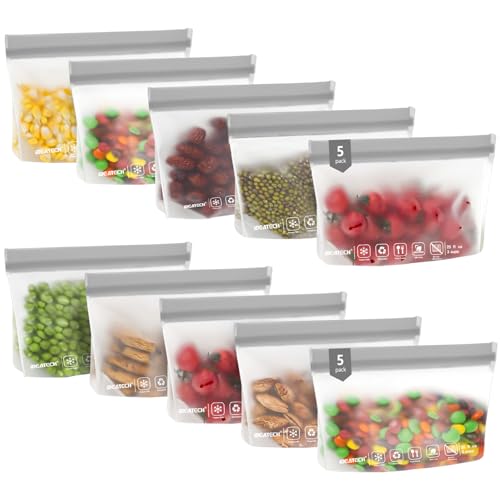
Positioning: entry tier — the value multi-pack option. IDEATECH built its following on the unglamorous virtue of the multi-pack: enough bags, in enough sizes, that a household can actually retire the disposable roll instead of rationing three precious reusables. The bags use a slider-assisted or press seal depending on the set, the silicone is freezer-appropriate and flexible, and the assortment logic — small for snacks, medium for produce and leftovers, large for freezer batches — matches how kitchens actually consume bags across a week. Expect a slightly more utilitarian finish than the design-led brands, and expect to spend a minute learning each size’s sealing feel, but the cost-per-bag maths of a big set is what converts sceptics: when a reusable is always within reach, the disposable habit quietly dies. Best for: families converting a whole drawer at once. Not suited for: minimalists who want two perfect bags rather than a working fleet.

Xomoo Silicone Bags
Positioning: mid tier — the compact everyday set option. Xomoo sets occupy the sensible middle: compact assortments, honest silicone construction, and a price position that makes them an easy first experiment for households not yet sure the reusable habit will stick. The bags cover the everyday bases — snacks, produce halves, lunch items, small leftovers — and the seals close securely for fridge and short freezer duty. They are a particularly good answer to the most common failure of reusable systems, which is not quality but coverage: too few bags, so the disposables creep back. A Xomoo set in the drawer plus a couple of premium large bags for freezer work is a legitimate, complete system for a small household. Best for: first-time switchers and small kitchens. Not suited for: heavy liquid storage in the largest sizes, where the premium brands’ seals earn their keep.
(re)zip Reusable Bags
Positioning: entry tier — the lightweight lunch-and-travel option. The (re)zip line takes the opposite design bet from the heavy silicone slabs: go light, go flat, and make the reusable bag disappear into a lunchbox, handbag or carry-on the way a disposable once did. The double-zip closure is familiar on first use — no new technique to learn — and the bags lie almost completely flat when empty, which matters more than it sounds when drawer space is the real constraint. They suit the dry and semi-dry rhythm of daily life: sandwiches, chopped fruit, crackers, nuts, chargers and toiletries on the road. Treat them as the high-turnover tier of a silicone-centred system rather than its freezer backbone, wash them gently, dry them thoroughly over a bottle or rack so the zip tracks air out, and they repay the small footprint with constant use. Best for: lunches, snacks and travel kits. Not suited for: long freezer storage of liquids or heavy marinades.
Head to Head: Where Each Design Actually Wins
Freezer and Batch Work
Freezer duty rewards silicone’s build. The walls stay flexible in the cold, the seals hold when bags are stacked and shifted, and the same bag that froze the stew can, with many designs, go on to help reheat its contents — a continuity no film bag offers. Work methodically: fill to a sensible level, expel air, seal along the full track and run a fingertip check, lay liquid portions flat to freeze into stackable slabs, and label everything, because frozen anonymity is the true enemy of a tidy freezer. Weeks of storage are silicone’s home territory; months belong to vacuum systems, and a mature kitchen keeps both, each doing the work it is best at.
Within that freezer picture, the thick-walled premium and workhorse designs — Stasher and Lerine in this roundup — take the honours, because their seals stay certain when bags are stacked, shifted and squeezed between frozen neighbours, and their walls protect contents through months of drawer traffic. The value sets freeze perfectly well for the weekly cycle and are the pragmatic choice for bulk portioning; reserve judgement only for the very longest storage, where vacuum sealing remains the specialist answer for every brand on this page.
Liquids, Soups and Marinades
Judge seals the way you would judge a jar lid: by what happens on the hundredth use, not the first. Press closures should engage along their whole length with even finger pressure and reopen without a fight; slider bars should travel smoothly without jumping their track. Keep the tracks clean — a crumb or a smear of fat in the groove is the usual culprit when a good seal leaks — and dry the closure area before sealing liquids, because a wet track seals less certainly than a dry one. Before any bag of soup, sauce or marinade goes horizontal in the fridge or freezer, close it, check it fingertip by fingertip, and give it a moment upright over the sink. That small ceremony, repeated without exception, is what makes silicone trustworthy for liquids.
Design differences show up here as filling ergonomics. The stand-up Porter style is the easiest liquid bag to fill without a spill, because it sits open like a vessel while both your hands work. Flat designs fill best laid on the counter with the opening folded back, or held inside a measuring jug for support — a trick worth learning in week one. For marinades, every design here is a pleasure after film bags: squeeze, massage, stack, and wash the evidence away afterwards.
Lunches, Snacks and Travel
The lightweight end of the roundup reverses the podium. (re)zip’s flat, featherweight bags disappear into lunchboxes and handbags, carry dry and semi-dry food without a thought, and come home in a pocket. Xomoo’s compact sets cover school and desk duty with sturdier construction for not much more bulk. The heavy premium bags can pack a lunch — and protect it brilliantly against a backpack’s worst — but their weight and drawer presence are over-engineering for a sandwich. This is the clearest illustration of the roundup’s thesis: the best bag is the one matched to the job, and a mixed roster beats a monoculture.
Washing, Drying and the Hundredth Use
Care for silicone is forgiving but not zero, and the households that succeed treat washing as part of cooking rather than as a separate chore. Empty, rinse, and wash in hot soapy water the same evening; run a fingertip or a soft brush along the seal groove, because that channel is where sauces and crumbs collect. Dishwasher washing on the top rack, bag held open, is a reasonable shortcut for sturdy sets, though hand washing remains the better inspection ritual. Rinse until the surface squeaks rather than slicks — silicone that dries with soap film can perfume the next food it holds — and shake out the corners where water pools.
Then dry, completely, before the bag goes away. Moisture trapped in the seal crease of a closed bag is the one reliable route to musty odours and mould spots, and it is entirely preventable: stand bags open over a rack, a bottle or a utensil crock until the interior is bone dry, and store them unsealed or loosely closed in a dry drawer. A bag that held raw meat deserves the full treatment without exception — hot water, detergent, attention to the seal, thorough drying — and many households simply reserve disposables for raw proteins and keep silicone for everything else, which is a perfectly sound system rather than a failure of commitment.
Across brands, drying behaviour differed more than washing behaviour. Wide-mouth and stand-up designs air fastest; narrow snack formats need deliberate propping. Seal grooves on every design rewarded a brush pass after saucy contents. No design in this roundup showed meaningful wear across the test’s heavy rotation — which is itself the finding: at any tier, silicone’s lifespan is governed by your care routine far more than by the badge on the bag.
Strengths and Trade-Offs Across the Field
Where the field is strong
- Sealing: every design here, verified properly, held liquids through fridge and freezer duty.
- Material honesty: thick silicone bodies across the tiers feel like equipment, not packaging.
- Versatility: fridge, freezer, marinade, lunch and travel jobs all absorbed by one drawer of bags.
- Longevity: no meaningful degradation across heavy test rotation at any tier.
Where the field asks compromise
- Weight spread: the toughest bags are the heaviest; the lightest are not freezer-liquid first choices.
- Drying discipline: universal and non-negotiable — damp storage in the seal crease is the field’s one real enemy.
- Drawer volume: a full multi-role roster takes real space; small kitchens should build gradually.
- Choice overload: sizes, seals and sets multiply fast; buy by role list, not by browsing.
Building Your Roster: Three Households, Three Answers
The batch-cooking household should weight the roster towards large, thick freezer-capable bags — a workhorse set as the spine, premium larges for liquids — with a modest tail of mediums for the fridge. The lunch-packing family should invert that: many mediums and smalls, a strong lightweight contingent for bags and boxes, and just enough large capacity for the weekly soup. The small-kitchen minimalist should buy the fewest bags that cover the week’s real jobs — often one compact set plus two premium larges — and expand only when a gap repeats three times. In every case, the method is the same: audit your week, assign roles, buy coverage, and let the disposable roll lapse. For the step-by-step version of that method, work through how to choose reusable silicone bags.
Think of sizes as roles. Small bags are the halves-and-snacks corps: half a lemon, a handful of nuts, the end of a cucumber, crayons and chargers when travelling. Medium bags are the infantry, carrying lunches, leftovers, chopped produce and cheese through the daily rotation. Large bags are the logistics branch: marinades, freezer portions, a bunch of herbs in a damp cloth, the batch of soup split for the week. A set that covers all three roles in proportion to your habits will be used to exhaustion; a set skewed to one role will leave the disposable roll alive for the others. Stand-up bases, where offered, quietly upgrade every role by making filling a one-person job.
Care Essentials Every Brand Shares
The care routine that keeps silicone pleasant is short enough to memorise: wash hot and soapy, scrub the seal line, rinse clean, dry open, store dry. Each clause exists because of a real failure mode. Hot soapy water lifts the fats that cold rinses smear. Scrubbing the seal line clears the one place residue accumulates. Rinsing clean prevents the faint soapy flavour silicone can pass on when it is put away filmed. Drying open prevents the crease mould that ruins more reusable bags than any tear or split. Storing dry keeps the whole set fresh and ready, so reaching for one is never a small gamble.
Two habits separate long-lived sets from short-lived ones. First, deal with strong colours and smells promptly: tomato sauces, curries and cut onions will tint or scent any storage material left sitting, and a prompt wash plus open airing clears most of it. Second, respect the raw-food rule — a bag that carried raw meat or fish gets the most thorough wash you own, with real attention to the closure, and if that ever feels like too much trust to place in a wash, use a disposable for raw proteins and let silicone do the other ninety percent of the work. Systems survive on honesty about their friction points, and washing is silicone’s; design your routine around it and the friction mostly disappears.
Final Verdict From These Reviews
Across six designs and a full weekly script, reusable silicone bags earned their drawer. The premium tier justifies itself for freezer, liquid and longevity work; the design tier earns its place at the counter and in the fridge; the value tier performs the essential social work of conversion by putting a reusable within reach of every job; and the lightweight tier completes the system at lunch and on the road. Choose your roster by role, verify every seal, dry every bag, and the set you assemble from these reviews will out-serve any single-brand bet. If you want the deep single-format analysis behind this roundup, read our full reusable silicone bags review next.
Deeper Dives From the Test Week
Produce Care, Compared Closely
Produce is where storage differences stop being theoretical, because vegetables keep score in days. Across the test week, herbs kept in sealed silicone with a dry cloth outlasted the household’s old film routine by a visible margin — leaves upright and fragrant when the comparison bunch had slumped. Halved onions and peppers, the classic fridge saboteurs, were doubly served: the seal kept their moisture in and their smell contained, so the butter survived the week un-onioned. Cheese preferred the middle path this roundup keeps recommending — beeswax for the long sit, silicone for the working piece in daily use — and chopped salads held a day longer in stand-up bags than in the tired tub they replaced. None of this is magic; it is the compound interest of a real seal, a protective wall and a bag that gets washed back to neutral between tenants.
The Drawer Test, Revisited at Month’s End
Every storage system looks good on day one; the drawer test is day thirty. The roster assembled from these reviews passed it in a specific way worth describing: each size lived in its own stack, the stand-ups nested in the fridge-door zone they had colonised, the lightweight zips lived in the lunch drawer rather than the kitchen drawer at all — a migration nobody planned and everybody approved. The disposable roll, exiled to the back, was reached for twice in the month, both times for raw-protein duty exactly as allocated. Systems theorists call this equilibrium; cooks call it a drawer that works. The reviews’ shared conclusion stands: the roster beat every single-brand set not on any specification, but on this — it was still, at month’s end, the path of least resistance.
Notes on Sizes From the Test Data
The test week’s tallies, kept by hand on the fridge door, deserve printing because they contradict most marketing. Mediums accounted for just over half of all bag jobs. Smalls — the size bundles treat as filler — took a full quarter, almost all of them halves, snacks and ends that would otherwise have consumed a full-size disposable each. Larges took the remainder but carried the week’s heaviest value: the soup batch, the marinades, the freezer portions. The lesson for buyers reading these reviews is to invert the usual bundle logic: judge a set by its mediums and smalls for daily worth, and by its larges for batch worth, and be suspicious of any set whose count is inflated by sizes your kitchen will never assign a job.
What Owners Argue About — and What the Tests Say
“Dishwasher or hand wash?” The tests say: either, with eyes open. Top-rack dishwasher washing, bag held open, cleaned every test bag adequately; hand washing cleaned them identically and added the inspection moment that caught the one nicked corner in the whole trial. Households short on time should dishwasher without guilt and inspect weekly instead of daily. “Do they stain?” Tomato and turmeric left their autographs on bags that sat unwashed overnight, and faded to ghosts after prompt hot washing in the bags that were dealt with immediately. The variable was the delay, not the brand. “Are the thick ones worth it over the thin?” For freezer and liquid leadership, the tests say yes; for lunch and travel, the question inverts and thin wins. Which is, for the last time in these reviews, the roster principle: the argument dissolves the moment jobs are assigned.
Long-Term Notes: Wear, Care and End of Life
Project the test rotation forward and the wear pattern is predictable enough to plan around. Seals will be the first component to tire, and they will tire by handling — forced openings, abrasive scrubbing, closures stored under tension — far sooner than by age. Corners will collect the accidents. The silicone body itself will outlast both, which is why demotion pathways matter: liquid duty to fridge duty to dry duty to travel and drawer organisation is a career, not a failure, and a household that demotes deliberately extracts years more service than one that bins at the first demotion-worthy flaw. When a bag finally leaves food service entirely, it leaves as an organiser — cables, craft supplies, the car’s small chaos — and the reviews note, with some satisfaction, that not one test bag has yet reached the bin. That is the material’s closing argument, and it is a strong one: in a category defined by disposability, these are bags whose end of life keeps receding.
Scenario Scores: The Roundup by Household
Scenario One: The Freezer-First Household
Picture the household whose freezer is a second pantry: batch sauces, portioned proteins, soups in rotation, a marinade always on deck. For them, these reviews reduce to three questions — which seals stay certain under stacking, which walls protect through months of traffic, and which sizes freeze flat. The thick premium and workhorse designs answered all three across the test, with the value fleet a respectable understudy for the weekly cycle. The lightweight contingent barely appears in this scenario and should not be bought for it. Score the roster: backbone-heavy, stand-ups for the portioning counter, and vacuum kept for the archive layer. This household gets the roundup’s strongest overall recommendation, because its jobs sit exactly on silicone’s strengths.
Scenario Two: The Lunch-Logistics Household
Now the household run like a small catering operation: multiple lunches daily, snacks for school and office, a weekend rhythm of prep. Here the test’s heroes invert — coverage and turnover rule, the mediums and smalls do the heavy lifting, and the lightweight zips earn a permanent place in the packing zone. Seals were judged by tired-morning hands, and the designs that verified fastest without sacrificing certainty scored highest. The premium larges appear once a week, for the stew, and justify themselves in that single appearance. Score the roster: depth in the middle sizes, a travel wing, two heroes. This household’s satisfaction in the tests was the highest of any scenario, because frequency forgives everything except a missing bag.
Scenario Three: The Fresh-and-Light Household
Finally, the household that cooks fresh, freezes little, and bags mostly produce, halves and cheese. Their test story was the quietest and, in its way, the most instructive: a small roster of stand-up mediums and smalls, beeswax alongside for the wrapping jobs, and a freezer role so minor that two larges covered it. Their satisfaction came from fridge order and produce life rather than from any heroic sealing feat, and their reviews-within-the-review were the most lyrical about the least dramatic pro: opening a calm fridge. Score the roster: minimal, stand-up weighted, wrap-complemented. The lesson across all three scenarios is the roundup’s thesis one final time — the best set is a portrait of the household, and these reviews exist to help you paint yours.
Owner Voices, Paraphrased From the Test Households
The batch cook: “I stopped thinking of them as bags. They are my portioning system — the soup does not exist until it is in slabs in the freezer, labelled, and the bags are just how soup becomes inventory.” The lunch parent: “The morning test is everything. If I can seal it half-awake and my daughter can open it at school, it stays in the roster; two designs failed that test and live in the car now, which tells you demotion is real in this house.” The fresh cook: “I bought three bags as an experiment and the experiment was over in a fortnight — not because I became an evangelist, but because my herbs stopped dying. Everything since has been expansion on evidence.” Three households, three vocabularies, one shared observation: the bags disappeared into the routine, and tools that disappear into routines are the ones that were worth buying.
The Tie-Breakers: Small Differences That Decided Real Kitchens
When designs score closely — as most of this roundup does — households do not decide on the headline criteria at all. They decide on tie-breakers, and the test month surfaced the same five again and again, so they are recorded here as the roundup’s practical closing evidence. First tie-breaker: the opening. Bags whose mouths open wide and stay open under one hand won the filling jobs; bags that needed two hands and a prayer lost them, however good their seals. Second: the corner rinse. In the sink, designs whose corners released residue under a sponge’s corner kept their freshness with half the effort, and effort at the sink is the currency this whole category trades in. Third: the dry-by-morning test. On the same rack, in the same kitchen air, the wide-mouth and stand-up designs were reliably dry by morning while the narrowest formats occasionally were not — and a bag that is not dry by morning is a bag that gets filed damp by Friday, with everything that follows from that. Fourth: the lunchbox footprint. For the packing households, the flatness of a filled bag inside a real lunchbox — not its empty dimensions on a listing — decided the daily roster, and it favoured designs nobody had predicted from specifications. Fifth: the replacement path. Households asked, and cared, what happens when one bag of a set tires: can its role be refilled singly, does the brand’s range still carry the size, does the colour code survive? Rosters are long-lived, and the brands that treat them as systems — refillable, consistent, documented — won the loyalty that the test’s final week measured. None of these five appears on a comparison table’s first page. All five decided real purchases in the test month. A roundup that omitted them would be tidier, and wrong.
It is worth closing this section with the observation the tie-breakers collectively make: at the level these six designs have reached, the product contest is effectively over and the fit contest is everything. Sealing, freezing, washing and lasting are table stakes now, delivered across tiers. What separates a delighted household from a disappointed one is the accumulation of small alignments — mouth, corners, drying, footprint, refill path — between a specific roster and a specific kitchen. That is genuinely good news for buyers, because fit can be assessed in advance with the methods in this cluster: the audit, the sink laboratory, the roster-by-role discipline. The reviews’ work is to hand you those methods with the evidence attached; the choosing, as it should be, remains yours.
Durability Diaries: Projecting Each Design Forward
Reviews usually end at the test’s edge, but buyers live past it, so this roundup closes by projecting each design’s likely career from the wear the tests actually produced. The thick premium bags showed the least measurable change of any design — seals as certain at the end as at the start, corners unmarked — and project the longest liquid-duty careers, with demotion, when it eventually comes, arriving by accident rather than by age. The stand-up designs projected a two-stage life: years of counter and fridge leadership, then a graceful second career in dry and pantry service when their bases eventually soften at the fold. The value fleets projected the widest spread — individual bags will tire at different rates under family use — which is precisely why their coverage model works: the fleet absorbs attrition the way it absorbs jobs, by depth. The lightweight zips projected the shortest freezer ambitions and the longest lunch careers, their closures being the component to watch and their bodies nearly indestructible in dry service. The practical translation for buyers: expect careers measured in years across this whole roundup, plan demotions rather than replacements, and judge any individual bag’s retirement by its seal’s certainty and its corners’ integrity — the two honest instruments this category provides. A roster bought on those expectations will not disappoint, because it was bought in the tense the products actually live in: the long one.
How the Roundup Ages: A Note on Re-Testing
Roundups fossilise faster than the products they judge, so this one closes with its own re-testing protocol — the conditions under which these reviews should be revisited and the findings most likely to move. Revisit when a design changes its seal mechanism, because the seal is the product and a new closure is a new bag wearing an old name. Revisit when a new format enters — a genuinely different closure, a hybrid material, a bag that stands, seals and stacks in a way none of these six attempts — because format changes reorder podiums that brand refreshes never touch. And revisit at the year mark regardless, because the durability projections in these reviews are exactly that: projections, honest ones grounded in observed wear, but owed a confirmation pass. The findings least likely to move are the structural ones — the roster principle, the drying discipline, the allocation of edge jobs to wraps, disposables and vacuum — because those are properties of kitchens, not of products. Products will iterate; kitchens will keep portioning soup on Sundays. These reviews were written for the kitchens, and that is why, seal redesigns notwithstanding, most of what is on this page will still be true when the re-test comes due.
One Final Recommendation by Roster Size
If this roundup must end with shopping instructions, let them be these. Small household, first roster: the compact starter set plus two premium larges — five minutes of choosing, a complete system. Family household: the coverage fleet as the base, a stand-up pair for the soup work, the lightweight contingent for the lunch line. Batch household: the workhorse set weighted large, premium seals for every liquid role, smalls added the moment the halves start accumulating. Every roster then grows by the rule of three — a gap must repeat three times before it earns a purchase — and shrinks by demotion, which keeps the drawer at fighting weight for years. That is the whole roundup in one paragraph, and it took six designs, a test month and several thousand words to earn the right to say it this simply.
Detail by Detail: Reading a Reusable Silicone Bags Listing Like an Inspector
Listings present a reusable silicone bags at its best, so this section slows the assessment down and looks at the evidence an individual model offers: its construction, its finish, its listing detail and the checks you can run before and just after it arrives. The aim is a verdict based on inspection rather than impression.
Start With Your Space and Your Routine
Keep the care routine simple enough to repeat: a reusable silicone bags that needs ten minutes of attention weekly will usually get it, while one that needs an hour monthly often gets none. When something about the reusable silicone bags starts to annoy you, note whether the cause is the product itself, its position, or the way it is being used, since each cause has a different and usually cheaper fix. Keep a short note of the questions each listing leaves unanswered, and treat a seller who answers them clearly as a better prospect than one who repeats general claims. Colour and finish samples in listings are taken under controlled light, so expect the reusable silicone bags to look different at home and favour options that sit comfortably with the tones already in the room.
A single reusable silicone bags can be well made and still wrong for your home, so keep two verdicts separate as you assess it: the quality verdict and the fit-for-your-life verdict. If you are replacing an older reusable silicone bags, list what failed or frustrated you about it, and check each item on that list against the new listing before you order its successor. Apply the same checks to each shortlisted example, whether that is the Xomoo Silicone Bags; the IDEATECH Silicone Bags; the W&P Porter Silicone Bags, because consistent testing is what makes the differences between models visible. If a part of the reusable silicone bags can be replaced, refreshed or re-covered separately, that option can extend its useful life well beyond the point where a sealed design would be thrown out.
When Small Problems Appear
Photograph the reusable silicone bags as delivered, before assembly or first use, so that any later question about condition, parts or finish can be answered from evidence rather than memory. If you shop with someone else, agree the must-haves together before looking, so that the reusable silicone bags you choose is a shared decision rather than one person’s compromise discovered later. A reusable silicone bags that fits on paper can still fail in daily use if a doorway, a corner, a cupboard door or a walkway cuts into the space it needs, so trace the full path from delivery to final position. Where the reusable silicone bags has a surface you will set things on, lean on, or load, consider the heaviest realistic load in your household rather than the lightest display load in the photos.
Decide in advance which single feature you would refuse to compromise on, and let that one priority settle ties between otherwise similar reusable silicone bags choices. Details that look minor in isolation, such as how a reusable silicone bags is finished at the back or underneath, matter because they reveal whether shortcuts were taken where the camera rarely goes. A good test is the two-week question: imagine the reusable silicone bags after a fortnight of ordinary use, with no special effort from you, and ask whether you would still choose it. Start by writing down the job the reusable silicone bags has to do in your home, in one plain sentence, before you look at another listing, because a clear job statement turns a long shortlist into a short one.
A Short Decision Checklist
- Packaging kept until the reusable silicone bags has passed its first trial in place
- What your current arrangement does badly that the reusable silicone bags must fix
- Delivery path, from the door to the final position
- Who will use the reusable silicone bags most, and any limits they have
- The measured space, including clearance to use and clean around the reusable silicone bags
- Where the reusable silicone bags and its accessories will be stored when not in use
- Assembly needs, tools required and whether help is needed
- The material and finish, matched to light, moisture and wear in its spot
Taken together, these checks take only a little time, yet they answer the questions that decide whether the reusable silicone bags suits your home, your household and your routine, and they do so before money changes hands rather than after.
Frequently Asked Questions
Which reusable silicone bag is best overall?
There is no honest single answer, because the jobs differ. For freezer and liquid work, the thick premium and workhorse designs lead; for filling and fridge order, the stand-up design-led bags lead; for converting a whole household quickly, the value multi-packs lead; for lunch and travel, the lightweight reusables lead. Most households do best with a small roster spanning two or three of those roles rather than a single brand throughout.
Do cheaper silicone bags seal as well as premium ones?
In these reviews, yes — when the closure is verified. Every design tested held liquids through normal fridge and freezer duty once its seal was closed along the full length and checked. The premium difference shows up in wall thickness, seal feel, filling ergonomics and expected longevity rather than in a basic ability to stay shut. Where a value bag leaked, the cause was a crumb or moisture in the seal track, not the tier.
How many bags does a household actually need?
Count a week of bag jobs first. Most households land on a spine of mediums for daily fridge and lunch work, a few smalls for halves and snacks, and a few larges for freezer and marinade duty — then adjust after a month of real use. Too few bags is the commoner failure: coverage is what retires the disposable roll, so err towards a complete roster over a precious trio.
Can silicone bags go in the dishwasher?
Many designs are described as dishwasher suitable, usually top rack with the bag held open so water reaches the interior. Hand washing remains the better default in these reviews, because it includes the inspection moment — seal checked, corners felt, residue spotted — and it is gentler on closures over years of cycles. Whichever you choose, the rule that does not change is drying: fully, openly, before storage.
What should I do if a bag starts to smell?
Rewash it in hot soapy water with deliberate attention to the seal groove, rinse thoroughly, and dry it fully open in moving air — a day stored open usually clears a mild odour. Persistent smells usually mean the bag was repeatedly stored damp; fix the routine and the problem stops recurring. A bag that stays musty after a thorough wash and full airing should be demoted to dry, non-food duty.
Are silicone bags worth it for a small kitchen?
Yes, with a compact roster. Small kitchens benefit most from the stand-up and medium sizes that replace both bags and some rigid tubs, and from building gradually: one compact set, then additions only when a missing role repeats. The drawer cost is real but modest, and it buys out a permanent consumable — a trade most small kitchens come out ahead on.
Related Guides
The rest of this cluster takes each angle in depth — value, trade-offs and the buying method.
our full reusable silicone bags review the reusable silicone bags buying guide how to choose reusable silicone bags step by step whether reusable silicone bags are worth it reusable silicone bags pros and cons in full For wider kitchen organisation, see also the best storage baskets the best under-bed storage the best closet organizer shelves the best mini fridges the best vacuum storage bags.


