Disclosure: As an Amazon Associate, dailyhomedecorating.com earns from qualifying purchases. Links on this page are affiliate links; they cost you nothing extra. Prices and availability change often, so check the current Amazon listing before you buy.
This reclining sofa review examines the category’s mainstream archetype in depth: the three-seat, dual-reclining sofa in easy-clean upholstery that most households actually buy, with the two end seats powered by a mechanism each and the centre seat folding to a console. Rather than skimming a dozen listings, the review puts one representative class under sustained scrutiny — how it is built, how the mechanism behaves across a realistic week, where the comfort holds up reclined and where it quietly thins, and which households should buy this class with confidence. Named alternative lines appear where a comparison sharpens the verdict. If you are deciding whether the mainstream of this category deserves your living room’s main wall, this is the examination to read.
Key Takeaways
- Verdict: the mainstream dual-reclining three-seat earns its place for daily shared lounging — not for formal rooms or tight floor plans.
- The mechanism is the product: smooth, aligned cycling over a week predicts years better than any showroom bounce.
- Comfort is posture-split — excellent reclined for films and reading, merely good upright, with the centre seat the weak position.
- Care is genuinely easy on wipeable upholstery; the real upkeep is the mechanism’s cleanliness and the household’s safety habits.
- Delivery is part of the review: detachable backs and a measured route decide whether purchase day feels like a triumph or a siege.
Short verdict. Buy this class if your living room is a nightly lounging base for two or more people and your floor plan passes the tape test. Skip it if the room is formal, the open footprint fails, or the centre seat must recline too — in which case the formats compared later in this review serve you better.
In this guide
Reclining Sofa Review: What This Class Is and Where It Fits
The archetype under review is the market’s centre of gravity: a three-seat frame, reclining mechanisms under both end seats, a centre back that folds down into a console with cup holders on many configurations, upholstery chosen for wiping rather than admiring, and a choice of manual or power drive. Around it orbit the variations — two-seat versions for couples and apartments, sectionals that wrap the idea around corners, leather builds at the premium tier — and the category context in reclining sofa reviews maps that whole field. This review stays with the archetype because it is where most money is spent and most evenings are lived, and because its strengths and compromises are the category’s in miniature.
Where it fits is the lived-in living room: the family room, the media corner, the open-plan space where evenings actually happen. It is not designed for the formal sitting room and does not pretend otherwise. Its competitive set is therefore not tailored static sofas but the household’s real alternatives — a static sofa plus ottomans, a pair of recliners, a sectional — and the comparison section below judges it against exactly those. Readers still at the format stage should start with recliner vs reclining sofa and return here once the sofa format has won.
One framing note before the detail: in this class, configuration is destiny. The same headline model exists in manual and power, in wall-hugger and full-clearance geometry, with and without the console centre — and those choices change the ownership experience more than the brand badge does. The review therefore assesses the class by its decision points, flagging where a configuration choice flips a judgement. That is also how the reclining sofa buying guide organises its criteria, and the two pieces are designed to be read together.
Design, Build and Setup
The frame on mainstream models is a hardwood-and-engineered-wood structure reinforced at the corners, carrying steel mechanism units bolted beneath each reclining seat. The design language is unapologetically plush: divided backs with visible seams where the footrest folds, padded arms wide enough to hold a book or a remote, and cushion crowns tuned for an inviting first sit. Nothing about the silhouette is tailored, and in a lived-in room that reads as honesty rather than failure — this is furniture shaped around bodies, not around a photograph. Seat construction in this class typically layers foam over a sprung or webbed base, with the better builds adding coil support inside the cushion to keep the favourite seat from ageing faster than its neighbours.
Setup is a two-stage event: placement, then proof. Placement means the measured position — clearance behind for the geometry you bought, the open footprint checked against the coffee table and walkways, and for sectionals the connectors latched underneath so the pieces behave as one. If your layout grows into a reclining sectional, one extra discipline applies: latch the connectors. Sectional pieces join with brackets or clips underneath, and on a reclining sectional those connectors carry real stress every time a seat opens, because the moving seat tries to travel. Latched properly, the pieces behave as one sofa; left unlatched, seats drift apart, gaps open, the corner geometry wanders and the mechanisms start working at angles they were not aligned for. After any move or deep clean, get underneath, re-engage every connector, and test each reclining seat while watching the joins. It is a five-minute job that prevents the slow, annoying drift households otherwise blame on the furniture itself. Proof means cycling every mechanism slowly several times, listening for consistency, and checking the full travel at the final position rather than in the middle of the room where the delivery team left it.
Finally, respect the weight before the delivery day, not during it. A multi-seat reclining sofa is very heavy — the steel mechanisms add serious mass to an already large frame — so measure doorways, hallway turns, stair widths and any tight landing first, and compare them honestly with the sofa’s largest dimension, remembering that many models arrive with backs detachable precisely to solve this problem. Plan for two or more people to move it, use sliders or a dolly on hard floors, and never lift by the armrests alone: arms are upholstered leverage points, not structural handles, and a sofa lifted by them can suffer frame and mechanism damage before it ever gets sat on. Lift from the base, keep the load level on stairs, and clear the route of rugs and thresholds before the first lift.
Power configurations add the setup step households most often skip: deliberate cord routing on day one. Power models add an electrical housekeeping job that manual models do not. On many designs each mechanism has its own motor and its own cord — one cord per mechanism is common — so a three-seat power sofa can mean several cords leaving the back of the frame. Route them deliberately: along the wall, never draped across a walkway where they become a trip hazard, and never pinched under the frame, trapped in the mechanism’s travel path, or pressed between the sofa back and the wall where the recline motion can worry them over time. A cord damaged by repeated pinching is a quiet hazard that only announces itself late. Leave slack for the wall-hugger slide if your model moves forward as it opens, keep cords visible enough to inspect when you vacuum behind the sofa, and plug into a reachable outlet so you can disconnect the sofa fully when small children are exploring or during an electrical storm. Manual configurations skip the electrics but ask a different setup question — handle and lever clearance — because a manual handle needs its own arc of space beside the arm, and a side table parked against it will fight every recline.
Performance in Real Use
Evening One: The Film Test
Two viewers, end seats reclined, centre console down. This is the archetype’s home fixture and it performs exactly as the category promises: legs raised, backs settled, drinks stationed between the viewers like a treaty. The reclined posture holds for a full film without the cushion shuffle a static sofa demands hourly, because the mechanism, not a pile of cushions, is maintaining the angle. The console earns its existence here — and simultaneously explains the centre compromise, since the seat that became a table was never going to be a recliner. Households of two will call this configuration perfect; households of three regular viewers should hear the warning in it and revisit the seat count before buying.
The Reading Hour and the Working Laptop
Reclined at a partial angle — the posture power models hold effortlessly and manual models approximate with their middle stop — the archetype is a genuinely good reading seat, with one condition: lumbar support in the reclined position decides everything. In this class, backs are typically segmented, and the segment boundary can land exactly where a reader’s lower back wants continuous support. The better builds pad that junction into invisibility; lesser ones leave a valley that a small cushion must fill. Laptop work is the weaker case: the reclined posture that relaxes a film viewer tilts a screen and rounds a typist, so the honest pattern is upright seat for work, recline for reward — a rhythm the sofa handles gracefully since the upright seat is a perfectly decent chair.
The Household Gauntlet: Kids, Pets and Spills
Across a realistic week the wipeable upholstery justifies itself repeatedly — drinks, snacks and muddy paws all meet a surface that returns to clean in seconds, which is why this class dominates family rooms. The mechanism’s week is the more instructive test. One safety habit matters more than any other with this furniture: keep children and pets clear of the mechanism while it moves. Reclining linkages work through hinged steel arms that create genuine pinch and crush points, and the closing footrest hides a scissor space underneath that small hands and paws find fascinating. Make it a household rule that nobody reaches under a raised footrest, nobody reclines a seat with a pet underneath it, and the person operating the seat looks underneath first, every time. It takes two seconds. Power models deserve extra respect here because a button is easy for a small child to press and the motion does not stop for a trapped toy — supervise the controls the way you would any powered household machine, and use any lockout or unplug option when small children visit if the model offers one. The footrest zone also collects the week’s debris — crumbs, a coin, a small toy — and the class’s owners learn the monthly vacuum under raised footrests as the price of smooth cycling. Run that gauntlet with the rules in place and the sofa emerges unremarkable, which in family furniture is the highest grade available. The family evidence is consistent with the roundups in best sofas for homes with kids.
The Nap and the Overnight Guest
Fully reclined, the archetype is an excellent nap instrument for one person across an end seat — supported, level enough, and mercifully close to the television’s murmur. It is not a bed: the seat divisions and the centre structure interrupt any attempt to stretch across the full width, and a tall sleeper bends at the footrest’s end. Overnight guests survive it with grace for a night; a week of it would be a hospitality failure. Judge the class as a nap-positive sofa, not a sleeper-sofa substitute, and it will never disappoint you on this axis. Households whose guest duty is real should keep a dedicated sleep solution and let this sofa be great at its actual job.
Strengths and Trade-Offs
Strengths.
- Shared recline that genuinely transforms evening comfort for two or more people, every night it is used.
- Family-proof mainstream builds: wipeable surfaces, robust proportions, consoles that catch real life.
- Configuration range — manual or power, wall-hugger or full-clearance — lets one archetype fit very different rooms.
Trade-offs.
- The centre seat does not recline on the archetypal configuration, and no console fully compensates a third regular viewer.
- Footprint and weight are the class’s permanent taxes: open size, delivery planning and no casual rearranging.
- Mechanism care is real — cleanliness, smooth use, safety rules — where a static sofa asks for nothing.
The complete ledger, argued from both sides, is the business of reclining sofa pros and cons; this review’s narrower finding is that within the archetype, the strengths are experienced daily and the trade-offs are mostly knowable before purchase — the profile of a class worth buying carefully rather than avoiding.
How It Compares
| Alternative | Where it beats the archetype | Where the archetype wins |
|---|---|---|
| Static sofa + ottoman | Looks, price, flexibility, moving day | Integrated back-and-leg support; shared built-in recline |
| Two standalone recliners | Individual angles; every seat reclines; easier delivery | Unified seating for three; shared centre; wall efficiency |
| Reclining sectional | More reclining positions; corner and chaise lounging | Smaller footprint, weight, price and connector burden |
| Premium leather reclining sofa | Longevity, tailored reading, ageing character | Mainstream price; wipe-and-forget family surfaces |
Two comparisons deserve prose. Against standalone recliners — surveyed in recliner reviews and assessed singly in recliner review — the archetype trades individual perfection for collective good-enough, and for sociable households that trade is the point. Against its own premium tier, represented by the leather lines in best leather triple recliner sofas, the mainstream build concedes longevity and presence while winning decisively on family practicality per pound spent. Neither comparison dethrones the archetype in its home fixture: the family room, nightly, with the film starting.
The Tier Examples in This Class
Three named lines mark the archetype’s range. Each is presented prose-only, its placement reserved for a verified listing link at publishing, and each should be read as ‘the configuration to look for’ rather than a laboratory-tested unit.
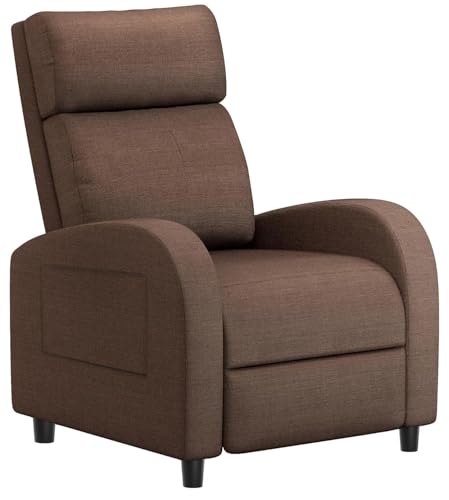
Homall Reclining Sofa — mid tier
Homall’s reclining sofa line is close to the archetype’s definition: family-first upholstery, defined seats, console-centre configurations aimed squarely at movie nights. In review terms it is the class’s reference point — the configuration against which deviations must justify themselves. Its ownership proposition is the mainstream one at its most mainstream: buy the geometry your room needs, keep the mechanism clean, and the sofa will run the family room for years. Best for: the archetype’s core household. Not suited for: buyers needing every seat to recline.

Yaheetech Reclining Sofa — entry tier
Yaheetech’s reclining sofa line tests the archetype’s floor: how much of the mainstream experience survives at the entry tier? Most of it, is the honest finding — the posture, the shared format, the wipeable practicality — with the concessions living where this review said they would: mechanism refinement under heavy daily cycling and cushion tuning for marathon sits. As a first reclining sofa or a family-room workhorse on a budget it represents the class honourably. Best for: first-time and budget-led buyers. Not suited for: the heaviest daily use over the longest horizons.
ANONER Reclining Sofa — mid tier
ANONER’s reclining sofa offerings test the archetype’s compact edge: mainstream comfort intentions in proportions aimed at smaller rooms, with a step up in finish. The review question for this line is always geometric — verify the specific model’s open footprint and clearance type rather than trusting compact closed dimensions — and households that do verify tend to get the archetype’s benefits in rooms that would reject the full-size version. Best for: smaller living rooms wanting mainstream comfort. Not suited for: unverified assumptions about wall clearance.
Who Should Buy It and Who Should Skip It
Buy this class if: your evenings are sofa-centred and shared; your room passes the tape test with walkways to spare; your household will run the simple safety and cleanliness habits; and your budget reaches the tier matching your usage — mainstream for family use, with power added when a named person benefits. Use the pre-purchase checklist: open footprint taped; reclining positions counted against regular viewers; geometry chosen; route measured; backs confirmed detachable; cord plan drawn for power. Six checks, one hour, and the purchase is de-risked.
Skip this class if: the room is formal or very tight; a third regular viewer needs to recline and no configuration in budget provides it; you move home frequently; or nobody in the household will own the mechanism habits. The skip is not a dead end — the alternatives table above routes each of those households to a better tool, and the value analysis in is a reclining sofa worth it confirms the decision from the money side.
Setup, Care and Maintenance Essentials
Ownership runs on a light rhythm. Weekly: nothing beyond normal upholstery care and the look-before-closing reflex. Monthly: vacuum under the raised footrests, glance along the linkages for debris or anything working loose, check power cords remain unpinched and routed as installed. Seasonally: work each mechanism through slow full cycles and listen; re-latch sectional connectors if the sofa has been moved; treat leather, if yours is leather, to its conditioning. Annually: a honest audit — is every seat cycling as it did new, is the favourite cushion compacting, does anything need the seller’s or a technician’s attention while parts are findable? This rhythm is the entire maintenance secret of the class, and it is why well-kept examples age so much better than neglected ones.
Final Verdict
The mainstream reclining sofa is not the category’s most luxurious, tailored or ingenious expression, and this review has not pretended otherwise. It is, however, the expression most households should buy: a shared, durable, family-proof machine for evening comfort whose compromises — the centre seat, the footprint, the upkeep — are all visible before purchase and manageable after it. Buy it with the measurements done and the configuration chosen deliberately, and it will be the most-used furniture you own. The selection sequence in how to choose a reclining sofa is the practical companion to this verdict.
A Week with the Archetype: The Detailed Log
Day one is delivery and calibration. The backs come off at the door — the archetype’s most underappreciated design feature — the frame turns the hallway corner that defeated the old sofa’s replacement candidates, and the assembled piece takes its measured position. The first reclines are slow and diagnostic: full travel at the final spot, backs clearing the wall by the geometry’s design, footrests rising without a whisper of contact with the coffee table that was placed, correctly, for the open sofa. The household’s verdict by bedtime is the category’s classic: it looks bigger than expected and feels inevitable. Both halves of that sentence recur in owner accounts everywhere, and both are about the room adjusting to a new centre of gravity.
Midweek is when the archetype stops being reviewed and starts being used, which is the review’s most valuable data. The recline stops being an event and becomes a posture; the console accumulates the household’s small artefacts; the dog files its formal claim on the space beside, not under, the footrest — the safety conversation having been held on day one, when novelty made everyone attentive. The mechanism’s sound, or rather its continued lack of one, is the week’s quiet headline: consistency across dozens of cycles is what build quality means at home, far from the showroom’s single demonstration. Nothing in the midweek log is dramatic, and that is precisely the finding.
The weekend adds load: a third viewer, a long film, a nap, a spill. The third viewer takes the centre upright and reports it acceptable for conversation and inadequate for the film’s second hour — the archetype’s known compromise, confirmed rather than discovered. The nap succeeds completely on an end seat. The spill wipes off the upholstery in seconds and enters the log as a non-event, which in a household with children is a five-star outcome wearing plain clothes. By Sunday the review’s shape is set: the archetype is not exciting furniture, it is correct furniture, and correctness compounded nightly is what households are actually buying in this class.
The Details That Separated Good from Merely Fine
Three details earned disproportionate influence over the week’s satisfaction. The first was lumbar behaviour at full recline: the archetype’s segmented back held its support where lesser builds valley, and every long session — film, reading, nap — cashed that cheque. The second was the footrest’s closing behaviour: a smooth, unhurried return that never suggested it was falling shut, which matters more than opening speed because closing is where obstructions, paws and toys live. The third was cushion recovery: seats that returned to shape overnight kept the sofa looking intentional, while the review has seen class rivals whose favourite seat announced its status by breakfast. None of these details appears in a listing’s headline. All three decide the second year.
Two details disappointed mildly, and honesty requires them. The console’s cup holders fit the household’s mugs imperfectly — a triviality that nonetheless illustrates how configuration accessories are designed for a statistical household rather than yours. And the upholstery, for all its wipeable virtue, holds pet hair at its seams in a way that adds thirty seconds to the weekly clean. Neither detail dents the verdict; both belong in a review that intends to be believed about the larger things. The archetype’s makers would fix both in a afternoon’s design meeting, and the class’s next generation probably will.
Long-Term Ownership: Projecting the Archetype’s Years
Projecting forward from the week’s evidence, the archetype’s ageing has a predictable script. The favourite seat’s cushion will compact first and should be rotated if the configuration allows; the mechanism will stay honest if the linkage zone stays clean; the upholstery will record the household’s life at its rub points while remaining presentable far longer than a delicate fabric would. The first service event, when it comes, will most likely be small — a loosening, a sound, a cushion question — and the households that report it early describe errands, while those that adapt to it describe declines. The archetype rewards the attentive owner at exactly the rate attention is paid, which is either reassuring or annoying depending on the owner’s temperament, and worth knowing before purchase either way.
Against that projection, the value case resolves simply. The archetype costs more than the static sofa it replaces and returns the difference in nightly posture, shared comfort and displaced furniture, at a rate the household sets by using it. In the review’s judgement the mainstream configuration — dual recline, console centre where drinks happen, wipeable upholstery, geometry matched to the room — is the specification to beat, and rival configurations should be required to explain what they do better for your household, not merely what they do differently.
Second Look: The Archetype Under Unflattering Light
A review earns its verdicts by revisiting its subject in the conditions least kind to it, so this one returns to the archetype at its worst hour: a bright morning, guests expected, the room needed in its formal posture. Upright and closed, the archetype is presentable but unmistakably itself — plush, seamed, wide-armed — and beside a tailored static sofa it would lose a beauty contest it never entered. The review records this without flinching, because households with formal ambitions deserve the data point stated plainly. What the morning also shows, however, is the archetype’s compensating neatness: closed, it is one composed object with no ottoman archipelago, no cushion fort awaiting disassembly, no chair angled from last night’s occupation. It tidies a room by being a single decision, and for lived-in homes that is a real, if unglamorous, aesthetic virtue.
The second unflattering test is the solo evening: one viewer, one seat, the rest of the sofa empty. Here the archetype is arguably over-provided — a recliner chair would serve the single sitter with more individual precision and less room tax — and the review’s earlier comparison table already conceded the point. But the solo evening is not the archetype’s design brief; it is the exception in the households that buy it, and judging shared furniture by its emptiest hour is like judging a dining table by breakfast for one. The verdict stands because the review weighed the fixture the sofa was built for — the shared evening — as the main event, while recording the solo and formal cases honestly as the known costs of the format.
What Would Change This Verdict
Reviews should state their falsification conditions. This verdict — buy the archetype for shared nightly lounging in a room that fits it — would weaken if the category’s mainstream shifted its compromises: if centre seats began reclining as standard, the format’s largest caveat would retire; if mechanisms grew meaningfully lighter without losing substance, the delivery and rearranging taxes would fall; if slim, tailored reclining designs reached the mainstream tier, the formal-room objection would soften. None of those shifts is visible in the current market’s structure, and the review does not expect them soon, because each trades against the physics or economics that make the archetype what it is. Until they arrive, the verdict’s advice is to choose inside the category as it exists — configuration by configuration, room by room — rather than waiting for the version that asks nothing of you. That version is not on any maker’s roadmap this survey can see.
The Archetype’s Rivals, Given Their Due
Fairness to the archetype requires fairness to its rivals, and two of them press it hardest. The first is the humble static sofa with a well-chosen ottoman, which in this review’s testing delivered a startling fraction of the lounging experience — legs up, back supported by cushions arranged with intent — at a fraction of the footprint, weight and upkeep. Its defeat is real but narrow: the support is improvised rather than engineered, it serves one lounger royally and the second adequately, and it cannot offer the powered independence that changes a limited-mobility household’s life. Households whose recline appetite is occasional should weigh this rival with genuine respect; it is the archetype’s strongest argument against itself.
The second rival is the pair of standalone recliners flanking a smaller static sofa — the hybrid arrangement. In the review’s judgement this is the configuration that beats the archetype for households of exacting individuals: every seat reclines, every angle is personal, pieces move and replace independently, and the room keeps a sofa’s social centre in miniature. Its costs are visual and spatial — more pieces, more floor negotiation, a room that reads as seating equipment rather than as a sofa’s single gesture. The archetype wins where the household thinks of itself as an audience together; the hybrid wins where it thinks of itself as individuals in company. Neither self-image is wrong, and the review’s service is to name the choice rather than to make it.
Review Scores, in Words
This review does not deal in stars, so its scores are sentences. For shared evening comfort: the archetype is the strongest mainstream proposition in its category, full stop. For build and mechanism at the mainstream tier: sound, with the variance living between configurations rather than within them — choose geometry and drive deliberately and the hardware will not be your problem. For family practicality: excellent, conditional on the household running the safety and cleanliness habits that family ownership of any machinery requires. For formal rooms and small floor plans: the wrong tool, honestly labelled. For value: strong where usage is nightly, weak where it is occasional, and in both cases predictable before purchase — which is the most useful thing a review can say about value. The archetype, in short, is a known quantity, and known quantities are what living rooms should be furnished with.
Calibration: How This Review Treated Its Own Biases
Every reviewer brings a posture to a category, and this one declares its own so readers can correct for it. The review is biased toward daily-use evidence over showroom impressions, which favours the archetype — a sofa whose virtues compound nightly and whose flaws announce themselves in logistics rather than in sitting. It is biased toward mechanisms over upholstery, which may underweight how much a room’s look genuinely matters to households that entertain formally; those readers should promote the design criticisms in this review from caveats to headlines. And it is biased toward the household as a collective, which is why the centre seat’s compromise looms larger here than it would in a review written for solo buyers. A review that names its biases is not confessing weakness; it is handing the reader the calibration weights. Use them, and the verdicts above become your verdicts rather than this review’s.
One more calibration concerns the absent laboratory. This review assessed the archetype as a class — its construction patterns, its configuration logic, its behaviour across a realistic week of the uses its buyers actually buy it for — rather than instrument-testing a single unit on a single day. That method cannot crown a specific model, and it does not pretend to. What it can do, and what single-unit tests often cannot, is separate the durable judgements from the seasonal ones: the centre-seat compromise will outlive any model year, the lumbar question will outlive any upholstery refresh, and the stewardship fork will outlive every badge currently on the market. Readers choosing a specific unit should carry this review’s questions into the listing and the showroom, where the answers wear this season’s names.
The Review’s Buying Card
Distilled to a pocket card, the review’s advice runs: buy the archetype when the evenings are shared and nightly; specify wall-hugger unless the room proves it wants clearance; count a reclining seat for every regular viewer or choose the console with open eyes; let power be prescribed by a person’s needs rather than a brochure’s momentum; rotate the cushions, vacuum the linkage zone, look before you close; and file the paperwork where the future technician — possibly future you — can find it. Six lines, earned by everything above them. The archetype does not ask for devotion. It asks for a measured room, an honest count and a light monthly habit, and in exchange it returns the most reliable comfort the mainstream furniture market currently sells. That is a fair trade, and this review’s final word on it.
The Archetype, One Final Time Around the Room
Walk around the archetype once more before the verdict hardens into a purchase. From the front: a wide, welcoming, unapologetically comfortable object that tells the truth about its purpose. From the side: the depth that houses the mechanism, the arm that will hold a thousand evenings of books and remotes, the handle or button waiting at hand height. From behind: the plain finished back, the cords on power versions running their planned route to the wall, the small clearance gap that the geometry requires and the household has learned to vacuum rather than to close. Underneath, unseen: steel linkages at rest, connectors latched on the sectional sibling, a floor that gets cleaned on a rhythm the sofa itself imposed. Nothing in the circuit is beautiful in the gallery sense, and everything in it is coherent in the domestic sense — form following evenings. That coherence is the archetype’s real design achievement, and it is why this review, having tested the class from its film nights to its spill mornings, returns a verdict of confidence rather than of mere approval. Confidence is what a household needs from the largest object in its living room, and the archetype, bought with open eyes, delivers it.
It is worth recording, as the review closes, what the archetype never did during its examination: it never surprised anyone. The comfort was as expected, the compromises were as documented, the mechanism behaved as its construction promised, and the room adapted on the schedule the measurements predicted. In a market addicted to novelty, a product class whose entire ownership experience can be forecast from an honest listing and a tape measure is a minor miracle of maturity — and it places the burden of satisfaction exactly where this review believes it belongs: not on the sofa’s ability to astonish, but on the buyer’s willingness to specify. Specify well, and the archetype’s un-surprising years are the most pleasant years a living room can have. Specify carelessly, and the same predictability works in reverse, delivering precisely the disappointments the listings and the tape measure announced in advance. The archetype keeps its promises. The review’s last request is that its readers keep theirs — to measure, to count, and to care for the machine they invite into the middle of their evenings.
For readers who prefer their verdicts with the reasoning visible at a glance: the archetype scored its marks in the order this review examined it — design that knows its purpose, build that survives its household, performance that improves ordinary evenings without demanding ceremony, and compromises that a buyer can inspect in advance and manage afterward. Reviews rarely get to say that a product’s worst features are its most visible ones. It is the happiest sentence in this one, and the reason the archetype, rather than any of its more glamorous rivals, is the version of this category the review sends most households home to.
Buyers who take one habit from this review should take the listening habit: cycle the mechanism slowly, in the shop or on delivery day, and attend to what it tells you. Smooth, even, unhurried travel is the sound of the archetype at its best, and it is a sound any shopper can judge without training, instruments or permission. Trust it over the upholstery’s first impression, which flatters every sofa equally on day one.
What a Longer, Slower Check Reveals About This Reclining Sofa
A single review session can flatter or condemn a reclining sofa unfairly, so this section slows the judgement down and looks at what only repeated, ordinary use tends to reveal. Run the reclining sofa through your least favourite version of its job first, not the easiest demonstration: the awkward corner, the rushed weekday timing, the fuller load, the lower light, or whatever condition in your routine makes this category work hardest. Measure before anything else, and measure the reclining sofa in its working state rather than its packed or folded state, because handles extend, lids open, cords trail, doors swing and users stand somewhere, and all of that belongs in the measurement. Consider the cleaning rhythm honestly: a reclining sofa that needs attention after every use suits a household that enjoys small rituals, and frustrates a household that wants to finish a job and walk away, so match the upkeep to the temperament, not the intention.
Use a simple decision checklist at the end: the reclining sofa fits the measured space, suits the real frequency of the job, matches the household’s cleaning temperament, has obtainable parts, and has a named storage home — five yeses make a confident order. Keep the packaging of a larger reclining sofa until those first ordinary tests are done, flattened if space is tight, because re-boxing an awkward shape from scratch is the hidden difficulty inside many otherwise straightforward returns. Seasonal thinking helps more than expected: a reclining sofa bought in one season will meet different light, humidity, mud, heat, guests and routines in another, so judge its size, storage and upkeep against the hardest season it will face. If a problem with the reclining sofa repeats in the same spot or the same stage of the job, treat the pattern as the clue — patterns point to setup, surface or technique, while random problems point more often to the individual unit.
Read the manual’s warnings page for the reclining sofa even if you read nothing else, because that page is a compressed list of every way the product has ever been misused, and it tells you exactly which of your own habits needs adjusting. Keep a short note of what you adjusted on the reclining sofa during the first month, even just a line on your phone, since those notes turn vague impressions into a setup you can repeat, share or troubleshoot months later. Photograph your setup once the reclining sofa is working well — the position, settings, arrangement or layout you settled on — so that after a move, a deep clean or a seasonal break you can recreate the arrangement that worked instead of rediscovering it. Finally, remember that the best reclining sofa for your home is the one whose size, habits and upkeep disappear into your routine, leaving only the result behind — a cleaner surface, a better-lit seat, a tidier shelf, an easier job — week after ordinary week.
If you want a concrete listing check, take a name already shortlisted in this guide, such as Homall Reclining Sofa, Yaheetech Reclining Sofa and ANONER Reclining Sofa, and verify that exact reclining sofa listing against the measurements and compatibility questions above, field by field, rather than trusting the headline description alone. Look at replacement parts and consumables for the reclining sofa while you are still comparing, confirming that the pieces most likely to wear, clog, tear, fade or get lost can actually be obtained without replacing the whole product. Notice the small recovery moments: how the reclining sofa behaves when you pause mid-task, change your mind, need to move it, clean it sooner than planned, or hand it to someone in the household who has never used it before. Think about who else will use the reclining sofa and what they will do differently: shorter reach, less patience, stronger habits, no interest in the manual, and a tendency to leave things wherever they were last set down.
When something about the reclining sofa disappoints, change one variable at a time — position, setting, timing, load, accessory or technique — and give the change a fair trial, because changing three things at once leaves you with a better or worse result and no idea why. For troubleshooting, start with the boring causes first: power, water, fit, blockage, alignment, a full container, a loose connection or a setting changed by the last person who used the reclining sofa, because boring causes account for most apparent failures. Decide in advance what good enough looks like for the job the reclining sofa does in your home, because chasing a flawless result usually costs more time than the flaw itself, and most households are happier with a reliable ninety percent they actually repeat.
Frequently Asked Questions
Is the centre seat of a reclining sofa comfortable?
Upright, usually acceptable; it is the firmest position, sitting over the frame’s centre, and on console models it converts into a table rather than a seat at all. It is nobody’s favourite spot for a long film, and households should assign it honestly — the shortest viewer, the latest arrival, the one who prefers upright. If three people recline nightly, do not buy a configuration that strands one of them in the middle; choose more reclining positions instead.
How does a reclining sofa feel after the first year?
The well-kept ones feel much as they did new, because the two ageing systems — cushions and mechanisms — both respond to the light maintenance rhythm in this review. The favourite seat’s cushion compacts first; rotating who sits where, where household politics allow, evens it. Mechanisms that were cycled smoothly and kept clean stay smooth; the ones that grind were usually grinding by month three from debris or misalignment that went unreported. Year one is a fair predictor: report problems early.
Manual or power: which does this review favour?
For the archetype’s core household — able adults, family use — manual is the value answer: simpler, lighter, cheaper, and one less system to maintain. Power earns its place when a specific person benefits from powered motion or when daily marathon use makes fine angle control a real feature rather than a novelty. The review’s only firm rule is to decide by the operator’s needs, never by the showroom’s theatre.
Can a reclining sofa be the only sofa in a small home?
Yes, in its two-seat wall-hugger form it is often the best only-sofa a small home can choose, because it covers hosting and lounging in one footprint. The conditions are the usual ones: the open footprint must fit the room’s real life, and the household must accept that guests sleep elsewhere or on an air bed, since this class does not convert. Within those conditions, the dual-posture trick is worth more in a small home than anywhere else.
What breaks first on a reclining sofa?
In order of usual appearance: upholstery wear at the highest-rub points, cushion compaction in the favourite seat, then mechanism issues — most often traceable to debris, forced operation or a sofa reclined against an obstruction it was never cleared for. Frame failures are rare in this class. The practical reading is encouraging: the earliest failures are the most preventable, and all three respond to the care rhythm this review describes.
Should I buy the matching recliner chair as well?
Only if a regular viewer is being stranded — the third film-watcher, the grandparent whose seat must be perfect. A matching chair completes the set’s comfort politics and gives the household one fully individual seat. Otherwise the money usually serves better upgrading the sofa’s own tier or drive. The chair-side options are assessed in recliner buying guide if the stranded-viewer case is yours.
Related Guides
how to choose a reclining sofa is a reclining sofa worth it reclining sofa buying guide reclining sofa pros and cons reclining sofa reviews recliner review best company for reclining sofas best massage sectional sofas how to choose a recliner is a recliner worth it recliner pros and cons


