Disclosure: As an Amazon Associate, dailyhomedecorating.com earns from qualifying purchases. Links on this page are affiliate links; they cost you nothing extra. Prices and availability change often, so check the current Amazon listing before you buy.
This reclining sofa buying guide is for the moment after you have decided the category suits your life and before you have to choose one actual sofa from a wall of near-identical photographs. A reclining sofa is several purchases stacked inside one: a frame that must carry a family’s weight for years, a mechanism per seat that must cycle smoothly thousands of times, upholstery that must survive your household’s real habits, and a delivery operation that must get a very heavy object through your front door. This guide separates those purchases, explains the types and the criteria in plain language, profiles the main kinds of buyer, and walks the category’s tiers with named examples — so the sofa you order is the one your room, your people and your evenings actually specified.
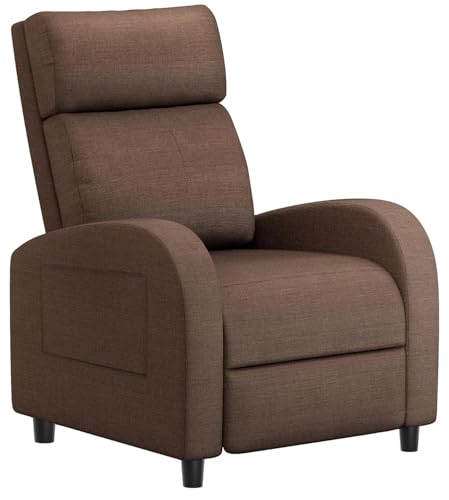
Key Takeaways
- Types first: two-seat, three-seat and sectional formats, in manual or power, wall-hugger or full-clearance geometry.
- The mechanism and frame decide lifespan; upholstery decides how the sofa ages in public. Budget for both, in that order.
- Count reclining positions, not seats — centre seats and chaise ends often do not recline.
- Measure three things: the wall, the fully open footprint, and the delivery route. All three can veto a model.
- Safety is a feature: pinch-point awareness, cord routing on power models and latched sectional connectors come with the category.
In this guide
What a Reclining Sofa Does and the Main Types
A reclining sofa gives several seated people a second, leaned-back posture with raised legs, powered by a mechanism inside each reclining seat. That is the whole job description, but the market splits it into types that behave very differently in a home, and the type decision quietly determines price, footprint and who in the household gets the good seat.
Two-Seat Reclining Sofas
The two-seat — a reclining loveseat in effect — puts a reclining mechanism under both sitters and fits the wall lengths of apartments and smaller family rooms. It is the couple’s format and the easiest type to place, deliver and justify. Its limits are social: a third person means a chair pulled up, and overnight guests get no sofa bed. For households whose evenings are genuinely two-person, it is the most honest buy in the category, and the step-by-step method in how to choose a reclining sofa starts from exactly this format decision.
Three-Seat Reclining Sofas
The family standard. Typically the two end seats recline and the centre does not, though some models fold the centre back into a console with cup holders and storage, converting the compromise into the household’s drinks station. Three-seats need the most wall and the most clearance honesty, and they reward the biggest rooms with the most complete shared lounging. Check the centre arrangement against your household’s seating politics: the person who always lands in the middle deserves to know what the middle does.
Reclining Sectionals
Sectionals wrap reclining seats around a corner, often adding a chaise end and armless reclining seats, and they furnish a room rather than merely sitting in it. They are the media-room and big-family answer, and they multiply every consideration in this guide: more mechanisms, more weight, more cords on power models, and connectors underneath that must stay latched so the pieces cannot drift apart. If your layout grows into a reclining sectional, one extra discipline applies: latch the connectors. Sectional pieces join with brackets or clips underneath, and on a reclining sectional those connectors carry real stress every time a seat opens, because the moving seat tries to travel. Latched properly, the pieces behave as one sofa; left unlatched, seats drift apart, gaps open, the corner geometry wanders and the mechanisms start working at angles they were not aligned for. After any move or deep clean, get underneath, re-engage every connector, and test each reclining seat while watching the joins. It is a five-minute job that prevents the slow, annoying drift households otherwise blame on the furniture itself. The feature-rich end of this type, including massage models, is surveyed in best massage sectional sofas.
Manual and Power, Wall-Hugger and Full-Clearance
Two cross-cutting choices apply to every type. Manual mechanisms are lever- or handle-operated, lighter and cord-free; power mechanisms are button-operated, stop at any angle, and help anyone with limited leg strength, at the cost of motors, weight and electrical housekeeping. Geometry is the other axis: wall-hugger designs slide forward to open and suit tight rooms; full-clearance designs arc backward and need space behind. A complete description of any model needs all four coordinates — format, drive, geometry, and how many seats actually recline — and a listing that will not tell you one of them is telling you something.
Top Picks at a Glance
The category’s tiers, with the kind of model that represents each. Badges are qualitative — there are no prices in this guide by design, because listings change constantly; check the current listing for the configuration you actually want. Each pick below is presented prose-only, its placement reserved for a verified listing link at publishing.
| Model line | Badge | Tier | Best for |
|---|---|---|---|
| Homall Reclining Sofa | Best Overall | Mid | Family movie nights, console-centre layouts |
| Yaheetech Reclining Sofa | Best Budget | Entry | First reclining sofa, wipe-clean family use |
| ANONER Reclining Sofa | Best for Compact Rooms | Mid | Smaller living rooms wanting a step up in finish |
| Sweetcrispy Reclining Sofa | Best Fabric Option | Entry-to-mid | Apartments and warm rooms preferring fabric |
| FDW Reclining Sofa | Best for Dens and Basements | Entry | Secondary rooms, first homes, straightforward comfort |
How Much Room Do You Actually Have?
Room fit is the criterion that vetoes the most purchases, so it comes first among the criteria. You need three measurements: the wall length, the depth from wall to the next obstacle, and the open footprint — the rectangle the sofa occupies fully reclined, footrests up and backs down. Clearance is the measurement shoppers most often get wrong, because a reclining sofa has two sizes: the one on the listing and the one it becomes when open. Full-clearance designs swing the back backward as the footrest rises, so they need real space behind them — push one against a wall and the back will rub, bind or simply refuse to recline fully. Wall-hugger designs solve this by sliding the seat forward on its base as it reclines, needing only a small gap behind, which makes them the right answer for apartments and tight family rooms. Neither is better in the abstract; they are answers to different rooms. Measure your room, not just the sofa: tape the closed footprint on the floor, then tape the fully reclined footprint, and check the open shape against walkways, doors and the coffee table before you fall in love with a fabric. Add the human layer: can someone cross the room past an open footrest without a sideways shuffle, can the door still swing, can a child reach the bathroom at night without mountaineering over furniture? A sofa that passes the tape but fails the midnight walk will irritate daily.
How Strong Does the Build Need to Be?
Build strength should track usage intensity. A formal-room sofa reclined twice a week can thrive on an entry build; a family sectional reclined by five people nightly needs frame reinforcement and mechanism components chosen for cycle life. Read listings like an engineer: reinforced frames, steel linkages and honest discussion of construction are good signs; pages that discuss only colour and cup holders are not. Weight correlates loosely with substance within a tier. The maker-level view in the best company for reclining sofas helps here, because brands tend to build to a consistent philosophy across their lines. Whatever tier you choose, commit to the mechanism’s side of the bargain: Treat every reclining mechanism as a set of moving steel parts, because that is exactly what it is. The linkages under the seat and behind the footrest open and close through pinch and crush points that can trap fingers, paws, tails and small toys, especially in the scissor-like space under the footrest as it folds away. Teach everyone in the household — and remind guests — that hands never go into the mechanism, that children do not operate the recline as a game, and that pets stay clear of the linkages and the under-footrest space while any seat is moving. Before you close a footrest, look: a cat asleep underneath or a toddler reaching for a dropped toy is the classic accident pattern with this furniture, and a two-second visual check is the whole prevention. If something is stuck, return the seat to upright slowly rather than forcing the handle or motor.
Manual or Power: Which Drive Suits Your Household?
Decide drive by the operator, not the brochure. Manual suits able households, keeps the sofa lighter and simpler, works in a power cut and removes a whole category of upkeep. Power suits mixed-strength households, anyone with knee or hip limitations, and perfectionists about angle, because a powered seat stops anywhere in its travel rather than at preset notches. Its honest costs: a heavier sofa, a higher tier of spending, and cords. Power models add an electrical housekeeping job that manual models do not. On many designs each mechanism has its own motor and its own cord — one cord per mechanism is common — so a three-seat power sofa can mean several cords leaving the back of the frame. Route them deliberately: along the wall, never draped across a walkway where they become a trip hazard, and never pinched under the frame, trapped in the mechanism’s travel path, or pressed between the sofa back and the wall where the recline motion can worry them over time. A cord damaged by repeated pinching is a quiet hazard that only announces itself late. Leave slack for the wall-hugger slide if your model moves forward as it opens, keep cords visible enough to inspect when you vacuum behind the sofa, and plug into a reachable outlet so you can disconnect the sofa fully when small children are exploring or during an electrical storm. If only one seat in the household needs power, some configurations motorise selectively — ask, because the saving in money, weight and cords is real. The value framing for this exact choice is worked through in is a reclining sofa worth it.
Which Upholstery Survives Your Household?
Upholstery is where daily life leaves evidence. Fabric — especially tight, textured weaves and microfiber — breathes, hides crumbs and hair between cleans, and feels warm in winter rooms; it asks for prompt spill work. The family case for microfiber is made across best microfiber dual reclining sofas. Faux leather wipes to clean in seconds, shrugs off the daily spill cycle, and its long-term weakness is surface wear at the points that flex and rub most. Genuine leather, the premium tier’s material as in the lines surveyed by best leather triple recliner sofas, ages into character, wipes clean, and asks for occasional conditioning. Choose by your household’s spill rate and cleaning temperament, not by the showroom’s lighting.
How Will It Get Into the Room?
Delivery is a criterion, not a logistics detail, because the best sofa in the category is worthless standing in a hallway. Delivery is a design decision too, because these are among the heaviest pieces of furniture a home takes in. The mechanisms that make the seats move are steel, and steel is unforgiving on stairs. Measure every doorway, turn and stair run on the route before ordering, and ask whether the backs detach — on many models they do, which transforms an impossible hallway into a routine one. Moving day needs at least two strong people, a cleared route, and a strict rule: never lift by the armrests alone. Arms are not load-bearing handles; lifting by them can crack frame joints and bend mechanism parts. Grip the base frame, keep the piece level, rest on landings, and set it down rather than dragging it, because dragging twists the very linkages you will rely on every evening. Add the access literature to your shortlist research: best sofas for narrow doorways exists precisely because this criterion eliminates otherwise perfect models. Note the answers in writing — doorway widths, whether backs detach, how many pieces a sectional arrives in — and give them to the delivery team before the day, not during it.
How to Prioritise by Use Case
The movie-night family. Prioritise reclining positions for every regular viewer, a console centre if drinks are part of the ritual, wipeable upholstery, and power only where the budget survives the mechanism tier. Sacrifice: formal looks, happily.
The reading-and-radio couple. Prioritise lumbar support in the reclined position, quiet mechanisms, fabric that feels good for hours, and a two-seat wall-hugger that leaves the room calm. The comparison with single chairs in recliner vs reclining sofa is worth this household’s evening.
The multigenerational home. Prioritise power on the seats grandparents use, firm seat height for easier rising, and controls a visiting child can be taught to respect. Safety rules are a purchase criterion here, not an afterthought.
The small-space dweller. Prioritise geometry above all: wall-hugger, two seats, compact arms that do not donate inches to decoration. Every other criterion is negotiable; the open footprint is not.
The Picks in Detail
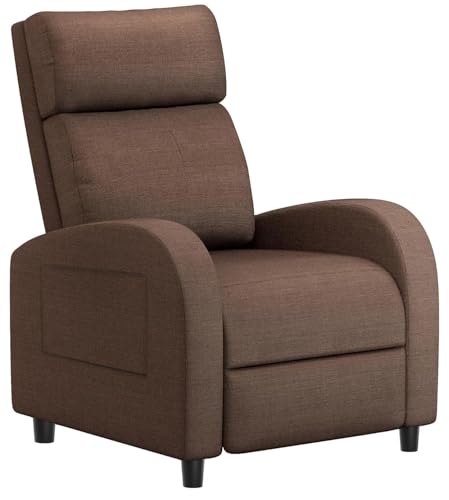
Homall Reclining Sofa — mid tier
Homall’s reclining sofa line anchors the mid tier for family rooms: easy-clean upholstery, defined seats, and configurations that frequently include the drop-down centre console. Best for: shared movie nights and households that want the category’s mainstream feature set without premium spending. Not suited for: centre-seat recliners, or formal rooms. Strengths: sensible configurations, family-proof surfaces, wide availability of matching pieces. Trade-offs: mechanism feel varies by configuration, so favour listings that discuss construction; the console centre is a feature only if your household drinks where it sits.

Yaheetech Reclining Sofa — entry tier
Yaheetech’s reclining sofa line is the entry tier’s representative: manual mechanisms, wipeable faux-leather style upholstery and proportions aimed at ordinary rooms. Best for: first-time buyers testing whether the category fits their life, and family rooms where spills outrank ceremony. Not suited for: very heavy daily use by several large adults over many years. Strengths: honest simplicity, easy cleaning, the lightest delivery in the category. Trade-offs: entry mechanisms reward smooth, aligned operation, and cushion softness is tuned for welcome rather than marathon support.
ANONER Reclining Sofa — mid tier
ANONER’s reclining sofa offerings sit mid-tier with an emphasis on finished looks in compact footprints — the kind of line apartment and smaller-home shoppers shortlist when the entry tier feels too plain. Best for: smaller living rooms that still want a step up in upholstery finish and seat definition. Not suited for: buyers who have not verified the specific model’s geometry — compact closed dimensions can still hide a full open footprint. Strengths: room-friendly proportions, tidy tailoring. Trade-offs: verify wall clearance and reclining-seat count configuration by configuration, because compact lines vary their compromises.
Sweetcrispy Reclining Sofa — entry-to-mid tier
Sweetcrispy’s reclining sofa line represents the fabric route at the entry-to-mid boundary: softer hand-feel, better breathability in warm rooms, and proportions aimed at apartments and second living spaces. Best for: fabric households, warm climates, and rooms where a leather-look surface would feel visually heavy. Not suited for: high-spill households unwilling to treat fabric promptly. Strengths: comfort in warm rooms, gentle visual presence. Trade-offs: fabric asks more of your cleaning routine than wipeable surfaces, and light colours show the household’s week honestly.

FDW Reclining Sofa — entry tier
FDW’s reclining sofa models are the category’s utility players: straightforward manual builds for dens, basements, first apartments and rental living rooms where the brief is real comfort without preciousness. Best for: secondary rooms and first homes. Not suited for: a decade-long primary-sofa plan. Strengths: simplicity, manageable weight by category standards, unfussy maintenance. Trade-offs: expect the tier’s standard limits in mechanism refinement and cushion longevity, and buy it as the honest tool it is rather than a heirloom. The long-form assessment of the category’s mainstream sits in reclining sofa review.
First Setup and Care Essentials
Set the sofa at its final clearance before the first recline and test every seat’s full travel while the room is still empty of obstacles. Route power cords along the wall immediately — day one is when routing habits form. Run each mechanism through several slow cycles and listen: a new mechanism should sound consistent, and anything gritty or catching is a same-week conversation with the seller, not a wait-and-see. Teach the household the safety rules while the sofa is still a novelty, keep the under-footrest zone on the regular vacuum route, and for sectionals, confirm every connector is latched after placement. Photograph the installed sofa and keep the manual with the household documents; mechanisms are wear items and paperwork is future kindness. The maintenance rhythm that keeps the category feeling new is detailed in reclining sofa reviews.
Mistakes to Avoid
Buying seats instead of reclining positions. Trusting closed dimensions. Choosing upholstery before geometry. Assuming power and manual versions of ‘the same’ sofa weigh the same. Forgetting that one cord per mechanism means a three-seat power sofa can need real cord planning. Skipping the route measurement because ‘the old sofa fit’ — the old sofa was lighter, narrower in its largest dimension, and did not contain several steel mechanisms. And the meta-mistake: treating this guide’s criteria as a scorecard to total rather than a set of vetoes to survive. A model that fails room fit or delivery is out, however beautifully it scores elsewhere. The balanced ledger in reclining sofa pros and cons is the right final read before ordering.
Reclining Sofa Buying Guide: Reading a Listing Like an Inspector
Every listing in this category is a negotiation between what the maker built and what the marketing noticed, and the inspector’s skill is reading for the built part. Start with the configuration diagram if one exists: it states which seats recline, where the console sits, and how a sectional’s pieces arrange — the three facts photography most reliably hides. Move to the construction vocabulary: frame materials, mechanism description, cushion build. Then the geometry words: wall-hugger, zero-wall, full-recline — marketing synonyms that all claim small clearance, and which you should translate into the only question that matters, whether the seat slides forward as it opens or the back arcs backward. Finish with the delivery facts: assembled dimensions, whether backs detach, how many boxes a sectional arrives in. A listing that answers all four sections has earned your shortlist place; one that answers only with adjectives has told you its tier.
Photographs deserve their own scepticism. The reclined shot is taken in a studio with infinite clearance; your wall is not a studio. The closed shot hides the seams that divide the seats and the handle or button positions that will interact with your side tables. Lifestyle photographs scale sofas against models and rooms chosen to flatter. None of this is dishonest, exactly — but the inspector reads photographs for construction evidence (stitching, cushion crowns, the mechanism’s shadow under the footrest) and reads text for facts, never the reverse. When the two disagree, believe the tape measure you are about to use at home.
The Specification Sheet, Decoded
Overall dimensions describe the closed box the sofa occupies; seat depth and height describe the human fit inside it. Seat height decides rising ease — higher seats forgive bad knees — and seat depth decides whether shorter legs reach the floor or dangle, which matters for the upright hours. Reclined length, when stated, is the honest footprint number and the one to tape. Weight, when stated, is a proxy for build substance within a tier and a literal input to your delivery plan. Capacity language (‘seats three’) is a seating claim, not a reclining claim; the configuration diagram outranks it. An inspector writes these five numbers on one card per shortlisted model, because comparison across a dozen browser tabs is where good intentions go to blur.
Warranty and Support: The Unglamorous Criterion
Mechanisms are wear items, so the support behind them is part of the product. Read the warranty’s structure rather than its headline length: frames commonly carry the longest cover, mechanisms and motors shorter, upholstery shortest — and that gradient itself is information about where the maker expects ageing. Ask how a mechanism claim is serviced in your area, whether a technician visits or a part ships, and how the claim begins. Makers with reachable support and findable parts turn a year-four linkage issue into an errand; makers without them turn it into a replacement conversation. This criterion never appears in the photograph, which is precisely why it separates careful buyers from the rest of the market.
Keep the paperwork as part of the purchase ritual: order confirmation, configuration, delivery photographs and the manual, filed together. Years later, the model and configuration names on that paperwork are the difference between ordering the correct replacement part in one attempt and describing a sofa to a support line from memory. It is a five-minute habit at the moment of maximum documentation, and like most habits in this category, it is the cheap version of a problem that is expensive later.
Trying Before Buying When You Cannot Try
Most of this category is bought unseen, so simulate the trial. Sit in your current sofa and measure where your body actually rests: the seat height your knees prefer, the back height your shoulders use, the depth your legs need. Compare those body numbers with the specification card — a sofa whose seat dimensions rhyme with a chair you already love will feel familiar in the ways that matter. Recline a showroom model of any brand if one is reachable, not to judge that model but to calibrate your household’s preferences: the angle you settle at, whether a middle stop suffices, how the lumbar zone feels at full recline. Calibration travels across brands; brand impressions from a four-minute sit do not.
Then interrogate the written record with the right questions. Owner commentary is most valuable when it is specific — mechanism noise after months, the centre seat’s firmness, delivery experiences with detachable backs, cord counts on power models — and least valuable as star-shaped summary, which this guide deliberately ignores. Patterns across many specific comments are the signal: one report of a gritty linkage is an anecdote; the same report across a season of owners is a specification. Read for patterns, decide by criteria, and let the listing’s adjectives do no work at all.
Seasonal and Practical Buying Notes
Furniture retail runs on seasons — new ranges, cleared ranges, delivery queues that lengthen exactly when everyone furnishes at once — and the practical buyer plans the calendar as well as the sofa. Order ahead of the season you want to lounge in, because a reclining sofa’s delivery involves scheduling, a route, and ideally a dry day. If your room is being decorated, the sofa’s placement measurements belong in the decorator’s brief before paint, not after. And if the purchase replaces an old sofa, arrange its exit before the new arrival: two very heavy sofas and one doorway is a logistics problem with a known solution — sequence — and no other.
Finally, a note on matching pieces. Ranges in this category often offer the matching recliner chair, loveseat or sectional sibling, and buying the family in one decision has real virtues: one delivery, one upholstery dye lot, one support relationship. Its cost is flexibility — the household’s needs distribute unevenly, and the chair may deserve a different tier from the sofa. Decide piece by piece against the criteria in this guide, then check whether the answers happen to share a badge. When they do, the matched set is a pleasure; when they do not, the mixed room serves its people better than the matched photograph would.
From Criteria to Cart: A Worked Shortlist
Watch the criteria do their work on a hypothetical but typical household: two adults, one teenager, a dog, a family room with one long wall and a doorway at its end, evenings built around films and homework. The room criterion speaks first — the long wall takes a three-seat, the doorway vetoes any open footprint that sprawls, and the tape selects wall-hugger geometry so the sofa can live on the wall it was measured for. The format criterion counts three evening viewers and flags the centre seat: this household chooses a console centre knowingly, because the teenager prefers the floor cushion anyway and the console will hold the homework drinks. Already, two criteria have done more deciding than an afternoon of photograph-browsing could.
The drive criterion asks who operates: three able people, daily use, and a household preference for simplicity — manual wins, and the saving funds the tier step that the build criterion demands for five-person-equivalent usage (the dog counts, in wear terms, as a person). The upholstery criterion hears ‘dog’ and ‘homework snacks’ and selects wipeable without debate. The delivery criterion measures the route, confirms detachable backs, and books the household’s two strongest adults plus a free Saturday. The shortlist that emerges — wall-hugger, manual, mid-tier, console centre, wipeable — describes perhaps a handful of actual models across all makers, and choosing among them is now a matter of taste, availability and support. That is what a buying guide is for: not to pick your sofa, but to shrink the market until picking is easy.
After the Order: The Buyer’s Remaining Jobs
A surprising amount of buying happens after the payment. Confirm the configuration in writing — format, geometry, drive, which seats recline — because the English language permits several sofas to share one product name, and the one that arrives should be the one the criteria chose. Prepare the room before delivery day: the placement measured, the route cleared, the old sofa’s exit arranged, cords’ future path decided if power is coming. Be present at delivery with the tape measure and the configuration note, cycle every mechanism before the team leaves, and photograph the installed piece. These are not the behaviours of a suspicious customer; they are the standard rituals of a category whose products are heavy, configurable and mechanical, and good retailers expect every one of them.
Then comes the first month’s quiet work: teaching the household. The look-before-closing rule, the smooth cycling habit, the under-footrest zone’s place in the cleaning round, the connectors’ check if the sofa is a sectional. Households sometimes resist this paragraph as fussiness, and the guide’s answer is the whole survey of ownership behind it: the difference between the category’s delighted majority and its disappointed minority is rarely the sofa and almost always these small transferred habits. A buying guide that ended at the checkout would be abandoning its reader at the exact moment the purchase becomes an ownership. Consider this section the guide keeping its promise to the end.
Configuration Clinics: Four Rooms, Four Specifications
Clinic one: the long, narrow room. Its wall is generous and its depth is not, so the specification writes itself — wall-hugger geometry, compact arms that do not donate scarce inches to sculpture, a coffee table placed for the open footrest or replaced by a pair of small side tables that flank rather than block. The buyer in this room should distrust any model whose closed depth already crowds the walkway, because the open depth will be ruder. Clinic one’s lesson generalises: in depth-poor rooms, every dimension must be audited in the open state, and the tape is the only auditor whose opinion counts.
Clinic two: the square family room with doors on two walls. Here the enemy is not size but circulation — the open sofa must not sever the room’s paths. The specification favours placing the sofa to close one natural route deliberately (rooms forgive one closed path and resent two half-blocked ones), choosing the format whose open footprint leaves the surviving route genuinely wide, and checking the door swings against the tape with the seriousness usually reserved for the sofa itself. Sectionals tempt this room and must prove, corner by corner, that their reclining pieces open into space rather than into traffic.
Clinic three: the rental. The specification adds two clauses the owned home skips: the route includes a stairwell the landlord’s other tenants also use, so delivery is a scheduled, two-person, backs-detached operation agreed in advance; and the sofa’s future moves are priced into the tier decision, because a piece that will be carried twice more in five years should be bought with its weight as a headline feature, not a footnote. Manual drive earns a premium here it does not earn elsewhere — fewer cords to route in rooms whose outlets are never where the sofa wants them.
Clinic four: the multigenerational house. The specification is written by its most vulnerable and most honoured users: power on the seats the grandparents take, seat height that forgives knees, controls that can be supervised around small children, clearance that lets a walking aid pass the open footrest. Every other criterion in this guide still applies, but their order inverts — accessibility first, and the room fitted around it. Clinics exist to show that ‘the criteria’ are not a ranking carved in stone but a kit whose order the household sets; the guide’s job is to make sure no criterion is forgotten entirely, because the forgotten one is reliably the one that mattered.
The Guide’s Own Bias, Declared
Every buying guide has a bias, and this one declares its own: it is biased toward the mechanism. Given a fixed budget, this guide will repeatedly advise spending on frame, linkage and configuration before upholstery upgrades, power features beyond need, or badge prestige — because the mechanism is the part of the sofa that cannot be covered, cleaned or forgiven into behaving, and because it is the part whose quality the household will feel in year five. Readers whose priorities run the other way — for whom the room’s look is the primary daily pleasure — should weight the upholstery and design criteria above this guide’s defaults, and will find the criteria themselves still serve them; only the ordering changes. A guide that hides its bias asks to be trusted too much. This one would rather be used correctly by readers who disagree with it.
A Note on Buying for Someone Else
A meaningful share of this category is bought as a gift or for a dependent relative — the power reclining sofa for a parent whose knees have begun negotiations, the family-room upgrade decided by the household member who does the research on everyone’s behalf. Gift-buying inverts several of this guide’s defaults. The recipient’s room must be measured by proxy or not at all, which argues for the most forgiving geometry and the most compact format that serves. The recipient’s habits are the specification, not the giver’s hopes, which argues for controls they will actually use and a drive matched to their strength today, not their pride. And the delivery must be arranged as part of the gift, complete with route, lifters and placement, because a very heavy present that arrives as a logistics problem is only half given. Buy for someone else with the same criteria, applied at one remove and with extra humility, and the gift lands as care rather than as furniture-shaped homework.
The same humility applies inside a household, where the researcher-buyer should remember that the criteria describe a shared life. The guide’s worksheets — the tape outlines, the reclining-position count, the configuration card — are at their best when they are filled in together, argued over at the kitchen table, and allowed to overrule the researcher’s private favourite. A sofa chosen by process belongs to everyone who sits on it; a sofa chosen by one person’s browsing belongs, in the household’s emotional accounting, to that person — along with every complaint it ever generates. Process is not bureaucracy here. It is how a purchase becomes a household’s decision instead of one member’s taste, imposed at scale, in the room everyone shares.
The Guide in One Breath
If this entire guide had to survive as a single breath of advice, it would be this: decide the format by who sits, the geometry by what the tape says, the drive by who operates, the tier by how hard it will be used, the upholstery by how your household actually lives, and the model by which maker answers questions about construction without changing the subject — then measure the route, confirm the backs come off, and be home, with help, on delivery day. Everything else in these pages is commentary on that breath: the criteria unpacked, the traps catalogued, the clinics walked through, the paperwork filed. Readers who carry the breath into the market will shop it well even if they never reopen the guide, and readers who want the reasoning can always return to the sections that earned each clause. That is the proper relationship between a guide and its reader — the guide does the long thinking once, so the reader can do the short deciding well, in the shop, with the tape measure in the other hand.
Keep this guide’s card with the household documents after the purchase, beside the manual it told you to file. Years from now, when a mechanism needs a part or a second sofa is being considered for another room, the configuration you chose and the criteria you chose it by will be the most useful page in the drawer — a record of a decision made properly, ready to be made again.
A Pre-Purchase Measurement and Compatibility Audit for Your Reclining Sofa
Use this audit in the final ten minutes before you order a reclining sofa, because that is when most buying-guide advice stops being abstract and starts being a tape measure, a doorway and a return label you would rather not need. Write down three numbers for the reclining sofa you are considering: the footprint where it will sit or be stored, the largest dimension it reaches in normal use, and the clearance it needs so doors, drawers, lids, handles or moving parts can work without catching. Check the floor, wall, ground or surface the reclining sofa will meet, since level, texture, moisture and finish decide more about everyday performance in living room furniture settings than most shoppers expect when they are comparing listings on a screen. Use a simple decision checklist at the end: the reclining sofa fits the measured space, suits the real frequency of the job, matches the household’s cleaning temperament, has obtainable parts, and has a named storage home — five yeses make a confident order.
Photograph your setup once the reclining sofa is working well — the position, settings, arrangement or layout you settled on — so that after a move, a deep clean or a seasonal break you can recreate the arrangement that worked instead of rediscovering it. If you want a concrete listing check, take a name already shortlisted in this guide, such as Homall Reclining Sofa, Yaheetech Reclining Sofa and ANONER Reclining Sofa, and verify that exact reclining sofa listing against the measurements and compatibility questions above, field by field, rather than trusting the headline description alone. Compatibility is the second audit, and for a reclining sofa it means checking what it must work alongside: the surfaces, fittings, power or water access, storage and other pieces already in your living room furniture setup that the new purchase has to cooperate with every day. Keep a short note of what you adjusted on the reclining sofa during the first month, even just a line on your phone, since those notes turn vague impressions into a setup you can repeat, share or troubleshoot months later.
Plan the storage home for the reclining sofa before it arrives, naming the exact cupboard, corner, shelf, hook or stretch of floor, because a product without a home migrates around the house and slowly becomes the clutter it was bought to reduce. Then measure the route, not just the destination, since a reclining sofa that fits its final spot perfectly can still fail at a narrow hallway, a tight turn, a low doorway or a cupboard mouth that is smaller than the space behind it. Keep the packaging of a larger reclining sofa until those first ordinary tests are done, flattened if space is tight, because re-boxing an awkward shape from scratch is the hidden difficulty inside many otherwise straightforward returns. Shortlist discipline helps here: keep two reclining sofa options that pass the audit and let one fail on paper, because comparing a clear pass against a clear fail teaches you more about your real priorities than comparing three near-identical maybes.
If a problem with the reclining sofa repeats in the same spot or the same stage of the job, treat the pattern as the clue — patterns point to setup, surface or technique, while random problems point more often to the individual unit. Consider the cleaning rhythm honestly: a reclining sofa that needs attention after every use suits a household that enjoys small rituals, and frustrates a household that wants to finish a job and walk away, so match the upkeep to the temperament, not the intention. Watch for edge cases in your own home: the pet that investigates everything, the child who treats every new object as furniture, the guest who uses force where you use familiarity, and the weather, light or season that changes how a reclining sofa behaves. Measure before anything else, and measure the reclining sofa in its working state rather than its packed or folded state, because handles extend, lids open, cords trail, doors swing and users stand somewhere, and all of that belongs in the measurement.
For troubleshooting, start with the boring causes first: power, water, fit, blockage, alignment, a full container, a loose connection or a setting changed by the last person who used the reclining sofa, because boring causes account for most apparent failures.
Frequently Asked Questions
What is the difference between a reclining sofa and a recliner?
A recliner is a single chair built for one person’s recline; a reclining sofa seats two or more people, with a mechanism in some or all of its seats. The sofa shares its comfort socially and presents as one unified piece; chairs offer individual angles and easier moving. Many homes combine both. The dedicated head-to-head, recliner vs reclining sofa, works through which format wins on space, cost and comfort for different households.
How many seats on a reclining sofa actually recline?
On most three-seat models, the two end seats recline and the centre does not — though some centres fold down into a console. On two-seat models, usually both seats recline. Sectionals vary by piece: chaise ends typically stay fixed while seat pieces may recline. Never assume; check the configuration diagram or description for the exact model, and count reclining positions against the people who will want one every evening.
Are wall-hugger reclining sofas as comfortable as full-clearance ones?
Yes — the difference is geometry, not comfort class. A wall-hugger slides the seat forward as it reclines so the back needs little room behind; a full-clearance design arcs backward into the space behind it. Both reach similar reclined postures. Choose by your room’s measurements: wall-hugger for tight placements against a wall, full-clearance where the sofa floats with space behind it. Comfort differences between specific models owe more to cushions and build than to which geometry they use.
What should I check in the first week after delivery?
Cycle every mechanism daily and listen for changes in sound or smoothness. Confirm the sofa reclines fully without touching walls or furniture at its final position. Check power cords are routed unpinched and untripped-over, sectional connectors are latched, and every seat returns to closed without force. Photograph the sofa from all sides. Anything gritty, catching or visibly damaged is a same-week report to the seller, while the purchase is new and the packaging still exists.
How do I keep a reclining sofa working well for years?
Use the mechanisms smoothly and never force a footrest against an obstruction. Vacuum under the raised footrests regularly so debris stays out of the linkages, and keep children and pets clear of the moving mechanism as a standing household rule. Keep power cords unpinched and inspect them when you clean behind the sofa. Tighten or report small looseness early. None of this is demanding — it is the difference between a mechanism that ages gracefully and one that grinds itself tired.
Is a reclining sofa a good choice for a household with pets?
It can be, with two conditions. First, upholstery: choose wipeable or hair-shedding surfaces and accept that the sofa will be shared. Second, safety: pets — especially cats — love the sheltered space under a raised footrest, which is precisely the space that becomes a crush zone when the footrest closes. The household rule is simple and absolute: look underneath before closing, every time. Households that keep that rule enjoy the format without incident; it is the one rule that cannot be relaxed.
Related Guides
how to choose a reclining sofa is a reclining sofa worth it reclining sofa pros and cons reclining sofa review reclining sofa reviews recliner buying guide how to choose a recliner best sofas for homes with kids is a recliner worth it recliner pros and cons recliner review recliner reviews


