Disclosure: As an Amazon Associate, dailyhomedecorating.com earns from qualifying purchases. Links on this page are affiliate links; they cost you nothing extra. Prices and availability change often, so check the current Amazon listing before you buy.
A good leaf blower buying guide should leave you able to walk past a hundred machines and point at the three that suit your garden — and this one is built to do exactly that. It explains what a leaf blower does and the main types on sale, puts representative picks on the table early with honest badges, then works through the criteria questions that actually decide satisfaction: how much airflow you need, which power source fits your ground, how much weight and noise you can live with, and which extras earn their tier. Finish with the mistakes to avoid and a first-session setup guide, and you will buy once and buy well.
Key Takeaways
- Type first, model second: cordless, corded and petrol blowers serve genuinely different gardens, and choosing the family correctly matters more than choosing within it.
- Air volume (CFM) is the headline figure for general clearing; air speed (MPH) is the supporting figure for wet leaves and hard surfaces.
- Buy into a battery platform you already own whenever you can — it is the largest single saving in the category.
- Weight, balance and noise decide long-term satisfaction more than small specification differences between rival models.
- Combination blower-vacuum-mulchers serve collectors and composters; dedicated blowers serve everyone else better.
- Every purchase should include impact-rated eye protection and hearing protection from day one — budget for them as part of the machine.
In this guide
What a Leaf Blower Does and the Main Types
A leaf blower concentrates air through a tube to move leaves, clippings and light debris from where they land to where you want them. That simple description hides a wide family of machines, and the types below are the ones a buyer actually meets. Each has a home ground where it is the obvious answer and a territory where it disappoints, and the rest of this guide exists to help you locate your garden on that map. If you prefer a staged, step-by-step version of the same decision, our companion piece on how to choose a leaf blower walks it as a checklist.
Cordless Battery Blowers
The mainstream choice. A battery pack drives an electric motor — increasingly a brushless one — and the machine starts at a trigger pull, runs without exhaust, and stores anywhere dry. Strengths: convenience, low maintenance, no cord, and interoperability when the battery platform is shared with your other garden tools. Limits: finite runtime per battery, output that softens as the pack empties, and the long-term cost of battery replacement. Sub-types range from compact models for patios to high-capacity machines on the largest garden platforms that approach petrol performance for suburban-scale work. For most readers, the real decision in this whole guide is which cordless platform to commit to.
Corded Electric Blowers
The lightest and simplest machines in the category, powered from the mains through an extension cord. Strengths: low weight, low purchase tier, unlimited runtime, almost no maintenance. Limits: the cord defines your working radius and demands management around trees and furniture, and you need an outdoor socket — ideally GFCI-protected — within sensible reach. Corded models are the connoisseur’s choice for small gardens and the budget-conscious choice everywhere their tether reaches. They are also the most common format for combination machines, below.
Petrol Blowers: Handheld and Backpack
Petrol machines deliver sustained high output independent of cords and batteries, refuel in a minute, and remain the default for very large, wooded properties and professional work. Handheld petrol models are powerful but heavy and loud; backpack models carry the engine on your back and are the comfort choice for long sessions on big ground. Costs: the most noise in the category, exhaust, vibration, the heaviest maintenance rhythm, and the highest tiers. For a typical suburban garden they are surplus machinery; for an acre of oaks they are still a rational, even necessary, answer.
Combination Blower, Vacuum and Mulcher Machines
Combination machines convert — usually by swapping tubes and attaching a bag — from blowing to vacuuming, shredding collected leaves as they pass through. They change the job from herding to gathering, and the mulching action shrinks leaf volume dramatically, which composters and anyone bagging leaves for collection will appreciate. Trade-offs: as pure blowers they rarely match a dedicated machine’s airflow at the same tier, the conversion ritual adds minutes, and the bag-and-shredder system adds parts to clean. They are the right answer for collectors, gravel and beds, and the wrong answer for someone whose whole job is sweeping a big lawn fast. Our dedicated round-up of the best leaf blower vacuums covers this family in full.
Leaf Blower Buying Guide: Top Picks at a Glance
The table below summarises this guide’s representative picks by role. All are presented in prose while verification of current listings is completed — there are no links or prices here by design — so use the badges to find your category, then read the mini-reviews later in the guide.
| Pick | Badge | Type | Tier | Best For |
|---|---|---|---|---|
| EGO Power+ LB6504 Cordless Leaf Blower | Best Overall | Cordless | Premium | Medium-to-large gardens on a shared battery platform |
| Ryobi 40V HP Brushless Whisper Series Leaf Blower | Best for Quiet | Cordless | Mid-to-premium | Close-set housing and neighbourly hours |
| Milwaukee M18 FUEL Cordless Leaf Blower | Best for Platform Owners | Cordless | Premium | Households already invested in the M18 tool system |
| Toro PowerJet F700 Corded Leaf Blower | Best Budget | Corded | Entry-to-mid | Small plots near the house |
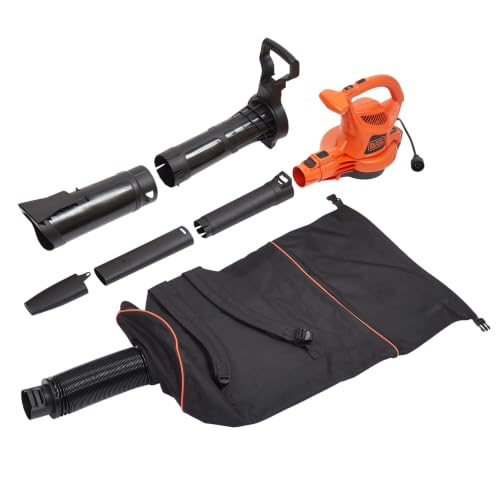
| BLACK+DECKER BEBL7000 Leaf Blower Vacuum Mulcher | Best for Collectors | Corded combination | Mid | Composters and gravel or bed clearing |
| EGO Power+ LB7654 Cordless Leaf Blower | Best for Large Gardens | Cordless | Premium | Heavy leaf fall and long sessions |
How Much Airflow Do You Actually Need?
Airflow is quoted as CFM (volume) and MPH (speed), and the plain-language translation is this: volume clears, speed loosens. If your garden’s main event is a lawn covered in dry leaves, shop by volume. If your recurring pain is wet leaves welded to a drive or patio, make sure speed is healthy too, and value a concentrator nozzle. Small plots with light fall need only modest figures in both; the machines at the entry tier exist precisely for them, and overspending here buys numbers you will never feel. Medium suburban gardens want the solid middle of the market. Large or wooded properties should chase the highest sustained volume they can hold comfortably — sustained being the operative word, since a brief turbo figure flatters every cordless specification sheet. Treat cross-brand number comparisons cautiously, because measuring methods differ; within a brand’s range, the ordering is meaningful. And remember that technique multiplies airflow: a well-used mid-range machine out-clears a flagship in frantic hands, as our guide on how to use a leaf blower demonstrates step by step.
Which Power Source Fits Your Ground?
Let geometry decide. Pace out your longest working distance from the house: comfortably within an extension cord’s reach, with an outdoor socket available, and corded enters the conversation with its lightness and simplicity. Beyond cord range — or around so many trees and corners that a cable would be a trip hazard and a temper hazard — cordless takes over, and the question becomes platform and battery capacity. Reserve petrol for the ground that defeats both: acreage, deep wet leaf fall, sessions that run past what a sensible battery rotation covers. Storage and household habits refine the answer: no dry storage argues against petrol; an existing shelf of one brand’s batteries argues overwhelmingly for that brand’s blower; a household that hates maintenance rituals should stay electric. There is no universally correct power source in this category — there is only the one whose inconveniences your household minds least.
How Much Weight and Noise Can You Live With?
A blower is a held machine, swept at arm’s length for the length of the session, so ergonomics are performance. Judge weight as the working combination — tool plus the battery you will actually fit — and judge balance as well as mass: a machine that hangs neutrally in the hand tires you less than a lighter one that constantly twists. Handles, trigger position and whether controls can be feathered without regripping all matter across a half-hour session. Noise deserves the same seriousness: petrol is loudest, standard cordless and corded machines sit in the middle, and quiet-engineered cordless models are the considerate end of the market. Whatever the model, hearing protection is standard equipment for the operator, and eye protection is equally non-negotiable. If your household includes anyone who will operate the machine with limited strength or stamina, make this section the deciding one — a slightly gentler machine used weekly beats a powerhouse that stays in the shed, a trade-off our leaf blower pros and cons page examines without flinching.
Which Extras Are Worth Paying For?
Variable speed control is the extra that is not really extra: beds, gravel, corners and finished piles all demand a feathered trigger or a dial, and a single-speed machine forces bad technique. Cruise control earns its place on longer sweeps. Interchangeable nozzles — flat for lawns, concentrator for edges and wet patches — extend one machine across all your surfaces. A vacuum and mulching kit is worth its tier only if you genuinely collect leaves; otherwise it is weight, cost and cleaning in exchange for a mode you will use twice. Shoulder straps help heavier handhelds; tool-free assembly helps everyone. Platform extras matter too: a charger that also serves your other tools, batteries with charge indicators, and a wall-mountable storage footprint. Spend on the extras that match your audit, and let the rest go without regret.
How to Prioritise by Use Case
The Small-Plot Gardener
Priorities: lightness, simplicity, low tier. A corded model or a compact cordless covers a patio, a path and a small lawn entirely; spend the savings on a quality outdoor-rated extension cord if corded, eye and hearing protection, and storage hooks. Ignore maximum airflow figures entirely — your garden cannot use them.
The Suburban Family
Priorities: platform, volume, variable speed. Choose the cordless blower that shares your existing batteries, with strong sustained volume for the lawn and a turbo reserve for the wet corner of the drive. A second battery outranks a model upgrade. Quiet-leaning designs pay social dividends on weekend mornings.
The Collector and Composter
Priorities: vacuum performance, mulching, bag design. A combination machine earns its place in your shed; judge it by how easily it converts, how the bag carries, and how simply the impeller housing clears when — not if — a twig jams it. Pair it with the compost system it feeds; our readers often continue to the best compost spreaders once the leaf-mulch habit takes hold.
The Large or Wooded Property
Priorities: sustained output, endurance, comfort over hours. High-capacity cordless with multiple large batteries, a backpack machine, or petrol — chosen by your tolerance for noise and maintenance. Weight distribution and hearing protection dominate; work in sections across dry days rather than in single marathons.
The Picks in Detail

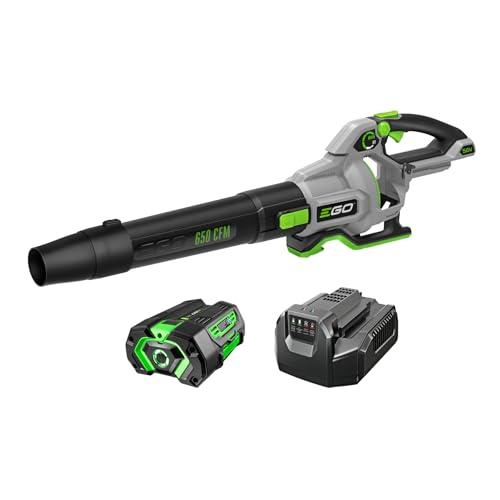
EGO Power+ LB6504 Cordless Leaf Blower — Best Overall
EGO’s LB6504 anchors the premium cordless tier: a brushless machine with a turbo reserve, variable control for delicate work, and the backing of one of the most complete battery garden platforms available. Strengths: sustained performance across real sessions, platform breadth, build quality that suits decade-scale ownership. Trade-offs: premium tier, and its larger batteries add working weight that smaller gardeners should test in the hand. Best for: medium-to-large gardens in committed cordless households. Not suited for: tiny plots or buyers outside the platform starting from zero on a tight budget.
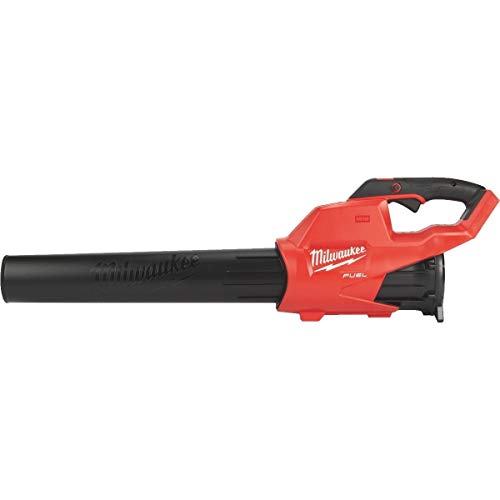
Milwaukee M18 FUEL Cordless Leaf Blower — Best for Platform Owners
Milwaukee’s M18 FUEL blower makes its case to the enormous number of households whose garages already run on M18 batteries from drills and saws: the same packs power the blower, which collapses the effective cost and the storage footprint. It is a compact, punchy machine aimed at clearing hard surfaces and garden areas efficiently rather than at acreage. Strengths: platform economics, compact handling, professional-grade build. Trade-offs: as a standalone purchase without existing batteries, the tier is harder to justify. Best for: M18 households. Not suited for: very large wooded plots needing maximum sustained volume.

Ryobi 40V HP Brushless Whisper Series Leaf Blower — Best for Quiet
The Whisper Series is engineered around sound: a housing and fan design intended to keep noise markedly below conventional blowers while remaining a full-strength tool on Ryobi’s higher-voltage garden platform. Strengths: neighbour relations, pleasanter sessions, and a platform with wide retail availability. Trade-offs: quiet engineering sits at a mid-to-premium tier, and peak figures are tuned for civility rather than bragging rights. Best for: terraces, semis and anyone who blows early or often. Not suited for: maximum-output work on big rural ground.

EGO Power+ LB7654 Cordless Leaf Blower — Best for Large Gardens
The LB7654 is the step up within EGO’s range for heavier work: more sustained output for deep leaf fall and longer sessions, within the same battery ecosystem as its smaller sibling. Strengths: headroom that large gardens genuinely use, platform consistency, turbo reserve for wet mats. Trade-offs: size, weight with large packs, and a tier that only makes sense where the ground demands it. Best for: large suburban and semi-wooded plots. Not suited for: small gardens, where it is simply surplus iron. Owners weighing the jump should read our verdict on whether a leaf blower is worth it at the premium tier.
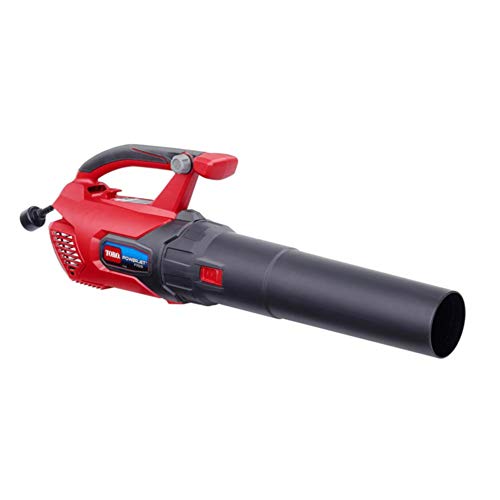
Toro PowerJet F700 Corded Leaf Blower — Best Budget
Toro’s PowerJet F700 is the corded category done right: light, simple, strong enough for the ground a cord can reach, and free of batteries and fuel forever. Strengths: weight, simplicity, entry-to-mid tier, zero charging discipline. Trade-offs: the tether itself, and the need for a GFCI-protected outlet and an outdoor-rated extension cord in good condition. Best for: small plots, patios, drives near the house. Not suited for: any garden where the cord cannot follow.
BLACK+DECKER BEBL7000 Leaf Blower Vacuum Mulcher — Best for Collectors
The BEBL7000 blows, vacuums and mulches in one corded package, turning leaf collection from a two-tool relay into a single pass and shrinking what it gathers for the compost heap or the bag. Strengths: genuine three-in-one utility, mid tier, excellent on beds and gravel where blowing scatters. Trade-offs: conversion takes a few minutes, pure blowing airflow trails dedicated machines at similar tiers, and the shredder housing needs occasional clearing. Best for: collectors and composters on small-to-medium plots. Not suited for: fast clearing of large open lawns.
First Setup and Care Essentials
Setup is brief for every type, and worth doing deliberately once. Assemble tube sections fully until they seat — a loose tube costs airflow and can detach mid-session. For cordless machines, charge the battery fully before first use and follow the maker’s guidance on charging and storage from the start; good battery habits are set in week one. For corded machines, inspect the extension cord along its whole length, use only an outdoor-rated cord, and plug into a GFCI-protected outlet. For petrol, read the fuel and starting instructions before the first pull, not during it. Fit your protection before your first session and store it with the machine: impact-rated eye protection and hearing defenders, every time. On the first outing, practise the sweeping arc on an open patch at low speed — nozzle low, slow arcs, leaves rolling ahead — and keep intake vents clear of clothing and hair as you work. After every session: two minutes to clear the intake and tube, a glance at cords or batteries, and dry storage off the ground.
Mistakes to Avoid When Buying
Buying by the largest speed figure is the classic error; volume and technique clear gardens, not headline velocity. Buying outside your battery platform is the expensive error, quietly doubling the real cost of a cordless machine. Ignoring weight is the comfort error — test-handle machines with their working batteries fitted. Ignoring noise is the social error, discovered on the first bright Sunday morning. Buying a combination machine for a fantasy of composting you will not actually do, or a dedicated blower when your real work is gathering from beds and gravel, is the mismatch error. And skipping protection to save a small sum is the unforgivable error: the airstream throws grit and stones, the noise is genuinely hazardous, and the nozzle must never be pointed at people, pets or vehicles. Finally, avoid blowing dust toward others and consider dampening very dusty ground — a buying guide can recommend a machine, but manners come free with it. Round out the autumn kit thoughtfully and the blower stops being an isolated purchase: the same seasonal logic runs through our guide to the best cordless hedge trimmers.
Understanding Battery Platforms Before You Buy Cordless
Because cordless is the default recommendation for most homes, its economics deserve a section of their own. A battery platform is a commitment: the packs and charger you buy with the blower become the system your future mower, trimmer and saw will either share or duplicate. Sharing is where the money is — a household with several tools on one platform owns a pool of batteries that covers every tool’s peaks, while a household split across platforms owns several chargers, several half-used packs and a shelf of quiet regret. Before buying any cordless blower, inventory what you already own, including workshop tools: more than one garden brand shares its battery system with a power-tool range, and a drill’s batteries in the garage may already have paid for your blower’s power supply.
Judge a platform by its breadth and its health, not only by the blower in front of you. Breadth: does the range include the other garden tools you plausibly need in the next five years, at tiers you would accept? Health: is the platform current and widely stocked, with batteries sold separately at sensible tiers, or is it a legacy line surviving on clearance? Battery capacity choices within a platform matter too — larger packs extend runtime and add weight in the same motion, so the pairing of pack to blower should match your session length rather than defaulting to the biggest available. Finally, treat charging as infrastructure: a charger that lives where the tools live, packs stored per the maker’s guidance in a cool dry spot, and a household routine that returns batteries to charge after use. Platform discipline sounds dull and is, in practice, the difference between cordless ownership that delights and cordless ownership that frays.
Petrol, Backpack and the Heavy End — A Fair Hearing
Buying guides owe the heavy end of the market its fair paragraph, because for a minority of readers it is the correct purchase and the mainstream advice does not apply. If your property is measured in acres, your trees are mature and numerous, your sessions run past what a sensible rotation of large batteries covers, and your ground sits far enough from neighbours that noise is your own affair, then petrol’s sustained output and instant refuelling are not nostalgia — they are the engineering answer to your audit. Within petrol, the format decision matters as much as the fuel: handheld petrol machines concentrate their weight in your arm and suit shorter, intense work, while backpack machines move the load to your hips and shoulders and are the humane choice for the long sessions that justify petrol in the first place.
Buy petrol with open eyes about its full contract: the loudest operation in the category, exhaust at the point of use, the heaviest maintenance rhythm — fuel management, filters, plugs, storage care — and the strictest hearing-protection discipline. Some households also face local expectations or rules about petrol garden machinery that should be checked before, not after, purchase. And consider the trajectory of your own property and strength: a machine bought for the acre you clear at fifty must still be operable at sixty-five, which is why some large-property owners deliberately choose high-capacity cordless systems and accept battery rotation as the price of a quieter, lighter old age in the same garden. The heavy end is a legitimate answer; it is simply an answer to a question most gardens never ask.
Buying Second-Hand, Warranties and the Total Cost Picture
The used market in blowers is active and, approached carefully, genuinely useful — with caveats that differ by type. Corded machines are the safest used purchase: little to wear, easy to test fully in a minute, and cheap enough that the risk is small; inspect the cord along its length and walk away from any damage to it. Cordless machines are only as good as their batteries, and batteries are the one component whose remaining life you cannot see — a used cordless blower should be priced as a tool plus a consumable of unknown age, and a seller’s runtime demonstration is worth more than any assurance. Petrol machines reward mechanical confidence: cold starting, steady running and a clean filter tell the story, and a machine that starts hard when warm is telling you the rest.
Whether new or used, complete the total cost picture before deciding: the machine, its power source if sold separately, the protection that must accompany it, the storage it needs, and the consumables of its type across a realistic ownership span. New purchases add one more consideration — warranty length and the local availability of service and spares, which for a decade-scale tool can matter more than a small difference in purchase tier. A blower is not a complicated machine, and that is its virtue: bought with the platform, weight, noise and total-cost checks in this guide, it should be one of the least regretted purchases in the shed.
Nozzles, Attachments and the Accessory Shelf
The accessory shelf is where buying guides earn or lose their honesty, because attachments are sold with the same enthusiasm as machines and deliver a fraction of the value per item. The genuinely useful list is short. A flat nozzle, which spreads the airstream into a wide blade, is the lawn attachment: it sweeps broad areas evenly and is the nozzle most owners end up leaving fitted. A round or concentrator nozzle focuses the stream for corners, steps, edges and wet patches, and is the natural partner to the flat one — a machine supplied with both has its surfaces covered. A shoulder strap transforms heavier handhelds on longer sessions for a trivial outlay. Beyond that core, value thins quickly: gutter attachments that promise to clear gutters from the ground deserve deep scepticism, and any accessory whose purpose you cannot state in one sentence tied to your own garden is shelf decoration bought in advance.
Vacuum kits and spare bags, for combination machines, sit in the middle ground: essential if you collect, pointless if you do not, and worth buying as spares only once the collecting habit has proved itself in a first season. Storage accessories — wall hooks, hangers, a simple shelf plan — are the unglamorous champions of the shelf, because a machine that hangs by the door with its protection gets used for the five-minute jobs that keep gardens tidy, while a machine stored awkwardly becomes a monthly machine regardless of its power. When budgeting a purchase, fund the core nozzles, the strap if the machine is heavy, and the storage before a single novelty attachment: the hierarchy is boring, and it is correct.
Seasonal Buying and Warranty Sense
When you buy matters less than what you buy, but it is not nothing. The category’s commercial rhythm peaks in autumn, when demand, promotions and new model announcements collide; a buyer who can shop in the quieter months may find the previous season’s machines — often identical in every way that matters — at friendlier tiers, and will certainly find more attentive advice in store. The countervailing caution: a machine bought in spring for autumn should be run, charged and stored correctly through its idle months, batteries especially, per the maker’s guidance, so that its first real season does not begin with a neglected pack. Whichever season you choose, register the warranty, keep the receipt with the manual, and note the battery purchase date somewhere durable — battery warranties and battery memories run on different clocks, and the paperwork is the one that wins arguments.
Warranty length in this category is a useful proxy for the maker’s confidence and a genuine component of value on a decade-scale tool: compare what is covered — tool, battery and charger are often covered for different periods — and how claims are serviced locally. A long warranty on a platform with no local presence may be worth less than a shorter one behind a dealer who will hand you a loan machine in November. None of this should outrank fit, weight, noise and platform in the decision; it is the tie-breaker layer, applied when two machines have survived every more important test, and applied there it regularly saves owners real money and real frustration.
The Guide’s Shortlist Logic, Restated
Everything in this guide compresses into a sequence a buyer can run in one visit. First, name your family from your ground’s geometry: corded within reach of the house, cordless beyond it, petrol only where acreage insists. Second, name your platform: the batteries you own, or the ecosystem you are willing to adopt for a decade. Third, set your tier by your leaf load and session length, and hold it. Fourth, within the surviving handful of machines, choose by the hand and the ear — working weight, balance, controls, noise — because those are the properties you will live with. Fifth, confirm variable speed, the nozzles your surfaces need, and the protection in the same basket. A buyer who runs that sequence will occasionally pass over the machine with the finest specification in the shop, and will be right to: the best leaf blower is the one whose strengths are spent on your garden every week, not the one whose strengths are spent on the box.
Fit, Grip and Controls: The Hands-On Checklist
Specifications end where your hands begin, and this guide insists on a hands-on pass for any machine beyond the entry tier. Grip first: the handle should fill your hand without forcing it, with the trigger or dial reachable by the operating finger without shifting your hold — because a control you must regrip to reach is a control you will stop feathering, and feathering is half of technique. Weight distribution second: lift the machine by its handle alone and let it hang; a well-balanced blower hangs with its tube pointing where you would point it, while a nose- or tail-heavy one announces the wrist workout it intends to give you. Third, the tube: attach and detach it, because you will do this for storage and cleaning for years, and a joint that fights you in the shop will fight you in the shed in the rain.
Controls deserve a gloved test where the retailer allows it. Can you find and modulate the speed with your gardening gloves on? Does the cruise control engage and release positively? On cordless machines, is the battery gauge visible in working position, and does the pack release with one hand? These are small questions with long shadows — a decade of sessions is built from exactly these micro-interactions — and a machine that answers them well will feel, within a month, less like equipment and more like a habit. Buying guides that skip the hands are reviewing brochures; this one declines to.
What Good Looks Like at Each Tier
To make the tiers concrete without printing a single price, here is the honest expectation set. At the entry tier, expect: complete competence on small ground, lightness, simple controls — and accept: modest sustained output, fewer refinements, and a machine that asks to be used within its design brief. At the mid tier, expect: sustained cordless performance that covers the typical suburban garden in full, variable control worth the name, platform support — and accept: batteries as a managed consumable and weight that must be chosen, not assumed. At the premium tier, expect: headroom you can feel on the worst November morning, quiet or endurance engineering, build quality aimed at a decade — and accept: that you are paying for capacity your garden must actually present, or the tier is a donation.
Across all tiers, the same non-negotiables apply, and a machine failing any of them should be struck from a shortlist regardless of tier or reputation: variable speed control; protection available and budgeted — impact-rated eye protection and hearing protection are part of every purchase in this guide; a power arrangement your household can operate safely, whether that is a GFCI-protected outlet and a sound outdoor-rated cord, a battery routine kept per the maker’s guidance, or petrol handled with full respect; and a storage answer that exists before the box comes home. A buying guide’s last job is to give the buyer permission to walk away from almost-right machines, and this one does: the right machine exists at every tier, and settling is the only true buying mistake left.
Questions to Ask in the Shop
A buying guide should arm its reader for the retail conversation, where good questions separate quickly. Ask what the machine’s airflow figures are in its standard mode, and watch whether the answer comes easily — hesitation there is information. Ask what the working weight is with the battery you would actually buy fitted, and lift exactly that combination. Ask what is not in the box: batteries, charger, nozzles, strap, bag — and have the full basket priced as one number, because that number, not the shelf tag, is the purchase. Ask about battery warranty separately from tool warranty, and about spares: tubes, bags, and packs, and how long the platform has existed. Ask, finally, what the shop itself sees returned and why; retailers know the category’s failure modes with a candour no brochure survives, and a shop that answers that question honestly has earned the sale it is about to make.
Take the answers home if the decision is large. The category rewards a night’s sleep between shortlist and purchase more than most, because its mistakes — wrong platform, wrong weight class, wrong family for the ground — are all slow mistakes, paid across years. A buyer who walks out with a shortlist, checks it against the audit one more time at the kitchen table, and returns the next day buys once. This guide’s whole architecture — family, platform, tier, hand and ear — is designed to be run in that order and at that tempo, and its final buying advice is simply this: let the process finish before the purchase does.
Delivery Day: The First Hour With a New Machine
This guide ends where ownership begins, because the first hour sets patterns that persist for years. Unbox on a clear surface and account for everything against the manual’s list before anything is discarded — tubes, nozzles, straps and paperwork have a way of hiding in packaging. Assemble slowly once, reading the manual’s sequence rather than improvising it, and note how the tube joints seat and release, because you will repeat that motion for storage and cleaning all decade. Charge the battery fully if cordless, or inspect the full cord run if corded, and fit the machine with its protection in its permanent storage place before the first leaf is blown — the storage decision made on day one is the one you will live with.
Then take the machine out for a deliberately small first job: one patio, one path, low speed, full protection, destinations chosen. Learn its trigger’s metering, its balance in the sweep, its sound in your street, while the stakes are a single tidy corner. Gardeners who begin with a practice session become the operators this guide has been describing — deliberate, feathered, destination-led — while gardeners who begin with the whole autumn backlog at full power learn the category’s bad habits first and spend seasons unlearning them. The buying decision deserves a good first hour; it is the cheapest performance upgrade in the entire category.
A closing word on confidence. Buyers in this category often apologise for their indecision, as if the choice were simpler than it feels; it is not simple, because it is genuinely several decisions wearing one coat — a power family, a platform marriage, a tier judgement, an ergonomic fit and a noise negotiation with your street, all concluded at one checkout. A guide that respects the buyer will say so, and will also say that every one of those decisions has a knowable right answer for a given garden, reachable by the sequence this page lays out. Run the sequence, trust the audit over the advertisement, and buy with the calm of someone who has done the work — because by the end of this guide, you have.
Putting the Shortlist to Work: A First-Month Reality Check for Your Leaf blower
A buying guide can rank features, but a leaf blower only proves itself once it is living in your garden & lawn routine. The first month is the honest test period: the novelty fades, the daily habits settle in, and the small mismatches between a listing photo and your room become impossible to ignore. Use the weeks after delivery as a structured trial rather than a victory lap. Keep the packaging until you have lived with the leaf blower through ordinary weekdays and one busy weekend, because the two situations stress very different qualities. What follows is a practical way to judge whether the model you chose is genuinely right, and what to adjust while adjusting is still easy.
Week One: Fit, Clearance and the Walk-Past Test
Start with movement. Walk the routes you actually use — carrying laundry, a tray, a vacuum, or shopping bags — and notice whether the leaf blower narrows any of them. Open every door, drawer, lid or panel to its full travel and check it against walls, skirting and neighbouring furniture. Sit or stand where you will normally use it and look at it from that height, not from the doorway: proportions that looked balanced in a listing can feel top-heavy or lost once your eye level changes. If something feels awkward now, it will not improve with familiarity; small placement changes made in week one are far easier than returns made in month three.
Weeks Two to Four: Load It the Way You Really Live
Most leaf blower disappointments come from a gap between the staged use in photographs and the untidy reality of a working home. So load it honestly. Put the heavy, awkward, everyday items in first, not the photogenic ones, and leave it that way for a fortnight. Watch for the early warning signs that matter: flexing, wobbling, sticking, fading, lingering odours, or parts that need constant re-adjusting. Note which features you reach for daily and which you have not touched at all, because that pattern tells you what to prioritise — and what to ignore — if you ever buy a second one for another room.
Before the trial month ends, run through this short decision checklist for your leaf blower:
- Photograph the leaf blower in place from the doorway and from your usual seat, and judge the proportions from the pictures rather than from memory.
- Check every fixing, joint and moving part once by hand, and tighten or adjust anything that has settled after the first days of use.
- Move one item you use every day to the most reachable position, and one rarely used item to the least reachable, then see whether the layout still makes sense.
- Clean the leaf blower once using only the method the maker recommends, and note how long it honestly takes you.
- Write down the single change you would make if you bought again — size, finish, layout or configuration — while the reasoning is still fresh.
Small households should weight compactness and easy storage more heavily, while large households should weight durability and simple operation, because the failure modes differ. If the leaf blower will serve children or older relatives, test the key actions with the weakest grip and the shortest reach in the house in mind. Leave a little capacity unused — in size, storage or power — because a leaf blower run permanently at its limit ages faster and annoys sooner than one with headroom. Notice which parts are replaceable and which are not; a leaf blower whose wear parts can be swapped cheaply often outlasts a sealed design twice its price in spirit, if not in years. Consider the leaf blower from the perspective of the person who cleans around it, because designs that trap dust, block access or demand special products quietly tax every week of ownership. Think about noise, light and heat as neighbours of the leaf blower, not afterthoughts, since a choice that performs well but disturbs the room around it rarely stays popular for long. Remember that guests experience your leaf blower without instructions, so anything that needs explaining, warning or demonstrating is worth simplifying before it is worth defending. Plan for the leaf blower to be moved at least twice in its life — for cleaning, redecorating or a change of room — and favour designs that forgive being shifted, tilted or carried. Look at the edges and undersides when you judge build quality, because those are the places makers save money first and the places owners discover last. Ask how the leaf blower behaves on your worst floor, wall or surface rather than your best one, since homes are uneven and listings are photographed in perfect rooms.
If the leaf blower passes the month with only minor grumbles, you have bought well, and the remaining niggles are usually arrangement problems rather than product problems. If it fails on fit or on daily friction, act while the return window is open instead of hoping the irritation will fade. Either way, the trial turns a hopeful purchase into a known quantity, and that knowledge is what makes the next garden & lawn decision faster and calmer.
Frequently Asked Questions
What is the best type of leaf blower for a typical home?
A mainstream cordless battery model suits the largest number of homes: instant starting, no cord to manage, enough sustained airflow for lawns and hard surfaces, and minimal maintenance. Small plots near an outdoor socket are served just as well — more cheaply and lightly — by a corded model. Petrol and backpack machines are for large or heavily wooded ground. Within cordless, the best type is usually the one that shares batteries with tools you already own, because platform economics outweigh small specification differences between rival models.
How much should I expect to spend on a leaf blower?
Tiers are wide. Corded machines occupy the entry tier and part of the mid tier; mainstream cordless models with battery and charger included sit in the mid tier; premium cordless, high-capacity and petrol machines occupy the upper tiers. The figure that matters is whole-system cost: a cordless machine bought as a bare tool for a platform you own can be the cheapest route of all, while the same machine with batteries and charger is a different purchase. Add protection gear to any budget — it is part of the machine, not an accessory.
Do I need a leaf blower with a vacuum function?
Only if gathering is genuinely your workflow: composting leaves, bagging them for collection, or clearing beds and gravel where blowing scatters more than it solves. Vacuum-and-mulch machines shrink leaf volume impressively and finish corners beautifully. If your work is sweeping open lawns, drives and patios into piles, a dedicated blower’s airflow will serve you better at the same tier, and a rake and tarp will finish the job. Many households own a plain blower for years without missing the vacuum once.
Are expensive leaf blowers worth it over budget models?
At the premium tiers you are buying sustained output, platform breadth, build quality and — on quiet-engineered models — civility, not a different category of result on a small garden. For a small plot, a budget corded or compact cordless machine delivers nearly all the satisfaction there is to have. For medium and large gardens with real leaf fall, the mid and premium tiers repay themselves in sessions that stay strong to the end and machines that last. Match the tier to the ground; overspending is as much a buying error as underspending.
What safety equipment should I buy with a leaf blower?
Impact-rated eye protection and hearing protection, bought with the machine and worn on every session — the airstream throws grit and small stones, and blower noise at the ear is a genuine hazard over time. Add sturdy closed footwear and gloves for collection work. Corded buyers should also ensure an outdoor-rated extension cord and a GFCI-protected outlet. Keep hair and loose clothing away from intake vents, keep children and pets clear while you work, and never point the nozzle at people, pets or vehicles.
Related Guides
Go deeper with the head-to-head leaf blower reviews, the balanced leaf blower pros and cons, and our seasonal companion on the best garden sprayers for the rest of the autumn garden round.