Disclosure: As an Amazon Associate, dailyhomedecorating.com earns from qualifying purchases. Links on this page are affiliate links; they cost you nothing extra. Prices and availability change often, so check the current Amazon listing before you buy.
These glass food storage containers reviews exist because a single review, however careful, can only follow one format into one kind of kitchen. Households differ too much for that. So this roundup places six leading sets side by side — the everyday anchor, the baking-led set, the modular system, the engineered seal, the travel specialist and the meal prep uniform — and judges each against the same everyday jobs: storing leftovers visibly, reheating without decanting, sealing honestly, stacking calmly, washing easily and surviving years of family use. No set wins everything, and this roundup’s job is to show you exactly where each one wins and loses, so your kitchen, not a ranking table, makes the final call.
A word on method, because roundups should show their working. Each set is treated as prose-only in this edition while verification is completed, so there are no linked listings and no invented figures — only roles, tiers and behaviour. The judgements below are comparative and qualitative: which lid seals hardest, which system stores smallest, which bases serve best at the table. Where a set’s strength is also its weakness, both are stated in the same breath. If you want the deep single-format story, read glass food storage containers review beside this roundup; if you want the buying framework, the companion glass food storage containers buying guide holds it.
Key Takeaways
- No set wins every category; the roundup’s value is in matching sets to kitchens.
- Sealing strength runs from simple press-on lids up to locking gaskets — buy the seal your food’s journey needs.
- All six sets share the same glass rules: temper before heat, lids out of the oven, retire chipped bases.
- Modular and uniform systems beat mixed sets for their specific households and lose outside them.
- The best first purchase for most homes is still a mixed everyday set, specialised later if life demands it.
Glass Food Storage Containers Reviews: The Field at a Glance
The field divides along one axis more than any other: the lid. At one end sit the simple press-on lids of the classic everyday sets — fast, universal, stay-at-home seals. In the middle sit snap and grip lids that add security without full locking hardware. At the far end sit the locking gasket systems, built for tilt, travel and soup. Almost every other difference between these six sets — price tier, weight of ritual, lid storage, replacement pattern — flows downstream from that single design choice, so this roundup returns to it in every individual review.
The second axis is system shape. Mixed sets spread sizes widely and suit unpredictable family food. Modular systems let you compose your own spread and replace parts individually. Uniform meal prep sets repeat one or two sizes and suit a weekly rhythm. A set can be excellent on the lid axis and wrong on the system axis for your house, which is why the individual reviews below always end with the same two lines: who it suits, and who should walk past it without regret.
One truth covers all six before the differences begin. Every base here is glass, with glass’s full gift — visibility, hygiene, oven-to-table service — and glass’s full terms: weight, breakability and thermal discipline. One safety habit matters more with glass than with any other storage material: respect thermal shock. Glass expands and contracts as its temperature changes, and when one part of a container changes temperature much faster than another part, the stress can crack or even shatter the base. Never move a container straight from the freezer into a hot oven, and never set a hot glass dish down on a cold, wet or stone surface that will chill one patch of its base instantly. Let a frozen container stand at room temperature for a while first, let a hot container cool before it goes into cold water, and place hot glass on a dry trivet, wooden board or folded dry towel. Before every use, run a fingertip slowly around the rim and look at the corners and base in good light: chips, hairline cracks and deep scratches are retirement signals, not battle scars to ignore, because damaged glass fails unpredictably under heat and stacking pressure. Finally, remember that on almost every set in this category the lid is plastic or silicone-trimmed plastic, and lids do not go in the oven, under a broiler or on a hob, whatever the glass base can handle. Remove the lid before reheating, vent it loosely in the microwave if the maker allows microwave lid use at all, and let steam escape away from your hands when you lift any lid from hot food. Learn that paragraph once and it protects you across every set in this roundup and every set you will ever own.
In this guide
How These Reviews Judge a Set
Each set is judged on the six jobs named in the introduction, weighted the way an ordinary week weights them. Sealing is judged by the food’s likely journey, not by laboratory extremes: a lid that keeps a fridge shelf clean is not failed for weeping in a backpack it was never designed for, but the review says plainly which journeys each lid can be trusted with. Reheating is judged on the whole loop — fridge to heat to table to sink — because the loop, not any single step, is where glass earns its reputation.
Stacking is judged in both of a set’s lives: filled in the fridge, where stability and footprint decide whether the shelf stays calm, and empty in the cupboard, where nesting depth decides whether the set is a pleasure or a space claim. Washing is judged on grooves, gaskets and corners, the places food and smells actually lodge. Longevity is judged as a system property — bases, lids and the availability of replacements together — because a set is only as durable as its most disposable essential part.
Finally, each set is judged on honesty of fit: does its marketing shape match its real shape? Sets that promise travel seals and deliver shelf seals are marked down for the promise, not the seal. Sets that know exactly what they are — a prep system, a modular kit, a baking-led family set — are marked up for that clarity, because a buyer who understands a set before purchase is a buyer who will still be happy with it in year three.
The Six Sets Reviewed

Pyrex Simply Store — The Everyday Anchor
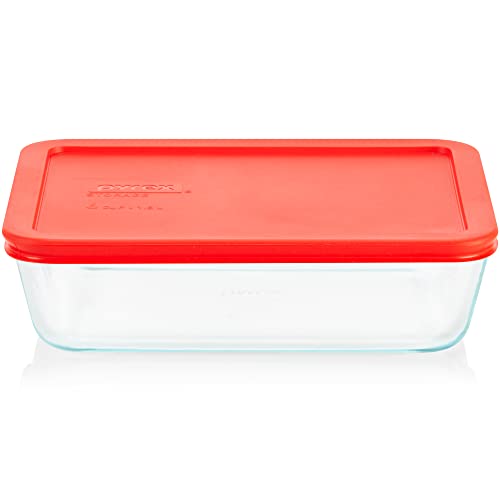
The Simply Store pattern is the set against which the category is unconsciously measured: graduated rounds and rectangles, clear bases, simple press-on lids in cheerful colours. In everyday judging it scores by having no weak job except travel sealing. Leftovers store visibly, reheating is effortless, stacking is stable, washing is simple and the whole household can operate it without instruction. It is the set a reviewer recommends to a friend who asks no follow-up questions, because its fit is the median kitchen’s fit.
Its limitations are the format’s limitations, stated without softening. The lids are shelf seals, and soup in a bag will eventually prove it. The lids also age first, relaxing over years until a replacement restores the set. The round-heavy mixes spend fridge corners less efficiently than rectangle-led rivals. None of this dents its role. Best for: first glass sets, family fridges, mixed everyday food. Not suited for: daily commuters carrying liquids. In tier terms it sits in the middle of the field, which matches its position in almost everything else: the calm, generalist centre.
Anchor Hocking TrueSeal — The Baker’s Set
Anchor Hocking approaches storage from the oven outward, and its set feels like bakeware that learned to store rather than storage that learned to bake. Bases are sturdy and generously shaped, lids aim for a firmer grip than the classic press-on, and the whole system suits a kitchen where casseroles, gratins and roasts are the native food. Judged on the cook-store-serve loop, it is arguably the most natural set in this roundup, because the loop is not a feature for it; it is the entire design premise.
The costs are footprint and weight. Bake-led bases ask for shelf room, filled large dishes are serious lifts, and the size spread leans toward cooking events rather than tiny everyday remnants. A small household cooking small meals may find the set’s generosity mostly unused. Best for: bakers, batch cooks and households whose leftovers begin life as baked dishes. Not suited for: tiny kitchens counting centimetres, or lunch-led buyers who need a travel seal more than an oven pedigree. It sits at a mid tier, with its value concentrated in the oven half of the loop.

IKEA 365+ Glass — The Modular System
The IKEA entry is not really a set at all, and that is its distinction. Bases and lids are composed by the buyer into a personal system: multiples of the sizes you live in, none of the sizes you do not, replacements bought individually forever. Judged as a system, it wins the storage and longevity categories outright — footprints repeat, stacking is disciplined, and a lost lid is a small errand rather than a set-ending event. For systematic households, this roundup regards it as the most adult design in the field.
The price of control is effort and a ceiling on sealing. You must decide your own size map, and the everyday lids are good seals rather than the field’s strongest. Buyers who want a single box to end the question will find the choosing itself tiring. Best for: small kitchens, growing households, organisers and anyone replacing parts over years. Not suited for: one-and-done shoppers or heavy travellers. Its entry tier makes experimentation cheap, which suits its philosophy perfectly: start small, learn your sizes, grow the system. Readers extending the system into pantry shelving often pair it with best storage baskets.

OXO Good Grips Smart Seal Glass — The Engineered Seal
OXO’s set is what happens when a company famous for handles studies a lid. The locking, gasketed closure seals evenly and opens with a designed smoothness, the bases are positioned for oven and table, and the system feels considered in the hand in a way that justifies its premium tier to the buyers it suits. Judged purely on sealing confidence for everyday-plus-travel duty, it leads this roundup, and judged on ergonomics it has no real rival here.
The counterweights are tier and ritual. Locking lids take two hands and a moment, every time, including the tired midnight times when the anchor set’s press-on lid feels like a gift. Replacement lids are considered purchases. Households that never carry food will pay for sealing they never test. Best for: soup carriers, careful cooks and anyone previously burned by leaks. Not suited for: entry budgets or households that prize one-handed speed above all. The full value debate for premium glass sits in are glass food storage containers worth it.

Rubbermaid Brilliance Glass — The Travel Specialist
Brilliance Glass is the set designed around a journey. Its latching lids close with a positive, confidence-giving action, the seal is built for leak resistance, and the polished clarity of the bases makes the set the best-looking in this roundup at the table as well as in the bag. Judged on transport, it shares the lead with the OXO; judged on presentation, it leads alone. For the commuter and the lunch carrier, this is the set whose compromises all point in the right direction.
At home, some of that engineering is surplus. Latching every container of a large family leftover session is a ritual some cooks will feel, and the lids reward careful storage. The tier is premium. None of that matters to its intended buyer, for whom one leak in a work bag costs more than the ritual ever will. Best for: commuters, lunch carriers and presentation-conscious hosts. Not suited for: static-fridge households buying sealing they will never use. Its closest comparison in this cluster is drawn fully in glass food storage containers pros and cons.
PrepNaturals Glass — The Meal Prep Uniform
PrepNaturals rejects the mixed-set philosophy entirely: identical bases, locking lids, a stack that turns one shelf into a week of lunches. Judged inside its intended life, it is superb — portioning is visual, reheating is predictable, the fridge grid is calm, and every lid fits every base, ending the lid hunt by design. Judged outside that life, it is the narrowest set in this roundup, and the review must say so in the same paragraph as the praise.
The narrowness is specific: a family roast, an odd-shaped leftover or a big bake has no home here, and most owners add a mixed set beside it within months. That pairing is not failure; it is the correct end state for a serious prepper. Best for: dedicated weekly meal prep and portioned lunches. Not suited for: varied family leftovers as an only set. It sits at a mid tier, and its value rises or falls entirely with the honesty of the routine it is bought for. The narrower prep-only comparison lives in the glass meal prep cluster elsewhere in this programme.
Head-to-Head: The Comparisons Buyers Actually Make
Anchor versus traveller is the first real contest: Simply Store against Brilliance Glass. The anchor wins on speed, universality and price tier; the traveller wins on sealing and presentation. The deciding question is embarrassingly simple — does your food leave the house in a bag? If yes, weekly, buy the traveller’s seal and enjoy it. If no, buy the anchor’s simplicity and spend the difference on a second large base. Most regrets in this category come from answering that question aspirationally instead of truthfully.
System versus set is the second contest: IKEA’s modular kit against every boxed set here. The system wins on fit, replacement and long-term coherence; the sets win on immediacy. Households that enjoy composing their tools should trust that enjoyment; it predicts a well-built system. Households that want the problem solved this weekend should buy a set and let a manufacturer do the composing. Neither temperament is superior, and this roundup refuses to pretend otherwise.
Uniform versus mixed is the third contest, and it resolves by addition rather than victory. Serious preppers need uniformity the way bakers need an oven; family kitchens need mixture the way they need a sharp knife. The mature answer, seen in kitchen after kitchen, is a mixed anchor set plus a uniform prep stack, each sized modestly. Buyers trying to force one philosophy to do both jobs end up with the frustrations of both and the strengths of neither, which is the closest thing to a universal mistake this category offers.
What Owners Value After the First Year
Across sets, the praise that survives a year is remarkably consistent, and it is never about the feature that sold the set. Owners praise visibility at the fridge door, the absence of smells, reheating without decanting, and lids that the whole household can work. They praise, in other words, the loop. The complaints that survive a year are equally consistent: a lid that relaxed, a base chipped by careless stacking, a size that was never used, a seal trusted beyond its design on one memorable journey. Notice that three of those four complaints are about fit and habits, not about glass — the strongest evidence in this roundup that choosing the right set matters more than choosing the most impressive one.
Year-two behaviour is the real review metric. Sets that fit get expanded; lids get replaced without resentment; the system becomes invisible infrastructure. Sets that misfit get quietly routed around, with plastic creeping back for the jobs the glass was meant to do. If you are reading these reviews before buying, the most useful exercise is to imagine your own year two in detail — the tired evenings, the full fridge, the missing lid — and choose the set that still works in that film. The sets above are all capable of starring in it, for different households.
Care and Safety Across All Six Sets
One care regime serves the whole roundup. Wash gaskets and grooves, dry lids fully, keep every plastic lid out of the oven and away from direct heat, and store lids in one vertical home beside the nested bases. Inspect rims and corners under good light whenever a base has taken a knock, and retire damage without negotiation. Temper cold bases before heat and rest hot bases before cold water or cold surfaces. These habits are identical for a mid-tier anchor and a premium traveller, which is convenient: you can change sets later without relearning how to live with glass. For the drying side of the routine, best waffle kitchen towels and best glass cleaning towels are the companion reads, and best under-bed storage helps when the cupboard reorganisation spreads beyond the kitchen.
Reheating, Serving and Table Manners, Set by Set
All six sets reheat in the microwave happily with lids removed or vented as each maker directs, so the differences appear in the oven and at the table. The Anchor Hocking, born as bakeware, is the most natural oven citizen and the set whose large dishes look least like storage at a table. The OXO and Pyrex bases follow closely, presenting cleanly and handling the bake-store-serve loop without fuss. The IKEA bases serve perfectly respectably, with a plainer, more utilitarian table presence that its owners tend to count as honesty rather than a flaw.
The Brilliance set is the presentation outlier in the best direction: its clarity and finish make it the set guests mistake for serving ware, which matters to hosts who take food to the table in its container. The PrepNaturals bases are the honest exception — designed for a fridge grid and a desk, they present adequately and apologise for nothing, because presentation was never their brief. A roundup should record these table manners because the oven-to-table promise is half the reason to buy glass at all, and sets keep that promise to visibly different degrees.
Oven behaviour, by contrast, is governed less by brand than by the universal rules already given in this roundup: temper, lid off, dry trivet, no sudden cold. Reviewers who rank sets by oven drama are usually ranking their own habits. What can fairly be said is that bake-led bases feel most at home under sustained oven duty, while every base here handles reheating and moderate baking with equal competence when the rules are followed. Choose your set for its lid and its system; the oven will treat them all alike.
Fridge Fit, Footprints and the Cupboard Test
Measured by footprint discipline, the IKEA system and the PrepNaturals stack lead this roundup, for the same reason: repetition. Identical or shared footprints stack into stable, space-honest towers, and a fridge shelf filled with either looks like it was planned. The mixed sets stack well within a size but vary across sizes, producing the familiar, slightly organic fridge landscape of family life — perfectly functional, less photogenic, and matched to food that is itself various. Neither landscape is wrong; they are portraits of different kitchens.
The cupboard test separates the field more sharply. Deep-nesting mixed sets and the modular IKEA bases store compactly when empty. Locking lids, whatever their set, store worst — bulkier, less nestable, happiest in a dedicated vertical file. The PrepNaturals lids share that bulk but redeem it by uniformity: one lid shape, filed once, learned forever. Households with one shallow drawer for all storage should weight this section heavily, because a set that cannot be put away will not be put away, and a set that is never put away properly loses lids, chips rims and slowly becomes the problem it was bought to solve.
Weight at the shelf deserves its sentence in every review and gets a paragraph here. A full shelf of filled glass is a serious load on fridge shelving and on the arms that unload it. The large Anchor Hocking and Pyrex bases, full, are two-handed objects; the uniform prep bases are one-handed by design. Households with glass fridge shelves, high storage or limited grip should test the largest filled base in person if they possibly can. No review, including this one, can lift it for you.
Longevity and the Replacement Economy
Five years in, the six sets diverge less in their glass than in their ecosystems. Bases across the roundup will mostly still be in service, barring accidents. The differences live in lids: whether a relaxed lid can be replaced singly, whether it can be replaced locally, and whether the line still exists to replace it from. On that measure the long-running anchor lines and the modular IKEA system hold a structural advantage that no launch-day feature can match, because they have already demonstrated the only longevity evidence that counts — time on sale, in kitchens, being re-ordered.
Premium locking sets ask a different longevity question: will the hinges and gaskets be treated as the engineered parts they are? Owners who wash gaskets, dry grooves and store lids unstacked report seals that stay true for years. Owners who treat a locking lid like a press-on lid — twisted, stacked under weight, baked by a dishwasher’s hottest cycle — report disappointment that belongs to the handling, not the design. This roundup scores both patterns honestly: the seal is stronger and the care requirement is real, and both halves belong in the review.
The practical advice that falls out of the longevity evidence is unglamorous and valuable. Buy into lines with a visible replacement path, keep one spare lid for your most-used size if your household is hard on lids, and retire chipped bases immediately so that one accident does not become a story about the whole set. Do those three things and any set in this roundup has a realistic path to a decade of service, which is the time horizon on which glass storage stops being a purchase and becomes part of the house.
Decision Shortcuts for Common Households
For the two-adult household cooking most nights and freezing little, the anchor pattern is the whole answer: one mixed set, rectangles leading, a couple of rounds, done. Add nothing until a real gap appears, because in this household it may never appear. The reviews above can be skimmed for confirmation rather than studied, and the money saved against premium tiers is better spent on one extra large base for the Sunday cook. This is the household the category was invented for, and it should enjoy the simplest decision in the roundup.
For the household with a new baby, a new job or any new reason that lunches now leave the house daily, skip the anchor entirely and start with the travel seal. Buying the simple set first, in this specific life, is not caution but a predictable leak followed by a second purchase. The Brilliance and the OXO divide the choice between them: presentation and latch confidence on one side, ergonomic seal design on the other. Handle both if you can; your hands will vote, and their vote is reliable.
For the household feeding teenagers, the deciding factor is volume with forgiveness. Large bases, lids a tired teenager can operate, and a replacement path for the inevitable losses matter more than any seal subtlety. The anchor lines and the modular system serve this chaos best, in different styles — abundance in one case, replaceable order in the other. Premium locking sets in a teenage kitchen are not wasted, exactly, but their engineering will be tested in ways its designers mercifully never imagined, and the lids will be the first casualties.
For the single cook in a small flat, the modular system is the roundup’s clearest recommendation. Shelf space is the scarcest asset, every base must cook, store and serve, and the ability to own exactly four perfect bases instead of fourteen assorted ones is worth more than any badge. Start with two medium rectangles and one round, live a month, and let your own cooking tell you the fourth piece. Small kitchens reward this patience disproportionately, because every wrong piece costs a visible percentage of the whole cupboard.
For the enthusiastic batch cooker whose freezer does as much work as the fridge, read this roundup with one correction applied: weight the freezing guidance in every review more heavily, leave generous headroom for liquids, and consider whether a dedicated freezer format should stand beside the glass rather than beneath it. Glass will handle the fridge week of a batch cook beautifully and the occasional frozen soup honestly, but a season of bulk freezing is a specialism, and specialisms deserve their own tools. The household that accepts that division owns two calm systems instead of one strained one.
Notice what none of these shortcuts mentions: a headline piece count, a colour, or a feature list. Across six sets and five household types, the decisions that predict happiness are journey, system, size map, hands and shelf. That is the roundup’s real conclusion, and it is why this article spends its length on behaviour rather than specifications. Specifications can be read in a minute on a listing when verification links are restored; behaviour has to be learned from reviews like this one, or expensively, in your own kitchen, one leak and one chip at a time.
A Note on Honesty in Roundups Like This One
Roundups in this category often pretend to a precision nobody possesses: laboratory scores for seals, exact hierarchies of near-identical bases, winners declared by margins thinner than the difference between two kitchens. This roundup has deliberately refused that theatre. The sets here are separated by philosophy — lid, system and intended life — far more than by quality, and within a philosophy the differences are matters of hand-feel and household fit. A review that ranks them one to six would be inventing a precision the products themselves do not contain, and readers deserve to be told that plainly.
What can be stated with confidence has been stated: locking gaskets seal harder than press-on lids; uniform systems stack tighter than mixed ones; modular systems replace parts more gracefully than boxed sets; bake-led bases present and roast more naturally than prep-led ones. Those are structural truths, true in every kitchen, and they are enough to choose by. Everything else is your kitchen’s vote, and this article’s structure — role, fit, suited, not suited — is designed to help you cast it accurately rather than to cast it for you.
If you finish this roundup still torn between two sets, that is not a failure of the roundup or of you. It usually means both sets genuinely fit, in which case the tie-breakers are the honest small ones: which lids your hands prefer, which system your shelf prefers, which replacement path you trust. Choose on those, without anxiety. In a category where every serious contender will store dinner competently for years, the cost of a slightly imperfect choice is low, and the cost of endless deliberation is a fridge still full of stained plastic while you decide.
One more collective observation belongs in the record before the verdict. Across all six sets, the households that thrive share a habit that has nothing to do with which set they bought: they treat the inspection ritual as part of washing up. Rims get a glance, corners get a fingertip, and damage leaves service the day it appears. That thirty-second habit is the closest thing this category has to a universal warranty, and it is entirely in the owner’s hands. Buy any set in this roundup and keep that habit, and the reviews above will read, in a year’s time, like a description of your own kitchen.
What Changes When the Household Changes
A final comparative lens is time. Households are not static, and the set that fits a couple may strain a family, while the set bought for toddlers may bore a household of teenagers. The modular system adapts most gracefully to change, because it grows piece by piece in the direction life actually takes. Mixed sets adapt by addition — a prep stack here, a travel pair there — which is nearly as graceful and rather more common. The sets that adapt worst are the highly specialised ones bought at full size for a phase: the enormous prep system bought for a six-week fitness enthusiasm is this category’s saddest cupboard resident.
The buying wisdom that follows is to purchase for the household you have, at the size it demonstrably needs, inside systems that can grow. Every set in this roundup can be the start of such a system except when bought as a grand, final gesture. Reviews can warn against the grand gesture but cannot prevent it; only the buyer’s honesty about the difference between a routine and a resolution can do that. If the prep habit is three weeks old, buy four prep bases, not twenty, and let the habit earn its expansion.
And when life genuinely changes — a move, a baby, a new job with a commute — revisit the set with the same questions this roundup opened with, rather than assuming the old answer still holds. The journey changes first, then the system should. Households that re-ask the questions keep systems that fit; households that never re-ask them end up with cupboards full of excellent containers for a life they no longer live, which is the most common and most avoidable end state in this entire category.
To close the evidence with the simplest summary this roundup can honestly offer: the anchor set is the best first answer, the locking sets are the best travelling answers, the modular kit is the best growing answer, the uniform set is the best rhythm answer, and the baking set is the best oven answer. Five different superlatives for six sets is not indecision; it is the accurate shape of a mature category. Your task as a buyer is not to find the set that beats the others, but to recognise which question your kitchen is actually asking — and every section of this article has been arranged to help you hear that question clearly.
A practical closing tip for readers comparing these sets in a shop or on a screen: perform the three-hand test in your imagination, in detail, before choosing. First, your hands at the end of cooking, one holding a hot pan, seating a lid one-handed over tomorrow’s lunch. Second, your hands on a weekday morning, closing a container that must not leak in a bag, half awake. Third, your hands in a year’s time, washing a groove, filing a lid, inspecting a rim by a window. The set that your imagined hands thank you for in all three scenes is your set, whatever any roundup — including this one — ranks first, and trusting that simulation is the most reliable reviewing instrument a buyer owns.
Readers who arrived here from the single-format review will notice this roundup reaching the same destination by a wider road, and that agreement is itself a finding. Whether you study one set deeply or six comparatively, the deciding factors refuse to change: the lid’s honesty about its journey, the system’s fit to your shelf and your routine, and your own willingness to keep glass’s few simple rules. Products differ; kitchens differ; the questions do not. Ask them in order, answer them truthfully, and the set almost chooses itself — which is, in the end, what a good roundup is for.
One last encouragement, offered to every reader still weighing the switch from a cupboard of ageing plastic: you do not have to convert perfectly or all at once for the change to be worth making. One anchor set, honestly fitted, already delivers the visibility, the clean reheating and the calm fridge that make households stay with glass. The specialised sets in this roundup will still be there when a commute, a prep routine or a bigger kitchen gives them a real job to do. Begin where your life actually is, and let the system grow the way the modular designers intended — piece by piece, need by need, year by year.
And if the choice still feels heavy, remember what is actually being decided: not a marriage, but a set of boxes with lids, in a category where every serious option performs its core job well and where a second, correcting purchase is neither expensive nor shameful. Kitchens are edited, not ordained. Choose the set that fits the evidence of your own week, keep the inspection habit, and get back to cooking — the food, after all, was always the point of the containers, and not the other way around.
Consider this the roundup’s footnote for the undecided: when two sets both fit, choose the one whose lids you can replace most easily, because that single, unglamorous property predicts a longer, calmer ownership than any difference in the glass itself.
The Roundup Verdict
If a single recommendation must be printed, it is this: most households should start with a mixed everyday set in the Simply Store pattern, because it fits the median week best and fails only where most weeks never go. Add the Brilliance or the OXO when travel becomes real, add the PrepNaturals when a prep routine becomes real, choose the IKEA when your temperament is systematic, and choose the Anchor Hocking when your kitchen’s centre of gravity is the oven. Sequenced that way, glass storage grows with your life instead of betting on it, and every set in this roundup finds the household in which it is genuinely the best one here.
After the Boxes Are Gone: Long-Term Ownership Notes From Glass food storage containers Reviews
Most glass food storage containers coverage stops at unboxing, yet almost everything that decides owner satisfaction happens afterwards. The first evening tells you about finish and first impressions; the third month tells you about durability, upkeep and whether the design still suits the way your household actually behaves. This section looks at the ownership phase in detail — the settling-in period, the first signs of wear worth watching for, and the small habits that separate owners who stay pleased from owners who start browsing replacements. If you are weighing Pyrex Simply Store, Anchor Hocking TrueSeal or any similar design, treat the points below as the questions a good long-term review should answer.
The Settling-In Period: What Changes in the First Weeks
New materials and mechanisms relax. Fabrics soften, joints settle, finishes lose their showroom sharpness, and moving parts either bed in smoothly or start to complain. With a glass food storage containers, use the first fortnight deliberately: operate everything daily, check fixings once after the first week, and keep a mental note of any sound, wobble or resistance that was not there on day one. Changes that stabilise after a small adjustment are normal settling; changes that keep progressing are early warnings, and they are far easier to raise with a seller while the purchase is recent.
Wear Worth Watching, and Wear Worth Ignoring
Not all wear is failure. Honest materials in the food storage & organization category develop a patina — slight softening of edges, gentle colour shifts where hands and light fall — and most owners come to like it. The wear that matters is functional: looseness that returns after tightening, surfaces that mark from ordinary use rather than accidents, parts that need persuading, and finishes that fail at edges and corners first. Check those high-contact zones on any glass food storage containers you already own, and look for honest close-up photographs of exactly those zones when you judge a replacement.
A simple ownership routine keeps a glass food storage containers performing the way the early reviews promised:
- Once a month, spend two minutes checking fixings, feet, seals or moving parts — whichever your glass food storage containers relies on — and correct small changes before they compound.
- Clean little and often with the mildest method that works, rather than rarely and aggressively, and always test any new cleaner on a hidden patch first.
- Rotate, rest or reposition the glass food storage containers if one side takes all the light, heat or traffic, so wear spreads evenly instead of concentrating.
- Keep the manual, spare parts and any touch-up materials together in one labelled place; the day you need them is never the day you want to search.
- Photograph the glass food storage containers once a year from the same spot; comparing pictures is the most reliable way to notice slow change you would otherwise miss.
Leave a little capacity unused — in size, storage or power — because a glass food storage containers run permanently at its limit ages faster and annoys sooner than one with headroom. Notice which parts are replaceable and which are not; a glass food storage containers whose wear parts can be swapped cheaply often outlasts a sealed design twice its price in spirit, if not in years. Consider the glass food storage containers from the perspective of the person who cleans around it, because designs that trap dust, block access or demand special products quietly tax every week of ownership. Think about noise, light and heat as neighbours of the glass food storage containers, not afterthoughts, since a choice that performs well but disturbs the room around it rarely stays popular for long. Remember that guests experience your glass food storage containers without instructions, so anything that needs explaining, warning or demonstrating is worth simplifying before it is worth defending. Look at the edges and undersides when you judge build quality, because those are the places makers save money first and the places owners discover last.
Ownership rewards attention in small doses. A glass food storage containers that is checked monthly and cleaned gently will usually outlast a neglected premium model, and it will certainly stay pleasanter to live with. Judge any review — including the detailed assessments earlier in this guide — by whether it helps you through this long middle phase of ownership, because that phase, not the unboxing, is where the money is really spent.
Frequently Asked Questions
Which glass set is best for a first purchase?
A mixed everyday set with a wide size spread and simple lids is the safest first purchase for most households, because it covers the ordinary week without asking you to predict specialist needs. Live with it for a few months and your real gaps will announce themselves — travel leaks, prep uniformity, a missing large base — at which point a targeted second purchase is obvious and cheap. Starting general and specialising later beats starting specialised and discovering the specialism was aspirational.
Do locking lids really seal better than press-on lids?
Yes, meaningfully. A locking lid compresses a gasket evenly around the whole rim, which is a stronger and more consistent seal than the friction grip of a press-on lid, and the difference shows exactly where you would expect: tilted containers, liquids and travel. On an upright fridge shelf with solid food, the difference nearly vanishes, which is why both designs survive. Buy the seal for the journey your food actually takes, not for the most dramatic journey you can imagine.
Can all of these sets go in the oven and freezer?
The bases across this roundup are designed for oven and freezer use within each maker’s guidance, and the lids are for neither the oven nor direct heat. The governing rules are universal: temper a cold base before the oven, leave headroom for liquids that will freeze and expand, and never move a container straight from freezer to hot oven. Read your own set’s guidance for its specifics, because limits differ between brands that look similar, and follow the stricter instruction whenever two sources disagree.
How do I stop lids from taking over a drawer?
Store lids vertically, on edge, in one shallow drawer, rack or box, grouped by size and kept beside the nested bases. Vertical filing turns a pile you must excavate into a row you can read at a glance, and it makes a missing lid visible immediately rather than at the moment of need. Every set in this roundup benefits from the same system, and households that adopt it consistently report that the lid problem, the category’s oldest joke, simply stops happening.
Is it worth paying a premium tier for glass storage?
Only when the premium buys a property your life will test: a locking gasket seal for travel, or ergonomics a household member genuinely needs. Premium clarity and presentation are pleasant but rarely decisive. If your food stays home and your hands are happy with simple lids, the mid-tier anchor sets deliver the entire core experience — visibility, hygiene, oven-to-table — without the premium. Spend the difference on the second set your routine actually proves it needs.
What is the most common reason a glass set disappoints?
Mismatch, not quality. A stay-at-home set trusted with a daily soup commute, a uniform prep set asked to house family roasts, a giant set bought for a small kitchen — each disappoints exactly as designed, because it was asked to live the wrong life. The second most common reason is a chipped base kept in service until it fails. Both are preventable before purchase and at inspection time respectively, which is why these reviews spend more words on fit than on features.


