Disclosure: As an Amazon Associate, dailyhomedecorating.com earns from qualifying purchases. Links on this page are affiliate links; they cost you nothing extra. Prices and availability change often, so check the current Amazon listing before you buy.
Learning how to choose a fire pit is really learning how to ask the right questions in the right order, because the wrong order — style first, rules last — is how households end up with beautiful bowls they may not light, on decks they may not use, in sizes their circles cannot fill. This guide gives you the order: rules and placement before products, fuel before finish, size before shopping, and the whole system priced before any single bowl is admired. Follow the steps and the shortlist builds itself; by the final step you will be choosing between two or three designs that all fit your life, which is exactly where a buyer wants to be. The short answer, for readers in a hurry: decide where the fire may legally and safely live, choose the fuel your evenings honestly suit, size for your ordinary gathering, buy materials for your climate, and never let a photograph overrule any of it.
Key Takeaways
- Step order matters: rules, placement, fuel, size, materials, system, then style.
- Fuel is the decision inside the decision — wood for ritual and ember heat, propane for instant, clean, permitted flame.
- Measure the whole arrangement — pit, clearances, chairs, walkways — never the bowl alone.
- Buy the system: cover, screen or stand, ash kit or tank routine, and seating are part of the purchase.
- Safety is a choosing criterion: outdoor use only, safe distances under local rules, no flammable liquids ever, supervised fires, cold ash into a metal container, propane checked with soapy water.
In this guide
What You Need to Know Before Comparing Models
Three facts govern every fire pit decision, and none of them is printed on a product box. The first is that fire pit heat is radiant and personal: it warms the people facing the fire at close range and does almost nothing for anyone outside the circle, so a fire pit is seating furniture as much as heating equipment, and its size is really a statement about how many people you gather. The second is that fuel is a lifestyle: wood asks for storage, building, tending, and ash; propane asks for a valve, a tank, and a leak check; and households reliably love whichever fire matches the effort they actually enjoy. The third is that permission is local and conditional: regulations, seasonal burn bans, leases, and building rules decide where and whether each fuel may burn, and they outrank every preference in this guide. A buyer who absorbs those three facts before opening a single product page will find the steps below almost anticlimactic — which is the mark of a method working. The drama in fire pit buying belongs to households that skip the foundations and shop by photograph; the method exists to spare you their sequel.
Vocabulary helps too, briefly. A bowl is the classic open wood burner; a smokeless pit is a double-walled wood burner engineered to burn off much of its smoke at the rim; a fire bowl in propane terms is a round gas burner, often dressed with lava rock; a fire table builds that burner into a table with the tank in its base; a built-in is a permanent landscape feature. Tiers — entry, mid, premium — describe materials and engineering in words: thin steel at the simple end, heavier steel and considered design in the middle, stainless and smokeless engineering at the top. None of these terms is a quality verdict by itself. Each names a set of trade-offs that the steps below will match against your plot, your rules, your circle, and your patience, in that order.
How to Choose a Fire Pit in 7 Steps
Step 1: Check Your Rules Before Anything Else
Before measuring, browsing, or dreaming, establish what may burn where you live. Look up your local regulations for recreational fires: permitted fuels, placement conditions, hours, and any permit requirements. Note the seasonal pattern of burn bans in dry or windy periods, and whether gas appliances are treated differently from wood — they often are, because they extinguish instantly and make no embers. If you rent, get the landlord’s position in writing; if a building or community has its own rules, read them rather than asking a neighbour’s memory of them. Homeowners should confirm that a fire pit, properly used, sits comfortably within their insurance conditions. This step takes an hour at most and can delete entire categories from your shortlist — a deletion that is painless now and expensive after delivery. Every later step assumes this one’s answer, so write it down: fuels permitted, surfaces permitted, conditions attached. That single note is the foundation of the whole purchase.
Step 2: Choose the Placement and Measure the Whole Arrangement
Walk the garden with the rules in hand and choose the fire’s home before choosing the fire. The spot needs a level, non-combustible surface; safe distance from the house, fences, sheds, overhanging branches, and anything flammable, as your local rules require; shelter from the worst of the wind if your plot offers it; and a position where the prevailing breeze carries smoke away from your seating and your neighbours’ windows. Then measure the whole arrangement, not the pit: the bowl at the centre, its clearances around, chairs at a comfortable radiant distance — close enough for warm knees, far enough for relaxed legs — and walkways that let people arrive and leave without squeezing past the fire carrying drinks in the dark. Sketch it on paper if the plot is tight. This step frequently shrinks ambitions honestly: a garden that measures for a compact bowl and four excellent chairs, like those in best chairs for a fire pit area, will host better evenings than a garden crammed with a big bowl and nowhere to sit. Placement chosen well also survives seasons — you will see the cooling pit from the house, remember its ash, and keep its cover on because its home is convenient rather than forgotten at the garden’s far end.
Step 3: Choose Your Fuel by Your Evenings, Not Your Ideals
Now decide the question the whole category turns on. Picture your typical fireside evening with forensic honesty: how long it lasts, who lights the fire, how tired everyone is, and how the evening ends. Long, unhurried evenings with a willing fire-keeper point to wood — radiant ember heat, crackle, the possibility of cooking in a suitable design, and a ritual many households name as the best part. Short, spontaneous evenings, sudden bedtimes, decks, and restricted areas point to propane — flame at a valve, no smoke, no ash, an ending that takes a second. Smoke sensitivity, in your household or your street, points to propane outright or to smokeless wood burned with discipline. Fuel access votes too: a dry store and a supply of seasoned hardwood argue for wood; distance from any wood supply and easy tank swaps argue for propane. If the picture stays tied, run the comparison in fire pit versus propane fire pit and then trust the Tuesday test — the fire you would light unplanned, midweek, slightly tired, is the right fuel. Record the decision and its reason; every later step is smaller than this one.
Step 4: Size for Your Ordinary Gathering
Count the chairs of your ordinary evening, not your annual party. Two to four sitters suit a compact bowl, which sips fuel, stores easily, and makes an intimate fire that looks right at small scale. Four to six — the commonest family circle — suit the mid-size class that most of this cluster’s guides treat as the default. Regular gatherings beyond that justify a large bowl, with its larger fuel appetite, ash volume, and placement demands priced in from the start. Remember the radiant rule: a fire warms the circle that faces it at close range, so an oversized pit does not warm a small circle better — it merely asks to be fed larger to look alive. If one big annual event worries you, plan a borrowed second pit for that night rather than a year of oversized evenings. Size also includes storage: measure where the pit will live unlit — under its cover on the patio, in the shed, in a garage corner — and let that space veto any model that cannot fit your life between fires.
Step 5: Choose Materials for Your Climate
Materials are where tier becomes honest. Entry-tier thin steel serves a starter season or three, especially stored dry and covered, and rusts fastest exactly where the fire burns hottest if it winters outdoors neglected. Mid-tier heavier steel stretches lifespan and stability. Premium stainless — the smokeless category’s usual metal — resists corrosion best and takes heat discolouration as its cosmetic tax. Cast iron holds heat and stays put in storms at the price of real weight. Judge beyond the metal: welds that look clean and continuous, legs that do not wobble on your actual surface, an ash solution you can operate cold with a small shovel or lift-out pan, and availability of the maker’s cover, screen, and stand — because a pit whose protective kit is an afterthought will live as one. Climate referees the choice: wet winters punish thin steel and reward stainless or diligent storage; dry climates forgive materials and punish nothing except inattention to burn bans. Buy the material your weather and your storage habits can keep, not the material in the photograph’s climate.
Step 6: Price the Whole System in Tiers
Write the system list before admiring any single model: the pit; its cover; a spark screen where children, pets, dry planting, or close seating call for one; a stand or heat shield where your surface needs protection; ash tools and a lidded metal container for wood, or a tank routine and a spare-connection check for propane; a dry fuel store for wood; and seating arranged for radiant distance — our guides to best chairs for a fire pit and best Adirondack chairs for a fire pit cover that half of the system properly. Then place the whole list in a qualitative tier you can sustain: a mid-tier system complete beats a premium bowl naked to the weather on every measure that matters after the first month. This step is also where frequency does its arithmetic in words — weekly use spreads the system’s cost across hundreds of evenings, occasional use concentrates it — and where the honest buyer discovers whether the premium smokeless tier is an investment or an ornament for their particular life.
Step 7: Apply the Safety Veto, Then Choose by Style
Last, run every surviving candidate through the safety veto, and let it be a veto. Can this design, in your placement, be used outdoors only — never in the house, garage, or tent, where carbon monoxide makes any fire lethal — with the clearances your local rules require? Can its fire be supervised by the adults your household actually has, with children and pets kept at a distance your layout makes natural? For wood: can you burn only dry, untreated fuel, light it with kindling and proper firelighters — never gasoline or other flammable liquids — and handle its ash completely cold into a metal container, every time? For propane: can you leak-check its connections with soapy water, keep its valve closed when idle, and store its tank as instructed? Any candidate that fails a question your household cannot fix is out, whatever its looks. Among the survivors — and there should be two or three — choose by style with a clear conscience, because at that point the method has done its work and taste is a legitimate decider. The pit you choose this way will not be the best fire pit in the world. It will be the best fire pit in your garden, which is the only title that matters.
Gear for This Guide

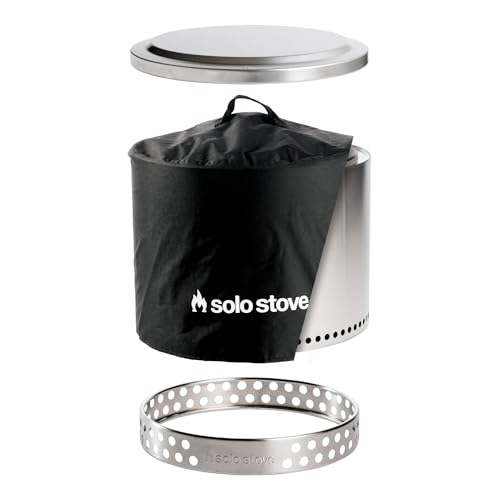
Solo Stove Bonfire — The Smokeless Shortlist-Topper
If your steps land on wood with neighbours near, the Solo Stove Bonfire is the design your shortlist starts from: stainless, smokeless, portable, sized for the common family circle, and honest about its duties — dry fuel, steady feeding, cold ash. It represents the premium tier’s real purchase: engineering that changes the smoke equation. Best for: weekly suburban wood burning. Not suited for: monthly use, where its tier cannot amortise.

TIKI Brand Patio Fire Pit — The Furnished Patio Choice
If your steps land on wood with design in the foreground, the TIKI patio pit is the mid-tier candidate: a handsome bowl, a beginner-friendly fire system, and traditional smoke accepted as part of its character. Best for: furnished patios and new hosts. Not suited for: smoke-sensitive streets.
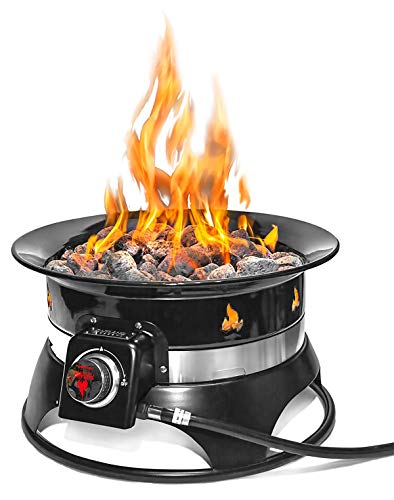
Outland Living Firebowl — The Propane Default
If your steps land on propane, the Outland Living Firebowl is the category’s classic bowl: portable, quick, at home on decks and under restrictions, with the propane liturgy of leak checks and valve discipline as its only homework. Best for: spontaneous and restricted settings. Not suited for: ritual seekers.
Amazon Basics Steel Fire Pit — The Learning Bowl
If your steps end in honest uncertainty, the Amazon Basics steel bowl is the rational teacher: an entry-tier wood fire that will tell you, within a season, how often you light up, how you feel about smoke and ash, and which upgrade — smokeless, propane, or none — your life is asking for. Best for: the undecided. Not suited for: as a forever pit in a wet climate without kind storage. Each of these is presented in prose, to be checked against current listings when you buy; the method above outranks any single name in this section, and a design that fails your steps should be struck off no matter whose shortlist it tops.
Common Mistakes
The mistakes repeat so reliably that they read as a liturgy of their own. Buying before checking rules, and discovering a restriction with a delivered pit in the drive. Choosing by photograph — a sculptural bowl that holds three splits, bought to warm eight adults. Placing under a pergola, canopy, or porch roof because the spot photographs well, ignoring that heat and sparks rise. Burning the wrong fuel: treated or painted wood, rubbish, damp logs — and, worst of all, trying to hurry any fire with gasoline or similar liquids, which must never come near a fire pit. Treating smokeless as a licence to ignore placement, though reduced smoke still drifts somewhere. Skipping the system — no cover, no ash container, no screen where one is needed — and blaming the bowl for rust and mess. And the quietest mistake: sizing and fuelling for imagined evenings instead of real ones, the error Steps 3 and 4 exist specifically to prevent. Every mistake on this list is free to avoid and expensive to learn, which is the entire economic case for a methodical hour before purchase.
Pro Tips From Owners Who Chose Well
Owners who chose well share habits worth copying. They stood in the placement spot on a breezy evening before buying, and let the garden’s real wind vote. They talked to neighbours before the first fire rather than apologising after it. They bought the cover the same day as the pit. They kept the first fires small, learning their pit’s draw and their own technique on forgiving evenings. They assigned the fire-keeper role as an honour, rotated it, and thanked whoever held it. They kept a simple rhythm — ash out cold, cover on, fuel dry, connections checked — that turned maintenance from a project into a reflex. And they reviewed the choice after a month rather than a year, adjusting placement, seating, or fuel habits while adjustment was still cheap. None of these habits requires money. All of them compound, which is why the same product can be one household’s best purchase and another’s garage clutter: the choosing, and then the keeping, is the product.
Worked Examples: Three Buyers, Three Right Answers
Buyer one: a couple on a small suburban plot, neighbours on both sides, evenings that end early because of a toddler. Their steps delete wood at Step 1’s spirit if not its letter — smoke and sudden endings rule it out — and land on a compact propane bowl at Step 3, mid-tier at Step 6, with seating for two good chairs and a boundary the toddler’s world respects. Buyer two: a rural family with a wood supply, a big lawn, and a Friday gathering habit. Their steps wave wood through, size at Step 4 to a generous traditional or smokeless bowl, choose heavier materials at Step 5 for a pit that lives outdoors, and price a full system at Step 6 without blinking, because frequency justifies it. Buyer three: renters in a first house, unsure whether fire life suits them, with permission confirmed for a portable pit on a paved area. Their steps end at the learning bowl, entry tier, system kept minimal but safe, with a promise to revisit in a year with data instead of guesses. Three households, three contradictory purchases, each correct — because the method, not the market, did the choosing. That is the standard your own decision should be held to, and the standard the companion guides in this cluster — the fire pit buying guide and the ledger in fire pit pros and cons — are written to support.
Reading Specifications Without Being Fooled by Them
Between the steps and the shortlist sits a skill the steps assume: reading what makers say with a translator’s ear. Heat figures, where they are given for propane, describe the burner’s output, not the warmth at your chair — a number measured at the source, in still air, that your windy garden and your seating distance will tax heavily before it reaches a single knee. Treat such figures as comparisons within a fuel type, never as promises across your patio. Size figures describe the bowl or the unit, not the arrangement; your Step 2 measurements are the operative ones, and a compact pit in a correctly measured circle will outperform a large pit in a guessed one every evening of the year. Material descriptions reward literal reading: stainless grades, steel thickness language, and finish claims all gesture at the durability Step 5 prices, and vague poetry about premium construction, unaccompanied by any specific material claim, should be read as the absence of one.
Photographs require the sternest translation of all. The pit is always shown at dusk, in a garden larger than yours, with a fire built larger than you will build on a Tuesday, surrounded by people at a distance no tape measure was consulted about, in weather that does not exist in your climate’s records. None of this is fraud — it is advertising doing its ancient work — but the choosing method in this guide exists precisely to replace the photograph’s evidence with your own: your rules note from Step 1, your sketch from Step 2, your evenings from Step 3, your circle from Step 4. A buyer who has done the steps can enjoy the photographs safely, the way a person who has eaten enjoys a menu. A buyer who has not will be chosen by them, and the choosing-by-photograph household is the one whose pit appears, a season later, in the second-hand listings with the description barely used — the four most diagnostic words in the entire category.
Choosing for Special Situations
Some situations bend the method without breaking it, and they deserve explicit handling. Choosing with children in the garden elevates the safety veto from Step 7 to the first step in practice: layout becomes the headline feature, with the fire’s zone defined by paving, furniture, and habit so that distance is architectural rather than verbal, and many households rationally choose propane’s instant off for the years when supervision is hardest, graduating to wood when the boundary can be understood by everyone it protects. Choosing for a household member with smoke sensitivity ends the fuel debate before it starts — propane, or no fire — and no romance about embers should be allowed to outvote a pair of lungs. Choosing for entertaining at scale adds a second pit to the conversation more often than a giant one: two mid-size fires warm two circles, split smoke and duty, and store more kindly than one vast bowl, a solution hosts discover after one oversized purchase and wise buyers consider before it.
Choosing on a slope, in a wind tunnel of a side garden, or under the eye of particularly close neighbours each adds its own first-step question — levelling and a non-combustible stance; shelter woven into planting or fencing; a courtesy conversation held before purchase, with smokeless or propane chosen as the relationship’s candidate. Choosing as a gift inverts the method entirely: the giver must run the recipient’s steps, not their own, and where any step cannot be answered — rules unknown, plot unseen, fuel heart unguessed — the gift should become the system’s accessories or the promise of a shopping trip together, rather than a delivered bowl and a hopeful smile. In every special case the pattern holds: identify the fact that dominates, promote it to the front of the order, and let the remaining steps proceed as written. The method is a sequence, not a scripture, and its intelligence lies in knowing which step your situation has already answered.
The steps also deserve a timing note, because choosing well has a season. Run them in the order your purchase will be used: rules and placement in daylight, with the garden honest around you; fuel and size at the kitchen table, with last season’s calendar open as evidence; materials and system at the point of shortlisting, with storage measured rather than imagined. Households that compress all seven steps into a single evening in a showroom tend to let the last step — style — swallow the first six, because style is the only one that can be fully experienced standing up in a shop. The method’s quiet demand is a few days: long enough for a breezy evening to be stood in, a neighbour to be consulted, a tape measure to contradict a hope. That small delay is the cheapest quality upgrade available in the entire category, and unlike every other upgrade, it cannot be bought later at any price — a pit chosen hastily stays chosen, in the garden, asking its questions nightly. Choose slowly, burn often: the order is not accidental.
And when the steps are done and two candidates remain genuinely tied, there is a tiebreaker with a long and honourable history in this category: choose the one whose chores you mind least. Not the prettier, not the grander — the one whose cover you will actually put on, whose ash you will actually empty cold, whose connections you will actually check, whose fuel store you will actually keep dry. Ownership is a thousand small performances of care, and the design that fits your care habits will be performing, safely and beautifully, years after a marginally superior design that fought them has been retired to the shed’s back corner. Reviewers score products; owners live with routines. The steps in this guide were written to deliver you to the routine you will keep — and a kept routine, in fire as in most things, is worth more than a brilliant specification.
A Worked Measurement: One Garden, Start to Finish
Methods persuade in the abstract and convince in the particular, so walk one ordinary garden through the steps with a tape measure in hand. The plot is a suburban rectangle: a paved patio against the house, lawn beyond, fences on both sides, one large tree at the far corner, neighbours whose windows overlook the fence lines. Step 1 returns its note: recreational wood fires permitted with conditions, seasonal bans in the driest weeks, gas appliances permitted more broadly — both fuels alive, wood with a calendar attached. Step 2 walks the ground: the tree’s corner is vetoed by overhang and by the breeze that funnels smoke along the fence toward the neighbours’ kitchen window; the patio’s far edge, on paving, with clearances the rules require and the evening breeze carrying what smoke there is across open lawn, is chosen, and the arrangement is sketched — bowl at centre, four chairs at the distance where knees warm and conversation carries, a walkway behind the chairs, the wood store’s future home against the shed wall in the same sightline.
Step 3 interrogates the household: two adults, one teenager, evenings that run long on Fridays and end early on school nights, a genuine love of tending in one adult and a genuine indifference in the other. The verdict is wood — with the smokeless question deferred to Step 5’s materials, because the neighbours’ windows are close enough that smoke is a social fact in this garden. Step 4 counts the ordinary circle at four, the monthly gathering at seven, and chooses the mid-size class, with a borrowed second pit pencilled in for the annual party rather than a year of oversized Fridays. Step 5, given the windows and the frequency, lands on stainless smokeless engineering in the premium tier — a decision that Step 6 then prices as a system: cover, screen for the dog’s sake and the dry border’s, ash container and tools, the shed-corner fuel store built from pallets and a tarp’s worth of forethought, and two replacement chairs chosen for fireside posture. Step 7 runs the veto — clearances confirmed, supervision natural in this household’s layout, ash routine assigned, the teenager briefed as apprentice fire-keeper — and the shortlist of two becomes a choice made by style, in daylight, without a single regret available to it. That is what the method buys: not a guarantee of perfect evenings, but the removal of every avoidable disappointment from a purchase that will sit in that garden, asking to be lit, for years.
One more worked example sharpens Step 3, because fuel is where readers most often stall. A household of two, in a terraced house with a small paved yard, entertains another couple most Saturdays and eats outdoors whenever the weather allows. Their first instinct is wood — it is the fire of memory, of campsites and grandparents’ gardens — and their yard, measured honestly at Step 2, can just give a compact bowl its clearances. But Step 3’s interrogation is unkind to instinct: their evenings are dinner-led, their fires would start late and end at a child’s bedtime relayed through a babysitter’s text, their fuel store would be a damp corner that guarantees smoky fires in a yard where smoke has nowhere to go but the neighbours’ washing lines. The method’s answer is a propane fire table, and the household’s first reaction — disappointment — deserves the respect of a direct reply: the fire they are picturing, with embers and craft, is a fire their current life would light six times a year and resent twice; the fire the method chose will light forty times, host every dinner, and keep the neighbours as friends. When their life changes — bigger garden, older children, longer evenings — the steps will return a different answer, and the table will still be serving dinners in the meantime. Choosing is not a verdict on your taste. It is a reading of your calendar, your yard, and your street, and its kindness lies in refusing to sell you the fire you cannot use.
The same example, run for the household’s neighbours across the fence, returns wood without hesitation — a retired couple, a slightly larger plot, a wood store already standing, evenings with no bedtime but their own, and a circle of grandchildren who visit on Sundays to learn, under supervision, how a fire is built and respected. Two households, one fence, opposite answers, each correct: this is the deepest claim the how-to-choose method makes, and the reason this guide teaches questions instead of naming winners. Your garden, your rules, your evenings, your circle — answer for those, in the order given, and the fire pit you choose will be the one your life would have chosen for you.
There is a final step hiding inside Step 7 that experienced buyers perform instinctively and first-time buyers should perform deliberately: the rehearsal. Before committing, borrow the evening. Light a fire in a friend’s pit of the type you favour, or hire the campsite version, and run your own household through the whole performance — the building or the valve, the sitting and the tending, the ending and the morning after. Note, without flattery, which parts your household leaned into and which it endured. A rehearsal costs an evening and returns the single most predictive data point available to any buyer, because it converts the steps’ honest guesses into witnessed facts. Households that rehearse almost never return a pit, sell one on, or write the category’s disappointed reviews; households that skip it are gambling that imagination and appetite coincide, which they do often enough to keep the gamble popular and not often enough to make it wise. The method ends, fittingly, not in a shop but beside a fire — the one place where every question in this guide can be answered by the only witnesses who matter.
It is also worth saying, in the method’s defence, that its steps protect a kind of pleasure that pure spontaneity endangers: the pleasure of the second year. A spontaneously bought pit can delight for a summer on novelty alone, and many do — the category’s forgiving designs and the sheer strength of fire’s appeal carry weak decisions a long way. The method is not aimed at the first summer, which takes care of itself, but at the seasons after, when the pit must earn its evenings against routine, weather, growing children, changing neighbours, and the household’s own evolving patience. Rules checked stay checked; placement chosen by wind stays right in every breeze; fuel matched to evenings stays matched as long as the evenings hold their shape; a system bought whole stays whole. The steps are, in that sense, less a buying technique than a small act of respect toward your future self — the person who will stand in the garden next October, match in hand, and either bless or curse the hour you spent choosing. Spend the hour. It is the cheapest hour in the entire life of the fire.
And if the hour returns an answer you did not expect — a smaller pit, a different fuel, a postponement, even a no — receive it as the method succeeding rather than failing. A how-to-choose guide that always ends in the largest purchase would be a sales funnel wearing a guide’s clothes. This one ends, for some readers, in a borrowed season, a propane table, a learning bowl, or a garden happily unchanged, and it counts every one of those endings as a victory of exactly the same size as the flagship purchase it recommends to the household whose facts demand one. The fire, after all, is not the point. The evenings are the point, and the method exists to maximise them — lit, in the end, only where they will actually happen.
Keep the method itself somewhere you will find it again — this page, a note in a drawer, a photograph of the sketch — because choosing a fire pit is not the last time it will serve you. It generalises, quietly, to every durable purchase a garden asks for: rules before products, use before style, systems before headlines, safety as a veto rather than a garnish, and the honest calendar consulted before the hopeful one. Households that internalise that order buy less, regret less, and enjoy what they own more completely — which is, in the end, the only promise any guide in this cluster is really making. The fire is the occasion. The choosing is the craft. Practise the craft once, carefully, and the occasions will take care of themselves for years.
Choose well, and then — the method’s true final step, unnumbered because it belongs to ownership rather than choosing — light the first fire soon, small, and in forgiving weather, with the people the choosing was for. The steps end there, in the garden, where they were always headed.
A Room-by-Room Fitting Walkthrough Before You Choose a Fire Pit
Technique matters more with a fire pit than most instructions admit, because the same product can feel clumsy or effortless depending on the order you do things in and the setup you repeat each time. Start by standardising your starting position: the fire pit in the same place, at the same setting, height or configuration each time, so that any change in results tells you something about the job rather than about a forgotten adjustment. Work in one direction and finish each zone completely before moving on, since a fire pit used in scattered passes tends to leave the edges, corners and transitions half-done, and those leftovers are usually what people later blame on the product. Measure before anything else, and measure the fire pit in its working state rather than its packed or folded state, because handles extend, lids open, cords trail, doors swing and users stand somewhere, and all of that belongs in the measurement.
Read the manual’s warnings page for the fire pit even if you read nothing else, because that page is a compressed list of every way the product has ever been misused, and it tells you exactly which of your own habits needs adjusting. Consider the cleaning rhythm honestly: a fire pit that needs attention after every use suits a household that enjoys small rituals, and frustrates a household that wants to finish a job and walk away, so match the upkeep to the temperament, not the intention. Check the floor, wall, ground or surface the fire pit will meet, since level, texture, moisture and finish decide more about everyday performance in patio & outdoor living settings than most shoppers expect when they are comparing listings on a screen. Build a tiny finishing ritual: a quick inspection of the result, a wipe, empty, coil, cover or reset of the fire pit as appropriate, and a note of anything that felt different, so the next session starts from a known state instead of a mystery.
Use a simple decision checklist at the end: the fire pit fits the measured space, suits the real frequency of the job, matches the household’s cleaning temperament, has obtainable parts, and has a named storage home — five yeses make a confident order. Plan the storage home for the fire pit before it arrives, naming the exact cupboard, corner, shelf, hook or stretch of floor, because a product without a home migrates around the house and slowly becomes the clutter it was bought to reduce. If a problem with the fire pit repeats in the same spot or the same stage of the job, treat the pattern as the clue — patterns point to setup, surface or technique, while random problems point more often to the individual unit. Watch for edge cases in your own home: the pet that investigates everything, the child who treats every new object as furniture, the guest who uses force where you use familiarity, and the weather, light or season that changes how a fire pit behaves.
Keep the packaging of a larger fire pit until those first ordinary tests are done, flattened if space is tight, because re-boxing an awkward shape from scratch is the hidden difficulty inside many otherwise straightforward returns. Slow down at the difficult part rather than speeding up, because most fire pit tasks fail at the moment of impatience — the forced fit, the skipped check, the extra load — and a ten-second pause at that moment prevents most of the damage and most of the rework. If someone else in the household shares the fire pit, agree the same basic sequence together, because two conflicting techniques — different settings, storage spots or cleaning habits — will make even a good product seem inconsistent from one use to the next. Seasonal thinking helps more than expected: a fire pit bought in one season will meet different light, humidity, mud, heat, guests and routines in another, so judge its size, storage and upkeep against the hardest season it will face.
For troubleshooting, start with the boring causes first: power, water, fit, blockage, alignment, a full container, a loose connection or a setting changed by the last person who used the fire pit, because boring causes account for most apparent failures. If you want a concrete listing check, take a name already shortlisted in this guide, such as Solo Stove Bonfire, TIKI Brand Patio Fire Pit and Outland Living Firebowl, and verify that exact fire pit listing against the measurements and compatibility questions above, field by field, rather than trusting the headline description alone. Share the checklist result with anyone who shares the space, since a fire pit chosen by one person and resented by another rarely survives, however sensible the purchase looked on paper. Think about who else will use the fire pit and what they will do differently: shorter reach, less patience, stronger habits, no interest in the manual, and a tendency to leave things wherever they were last set down.
Look at replacement parts and consumables for the fire pit while you are still comparing, confirming that the pieces most likely to wear, clog, tear, fade or get lost can actually be obtained without replacing the whole product. When something about the fire pit disappoints, change one variable at a time — position, setting, timing, load, accessory or technique — and give the change a fair trial, because changing three things at once leaves you with a better or worse result and no idea why. Photograph your setup once the fire pit is working well — the position, settings, arrangement or layout you settled on — so that after a move, a deep clean or a seasonal break you can recreate the arrangement that worked instead of rediscovering it. Test the fire pit in the first week under deliberately ordinary conditions rather than saving it for a special occasion, so that any problem surfaces while returning, exchanging or adjusting your setup is still simple.
Frequently Asked Questions
What is the first thing to decide when choosing a fire pit?
Whether and where you may burn at all. Check local regulations, seasonal burn bans, and any lease or building rules, then choose a placement with safe clearances from the house and anything flammable. Rules and placement delete whole categories painlessly at the start and painfully after delivery, so they come before fuel, size, and style in every sane sequence — including the seven steps in this guide.
How do I choose between wood and propane?
By your evenings, honestly pictured. Wood suits long, unhurried gatherings, willing fire-keepers, and households with dry fuel storage and room for smoke to drift harmlessly. Propane suits short or spontaneous evenings, decks, small plots, restricted areas, and households that want flame without ash or ember duties. If the picture stays tied, apply the Tuesday test: the fire you would light unplanned on an ordinary weeknight is the right fuel.
What size fire pit should I choose?
Size for your ordinary gathering: compact for two to four sitters, mid-size for the common family circle of four to six, large only when gatherings regularly outgrow that. Measure the whole arrangement — pit, clearances under local rules, chairs at radiant distance, walkways — because the bowl alone is never the real footprint, and an oversized pit asks to be fed large merely to look right on ordinary evenings.
Is a smokeless fire pit the best choice?
It is the best choice for a specific household: wood lovers who burn often, near neighbours, and will feed the fire dry seasoned wood loaded properly, since the engineering needs that partnership to deliver its dramatic smoke reduction. For occasional users its premium tier may not amortise; for the smoke-intolerant, propane removes smoke entirely. Best is a match, not a model — which is why this guide teaches a method rather than naming a winner.
What else do I need to buy with a fire pit?
The system around it: a fitted cover; a spark screen where children, pets, dry planting, or close seating call for one; a stand or heat shield if your surface needs protection; ash tools and a lidded metal container for wood, or a tank routine for propane; dry fuel storage for wood; and seating arranged for radiant distance. Pricing the system with the pit, in one tier decision, prevents the season of small regrets that bowl-only buying produces.
Can I choose a fire pit for a deck?
Possibly — if local rules, building rules, and the maker all permit it, with required heat protection beneath and generous clearances around. Many deck households choose propane for its instant shut-off, while accepting that it remains an open flame needing supervision, distance, and the same outdoor-only respect as wood. If any authority in the chain says no, the answer is no, and a patio or lawn placement — or a different feature entirely — is the right outcome of the method.
Related Guides
Apply the method with the shortlists in the fire pit buying guide, test your result against fire pit reviews, arrange the circle from best chairs around a fire pit, and time the purchase with black friday outdoor deals if a season of sales is near.