Disclosure: As an Amazon Associate, dailyhomedecorating.com earns from qualifying purchases. Links on this page are affiliate links; they cost you nothing extra. Prices and availability change often, so check the current Amazon listing before you buy.
Fire pit pros and cons deserve a straighter conversation than most product pages offer, because a fire pit is not a gadget you can return to a drawer — it changes how your garden works, what your evenings smell of, what your neighbours experience, and what chores follow you into the next morning. This article lays out the genuine advantages of owning a fire pit, then gives the disadvantages exactly the same respect and detail, then shows what those trade-offs mean for different households, so the decision you make is the one your real life would have chosen. No hype, no horror stories — just the balanced ledger, with safety treated as part of the ledger rather than a footnote.
Key Takeaways
- Quick verdict: a fire pit pays off for households that gather outdoors often and will follow basic fire discipline; it disappoints households buying it for occasional, effortless ambience.
- Best for: regular hosts, shoulder-season garden lovers, and families building an outdoor ritual. Not suited for: restricted plots, smoke-sensitive streets, and anyone unwilling to manage ash, fuel, or supervision.
- The biggest pro is social: fire reorganises an evening around itself like nothing else you can buy for a garden.
- The biggest con is responsibility: a fire pit is an open flame at home, and its safety, smoke, and cleanup duties never take a night off.
- Fuel choice moves several items between columns — propane deletes most cleanup and smoke cons while softening the ritual and heat pros.
In this guide
Fire Pit Pros and Cons: The Quick Verdict
Weighing fire pit pros and cons honestly starts with frequency. Used weekly through spring, summer, and autumn, a fire pit delivers hundreds of hours of warmth, light, and gathering for a single purchase, and its chores amortise into routine. Used four times a year, the same pit delivers four lovely evenings and fifty weeks of storage, covering, and walking around it. Almost every pro in this article strengthens with use, and almost every con is really a cost-per-evening calculation in disguise. That is why the verdict splits so cleanly: enthusiastic, frequent outdoor households should buy with confidence and choose quality; occasional users should either choose the lowest-effort propane route or borrow the experience at campsites and friends’ gardens until their own appetite is proven. The sections below unpack both sides in full, because a quick verdict is only useful if the detail beneath it survives scrutiny.
The Pros
A Gathering Point Nothing Else Replicates
Fire is the original social technology. Put a flame at the centre of a patio and people arrange themselves around it instinctively — chairs turn inward, phones go away more often, conversation slows and lengthens, and guests who might have drifted indoors stay for another hour. No outdoor purchase at any tier produces this effect as reliably: not lighting, not furniture, not a speaker. Hosts feel it as an easing of their job, because the fire entertains; parents feel it as teenagers willingly sitting with the family; couples feel it as evenings that become occasions without planning. This is the pro that owners mention first years later, and it is not sentimental decoration — it is the core function of the product, the thing the warmth and light are actually for.
Warmth That Extends the Season
A fire pit stretches the garden’s usable year at both ends. Spring evenings that would end at sunset gain two or three comfortable hours; autumn, for many owners, becomes the best season of all — early darkness, cool air, and a fire that feels earned. Radiant heat at close range is a different comfort from warm air: it warms hands, knees, and faces directly, works in open spaces where heated air would simply blow away, and pairs with blankets and hot drinks to make genuinely cold evenings enjoyable rather than endured. For households that feel their garden is underused for half the year, this season extension is a practical, almost financial pro — the pit pays rent on space you already own.
Atmosphere and Light You Cannot Buy in a Lamp
Firelight flickers, moves, and changes colour as fuel shifts and embers pulse, and human eyes are built to find it beautiful. A garden lit by a fire pit looks better in every direction: faces are flattered, planting throws soft shadows, and the house behind you glows at its edges. Owners consistently describe their gardens as transformed after dark, and that transformation has a real effect on how a home feels — the outdoor space becomes a room with a mood, not a yard with furniture. String lights and lanterns complement a fire beautifully, as our guide to best outdoor string lights shows, but they decorate a darkness that the fire pit actually banishes from the centre outward.
Simple Cooking and Old Pleasures
Where a design is built for it, a fire pit returns cooking to its oldest form: marshmallows and skewers for children, corn and foil parcels at the edges, a grate over embers for those who enjoy fire cooking as a craft. Even without formal cooking, the small rituals — toasting something, warming hands, poking the fire back to life — give evenings a texture that screen-based leisure never provides. Many owners say the fire taught their children practical skills and patience: how to build, tend, respect, and safely extinguish a fire under supervision. That educational, unplugged quality is a pro that never appears on a specification sheet and dominates many families’ memories of the product.
Choice of Fuels, Sizes, and Commitment Levels
The modern category is unusually flexible. A household can start with an entry-tier steel bowl, move to a premium smokeless design, add a propane bowl for weeknights, or commit to a built-in centrepiece — and each step is a legitimate product, not a compromise. Portable pits travel to campsites and holiday homes; fire tables double as daily furniture; compact bowls serve small gardens that a generation ago had no real option. This range means the pros of fire ownership are accessible at almost any budget tier and in almost any outdoor space where open flame is allowed at all. Few home purchases scale so gracefully from tentative experiment to permanent feature.
Property Appeal and Garden Design Value
A well-placed fire pit gives a garden a designed focal point — a destination at the end of a path, a reason for a circular seating area, a feature that makes outdoor space read as intentional in daylight as well as at night. Landscapers use fire features to anchor layouts precisely because the geometry is so satisfying: a centre, a circle, a boundary of planting or stone. While no honest writer promises that a portable pit adds a fixed sum to a sale price, estate professionals consistently note that presented, usable outdoor living space helps buyers imagine a life in a home. The pro is real but should be weighted last: buy the fire for your own evenings, and let any design value arrive as a bonus.
The Cons
Smoke: The Neighbour and Laundry Problem
Wood smoke is the con that ends more fire pit love affairs than any other. It drifts — into your eyes as the wind turns, into your clothes and hair by the end of every evening, and, on the wrong night, across a fence into a neighbour’s open windows or fresh laundry. Smokeless designs reduce the problem dramatically when burned correctly with dry wood, but reduce is the honest verb, and propane eliminates smoke only by eliminating the wood fire itself. Households on small plots with close neighbours must weigh this con at full strength, because a pit that creates friction every time it is lit will stop being lit. Smoke is also a personal sensitivity issue: guests with asthma or smoke sensitivity may quietly dread invitations they otherwise love, which is worth knowing before you build your social life around a wood fire.
Safety Duties That Never Take a Night Off
A fire pit is an open flame in a domestic setting, and its safety requirements are absolute rather than decorative. It is for outdoor use only, never indoors, in a garage, or in a tent, because of fire and carbon monoxide risk. It must sit at a safe distance from the house, fences, sheds, and anything flammable, following local rules. It must never be lit or revived with gasoline or other flammable liquids. Children and pets must be kept at a supervised distance, the fire must never be left unattended, and ash must cool completely before it is moved into a metal container for disposal. Propane models swap some duties for others — soapy-water leak checks, valves closed when idle — without reducing the total to zero. None of this is difficult, but all of it is mandatory, every time, including the tired end of a long evening. Households honest enough to admit they will cut corners should read this con as a stop sign rather than a challenge.
Cleanup, Ash, and Maintenance
Wood fires leave ash, and ash leaves work. Every few fires the bowl must be emptied once fully cold, the pit brushed down, and surfaces checked; covers must go on and come off; fuel must be stored dry; steel must be watched for rust, especially in entry-tier bowls left out through wet seasons. Propane owners escape ash but inherit hose inspections, burner cleaning, and tank management. None of these chores is large — most owners describe ten minutes here and there — but they are perpetual, and they fall due at the least glamorous moments: the morning after, the first wet week of autumn, the spring day you want the garden tidy. Buyers who imagine ownership as pure ambience should correct the picture now, while it is still free to do so.
Rules, Restrictions, and Burn Bans
Your right to light a fire at home is conditional, and the conditions vary by place and by season. Local regulations may govern pit type, placement, fuel, and hours; drought and wind bring temporary burn bans that can sideline a wood pit during exactly the dry summer weeks you imagined using it most; leases, building rules, and campsite policies add their own layers. Propane is permitted in more situations because it can be extinguished instantly, but it is not exempt from rules either. This con is really a research duty — check before buying, check before lighting — yet it surprises buyers every year, and a pit bought in ignorance of a local restriction is the purest waste of money in the category.
Cost Beyond the Bowl
The pit itself is only the first line of the true cost. Wood owners buy or gather fuel forever, plus a cover, tools, a metal ash container, and ideally a spark screen; propane owners buy gas and eventually replacement hoses and igniters; everyone buys seating that suits fireside distances, as the options in best chairs for a fire pit illustrate. None of these costs is unreasonable, and they spread across seasons, but the honest total is meaningfully more than the headline purchase, in whichever qualitative tier you shop. The con is not that fire pits are extravagant — compared with most home improvements they are modest — but that the advertised price is a starting point, and budgeting only for the bowl leads to skimping on the safety and care items that should never be skimped on.
Heat That Is Less Useful Than It Looks
Fire pit heat is radiant, directional, and honest about physics: it warms what faces the fire, at close range, while backs stay cool and anyone outside the circle feels little. A pit will not heat a dining table evenly, will not make a large exposed garden comfortable in a cold wind, and will not replace a heater for a working outdoor space. Buyers expecting whole-garden central heating will be disappointed by even the largest bowl, and this expectation gap is one of the most common sources of lukewarm reviews for products that are performing exactly as fire has always performed. The pro version of this truth — intimate, close, personal warmth — is wonderful; the con is simply that it is not the warmth some shoppers think they are buying.
Storage, Weather, and the Off-Season
For months of the year in many climates, the pit is not a fire feature but an object to store, cover, and walk around. Portable designs need shed or garage space; built-ins need weathering and cleaning; all designs need protection from the wettest weather if they are to age well. Gardens are working spaces, and a large bowl in the middle of a small lawn competes with games, mowing, and winter access. This con is minor for households with storage and space, and decisive for those without either — which is why measuring your storage before choosing a model belongs in any sensible buying process, alongside the guidance in fire pit buying guide.
What the Trade-Offs Mean for You
For the frequent host, the ledger is lopsided in favour of buying: the social pro compounds weekly, warmth extends your entertaining season, and the chores divide across many evenings of value. Choose smokeless or propane if your street is smoke-sensitive, and invest in seating from best Adirondack chairs for a fire pit so guests settle at the right distance. For the young family, the pros are memory-making and unplugged evenings; the cons concentrate in supervision and the late ember watch, which is why many parents choose propane until children are older, then graduate to wood with the safety habits already built. For the small-garden household, space and smoke dominate the con column, so compact designs, strict placement, and honest neighbour awareness decide the question — and a tabletop or small propane bowl may deliver most of the atmosphere pro at a fraction of the footprint con.
For the renter, portability converts several cons into non-issues — no built-in commitment, storage that travels — but rules move to the top of the ledger, because a landlord’s or building’s prohibition is absolute. For the countryside household with space, distance, and its own wood supply, nearly every con shrinks: smoke drifts harmlessly, fuel is cheap in effort terms, storage is a barn corner, and the pros arrive at full strength. The same product is a delight in one setting and a nuisance in another, which is the deepest truth in this entire comparison — fire pit pros and cons are properties of a match between product, place, and household, not of the bowl alone.
How the Alternatives Compare
Set a fire pit beside its realistic alternatives and the trade-offs sharpen. A patio heater gives targeted warmth without smoke, ash, or flame management, and suits dining better — but provides no focal point, no light show, no ritual, and nobody gathers around it telling stories. An outdoor fireplace gives a grander, more permanent version of the fire experience with a chimney that lifts smoke above the circle, at the cost of a fixed position, a major build, and professional attention to safety. A simple fire bowl or chiminea at the entry tier gives real flame cheaply in tier terms but concentrates the smoke and durability cons. Candles, lanterns, and electric flame effects give atmosphere with almost no duties, and almost no warmth. The fire pit’s position in this field is the versatile middle: real fire, real warmth, movable, and moderately demanding — which is precisely why its pros and cons both matter, and why households that want zero duties or maximum formality should choose the alternatives without regret.

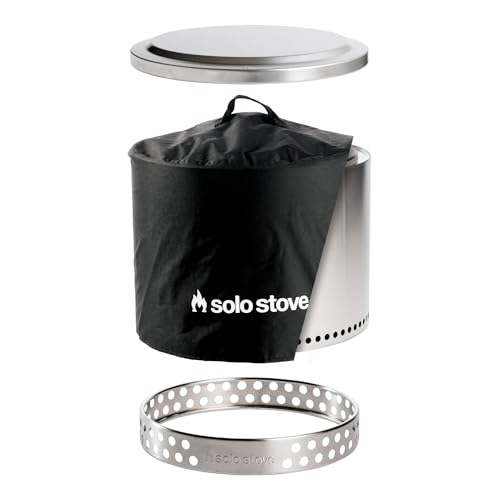
Solo Stove Bonfire in This Ledger
The Solo Stove Bonfire is the design that most weakens the smoke con while keeping the ritual pro: its double-wall smokeless engineering, burned with dry hardwood, lets a wood household enjoy crackle and embers with far less drift and smell. Its own cons are the smokeless category’s — fuel burns briskly, wet wood still smokes, and it remains a wood fire with ash and ember duties in full. Best for: smoke-sensitive wood lovers. Not suited for: anyone hoping smokeless means duty-free.
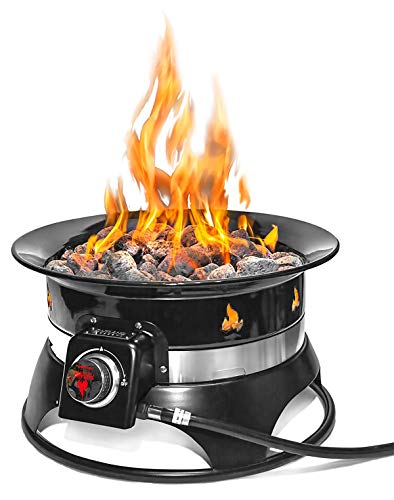
Outland Living Firebowl in This Ledger
The Outland Living Firebowl shows the propane side of the ledger: smoke, ash, and ember cons largely deleted; instant-off safety in restricted settings; and in exchange, a softer heat pro, no crackle, and tank duties of its own. Best for: decks, restrictions, and spontaneous evenings. Not suited for: fire-cooking romantics. Between these two designs, most households can locate their own position on the pros-and-cons spectrum — and that, more than any single product, is the decision this article exists to support. The step-by-step method in how to choose a fire pit turns that position into a purchase.
How to Buy Smart
Buying smart means pricing the whole system in one decision: the pit, its cover, a spark screen where your setting calls for one, ash tools and a metal container for wood, a spare tank plan for propane, and seating at the correct distance. It means checking local rules before choosing fuel, measuring placement and storage before choosing size, and reading the maker’s safety guidance as part of the product rather than packaging. It means choosing materials for your climate — heavier steel or stainless where winters are wet, lighter designs only where storage is dry — and treating included accessories with suspicion: a bundled screen or poker is a bonus, not a substitute for the items your setting genuinely requires. Above all, it means buying for frequency: the household that will light up weekly can justify the premium tier on cost-per-evening logic alone, while the twice-a-year household should let the entry tier or the propane route carry the experiment.
Setup and Care That Reduce the Cons
Half the cons in this article shrink under good habits. Smoke shrinks when fuel is dry, seasoned hardwood, loaded so air can move, in a pit placed where the breeze carries the plume away from people and windows. Rust shrinks when ash is removed cold and promptly, because damp ash is corrosive, and when the cover goes on after every use once the pit is cool. Safety risk shrinks when the routine is fixed: outdoor use only, safe distance from the house and anything flammable under local rules, no gasoline or flammable liquids ever, children and pets supervised at a distance, propane connections checked with soapy water and valves closed when idle, and ash left until completely cold before it meets its metal container. Even the storage con shrinks when the pit’s off-duty home is decided before purchase. What remains after good habits is the honest residue — some smoke, some work, some weather — and owners who accept that residue in advance tend to love their pits without reservation.
Care also includes an annual honest review of the pit itself. Check legs, welds, and bowl integrity before the season starts; a bowl burned through or a leg weakened by rust is a safety problem, not a cosmetic one, and retiring a worn pit is part of responsible ownership. Inspect propane hoses for cracking, keep burners clear, and replace perished parts rather than nursing them. Look at your placement with fresh eyes too — gardens change, fences move, children grow, and the spot that was safe for last year’s layout deserves re-checking against this year’s. The owners who keep the pro column long and the con column short are not lucky; they are simply the ones who treat care as part of the pleasure of ownership rather than an interruption of it.
The Bottom Line on Fire Pit Pros and Cons
The pros are warmth, gathering, atmosphere, simple cooking, flexibility, and a garden that gains a heart. The cons are smoke, safety duties, cleanup, rules, running costs, directional heat, and storage. Neither list is a verdict by itself — the verdict comes from your frequency of use, your plot, your neighbours, your rules, and your honesty about chores. If you will gather often, place carefully, burn responsibly, and maintain without resentment, the pros win decisively and a fire pit is among the best-value pleasures a home can buy. If your space is restricted, your street smoke-sensitive, or your appetite for duties low, the cons win just as decisively, and the wise move is propane, an alternative, or no fire at all. For the value question explored from the money-and-effort angle, continue to is a fire pit worth it; for the fuel head-to-head, see fire pit versus propane fire pit.
Pros and Cons by Fuel: Wood, Smokeless, and Propane Side by Side
Because fuel moves so many items between the columns, it deserves its own ledger. A traditional wood bowl offers the fullest version of every classic pro: the strongest radiant heat, real crackle and ember glow, the possibility of cooking over coals where the design allows, and fuel that can be gathered, split, and seasoned at home. Its con column is equally full: the most smoke, the most ash, sparks to manage, the longest start and finish to every evening, and the greatest sensitivity to local burn restrictions. A household choosing a traditional bowl is choosing involvement, and should do so with eyes open and a dry wood store ready. The design rewards the involved owner more richly than any other — and punishes the reluctant one more visibly, in rust, mess, and disuse.
A smokeless wood pit keeps most of the ritual pros and attacks the smoke con directly. The engineering premium buys evenings where guests stop chair-hopping to escape the plume, where clothes go back into the wardrobe instead of the wash, and where a suburban plot becomes a realistic wood-fire setting. Its specific cons are subtler: fuel consumption is brisker because the fire burns hot and clean; the effect depends on technique, so a carelessly loaded smokeless pit can smoke like any other; and the category sits in the premium tier, which raises the cost-per-evening stakes if use turns out to be rare. For the household caught between love of wood and fear of smoke, this middle path is often the exact answer — provided the frequency of use justifies the tier.
Propane rewrites the ledger rather than editing it. The smoke, ash, spark, and ember cons essentially vanish; starting and stopping become seconds; placement options widen because many restrictions target wood burning specifically. In exchange, the heat pro softens — the flame is beautiful but much warmth rises away — the cooking pro disappears, the ritual pro becomes a knob turn, and new cons appear: tank storage and swaps, hose and connection checks with soapy water, and a flame that must still be supervised, kept outdoors only, and given the same clearances as any fire. Propane is not the lesser choice or the greater one; it is the appliance choice, and households that think of their pit as an appliance they switch on will be happier with it than households mourning a campfire.
Turning Points: When Owners Change Their Minds
Talk to owners a year after purchase and the same turning points recur. The first is the neighbour moment: a smoky evening, a polite knock or a strained comment, and the wood owner either reforms their fuel and placement, switches to smokeless or propane, or quietly stops lighting up. The lesson is not that neighbours are obstacles — it is that social context is a specification, as real as bowl diameter, and the time to discover it is before purchase, in a friendly conversation, rather than after it, in an awkward one. The second turning point is the third ash morning: the novelty gone, the bowl full, the weather damp. Owners who built a cold-ash routine — metal container by the pit, brush in the same place, cover on a hook — sail through it; owners who did not begin the slow drift toward disuse that ends with a rusting bowl and a story about how fire pits are more trouble than they are worth.
The third turning point is the first truly cold evening, when a household learns what radiant heat can and cannot do. Those who arranged a tight circle of suitable chairs — the kind compared in best chairs for an outdoor fire pit — discover the pro at full strength; those who scattered dining chairs at a polite distance discover the con and sometimes blame the pit unfairly. The fourth is the first burn ban or rule check, which rewards owners who chose fuel with their local conditions in mind. None of these turning points is about the product’s quality in isolation. All of them are about fit — and fit, unlike finish or styling, can be assessed honestly before any money moves, using nothing more than this ledger, a tape measure, a look at your storage, and a candid conversation with yourself about smoke, chores, and how often you truly sit outside after dark.
A fifth turning point deserves its own sentence because it is a happy one: the first unplanned fire. Not a party, not an occasion — just a mild evening, a whim, and the discovery that lighting up has become easy enough to be spontaneous. Owners consistently identify that moment as the point where the purchase proved itself, and it is worth designing for: keep fuel dry and near, keep the pit covered and ready, keep matches and tools in one known place, and the path from whim to flame stays short enough for weeknights. Every con in this article is, in the end, a small tax on spontaneity; every habit that reduces those cons is an investment in the fires you have not planned yet — which, for most owners, turn out to be the best ones.
Pros and Cons for Children, Pets, and Guests
Households do not experience a fire pit as individuals; they experience it as a group with different vulnerabilities, and the ledger shifts accordingly. For children, the pro column gains wonder, skill, and family ritual — many adults trace their love of the outdoors to fireside evenings — while the con column gains the most serious version of the safety duty: constant supervision, a clear boundary children understand, seating that keeps small legs at a safe distance, and adults who treat the bowl as hot long after the flames die, because a child’s curiosity peaks exactly when the fire looks finished. Households that build the boundary into the furniture layout — chairs as a natural fence, a paved or gravel zone that reads as the fire’s territory — find the duty manageable; households relying on verbal reminders alone find it exhausting, and exhaustion is itself a safety risk.
Pets redraw the map again. Dogs mostly respect fire instinctively but can chase a spark or brush a hot rim in excitement; cats wander where they please and cannot be briefed. The practical answers are the same family of habits: supervision, distance, a spark screen where the setting calls for one, and never leaving animals alone with a lit or cooling pit. Guests introduce the final variable — people who do not know your pit’s habits, who may lean a chair closer than is wise, set a drink on a warm rim, or offer to revive a dying fire with something from the shed. A good host briefs lightly and early: where to sit, where not to put things, and who tends the fire. None of these group considerations cancels the pros; families and hosts are, after all, the people who benefit most from a fire’s gathering power. They simply price the supervision con honestly, at the level your actual household — not an imagined household of careful adults — will pay.
There is also a social pro worth naming for guests specifically: a fire gives a gathering a centre that relieves social pressure. Shy guests can watch flames instead of performing; mixed groups find easy conversation in a shared focus; teenagers and grandparents occupy the same circle comfortably. Hosts who struggle with entertaining often find that a fire pit does half the work of hospitality before a word is spoken. Weighed against the briefing duty and the supervision con, most hosts still call the exchange heavily favourable — which is why, in survey after informal survey of owners, the fire pit is remembered as a social purchase first and a heating purchase a distant second.
The Environmental Column Nobody Should Skip
An honest ledger includes the fire’s footprint on the air around it. Wood burning releases smoke particles and the smell that carries them, which is why local rules tighten during poor-air periods and why burn bans deserve respect rather than resentment. Burning only dry, seasoned, untreated wood — never painted, treated, or manufactured offcuts, and never rubbish — keeps emissions and odour as low as a wood fire can manage, and burning less often but better is a legitimate household choice: a fire for an occasion, tended well, rather than a nightly smoulder of damp fuel. Propane burns cleanly at the point of use, which is one reason it suits dense neighbourhoods, though it remains a fossil fuel consumed by the hour. Neither option is impact-free, and pretending otherwise would weaken every other claim in this article. The balanced position is simple: if you burn, burn clean fuel, in the right conditions, under the rules your area sets for everyone’s air — and let that discipline be part of the ritual rather than a grudging addition to it.
There is a counterweight worth recording too. A fire pit is a durable, repairable, low-technology product in a world of disposable appliances: a steel bowl has no software, no battery, and no planned obsolescence, and a well-kept pit serves for many years with nothing consumed but fuel. Owners who heat one small circle of people outdoors, instead of heating rooms for guests who would rather be outside, may even see the arrangement as proportionate. The environmental verdict, like every verdict in this article, depends on use: frequent, clean, considerate burning of a long-lived product is a defensible pleasure; frequent smoky burning of damp fuel in a dense street is not — and the difference lies in habits the buyer controls from day one.
One final test cuts through the whole ledger: the Tuesday test. Not the party, not the holiday — an ordinary Tuesday evening, slightly cool, nothing planned. If the thought of lighting the pit that night, with its particular fuel, its particular chores, and its particular ending, makes you smile, the pros will win in your household regardless of what any article concludes. If the thought makes you tired, believe that feeling and choose the lower-effort fuel, the smaller commitment, or the patience to wait. Fire pits reward the households that want them on Tuesdays; they merely tolerate the households that wanted them for photographs. Decide which household you are, and the rest of this decision — size, fuel, tier, timing — becomes the easy part.
Consider also the ledger across a household’s changing life. A pit bought for adult evenings becomes, a few years later, the place children learn fire craft under supervision, then the place teenagers gather with friends, then a quieter pleasure for two again. Few products adapt across those stages without modification, and that adaptability is a long-horizon pro that short reviews undervalue. The con side has a life-cycle too: the years of toddlers are the years of maximum supervision cost, and some households wisely pause wood burning then, using propane or nothing until the boundary can be understood by everyone in the garden. Judging the purchase across a decade rather than a summer smooths both columns — the duties shrink in proportion, the memories compound — and for patient households that long view is often what finally settles the question in favour of buying well and keeping the pit for good.
There is a temptation, reading a long ledger like this one, to treat it as a score to be totalled — seven pros, seven cons, decision by arithmetic. Resist it. The items are not equal, and their weights are set by your household, not by their order on this page. For one family the supervision con outweighs every pro combined for the toddler years, and then quietly expires. For one street the smoke con is decisive; for one countryside plot it barely exists. The ledger’s purpose is not to total but to illuminate — to make sure no item ambushes you after purchase, and that the items which will weigh most in your life get your attention while the decision is still free. Read it that way, argue with it at the kitchen table, add the items your own household knows and this page missed — and the choice you reach will have the one property no reviewer can give it: it will be yours, made with open eyes, and therefore very likely right.
Living With the Trade-Offs: A Week-by-Week Reality Check for a Fire Pit
A pros-and-cons list is a snapshot, but living with a fire pit is a film, and this section follows the trade-offs across the first weeks when novelty fades and routine takes over. In week one, most owners notice the headline advantage of a fire pit constantly, because every use is a comparison with whatever came before it, while the headline drawback feels minor simply because it is still new. Measure before anything else, and measure the fire pit in its working state rather than its packed or folded state, because handles extend, lids open, cords trail, doors swing and users stand somewhere, and all of that belongs in the measurement. Keep a short note of what you adjusted on the fire pit during the first month, even just a line on your phone, since those notes turn vague impressions into a setup you can repeat, share or troubleshoot months later.
Keep the packaging of a larger fire pit until those first ordinary tests are done, flattened if space is tight, because re-boxing an awkward shape from scratch is the hidden difficulty inside many otherwise straightforward returns. Plan the storage home for the fire pit before it arrives, naming the exact cupboard, corner, shelf, hook or stretch of floor, because a product without a home migrates around the house and slowly becomes the clutter it was bought to reduce. Read the manual’s warnings page for the fire pit even if you read nothing else, because that page is a compressed list of every way the product has ever been misused, and it tells you exactly which of your own habits needs adjusting. That reversal is the real test for a fire pit: ask whether the drawback you are weighing is a one-time cost, paid at setup or purchase, or a per-use cost that you will pay hundreds of times a year without ever getting used to it.
Finally, remember that the best fire pit for your home is the one whose size, habits and upkeep disappear into your routine, leaving only the result behind — a cleaner surface, a better-lit seat, a tidier shelf, an easier job — week after ordinary week. If you already own a fire pit, run the same week-by-week check backwards and note which drawback you have genuinely stopped noticing and which one still earns a small sigh, because that sigh is the most honest review you will ever read. Photograph your setup once the fire pit is working well — the position, settings, arrangement or layout you settled on — so that after a move, a deep clean or a seasonal break you can recreate the arrangement that worked instead of rediscovering it. For troubleshooting, start with the boring causes first: power, water, fit, blockage, alignment, a full container, a loose connection or a setting changed by the last person who used the fire pit, because boring causes account for most apparent failures.
Consider the cleaning rhythm honestly: a fire pit that needs attention after every use suits a household that enjoys small rituals, and frustrates a household that wants to finish a job and walk away, so match the upkeep to the temperament, not the intention. Think about who else will use the fire pit and what they will do differently: shorter reach, less patience, stronger habits, no interest in the manual, and a tendency to leave things wherever they were last set down. Test the fire pit in the first week under deliberately ordinary conditions rather than saving it for a special occasion, so that any problem surfaces while returning, exchanging or adjusting your setup is still simple. By week three the pattern usually reverses: the advantage becomes invisible background, part of how the room or routine simply works now, while any recurring friction with the fire pit — a awkward reach, a fiddly clean, a storage squeeze — is the thing you feel on every single use.
One-time costs forgive easily, so a fire pit that is slow to assemble, heavy to position once, or demanding on its first deep clean can still be the right long-term choice if daily use afterwards is effortless. If you want a concrete listing check, take a name already shortlisted in this guide, such as Solo Stove Bonfire and Outland Living Firebowl, and verify that exact fire pit listing against the measurements and compatibility questions above, field by field, rather than trusting the headline description alone. Share the checklist result with anyone who shares the space, since a fire pit chosen by one person and resented by another rarely survives, however sensible the purchase looked on paper. Use a simple decision checklist at the end: the fire pit fits the measured space, suits the real frequency of the job, matches the household’s cleaning temperament, has obtainable parts, and has a named storage home — five yeses make a confident order.
Check the floor, wall, ground or surface the fire pit will meet, since level, texture, moisture and finish decide more about everyday performance in patio & outdoor living settings than most shoppers expect when they are comparing listings on a screen. Seasonal thinking helps more than expected: a fire pit bought in one season will meet different light, humidity, mud, heat, guests and routines in another, so judge its size, storage and upkeep against the hardest season it will face.
Frequently Asked Questions
What is the biggest disadvantage of a fire pit?
For most households it is the combination of smoke and responsibility rather than any single flaw. Wood smoke drifts to neighbours and clings to clothes, while the safety duties — outdoor use only, safe placement, supervision, cold ash handling — apply at every single fire. Propane removes most smoke and ash but keeps supervision and adds tank checks. Households that accept these duties happily rarely regret buying; households that resent them rarely keep using the pit.
Are smokeless fire pits really smokeless?
They are greatly reduced-smoke rather than literally smoke-free. Double-wall designs burn off much of the smoke at the rim when they are loaded sensibly and fed dry, seasoned wood. Wet fuel, overloading, or a dying fire will still produce visible smoke in any wood burner. The improvement is large enough to change the experience for most users and neighbours, but promising zero smoke would be dishonest, and placement still matters.
Is a propane fire pit safer than a wood one?
It is safer in specific ways: no embers, no ash, no sparks, and an instant shut-off that matters in restricted settings and at bedtime. It has its own duties instead — checking connections for leaks with soapy water, keeping the tank valve closed when idle, and respecting the same outdoor-only, supervised, safe-distance rules as any open flame. Carbon monoxide risk means no fire pit of any fuel belongs indoors, in a garage, or in a tent.
Do fire pits damage decks or patios?
They can if placed carelessly: heat radiates downward as well as outward, and some surfaces scorch or discolour under a low bowl. Use the maker’s required stand or heat shield, confirm your surface and local rules allow the pit at all, and keep generous clearances. Many owners place wood pits on stone, gravel, or a purpose-made pad even on larger patios, treating surface protection as part of the setup rather than an optional extra.
How much work is a fire pit, really?
In honest terms, a few minutes around each fire and a short session each season. Wood owners manage fuel, remove cold ash into a metal container, cover the pit, and watch for rust; propane owners check hoses and connections, clean burners, and manage tanks. The work is small but perpetual, and it arrives at unglamorous moments — the morning after, the wettest week of autumn — which is why this article counts attitude toward chores as a buying criterion.
Can a fire pit annoy neighbours?
Yes, and smoke is usually the reason, followed by late-night noise around a fire that keeps a gathering outside longer. You can reduce the risk greatly: burn dry wood or choose propane, place the pit so the prevailing breeze carries smoke away from neighbouring windows, respect local rules and quiet hours, and simply talk to neighbours before the first fire. A pit used considerately is a neighbourhood pleasure; the same pit used carelessly becomes a recurring grievance.
Related Guides
Turn this ledger into a shortlist with the fire pit buying guide, test the value case in fire pit reviews, arrange the circle with best chairs around a fire pit, and plan the setting with best outdoor chairs for the patio.