Disclosure: As an Amazon Associate, dailyhomedecorating.com earns from qualifying purchases. Links on this page are affiliate links; they cost you nothing extra. Prices and availability change often, so check the current Amazon listing before you buy.
This fire pit buying guide is written for one job: helping you choose a fire pit that fits your yard, your local rules, and the way you actually spend evenings outside, without guessing. A fire pit looks simple — a bowl, a flame, a circle of chairs — yet the differences between a wood-burning bowl, a smokeless stainless design, a propane fire bowl, and a fire table change everything about smoke, heat, cleanup, storage, and how often you will honestly use it. This guide works through those differences in plain language, puts proven designs in front of you as prose recommendations, explains the safety rules that should shape the purchase before style does, and finishes with the mistakes that send most first-time buyers back to the shops within a season.
Key Takeaways
- Fuel comes first: wood gives ritual, crackle, and strong radiant heat; propane gives instant on, instant off, and almost no cleanup.
- Size follows seating: the pit should warm the circle you really gather, not the party you imagine once a year.
- Safety is a buying criterion, not an afterthought — placement, local burn rules, and ash handling decide whether a model suits your home at all.
- Smokeless designs reduce smoke greatly when burned correctly, but no wood fire is completely free of smoke.
- Best for: households that entertain outdoors often and will maintain the pit. Not suited for: anyone whose local rules or small, enclosed space rule open flame out entirely.
In this guide
Fire Pit Buying Guide: What a Fire Pit Does and the Main Types
A fire pit is an outdoor-only appliance for contained fire. It gives a patio or lawn a focal point, extends the usable hours of a garden into the cooler months, provides a place to cook simply over real flame if the design allows it, and creates the social geometry humans have loved for centuries: faces around a shared centre, warmth on knees and hands, and a reason to stay outside after dark. What it does not do is heat a whole garden evenly, replace a patio heater for targeted warmth at a dining table, or forgive careless placement. Understanding that honest job description is the foundation of this fire pit buying guide, because most disappointment comes from expecting a decorative bowl to perform like a furnace, or expecting a rugged campfire ring to behave like a tidy gas appliance.
Wood-Burning Bowls and Rings
The classic wood-burning fire pit is a steel or cast bowl, sometimes on legs, sometimes a ring set into a patio build. It burns split logs, produces real crackle and ember glow, throws generous radiant heat in every direction, and asks the most of its owner in return: dry fuel storage, ash removal, spark awareness, and patience while the fire builds and dies down on its own schedule. Steel bowls in the entry tier are light and easy to move but can rust if left uncovered through wet winters. Heavier steel and cast designs sit in the mid and premium tiers, hold heat longer, and age more gracefully. This is the type for people who love tending a fire as part of the evening, who have space to keep a safe distance from the house and fences, and who accept smoke as part of the experience — a neighbour consideration as much as a personal one.
Smokeless Fire Pits
Smokeless fire pits are double-walled wood burners engineered so air feeds in low, heats as it rises between the walls, and exits near the rim to burn off much of the smoke before it leaves the pit. Used with dry hardwood and loaded so flames stay below the rim vents working properly, they genuinely produce far less smoke than an open bowl, which changes the social experience: clothes smell less, eyes water less, and guests stop rotating chairs to escape the plume. They are not magic. Wet wood, overloading, and soft resinous fuel will still smoke, and the fire inside tends to burn hotter and faster, using fuel at a brisker pace. Stainless models sit in the premium tier, pack down for camping or storage in some designs, and reward owners who burn properly. For smoke-sensitive households on reasonably sized plots, this category has become the default recommendation.
Propane Fire Bowls and Fire Tables
Propane models trade ritual for convenience. Turn a knob, press an igniter, and a clean flame dances over lava rock or fire glass; turn it off and the evening ends instantly, with no ash, no embers to babysit, and no smoke drifting toward the house. Fire bowls keep the classic round gathering shape, while fire tables build the burner into a dining or coffee-height table with a ledge for drinks and plates, hiding the tank inside the base or connecting to a separate tank beside it. Heat output is real but feels gentler and more directional than a big wood fire, and running costs follow fuel use rather than a woodpile. Propane suits decks where local rules allow gas appliances but not open wood burning, households with young children whose bedtime makes a long ember watch impractical, and anyone who knows an appliance that takes effort to start will simply not get used on weeknights.
Built-In and Tabletop Designs
Built-in pits — block, stone, or metal inserts set into a patio during construction — offer the most finished look and the least flexibility. They suit a long-term landscaping plan, need professional attention to clearances and drainage, and cannot move when you realise the prevailing wind carries smoke straight to the kitchen door. Tabletop models, usually small propane units, serve balconies and tiny patios where rules permit them, giving ambience more than heat. Both ends of this spectrum reward honesty: a built-in is a commitment to a layout, and a tabletop is a commitment to atmosphere over warmth. Most households land happily between them with a portable pit they can reposition as seasons, furniture, and family habits change.
Top Picks at a Glance
The designs below are presented in prose, in qualitative tiers, so you can shortlist by role rather than by headline numbers. Each one earns its place for a different household, and each gets a fuller mini-review later in this guide. Read the badges as jobs: the best overall design is the one most families will use most often, the budget badge marks the simplest honest route into real wood fires, and the specialist badges point at propane convenience, group warmth, and deck-friendly evenings respectively. None of them overrides the safety section that follows — a brilliant pit in a forbidden or cramped location is still the wrong pit.

Solo Stove Bonfire — Best Overall Smokeless Pick
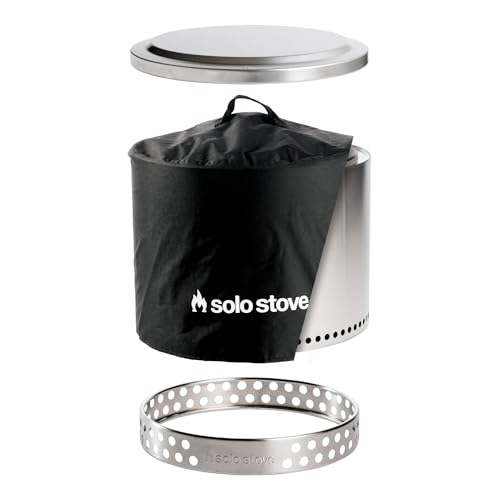
The Solo Stove Bonfire represents the smokeless category at its most convincing: a stainless, double-walled wood burner sized for a family circle, designed to be carried to a storage spot or a campsite, and built to produce a strong, lively flame with dramatically reduced smoke when fed dry hardwood. It suits owners who want the ritual and heat of real wood without the traditional smoke tax on clothes, eyes, and neighbourly relations. Best for: regular backyard gatherings, camping households, and smoke-sensitive hosts. Not suited for: anyone who wants instant off at bedtime, or who plans to burn whatever fallen branches the garden provides regardless of moisture.

TIKI Brand Patio Fire Pit — Best for Easy Wood Fires
The TIKI patio design aims at the host who wants a wood fire without a woodsman’s skill set, pairing a deep steel bowl with the brand’s wood-pack system and a design language that looks at home on a furnished patio. In prose terms it sits in the mid tier: more considered than a basic bowl, less of an engineering statement than premium stainless smokeless models. Best for: patio owners who entertain and want a handsome, approachable fire. Not suited for: minimalists who want the lightest possible pit to store in a small shed.
Outland Living Firebowl — Best Propane Bowl
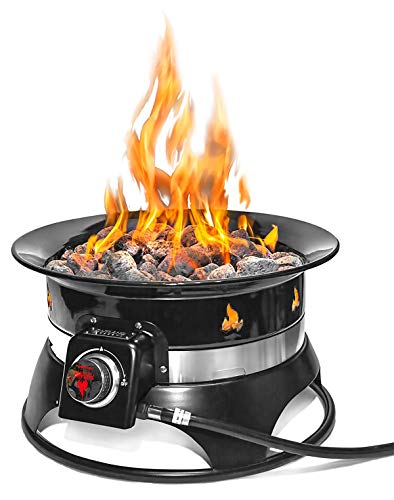
The Outland Living Firebowl is the propane bowl in its classic form: a portable round burner with lava rock, a hose to a standard propane tank, and ignition that turns a chilly evening into a gathering in moments. It is the design campers and deck owners reach for when wood fires are restricted, because a gas flame that can be shut off instantly is acceptable in many places and situations where embers are not. Best for: decks, campsites with fire restrictions, and spontaneous weeknight use. Not suited for: purists who want crackle, ember cooking, and the smell of real wood smoke.
Bali Outdoors Wood Burning Fire Pit — Best for Bigger Groups
The Bali Outdoors design is a generous wood-burning bowl with a surrounding ledge in many configurations, made for circles that regularly stretch beyond four chairs. A wider bowl means a larger fire, more radiant warmth reaching the outer seats, and more fuel and ash to manage — the honest trade of the group category. Best for: large families and frequent hosts with the space to place it properly. Not suited for: small patios, where its footprint and the safe clearance around it would crowd out the seating it exists to serve.
Amazon Basics Steel Fire Pit — Best Entry-Tier Bowl
Every category needs an honest simple option, and in this guide that role belongs to the Amazon Basics steel bowl: a straightforward wood burner that does the basic job — contain a fire, radiate warmth, gather people — without engineering flourishes. Entry-tier steel asks for a cover and dry storage to fight rust, and it will smoke like any open bowl, but for a household testing whether fire-pit life suits them before committing to a premium design, a simple bowl is a rational first step. Best for: first-time buyers and occasional use. Not suited for: daily fires through wet winters, where heavier materials earn their tier quickly.
Endless Summer Propane Fire Pit Table — Best Fire Table
Endless Summer is a long-standing name in propane fire tables, and its designs show why the format endures: a table surface for drinks and small plates, a burner at the centre, the tank concealed in the base, and a lid that restores a flat table when the flame is off. It is the most furniture-like option in this guide, and the right answer when the pit must earn its patio space every day, not only on fire nights. Best for: dining patios and deck living. Not suited for: anyone wanting a big, primal wood fire to gather deep chairs around.
How Much Heat and Size Do You Actually Need?
Size the pit to the circle, not the fantasy. Measure the seating you truly use — for most homes that is four to six chairs — and picture them at a comfortable distance from the rim, close enough to feel warmth on shins and hands, far enough that nobody cooks. A compact pit serves two to four people beautifully and sips fuel; a mid-size bowl is the family workhorse; a large pit only earns its footprint when the circle regularly grows. Oversizing has real costs: more wood per evening, a bigger ash problem, more storage, and a fire that must be built large to look right in its bowl. Undersizing is gentler — people pull chairs closer and enjoy an intimate fire — which is why this guide consistently advises buying for your ordinary Friday, not your biggest annual party. For that one big night, a second small pit or a borrowed bowl beats a season of oversized evenings.
Heat is harder to shop for than size because it depends on fuel, wind, and how open your space is. Wood fires radiate in all directions and reward closeness; propane flames look generous but much of their warmth rises, so seated guests feel less of it at knee level. Screens, fences, and house walls that shelter a patio from wind make any pit feel dramatically warmer, while an exposed lawn on a breezy ridge will humble the largest bowl. Before blaming a pit for weak heat, consider placement: a sheltered corner with a windbreak often improves an evening more than upgrading the burner does. This is also why experienced owners talk about the fire as one part of a comfort system that includes chairs pulled into a tight circle, blankets on chair arms, and warm drinks doing quiet work of their own.
Which Fuel Suits the Way You Live?
Wood is a hobby as much as a fuel. It needs a dry store, it rewards seasoning and species knowledge — hardwoods burn longer and cleaner, softwoods light easily and burn fast — and it turns lighting, tending, and banking a fire into part of the entertainment. Households that love that ritual describe their pit as the best purchase they made for their garden; households that secretly dread it describe a rusting bowl they walk past. Propane is an appliance fuel: predictable, instantly controllable, clean at the point of use, and dependent on tank swaps and hose checks. Neither is morally better. The right question is behavioural: on a cool Tuesday with forty free minutes, which fire will you actually light? Answer honestly and the fuel decision — the biggest in this entire guide — makes itself.
Availability shapes the answer too. Rural and suburban homes with access to seasoned hardwood, space for a wood store, and distance from neighbours lean naturally toward wood. Dense suburbs with smoke complaints, small plots, and local burn restrictions lean toward propane, which many rules treat more leniently because it can be extinguished instantly and produces no drifting wood smoke. Apartment and balcony dwellers must check building rules first of all: many prohibit open flame of any kind, and no buying guide outranks a lease or a fire code. Where both fuels are allowed, some households eventually own both — a wood pit for long weekend fires and a propane bowl for quick weeknight warmth — but start with the one matching your most common evening.
What Materials and Build Quality Are Worth Paying For?
Materials decide lifespan more than any other factor. Thin painted steel in the entry tier will do a season or three of honest service, then rust at the bowl’s hottest points unless it is covered, stored dry, and occasionally maintained. Heavier steel and corten-style designs that form a protective surface patina stretch that life considerably. Stainless steel, the premium tier’s usual choice, resists corrosion best and suits smokeless engineering, though it can discolour with heat — a cosmetic change owners quickly accept as a badge of use. Cast iron holds heat beautifully and weighs enough to stay put in storms, at the cost of portability. Beyond material, judge welds, leg stability, the quality of spark screens and covers included or available, and whether ash can be removed without tipping the whole pit. A removable ash pan or a bowl shape that a small shovel fits is a daily-life feature you will appreciate far more than decorative cutouts.
Accessories belong in the build-quality conversation because several of them are effectively part of the product. A well-fitting cover protects any pit left outdoors. A spark screen matters where children, pets, dry grass, or overhanging planting raise the stakes. A stand or heat shield protects deck boards and stone patios from the heat a bowl radiates downward — some surfaces scorch or discolour under a low pit. Cooking grates turn certain pits into simple grills, but only choose that path if the design is genuinely built for food, with stable grate height and food-safe surfaces. Buying the pit and its essential protection together, in one decision, is cheaper and safer than discovering each need across a season of small incidents.
Safety: The Rules That Come Before Style
Every fire pit in this guide is for outdoor use only — never in a house, garage, tent, or enclosed porch, because fire consumes oxygen and produces carbon monoxide, an invisible gas that can kill without warning; a pit that has been used must never be brought indoors for extra warmth, even when the flames look dead. Place a pit on a stable, non-combustible surface, at a safe distance from the house, fences, sheds, decking rails, overhanging branches, and anything flammable, following your local rules and the maker’s guidance — distances are set by local regulation and common sense, so check the rules where you live rather than trusting a number from the internet, and check for local burn bans and restrictions before every fire, especially in dry or windy weather. Never use gasoline or other flammable liquids to light or revive a fire; they flare unpredictably and cause severe burns — use proper kindling and firelighters made for the purpose. Keep children and pets at a supervised distance at all times, treat the bowl and rim as burn hazards long after flames fade, and never leave a fire unattended. When the evening ends, let ash cool completely — embers can hide heat for a day or more — then move it into a metal container with a lid, stored away from combustible surfaces, before disposal. For propane models, check connections for leaks with soapy water before use — bubbles mean a leak that must be fixed before lighting — keep the tank valve closed when the pit is not in use, and follow the maker’s hose and storage instructions exactly.
Placement deserves one more paragraph because it is the safety decision you make every single evening. Think about wind first: a spot where the breeze habitually carries smoke and sparks toward your own seating, a neighbour’s windows, or dry planting is the wrong spot even if it is the prettiest corner of the garden. Think about footing: guests carrying drinks in the dark should cross level ground, not step over borders and cables to reach the circle. Think about exits: chairs should never pen anyone in against a fence with a fire between them and the way out. And think about the morning after — a pit placed where you will see it from the kitchen window is a pit whose cooling ash you will remember to check. Good placement is invisible when it works, which is exactly the point.
How to Prioritise by Use Case
The family entertainer should prioritise a mid-to-large wood or smokeless pit, stable legs, a spark screen, and seating comfort over portability; your pit lives in one place and serves a crowd. Start with the smokeless shortlist if smoke complaints are a risk in your street, and read our notes on best chairs for a fire pit before assuming your existing patio chairs suit long fireside evenings — seat height changes how much warmth you feel. The deck household should start with propane, confirm local and building rules for gas appliances on decks, add a heat-protective base if the maker requires one, and value instant shut-off above raw heat. The small-garden couple should measure honestly, choose compact wood or a fire bowl, and spend the savings on two excellent chairs such as those in best Adirondack chairs for a fire pit, because a small circle done well beats a big circle done awkwardly. The camper should weigh portability, pack size, and how a pit behaves under campsite rules, where a propane bowl often remains usable during wood-fire restrictions.
Renters and frequent movers form a fifth profile worth naming: choose portable, mid-tier, and easy to clean, because a pit you can take with you and store in a garage corner will serve across several homes, while a built-in or very heavy design belongs to a house you expect to stay in. Gift buyers form a sixth: a fire pit is a generous gift only when you know the recipient’s space, rules, and fuel preference — otherwise the generous move is a quality cover, a set of fireside tools, or seating from best chairs around a fire pit to complete a pit they already own and love.
First Setup and Care Essentials
Set up on a level, non-combustible base, assemble exactly as the maker directs, and do the first burn as a learning exercise rather than a party: you are discovering how your pit draws, how fast it uses fuel, and where its smoke travels in your garden’s usual breeze. For wood pits, build the first fire small — kindling and a few modest splits — and add fuel gradually; an overloaded first fire teaches nothing except how much smoke wet or excessive wood makes. For propane, complete the soapy-water leak check on every connection before the first ignition, route the hose where nobody will trip over or step on it, and learn where the shut-off valve is by touch, in daylight, before you ever need it in the dark. Note where you will keep the cover, the ash tools, and the metal ash container; a pit whose supporting kit has a home is a pit that gets maintained.
Care is mostly rhythm. Remove ash once it is completely cold, because a deep ash bed insulates embers unpredictably and, left damp, turns corrosive against steel. Wipe or brush the bowl, check legs and welds each season, touch up or oil surfaces where the maker recommends it, and store or cover the pit through the wettest months if it lives outdoors. Propane owners should inspect hoses for cracks and perishing, keep burners clear of debris and insects, and store tanks upright, outdoors, and disconnected as instructed. Wood owners should keep the fuel store dry and off the ground — dry wood is a performance feature, a smoke feature, and a safety feature all at once. Ten unhurried minutes after a fire night, done cold the next day, is the entire maintenance secret of owners whose pits last a decade.
Mistakes to Avoid
The first mistake is buying size before checking rules: a household that discovers a local burn restriction or a deck prohibition after delivery owns an ornament, not a fire pit, so rules and placement come before shopping in every sane sequence. The second is placing any pit under a pergola roof, tree canopy, or porch because the spot looks inviting in daylight — heat and sparks rise, and clearances above matter as much as distances sideways. The third is fuelling errors: burning treated wood, painted offcuts, or rubbish, which produce foul and potentially harmful smoke, or trying to hurry a fire with gasoline or similar liquids, which must never be used anywhere near a fire pit. The fourth is treating smokeless as smoke-proof and sitting a premium pit where its reduced — not eliminated — smoke still drifts into a neighbour’s open windows. The fifth is neglecting the unglamorous kit: no cover, no metal ash container, no proper storage, and then blaming the pit for rust and mess that ownership habits caused.
Two quieter mistakes deserve mention. People buy for the photograph instead of the evening: a sculptural pit that holds three small logs will not warm six adults, whatever the brochure’s sunset suggests. And people forget the seating plan, arranging deep lounge chairs at dining distance or upright dining chairs where they cannot lean back from the heat — our roundup of best outdoor chairs for the patio is a useful cross-check, because the circle and the pit are one purchase in practice. Avoid these, and the pit you buy this season is very likely the pit still serving you, safely and often, many seasons from now. For a second opinion on the value question itself, see is a fire pit worth it, and for the head-to-head fuel debate, fire pit versus propane fire pit.
Understanding Heat, Smoke, and Wind Before You Spend Anything
New buyers shop with their eyes, comparing bowl shapes and finishes, but experienced owners shop with their memory of actual evenings — and those evenings are governed by three invisible forces: radiant heat, smoke behaviour, and wind. Radiant heat travels in straight lines from the flame and embers, which is why the person facing the fire feels warm while their back stays cold, why a low bowl warms shins more than shoulders, and why a ring of chairs at a consistent distance matters more than raw fire size. Raising the fire, choosing a design with a taller flame presentation, or simply pulling the circle tighter all change perceived warmth without changing fuel at all. When you read any fire pit buying guide — including this one — translate every size claim into that picture: your chairs, your distances, your typical evening temperature, and the fire doing its work in straight lines.
Smoke behaves like a slow liquid poured upward. It rises while the fire is hot and vigorous, slumps sideways when wind presses it, and hangs at face height on still, damp evenings when the fire is dying — which is why the last half hour around a wood pit can be smokier than the blazing first hour. Smokeless engineering attacks the problem at the rim, but garden layout attacks it everywhere else: a pit placed where the prevailing breeze carries the plume away from seating and away from windows will always outperform a technically superior pit placed in a swirling corner between fences. Before buying, stand in your intended spot on a breezy evening and notice where the air actually moves. That five-minute observation is worth more than any specification sheet, and it costs nothing.
Wind is also a safety variable, not merely a comfort one. Gusts carry sparks further than still air, push flames sideways toward chair arms and blankets, and can turn a well-behaved fire into a scatter of embers on dry ground. Sensible owners treat windy, dry weather as a reason to choose propane, move the evening indoors, or skip the fire entirely — and local burn bans formalise exactly that judgement during dangerous periods. Building wind awareness into your buying decision might mean choosing a design with a deeper bowl and a good spark screen, or preferring a sheltered placement from the start. The pit is only ever one part of the system; the weather is the rest of it, and it does not negotiate.
A Realistic Fire Pit Evening, From Lighting to Last Ember
Picture the evening honestly and many buying questions answer themselves. You finish work, step outside, and want a fire within the hour — propane owners turn a valve and sit down, while wood owners spend the first stretch building: kindling arranged, flame coaxed, larger splits added as the structure catches. Neither opening is better, but they suit different moods, and the household that regularly wants instant ambience should not buy a ritual. An hour in, both fires are social centres, though the wood fire needs feeding and rewards attention, while the propane flame holds steady and lets its owner stay in their chair. Cooking, if it happens, happens over wood embers or not at all — a propane flame is for warmth and light, and pretending otherwise leads to greasy burners and disappointment.
The end of the evening is where the fuels truly part company. Propane goes dark at a twist, the lid or cover waits until the unit cools, and everyone goes to bed. Wood asks for a managed ending: stop adding fuel in good time, let the fire burn down, stay nearby while embers fade, and return the next day to deal with ash that is finally, completely cold. Families with early mornings, young children, or a well-earned dislike of next-day chores feel that difference weekly, and it compounds across a season. This is why the most useful question in any fire pit buying guide is not which pit is best, but which evening you want to own — the beginning, middle, and end of it — because you are buying all three, every time you light up.
Seasonality completes the realistic picture. Spring and autumn are fire pit prime time in most climates: cool evenings, early darkness, and gardens still pleasant to sit in. High summer may reduce use to late-night gatherings after the heat breaks, while deep winter fires are glorious but shorter, bundled affairs. A pit that serves the shoulder seasons beautifully is therefore a pit that earns its keep, and features that extend those seasons — good radiant heat at close range, wind-sheltered placement, seating you can add blankets to — matter more than peak output on a specification list. Buy for the evenings you will actually have, in the months you will actually have them, and satisfaction tends to follow.
Questions to Ask Before You Commit to a Model
Where will it live when it is not lit? A pit without a storage answer becomes a garden obstacle that weathers in place, so decide whether it will stand covered on the patio, roll into a shed, or break down into a bag — and choose weight and design accordingly. Who will light it most often? The regular operator’s preference outranks a partner’s or guest’s occasional taste, because the operator’s habits decide whether the pit is used weekly or twice a year. What will you burn, and where will that fuel live? A household without a dry wood store should not drift into wood ownership on optimism, just as a household far from a propane refill point should count the errand honestly. What do your rules actually say? Local regulations, burn bans, building or lease conditions, and insurance terms are not fine print to skim after delivery; they are the first page of the decision.
How will the circle sit? Sketch the chairs you own around the footprint you are considering, at a distance that feels warm rather than wary, and check that people can arrive, leave, and carry drinks without squeezing past the bowl. Our notes on best chairs for a fire pit area can help you sanity-check that layout. How will you clean it? If ash removal requires tipping a heavy bowl, someone will eventually do it while the ash is still warm — choose a design whose cleaning method you will actually follow when it is cold, dark, and easier to postpone. And what is your honest budget shape? A mid-tier pit with its cover, screen, stand, and ash container bought together serves better than a premium bowl left naked to the weather, so price the whole working system in qualitative tiers rather than falling for a headline model and skimping on the kit that keeps it safe and durable.
Finally, ask what would make you stop using it. For some households it is smoke drifting to a neighbour; for others it is the chore of ash, the cost of fuel, or children growing into a more chaotic garden stage. Naming the likely deal-breaker in advance points straight at the design that avoids it — smokeless engineering, propane convenience, a smaller footprint, a locking lid, or simply waiting until the garden and the family are ready. A purchase delayed by one honest question is a bargain compared with a pit abandoned after one disappointing season, and the goal of this guide is not to sell you a fire pit at any cost. It is to make sure the one you choose is still earning its place, safely and often, years after the first fire.
One last buying lens is worth applying to every model on your shortlist: imagine it in its third year, not its first evening. The paint will have softened or the steel taken on heat colour, the cover will have faded, and the novelty will be gone. What remains is the pattern of use — whether lighting it is easy enough to happen on ordinary evenings, whether cleaning it is simple enough to happen without resentment, and whether its place in the garden still makes sense for the family you have become. Models that survive this test share a profile: honest materials, a size matched to real gatherings, a fuel matched to real habits, and no feature that demands more care than it returns in pleasure. If a design on your list passes the third-year test while respecting every safety rule in this guide, you have very likely found your pit — and the remaining work is simply to place it well, burn it responsibly, and enjoy the oldest form of home entertainment there is.
It also helps to decide in advance how you will judge success after the first month. A good sign is unplanned use: the pit gets lit because the evening is pleasant, not only because guests are coming. Another is easy hosting — friends settle in without chair shuffling, smoke dodging, or anyone volunteering to supervise the fire instead of enjoying it. A third is quiet maintenance: ash dealt with cold, cover on without a struggle, fuel store tidy. If those three signs appear, your choice was right regardless of tier. If none appear, the honest response is to adjust placement, seating, or fuel before blaming the bowl itself, because most fire pit disappointment is a layout problem wearing a product problem’s clothes.
A Pre-Purchase Measurement and Compatibility Audit for Your Fire Pit
Use this audit in the final ten minutes before you order a fire pit, because that is when most buying-guide advice stops being abstract and starts being a tape measure, a doorway and a return label you would rather not need. Write down three numbers for the fire pit you are considering: the footprint where it will sit or be stored, the largest dimension it reaches in normal use, and the clearance it needs so doors, drawers, lids, handles or moving parts can work without catching. Test the fire pit in the first week under deliberately ordinary conditions rather than saving it for a special occasion, so that any problem surfaces while returning, exchanging or adjusting your setup is still simple. Compatibility is the second audit, and for a fire pit it means checking what it must work alongside: the surfaces, fittings, power or water access, storage and other pieces already in your patio & outdoor living setup that the new purchase has to cooperate with every day.
Decide in advance what good enough looks like for the job the fire pit does in your home, because chasing a flawless result usually costs more time than the flaw itself, and most households are happier with a reliable ninety percent they actually repeat. Keep the packaging of a larger fire pit until those first ordinary tests are done, flattened if space is tight, because re-boxing an awkward shape from scratch is the hidden difficulty inside many otherwise straightforward returns. Photograph your setup once the fire pit is working well — the position, settings, arrangement or layout you settled on — so that after a move, a deep clean or a seasonal break you can recreate the arrangement that worked instead of rediscovering it. If you want a concrete listing check, take a name already shortlisted in this guide, such as Solo Stove Bonfire, TIKI Brand Patio Fire Pit and Outland Living Firebowl, and verify that exact fire pit listing against the measurements and compatibility questions above, field by field, rather than trusting the headline description alone.
Look at replacement parts and consumables for the fire pit while you are still comparing, confirming that the pieces most likely to wear, clog, tear, fade or get lost can actually be obtained without replacing the whole product. If a problem with the fire pit repeats in the same spot or the same stage of the job, treat the pattern as the clue — patterns point to setup, surface or technique, while random problems point more often to the individual unit. Consider the cleaning rhythm honestly: a fire pit that needs attention after every use suits a household that enjoys small rituals, and frustrates a household that wants to finish a job and walk away, so match the upkeep to the temperament, not the intention. Measure before anything else, and measure the fire pit in its working state rather than its packed or folded state, because handles extend, lids open, cords trail, doors swing and users stand somewhere, and all of that belongs in the measurement.
Seasonal thinking helps more than expected: a fire pit bought in one season will meet different light, humidity, mud, heat, guests and routines in another, so judge its size, storage and upkeep against the hardest season it will face. For troubleshooting, start with the boring causes first: power, water, fit, blockage, alignment, a full container, a loose connection or a setting changed by the last person who used the fire pit, because boring causes account for most apparent failures. Think about who else will use the fire pit and what they will do differently: shorter reach, less patience, stronger habits, no interest in the manual, and a tendency to leave things wherever they were last set down. Keep a short note of what you adjusted on the fire pit during the first month, even just a line on your phone, since those notes turn vague impressions into a setup you can repeat, share or troubleshoot months later.
Then measure the route, not just the destination, since a fire pit that fits its final spot perfectly can still fail at a narrow hallway, a tight turn, a low doorway or a cupboard mouth that is smaller than the space behind it. Check the floor, wall, ground or surface the fire pit will meet, since level, texture, moisture and finish decide more about everyday performance in patio & outdoor living settings than most shoppers expect when they are comparing listings on a screen. Read the manual’s warnings page for the fire pit even if you read nothing else, because that page is a compressed list of every way the product has ever been misused, and it tells you exactly which of your own habits needs adjusting. Finally, remember that the best fire pit for your home is the one whose size, habits and upkeep disappear into your routine, leaving only the result behind — a cleaner surface, a better-lit seat, a tidier shelf, an easier job — week after ordinary week.
Frequently Asked Questions
Can I use a fire pit on a wooden deck?
Only if your local rules, building rules, and the pit’s maker all allow it, and even then with the maker’s required heat protection beneath the pit and generous clearances around it. Many households choose propane for decks because it can be shut off instantly, but gas on a deck is still an open flame that demands the same respect, supervision, and distance from rails, furniture, and the house wall. When in doubt, ask your local fire authority rather than a retailer.
How do I reduce smoke from a wood fire pit?
Burn dry, seasoned hardwood, build the fire so air can reach it, and avoid overloading the bowl. Smokeless double-wall designs reduce smoke further by burning it off at the rim, but they still need dry fuel and sensible loading to work as designed. Wet wood, soft resinous wood, and smothered fires smoke heavily in any pit ever made, so fuel quality is the cheapest smoke upgrade available to any owner.
What should I do with ash after a fire?
Let it cool completely — hidden embers can stay hot far longer than the grey surface suggests — then transfer it to a metal container with a lid, kept outdoors away from anything combustible, and only dispose of it once you are certain it is fully cold. Never tip ash into a plastic bin, a paper sack, or onto garden beds the same night, and never bring a used pit or its ash indoors.
Do I need a permit or permission for a fire pit?
It depends entirely on where you live. Some areas allow small recreational fires with basic conditions, some require permits, and some impose seasonal bans that change with drought and wind. Check your local council or fire authority rules before buying, and check again before lighting during dry spells. Homeowners should also confirm that a pit does not affect insurance conditions, and renters need their landlord’s agreement first.
Which is cheaper to run, wood or propane?
It depends on your local fuel supply rather than a universal answer. Households with access to affordable seasoned wood often find wood economical per evening but pay in storage and effort; propane costs follow tank refills and burn time, with the benefit of paying only for the minutes you burn. Compare the full picture — fuel, storage, covers, and your own time — in qualitative terms before deciding, because the cheapest fire is the one you enjoy enough to use.
How long will a fire pit last?
Longevity follows material and care more than brand. A covered, cleaned, dry-stored pit in heavier steel or stainless can serve for many years of regular use, while a thin bowl left full of wet ash through winter can rust within a couple of seasons. Treat covers and cold-ash removal as part of the purchase, and judge any model by its materials and construction rather than its styling.
Related Guides
Continue with the balanced view in fire pit pros and cons, the step-by-step method in how to choose a fire pit, and our hands-on style assessment in fire pit review. If your evenings are seasonal, the timing notes in black friday outdoor deals may help you plan a purchase, and the ambience around the fire can be finished with ideas from best outdoor string lights.