Disclosure: As an Amazon Associate, dailyhomedecorating.com earns from qualifying purchases. Links on this page are affiliate links; they cost you nothing extra. Prices and availability change often, so check the current Amazon listing before you buy.
Fire pit vs propane fire pit is the decision that decides all the others, because fuel determines smoke, heat character, chores, rules, and the entire emotional texture of your evenings around the fire. This comparison stages the contest properly: a traditional wood-burning fire pit on one side, a propane fire pit on the other, judged criterion by criterion with a verdict after each, then by household, then by the questions that actually separate buyers. Quick verdict: choose wood if you want ritual, crackle, ember heat, and the real craft of fire, and your setting and rules allow it; choose propane if you want instant, clean, controllable flame on decks, in restricted areas, and on short weeknights. Neither side wins in general — each wins in a specific life, and this article’s job is to find yours.
Key Takeaways
- Wood wins on heat feel, atmosphere, cooking, and ritual. Propane wins on convenience, cleanliness, control, and permission under restrictions.
- Smoke is the sharpest divider: wood produces it in some measure always; propane produces none at the flame.
- Endings differ as much as beginnings: wood demands an ember watch and next-day ash; propane ends at a valve.
- Safety duties exist on both sides — placement, supervision, and outdoor-only use for both; ash discipline for wood, leak checks for propane.
- Best for wood: spacious plots, patient households, frequent long evenings. Best for propane: decks, small plots, restricted areas, spontaneous short evenings.
In this guide
Fire Pit vs Propane Fire Pit: The Side-by-Side
Start with the comparison in its starkest form. A wood fire pit burns split logs in a bowl: flame from combustion you build and feed, heat radiating strongly in every direction, smoke rising in proportion to your fuel’s dryness and your technique, sparks possible, ash inevitable, and an ending that unfolds over hours as embers fade. A propane fire pit burns gas through a burner under lava rock or fire glass: flame at the turn of a valve, heat that looks generous and feels gentler at seated distance, no smoke, no sparks, no ash, and an ending that takes one second. Set-up differs in kind as well — wood wants a dry fuel store and fire-building kit; propane wants a tank, a sound hose, and a soapy-water leak check before use. Storage differs: wood pits weather outdoors under covers; propane units add tank storage rules to the same picture. Every row of that table is expanded into its own criterion below, because the stark version persuades nobody — the detail is where households recognise themselves.
Heat: Radiant Embers Against a Managed Flame
Wood wins the heat criterion on feel. A well-built log fire throws radiant energy in every direction and stores more of it in a bed of embers that keeps warming the circle even as flames settle; sitters tune their comfort by inches, leaning toward the glow or easing back, and the heat reaches knees, hands, and faces with the directness of sunlight. Propane’s flame is real fire and genuinely warming at close range, especially in bowls that present the flame within the circle, but a larger share of its energy rises with the hot gases, so the seated experience is softer — beautiful to watch, pleasant to sit beside, less capable of making a cold night feel conquered. Fire tables spread their warmth across a dining surface’s edge rather than into a circle’s centre. Verdict on heat: wood, clearly, for warmth as a purpose; propane suffices where warmth is a companion to the evening rather than its point.
Atmosphere: Crackle and Ember Against Clean Flame
Atmosphere is wood’s home ground, and propane’s defenders should concede it gracefully. Wood gives crackle and pop, a flame that changes shape as logs shift, embers that pulse after the flames die, and a scent that half the population reads as the smell of happiness itself. It gives work that feels like play — building, feeding, rearranging — and a sense of occasion that a valve cannot manufacture. Propane gives a different, real beauty: a steady, clean flame dancing over rock or glass, consistent from the first minute to the last, flattering to a furnished patio, and free of the smoke that drives guests around a wood circle like a slow weather system. For households whose evenings are about looking at a fire while dining and talking, propane’s steadiness may honestly serve better than wood’s theatre. Verdict on atmosphere: wood for ritual and sensory depth; propane for composed, dinner-friendly ambience — with the acknowledgement that this criterion is the most personal in the comparison and the one where your own taste should overrule any verdict printed here.
Smoke, Smell, and Neighbours
Here the comparison stops being balanced, because smoke is propane’s decisive victory. A propane flame produces no wood smoke: nothing drifts to the neighbours, nothing settles in hair and clothes, nothing stings eyes when the wind turns at the worst moment of a story. A wood fire always produces some smoke — a little at lighting, a little at dying, and a great deal whenever fuel is damp, unseasoned, or smothered. Smokeless wood designs narrow the gap dramatically when burned correctly, and for many suburban households they narrow it enough; but narrowed is not closed, and a household for whom smoke is a hard problem — close neighbours, smoke sensitivity, laundry lines, open windows everywhere — should read this criterion as the whole comparison. Verdict on smoke: propane, outright; smokeless wood as the honourable middle; traditional wood only where drift harms nobody. Our review of the smokeless approach lives in fire pit review.
Convenience: The Tuesday-Night Test
Propane wins convenience so completely that the criterion needs only honesty from the wood side in reply. Propane: turn, click, flame; turn, silence, bed. No fuel to split, stack, dry, or carry; no fire to build in the wind; no ash tomorrow; no ember watch tonight. Wood’s reply is that its inconvenience is the product — the building and tending are the hobby, the craft, the reason the evening feels earned — which is true for the households who love it and irrelevant to the households who do not. The Tuesday test referees: forty free minutes on a cool weeknight, tired household, school tomorrow. If the fire still gets lit in your imagination, wood’s rhythm fits your life; if the imagined evening quietly becomes television, propane is the fire you will actually own rather than admire. Verdict on convenience: propane, outright — and it is the criterion that predicts usage frequency, which predicts satisfaction, more reliably than any other in this comparison.
Rules, Restrictions, and Where Each Fire May Burn
Propane wins the permissions criterion in most places, for a structural reason: it can be extinguished instantly and produces no embers or smoke, so many local rules, campsite policies, and deck regulations that prohibit wood burning — permanently or during dry-season burn bans — still permit gas appliances, subject always to the specific local wording, which every buyer must check rather than assume. Wood’s position is the mirror: the more traditional and beloved the fire, the more conditional its welcome, with seasonal bans capable of sidelining it during the driest, most fire-friendly-looking weeks of the year. Both fuels share the absolute rules that no permission softens: outdoor use only, never in a house, garage, or tent, because carbon monoxide kills without smell or warning; safe distance from the house, fences, and anything flammable, as local rules set out; supervised fires, always. Verdict on rules: propane, broadly — with the standing instruction to verify your own area’s exact position before buying either side of this comparison.
Safety: Two Liturgies, One Standard
Safety does not declare a winner; it declares two different sets of duties under one standard of seriousness. The wood liturgy: place the pit on a level, non-combustible surface with clearances all round; build with kindling and proper firelighters, and never with gasoline or other flammable liquids, which flare unpredictably and cause the worst burns in this category; manage sparks with a screen where the setting calls for one; keep children and pets at a supervised distance and treat the bowl as hot for hours; never leave the fire; and close the evening properly — stop feeding in good time, watch the embers down, and move ash only when it is completely cold, into a lidded metal container stored away from anything combustible. The propane liturgy: check every connection for leaks with soapy water before use and fix any leak before lighting; route the hose where it cannot be tripped over, stepped on, or heat-damaged; keep the tank valve closed whenever the pit is idle; inspect hose and burner regularly; and observe exactly the same placement, supervision, and outdoor-only rules as wood. A household should choose the liturgy it will actually perform at eleven at night in November — that, and not any abstract ranking, is the safety verdict.
Running Costs and Effort Over a Season
Without inventing numbers, the shape of the two cost profiles is clear. Wood’s costs arrive as fuel and effort: seasoned hardwood bought or gathered, stored dry, carried to the pit, plus covers, screens, and ash kit at the start, and the perpetual small tax of tending and cleaning. Households with their own wood supply or cheap local seasoned wood find the profile gentle; households buying small retail bundles find it steeper than expected. Propane’s costs arrive as gas and hardware: tank refills in proportion to burn time, eventual hose and igniter replacements, and the errand rhythm of swaps — softened by the fact that you pay only for minutes actually burned, with no fuel ageing in a damp store. Effort tilts the ledger further: propane’s season contains almost no chores, while wood’s contains a rhythm of them that owners either enjoy as part of the craft or resent as a subscription they never meant to buy. Verdict on running costs: propane for predictability and low effort; wood for households whose fuel access makes it economical and whose temperament makes its effort a pleasure. The broader value argument is developed in is a fire pit worth it.
Cooking: Embers Against Ornament
Wood wins cooking outright, with a design caveat. Over a wood fire’s embers — in a pit built for it, with a proper grate — a household can toast, roast, and genuinely cook, and the social cooking of skewers and marshmallows belongs to wood’s world entirely. A propane flame is a heating and lighting device: its burner, rock, and glass are not a grill, and treating them as one produces grease-clogged burners and poor food. Households for whom fire cooking is a headline desire should buy wood, in a design that supports it, and treat the cooking as a craft learned over embers. Households who cook on a separate grill and want the fire purely for warmth and light lose nothing on this criterion by choosing propane. Verdict on cooking: wood, decisively, where the design supports it; irrelevant, where it does not feature in your evenings at all.
Strengths and Trade-Offs of Each Side
Wood — strengths: the strongest, most tuneable radiant heat; unmatched atmosphere of crackle, ember, and scent; real cooking potential in suitable designs. Wood — trade-offs: smoke in some measure always; sparks, ash, and an ember-managed ending to every evening; fuel logistics and the strictest exposure to burn restrictions. Propane — strengths: instant on and off with total control; no smoke, sparks, or ash, and the widest permission under local rules; the lowest effort per evening in the category. Propane — trade-offs: softer heat at the chairs and none of wood’s ember character; no cooking; tank, hose, and leak-check duties replacing the wood chores rather than abolishing care. Read those four lists against your own evenings and the comparison is effectively over — the remaining sections exist to help households whose lists come out tied.

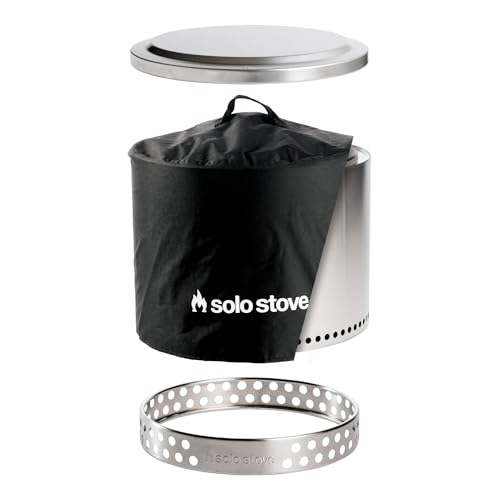
The Wood Champion: Solo Stove Bonfire
If the wood side wins your comparison, the Solo Stove Bonfire is its most persuasive current ambassador: a smokeless stainless design that keeps crackle, embers, and radiant heat while cutting the smoke that is wood’s weakest criterion. It does not change the wood liturgy — dry fuel, tending, cold ash — it simply removes the commonest reason households abandon it. Best for: wood loyalists near neighbours. Not suited for: anyone whose real desire is propane’s ease, honestly examined.
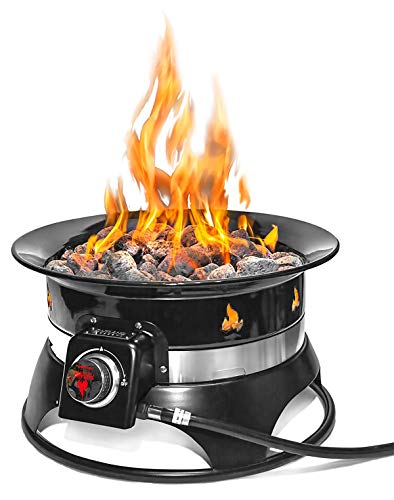
The Propane Champion: Outland Living Firebowl
If the propane side wins, the Outland Living Firebowl is its classic form: portable, quick, dressed with lava rock, and at home on decks and campsites where wood is restricted. It represents propane’s case at its cleanest — flame as an appliance, warmth as a companion, evenings that begin and end on your schedule. Best for: decks, restrictions, spontaneity. Not suited for: ember cooks and ritual seekers. Households furnishing the winning side’s circle will find best chairs for a fire pit and best chairs around a fire pit the natural next reads.
Who Each Option Suits — and Who Should Skip Each
Wood suits the spacious, the patient, and the ritual-minded: plots with room for clearances and a dry fuel store, households that entertain at length, campers and countryside owners, and anyone who hears fire-tending described as work and thinks it sounds like the best part. Wood should be skipped by the smoke-constrained, the rule-restricted, the storage-poor, and the honestly time-poor — not as a judgement on their taste, but because an unlit wood pit serves nobody. Propane suits the deck household, the small plot, the restricted area, the young family whose evenings end early and suddenly, and the spontaneous host who wants firelight between deciding and sitting down. Propane should be skipped by the ember romantic, the fire cook, and the household that knows a quiet, steady flame will always feel to them like a photograph of the thing they wanted. Both skips are successes of this comparison, not failures: a skipped fire is money and garden kept for the right pleasure.
How to Decide: Questions That Branch
Answer in order, and stop when the answer is clear. Are you permitted to burn wood where you live, in the seasons you will use it, on the surface you will use? If no, propane — the comparison is over and you have lost nothing but an argument. Is smoke a hard problem for your household or your neighbours? If yes, propane, or smokeless wood if the ritual matters enough to manage its remaining smoke with placement and dry fuel. Are your typical fireside evenings under an hour? If yes, propane’s instant rhythm will double your usage. Do you dream specifically of embers — cooking over them, watching them, tending them? If yes, wood, and let the other criteria arrange themselves around that desire. Do children or bedtimes end your evenings suddenly? Propane’s valve is a kindness to your future tired self. Is your fuel access easy and your storage dry? Wood’s economics and craft both improve. Most households find their answer by the third question; households still tied at the end should choose by the Tuesday test — the fire you will light unplanned, on an ordinary evening, is the right fire, whichever fuel it burns. The full choosing method, beyond fuel, is in how to choose a fire pit.
Final Recommendation by Use Case
For long weekend gatherings on a spacious plot: wood, in a traditional or smokeless bowl sized to your circle. For suburban sociability with neighbours in earshot and nose range: smokeless wood if ritual calls, propane if it does not. For decks, balconies where permitted, and restricted areas: propane, without a backward glance. For young families and short evenings: propane now, with wood as a later chapter when bedtimes forgive an ember watch. For campers under variable rules: propane for guaranteed permission, or a portable smokeless pit for sites that welcome wood. For the genuinely undecided: borrow both evenings before buying either fire — an hour of tending and an hour of valve-turning will tell you more than any comparison, this one included. And whichever side you choose, buy the whole system — cover, screen or stand as your setting requires, ash kit or tank routine, seating from guides like best Adirondack chairs for a fire pit — and run it by the safety liturgy of its fuel, every time, without exception.
Two Evenings, Lived Honestly: The Diary Test
Comparisons persuade in the abstract; diaries persuade in the particular, so live both evenings in imagination before choosing. The wood evening begins at the wood store: splits selected, kindling gathered, the fire built in the bowl with the small ceremony that owners either love or endure. Twenty minutes of coaxing brings the first real flame; an hour of feeding and adjusting brings the ember bed, the circle at its warmest, conversation at its loosest, marshmallows appearing as if by tradition. The fire-keeper has worked happily or resentfully — there is no neutral version — and when the evening thins, the work continues: no new logs, a watch kept while embers fade, chairs straightened around a bowl that will still be warm at midnight and must be cold before its ash moves tomorrow. Sleep comes with the smell of smoke in your hair, which is either the signature of a perfect evening or a shower you did not plan.
The propane evening begins at a valve. Flame before the drinks are poured, a circle settled in minutes, warmth as a backdrop rather than an achievement. Nobody works; everybody sits, including the host, which regular hosts name as propane’s hidden luxury. When a child is tired or the evening simply completes itself, the valve turns, the flame vanishes, and the household disperses without a watch, a residue, or a tomorrow. What is missing is equally concrete: no crackle under the conversation, no ember glow to fall silent in front of, no sense of a thing made together. Neither diary is a caricature — both evenings are genuinely good, for different households on different nights — and the comparison’s whole argument is that you should buy the diary you want to live in repeatedly, not the one that sounds better in a shop. Read both again slowly. The one that made you slightly impatient to begin is your answer.
Myths on Both Sides, Corrected
Myths cluster around this comparison because both fuels inspire loyalty. Myth one: smokeless wood pits produce no smoke. They produce much less, when fed dry wood and loaded properly, and exactly as much as any fire when fed wet fuel — the engineering assists technique, never replaces it. Myth two: propane pits are not real fires. The flame is real, the heat is real, and the safety duties are entirely real; what is absent is wood’s by-products and rituals, which is a preference, not a fraud. Myth three: wood is free to run. It is free only where your time, storage, and a wood supply are genuinely costless to you, which is true for some rural households and false for most bundle-buying suburban ones. Myth four: propane is maintenance-free. Its burners clog, its hoses perish, its connections need checking with soapy water, and its tanks need managing — a shorter list than wood’s, and a real one. Myth five: one of these fuels is the safe one. Both are open flames with a liturgy; the safe fire is the supervised, well-placed, correctly run fire, and it exists on both sides of this comparison.
A sixth myth deserves its own sentence because it ends comparisons prematurely: that you must choose forever. Gardens change, children grow, rules tighten and loosen, and households migrate between these fuels across a decade as naturally as they migrate between cars. Choosing the fire for your current life, at a tier your current frequency justifies, is not a life sentence — it is good buying. The households that regret this purchase are rarely the ones that chose the wrong fuel in some absolute sense; they are the ones that chose against their own diary — propane for a ritual heart, wood for a calendar with no room for embers — and then blamed the flame for the mismatch.
Weather, Seasons, and the Climate Clause
Climate referees this comparison more than most buyers expect. In a dry, fire-prone region, wood’s season is punctured by burn bans exactly when evenings are longest, and propane’s permission advantage compounds year after year — a household there is not choosing between two fires so much as between a fire it may use and a fire it may admire. In a cool, damp region, the bans recede and a different clause bites: wood fuel must be stored properly dry or every fire becomes a smoke machine, while propane shrugs at the weather and lights in the drizzle’s pause. In a windy region, both fuels suffer — wood sheds sparks and smoke sideways, propane’s flame flattens and its heat blows away — and the winner is whichever pit your garden can shelter, which makes placement a fuel decision in disguise. In a mild region with long shoulder seasons, wood’s ritual gets the most evenings to shine in, and its ember heat is needed least, which paradoxically makes propane’s gentler warmth sufficient for more of the year. There is no climate in which one fuel is absurd; there are several in which one fuel is obviously right, and buyers should let their own sky vote early in the comparison rather than discovering its veto after delivery.
Storage weathers the comparison too. Wood pits and their fuel both dislike damp: a bowl wintered uncovered rusts at its hottest seams, and a woodpile stored badly guarantees a smoky spring. Propane units dislike damp differently — connections corrode, burners invite insects, hoses perish in sun — and ask for covered storage and seasonal inspection rather than a fuel store. The household with a dry shed and a wood corner leans wood by infrastructure; the household with a garage corner and no fuel space leans propane by the same logic. Infrastructure is unglamorous and decisive, which is why this comparison keeps returning to it: fires are not bought for the evening of the photograph but for the hundred evenings after, in the storage, weather, and rules you actually have.
One further criterion quietly decides many real households: who else uses the garden, and when. A pit that grandparents light confidently is a pit that gets used in the afternoons of family life, and propane’s single-valve simplicity genuinely widens the circle of confident operators. A pit that teenagers will gather around under supervision becomes a social asset for a decade, and wood’s theatre genuinely widens that circle. A pit near a play area asks for propane’s instant off or a wood bowl’s screen and boundary discipline, and asks it as a headline criterion rather than a footnote. Even the dog votes: a sprawling sleeper beside the circle is safer beside a screened, steadily managed fire of either fuel than beside an open bowl at tail height, which is a placement sentence more than a fuel sentence. List your garden’s actual population — ages, confidence, habits, tails — and let that census argue alongside heat and smoke. Comparisons are usually written for a buyer alone with a credit card; fires are lived with by households, and the household is the correct unit of decision.
And if the census and the criteria still leave you tied, there is a respectable tiebreaker with a long pedigree: start with the fire that is permitted, practical, and kind to your current stage of life, and let the other fire be the aspiration you revisit when the stage changes. Propane now and wood when the children are older; wood now and propane when the plot shrinks; either now and both when the garden and the budget grow into them. A tie is not indecision — it is information that your household sits near the border, where both fires genuinely serve, and where the worst outcome is not choosing the second-best fuel but choosing neither and losing the evenings entirely.
The Environmental and Sensory Fine Print
Both fires have an environmental signature, and honest comparison states them in the same tone. Wood burning releases smoke particles and odour into shared air, which is why its use is regulated by place and season, and why burning dry, seasoned, untreated wood — never painted or treated timber, never rubbish — is an obligation rather than a preference, keeping emissions and smell as low as the fuel allows. Propane burns cleanly where it stands, with no local smoke at all, while remaining a fossil fuel consumed steadily by the hour; its cleanliness is local and immediate rather than absolute. Households weigh these signatures differently — a rural wood burner with seasoned hardwood from a managed supply and a suburban propane user avoiding smoke drift can both defend their choice in environmental terms — and this comparison declines to award a green rosette to either side. What it does award is a responsibility point: the cleaner fire, on either side, is the one burned in the right conditions, at the right frequency, under the rules written for everyone’s air.
The sensory fine print cuts the other way. Wood’s smoke, the very thing the environmental paragraph must count as a cost, is also — in trace amounts, on clothes, in the cool air — the scent its devotees would bottle. Propane’s cleanliness, its environmental and neighbourly virtue, is also the absence its critics feel as sterility. There is no resolving that paradox with data, because it is not a data question; it is the oldest taste question in domestic life, the same one that divides cooks between gas and flame, readers between paper and glass. Name your own position in it plainly, because a household that pretends to be indifferent to the sensory signature of fire will discover, one evening in, that it is not — and the discovery is cheaper in this paragraph than beside a delivered pit.
Consider, finally, the comparison from the garden’s point of view across the years. A wood pit anchors a social corner with a wood store beside it, a paved or gravelled stance, a screen on its hook — a small, purposeful landscape that reads as a hearth outdoors. A propane table anchors a dining terrace; a propane bowl anchors a deck’s evening corner with a tank discreetly housed. Each reshapes its setting differently, and the reshaping outlasts any single season’s fires, which is why designers ask the fuel question before they draw a single line. Buyers should do the same: walk the garden, stand where the fire would live, and picture both versions of the scene — the tended hearth with its store and tools, the clean appliance with its hidden tank — at noon, in rain, in February. The version that still pleases you in February is the version to buy, because February is when purchases are regretted and when the right one, covered and waiting, quietly promises spring.
Before the verdicts close, one under-discussed criterion deserves its moment: repairability and the long service of each side. A wood bowl is among the most repairable objects in a home — a grate replaced, a leg re-welded, a surface brushed and seasoned back — and its failure modes announce themselves slowly, in rust and thinning that inspection catches. A propane unit concentrates its vulnerability in its working parts: igniters tire, hoses perish, valves and burners corrode, and while each part is replaceable in principle, the household must actually source and fit it, or the appliance declines as a system. Over a decade, wood’s simplicity compounds into longevity for owners who maintain; propane’s convenience compounds into reliance on parts and the will to fit them. Neither profile should frighten a buyer — both are manageable by the same seasonal inspection this comparison has recommended throughout — but a household choosing for the long term, in a place far from suppliers, may find wood’s dumb durability a genuine criterion, while a household that values the appliance’s manners will accept the parts list as the price of them. The comparison, as ever, ends not with a winner but with a clearer view of the household doing the choosing.
Households that own both fuels — and this comparison has met many in the pattern of ownership it draws on — develop a private protocol worth reporting, because it reveals what the head-to-head format conceals: the fuels stop competing and start specialising. Wood takes the long evenings, the celebrations, the cold nights when heat is the point and time is plentiful; propane takes the weeknights, the dinners, the restricted days, the evenings when a child might end everything early. The household’s satisfaction rises not because either fire improved but because each is finally being asked only for what it does best. Readers who can see that protocol in their own future should not feel they have failed to decide — they have decided twice, correctly, for two different evenings that both deserve a fire. Start with the fuel of your commonest evening, as this article has advised throughout, and let the second fire arrive, if it arrives, as an addition rather than a correction.
The comparison also changes with the hour, and households feel this before they can say it. At six in the evening, with dinner to cook and light still in the sky, propane’s readiness rules: flame for the cooks’ warmth, flame for the first drinks, no project started while sausages wait. At nine, with the meal cleared and the night settling, wood’s long game begins: embers built across the evening reach their generous peak exactly when the gathering stops performing and starts confiding. At eleven, the fuels’ endings argue their final case — the valve’s mercy against the ember watch’s meditation — and different households, equally happy all evening, will part company on that hour alone. A complete comparison therefore asks not only which fire, but which hours your fireside life is lived in; a household of early evenings and a household of late ones are buying different products that happen to share a name, and both should choose with their clocks open beside their calendars.
Let the last word of the comparison be a concession each side owes the other, because it is the truest sentence available. Wood’s devotees should concede that they have all, on some tired Tuesday, envied the valve — and that the envy was information about their lives, not treason against their fuel. Propane’s devotees should concede that they have all, beside some campfire of embers and crackle, felt the pull of the older fire — and that the pull was information too. A household that can hold both concessions at once understands the comparison completely, and will choose — one fire, the other, or both in their seasons — with the calm of people who know exactly what they are trading, and why, and for which evenings. That calm, more than any verdict in these pages, is what a good comparison is for.
And so the comparison ends where it began, with two good fires and one honest household between them. Everything in these pages — the criteria, the diaries, the myths corrected, the climates and censuses and clocks consulted — exists to make that household’s self-knowledge sharper, because the fuels themselves need no advocacy: each has kept its devotees warm and gathered for years, in gardens that suit it, under rules that permit it, in evenings shaped to its rhythm. Choose the rhythm, and you have chosen the fire; the rest — model, tier, size, seating — is the pleasant administration that follows a real decision. May your evenings, whichever flame they gather around, be long, warm, supervised, and exactly as smoky as you intended.
One sentence, then, to carry away from the whole comparison: buy the fire whose duties you will perform gladly, whose absences you will not mourn, and whose evenings — beginning, middle, and end — you have already lived happily in imagination and, ideally, in rehearsal. Everything else is administration.
And whichever fire you choose, choose it completely — the whole system, the whole liturgy, the whole evening — because half-chosen fires, like half-built ones, satisfy nobody and teach nothing except the cost of the lesson.
The Tie-Breaker Tests: Fire Pit Against Propane Fire Pit in the Same Room
Head-to-head comparisons of a fire pit often end in a draw on paper, so this section offers tie-breaker tests you can run mentally against your own room before committing to either side. First tie-breaker: give each contender the worst realistic day in your routine — the biggest load, the tightest timing, the least convenient position — and ask which version of the fire pit question copes with that day rather than with an average one. When something about the fire pit disappoints, change one variable at a time — position, setting, timing, load, accessory or technique — and give the change a fair trial, because changing three things at once leaves you with a better or worse result and no idea why. Watch for edge cases in your own home: the pet that investigates everything, the child who treats every new object as furniture, the guest who uses force where you use familiarity, and the weather, light or season that changes how a fire pit behaves.
Decide in advance what good enough looks like for the job the fire pit does in your home, because chasing a flawless result usually costs more time than the flaw itself, and most households are happier with a reliable ninety percent they actually repeat. Measure before anything else, and measure the fire pit in its working state rather than its packed or folded state, because handles extend, lids open, cords trail, doors swing and users stand somewhere, and all of that belongs in the measurement. Think about who else will use the fire pit and what they will do differently: shorter reach, less patience, stronger habits, no interest in the manual, and a tendency to leave things wherever they were last set down. If a problem with the fire pit repeats in the same spot or the same stage of the job, treat the pattern as the clue — patterns point to setup, surface or technique, while random problems point more often to the individual unit.
Keep a short note of what you adjusted on the fire pit during the first month, even just a line on your phone, since those notes turn vague impressions into a setup you can repeat, share or troubleshoot months later. Test the fire pit in the first week under deliberately ordinary conditions rather than saving it for a special occasion, so that any problem surfaces while returning, exchanging or adjusting your setup is still simple. Read the manual’s warnings page for the fire pit even if you read nothing else, because that page is a compressed list of every way the product has ever been misused, and it tells you exactly which of your own habits needs adjusting. Check the floor, wall, ground or surface the fire pit will meet, since level, texture, moisture and finish decide more about everyday performance in patio & outdoor living settings than most shoppers expect when they are comparing listings on a screen.
Keep the packaging of a larger fire pit until those first ordinary tests are done, flattened if space is tight, because re-boxing an awkward shape from scratch is the hidden difficulty inside many otherwise straightforward returns. Third tie-breaker: imagine handing each option to the least patient person in your household, since the version of a fire pit that survives being used carelessly, quickly and without instructions is usually the version still earning its place in year two. Look at replacement parts and consumables for the fire pit while you are still comparing, confirming that the pieces most likely to wear, clog, tear, fade or get lost can actually be obtained without replacing the whole product. If the tie still will not break, choose the fire pit option whose weakness you can fix with a habit — a mat, a timer, a different storage spot — over the one whose weakness is built into its shape, size or mechanism.
Consider the cleaning rhythm honestly: a fire pit that needs attention after every use suits a household that enjoys small rituals, and frustrates a household that wants to finish a job and walk away, so match the upkeep to the temperament, not the intention. For troubleshooting, start with the boring causes first: power, water, fit, blockage, alignment, a full container, a loose connection or a setting changed by the last person who used the fire pit, because boring causes account for most apparent failures. Share the checklist result with anyone who shares the space, since a fire pit chosen by one person and resented by another rarely survives, however sensible the purchase looked on paper. Finally, remember that the best fire pit for your home is the one whose size, habits and upkeep disappear into your routine, leaving only the result behind — a cleaner surface, a better-lit seat, a tidier shelf, an easier job — week after ordinary week.
Fourth tie-breaker: picture removing it, because the option that is easier to clean around, move for guests, store out of season or pass on when you upgrade quietly wins arguments that feature lists never settle for a fire pit. Seasonal thinking helps more than expected: a fire pit bought in one season will meet different light, humidity, mud, heat, guests and routines in another, so judge its size, storage and upkeep against the hardest season it will face. Photograph your setup once the fire pit is working well — the position, settings, arrangement or layout you settled on — so that after a move, a deep clean or a seasonal break you can recreate the arrangement that worked instead of rediscovering it. Plan the storage home for the fire pit before it arrives, naming the exact cupboard, corner, shelf, hook or stretch of floor, because a product without a home migrates around the house and slowly becomes the clutter it was bought to reduce.
Second tie-breaker: count the supporting purchases and habits each side demands, because a fire pit choice that also needs new storage, new accessories, a different cleaning routine or a moved piece of furniture costs more than its listing admits.
Frequently Asked Questions
Which is warmer, a wood or propane fire pit?
A wood fire feels warmer at the chairs in most comparable setups, because its radiant heat and ember bed push warmth sideways into the circle, while a larger share of a propane flame’s energy rises away. Propane is genuinely warming at close range and entirely sufficient for mild evenings and dining settings, but households buying primarily for heat on cold nights should choose wood — or arrange propane seating close and sheltered to get the best from it.
Which is safer, wood or propane?
Neither is safe unattended, and both are safe under their own discipline. Propane removes sparks, embers, and ash, and can be extinguished instantly, which matters in restricted settings and at sudden bedtimes. Wood removes gas storage and connections from the picture. Both demand outdoor-only use because of carbon monoxide, safe placement under local rules, supervision, and distance for children and pets. Choose the set of duties your household will perform reliably, every single time.
Can a propane fire pit be used where wood fires are banned?
Often, yes — many burn bans and site rules target open wood burning specifically, and gas appliances that can be shut off instantly are frequently still permitted. Often is not always, and wording varies by area and by season, so check the exact local rule before relying on it, especially during declared high-risk periods when all flames may be restricted. Never assume a ban’s exemption; verify it, each season, from the authority that issued it.
Does a propane fire pit smell or make noise?
A properly working propane pit produces no wood-smoke smell — one of its chief comforts — and burns with a soft hush rather than wood’s crackle. A faint gas smell at connection or ignition is a signal to stop and check: shut the valve, inspect the connections, and use the soapy-water test to find a leak before lighting. Ongoing gas smell during use is never normal and always means switching off and investigating before the next fire.
Which is better for cooking?
Wood, in a design built for it. Embers under a proper grate can genuinely cook, and social toasting belongs to wood fires. A propane burner is a heating and lighting device whose rock or glass should not be treated as a grill; grease and food debris damage burners and create maintenance and safety problems. If fire cooking is a headline desire, it decides the comparison on its own: buy wood, in a cooking-capable design.
Can I switch fuels later, or own both?
Many households do exactly that — a propane bowl for weeknights and restrictions, a wood pit for long ritual evenings — because the two fires serve different evenings rather than competing for one. Switching costs nothing but storage and the second system, and owning both is the honest end-point for households whose comparison stays tied after honest answers. Start with the fuel that matches your most common evening; add the other only when a real pattern of missed evenings justifies it.
Related Guides
Complete the decision with the fire pit buying guide, the ledger in fire pit pros and cons, the wider field in fire pit reviews, and the patio setting in best outdoor chairs for the patio.