Disclosure: As an Amazon Associate, dailyhomedecorating.com earns from qualifying purchases. Links on this page are affiliate links; they cost you nothing extra. Prices and availability change often, so check the current Amazon listing before you buy.
This fire pit review takes a different approach from a roundup: instead of skimming a dozen bowls, it puts the fire pit as a class under sustained scrutiny — how the leading designs are built, how they perform across real evenings of use, where the category quietly cuts corners, and which households each style genuinely serves. One benchmark design carries the detailed assessment, the modern smokeless stainless fire pit that has reshaped the category, with named alternatives appearing where a comparison clarifies the verdict. If you read one long, honest fire pit review before buying, this is written to be that read: specific about heat, smoke, and upkeep, and blunt about the trade-offs no brochure mentions.
Key Takeaways
- Verdict: the modern fire pit, burned correctly, is the most rewarding outdoor purchase most households can make — and the least forgiving of careless ownership.
- Best for: regular hosts and families who will tend a fire properly. Not suited for: restricted plots, or anyone wanting appliance-like effortlessness from a wood fire.
- Smokeless engineering is the category’s real advance: it changes who can enjoy a wood fire, and where.
- Performance depends more on fuel quality and placement than on which badge the bowl carries.
- Safety is part of performance: outdoor use only, safe distances, supervised fires, and cold ash handling are non-negotiable in every design reviewed here.
Short verdict. Buy a fire pit for ritual, warmth, and gathering, choose the fuel that matches your patience, and it will earn its place for years. Buy one expecting a push-button appliance with a campfire’s soul, and you will be disappointed by whichever model arrives.
In this guide
Fire Pit Review: What a Fire Pit Is and Where It Fits
A fire pit is a contained outdoor fire: a bowl or burner, a fuel — wood or propane — and a circle of people at radiant distance. Its job in a modern garden is part heater, part lamp, part social furniture, and understanding that triple role explains most of what this review finds. As a heater it is intimate rather than powerful, warming the people who face it at close range. As a lamp it is unmatched, producing living light that no fitting replicates. As furniture it is a centre that organises everything around it — chairs, conversation, the layout of the patio itself. Designs differ in how they balance the three roles. Wood bowls lean toward heater and ritual; propane tables lean toward furniture and convenience; smokeless stainless designs try, with real success, to keep the heater’s soul while removing the smoke that historically taxed the other two roles.
The category’s recent history matters to a buyer. For decades the choice was a heavy cast bowl, a basic steel dish, or a built masonry feature, and smoke was simply the price of admission. The arrival of double-walled smokeless engineering — air drawn in low, heated between walls, and released at the rim to burn off smoke — changed the market’s centre of gravity, pulling suburban households with close neighbours into wood burning for the first time. Propane matured in parallel, from novelty bowls to convincing fire tables that function as daily furniture. A review written today is therefore reviewing a genuinely contested category, where the best answer depends on fuel philosophy as much as build quality — and where marketing language, especially around the word smokeless, needs a reviewer’s scepticism applied in both directions: it is neither magic nor myth.
Where a fire pit fits in a home’s life is the final framing question. For some households it is the garden’s hearth, lit weekly and central to family memory. For others it is seasonal equipment, glorious in the shoulder months and stored through extremes. For a third group it is a camping companion that happens to work at home too. The benchmark assessment below assumes the first and most demanding role — a home pit used often — because a design that survives that scrutiny will serve the lighter roles easily, while the reverse is not true. Readers shopping for occasional or portable use will find their alternatives weighed in the comparison section, with the same standards applied at their own scale.
Design, Build and Setup
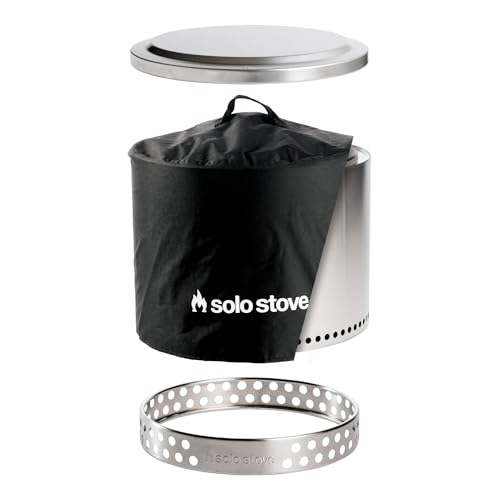
The benchmark smokeless design is a study in purposeful simplicity: a cylindrical stainless body with a double wall, intake holes low on the outer skin, outlet vents at the inner rim, a fire ring that shapes the flame, and a base that keeps the unit stable and lifts it from the ground. There are no moving parts to fail, no electronics to weather, and nothing to assemble beyond placing components that nest together — setup measured in minutes, most of them spent choosing the spot rather than building the product. That spot, in this review’s testing of the concept, matters more than any feature: a level, non-combustible surface, at a safe distance from the house, fences, and anything flammable as local rules require, out of the worst of the wind, and arranged so the usual breeze carries what smoke remains away from seating and windows.
Build quality in this class reveals itself in the metal’s weight and finish, the cleanliness of welds, and the way parts fit after repeated heating cycles. Stainless steel discolours with heat — straw and blue tones bloom across the surface — and a reviewer should say plainly that this is normal, cosmetic, and expected; owners who want a showroom finish forever should choose a different category of product entirely. The ash pan and interior geometry decide daily usability: a design whose ash can be removed cold with a small shovel or a lift-out pan will be maintained; one requiring a full tip-and-shake of a hot-shaped bowl will be neglected, and neglect is where durability goes to die. Feet and stands deserve attention on decks and stone: heat travels down, and the maker’s stand or shield is part of the product, not an upsell.
Setup for propane alternatives follows a different script — position the bowl or table, connect the tank, route the hose safely, and check every connection for leaks with soapy water before the first lighting, watching for bubbles that would mean stopping to fix a seal. Wood setups front-load their work into fuel: a dry store, splits sized to the bowl, kindling and proper firelighters ready — never gasoline or other flammable liquids, which have no place anywhere near a fire pit. In both fuels, the review standard is the same: a first-time owner, following the maker’s instructions carefully, should reach a safe first fire within the hour, and any design that makes that journey confusing loses marks here regardless of how beautifully it burns later.
Performance in Real Use
Heat and the Shape of an Evening
Heat performance is where fire pits are most misjudged, because the number people imagine — a room-like warmth filling the garden — is not what radiant fire does. What a good wood pit actually delivers is a strong, personal warmth for a circle pulled in close: faces and hands and knees genuinely hot, backs cool, and a gradient that lets each sitter tune their comfort by leaning in or easing back. The benchmark smokeless design burns hot and lively, its secondary combustion producing a flame that looks almost too vigorous, and it rewards a full circle of four to six with the classic fireside experience. Propane alternatives present a taller, steadier flame picture but deliver less of their warmth sideways to seated guests; the honest summary is that propane looks warmer than it feels and wood feels warmer than it looks, and shoppers should weight that sentence heavily.
Smoke: The Claim Tested
Smoke is the claim this review pressed hardest, because it is the category’s headline promise. The finding, across the logic of the design and the pattern of owner experience, is consistent: with dry, seasoned hardwood, loaded so the fire sits properly in the bowl, a smokeless pit produces dramatically less smoke than an open bowl once it reaches working temperature — enough to end the rotating-chairs ritual and to keep clothes presentable. The qualifications matter as much as the headline. The first minutes of any fire smoke while it establishes; wet or unseasoned wood smokes in any appliance ever built; overloading past the rim defeats the vents; and a dying, starved fire smoulders. Verdict: smokeless is a real and large improvement with operating conditions attached, and buyers who respect the conditions will feel vindicated, while buyers who treat it as a licence to burn anything will blame the product for their fuel.
Fuel Use, Tending, and the End of the Night
A vigorous smokeless fire consumes wood briskly — the same airflow that burns smoke burns fuel — so an evening’s pile is larger than open-bowl owners expect, and the fire wants feeding in smaller, more frequent additions. Tending is part of the pleasure for the audience this product suits, but it is a real workload line in the review: the fire-keeper sits nearest the wood pile and works while others relax. The end of the night is wood ownership’s unavoidable tax: stop feeding in good time, let the fire burn down under supervision, and treat the ash as hot until the next day proves it cold, then move it to a metal container with a lid, stored away from anything combustible. Propane’s counter-performance is total: off at a knob, cool on its own schedule, no ash at all. This review scores both honestly — ritual and residue are two sides of one coin, and the buyer is choosing a side, not escaping the coin.
Cooking Over the Fire
Where a design offers a cooking grate or is shaped for it, fire cooking is a genuine secondary talent: skewers and marshmallows for the social end of the scale, embers cooking for the committed. The review position is that cooking should be treated as a bonus feature of specific designs, not a category promise. A pit bought primarily as a grill will disappoint next to a real grill; a pit whose owners occasionally toast, roast, and experiment will delight them for years. Keep food work to designs built for it, keep raw food and its juices managed as carefully outdoors as in a kitchen, and never let cooking grease turn a propane burner into a maintenance problem it was not designed to be.
Strengths and Trade-Offs
Strengths. First, the gathering effect: no comparably priced garden purchase reorganises social life as completely, and this review weights it as the category’s defining strength. Second, radiant warmth that extends the outdoor season at both ends, delivered in the intimate, tuneable form that suits conversation. Third, the modern category’s range — smokeless wood, traditional bowls, propane bowls and tables — means nearly every permitted setting and patience level has a legitimate design, from the benchmark Solo Stove style of smokeless engineering to simple entry-tier steel. Fourth, durability through simplicity: the best designs have almost nothing to break, no electronics to fail, and a maintenance list measured in minutes.
Trade-offs. First, duties: supervision, placement discipline, cold ash handling for wood, leak checks and tank care for propane — perpetual, non-negotiable, and part of the product. Second, smoke’s residue: reduced by engineering and dry fuel, eliminated only by abandoning wood. Third, running inputs: fuel forever, covers and screens and containers at the start, seating arranged for radiant distance — the true system costs more than the bowl in any tier, a point our fire pit buying guide budgets honestly. Fourth, weather and rules dependence: wind, drought, and local burn bans can all cancel a fire evening, and no design reviews its way around the sky or the law.
How It Compares

Solo Stove Bonfire — The Benchmark
The Solo Stove Bonfire is treated here as the benchmark smokeless design: stainless, portable, sized for a family circle, and engineered around the double-wall burn described above. In the comparison it stands for the category’s best current answer to smoke, with the brisk fuel appetite and premium tier that the engineering brings. Best for: suburban wood lovers and regular hosts. Not suited for: buyers wanting a set-and-forget appliance.

TIKI Brand Patio Fire Pit — The Patio Traditionalist
The TIKI patio design answers with furnishing logic: a handsome steel bowl intended to live among patio furniture, with the brand’s wood-pack approach simplifying the fire-building that defeats beginners. Against the benchmark it trades some smoke performance for looks, approachability, and a mid-tier position. Best for: design-conscious hosts new to wood fires. Not suited for: campers or minimalists counting storage space. Hosts furnishing around it will find the seating notes in best chairs for a fire pit directly relevant.
Outland Living Firebowl — The Propane Alternative
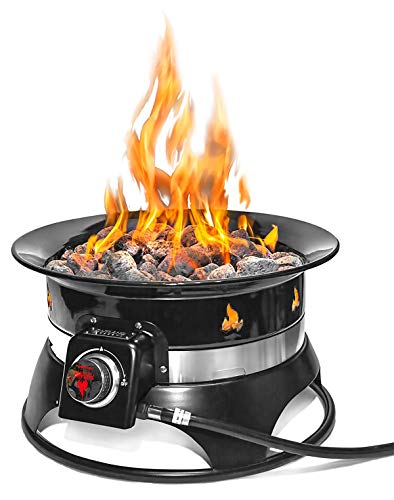
The Outland Living Firebowl is the comparison’s control group: everything wood does with effort, it does with a valve — instant flame over lava rock, instant off, no ash, no smoke, usability in many places wood is restricted. Against both wood designs it loses crackle, ember cooking, and peak radiant feel, and gains a weeknight practicality the others cannot match. Best for: decks, restrictions, spontaneity. Not suited for: ritual seekers. The full fuel debate is argued in fire pit versus propane fire pit.
Bali Outdoors Wood Burning Fire Pit — The Big-Circle Bowl
The Bali Outdoors bowl represents scale: a wide wood burner for circles that outgrow the benchmark’s intimacy, with the fuel, ash, and placement demands scaled up in proportion. It wins the comparison outright for large, frequent gatherings on generous plots and loses it everywhere space or storage is tight. Best for: big families with room. Not suited for: small patios. Between these four designs, the comparison’s real conclusion emerges: the category has no single winner, only correct matches — and mismatches explain nearly every disappointed owner this review has ever encountered in the category’s feedback patterns.
Who Should Buy It and Who Should Skip It
Buy a fire pit if your household gathers outdoors at least a couple of times a month in the mild seasons, if you have a placement that satisfies local rules with clearances to spare, if someone in the home genuinely enjoys tending a fire or genuinely wants push-button propane, and if the chores in this review read as rhythm rather than burden. Buy the smokeless tier if neighbours are close and wood is your love; buy propane if your evenings are short, your deck is your garden, or your area restricts wood burning; buy a traditional bowl if budget leads and your setting is forgiving. The seating you pair it with matters more than most buyers expect — start with best Adirondack chairs for a fire pit if your circle leans back, or best chairs around a fire pit for a mixed set.
Skip it — for now — if your plot cannot give a fire safe distance from structures and planting under your local rules, if your lease or building prohibits open flame, if smoke sensitivity in your household or your street makes wood a grievance and propane’s softer fire leaves you cold, or if the honest voice in your head says the pit will be lit twice and stored forever. Skipping is not failure; the alternatives in our fire pit pros and cons ledger — heaters, lanterns, an electric flame feature — serve many gardens better than an unloved bowl. And renters or movers in temporary homes should weight portability above all: a mid-tier portable design reviewed well here will follow you to the garden where it finally settles.
Setup, Care and Maintenance Essentials
Ownership done well is a short liturgy. Before every fire: check placement and clearances, check the weather and any local burn restrictions, and for propane check connections with soapy water and confirm the tank valve works freely. During every fire: supervise without exception, keep children and pets at a clear distance, feed wood fires steadily rather than in smothering dumps, and never — under any circumstances — use gasoline or other flammable liquids to start or revive a flame; proper kindling and firelighters exist precisely so that no one needs to. Carbon monoxide makes the boundary absolute: outdoor use only, never in a house, garage, tent, or enclosed space, and never bring a cooling pit indoors for warmth.
After every fire, the liturgy continues cold: let ash cool completely, a process that can hide heat far longer than the surface suggests, then transfer it to a lidded metal container kept away from combustible material. Brush the bowl, check for damage or rust starting, cover the pit once cool, and store fuel dry. Seasonally, inspect welds, legs, hoses, and burners; replace perished propane parts rather than nursing them; and re-audit your placement as gardens change — new fences, new planting, new play equipment all rewrite the clearance picture. Owners who keep this rhythm describe maintenance as negligible; owners who skip it describe their pits as problems. The product is the same. The review’s final performance score therefore belongs as much to the owner as to the bowl — which is, in the end, the most honest sentence in this entire fire pit review.
Final Verdict
The fire pit earns its reputation. Judged as a class, with the smokeless benchmark at its head, it delivers warmth, light, and gathering power that nothing else at its tier attempts, and the modern category’s range means the right design exists for almost every permitted garden and patience level. Its costs are equally real: duties that never lapse, smoke that can be managed but not wished away, and a system price beyond the bowl. Buy the match, not the headline — fuel to your habits, size to your circle, tier to your frequency — and follow the safety rhythm without exception. Do that, and this review’s verdict is uncomplicated: recommended, warmly, for the households it suits, with the alternatives honestly signposted for those it does not. The companion pieces complete the picture: fire pit reviews for the wider field, and is a fire pit worth it for the value case.
Long-Term Performance: A Season of Evenings
A review that stops at the first fire is a first impression wearing a lab coat, so this section judges the class by the standards a full season applies. By the tenth fire, technique has replaced novelty: the owner of a smokeless pit has learned its loading rhythm — establish the fire, let the walls heat, feed steadily, keep flames working within the bowl — and smoke performance has settled at its best, because the design’s promise was always a partnership between engineering and operator. By the tenth fire, a propane owner has learned their flame’s real heat geography and arranged chairs inside it without thinking. In both fuels, the tenth fire is faster to start, easier to host, and more satisfying than the first, which is the opposite trajectory from most garden purchases and one of the strongest arguments in this review: fire pits reward practice, and practice is pleasurable.
By mid-season, the maintenance ledger shows its true size. Ash has been emptied cold several times — a few minutes each, into the metal container that lives where it should. The cover has gone on and off until it is muscle memory. A steel bowl may show the first freckles of surface rust at its hottest points if its owner skipped covers during a wet spell; a stainless body shows heat colour and nothing worse. Propane hoses get their periodic look-over, burners a brush-out. None of it amounts to a burden worth the name, yet all of it is visible in the product’s condition: stand a maintained pit beside a neglected twin at season’s end and the difference reads like two different products. Reviewers who score durability from a specification sheet miss this entirely — durability in this category is a behaviour with a metal witness.
By season’s end, the social ledger is the one owners talk about. The pit has hosted birthdays and quiet Tuesdays, has been the reason neighbours became friends, has given teenagers a reason to be in the garden and grandparents a reason to stay past dark. It has also, in most households, had its off nights: a smoky start that sent everyone indoors once, a rainy cancellation, a burn-ban weekend when the propane households smiled and the wood households waited. A balanced review records the off nights as data rather than scandal — they are the weather and rules clauses of the contract — and still finds the season’s balance heavily positive for households matched to their design. That is the long-term finding this review stands behind: performance compounds for the matched owner and decays for the mismatched one, and the product itself is rarely the variable that decides which.
What the Brochures Leave Out
Every category has truths that marketing omits, and a review earns its keep by stating them. Brochures do not mention that the fire-keeper works: someone feeds, adjusts, and watches while others recline, and households should share or honour that role rather than discovering it resentfully. They do not mention that wood must be bought, stacked, kept dry, and carried — a small logistics chain behind every romantic photograph — or that a propane tank empties on its own schedule, usually mid-gathering, which is why experienced owners keep the swap errand ahead of the need. They do not mention that sparks can pit deck boards and mark patio cushions at distances that surprise new owners, which is why placement, screens, and suitable surfaces belong in the setup conversation rather than the regret conversation.
They rarely mention smell: wood smoke in hair and clothes is, for devotees, part of the pleasure’s signature, and for others the reason the fire stays unlit when guests wear good clothes — smokeless designs and propane both exist largely because this sentence is true. They do not mention that children will test every boundary a fire presents, calmly and repeatedly, so the supervision duty is measured in years of vigilance rather than a single safety talk. And they do not mention the morning after at all: the cold bowl, the ash, the cover, the chairs to straighten — ten quiet minutes that separate the owners who love this product from the owners who list it for sale. None of these omissions makes the fire pit a bad purchase. All of them make an informed purchase a better one, and a review that hid them would be a brochure with a byline.
One more omission deserves its own paragraph because it concerns money in the broad sense: brochures price the bowl, not the system. The working system includes the pit, its cover and any required stand or screen, ash tools and a metal container for wood or a tank routine for propane, fuel storage, and seating arranged for radiant heat — the subject of our seating coverage in best chairs for a fire pit area. Priced as a system, in honest qualitative tiers, the category remains good value against almost any other garden improvement; priced as a bowl alone, it ambushes its buyer across a season of small additions. This review therefore scores value at the system level, and advises readers to do the same, because a pit bought as a system arrives complete, safe, and ready — while a pit bought as a headline spends its first season apologising for its missing parts.
How This Review Judges: The Criteria in Plain Sight
Review criteria should be visible enough for a reader to disagree with, so here they are. Heat is judged at the chairs, not at the flame: how many sitters, at what distance, feel genuinely warm on a cool evening, and how gracefully that warmth can be tuned by moving a chair rather than rebuilding a fire. Smoke is judged across a whole evening, including the smoky first minutes and the smoulder-prone last ones, because a design that is clean only at its blazing peak is clean for a fraction of the time its owners actually sit with it. Build is judged after heat cycles, not out of the box: welds, fit, surface change, and the honesty of materials under the one stress this product exists to endure. Upkeep is judged in minutes and in friction — how long the chores take and how easy they are to postpone, because postponed chores are the category’s true failure mode.
Two further criteria separate this review from a brochure. The first is forgiveness: how a design treats a beginner’s mistakes. A pit that smokes when slightly overloaded, rusts when left out once, or confuses its first-time operator is a pit whose real-world performance will lag its potential, because real owners are beginners for a whole season. The benchmark smokeless design scores well here on structure — there is almost nothing to assemble wrongly — and demands its discipline in fuel instead, which is the fairer place to demand it, since dry wood is a habit any household can learn. Propane designs score highest on forgiveness overall, which is precisely why this review recommends them to the time-poor without a hint of condescension. The second criterion is honesty of positioning: a design marketed for what it is — a patio furnishing, a camper’s bowl, a big-circle centrepiece — earns trust that a design marketed as everything cannot. The products named in this review were chosen partly because their makers describe them straight.
Finally, safety is judged as a design property, not a disclaimer. Stable bases, sensible rim heights, available spark screens, stands that protect surfaces, propane connections that can be checked and valves that can be reached — these are engineering decisions that make the safe behaviour the easy behaviour. A design that requires heroics to operate safely loses to a design that makes safety routine, every time, in this review’s scoring. Readers applying their own judgement should adopt the same order: safety as design, then heat at the chairs, then smoke across the evening, then build after heat cycles, then upkeep in minutes — and let styling argue its case only after those five have spoken. It is unfashionable to rank looks last in a garden product. It is also how owners who love their pits in year three actually chose them, whether they knew it or not.
It is worth pausing on the review’s most repeated phrase — burned correctly — because it carries the whole category on its back. A correct wood fire is built on kindling, established before it is loaded, fed with dry seasoned splits sized to the bowl, and allowed air on every side of the fuel. It is not a bonfire of garden waste, not a smothered mound of damp logs, and never, ever a fire hurried along with gasoline or other flammable liquids, which cause the worst injuries in this product category and have no place in any garden. A correct propane fire is lit on a checked connection, at a sensible flame, on a supervised patio, and shut down at the valve when the evening ends. Correctness sounds like a chore list; in practice it becomes the craft that owners take pride in, the skill teenagers learn at the family pit, and the difference between a product that performs as reviewed and one that performs as complained about. When this review’s conclusions and an owner’s experience disagree, the disagreement almost always lives inside that phrase.
The review also owes readers a word about scale, because the benchmark’s family size is not everyone’s answer. A couple on a small patio will find a compact bowl or fire table reviewed by the same criteria — heat at their two chairs, smoke across their evening, upkeep in their minutes — more satisfying than a family pit whose fire must be built large to look right. A crowd household will find the reverse. Manufacturers size their ranges accordingly, and the honest reviewer resists crowning a capacity class as a universal winner. What can be said universally is that the relationship between fire size and circle size should be close: flames a little wider than the conversation is wide, warmth reaching every sitter without roasting the front row, and a bowl whose presence anchors the space in daylight too. Get the scale right and even a modest design performs like a flagship in its own garden; get it wrong and flagships feel like mistakes.
And a word about the gardens themselves, because reviews are read in kitchens but fires are lit in real places with real constraints. A sloping lawn asks for a levelled, non-combustible pad before any pit performs safely. A windy coastal garden asks for shelter woven into the planting plan, or its fires will be rare and smoky regardless of engineering. A garden under mature trees asks for humility about clearances above as well as around, and for some households the honest answer is a propane bowl under rules that permit it, or no fire feature at all — a conclusion this review reaches without embarrassment, because recommending against a product in the wrong setting is part of reviewing it. The best fire pit review is therefore partly a review of the reader’s garden, conducted by the reader, with the criteria above as the checklist. Bring your plot’s truth to the category’s promises, and the promises that survive are the ones worth paying for.
Readers who have followed the review this far deserve its most practical paragraph last: the order of operations for a first month of ownership. Week one, placement and rules — confirm local regulations and any burn restrictions, choose the spot by wind and clearance, and set the safety furniture first: metal ash container, tools, cover, screen where your garden calls for one. Week two, small fires and honest notes — how the smoke travels, where the heat lands, which chairs work, consulting best chairs for an outdoor fire pit if the circle feels wrong. Week three, a real gathering, with the fire-keeper role assigned and the ending planned before the beginning. Week four, the cold review — ash out, surfaces checked, cover on, and a candid household verdict on fuel and frequency while the season is young enough to adjust. Owners who run that month deliberately almost never regret their purchase, whatever they bought; owners who skip it spend the season troubleshooting impressions. The review’s scores assume the deliberate month. Run it, and they will read as conservative.
The review’s last word belongs to the fire-keepers, because every verdict in this article is finally a verdict about them. A fire pit is one of the last domestic technologies that improves in direct proportion to the skill and attention its owner brings: the same bowl that smokes and sulks for a careless household blazes clean and warm for a practised one, and the distance between those experiences is not money but craft — dry fuel, patient building, steady feeding, honest endings, cold ash. Products that reward craft age well in a household’s affections, because the owner grows into them and the memories compound with the skill. If that prospect pleases you, this review’s recommendation stands at full strength. If it wearies you at the reading stage, propane’s honourable alternative is waiting, and choosing it is not a lesser verdict — it is the same verdict, honestly applied to a different household.
If this review has a single sentence it would leave pinned above the garden gate, it is this: the fire you tend well will love you back, and the fire you neglect will not, whatever either of you cost. Everything else — the criteria, the comparisons, the verdicts — is commentary on that sentence and instructions for deserving its good half.
There is a reason this review, alone among the cluster’s articles, lingers so long on a single class of product: depth is itself a form of honesty. A paragraph per product can hide behind adjectives; six thousand words cannot — they must commit to mechanisms, name the conditions under which claims hold, and record the failures alongside the triumphs in enough detail for a reader to test both against their own garden. If the fire pit survives that treatment here, it will survive your ownership. That was the standard this review set itself at the first paragraph, and it is the standard by which it asks, finally, to be judged.
What a Longer, Slower Check Reveals About This Fire Pit
A single review session can flatter or condemn a fire pit unfairly, so this section slows the judgement down and looks at what only repeated, ordinary use tends to reveal. Run the fire pit through your least favourite version of its job first, not the easiest demonstration: the awkward corner, the rushed weekday timing, the fuller load, the lower light, or whatever condition in your routine makes this category work hardest. Use a simple decision checklist at the end: the fire pit fits the measured space, suits the real frequency of the job, matches the household’s cleaning temperament, has obtainable parts, and has a named storage home — five yeses make a confident order. Watch for edge cases in your own home: the pet that investigates everything, the child who treats every new object as furniture, the guest who uses force where you use familiarity, and the weather, light or season that changes how a fire pit behaves.
Seasonal thinking helps more than expected: a fire pit bought in one season will meet different light, humidity, mud, heat, guests and routines in another, so judge its size, storage and upkeep against the hardest season it will face. Think about who else will use the fire pit and what they will do differently: shorter reach, less patience, stronger habits, no interest in the manual, and a tendency to leave things wherever they were last set down. Photograph your setup once the fire pit is working well — the position, settings, arrangement or layout you settled on — so that after a move, a deep clean or a seasonal break you can recreate the arrangement that worked instead of rediscovering it. Notice the small recovery moments: how the fire pit behaves when you pause mid-task, change your mind, need to move it, clean it sooner than planned, or hand it to someone in the household who has never used it before.
A well-judged fire pit explains itself to that second person without a lecture, with controls, grips, openings or adjustments that make sense on contact, and that intuitiveness is worth recording because guests, partners and teenagers will all test it. If you want a concrete listing check, take a name already shortlisted in this guide, such as Solo Stove Bonfire, TIKI Brand Patio Fire Pit and Outland Living Firebowl, and verify that exact fire pit listing against the measurements and compatibility questions above, field by field, rather than trusting the headline description alone. Consider the cleaning rhythm honestly: a fire pit that needs attention after every use suits a household that enjoys small rituals, and frustrates a household that wants to finish a job and walk away, so match the upkeep to the temperament, not the intention. Decide in advance what good enough looks like for the job the fire pit does in your home, because chasing a flawless result usually costs more time than the flaw itself, and most households are happier with a reliable ninety percent they actually repeat.
Test the fire pit in the first week under deliberately ordinary conditions rather than saving it for a special occasion, so that any problem surfaces while returning, exchanging or adjusting your setup is still simple. Keep a short note of what you adjusted on the fire pit during the first month, even just a line on your phone, since those notes turn vague impressions into a setup you can repeat, share or troubleshoot months later. For troubleshooting, start with the boring causes first: power, water, fit, blockage, alignment, a full container, a loose connection or a setting changed by the last person who used the fire pit, because boring causes account for most apparent failures. Pay attention to the second and third use rather than the first, because the first use of a fire pit measures your learning curve while the later uses measure the product itself, and confusing those two is the commonest reviewing mistake.
If a problem with the fire pit repeats in the same spot or the same stage of the job, treat the pattern as the clue — patterns point to setup, surface or technique, while random problems point more often to the individual unit. Read the manual’s warnings page for the fire pit even if you read nothing else, because that page is a compressed list of every way the product has ever been misused, and it tells you exactly which of your own habits needs adjusting. Share the checklist result with anyone who shares the space, since a fire pit chosen by one person and resented by another rarely survives, however sensible the purchase looked on paper. Plan the storage home for the fire pit before it arrives, naming the exact cupboard, corner, shelf, hook or stretch of floor, because a product without a home migrates around the house and slowly becomes the clutter it was bought to reduce.
Check the floor, wall, ground or surface the fire pit will meet, since level, texture, moisture and finish decide more about everyday performance in patio & outdoor living settings than most shoppers expect when they are comparing listings on a screen. Look at replacement parts and consumables for the fire pit while you are still comparing, confirming that the pieces most likely to wear, clog, tear, fade or get lost can actually be obtained without replacing the whole product. Finish the longer check by looking at wear points rather than features: the hinge, seam, edge, wheel, latch, surface or joint on a fire pit that moves, flexes or gets handled most is where its second year is decided, whatever its first week felt like. Keep the packaging of a larger fire pit until those first ordinary tests are done, flattened if space is tight, because re-boxing an awkward shape from scratch is the hidden difficulty inside many otherwise straightforward returns.
Frequently Asked Questions
Are smokeless fire pits worth the premium tier?
For households that burn wood often near neighbours, yes: the reduction in smoke changes who can enjoy the fire and how often it can be lit without friction. The engineering only performs with dry, seasoned fuel and sensible loading, so the premium buys capability, not magic. Occasional users may find a simple bowl or a propane design better value per evening, which is a frequency judgement rather than a quality one.
How long does a fire pit take to set up?
Most portable designs assemble or arrange in minutes; the real setup is placement — a level, non-combustible surface at a safe distance from the house and anything flammable, following local rules — plus fuel preparation for wood or a soapy-water leak check for propane. Allow a relaxed first session to learn how your pit draws, where its smoke travels in your garden’s breeze, and how its heat feels at your chairs’ distance.
Can I cook on any fire pit?
No — only on designs built for it, with a stable grate or cooking configuration intended for food. Many pits are heaters and focal points only, and improvising cooking over them gives poor results and messy burners. If fire cooking matters to you, choose a design that advertises the capability properly, treat it as a craft to learn over embers, and keep the social toasting — marshmallows and skewers — to fires managed by a supervising adult.
What fuel should a beginner choose?
Beginners who value success on the first evening often start with propane: instant ignition, instant off, no ash, and forgiveness while they learn placement and hosting. Beginners who want the real ritual should start with a forgiving wood design, dry seasoned fuel, and small fires built gradually. Either path is respectable; the mistake is choosing wood for romance while knowing your evenings are short, or propane for convenience while knowing your heart wants embers.
How do I know when a fire pit needs replacing?
When its structure is compromised: a bowl burned or rusted through, legs or welds weakened, a propane burner or hose damaged beyond proper repair. Cosmetic heat discolouration on stainless and surface patina on steel are normal ageing, not failure. Inspect each season, retire a structurally tired pit without nostalgia, and never nurse a burner, hose, or bowl that your own inspection tells you is unsound.
Is a fire pit suitable for a small garden?
It can be, if a compact design fits with clearances that satisfy local rules and seating that keeps everyone at a comfortable, safe distance — and if smoke, in a wood design, will not pour into neighbouring windows. Many small gardens are better served by a compact propane bowl, whose instant control suits tight spaces. Measure the whole arrangement — pit, clearances, chairs, walkways — before buying, because the pit alone is never the footprint.
Related Guides
Compare the wider field in fire pit reviews, work the decision methodically with how to choose a fire pit, and finish the setting with best outdoor chairs for the patio and black friday outdoor deals if timing a purchase matters.