Disclosure: As an Amazon Associate, dailyhomedecorating.com earns from qualifying purchases. Links on this page are affiliate links; they cost you nothing extra. Prices and availability change often, so check the current Amazon listing before you buy.
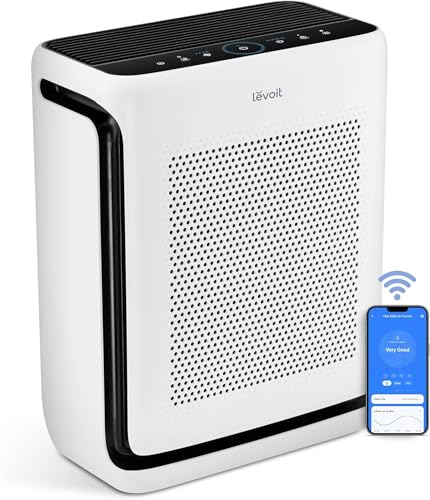
This oransi mod plus review exists because some rooms defeat ordinary purifiers so completely that the shopping question changes. In a small bedroom, the question is which quiet machine to buy. In an extra-large room — an open-plan floor, a great room with a kitchen breathing into it, a house where the dogs outnumber the sofas — the question becomes whether any single machine can cycle that volume of air fast enough to matter, and the mod+ is Oransi’s answer to that harder question. Its listing describes it plainly: a purifier for extra-large rooms, with a three-stage filter that includes carbon, positioned against wildfire smoke, allergies, pets, and birds. This review takes that positioning seriously, examines what the machine’s design means in a real large space, and compares it with the two largest members of Oransi’s own AirMend line for households deciding how far up the maker’s range they actually need to climb.
All three machines discussed were verified against current Amazon listings with official imagery confirmed before this was written. The mod+ gets the deepest treatment, as the subject deserves, and the AirMend 270HB and 200HB appear as the in-family alternatives they genuinely are: the right answers for the many rooms that are merely large, offered here so that nobody buys an extra-large machine to do a large room’s job.
Oransi Mod Plus Review: What This Machine Is For
Start with the problem’s physics, because the mod+ only makes sense inside it. A purifier cleans the air that passes through its filter, so its usefulness in a room is a race between its hourly throughput and the room’s total air volume, complicated by whatever keeps adding particles and gases to that volume. Extra-large rooms lose that race to ordinary machines twice over: the volume is bigger, and the sources are usually stronger, since these are the rooms with the cooking, the wood stoves, the pet traffic, and the doors to the outside. A machine built for that territory needs three things in unusual measure — airflow, filter volume to sustain that airflow without choking, and a carbon stage with enough substance to work on the smoke and odour load that particle filtration cannot touch. The mod+’s listing promises exactly that triad: extra-large positioning, a three-stage filter, and carbon named in the title rather than buried in the fine print. The sections below examine each promise and the ownership reality behind it.
In this guide
Key Takeaways
- The mod+ is Oransi’s extra-large-room machine, and its purchase should begin with a room measurement rather than with brand loyalty.
- Its three-stage filter with carbon addresses gases and odours — smoke above all — alongside the particles every HEPA machine handles.
- Large rooms need throughput headroom, so the machine can hold the space at working speeds below its loudest.
- The AirMend 270HB and 200HB remain the correct Oransi answers for rooms that are large rather than extra-large.
- Filter size and replacement cost scale with the cabinet, and both belong in the purchase arithmetic from the start.
The Comparison at a Glance
| Machine | Territory | Filter story | Household it fits |
|---|---|---|---|
| Oransi mod+ | Extra-large rooms | Three-stage with carbon, per its listing | Open-plan homes, smoke regions, heavy pet loads |
| AirMend 270HB | Main living rooms | AirMend multi-stage design | Family living rooms of ordinary large size |
| AirMend 200HB | Large bedrooms, small living rooms | AirMend multi-stage design | Rooms between compact and large |
The table’s lesson is restraint. Most households that arrive at the mod+ with a tape measure leave with an AirMend, because most rooms are large rather than extra-large, and the mod+ makes no apology for being a specialist. Specialists punish general use: they cost more, consume more, and occupy more floor in exchange for capacity that an ordinary room never calls upon. The review that follows is therefore written in two registers — a full account of the mod+ for the households that need it, and a standing reminder, at every decision point, of the measurement that would send a household happily down-range instead.
How This Review Was Put Together
The mod+ and both AirMend alternatives were confirmed through the retailer’s own product data, exact listing titles and official images retrieved, before drafting began. Claims drawn from a listing are attributed to it; category knowledge — how air changes work, what carbon does, how placement shapes performance — is presented as the general physics of the category rather than as a property of one machine. No hands-on testing is claimed. Health language is kept where it belongs: these machines improve a home’s air as housekeeping, and anyone with significant respiratory concerns should be guided by medical advice alongside any appliance decision.

Oransi mod+: The Extra-Large Room Machine
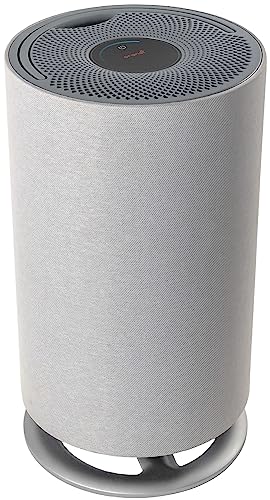
Badge: the subject, and the ceiling of the maker’s range. The mod+ presents as a serious appliance rather than as decor, which is the correct presentation for its job. Its three-stage filter pairs the particle work — a first stage for the coarse load, a HEPA stage for the fine fraction — with a carbon stage aimed at the gases that make large, lived-in rooms smell like their activities. Its listing names the enemies directly: wildfire smoke, allergies, pets, and birds, a list that reads like a census of the households that actually need a machine of this size.
Territory: extra-large rooms per the listing. Filtration: three-stage filter with carbon per the listing. Positioning: wildfire smoke, allergies, pets, and birds. Maker: Oransi, United States based air purification specialist.
Strengths
- Capacity is sized for the rooms that defeat ordinary machines, with headroom to work below maximum speed.
- The carbon stage gives it a genuine answer to smoke and odour, where particle-only machines have none.
- It comes from a specialist maker whose filters and support are established parts of its business.
Trade-offs
- It is the most expensive machine in this article to buy and to feed with filters.
- Its cabinet claims real floor space and visual attention in the room it serves.
- In an ordinary living room its capacity is surplus, and surplus capacity is a cost rather than a virtue.
Imagine the mod+ across a smoke week in a fire-prone region, the scenario its listing was written for. The windows stay shut, the household lives indoors, and the machine runs continuously in the main space, its carbon stage working on the smell while its particle stages work on the fine fraction that makes eyes water. That week is the machine’s whole argument: no compact purifier, however excellent, can cycle an open-plan home’s air fast enough to hold it against a regional event, and the households in those regions are not buying a luxury — they are buying the difference between sheltering indoors and merely sitting indoors. Outside smoke country, the same capacity serves the pet-heavy great room, the house that cooks seriously twice a day, and the open-plan flat whose single space must do everything. In each case the pattern of ownership is identical: continuous running, placement on the room’s air path, and a filter calendar respected like a car service schedule.
Best for: extra-large and open-plan rooms, wildfire-smoke regions, and homes with heavy pet or cooking loads. Not suited for: ordinary bedrooms or living rooms an AirMend covers. Check price on Amazon

AirMend 270HB: The Large-Room Alternative
Badge: the mod+’s in-family rival for ordinary large rooms. The largest AirMend is the machine most mod+ shoppers should measure twice against, because a main living room of a typical house — generous, busy, but enclosed — is its exact territory. It carries the AirMend line’s shared design and multi-stage filtration into that room with airflow scaled for it, and it does so at a smaller cabinet, a smaller filter bill, and a smaller claim on the room’s floor than the mod+ demands.
Territory: main living rooms. Filtration: AirMend multi-stage design with HEPA filtration at its core. Position in range: largest AirMend model.
Strengths
- Living-room scale with headroom, achieved without an extra-large machine’s costs.
- The AirMend design sits more quietly among furniture than the mod+’s appliance presence.
- It pairs naturally with the smaller AirMend models in a multi-room household.
Trade-offs
- Open-plan spaces and smoke events can exceed its ceiling where the mod+ still has gears left.
- Its carbon provision should be checked on its listing by households whose main problem is odour.
- It remains a substantial machine, not a compact, and small rooms should look down-range.
The 270HB’s case rests on the distribution of real rooms. For every open-plan barn conversion there are a dozen ordinary large living rooms, and those rooms are served completely by this machine’s capacity while the mod+’s extra headroom stands idle. Buy the 270HB when your measurement says large, and let the mod+ keep its dignity as the answer to a rarer question.
Best for: main living rooms of typical houses and multi-room Oransi households. Not suited for: extra-large open-plan spaces or smoke-heavy briefs. Check price on Amazon

AirMend 200HB: The Middle Alternative
Badge: for households whose large room is not the main event. The 200HB appears in this review as the reality check at the bottom of the ladder. Some mod+ shoppers are not furnishing a great room at all; they are furnishing a large bedroom or a flat’s modest living room and have been pulled up-range by the anxiety that bigger must be safer. The 200HB is the machine that anxiety should land on: sized for rooms between compact and large, with the family’s design and filtration, at the range’s most forgiving running costs.
Territory: large bedrooms and small living rooms. Filtration: AirMend multi-stage design with HEPA filtration at its core. Position in range: middle AirMend model.
Strengths
- Correctly sized for the in-between rooms that make up much of real housing.
- The most economical Oransi ownership in this article, in purchase and in filters.
- Its size makes it the most reassignable machine here when rooms change purpose.
Trade-offs
- A main living room will outsize it, especially with doors open and a household in motion.
- It offers no answer to a smoke-region brief beyond ordinary particle cleaning.
- Buyers who later expand to a larger home may find it becomes the second machine sooner than planned.
There is no condescension in recommending the smallest machine in an article about the largest. The 200HB exists because rooms exist that it serves perfectly, and a household that buys it for one of those rooms has made a better decision than the household that buys the mod+ for the same room out of abundance. Purifiers reward fit, not excess, and the fit here is exact.
Best for: large bedrooms, small living rooms, and first Oransi purchases. Not suited for: main living rooms or extra-large spaces. Check price on Amazon
The Carbon Question: Why the Third Stage Decides Smoke Country
Particle filtration is a solved problem at many price points; gas filtration is where machines separate. Smoke is both — a dense load of fine particles riding on a cloud of gases and volatile compounds — and a purifier that handles only the particles leaves the room visibly clearer and still smelling of the fire. Activated carbon is the technology that addresses the gaseous half, and its effectiveness is a function of quantity and contact time: a substantial bed of carbon, with air moving through it at a pace that lets adsorption happen, against a token sheet that exists to complete a feature list. The mod+’s listing puts its carbon stage in its title, which is the maker staking its claim where claims are most accountable, and households in smoke regions should read that as the machine’s central promise. The same logic serves the pet household and the serious kitchen, both of which generate odour loads that particle stages cannot retire. When you compare the mod+ against any rival for a smoke or odour brief, the question to ask is not whether carbon is present but how much of it there is and how the maker describes its role; the answers separate machines designed for the problem from machines merely adjacent to it.
Sizing an Extra-Large Room Without Fooling Yourself
Measure the room’s length and width, then multiply by the ceiling height to get its volume, because at this scale the ceiling is a co-conspirator: a great room with a vaulted fourteen-foot ceiling holds nearly twice the air of the same footprint under a standard ceiling, and purifiers are paid by the cubic foot. Count the openings honestly. A space that flows into a kitchen, a hall, and a dining area through wide openings is, for air purposes, all of those spaces at once, and the machine must be sized for the union rather than for the room named on the floor plan. Then decide the air-change rate you are buying: for a living space in ordinary conditions, cycling the volume a few times an hour at a tolerable speed is a sane target, while smoke events argue for the highest rate the household can stand. The mod+ earns its place when that arithmetic — volume times target rate — exceeds what a large-room machine delivers at its comfortable speeds. If the arithmetic fits inside the 270HB’s comfort zone, the honest purchase is the 270HB, and the mod+’s extra capacity is a donation to a problem you do not have. This is the rare category where the flagship’s own review keeps handing you the tape measure, because the flagship is only a bargain in the rooms that need it.
Setup and Placement at Extra-Large Scale
Placement matters more as rooms grow, because a big room has room to fail in. Put the mod+ on the main air path of the space — typically the route between the dominant source and the seating — with honest clearance at its intake, and not in the dead corner behind the largest piece of furniture, however tidy that corner looks. In open-plan homes, resist placing the machine at the far end from the kitchen if cooking is a main load, and resist centring it in the walkway where it becomes an obstacle with a fan. Run it continuously from the first day; large volumes take days of steady cycling to reach their cleaned equilibrium, and the household that judges a big machine after one evening has measured its own impatience rather than the purifier. Thereafter, let events set the tempo: higher speeds during cooking, gatherings, and smoke episodes, settling back to a sustainable cruise between them. Maintain the first stage on a short cycle — large rooms in busy homes load pre-filters quickly — and keep the main cartridge on the calendar discipline the maker prescribes, since a machine of this size quietly moves a great deal of money’s worth of filter across a year.
Mistakes Made at the Top of the Range
The flagship mistake is buying capacity as insurance without measuring, then discovering that the insurance premium is paid in floor space, filter size, and noise headroom never used. The second is placing a large machine for symmetry — centred on a wall like a sideboard — rather than for airflow, and concluding that big purifiers underperform. The third is neglecting the carbon stage’s finiteness: carbon saturates, and a smoke-region household that stretches the cartridge past its life owns a particle filter with a decorative third stage. The fourth is expecting one machine to govern a whole multi-room floor through doorways, when air, unlike sound, does not turn corners with enthusiasm; two machines in two zones beat one hero in a hall for most real floor plans. The fifth is forgetting that a large machine is a long-term tenant: check the filter’s price and availability with the same seriousness as the machine’s, because the tenancy will be measured in cartridges.
Final Recommendation
Buy the Oransi mod+ when the measurement says extra-large: the open-plan home, the great room with volume to spare, the smoke-region household, the home where pets and cooking load the main space all day. Its three-stage filter with a real carbon role, its maker’s specialist pedigree, and its capacity headroom make it the correct tool for that defined job. Buy the AirMend 270HB when the measurement says large, and the 200HB when it says in-between, without a flicker of regret, because in this category the correctly sized machine outperforms the oversized one in every way that survives contact with a year of ownership. The mod+ is not the best purifier in this article in the abstract. It is the best answer to the biggest question, and households with that question will find it answers completely.
Smoke Country: A Field Guide for the Households This Machine Names
Because the mod+’s own listing leads with wildfire smoke, it deserves a section written for the households that live with a smoke season rather than a smoke day. Preparation begins before the season: the machine installed and placed, a spare cartridge in the house, and the room it serves made as sealable as ordinary life allows, since a purifier’s work is multiplied by every gap the household closes against the outdoor air. During an episode, the pattern is continuous operation in the main living space, with the household effectively camping in the cleaned zone — sleeping arrangements temporarily moved toward the machine’s room are a recognised strategy in bad weeks, and a machine sized for that room makes the strategy comfortable rather than merely survivable. The carbon stage’s condition becomes the season’s quiet anxiety, and the disciplined household tracks it: a cartridge that entered the season already tired will leave the household under-protected in its final weeks, which is why the spare belongs in the cupboard before the first plume, not in a shopping basket during it. After the season, the machine gets its reward and its audit — a fresh cartridge if the old one carried the load, a cleaning of every intake surface, and a note in the household calendar of what the season cost in filters, so next year’s preparation is arithmetic rather than memory. None of this is medical advice, and official guidance during severe smoke always outranks an appliance review; it is household logistics, written for the people this machine was quite literally designed to serve.
The Pet and Bird Household, Taken Seriously
Listings rarely name birds, and the mod+’s does, which signals a maker that understands its actual customer base. Bird households produce a distinctive air load — fine feather dust and dander in unusual quantity, generated continuously in the room the birds live in — and they need a machine that can run constantly in that room without its filters collapsing under the load. Pet households more broadly levy the same tax at a lower rate: hair and dander load the first stage quickly, and the difference between a machine that thrives in a pet home and one that merely survives it is the ease and frequency of first-stage maintenance. The mod+’s scale helps here in an unglamorous way: larger stages load more slowly per hour of work, so the maintenance rhythm stays weekly rather than becoming daily. The owner’s side of the bargain is to keep that rhythm — a vacuum passed over the intake and first stage as part of the room’s ordinary cleaning — and to budget the main cartridge’s life at the pet household’s rate rather than at the laboratory’s. Households with animals should also place the machine where the animals actually spend their hours, which is not always where the humans would prefer to look at it, and accept the compromise as the price of air that is cleaned where it is dirtied.
Ownership Economics at the Top of the Range
Let the money be discussed as plainly as the airflow. A machine of the mod+’s class is bought once and fed for a decade, and the feeding — cartridges, electricity, the occasional part — will, across that decade, rival or exceed the purchase price. That is not an argument against it; it is the normal economics of any serious appliance, from a boiler to a car, and it argues for buying the machine whose support ecosystem makes the feeding predictable. Oransi’s proposition at this tier is exactly that predictability: a specialist maker, filters sold as a line of business rather than as an afterthought, and a range structure that lets a household standardise on one maker’s consumables across several rooms. The household comparing the mod+ against a cheaper extra-large rival should therefore compare decade costs, not ticket prices: cartridge price multiplied by cartridges per year, at the household’s real load, plus the probability-weighted cost of a rival’s filters becoming scarce in year four. Run that arithmetic honestly and the flagship’s price often resolves into something unremarkable — the going rate for governing a very large room’s air with a supported machine — while the bargain occasionally resolves into the most expensive purifier the household ever owned.
Frequently Asked Questions
How large is extra-large for the mod+?
Think in volume and in openness rather than in a single floor figure. A space that combines living, kitchen, and dining functions under one ceiling, a great room with a vaulted height, or a main room that regularly hosts the whole household plus animals is the territory the listing describes. The practical test is arithmetic: if cycling your space’s air volume several times an hour requires a large-room machine to live at its loudest setting, your room is extra-large for purifier purposes and the mod+ is the class built for it.
Does the carbon filter really help with wildfire smoke?
It addresses the half of smoke that particle filtration cannot: the gases and odorous compounds that make a room smell burned after the visible haze is gone. The HEPA stage handles the fine particles themselves, which are the larger part of the problem, and the carbon stage handles the rest, provided it is substantial and replaced before saturation. No purifier makes a smoke event pleasant, and official guidance during severe episodes should always take precedence, but a machine with both stages working is the strongest household response available.
Should I buy the mod+ or two AirMend machines?
Let the floor plan arbitrate. One open volume with a single air circuit suits one large machine placed on its path. Two distinct zones — a living area at one end of the home and bedrooms at the other, or a main room plus a separate kitchen — are usually served better by two correctly sized machines, each working a shorter circuit. The two-machine route also degrades gracefully: if one unit is being serviced, the home still has a working purifier, which a single-hero setup cannot claim.
How expensive is the mod+ to run?
Its running costs scale with its size, as they should: a larger filter cartridge costs more than a smaller one, and a fan moving extra-large volumes draws more at full effort than a compact’s does. The mitigations are the ones this review repeats — correct sizing so the machine cruises rather than strains, first-stage maintenance so the main cartridge lives its full life, and cartridge replacement by schedule rather than by crisis. Priced honestly across a year, the mod+ costs what governing a very large room’s air costs, and households with that room generally find the figure proportionate.
Can the mod+ serve a whole house?
It can serve a whole open-plan floor whose spaces share air freely, and it will make a real contribution to adjoining rooms with open doors. It cannot govern a multi-room floor of closed doors, because air does not circulate through walls, and no single machine of any size repeals that. Households wanting whole-house coverage should think in zones — a mod+ for the great room, an AirMend for the bedroom wing — which is precisely the household architecture Oransi’s range is laid out to supply.
Is the mod+ too loud for a living room?
At its highest speeds, any machine moving this much air makes its presence known, and the honest comparison is not silence against noise but the speed each machine needs to hold your room. The mod+’s headroom is its acoustic argument: in a room sized for it, the machine holds the air at middle speeds where conversation is easy, while an undersized rival would be shouting at its ceiling to achieve less. Judge it, as with every purifier, at the speed your room actually demands of it.
How the mod+ Fits a Whole-Home Plan
Few households buy their last purifier first, so place the mod+ in the plan it usually joins. The typical architecture for a larger home is a heavy machine in the great room, a mid-sized machine in the primary bedroom, and — eventually, if the household’s experience justifies it — a compact in the room of whoever still complains. The mod+ anchors that architecture at its heaviest point, and the AirMend sizes fill the other posts from the same maker, which keeps filters, controls, and support in one relationship. Sequencing matters: buy the anchor first if the main room is the problem, live with it through a season, and let its performance teach you whether the bedroom machine is a necessity or a nicety, because households regularly discover that governing the main space changes the whole home’s baseline enough to shrink the second purchase. The reverse sequence — small machines first, flagship later — usually costs more in total, as the small machines get reassigned to ever-less-suitable rooms. However the plan unfolds, the mod+’s role in it is stable: it is the machine for the room where the household’s air is made, and everything else in the plan is a satellite of that room.
Reading the Room: Signs Your Space Has Outgrown Ordinary Machines
Households rarely measure their way to this machine; they arrive by symptoms, and the symptoms form a recognisable pattern. Dust returns to surfaces within a day or two of cleaning despite a purifier running. Cooking smells from the evening are still present at breakfast. A guest with sensitivities reacts in your main room while tolerating your bedroom, where a smaller machine holds its own. The existing purifier lives permanently at its highest speed and has become part of the room’s soundscape, which is a machine announcing that it is undersized in the only language it has. Any two of those signs together justify the tape measure, and the tape measure, applied with the volume arithmetic earlier in this review, will usually explain the symptoms completely: the room’s air has outgrown the machine class serving it. The mod+ is what the next class looks like from a maker that builds nothing else, and recognising the pattern early saves a household the intermediate purchase — the slightly larger machine that almost works — which is the most expensive sentence in this entire category.
Durability and the Decade Test
A flagship purifier should be interrogated as a decade purchase, because that is the horizon its price implies. The questions that matter at that horizon are unfashionable ones. Is the cabinet built to be opened and serviced by its owner without drama, since a machine whose filter door fights back will be maintained late and reluctantly? Does the maker sell the cartridge as a standing product with a stable part number, so that year seven’s order is the same errand as year one’s? Does the control scheme depend on an application whose survival is a separate company’s decision, or can the machine be run completely from its own panel if the digital world moves on? Oransi’s specialist profile answers those questions in the owner’s favour more often than most, because a maker whose entire business is machines like this cannot afford a support tail that frays. The household’s side of the decade bargain is the maintenance calendar: first stage attended to, cartridge replaced on schedule, placement revisited when furniture migrates. Machines rarely die of age in this category; they fade from neglect that was always optional, and a flagship maintained as its maker intends has no natural retirement date inside a decade.
A Note on Expectations
Close the review with the expectation that makes owners happiest with this machine: it will not announce itself. A correctly sized mod+ in a correctly placed position produces a room that simply stops being a topic — the cooking smell that clears by the time the table is set, the smoke week that stays outside the windows in every sense but the view, the guests who stop remarking on the dog. Purifiers are infrastructure, and infrastructure’s triumph is invisibility. Buy the mod+ for the room that needs infrastructure, maintain it like infrastructure, and judge it, a year from now, by how completely you have forgotten it is there.
Comparing the mod+ Against the Wider Extra-Large Market
No flagship should be bought inside its own maker’s echo, so consider how the mod+ stands in the wider extra-large field. The competitors at this scale divide into the appliance giants, whose large machines are extensions of broad home-appliance catalogues, and the specialists, Oransi among them, whose entire identity is air. The giants bring distribution and brand familiarity; the specialists bring depth — in filter options, in support knowledge, and usually in the honesty of their coverage arithmetic, since a specialist’s whole reputation rides on the one category. The mod+’s particular hand in that contest is its carbon-forward three-stage design and its explicit naming of smoke and pet households in its own listing, which commits the maker publicly to the hardest jobs in the category. A household cross-shopping at this tier should run every candidate through the same three questions used throughout this review: what volume, at what air-change rate, at what working noise; how much carbon, in the maker’s own description; and what does the cartridge cost, from a listing that exists today. The machine that answers all three in the open is the machine to buy, and on the evidence of its listing the mod+ is comfortable being asked.
The Installation Day, Choreographed
Large machines reward a planned arrival. Decide the position before the box is opened, using the air-path logic from earlier in this review, and clear the route from the door to that position, because a cabinet of this size is a two-person carry through any home with corners. Unpack it where it will live, remove every piece of transit material from the filter compartment — large machines ship with their cartridges protected, and a first run against wrapped filters is the category’s most common false start — and let the machine run at a strong speed for its first hours while the household is awake and about, both to clear the room’s standing load and to learn the machine’s voice at each setting in daylight rather than at midnight. Register the purchase, photograph the rating label, and write the cartridge’s part number and the date of first use where the household keeps such things. Set the calendar entries for the first-stage checks and the cartridge’s expected replacement month before the day ends, while the intention is fresh. That small choreography, perhaps forty minutes of it, is the difference between a flagship that is managed from its first day and one that is merely present, and across a decade of ownership the managed machine wins by a distance that dwarfs its price difference from any rival.
When One Machine Is Not the Architecture: Zoning a Big Home
Some homes defeat even the mod+ not by volume but by geography, and recognising that early saves a flagship from being blamed for a floor plan. A long ranch layout, a main room separated from the kitchen by a level change, a great room whose ceiling opens to a mezzanine — these spaces hold air in pockets that a single point of filtration reaches slowly, however powerful it is. The remedy is zoning: the mod+ governing the principal pocket, and a second machine, often the 270HB, governing the secondary one, each running at moderate speeds inside its own circuit. Zoned pairs share a virtue with the sizing philosophy elsewhere in this review — every machine lives in its comfortable gears, where it is quiet, efficient, and gentle on its filters. The household that suspects geography is its problem can test the suspicion cheaply before buying anything: run the existing purifier in one pocket and observe whether the other pocket’s air behaves as if the machine were in a different house. If it does, no single machine will fix the layout, and the honest purchase is the pair, bought in sequence, anchor first.
One further honesty belongs in a flagship review: the mod+ cannot fix a home’s air at its sources, and households get the most from it when they treat it as the last layer rather than the only one. Venting a kitchen properly, grooming animals in one place, keeping a wood stove’s door sealed and its ash handled gently, and dusting with a damp cloth that captures rather than launches particles all reduce the load the machine must carry, and a reduced load is a quieter, longer-lived, cheaper machine. The purifier then does what only it can do — the continuous, whole-room polishing that no episodic cleaning matches — and the partnership between housekeeping and machine is what an extra-large room actually requires.
A Buyer’s Checklist for the Extra-Large Tier
Compress this review into the checklist its readers will actually carry into a purchase and it reads as follows. Measure the space in three dimensions and name its openings. State the household’s dominant load — smoke, pets, cooking, pollen, or some honest mixture — in one sentence. Require every candidate, the mod+ included, to answer for its coverage basis, its carbon quantity, and its cartridge price from live listings. Decide the architecture: one machine for one open volume, or a zoned pair for a divided one. Confirm the placement on the room’s air path and the clearance it needs. Write the maintenance calendar before the machine arrives, not after its first filter expires unnoticed. And keep the paperwork — receipt, rating label, cartridge number — in the household’s permanent file. A purchase made through that checklist is very unlikely to be regretted, because every regret this category produces is born in one of its skipped lines.
Finally, a word about the reader who has measured, found the room honestly large but not extra-large, and feels a small disappointment at being routed to the AirMend below. That disappointment is the sound of this category working properly. The 270HB in a room that fits it will be quieter, cheaper to feed, and longer-lived than the flagship would have been in the same room, and it will clean that room’s air to the same standard, because air does not grade machines by their badges. Save the difference, spend a little of it on the spare cartridge this review keeps recommending, and enjoy the rare purchase that was improved by being talked down.
What Success Looks Like in Month Six
Judge this machine, if you buy it, at the six-month mark, when the novelty has worn off and the household’s true relationship with it has formed. Success looks like a main room whose air is no longer a subject of conversation, a filter calendar that has been kept without heroics, and a machine whose highest speed is now reserved for events rather than used as a default. It looks like a smoke episode or a pollen peak that the household weathered indoors with less drama than the neighbours describe. It also looks, in the ledger, like costs that arrived on schedule and matched the estimates made at purchase, because a flagship whose running costs surprise its owner has failed at the planning stage however well it filters. If month six matches that description, the mod+ has done the whole of its job, and the review you are reading will have nothing left to add.
And if month six disappoints, let the disappointment be diagnostic before it is financial. Check the placement against the air path, the first stage against its calendar, and the cartridge against its true age and load before concluding the machine is at fault, because in this category the fixable causes outnumber the fundamental ones by a wide margin. A flagship that is placed well, fed on time, and sized to its room has very little left to go wrong with it, which is the deepest reason this review keeps returning to those three unglamorous disciplines.
Seasonal Rhythm of an Extra-Large Room
The great room’s year has its own calendar, and the mod+’s work follows it. Spring opens windows and admits pollen through every door cycle, so the machine’s pattern is steady compensation, hardest at the hours the household comes and goes. Summer is the social season in most large rooms — gatherings, grilling drift, doors standing open to the garden — and the machine earns its keep in bursts, turned up for events and settled between them. Autumn quiets the sources and rewards the household with the machine’s most efficient months, the natural window for its annual cartridge decision. Winter seals the house around its own emissions — cooking, heating, animals, people — and the great room’s machine becomes the home’s steady lung, running continuously at the cruise speed the sizing was chosen to make comfortable. Owners who anticipate that rhythm, scheduling the cartridge and the deep clean in the quiet autumn, find the flagship’s ownership almost entirely free of surprises, which is the true luxury this tier of machine is selling.
To bring the review home: the mod+ is a machine for a measured minority of rooms and a defined set of hard jobs, and it is at its best when bought by the household that has done the arithmetic and recognised itself in the answer. If that household is yours, buy it without second-guessing, place it like infrastructure, feed it like clockwork, and let the largest room in your home stop being the hardest one to breathe in.
Gifting and Specifying for Others
Large purifiers are increasingly bought by one person for another’s home — adult children for parents in big houses, hosts for a family member in smoke country — and the mod+ class raises the stakes of getting someone else’s purchase right. The disciplines transfer with one addition: measure their room, not your impression of it, and ask about their animals, their stove, and their tolerance for appliance noise as directly as politeness allows, because a flagship installed in the wrong room is an expensive embarrassment for both parties. Include the first spare cartridge in the gift, write its part number and the maintenance rhythm on a card, and offer the installation visit as part of the present, since placement and setup are where a large machine’s value is decided. A purifier given that way arrives as a system rather than as an object, and systems are what actually clean air.
One last note on resale and handover, since machines of this class outlast tenancies and sometimes change homes. If the mod+ ever moves to a new household, its value travels with its documentation: the cartridge’s age, the maintenance history, and the part numbers are what separate a used flagship from a used mystery. Sellers who kept the records this review recommends will find the machine easy to place; buyers of a second-hand unit should ask for exactly those records and price their absence honestly.
The through-line of this entire review deserves one plain restatement at the end. Air cleaning at extra-large scale is a logistics problem disguised as a shopping problem, and the mod+ is a strong answer because its maker treats it that way — capacity stated for real rooms, a filter stack that answers gases as well as particles, and a support structure built for a decade of cartridges. Households that meet it halfway, with measurement, placement, and maintenance, will get everything the design promises.
Readers who have followed the argument this far will notice it never once required faith in a badge. That is deliberate, and it is the highest compliment a review can pay a machine in this tier: the mod+ does not need its maker’s reputation to close the sale, because the arithmetic of its room, its filter stack, and its support closes it. Reputation merely confirms what the numbers already said.
So the final practical advice is short enough to fit on the cartridge box: measure in three dimensions, buy for the load you actually have, place the machine where the air travels, and never let a filter expire in silence. Do those four things and the largest room in the house becomes the easiest to vouch for.
The Mod Plus in a Home Office That Doubles as a Guest Room
One placement deserves a paragraph of its own because it has become the modal American room: the home office that hosts a guest bed twice a year. That room asks a purifier to be invisible in two different ways — silent enough for video calls and for sleep, compact enough to share floor space with a desk, a chair, and a suitcase — and to keep the air of a room that is occupied sixteen hours a day in its working season. The mod plus fits the brief with unusual completeness, since its design was aimed at desks long before the hybrid room existed, and its quiet low speeds serve the call and the guest with the same setting. Households furnishing that room should place the unit where its intake clears the desk’s shadow, run it through the working day rather than at night only, and let the guest inherit air that has been cleaned for eight hours before they arrive. It is a small choreography, and it is the difference between a room that technically contains a purifier and a room whose air a guest compliments without knowing why.
Related Guides
the AirMend family reviewed in full the original Mod and its place in the range purifiers sized for large rooms whole-home air strategies HEPA machines compared another extra-large option from Honeywell pet households and their purifiers