Disclosure: As an Amazon Associate, dailyhomedecorating.com earns from qualifying purchases. Links on this page are affiliate links; they cost you nothing extra. Prices and availability change often, so check the current Amazon listing before you buy.
Most air purifiers ask to be taken on faith, which is why the winix 5520 review practically writes its own opening: this is the Winix that shows you the air. The 5520 is a large-room tower whose listing claims the air of 1,882 square feet turned over within the hour, filtered by true HEPA behind a carbon stage specified for heavy deodorization, with auto mode built around the feature its siblings lack: an air quality monitor on the machine itself, reporting the room’s condition in real time. That single addition changes the ownership experience more than any spec-sheet increment can, because a purifier that displays its world becomes a teacher: you learn what your cooking does to a room, how long recovery takes, when a filter’s age starts telling, and whether the expensive machine is earning its floor space. This review examines the 5520 as the feedback-first Winix — for allergy households that manage by measurement, for skeptics who want receipts, and for anyone who has ever stood in front of a silent tower and wondered whether it was doing anything at all.
Key Takeaways
- The WINIX 5520 is a verified current model with an air quality monitor built in — the distinguishing feature of Winix’s large-room line.
- Filtration matches its siblings: true HEPA plus a high deodorization carbon filter, with auto mode responding to what the monitor sees.
- The display turns ownership into a feedback loop: events register, the machine answers, recovery is visible, and household habits improve around the evidence.
- Choose the 5520 for on-device feedback; choose the 5510 for the balanced set with app support, or the 5530 if app control outranks the display.
- Sensor readings describe the air at the machine’s location — placement discipline matters more, not less, on a monitor-equipped purifier.
In this guide
Winix 5520 Review: The Purifier That Shows Its Work
Begin where the machine begins: with sensing. The 5520’s air quality monitor samples the room’s air and reports its condition on the device, giving the auto mode a visible brain. Where a sensor-hidden purifier changes speed for reasons the household must trust, the 5520 changes speed for reasons the household can watch — the climb as the frying pan does its work, the plateau as the machine engages, the long settle back toward clean as the filters win. That visibility is not a gimmick bolted onto a purifier; it is an answer to the category’s oldest credibility problem, which is that cleaned air looks exactly like dirty air. Dust you can see on a shelf; particles you cannot see at all, and a machine claiming to remove them has historically offered nothing but its own confidence. The monitor replaces confidence with evidence, imperfect and local evidence, but evidence — and households run differently on evidence.
Beneath the display sits the family substance, and it is important that it does: true HEPA media for the fine particles, a high deodorization carbon stage for the gases and smells, a pre-filter in front of both, and the line’s PlasmaWave ionization as the switchable supplement. The listing’s stated targets — pet allergens, smoke, dust — are the large room’s usual suspects, and the coverage claim of 1,882 square feet in one hour puts the 5520 in the same fast-cycling class as its siblings, suited to living rooms, open-plan zones, and large bedrooms run as sealed systems. The machine’s temperament follows from its instrumentation: it is the Winix for the owner who will glance at it the way a driver glances at a dashboard — not constantly, not anxiously, but with the settled habit of someone whose machine reports and who has learned to read the reports.
Mini spec box — WINIX 5520
- Coverage: large rooms up to 1,882 sq ft in 1 hour (manufacturer figure)
- Filtration: four stages in sequence — a washable pre-filter, the high-deodorization carbon stage, true HEPA, and a PlasmaWave finish the owner can switch
- Distinguishing feature: built-in air quality monitor with on-device display
- Controls: sensor-driven auto mode plus onboard panel
- Listed targets: pet allergens, smoke, dust, household odors
Strengths
- The monitor closes the trust loop: purification becomes observable, and the household’s habits — doors, cooking bursts, filter timing — improve around real feedback.
- Auto mode anchored to a visible reading responds to events with an accountability its sensor-hidden rivals cannot show.
- Full-strength family filtration underneath: the display is an addition to the Winix recipe, not a trade against it.
Trade-offs
- A glowing readout is a presence in a dark bedroom; light-sensitive sleepers should audition its night behavior or place accordingly.
- The sensor reads its own neighborhood — a tower stranded in a dead corner reads its pocket rather than the room, and misleads in both directions.
- App depth is not this model’s headline; households wanting the purifier in their phones should weigh the 5530.
Best for: allergy-season managers, data-minded owners, and skeptics who want their purifier to prove itself daily. Not suited for: buyers who want the appliance to vanish perceptually, or whose priority is remote app control above on-device truth.
The siblings, from the 5520’s point of view

WINIX 5510 — the same substance, taken on trust
Badge: Best for households that don’t need the display
The 5510 covers near-identical ground — the same hourly air volume, the same filter pairing, the same auto running — and carries the new-generation-of-the-5500-2 title with app support. Its auto mode senses and responds just as the 5520’s does; it simply declines to narrate. For the household that finds a display more distraction than data, the 5510 is the same filtration with the commentary turned off, and its fuller treatment lives in Winix 5510 review. The honest summary: you are not choosing cleaning power between these two, you are choosing an information style.
Mini spec box — WINIX 5510
- Maker’s coverage claim: air for rooms up to 1,881 sq ft, turned over inside the hour
- Stack: true HEPA paired with a carbon filter built for deodorization, PlasmaWave line
- Day-to-day control: auto mode with app support, and a panel on the machine itself
- Position in the family: the 5500-2’s new generation, as Winix titles it
Strengths
- Balanced feature set with app support for scheduling and filter awareness.
- No display glow for light-sensitive rooms.
- The family’s full filtration recipe.
Trade-offs
- Feedback lives in the app rather than on the machine.
- Auto mode’s reasoning is invisible at a glance.
- Otherwise a near-twin; the choice is temperament, not performance.
Best for: households content to trust the machine quietly. Not suited for: owners who manage by measurement — that is the 5520’s home ground.

WINIX 5530 — feedback that lives in your phone instead
Badge: Best for remote managers
The 5530 matches the coverage and filtration, near enough to make no practical difference — and moves the information layer into an app, headlining app control where the 5520 headlines its monitor. The contrast is a genuine fork in ownership philosophy: the 5520 informs the room, the 5530 informs the owner wherever the owner happens to be. Households that travel, commute long, or manage a second property may rationally prefer the phone; households whose purifier life happens in the room will prefer the display. Its own review at Winix 5530 review argues the remote case in full.
Mini spec box — WINIX 5530
- Maker’s coverage claim: air for rooms up to 1,882 sq ft, turned over inside the hour
- Stack: true HEPA paired with a carbon filter built for deodorization, PlasmaWave line
- Day-to-day control: app control over auto mode, panel on the machine itself
- Position in the family: the 5500-2’s new generation, as Winix titles it
Strengths
- Remote operation and scheduling for away-from-home management.
- The shared family filtration core.
- Suits routine-driven, connected households.
Trade-offs
- The room itself gets no air quality readout — that is this article’s subject’s party trick, not the 5530’s.
- Headline features depend on Wi-Fi and app habits.
- Information reaches the phone, not the room’s other occupants.
Best for: connected households and frequent travelers. Not suited for: owners who want the evidence on the machine, in the room, at a glance.
How do you read the 5520’s monitor like an owner, not a spectator?
Learn your room’s baseline
In the first week, note what the display reports in the room’s calm states — early morning, empty afternoon — because every later reading is a comparison against that baseline, and a household that knows its normal can spot the abnormal at a glance. The baseline also quietly audits your placement: a machine whose “calm” reading never settles may be sitting in a draft of hallway air or beside a source it cannot outrun.
Run events deliberately
Cook something honest, vacuum a rug, let the dog in from the rain — and watch. The point is calibration: you are learning the room’s event signatures and the machine’s recovery times, which converts the display from decoration into an instrument you trust. Owners who do this in week one develop the dashboard habit; owners who don’t own an expensive night-light with a fan attached.
Let the readings schedule the household
The monitor’s mature use is behavioral. If the display teaches that the bedroom’s air degrades on the nights the door stands open to the hall, the household closes the door. If recovery from cooking takes twice as long in month nine as in month one, the filters are telling their age before the indicator does. If a smoke day’s numbers refuse to settle, the room’s seals want attention. A sensor’s highest purpose is not information but instruction, and the 5520’s owners get more from theirs than from any other single feature in the line — provided they treat readings as the start of a question rather than as entertainment.
Respect the sensor’s limits
The monitor samples the air that reaches it, through a sensor that wants the gentle cleaning the manual describes, and it reports an index of the room’s condition rather than a laboratory analysis. Treat dramatic single readings with curiosity rather than panic, patterns with respect, and medical questions with a clinician rather than a purifier. The display is a superb household instrument; it is not a diagnostic device, and this review will not pretend otherwise.
Allergy season on instruments: the 5520’s home fixture
If one season justifies the monitor, it is pollen season, when the air’s insults are invisible and the sufferer’s question — is it bad in here, or is it me? — finally has an instrument to consult. The 5520’s season protocol runs on feedback: the bedroom sealed and the machine on auto through the night, the morning reading as the day’s first fact, the decision about windows made from evidence rather than from the beauty of the morning. Outdoor excursions register on return — clothing and hair bring the field indoors — and the household watches the machine absorb the insult and can time its own routines, showers and changes, against the recovery curve. None of this treats anything, and allergy management belongs with clinicians; but as household operations, instrumented beats guessed, and owners who have run one season on a display rarely consent to run the next one blind. The background on what filtration does and does not claim — including the virus questions that follow this category — is covered carefully in do HEPA filters remove viruses, and the filtration fundamentals live in what is a HEPA filter.
Placement when the machine is also a measuring instrument
A monitor-equipped tower adds a surveying duty to the usual placement rules. The machine still needs intake clearance and a circulation path, but now its location is also a claim about the room: the reading describes the air where the tower stands. Place it in the room’s genuine living zone — where the family breathes, not where the dust gathers undisturbed — and away from hyperlocal influences that would make it a liar: not directly beside the stove’s plume, not in the litter box’s immediate weather, not behind the door that seals it into a private climate. In a bedroom, the honest spot is across the room from the bed rather than on the nightstand, near enough to serve the sleepers, far enough to sample the room they sleep in. Households with a separate particle monitor can enjoy the calibration exercise of comparing the two for a week; households without one should simply remember the principle — a sensor is a witness, and witnesses should be stationed where the events happen. The technology that drives the rest of the machine is explained in what is PlasmaWave technology, for readers who want the full stack understood.
Mistakes specific to monitor-equipped purifiers
The first is display-watching as a hobby: refreshing one’s anxiety at the readout hourly, when the instrument’s value is patterns across days. The second is sensor neglect — a dust-filmed sensor makes auto mode lazy and readings conservative in the wrong direction, and the gentle cleaning the manual prescribes is the cheapest accuracy in the house. The third is placement fraud, stationing the tower where the air is unrepresentatively clean and then citing its contentment as the room’s verdict. The fourth is treating the index as a medical instrument, adjusting medications or worries to a consumer sensor’s moods; clinicians manage conditions, dashboards manage rooms. The fifth is forgetting the machine beneath the monitor — the filters still saturate on their own schedule, and a brilliant display atop a spent carbon pack is a narrator describing a story that ended months ago. Avoid the five and the 5520’s monitor remains what it was designed to be: the most useful liar-detector ever fitted to a household appliance, pointed at the appliance itself.
A smoke week, watched on the display: a diary in five entries
Monday arrives with a regional haze and a sky the color of weak tea. The 5520’s morning reading, usually the household’s calm baseline, opens elevated — the first lesson of instrumented ownership, which is that outdoor air signs its work indoors within the hour. Windows stay shut on evidence rather than on news alerts. Tuesday is the sealed-house day: the machine at purposeful speeds, the display’s slow improvement across the afternoon teaching the household what its own building’s tightness is worth, and the bedroom’s door discipline turning from preference into policy. Wednesday brings a cooking experiment conducted like a control test — the range hood on, the kitchen door managed — and the recovery curve comes in visibly faster than Monday’s unmanaged version, which is the monitor paying its rent in a single graph-shaped feeling. Thursday the wind turns, the regional air clears, and the household watches the baseline come home like a tide going out, with the new knowledge of exactly how long their house holds a grudge against the weather. Friday is the audit: filters inspected after their hardest week of the year, the carbon’s remaining patience honestly estimated, the pre-filter cleaned of its grey week. No other purifier in the line could have narrated that week. The filtration did the work — the same filtration its siblings carry — but the 5520 made the work legible, and a household that has watched one smoke week on instruments will never again run one on vibes.
What a consumer air sensor can and cannot tell you
A short science briefing protects 5520 owners from both over-trust and under-use. Sensors in this class estimate particle load optically or infer air quality from a combination of signals, and they are genuinely good at the household scale of truth: relative change, event detection, trend across days, the difference between a sealed room and an open one. They are not good at absolute laboratory values, at identifying which pollutant is speaking, or at the far side of a large room from where they sit. Read the 5520’s display the way a good driver reads a fuel gauge — as a trustworthy guide to the journey, not as an analysis of the fuel — and it will never mislead you. Read it as a medical instrument and it will eventually frighten or reassure you without authority, which is why this review keeps the boundary bright: the monitor manages rooms; clinicians manage people; and the household that respects the boundary gets the full value of both.
The three siblings on one table
| Dimension | 5510 | 5520 | 5530 |
|---|---|---|---|
| Coverage class | Up to 1,881 sq ft in 1 hr | Up to 1,882 sq ft in 1 hr | Up to 1,882 sq ft in 1 hr |
| Filtration | True HEPA + high deodorization carbon | True HEPA + high deodorization carbon | True HEPA + high deodorization carbon |
| Information style | App support; quiet machine | On-device air quality monitor | App control |
| Household it flatters | The balanced family living room | The measuring, managing household | The connected, scheduling household |
| Lineage | New generation of the 5500-2 | Current large-room sibling | New generation of the 5500-2 |
The table’s lesson is the line’s honesty: one filtration platform, three information philosophies. A shopper who understands that cannot make a bad choice among them — only a mismatched one, correctable by knowing whether the household reads displays, phones, or neither.
The 5520 in the bedroom: an instrument on the night shift
The bedroom is where the monitor’s value compounds, because the bedroom is where a household spends a third of its life unable to manage anything consciously. A 5520 on the night shift does three jobs no sleeper can. It notices the evening’s residue — the cooking hour’s drift down the hall, the day’s pollen imported on clothing — and works it down before the room is occupied. It holds the night honestly, responding to the small insults of a closed house (a bathroom’s humidity excursion, a pet’s relocation) without waking anyone for instructions. And it files the morning report: the household wakes to a reading that summarizes the night they slept through, which over a season becomes a diary of what actually helps — this window habit, that door policy, the new filter’s unmistakable signature. Light-sensitive sleepers will manage the display as the trade-offs section advises, by placement and settings; everyone else will find that a quiet instrument in the corner changes the bedroom from the house’s most assumed room into its best-documented one.
Filter discipline, as told by the display
Every purifier in this line lives or dies by its pack, but the 5520 is the only one whose decline is narrated. Fresh media has a signature: events spike and recover briskly, baselines sit low and steady. Aging media writes a different story — recoveries lengthen first, because the fan is working against a loading filter and the carbon’s easy capacity is spent; baselines creep; the machine spends more of the day at purposeful speeds for the same room. An owner who has learned the fresh signature owns an early-warning system no indicator light matches, and can time the genuine pack change to the evidence rather than to a calendar’s guess. The disciplines themselves are the family’s usual ones — pre-filter kept clean so the pack’s life is spent on the fine work, genuine model-matched replacements, the change date recorded — but on the 5520 they stop being acts of faith. You can watch maintenance work. That may be the monitor’s deepest value: it converts the invisible economics of filtration into a visible return on the household’s small, regular acts of care.
5520 or a separate monitor plus a simpler purifier?
A fair rival to the 5520 is not another tower but a combination: a standalone air quality monitor on the shelf and a sensor-free purifier beneath it. The combination’s case is real — the monitor can be placed independently of the machine, upgraded separately, and carried from room to room like a referee. The 5520’s answer is integration: its sensor and its fan share a brain, so the reading does not merely inform the household, it drives the response, in the same second, without anyone interpreting anything at midnight. The standalone pairing tells you the air is dirty; the 5520 is already working on it and shows you the recovery as a single story. Households that love instruments for their own sake may enjoy the separable system and its tinkering; households that want the loop closed inside one appliance — which is most households, most nights — are the 5520’s constituency. Either way, the comparison flatters the concept: once a home has lived with feedback, the only argument left is about packaging.
Who should not buy the 5520?
Three households should pass, and naming them protects the model’s reputation from its wrong owners. The light-absolutist household, for whom any display in a sleeping room is a defect regardless of settings, should take the 5510 and its quiet face. The fully remote household — second homes, long commutes, a purifier whose owner is rarely in its room — gets more from the 5530’s app control than from a display no one is present to read. And the household that knows itself to be anxiety-prone around data should think carefully: a monitor is a mirror, and a family that will read every fluctuation as a verdict may sleep worse with better information, a trade no appliance should impose. For everyone else — the measurers, the managers, the skeptics, the allergy households running a season like a campaign — the 5520 is not merely suitable; it is the model in the line that was plainly designed with them in the room.
Setting up the 5520 so its evidence is honest
Day one: station the witness
Unwrap the filter pack — the immortal first step — seat it, and place the tower where the room’s life happens: intake clearance all around, out of corners and alcoves, away from the stove’s plume and the humidifier’s exhaust, both of which would make the sensor a fabulist. In the living room that is usually a wall position along the seating’s air path; in the bedroom, across from the bed rather than beside it.
Week one: the calibration diary
Keep a notebook or a phone note for seven days: the calm baseline, two or three deliberate events, the recovery times, and anything the display reveals that the household did not know — the hallway’s contribution, the bathroom’s, the dog’s. This small ritual converts a purchase into an instrument, and it is the difference between 5520 owners who cite their machine in arguments and owners who merely own one.
Month one and after: let the loop close
Adjust one habit per insight — the door policy, the cooking-hour routine, the window rule for high-count mornings — and watch the display grade the change. Clean the sensor gently on the manual’s schedule, keep the pre-filter on its rhythm, and record the pack’s birthday somewhere the household keeps its calendars. The machine will do the rest, visibly, which is the entire point of having bought the one that shows its work.
The economics of evidence: what the monitor saves
A monitor’s return on investment is measured in avoided waste, and the 5520’s owners collect it in three currencies. The first is filter timing: packs changed on evidence rather than on fear or forgetfulness — neither retired early with life left in them nor stretched into uselessness — which across a decade of ownership is a real sum in a category whose consumables are the true price. The second is energy and attention: an auto mode with a visible brain gets trusted, and a trusted machine is left alone at its efficient settings instead of being overridden into theatrical speeds by owners flying blind. The third, hardest to price and easiest to feel, is decision quality: the household stops buying solutions to problems it does not have — a second purifier for a room whose readings were fine, a specialist machine for a gas the display never registers — because the instrument keeps the conversation honest. None of this appears on the 5520’s box. All of it appears in its owners’ second year, which is why this review rates the display not as the model’s decoration but as its economics.
When the reading looks wrong: a troubleshooting litany
Instrumented appliances earn a new class of complaint — the reading that offends its owner — and the 5520’s are all diagnosable. A display stuck at poor quality in a room that feels fine indicts, in order: the sensor’s cleanliness, the tower’s placement in a source’s private weather, a pre-filter matted enough to starve the machine, and only then the room itself, which may indeed be telling an unwelcome truth via a window left open to a smoky street. A display implausibly serene during a visible dust event suggests the tower is sampling a sheltered pocket — geography again — or a sensor filmed into optimism. Readings that swing wildly minute to minute usually describe a machine stationed in a draft’s highway, where every passing current is an event; move the witness out of the traffic. And a monitor that seems to have aged faster than its filters deserves the manual’s sensor care before any conclusion about the machine. The pattern across all four is the review’s refrain: instruments report their situation, so troubleshooting a reading means troubleshooting the situation — placement, cleanliness, media — in that order, and the machine itself is the last suspect, which is exactly where a well-built appliance should rank.
An unexpected constituency: kids, classrooms, and the science of a Tuesday
One of the 5520’s quieter careers deserves a paragraph: it is a teaching instrument that happens to clean air. A child who can watch the display answer a vacuum cleaner’s pass, a window opened to a pollen morning, a candle blown out in the next room, is learning the otherwise invisible physics of indoor life — that air is a medium, that it carries things, that rooms have weather. Households report the machine becoming a small domestic celebrity for exactly this reason, and a classroom or a scout project could do worse than borrow one for a week. This review mentions the constituency not as a sales point but as evidence for its thesis: feedback changes relationships with appliances. The purifier that shows its work gets understood, maintained, and believed — by adults managing allergies and by ten-year-olds managing curiosity — and understood appliances are the ones still running, correctly, in year five.
The 5520’s evidence, and this review’s
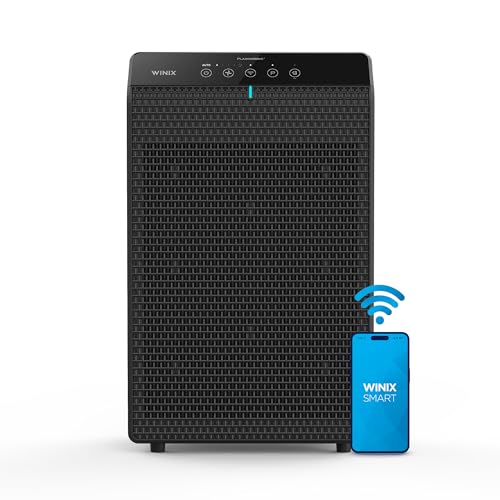
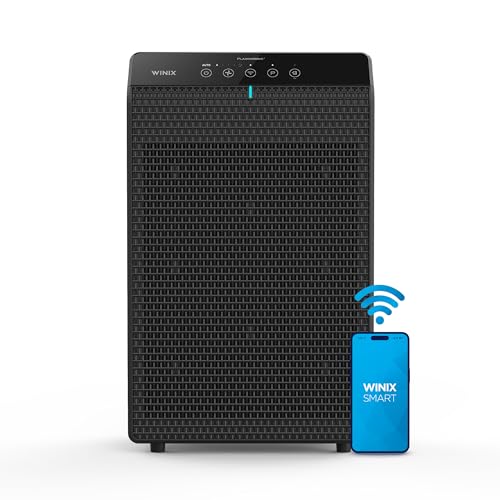
The model’s claims in this review rest on its verified listing — the monitor’s presence in its very title, the coverage figure, the filtration as specified, the official image above — and the ownership narrative rests on what an instrumented purifier’s architecture makes inevitable: feedback, calibration, habits. No chamber measurements have been invented for the 5520, and its sensor has not been credited with laboratory precision anywhere in these pages; where the review praises the display, it praises its household truth — relative, local, pattern-forming — which is the truth the machine actually trades in. Readers who want the deeper background on what consumer air data can mean will find the statistical context in indoor air quality statistics, a useful corrective to both complacency and panic. The 5520, fairly read, needs neither: it is a good filter with its eyes open, and this review has tried to keep its own eyes equally open about what that does and does not prove.
Decision framework: choosing the 5520 with your eyes open
Five questions settle this model. First: will anyone in the household actually read a display? A purifier’s monitor is worth its premium only to eyes that visit it, and the household that knows it glances at dashboards — thermostats, weather stations, the car’s economy readout — has answered yes by biography. Second: is there a season or a condition being managed — pollen, smoke, a new baby in the house, a renovation next door — where evidence would change behavior? Managed problems repay instruments; ambient vague worry does not. Third: does the room have an honest station for the witness — a living-zone position with clearance, out of drafts and plumes? Fourth: is the household’s information preference in the room rather than in the phone, which is the fork between this model and the 5530? Fifth: will the filter disciplines be kept, since the monitor’s finest readings are wasted on spent media? Five yeses make the 5520 not merely a good choice but the obvious one; a trail of noes points politely to its siblings, whose reviews in this series will receive you with the same filtration and a different philosophy of knowledge.
The office, the studio, and the waiting room: the 5520 at work
Shared and semi-public spaces give the monitor a second career worth noting. In a home office that receives clients, a small studio, or a practice’s waiting room, the display performs a social function no specification captures: it testifies. A visible air quality readout tells the room’s occupants that the air is being managed and shows the management happening, which in the post-pandemic etiquette of shared indoor space is a form of hospitality. The machine underneath remains a domestic tower with domestic consumables, so these deployments suit small, calm spaces rather than commercial duty — but within that scale, the 5520’s combination of serious filtration and public evidence is genuinely distinctive, and more than a few of these models will live their lives being glanced at by strangers who are quietly reassured. An appliance that can reassure a waiting room has earned its display.
One household, three readings: a final calibration story
End with the small domestic parable this model keeps generating. A family installs the 5520 in the living room and spends the first evening the way new owners do, manufacturing events — a candle, a shaken rug — to watch it respond, and the machine indulges them. In the second week the novelty inverts: the display catches them, reporting a slow degradation every evening that no one can source, until the diary habit this review prescribes traces it to the bathroom fan’s failure and the shower steam’s nightly migration down the hall — a building fault, discovered by a purifier, fixed by a handyman. In the third month the reading that matters is the one nobody watches anymore, the calm baseline under everything, noticed only when a visitor asks what the glowing tower is and the owner answers with the household’s whole new literacy: that’s the air, it’s fine, the machine checks. Instruments earn their keep in the second and third acts — the fault found, the confidence made ordinary — and a review that only praised the first evening’s theater would have missed the product. The 5520’s product is the third month.
Before you order: the 5520 buyer’s last checklist
Confirm the room is the large class the line serves, and that a tower’s footprint has a surveyed home in its living zone. Confirm the household’s readers exist — at least one person who will glance at a display weekly and enjoy it. Confirm the placement can be honest: no plume, no alcove, no draft highway. Confirm the filter rhythm is accepted and budgeted, with the first replacement season penciled rather than dreaded. Confirm the PlasmaWave preference — left running as the factory intends, or switched off by household decision — so setup day executes a decision instead of hosting a debate. And confirm, finally, that the choice against the siblings is being made for the stated reason: this household wants its evidence in the room. A buyer who checks those six boxes will receive exactly the machine this review described, and a household that cannot check them will be happier in the 5510’s quiet or the 5530’s remoteness — which is not a failure of the 5520 but the line working as designed, three philosophies of knowledge sharing one honest set of filters.
The shortest honest summary
Compressed to its essence: the Winix 5520 is the large-room Winix — true HEPA, deodorizing carbon, PlasmaWave on a switch, coverage in the family’s standard class — plus the one feature that changes the owner’s relationship with all of it, a monitor that reports the room’s air on the machine itself. Everything else in this long review is commentary on that sentence: how the feedback teaches, how the sensor must be stationed and kept, how the seasons look when they are measured instead of guessed, and which households should choose its siblings’ quiet or remoteness instead. If the sentence sounds like the purifier your household has been missing, the review has done its work; the evidence, appropriately, will be on display in your living room shortly.
A note for readers cross-shopping beyond Winix
Some readers will arrive at the 5520 from rival brands’ monitor-equipped models, and the comparison discipline matters more than the badge. Compare filtration first, in the order this series always applies: pre-filter practicality, carbon specified as a deodorizing stage rather than a sheet, true HEPA media, and the replacement pack’s price and availability across a three-year horizon. Compare sensing second: what the rival’s display actually reports, whether it drives the fan or merely decorates the panel, and whether the household can act on its information style. Compare the ionization story third, with the PlasmaWave explainer’s framework — certified, switchable, supplementary — as the standard any brand should meet. And compare the maker’s consumable faith last: a brand still selling packs for its decade-old models, as Winix demonstrably does for the generation reviewed elsewhere in this series, is telling you how your machine will be treated in its own old age. Run those four comparisons and the 5520 will win some households and lose others on evidence, which is the only way this review wants it chosen.
And the second machine question, once more
Instrumented first machines have a way of recruiting their households: once one room reports, the unreported rooms start to feel like rumors. The common resolution in this line is a 5520 holding the household’s most-managed room — the primary bedroom in allergy country, the living room in smoke country — while a sibling takes the second post on a simpler brief, or the compact end of the family takes the small rooms where a large tower would be furniture with a fan. Plan the pair by information value rather than by symmetry: the monitor belongs where decisions are made from its readings, and raw filtration belongs everywhere else. Households that sequence the purchases bedroom-first, as this series consistently advises, will find the 5520’s diary of the night room the most persuasive argument for machine number two — written, fittingly, by the machine itself.
Last: what living with a witness does to a household
It is fitting to end a monitor’s review by noting the change that no specification predicts: a household with a 5520 starts to talk about its air the way it talks about its weather — as a shared condition with a forecast, a history, and a few superstitions the data keeps correcting. Doors acquire policies. Cooking acquires a choreography. The filter change becomes a small ceremony with a before and an after that can both be pointed to. None of this is necessary for clean air — the 5520’s siblings clean the same air in the dark — but it is a genuine human good that the instrument creates as a by-product, and it is why owners of this model tend to become the line’s evangelists. They are not praising a purifier. They are praising the year they stopped guessing about the room they live in.
Postscript: the display as a household archive
Owners who keep the calibration diary this review recommends discover, a year in, that they have accidentally written a domestic archive: the week the wildfire came, the month the puppy arrived, the renovation next door, the first spring in the new house — all timestamped in baselines and recoveries. It is a strange and rather lovely by-product of an appliance purchase, and it points at the deepest reason the monitor matters. Houses forget nothing; they merely keep their records in their carpets, their ducts, and their occupants’ lungs. A machine that keeps a small, honest, readable record of the air is giving the household a memory it can act on — and action, in the end, is what every page of this review has been about.
One more angle: the 5520 for the newly diagnosed household
A particular reader finds this model in a particular week: the week an allergy or asthma diagnosis lands in a family and the clinician’s parting advice includes “consider an air purifier for the bedroom.” That household does not need a sales pitch; it needs an instrument and a routine, and it needs them without hysteria. The 5520 fits the brief with unusual grace — the bedroom deployment, the sealed-door night protocol, the morning reading as a shared fact the family can bring back to the clinician’s follow-up in place of impressions. This review repeats its boundary one final time for that reader: the purifier manages a room’s air as a comfort and cleanliness measure, the clinician manages the condition, and the monitor’s gift to that household is not treatment but clarity — the ability to know the room is doing its part while the medicine does its own.
Frequently Asked Questions About the Winix 5520
What exactly does the 5520’s air quality monitor measure?
It samples the room’s air and reports an air quality condition on the device, which the auto mode uses to modulate the fan. Treat it as a household index — excellent for baselines, events, and recovery patterns at the machine’s location — rather than as a laboratory instrument or a medical device. Its real value is comparative and behavioral: it shows your room to you, over time, in a way no other appliance does.
Is the 5520’s filtration better than the 5510’s?
The filtration recipe is the family’s shared one — true HEPA plus a high deodorization carbon filter — and the coverage classes match. What the 5520 adds is not cleaning power but visibility: the monitor and the feedback loop it creates. Households choosing between them are choosing an information style, and this review’s position is that the loop itself improves outcomes, because households manage what they can see.
Can the 5520’s display be dimmed or ignored at night?
Display behavior follows the model’s controls and sleep settings; light-sensitive households should check the current listing’s description of its night behavior and, in any case, can place the tower so its face is not in the bed’s sightline. Owners who know a glowing readout will trouble their sleep should weigh the 5510, whose feedback lives in an app that stays in a drawer overnight — a legitimate preference this review respects, addressed in best quiet air purifiers territory as much as in this line.
Does the monitor need maintenance?
The sensor wants the gentle, occasional cleaning the manual describes, and a dust-filmed sensor will make both readings and auto mode less honest. It is a two-minute, infrequent task — and the only maintenance unique to this model, since the pre-filter and pack disciplines are the family’s shared ones.
5520 or 5530 — display or app?
Ask where the household wants its information. In the room, at a glance, shared by everyone present: the 5520. In the phone, from anywhere, with scheduling attached: the 5530. Filtration does not decide this one; geography does. Households that are home and attentive choose the display; households that manage from away choose the app — and both are buying the same filters underneath.
How large a room will the 5520 actually serve?
Its listing claims up to 1,882 square feet in one hour, a fast-cycling basis shared with its siblings; in practice it is a large-room machine for living rooms, open-plan zones, and big bedrooms, most effective with the door in its normal position and run continuously. Whole-house ambitions need a machine per key room, starting where the household sleeps — the monitor makes the bedroom deployment especially informative.
The verdict on the Winix 5520
The 5520 is the Winix for people who believe that what gets measured gets managed. Its filtration is the family’s proven recipe, its coverage is the line’s large-room standard, and its monitor converts the purifier from an act of faith into a household instrument — one that teaches its owners their own air and quietly improves every habit around it. Buyers who will never look at a display should save their attention for the 5510; buyers who glance at dashboards by instinct will find the 5520 the most satisfying machine in the line, because it is the only one that answers the question every purifier owner eventually asks out loud: yes — and here is the evidence.
There is a broader point the 5520 makes about where appliances are going, and it is worth closing on. The first generation of smart home devices competed on connectivity — everything reachable from everywhere — and produced a great many machines whose owners use exactly none of the connection by month three. The 5520 represents the quieter, more durable idea: intelligence in the room, at the point of experience, in service of the appliance’s actual job. Its sensor does not post, stream, or socialize; it watches the air and shows its owner, and the fan answers. Households deciding between this model and its app-led sibling are really voting on that philosophy with their purchase, and this review’s sympathies are declared: for an appliance whose workplace is a room and whose beneficiaries are in it, the display in the room is the honest interface. The 5520 is the line’s philosopher, and it philosophizes in numbers.