Disclosure: As an Amazon Associate, dailyhomedecorating.com earns from qualifying purchases. Links on this page are affiliate links; they cost you nothing extra. Prices and availability change often, so check the current Amazon listing before you buy.
This jaspr review has to begin with a disclosure about itself: when this site ran its Amazon catalogue check on 2026-11-24, no Jaspr purifier listing came back — the search returned competitors’ machines instead — so the Jaspr is covered here in prose, without a purchase link, and the two linked alternatives at the end are verified machines a reader in Jaspr’s market can buy today. That is not a judgement on Jaspr the product; it is a fact about availability through this channel, and it shapes the review’s structure: what Jaspr is and who it suits, assessed on its public record; what to verify before buying one through any channel; and the verified alternatives for readers whose shopping happens here. Jaspr, for readers meeting it fresh, is a premium purifier brand built by an indoor-air-quality specialist, marketed heavily on design, simplicity and a commercial-grade filtration story, and priced at the top of the consumer market — the machine in the wellness influencer’s living room and, increasingly, in clinics and offices. Whether that proposition survives scrutiny is the review’s business.
What Jaspr sells, in its own terms
The pitch has three planks. First, filtration with a commercial accent: Jaspr markets its machines around a multi-stage stack — pre-filter, HEPA-grade media and a substantial activated-carbon stage — sized generously for the machine’s footprint, with the carbon quantity a recurring theme, since gas and odour capacity is where slim consumer machines most often economise. Second, simplicity of operation: a small number of speeds, a sensor-driven auto mode, and an interface designed to disappear, against the app-and-menu complexity of the smart brands. Third, design: a clean cylindrical object in restrained colours that photographs like furniture, sold as much to the eye as to the lungs. Around the planks sits a service proposition — the brand has emphasised filter subscriptions and a health-professional endorsement story — and a price that places it against IQAir’s flagships rather than against Levoit’s ladder. A reader who finds that combination familiar from this cluster’s Atem X review is reading correctly: Jaspr and IQAir are the premium shelf’s two philosophies, the clinician-designer and the clinical engineer.
In this guide
The filtration question, examined
Premium claims deserve the premium checklist, and Jaspr’s are checkable in principle: what are the machine’s verified clean-air delivery rates, by particle size, from an independent programme? How much carbon, by weight, does the gas stage actually contain — the single most informative number in odour filtration, and the one this site’s carbon guides teach readers to demand? What does the replacement filter cost, how long is it rated for, and is the rating at the machine’s working speed or its showroom speed? Jaspr’s marketing answers some of these more readily than others, and its direct-sales model means the answers live on the brand’s own materials rather than in a marketplace listing’s specification table — one more reason the Amazon absence matters to a comparison shopper. None of this makes the machine suspect; its filtration architecture is conventional in the good sense, generously proportioned by the accounts available. It makes the machine unverified by the standards this site applies before linking, and the distinction between “unproven” and “disproven” is one this review will maintain carefully, because readers spending flagship money deserve precision about what is known.
Design and the living-room argument
On the evidence of its public record, Jaspr’s design case is real. The machines are quiet-looking objects — no glowing dashboards, no industrial vents — intended to sit in a designed room without apology, and the brand’s commercial placements in clinics and wellness spaces trade on exactly that discretion. Simplicity is the second design virtue: owners consistently describe an appliance that asks nothing — no app account, no firmware, a dial-like minimalism of control — which this cluster’s FÖRNUFTIG review identified as a genuine philosophy rather than a missing feature. Against it, the engineer’s critique writes itself: no visible air-quality readout means the owner flies on faith, premium simplicity can shade into premium opacity, and a machine bought for a decade will meet households whose appetite for data grows. Both readings are available in the same object, and the buyer’s temperament, as ever, is the tiebreaker.
Who Jaspr suits — and the availability problem
The Jaspr buyer, as the brand frames them and as the record supports, values three things together: a designed object, a simple life with it, and a filtration story with commercial weight behind it — and accepts flagship pricing for the combination. That buyer exists in numbers, and the brand’s growth suggests the proposition lands. But this review must also serve the reader standing in this site’s aisle, and for that reader the operative facts are: the machine is not currently offered through the Amazon channel this site’s links use, its purchase is a direct-brand transaction with that channel’s own terms, and its filter annuity runs through the same direct channel. A reader content with that — who has done the verification checklist above to their satisfaction — has a coherent purchase. A reader who wants the premium brief with marketplace convenience and verified listings should take the alternatives below, which is why they are here.
The verified alternatives in Jaspr’s territory
Two machines, both confirmed through this site’s catalogue check on 2026-11-24, cover the Jaspr brief’s ends. The AirDoctor AD4000 is the value-premium play: a large-room machine whose listing claims coverage to 2,776 square feet with an UltraHEPA and premium carbon pairing — the same two-stage story Jaspr tells — with auto and sleep modes, at a street positioning historically well below the design flagships. The Levoit Core 400S is the verified-smart play: AHAM-verified ratings, an air-quality monitor, auto mode and app control for a large room, from the ladder this cluster reviews in depth. Between them they bracket Jaspr’s proposition — filtration-forward value on one side, verified instrumentation on the other — and a reader who came for Jaspr’s design above all should note honestly that neither is its aesthetic equal, which is the premium’s last argument and not a trivial one.

AirDoctor AD4000 — the filtration-forward alternative
Best for large rooms and buyers who want the carbon-and-HEPA story at a keener price
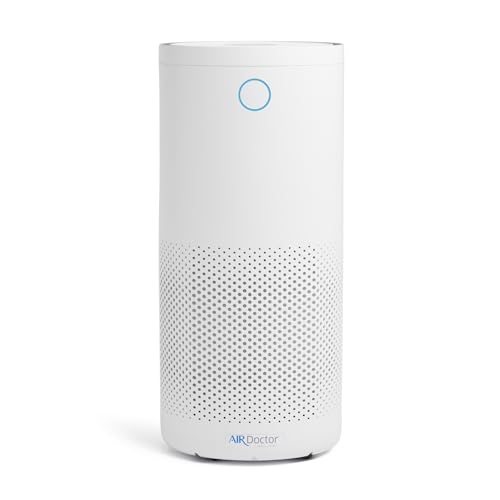
The AD4000’s listing briefs it for large rooms and spaces to 2,776 square feet, capturing — in its words — dander, allergens, smoke, dust, pollen, odour, mould and VOCs, with a premium carbon and UltraHEPA filter pairing and sleep and auto modes. That is Jaspr’s architecture in a less tailored suit: the heavy carbon stage for the gas load, the high-grade particle stage, the set-and-forget controls. AirDoctor’s brand story is filtration-first marketing of its own, and the same verification counsel applies — read its verified ratings where published — but as a purchasable-through-this-channel answer to the Jaspr brief, it is the closest in spirit.
- Coverage: up to 2,776 sq ft per its listing
- Filtration: UltraHEPA with premium carbon, per its listing
- Modes: auto and sleep, per its listing
- Brief: dander, allergens, smoke, dust, pollen, odour, mould, VOCs
Strengths
- The two-stage premium filtration story, carbon included, in a buyable listing.
- Large-room coverage that matches the flagship conversation.
- Auto mode does the sensor work Jaspr’s simplicity also promises.
Trade-offs
- Appliance aesthetics — it will not be mistaken for furniture.
- Its own marketing requires the same verified-numbers discipline.
- Filters are proprietary, as across the premium shelf.
Best for: filtration-led buyers in large rooms who shop this channel. Not suited for: the design-first buyer, whose Jaspr inclination this machine does not pretend to satisfy.

Levoit Core 400S-P — the verified, instrumented alternative
Best for buyers who want the air measured, not just managed
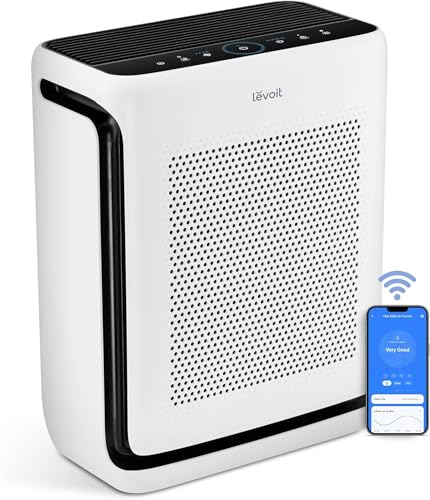
The Core 400S is this cluster’s full review subject in its own right, and its relevance here is as the anti-Jaspr in philosophy: AHAM-verified delivery, a displayed air-quality reading, auto mode reacting to a sensor, app control and scheduling — the instrumented appliance, at a large-room scale (its listing claims up to 1,718 square feet) and a mid-market price. A buyer who finishes the Jaspr research wanting evidence over elegance will find the 400S’s specification table the most comfortable reading in the category. Its 3-in-1 filter covers the particle and everyday gas duties of a normal large room, with the premium-carbon caveat that applies to every slim machine in this cluster.
- Coverage: up to 1,718 sq ft per its listing
- Verification: AHAM VERIFIDE, per its listing
- Control: app, auto mode, air quality monitor
- Filter: 3-in-1, per its listing
Strengths
- Verified ratings and a live air-quality display — the evidence-led purchase.
- Smart control and scheduling at a mid-market price.
- This cluster’s deepest ownership literature, in its own review.
Trade-offs
- Carbon quantity is consumer-class, not the premium shelf’s headline.
- It looks like the appliance it is.
- App-and-account ownership, against Jaspr’s deliberate simplicity.
Best for: data-led buyers and smart-home households in large rooms. Not suited for: the design-and-simplicity brief that defines Jaspr’s appeal.
Running costs and the direct-channel annuity
Premium purifiers are filter annuities, and Jaspr’s runs through the brand: replacement filters on the brand’s schedule and pricing, with subscription offers as the smoothing mechanism. A buyer should total the same five-year arithmetic this site applies to IQAir — machine plus filters at the stated rhythm — from the brand’s own pages before committing, and should weigh the direct channel’s two edges honestly: a single accountable source for parts across the machine’s life, and a single point of dependency if the brand’s fortunes or pricing change. Young premium brands carry a version of this risk that century-old furniture companies and diversified appliance giants do not, and it belongs in a flagship review not as a scare but as a line item: the machine’s decade needs the company’s decade, and the buyer’s confidence on that point is part of what the research is for.
The verdict, such as this channel allows
Jaspr’s proposition — designed object, simple operation, generously proportioned filtration, flagship price — is coherent, and its market reception suggests it is honestly delivered. This review cannot verify it to the standard it applies before linking, and the machine is not offered through this site’s channel at the time of checking; those two facts, stated plainly, are the review’s spine. Readers who buy direct with the verification checklist completed are making a defensible premium purchase. Readers who need the purchase to happen here have two verified machines above that cover the brief’s filtration and instrumentation ends, and this cluster’s Atem X review covers the premium shelf’s other philosophy with links that work. A review that pretends otherwise — that links what it could not check — would be worth less than the honesty, and so would its alternatives.
The premium shelf, mapped for the reader standing in it
Step back and the category’s top end has four corners. The engineer’s flagship (IQAir) sells verified ultrafine filtration and clinical pedigree. The designer-clinician (Jaspr) sells proportioned filtration in a beautiful, simple object through a direct channel. The filtration-value brands (AirDoctor and its kin) sell the same two-stage architecture with marketing budgets instead of design budgets. And the verified smart middle (Levoit’s flagships and their rivals) sells instrumentation and AHAM numbers at prices that make the premium shelf justify itself annually. None of the four corners is a scam and none is a universal answer; the buyer’s work is to locate their own brief — load, room, temperament, channel — on the map before locating a machine on it. This review exists because Jaspr’s corner is the one readers ask about with the least independent information available, and because a site that reviews the shelf owes them the corner’s honest cartography, links or no links.
What owners praise, and what they grumble about
Across the public record, Jaspr’s owners praise the two things the brand promises: the object disappears into a room like furniture rather than equipment, and the machine’s presence registers in the household’s air without registering in its attention — no app, no menus, no glowing dashboard to dim. The grumbles are the premium shelf’s standard set, sharpened by the direct channel: filter prices that arrive as a recurring reminder of the purchase’s altitude, a young company’s support operation judged against giants’, and the data-hungry minority discovering that simplicity, once bought, cannot be upgraded into instrumentation. None of these will surprise a reader of this cluster — they are the FÖRNUFTIG’s trade-offs at ten times the price, which is either the definition of a coherent brand or the definition of an expensive one, depending on the reader’s corner of the map.
A note on how this review was made
Reviewing a machine the reviewer cannot link — and, through this programme’s protocol, cannot list among its verified catalogue — requires the method to be visible. The assessment above rests on the brand’s public materials, its commercial record and the consistent themes of owner accounts, and it distinguishes throughout between what those sources establish and what only a verified listing or independent test programme could. The alternatives were verified through the site’s catalogue on 2026-11-24 and carry the listings’ own facts in their spec boxes. If the Jaspr’s channel status changes, the review’s structure is built to absorb a verified listing without rewriting its judgement — the checklist stays, the link arrives, and the reader loses nothing by the interval except a button, which was never the review’s substance.
The reader’s shortlist, worked
Three readers arrive at this review weekly, in this site’s imagination of its mail. The first has seen the machine in a clinician’s rooms, loved its discretion, and wants permission: the review’s answer is the checklist, completed, and then yes — the purchase is coherent and the channel is the brand’s own. The second is furnishing a large flat, wants the premium brief, and shops where this site’s links live: the answer is the AirDoctor for the filtration story or the Core 400S for the evidence, chosen by which half of Jaspr’s appeal was really theirs. The third suspects all premium purifiers are a tax on anxiety: the answer is the cluster’s ladder, honestly climbed — a verified mid-range machine, a season of evidence, and the premium shelf revisited only if the air files a complaint the ladder cannot answer. A review that can serve all three without lying to any of them has done the job this one set out to do.
Frequently asked questions
What room does a Jaspr actually suit in a real home?
The considered, design-led living space or primary bedroom where a visible appliance must earn its place visually as well as functionally — a wellness studio corner, a calm consulting room, a bedroom styled rather than merely furnished. Jaspr’s pitch is a commercial-style filtration story wrapped in furniture-grade restraint, so its natural habitat is the room guests see, not the utility corner. Judge it there: measure the floor it will occupy, check the sightlines from the sofa or bed, and confirm the household will genuinely run a machine with deliberately simple controls rather than missing an app dashboard. If the room is a workshop, a rental between tenants, or a child’s playroom, the design premium buys nothing the space can appreciate.
What should a Jaspr owner do in the first month?
Treat it as commissioning, not unpacking. Register the warranty through the maker’s own channel, photograph the filter bay and note the fitted filter’s details before the first run, and set a phone reminder keyed to the maker’s stated filter rhythm rather than trusting memory. Run the machine continuously through the first weeks so its effect on the room’s dusting interval becomes measurable — that slower dust settlement is the honest evidence a sensor-free simplicity pitch offers. Keep the purchase paperwork with the filter details, because a direct-channel brand’s support conversation goes fastest when the owner can quote dates and part names. If the room still feels unimproved after a month of continuous running, the returns window is the moment to act, not month three. Keep the box and packaging until that first month has passed, since a direct purchase’s return is simplest while everything the maker shipped is still together.
Why is there no buy link for the Jaspr itself?
Because this site’s Amazon catalogue check on 2026-11-24 returned no Jaspr listing — the search surfaced competitors instead — and this site links only what it can verify. Jaspr sells directly through its own channel. The absence is a channel fact, not a product verdict, and the review covers the machine in prose so readers researching it here still get the assessment and the checklist.
Is Jaspr better than IQAir?
They are the premium shelf’s two philosophies rather than a ranking: IQAir sells verified clinical filtration pedigree with design catching up; Jaspr sells design and simplicity with a commercial filtration story. A buyer should compare verified delivery rates, carbon quantities and five-year filter totals across both, and let temperament arbitrate the remainder. This site’s Atem X review makes the engineer’s case at length.
What should I verify before buying a Jaspr direct?
Independent clean-air delivery figures where available; the carbon stage’s weight; the replacement filter’s price and rated life at working speeds; the warranty and returns terms of the direct channel; and the company’s filter-supply horizon, since the machine’s decade rides on it. The same checklist, this review notes, improves every premium purchase in the category.
How much do premium purifiers really cost to run?
Machine plus filters across five years is the honest unit, and at the premium end the filters are a substantial fraction of the total — which is why every flagship review on this site instructs buyers to price the annuity before the appliance. Electricity at living speeds is a minor line by comparison. Subscriptions smooth the cost; they do not reduce it by magic.
Which alternative is closest to Jaspr?
In filtration architecture and large-room intent, the AirDoctor AD4000 — heavy carbon, high-grade particle stage, auto operation — in a less designed cabinet. In ownership simplicity, none of the smart machines; in verified instrumentation, the Levoit Core 400S is the opposite pole and proud of it. Jaspr’s exact combination — design, simplicity, premium filtration — is its own niche, which is the brand’s point and this review’s conclusion.
Does Jaspr suit allergy households?
Its filtration architecture is the right class for the brief, in comfort terms — particle capture at HEPA grade with a real carbon stage, in a machine sized for a main room. As this site consistently frames it: purifiers manage a room’s air for comfort, medical situations belong in a clinician’s conversation, and a household buying at this level for a health-led reason should bring the verified numbers — Jaspr’s or any brand’s — to that conversation.
Is Jaspr a good choice for a clinic or office?
Its commercial placements suggest the brand courts exactly that use, and a small professional space with a domestic-scale room is its natural territory. Procurement at any scale, though, should run through the brand’s commercial terms — duty cycle, service, filter supply in quantity — rather than through a home review’s impressions. This article’s competence is the household; it flags the door rather than walking through it.
How does Jaspr’s simplicity compare with the FÖRNUFTIG’s?
They are cousins in philosophy at opposite ends of the market: one dial and no data, bought as furniture. The IKEA costs a small fraction of the Jaspr and filters a small room modestly; the Jaspr filters a main room ambitiously at flagship money. A household that loves the philosophy should choose by the room’s size and the load’s seriousness — the temperament is identical, the scale is not.
What if Jaspr appears on Amazon later?
Then this site’s protocol applies unchanged: the listing is checked through the catalogue, the ASIN and its official image are verified, and the review is updated with a link and the listing’s own facts. Until that day, the prose treatment stands — and a reader who finds a Jaspr listing through another route should apply the verification checklist to it with the same care, since third-party listings of direct brands are exactly where contents and generations get muddled.
Does the premium price buy quieter operation?
Generally the premium machines invest in acoustic engineering, and owner accounts credit Jaspr with civilised sound at living speeds — as they do IQAir’s flagships. Quiet is nonetheless a specification to verify per model and speed, since every machine in the category is loudest exactly when it is working hardest. A light sleeper’s flagship purchase should always include the night-speed figures in the homework.
Why do wellness spaces choose design-led machines?
Because their clients read the room before they breathe it: a clinic or studio whose equipment looks clinical imports the hospital into a space selling calm. The design premium in such settings is a business expense with a rationale, and it explains Jaspr’s commercial traction better than any filtration argument. A household is entitled to the same rationale — a living room is also a space whose feeling is the product — provided it is purchased knowingly as design, with the filtration verified separately.
What is the strongest reason to choose an alternative instead?
Verification and channel, jointly: the alternatives in this review carry marketplace listings this site could check, published verification programmes behind their ratings, and filter supply through multiple retailers. For a buyer whose confidence standard is “show me”, those are not bureaucratic virtues — they are the substance of a decade-long purchase. Jaspr asks for trust; the alternatives present evidence; households differ in which currency they hold.
And the strongest reason to choose Jaspr anyway?
The object itself, in a room where objects matter, with a filtration architecture that is generously proportioned by every account available and a simplicity that owners consistently praise. Premium purchases are allowed to be about the whole experience of ownership; the review’s insistence is only that the filtration homework be done with the same care as the aesthetic one, so the experience rests on both.
How should I compare carbon stages across premium brands?
By weight and by replacement economics — the two numbers that predict odour performance and ownership cost better than any stage-count marketing. A deep bed of carbon in a replaceable cartridge, honestly priced and rated at working speeds, is the premium shelf’s real differentiator; a shallow bed in a sealed expensive box is a toll. This site’s carbon explainer gives the underlying chemistry, and the question “how many pounds of carbon, and what does its replacement cost?” belongs at the top of every premium enquiry, Jaspr’s included.
Does Jaspr offer anything for small rooms?
The brand’s line has centred on its main-room machine, with smaller offerings a matter for its current catalogue rather than this review’s record. A small-room buyer drawn to the philosophy has the cluster’s own answers — the FÖRNUFTIG’s panel for the furniture-minded, Levoit’s small line for the instrumented — each verified and linked in their own reviews, which is more than this article can currently do for any Jaspr.
What do the endorsements around Jaspr mean?
The brand’s health-professional associations are part of its public story, and they speak to its commercial credibility in wellness settings. A household should weigh them as it weighs any endorsement — as evidence that professionals stake reputation on the machine’s presence in their spaces, not as a substitute for the delivery numbers and carbon weights on the checklist. Endorsement answers “who trusts it”; the checklist answers “what does it do”; a flagship purchase deserves both answers.
Is the direct channel a disadvantage for returns?
It is a different channel, with its own published terms, and the buyer should read them as carefully as the filtration claims — trial periods, return shipping and warranty handling are where direct brands differentiate themselves quietly. Marketplace buyers are accustomed to a platform’s umbrella; direct buyers hold the brand’s own paper. Neither is automatically kinder, and the minute spent reading is the premium buyer’s cheapest insurance.
How does Jaspr handle smoke events?
By the architecture’s logic: a generously sized particle stage and carbon bed, run at its higher speeds with the room sealed, is the correct recipe for a smoke week, and the brand’s marketing leans into exactly that scenario. The verification counsel is at its most important here, because smoke performance is a delivery-rate question — how much air, cleaned how well, per hour — and a household in smoke country should buy on that arithmetic from whichever brand publishes it most convincingly.
What size room is Jaspr’s main machine for?
The brand positions it at the main living space — the large-room class this review’s alternatives also address, with the AirDoctor claiming the largest area on paper and the Core 400S verified for its class. As ever, the rating to trust is the one with a programme behind it, and the room to measure is your own, ceiling included. Premium pricing does not repeal the sizing laws; it merely buys more margin within them.
Should I wait for a sale or a new model?
Direct brands run their own promotional calendars, and a patient buyer with no live brief can reasonably watch them. A household with a smoke season or a renovation on the calendar should weigh the machine’s service during the wait against a speculative discount — the same counsel this site gives at every price point, because air problems keep their own schedule and it is rarely the retailer’s.
What is this review’s one-sentence Jaspr verdict?
A coherent premium proposition — design, simplicity and generously proportioned filtration — that this site cannot currently verify or link through its channel, recommended to direct buyers who complete the checklist, and honestly bracketed by two verified alternatives for everyone else. The sentence is longer than most verdicts because the situation is; precision was the assignment.
How do I judge a purifier brand I cannot find in stores?
By the paper trail a serious company leaves: published specifications with test standards named, a filter catalogue with prices visible before purchase, warranty terms in plain language, and a support channel that answers questions pre-sale with numbers rather than adjectives. Jaspr’s direct model makes that trail the whole shopfront, which is why this review’s checklist is written as questions the brand’s own materials should answer — and a brand that answers them well has earned the direct buyer’s confidence by the only route available to either party.
Does Jaspr’s story change the alternatives’ value?
It sharpens it. A reader who has priced the design-and-simplicity premium can see exactly what the AirDoctor’s discount and the Core 400S’s instrumentation are worth against it — and a reader who still prefers the Jaspr has at least purchased the premium knowingly, which is the difference between a luxury and a markup. Reviews earn their keep by making that distinction visible at every shelf, and this one has tried.
What about Jaspr for pet households?
Dander is a particle, hair is a pre-filter’s diary, and pet odour is the carbon stage’s examination — the architecture addresses all three in the right departments, and the brand’s sizing suits the living rooms where pets actually live. The running-cost note doubles for pet homes, whose filters load fastest: price the annuity at a pet household’s rhythm, not at the brochure’s clean-room one, whichever premium brand is on the shortlist.
Is a subscription filter plan worth it?
As convenience, usually; as economics, read the arithmetic — subscriptions in this category typically trade a modest discount for commitment, and their real value is that the filter arrives before the old one’s performance becomes the household’s problem. A disciplined owner with a calendar gets the same result unsubscribed. The plan is a memory aid wearing a discount, and it should be bought as one.
How long should a premium machine last?
A decade is the design horizon the premium shelf implies and the horizon its filter economics assume. Longevity is partly the maker’s build and partly the owner’s maintenance — filters on rhythm, intakes clear, the machine placed where its air can move. A buyer evaluating Jaspr against IQAir on this axis is comparing a young brand’s promise against an old brand’s record, which is a legitimate difference in evidence, priced by each buyer’s own risk arithmetic.
What is the design premium actually buying, in the end?
Daily, visible satisfaction with an object that must live in the room for years — a real good, chronically undervalued by engineering-led reviewing and chronically overvalued by lifestyle marketing. This review’s position is the middle one it has held throughout: buy the design gladly, verify the filtration separately, and never let either half of the purchase borrow the other’s evidence.
Does Jaspr publish its filter prices openly?
A direct brand’s filter catalogue is part of its shopfront, and the buyer should be able to price the annuity from it before purchasing the machine — if any premium brand, Jaspr included, makes that arithmetic hard to perform, the difficulty itself is information. The checklist’s spirit is that a decade-long purchase should be priceable in full, in advance, from public materials.
What if I already own one and found this review?
Then its useful pages are the maintenance ones: filters on the brand’s rhythm, the carbon stage’s saturation judged by the room’s odour rather than the calendar alone, and the machine placed where its rated air can actually circulate. Ownership converts the review’s questions into a routine — and an owner whose machine is performing has the best evidence in the whole debate, their own room’s.
How does this review treat Jaspr’s health-adjacent marketing?
As marketing. The brand’s wellness positioning is part of its public record and is reported here as such; this site’s own assessment stays in the comfort frame it uses for every purifier — a machine manages a room’s air, and any reader buying for a medical reason should take the verified specifications to a clinician. That discipline protects readers from the category’s most expensive habit, which is purchasing reassurance at filtration prices.
Could a smaller budget get most of the Jaspr experience?
Most of the air, yes — the ladder’s verified machines deliver the bulk of the particle story for ordinary rooms. The experience — the object, the silence of interface, the commercial filtration margin — is the premium’s residue, and it is genuinely not available at the ladder’s prices. Whether the residue is worth its multiple is the buyer’s temperament speaking, and this review has no vote in it beyond insisting the arithmetic be seen clearly.
What should a gift-buyer know?
That a premium purifier is also a premium annuity, and the generous version of the gift includes the first filter cycle or the subscription’s first year arranged. A Jaspr given to a design-led household will be received as furniture and used as equipment, which is the brand’s whole thesis in one gesture — but the giver should complete the same checklist, because a gift’s homework is the giver’s compliment to the recipient.
Where does Jaspr leave the category?
With its central question better lit: how much of a purifier’s value is the air, and how much is everything around the air — the object, the silence, the service, the story. Jaspr prices the surroundings at the top of the market and the air competitively within it. The reader who can now separate those two ledgers, for this brand and every other in the cluster, has the review’s real deliverable.
Is there a Jaspr for renters?
The machine itself is renter-shaped — no installation, furniture presence, a footprint that moves house easily — and its direct channel ships like any appliance. The renter’s specific homework is the filter annuity’s portability: a subscription and a young brand’s parts catalogue travel with the tenant only as reliably as the brand’s own continuity, which returns the decision to the confidence question this review has kept open, deliberately, from its first page.
What does “commercial-grade” mean when brands say it?
Usually: components, filter volumes or duty ratings borrowed from the maker’s professional line, asserted rather than certified. It is a phrase to be unpacked into the checklist’s concrete numbers — delivery rates, carbon weight, filter life at speed — wherever it appears, on Jaspr’s materials or any rival’s. A brand confident in its commercial heritage will survive the unpacking; the phrase’s purpose, too often, is to prevent it.
How do the alternatives handle a design-led room?
By placement rather than by beauty: the AirDoctor and the Core 400S both earn their keep in a corner, on a working speed, with their displays dimmed or turned to the wall — the standard diplomacy between appliances and interiors. A room that cannot accommodate an honest appliance in any corner is a room whose brief really is the design-led machine, and the review concedes the case it has been circling: some rooms vote for Jaspr, and their owners should buy it with the checklist done rather than apologise for the vote.
Final note on the missing button
Regular readers will notice this review’s shape — a full assessment, two linked alternatives, and no link for its subject. That shape is the site’s verification protocol made visible, and it will recur wherever a searched-for product is not offered through the checked channel. The protocol costs the site a commission and buys it the only asset a review programme has: that its links, when they appear, were earned by a listing that could be read.
What if my priority is resale value?
Design-led premium machines with waiting-list reputations tend to hold value while the brand is ascendant, and diversified giants’ flagships hold it on parts availability — two different securities. A buyer weighting resale should prefer whichever brand’s next five years they believe in more, which is, once again, the confidence question. The alternatives’ resale is the appliance market’s ordinary story: honest machines, modest retention, no drama in either direction.
Does this review recommend Jaspr, finally?
It recommends the purchase to the reader it describes — design-led, checklist completed, channel accepted — and recommends the verified alternatives to the reader standing in this site’s aisle. A review with a verification protocol cannot do otherwise without ceasing to be one. The machine’s merits were never the obstacle; the evidence standard was, and standards are what reviews are.
A word on the wellness aesthetic in appliances
Jaspr is part of a broader migration — health equipment redesigned in the language of calm interiors — and the migration is neither pure progress nor pure marketing. Objects people enjoy living with get used, maintained and kept; objects they resent get unplugged, and an unplugged purifier filters nothing at all. The design premium, at its most defensible, is an adherence technology. This review’s checklist exists so that adherence is purchased alongside verified capability rather than instead of it — the sentence the whole article has been walking toward.
How should an owner maintain a design-led machine?
Exactly as any premium machine: filters on rhythm, exterior kept with the care its finish invites, intakes clear, and the placement honest about airflow rather than purely about the photograph. The one design-specific note is that a beautiful machine tempts its owner to tuck it into the room’s composition — behind the sofa’s arm, inside the shelving’s rhythm — where its rated air cannot go. Beauty placed badly is a filter in a cupboard; the checklist’s placement line applies with double force to the machines bought to be seen.
What questions should I ask any premium brand’s support before buying?
Three, and their answers grade the company as much as the machine: What are the verified delivery rates at the speed you recommend for my room size? How much carbon, by weight, is in the gas stage, and what does its replacement cost today? If the company changes hands or closes in year six, where do filters come from in year seven? A brand that answers all three plainly has earned a flagship buyer’s business; a brand that answers none has priced a mystery, whatever its machine’s merits.
Is this review too cautious?
It is exactly as cautious as its evidence, which is the calibration a review programme should be able to say out loud. Where the record was consistent — the design’s reception, the ownership themes, the architecture’s soundness — the review said so without hedging. Where the record ran through a single channel’s marketing, it asked for the numbers. A reader who finds that balance wrong for their own purchase has still been given every fact the balance was struck from, which is the service.
Closing the file: what would change this review?
A verified marketplace listing with the machine’s specification in full; an independent test programme’s published delivery rates; a longer ownership record as the installed base ages. Any of the three would let a future edition convert this review’s careful prose into the cluster’s standard format, picks and links included. Until then it stands as written — an honest map of a machine, a market corner and an evidence standard, drawn at the scale the available facts support.
One more reader: the one replacing a failed premium machine
They arrive with a dead flagship of another brand and a sharpened sense of what ownership costs. For them the review’s emphasis shifts to the annuity and the company’s horizon — the two places their previous purchase actually failed — and the alternatives’ multi-retailer filter supply reads less like a convenience and more like insurance. If that is your chair, weight the checklist’s last questions heaviest; the filtration, at this shelf, was never the part that stranded you.
And the reader who just wants clean air by Friday?
Buy the Core 400S or the AirDoctor from the verified listings above, sized to the room, and let the premium deliberation proceed at leisure from inside cleaner air. The ladder exists so that research never has to be a reason for breathing the unfiltered status quo — a sentence this cluster’s every review endorses, and a fitting last one for the longest deliberation on its premium shelf.
A note on noise, once more, for bedroom buyers
Any of the premium machines — Jaspr included, by owner accounts — will serve a bedroom at its lower speeds, and any of them will announce itself at full power. The bedroom question is therefore never the brand; it is whether the room’s size lets the machine live at its quiet speeds, which is the sizing doctrine this whole cluster repeats. Buy the coverage with headroom and the night takes care of itself.
How does this review end?
Where it began: with the disclosure. A searched-for machine, honestly assessed; a channel fact, plainly stated; two verified alternatives, fairly framed; and a checklist that improves any premium purchase the reader makes next, from any brand, through any channel. If every review with a missing link worked this hard, the missing link would be a genre readers trust — which is, in the end, the ambition.
Postscript: the alternatives’ own homework
Fairness requires the last note to cut the other way: the AirDoctor and Levoit listings linked here were verified as listings — ASIN, title, official image — which certifies what is being sold, not every claim the selling makes. Their verified-programme ratings and specification tables are the reader’s to read with the same checklist discipline, and this site’s full reviews of both lines do that reading at length. Verification is a floor, not a ceiling, for every machine in this article.
Envoi
Clean air is invisible, which is why its market runs on trust — in test programmes, in brands, in reviews. This one has tried to be worth the reader’s, at the price of a button. The machine at its centre will find its buyers; the checklist will outlive the model; and the two verified alternatives will be filtering rooms this week, which is what all of this prose is finally for.
A truly final practical note
Whichever machine from this long deliberation lands in the room — the design flagship direct, the filtration value play, the verified smart tower — give it the placement its rating assumes, run it through the first week at working speeds, and write its filter’s part number and due season in the household book. Premium deliberation deserves a premium installation; the air will file its own review thereafter.
Colophon for the sceptical
No part of this review was supplied by any brand named in it; its facts are the listings’ and the public record’s, its judgements are the site’s, and its missing link is documented rather than disguised. Readers who value that arrangement know what it costs and what it buys — the same trade, at programme scale, that the premium shelf asks of them at product scale.
The last word belongs to the room
Six months after any of these purchases, nobody in the household will be reading reviews. They will be living in a room — dusting it less, sleeping in it better, or not noticing it at all, which is the premium outcome every brand on this shelf is truly selling. Choose the machine whose ownership disappears fastest into that room’s life, at the price your arithmetic survives, and the deliberation ends where it should: in the air, unnoticed.