Disclosure: As an Amazon Associate, dailyhomedecorating.com earns from qualifying purchases. Links on this page are affiliate links; they cost you nothing extra. Prices and availability change often, so check the current Amazon listing before you buy.
Two names dominate the filter-pitcher shelf, and the zerowater vs brita question is really a question about what you want filtered water to be. Brita is the incumbent: a gentler filtration aimed at taste — chlorine and the common metals that ride along in municipal water — with long-lived filters and an ecosystem in every supermarket. ZeroWater is the maximalist challenger: a five-stage filter that aims to strip dissolved solids down to a meter reading of zero, certified against a heavier list of contaminants, at the cost of filters that work harder and are spent sooner. Neither is “better” in the abstract; they are different answers to different anxieties about the same tap. This head-to-head compares the two systems across filtration philosophy, taste, filter economics, pitcher design, and ownership — with three verified pitchers or dispensers from each side, shown with their official images — so the choice can be made on the household’s actual water and actual priorities.
Key Takeaways
- ZeroWater’s five-stage filtration targets total dissolved solids — its pitchers are built and certified to deliver water that reads 0 TDS — and its listings carry IAPMO certification for lead, PFOA/PFOS, chromium, and mercury.
- Brita’s standard filters are WQA and NSF/ANSI certified to reduce chlorine, copper, mercury, and cadmium, with a two-month filter life; the Elite filter steps up to 99% lead reduction, microplastics, and 30 contaminants per its listing.
- The taste difference is philosophical: Brita keeps water tasting like improved tap water; ZeroWater produces a flatter, mineral-free taste some drinkers love and some find empty.
- Filter economics divide the brands: Brita’s longer-lived filters cost less per month in most households; ZeroWater’s harder-working filters are consumed faster, especially in high-TDS water.
- All six products below were verified against the site’s Amazon catalog data, three per side, in pitcher and dispenser formats.
In this guide
Quick Verdict: Which Side of Zerowater vs Brita Wins?
If your water tastes fine but smells of chlorine and your priority is cheap, easy, everywhere-available filtration, Brita wins on economics and convenience. If your concern is what is dissolved in the water — an older home’s plumbing, a region with known lead or PFAS anxiety, a TDS meter reading that bothers you — ZeroWater wins on filtration ambition and certification scope. If you want the middle path, Brita’s Elite filter is the bridge product: Brita’s pitcher convenience with a contaminant brief much closer to ZeroWater’s. The sections below argue each criterion properly before the products are presented, because in this comparison the criteria are the decision.
The Head-to-Head Table
| Criterion | ZeroWater | Brita |
|---|---|---|
| Filtration approach | Five-stage filtration designed to remove dissolved solids to 0 TDS | Carbon-based filtration for taste and common contaminants; Elite adds deeper reduction |
| Certifications (per listings) | IAPMO certified: lead, PFOA/PFOS, chromium, mercury | WQA and NSF/ANSI certified: chlorine, copper, mercury, cadmium; Elite: 99% of lead, microplastics, 30 contaminants |
| Taste result | Very flat, mineral-free — polarizing | Familiar, chlorine-free tap-water taste |
| Filter life pattern | Shorter; depends heavily on your tap’s TDS | Standard filter rated at two months per listing; Elite is the line’s longer-duty option |
| Feedback | TDS meter culture — the system’s effect is measurable at home | Calendar and taste; no meter ritual |
| Formats verified here | 12-cup pitcher, 10-cup pitcher, 32-cup dispenser | 10-cup pitcher, 10-cup Elite pitcher, 27-cup dispenser |
Criterion One: What does each system actually remove?
The philosophies diverge at the first principle. Brita’s standard filter is a taste-and-common-contaminants device: its certifications cover chlorine (the taste and odor offender), copper, mercury, and cadmium — the realistic burden of treated municipal water — and it makes no claim to strip the water’s mineral content. ZeroWater’s five-stage design adds ion-exchange stages whose entire purpose is dissolved solids: the salts, minerals, and metals that a carbon filter alone passes, taken down toward the zero its name advertises, with IAPMO certification against lead, PFOA/PFOS, chromium, and mercury stated in its listings. Between them sits Brita’s Elite, whose listing claims reduction of 99% of lead, microplastics, and 30 contaminants — a deliberate move toward ZeroWater’s territory from inside Brita’s ecosystem. The verdict on this criterion depends on the household’s water story: for treated city water whose sins are chlorine and age, Brita’s brief is honestly sufficient; for well water, old plumbing, or a household that has read its local water report with rising eyebrows, ZeroWater’s ambition — and Elite’s — is the point. No invented laboratory figures are needed to see the shape: one system polishes, the other strips, and the bridge product narrows the gap from the polishing side.
Criterion Two: Taste — the glass-by-glass verdict
Taste is where the maximalist philosophy meets its referendum. ZeroWater’s 0 TDS output is, by design, water with its mineral character removed — and minerals are flavor. Devotees describe it as clean, pure, and neutral, the perfect blank for tea and coffee; detractors describe the same glass as flat, empty, even vaguely unsatisfying, and some households find they drink less water when it tastes of nothing, which is a health-relevant outcome no certification measures. Brita’s water keeps the tap’s mineral personality with the chlorine edited out, which most drinkers experience simply as “water, but nicer” — the taste that disappears into a meal rather than announcing itself. Coffee and tea complicate the verdict in an interesting direction: mineral-free water extracts differently, and serious brewers often prefer some mineral content for flavor, while households fighting a kettle’s scale welcome the stripping. The honest summary is that taste is the criterion where ZeroWater’s greatest technical achievement is also its greatest liability, and the household should decide it with a glass, not with a chart — borrow the experience if you can before committing a filter pipeline to it.
Criterion Three: Filter economics and the TDS trap
The running costs invert the purchase prices’ impression. Brita’s standard filter is rated in its listing at two months — a slow, predictable consumable, stocked everywhere, with the Elite positioned as the line’s longer-duty, higher-reduction option. ZeroWater’s filters are spent by work done: every gallon’s dissolved solids land in the ion-exchange stages, so a household on high-TDS tap water — hard, mineral country — will consume filters at a rate that surprises buyers who budgeted from the box’s gentler assumptions, while a soft-water household may find the rhythm perfectly reasonable. This is the famous TDS trap, and it is not a defect; it is physics with a price attached. The meter culture that surrounds ZeroWater exists partly to manage it: owners test their tap, test the filtered output, and replace on evidence as the reading creeps up from zero. The verdict: Brita wins predictable economics for the average municipal household; ZeroWater’s costs are fair exactly in proportion to how much dissolved material the household actually wants removed — which is to say, the filter bill is the filtration, itemized.
Criterion Four: Pitchers, dispensers, and refrigerator geography
Hardware is the underrated criterion, because a pitcher is furniture in the most contested real estate in the house: the refrigerator door shelf. Both brands field the two canonical formats. Pitchers — ZeroWater’s 12-cup and 10-cup, Brita’s 10-cup standard and Elite — suit households that fill at the sink and pour at the table, and their differences live in the details of lids, spouts, and one-handed pouring that listings describe and hands must judge. Dispensers — ZeroWater’s 32-cup and Brita’s 27-cup — are the high-volume answer: a reservoir that lives in the fridge with a spigot, refilled less often, poured without lifting, and kinder to large households, athletes, and anyone whose water habit is measured in bottles per day. Filtration speed is the format’s shared tax: gravity is the pump in every product on this page, and a freshly filled pitcher needs its minutes before the reservoir below is ready — a rhythm households adapt to by filling after pouring, the category’s universal habit. On this criterion the brands tie in structure and differ in execution, and the household’s fridge geography — door shelf versus main shelf, pitcher versus spigot household — should arbitrate.
The ZeroWater Side: Three Verified Picks

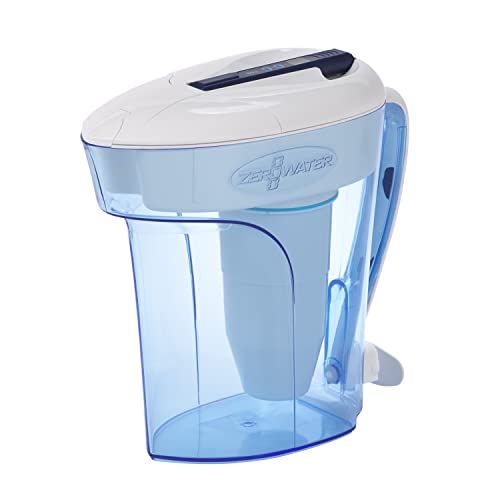
ZeroWater 12-Cup Pitcher — the flagship glass
Badge: Best ZeroWater for most households
The 12-cup pitcher is the system’s standard-bearer: five-stage filtration, the 0 TDS promise, and IAPMO certification for lead, PFOA/PFOS, chromium, and mercury stated in its listing, in the format most households picture when they picture a filter pitcher. Its capacity sits at the generous end of the pitcher class, suiting a family fridge better than a mini-fridge, and it is the natural first purchase for a household testing whether the stripped-water taste is for them — the experiment this whole comparison keeps recommending, run at pitcher scale.
Mini spec box — ZeroWater 12-Cup Pitcher
- Filtration: 5-stage, designed for 0 TDS output
- Certification per listing: IAPMO certified for lead, PFOA/PFOS, chromium, mercury; removes PFOA/PFAS
- Format: 12-cup refrigerator pitcher
Strengths
- The full ZeroWater brief in the classic format — maximum filtration ambition, pitcher convenience.
- Certification scope that answers the lead and PFAS questions directly.
- Capacity that serves a family without dispenser bulk.
Trade-offs
- Filter consumption follows your tap’s TDS; hard-water households must budget honestly.
- The flat, mineral-free taste is a household referendum, not a universal upgrade.
- Gravity filtration asks for the fill-ahead habit.
Best for: households whose water report or plumbing age makes dissolved contaminants the concern. Not suited for: drinkers who know they dislike mineral-free water’s taste.
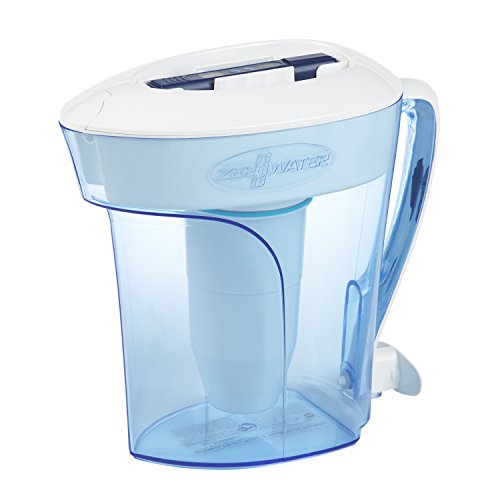
ZeroWater 10-Cup Pitcher — the smaller door-shelf option
Badge: Best ZeroWater for small fridges and small households
The 10-cup pitcher carries the identical five-stage, 0 TDS, IAPMO-certified brief in a slightly smaller body — the version for the couple’s fridge, the office kitchenette, the door shelf that rejected its bigger sibling. Nothing about the filtration is diluted; only the reservoir shrinks, which in practice means one more fill in a heavy-drinking day and a happier relationship with a crowded refrigerator.
Mini spec box — ZeroWater 10-Cup Pitcher
- Filtration: 5-stage, designed for 0 TDS output
- Certification per listing: IAPMO certified for lead, PFOA/PFOS, chromium, mercury; removes PFOA/PFAS
- Format: 10-cup refrigerator pitcher
Strengths
- The complete ZeroWater system at a friendlier footprint.
- Same certification story as the flagship.
- A sensible trial size for the taste experiment.
Trade-offs
- Smaller reservoir, more frequent filling in thirsty households.
- Same TDS-dependent filter economics as its sibling.
- Still a pitcher: gravity’s pace applies.
Best for: singles, couples, and small-fridge households wanting the full ZeroWater brief. Not suited for: large families, who should look at the dispenser below.
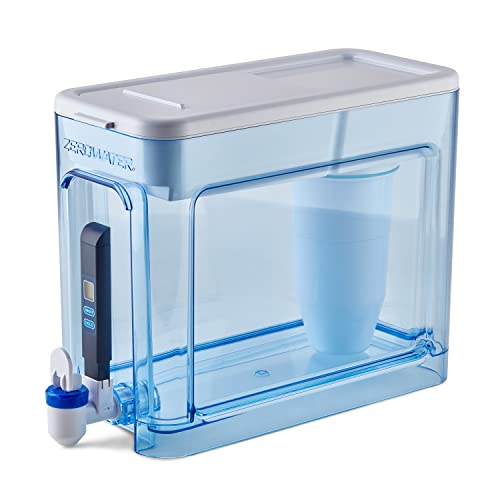
ZeroWater 32-Cup Dispenser — maximum filtration, maximum volume
Badge: Best ZeroWater for big households
The 32-cup dispenser is the system at full scale: the same five-stage, 0 TDS filtration with the same IAPMO certification list, in a fridge reservoir with a spigot that serves a household’s whole day without a lift-and-pour. For large families, training athletes, and households replacing a bottled-water habit, this is the format where ZeroWater’s economics and convenience argue best — one filtration system, stationed centrally, working at volume.
Mini spec box — ZeroWater 32-Cup Dispenser
- Filtration: 5-stage, designed for 0 TDS output
- Certification per listing: IAPMO certified for lead, PFOA/PFOS, chromium, mercury; removes PFOA/PFAS
- Format: 32-cup refrigerator dispenser with spigot
Strengths
- Volume that ends the refill treadmill for big households.
- Spigot pouring suits kids, guests, and bottle-filling routines.
- The full certification and filtration brief, unscaled.
Trade-offs
- Claims serious refrigerator territory; measure the shelf before ordering.
- High throughput spends filters at household scale — budget with the TDS rule in mind.
- A dispenser is a commitment to one fridge location.
Best for: large households and bottled-water converts on the ZeroWater side. Not suited for: small fridges and table-service traditionalists.
The Brita Side: Three Verified Picks

Brita Large 10-Cup Pitcher — the incumbent standard
Badge: Best Brita for everyday municipal water
This is the pitcher that defined the category for a generation: 10 cups, one standard filter included, WQA and NSF/ANSI certification reducing chlorine, copper, mercury, and cadmium, and a filter life of two months per its listing. Its virtues are the incumbent’s — a shape every fridge knows, filters in every store, a taste result that simply makes tap water taste like itself on a good day. For the household whose water is safe and merely chlorinated, this remains the rational default against which both rivals must argue.
Mini spec box — Brita Large 10-Cup Pitcher
- Filtration: standard Brita filter for taste and common contaminants
- Certification per listing: WQA and NSF/ANSI certified — reduces chlorine, copper, mercury, cadmium
- Filter life: two months per listing; one filter included
- Format: 10-cup pitcher, bright white
Strengths
- The cheapest, easiest filtration habit in the category — two-month filters, universal availability.
- Certified performance against the realistic municipal burden.
- A taste result nobody in the household will argue with.
Trade-offs
- No dissolved-solids ambition; minerals and TDS pass through by design.
- The standard filter’s contaminant brief is narrower than Elite’s or ZeroWater’s.
- Pitcher pace and capacity are the class’s usual limits.
Best for: municipal-water households whose complaint is chlorine taste. Not suited for: lead or PFAS anxiety, where the Elite or ZeroWater briefs apply.
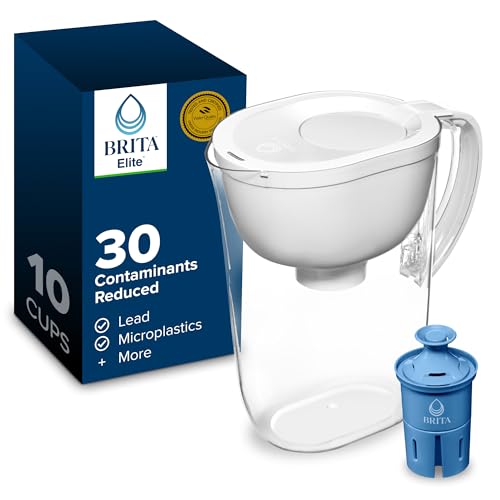
Brita Large 10-Cup Elite Pitcher — the bridge product
Badge: Best middle path in the whole comparison
The Elite pitcher keeps Brita’s format and ecosystem and upgrades the filter’s ambition: its listing claims reduction of 99% of lead, microplastics, and 30 contaminants, with chlorine taste and odor removed — a brief that reaches deep into ZeroWater’s territory while keeping Brita’s ownership manners. For the household that wants more than taste polishing but is unpersuaded by the 0 TDS philosophy — or unwilling to accept its filter economics and flat taste — this is the comparison’s natural compromise, and for many households it will be the correct final answer.
Mini spec box — Brita Large 10-Cup Elite Pitcher
- Filtration: Brita Elite filter
- Claims per listing: reduces 99% of lead, microplastics, and 30 contaminants; WQA NSF/ANSI certified; BPA-free; removes chlorine taste and odor
- Format: 10-cup pitcher, one Elite filter included
Strengths
- A contaminant brief that answers the lead question inside Brita’s convenience.
- Keeps the familiar mineral taste ZeroWater removes.
- The ecosystem’s full availability behind a stronger filter.
Trade-offs
- Elite filters are the line’s premium consumable; the two-month standard’s simplicity is traded up, not kept.
- Still no TDS stripping — households measuring dissolved solids should stay on the ZeroWater side.
- One pitcher format; high-volume homes need the dispenser below.
Best for: households wanting deeper reduction without the 0 TDS commitment. Not suited for: TDS-focused buyers or the strictest filter budgets.
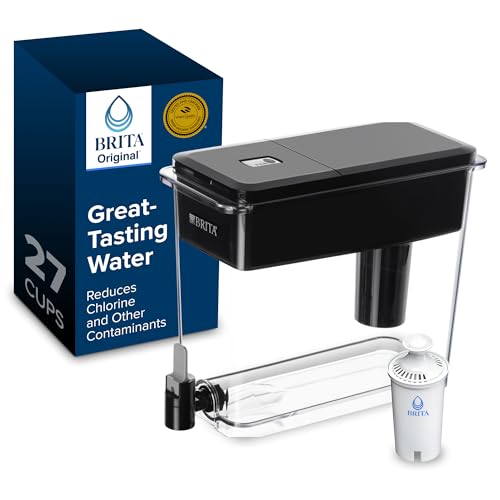
Brita X-Large 27-Cup Dispenser — Brita at household scale
Badge: Best Brita for volume
Brita’s dispenser answers ZeroWater’s 32-cup directly: 27 cups in a fridge reservoir with a spigot, the standard filter’s WQA and NSF/ANSI certified reductions — chlorine, copper, mercury, cadmium — and the two-month filter rhythm per its listing. It is the format for the household that drinks water like a utility and wants Brita’s economics at that scale: fewer refills, no lifting, filters that last a season of ordinary use rather than a month of it.
Mini spec box — Brita X-Large 27-Cup Dispenser
- Filtration: standard Brita filter
- Certification per listing: WQA and NSF/ANSI certified — reduces chlorine, copper, mercury, cadmium
- Filter life: two months per listing; one filter included
- Format: 27-cup dispenser, black
Strengths
- Household-scale volume on Brita’s gentle filter economics.
- Spigot convenience for bottles, kids, and cooking water.
- The incumbent’s availability behind every consumable.
Trade-offs
- The standard filter’s narrower brief — Elite-level concerns need a different choice.
- A large fridge footprint, like its ZeroWater rival.
- No dissolved-solids reduction, by design.
Best for: big households on municipal water who want Brita’s simplicity at volume. Not suited for: contaminant-led buyers, who belong on the other side of this comparison.
Strengths and Trade-Offs: The Two Systems, Whole
ZeroWater, strengths. The deepest filtration brief in the pitcher category, certified against the contaminants households actually worry about; an effect the owner can verify at home with a meter, which turns faith into evidence; and a format range that scales from a couple’s pitcher to a family’s dispenser without changing systems. ZeroWater, trade-offs. Filter economics hostage to the tap’s dissolved solids; a stripped taste that divides households; and a more demanding ownership ritual — testing, tracking, replacing on evidence — that some families will quietly abandon, at which point an exhausted filter makes the system worse than a simpler one honestly maintained.
Brita, strengths. The gentlest ownership in the category: long-lived filters, universal availability, a taste result with no referendum attached, and — through Elite — a credible upgrade path for households whose concerns deepen. Brita, trade-offs. The standard filter’s brief stops where modern anxieties begin; nothing in the standard system addresses dissolved solids; and the brand’s very familiarity can lull a household with a genuine lead question into a taste product’s answer — which is why this comparison insists the water’s story, not the brand’s fame, should choose.
Who should choose which?
Choose ZeroWater if your household’s file contains any of: a water report you have actually read with concern, plumbing old enough to have opinions, a preference for evidence you can meter yourself, or a taste for the stripped glass itself. Choose Brita standard if your water is municipally sound, your complaint is chlorine, and your household’s filtration must run on autopilot and pocket change. Choose Brita Elite if you want the deeper reduction list — lead above all — inside the autopilot ecosystem, and your dissolved solids can stay where they are. And choose the dispenser format on either side when the household’s volume, not its chemistry, is what broke the last arrangement. Households between kitchens and filtration systems generally should also read how to clean a water cooler — the dispenser hygiene habits transfer directly.
How to choose between pitcher and dispenser
The format decision is arithmetic plus geography. Count the household’s daily glasses honestly — cooking water included, guests amortized — and compare against the reservoir: a pitcher that must be filled three times a day will be found empty at the worst moment and resented by autumn, whatever its brand. Then measure the refrigerator: the door shelf’s height and depth for pitchers, the main shelf’s claim for dispensers, with the household’s other tenants consulted. Finally, weigh the pour: pitchers travel to the table and suit dining households; spigots stay put and suit bottle-fillers, lunch-packers, and children serving themselves. Get the format right and either brand will feel well chosen; get it wrong and the better filter will lose to the worse one’s convenience, which is the quiet way most of these comparisons are actually decided in real kitchens.
How to run either system well
Four habits govern both sides. Fill after pouring, so gravity works while the household does something else and the reservoir is never caught empty. Replace filters on the system’s own signal — Brita’s two-month rhythm per its listing, ZeroWater’s meter evidence as the reading climbs from zero — because every pitcher in this comparison is only its filter, and an exhausted filter is a decoration with a spout. Keep the vessel clean on a weekly rhythm, reservoir and lid washed like any food container, since filtered water stored warm and unwashed grows its own ecology regardless of brand. And store the pitcher cold and covered, the way the water’s taste assumes. Households that keep those four habits will find the brand argument fades into the background, which is the surest sign the right system was chosen.
Common Mistakes in the Zerowater vs Brita Decision
The first mistake is buying filtration ambition the household will not maintain — the ZeroWater system abandoned at its third filter change polishes nothing. The second is the mirror error: answering a lead or PFAS concern with a taste filter because the brand is familiar. The third is ignoring the tap itself — never reading the local water report or testing the TDS before choosing the system whose economics depend on it. The fourth is format blindness: the perfect filter in a pitcher the fridge rejects. And the fifth is expecting any pitcher to be a whole-house answer — these are drinking-water devices, and the shower, the kettle’s scale, and the garden hose live outside their brief on both sides of the comparison.
Final Recommendation
The zerowater vs brita contest has no universal winner because it is two products wearing one category: a polisher and a stripper. For the average municipal household, Brita — standard for the taste-only complaint, Elite for the deeper one — is the recommendation this comparison makes most often, on economics, convenience, and a taste nobody votes against. For the household whose water story includes old pipes, a worrying report, or a meter reading they cannot unsee, ZeroWater’s five-stage ambition and its certification list earn their higher running costs outright. Choose by your water, maintain what you choose, and either name on the fridge will have been the right one.
One sentence of maintenance advice outranks every other line in this comparison, so it gets the final position: the best pitcher filter in the world is the one that gets changed on time, and the second-best is also the one that gets changed on time — brand loyalty, stage counts, and certification lists all stand behind that single habit in the queue of things that determine what a household actually drinks.
Start with the water report: the document that should decide this
Both brands’ marketing assumes a water story, and the household’s first task is to replace assumption with document. Municipal suppliers publish an annual water quality report — the consumer confidence report — listing what was measured in the delivered water and at what levels, and ten minutes with it will usually settle this comparison more honestly than any review can. If the report shows a compliant system whose sins are aesthetic — chlorine’s taste, hardness’s scale — the Brita side’s brief matches the evidence, and the Elite upgrade is a matter of temperament. If the household’s concern lives downstream of the report — the building’s own old plumbing, a service line of uncertain vintage, a private well the report does not cover — the argument shifts toward ZeroWater’s ambition or toward testing the tap itself, since no municipal report can speak for the last fifty feet of pipe. The TDS meter reading belongs to the same homework: a household that knows its number knows which side’s economics it will experience, because ZeroWater’s filter life is that number, spent slowly. Do the homework and the brand chooses itself; skip it and the household is shopping for an anxiety rather than for its water.
The bottled-water convert’s perspective
A large share of both brands’ buyers arrive from bottled water, and their comparison is secretly three-way. Against bottles, both pitchers win the same victories: no hauling, no storage wall of plastic, no per-bottle cost, and a fridge-cold glass on demand. The differences that remain are the ones this review has argued — taste and filtration brief — plus one the converts feel keenly: bottled water’s taste is itself mineral-managed, so the convert’s palate has a reference. Drinkers of crisp, lightly mineral spring water tend to land on Brita’s side of the glass; drinkers of purified bottled water — the kind processed toward neutrality — find ZeroWater’s stripped output familiar rather than flat. The convert household should therefore taste its decision against the bottle it is leaving, which is the most honest benchmark available to it. Households weighing the dispenser formats against a full bottled-water service may also find best stainless steel water coolers for home worth reading, and those whose water report pushes them past pitchers entirely should look at best reverse osmosis water coolers for the under-sink end of the same argument.
Coffee, tea, and the kettle: the kitchen’s verdict
The kitchen adjudicates this comparison daily in ways the water glass does not. Kettle scale — the mineral crust that hard water deposits — is dissolved solids made visible, and ZeroWater’s stripping genuinely retards it, a benefit owners in hard-water country cite with feeling; Brita’s water scales a kettle at the tap’s own rate, since the minerals pass through by design. Brewing cuts the other way for many palates: coffee and tea extract against the water’s mineral content, and a fully stripped brew can taste thin to drinkers calibrated on their tap — though drinkers fighting a genuinely unpleasant tap flavor find the neutral canvas an improvement. The practical settlement most households reach is unglamorous and correct: the pitcher serves drinking and the kettle, preferences are discovered within a month, and the household that brews seriously will have opinions the review cannot pre-empt. What neither brand changes is the coffee itself — a sentence worth printing in a category whose marketing occasionally implies otherwise.
The environmental ledger, kept qualitatively
Both systems exist to displace bottles, and against that baseline both are environmental wins of the same order: a filter cartridge every month or two against a household’s worth of single-use plastic. Between themselves the ledger is finer-grained. Brita’s longer filter life means fewer cartridges per year for the same household; ZeroWater’s harder-working filters are spent faster but displace, in high-TDS homes, a dissolved burden the household has decided it does not want — a health expenditure, not waste in the pejorative sense. Dispenser formats on both sides reduce the temptation of convenience bottles by making the filtered glass the easiest glass in the house. The honest conclusion is that the environmental argument chooses pitchers over bottles decisively and chooses between these brands only marginally — households should let water, taste, and economics decide, and count the plastic victory as banked either way.
Switching costs and the ecosystem reality
Pitcher systems are small ecosystems, and switching sides is cheaper than the installed base implies but not free. The vessel itself is the sunk cost — a pitcher or dispenser bought for one brand’s filters does not take the other’s — while the consumable pipeline is the ongoing one: a household mid-way through a multipack of one brand’s filters will rationally finish it before migrating. The more meaningful switching cost is habitual: Brita’s calendar rhythm and ZeroWater’s meter ritual are different relationships with the same shelf, and a household that knows it will not test water should not buy the system whose maintenance is testing. Office kitchens making the same decision at slightly larger scale will find the dispenser logic in best office water coolers a useful companion read. For households, the migration advice is simple: decide at a filter-change boundary, donate or retire the old vessel without ceremony, and let the new system’s first month be judged on the new water rather than on nostalgia for the old routine.
Month three: grading the choice fairly
Whichever side the household chose, month three is when the verdict becomes evidence. The taste referendum has been held at every meal; the filter rhythm has completed at least one full cycle, so the economics are no longer a listing’s promise but a household fact; and the fridge geography has either settled or announced its grievance daily. A household on the right system at month three shares a signature: the pitcher is simply where water comes from, unremarked, its maintenance folded into the week’s routines like the coffee maker’s. A household on the wrong system shows the opposite signature — the pitcher bypassed for the tap, the filter change deferred past its signal, the bottled water quietly reappearing in the shopping cart. That signature, not the brand, is what to act on: the losing variable is almost always one of this review’s criteria — taste, economics, format — and each has a named remedy on one side or the other of the comparison. The brands are patient; households should be honest.
A note on the evidence in this comparison
The claims compared here are the brands’ own, taken from the verified listings — certifications named as the listings name them, contaminant lists quoted rather than paraphrased into new claims, and no laboratory figures invented to decorate the argument. Where the comparison judges — taste, economics, the TDS trap — it argues from the systems’ documented designs, which is the strongest ground a head-to-head can occupy without a laboratory of its own. Readers who want primary evidence have a clear path: the water report for their tap, a meter for their dissolved solids, and a glass of each water if a friend’s fridge allows. This review’s ambition is narrower and, it hopes, more useful: to make sure the household asks those three witnesses the right questions, in the right order, before the filters start arriving on a schedule.
The decision in five questions
For the household that has read this far and wants the procedure rather than more prose: One — what does your water report, or your plumbing’s age, say the burden is: chlorine and taste, or lead, PFAS, and dissolved everything? Two — how does the household feel about a mineral-free glass, answered by palate if possible and by bottled-water history if not? Three — what is your tap’s dissolved-solids level, and have you priced ZeroWater’s filter rhythm at that number rather than at the box’s optimism? Four — pitcher or dispenser, settled by the household’s daily volume and the refrigerator’s measured geography? Five — which maintenance religion will the household actually practice: the calendar, or the meter? Five answers produce the choice with no residue: taste-burden plus calendar plus pitcher is Brita standard; contaminant-burden plus meter is ZeroWater; contaminant concern with calendar manners is the Elite bridge; volume rewrites the format on whichever side the chemistry chose. Everything else in this long comparison is commentary on those five questions — which is as it should be, because the household that can answer them never needed a winner declared, only a fair fight described.
Two households, two correct answers: a closing illustration
Consider the comparison embodied. The first household rents a pre-war walk-up: pipes of unknown vintage, a water report from a good municipal system that cannot speak for the building, a kettle furred with scale, and a renter who reads labels. Their ZeroWater dispenser is not maximalism; it is the proportionate answer to a documented uncertainty, its filters spent at a rate their moderately mineral tap makes tolerable, its meter a small ritual of reassurance performed monthly with genuine pleasure. The second household owns a newer suburban home on the same region’s water: sound plumbing, a chlorine note in the summer months, three children whose water consumption is a logistics problem, and parents whose maintenance religion is benign neglect. Their Brita dispenser — standard filter, two-month rhythm, filters bought with the groceries — is not complacency; it is the proportionate answer to a documented adequacy, and its water disappears into the household exactly as water should. Neither household should trade systems. That is the whole verdict of this head-to-head, and it is why the comparison refused, from its first table, to crown a winner the water had not chosen.
Envoi: the glass on the table
End where the comparison actually lives: a glass of water, poured at your own table, from a system the household maintains without thinking. Everything argued above — stages and certifications, meters and calendars, pitchers and spigots — exists to make that glass unremarkable in the best sense: trusted, tasty, and always there. ZeroWater earns that glass by taking the water apart and handing back its essence; Brita earns it by leaving the water itself and removing its insults. The household that understands its own tap, its own palate, and its own habits will pour that glass from the right pitcher — and will find, as both illustration households did, that the famous rivalry dissolves the moment the water is right. Choose by your water. Maintain what you choose. Drink.
Before the first fill: setting up either system
Setup is short and worth doing deliberately on both sides. Rinse and prepare the filter exactly as its instructions direct — the first reservoir is a priming exercise, not a beverage — and seat it with the firmness that prevents the unfiltered bypass every pitcher design theoretically allows and careless seating practically causes. Run the first fill through and discard or divert it to the plants as the maker’s guidance suggests, then fill again and refrigerate: the system’s career begins with its second reservoir, cold and fully seated. Set the maintenance signal the same day — the calendar entry for Brita’s rhythm, the meter stationed by the sink for ZeroWater’s — while the intention is warm, because a ritual installed at setup survives and a ritual deferred to “later” is a filter that will be changed late. Finally, pour the household’s first glass as a small ceremony and hold the taste referendum honestly: this is the cheapest moment to discover the stripped glass is not for you, with the other brand’s pitcher still an exchange rather than a second purchase.
Postscript: what the rivalry gets right
It is worth ending the comparison with respect for the rivalry itself, because the two philosophies have improved each other in public. Brita’s Elite exists because ZeroWater taught the market to ask about lead and contaminant lists; ZeroWater’s format range and retail presence grew because Brita had already taught households the pitcher habit it could recruit from. The household shopping today inherits both educations: a category where certifications are printed, contaminant briefs are compared in the open, and even the incumbent’s premium tier argues on reduction lists rather than on habit alone. Whichever name ends up in the refrigerator, the water in the glass is better — and better documented — than it was before the challenger arrived with its five stages and its meter. Rivalries that end in better homework are the kind worth having, and this one, unusually, can be tasted.
Appendix: the owner’s calendar, both religions
For the calendar household (Brita’s side): the filter changes on its two-month rhythm, entered once as a repeating reminder; the vessel washes weekly with the fridge’s own cleaning; the multipack lives in a known cupboard, reordered when the last-but-one is opened. For the meter household (ZeroWater’s side): the tap’s number is known and written on the filter log; the filtered output is tested monthly and at any taste change; the change happens as the reading climbs from zero, with the spent filter’s lifespan recorded so the next interval is predicted rather than discovered. Both calendars share the annual entry: re-read the water report when the new one publishes, and re-ask the five questions of this comparison — because water systems, buildings, and households all change, and the right answer of three years ago is a hypothesis today. Keep the calendar and the comparison never needs to be re-fought; it only needs to be re-confirmed, which is the mature form of every decision in this long guide.
Really the last section: the one-glass summary
If the whole comparison must survive in a single paragraph for the reader deciding tonight, it is this one. Brita polishes: chlorine and the common metals out, minerals and familiarity kept, filters that last two months and live in every store, with the Elite tier reaching for lead and a thirty-contaminant list when the household’s concerns grow. ZeroWater strips: five stages down to a meter’s zero, certified against lead, PFAS compounds, chromium, and mercury, at the price of filters spent as fast as your tap’s dissolved solids demand and a glass some palates call pure and others call flat. Pitcher for the table, dispenser for the volume, on whichever side your water chooses. Read the report, taste the glass, count the household’s glasses, and the rivalry resolves itself — as it has in this review, criterion by criterion, into the only verdict the evidence supports: your water picks the winner.
Coda: hygiene, the criterion nobody markets
One criterion appears on neither brand’s box and governs both in practice: the vessel is a food container holding water at refrigerator temperature for days, and it behaves like one. Reservoirs grow the same films any stored water grows; lids and spigots collect the kitchen’s ambient life; a filter changed religiously inside a vessel washed never is a system half-maintained. The discipline is identical on both sides — a weekly wash of reservoir and lid with ordinary dish care, a spigot flushed and wiped, hands off the filter’s outlet end during changes — and the detailed habits in keeping a water dispenser clean transfer to these fridge dispensers and pitchers almost word for word. Households choosing between the brands on a coin flip should flip this coin instead: which vessel will this household actually wash — the one whose lid lifts easily, whose reservoir fits the sink, whose spigot comes apart without a manual? It is a humble criterion, and at month six it will have mattered more than several of the glamorous ones, because water quality is filtration multiplied by hygiene, and either factor, neglected, zeroes the product.
Final word, from the refrigerator door
Open the refrigerator of either illustration household a year from now and the comparison’s outcome will be sitting there, cold and unremarkable — which is the point. The famous rivalry, argued at full length above, resolves in practice into a shelf, a rhythm, and a glass nobody thinks about anymore. If this review has done its work, the reader’s own refrigerator will reach that unremarkable state by the shortest honest route: the water read, the palate consulted, the volume counted, the maintenance religion confessed. The brands will keep arguing in the aisle, as they should. The household, having chosen by its water, can let them.
One more angle: the rental, the dorm, and the first apartment
Small households in temporary housing replay this comparison under special rules, and they deserve a direct word. The renter cannot plumb anything, inherits pipes of unknown biography, and will leave within a lease or two — a profile that flatters pitchers generally and ZeroWater’s caution about inherited plumbing in particular, though Brita’s cheaper commitment flatters the renter’s budget with equal logic. The deciding factor at this scale is usually the taste referendum plus the filter pipeline’s portability: both systems move in a box, both resume in the new kitchen within the hour, and the one whose consumables the local store stocks wins ties that theory cannot break. First-apartment households should buy the pitcher, not the dispenser — the fridge is small, the household is smaller, and the format can grow when the household does. Temporary housing is where this category earns its keep most quietly, and either brand, honestly matched to the water in the inherited pipes, will be remembered as one of the first apartment’s few unambiguous improvements.
Frequently Asked Questions About Zerowater vs Brita
Does ZeroWater remove more than Brita?
By design, yes — its five-stage system targets dissolved solids down to a 0 TDS reading and carries IAPMO certification for lead, PFOA/PFOS, chromium, and mercury per its listings, while Brita’s standard filter is certified for chlorine, copper, mercury, and cadmium. Brita’s Elite narrows the gap considerably, claiming 99% lead reduction, microplastics, and 30 contaminants. “More” only matters where your water’s actual burden lies, which is why the comparison begins with the water report rather than the spec sheet.
Why does ZeroWater water taste different?
Because the minerals are gone, and minerals are a large part of what tap water tastes like. The result is a flat, neutral glass that devotees call pure and detractors call empty. Brita keeps the mineral character and removes the chlorine note, so its water tastes like familiar water improved. Neither is a defect; it is the two philosophies arriving in the glass, and households should taste before committing a filter budget.
Which is cheaper to run, ZeroWater or Brita?
Brita, for most households: its standard filter is rated at two months per its listing and the consumables are inexpensive and everywhere. ZeroWater’s filters are spent in proportion to the dissolved solids they remove, so high-TDS tap water consumes them quickly and soft water slowly — the bill is the filtration, itemized. Elite sits between: a premium filter inside Brita’s gentler economics.
What is TDS, and should I care about it?
Total dissolved solids — the mineral and metal content dissolved in the water, measurable at home with an inexpensive meter. ZeroWater’s system is built to reduce it to zero, which its owners verify with the meter; Brita’s standard system leaves it essentially alone, by design. Whether to care is a household judgment: TDS is mostly minerals rather than a contaminant list, but the same stages that strip it also carry ZeroWater’s certifications against the contaminants that do matter — which is the honest frame for the number.
Can I put a Brita Elite filter in a standard Brita pitcher?
The Elite pitcher above is sold with its Elite filter as a set, which is the surest route; Brita’s ecosystem is designed around its own filter families, and the listings here present each product as verified. Households upgrading within Brita should confirm the current product’s stated compatibility on its listing before assuming a swap — the ecosystem’s convenience is real, but so is the difference between its filter lines.
Is either system right for well water?
Well water widens the question beyond either brand’s pitcher brief: its burdens can include sediment, bacteria, and chemistry that drinking-water pitchers are not the whole answer to. ZeroWater’s dissolved-solids ambition suits the mineral side of many wells, and its filter consumption will reflect the well’s TDS honestly; but a well household should start from a water test and treat the pitcher — either brand — as the drinking-water layer of a larger answer, not the answer itself.