A stainless-steel water cooler can look at home beside a refrigerator, pantry cabinet, or coffee station, but the finish alone does not tell you what touches the water. Some dispensers have a stainless outer cabinet and plastic reservoirs; others specify stainless-steel hot and cold tanks. For a home purchase, that distinction matters alongside bottle handling, temperature controls, cleaning access, noise, and replacement-part support. This guide explains how to compare those details and reviews several models as starting points, while urging you to verify the current product documentation for the exact version you plan to buy.
Affiliate disclosure: This article contains affiliate links. If you buy through them, Daily Home Decorating may earn a commission at no additional cost to you. Amazon Associate disclosure: As an Amazon Associate I earn from qualifying purchases.
We focus on practical fit and documented features rather than treating “stainless” as a blanket promise about every water-contact component. Product names, configurations, availability, and seller listings can change. Check the manufacturer’s current specification sheet, use and care guide, warranty, and exact model number before ordering.
What “stainless steel water cooler” should mean
Retail descriptions use stainless steel to refer to different parts. A brushed stainless exterior is a cabinet finish: it helps the dispenser coordinate with other appliances and may be easier to wipe than a glossy dark plastic surface. A stainless reservoir or tank is a water-holding component. These are not interchangeable claims. A cooler can have a stainless-looking skin while its reservoirs, internal tubing, probe, or fittings are made from other materials.
When a product page makes a materials claim, identify its subject and scope. Look for wording such as “stainless-steel hot and cold reservoirs” and then check the manual or specification sheet for the exact model. If the page says only “stainless steel finish,” treat that as an exterior description. If documentation does not say what a tank is made of, do not assume. Contact the manufacturer with the model number and ask which wetted components are stainless steel, which are plastic or other materials, and whether any liners or coatings are used.
Stainless steel is an alloy family, not one universal grade or a guarantee of a maintenance-free system. The suitability of a particular part depends on its alloy, construction, water chemistry, cleaning method, and exposure to salts or cleaning agents. A tank material does not filter water, sterilize it, or make an unsafe source safe. Use potable water from a source you trust and follow the device’s cleaning instructions.
How we evaluated home models
We compared the documented format, temperature options, loading method, cleaning access, safety controls, and parts of the product that the available listing actually identifies. The models below are examples for comparison, not laboratory-tested rankings. We did not test flow rate, taste, tank metallurgy, cooling recovery, or long-term durability. Manufacturer specifications and seller listings can be revised, so confirm them at the point of purchase.
We also separate clear claims from details that need confirmation. For example, a listing that verifies a stainless cabinet supports a finish comparison; it does not prove that the internal tank is stainless. Where we could verify an Amazon ASIN for a product family, the Amazon card links to that listing. Where the exact model could not be matched to a verified ASIN, we provide a model-specific Amazon search link and recommend checking the model code in the results.
Home water cooler formats: bottle-loaded or plumbed
Bottled coolers
A bottled dispenser stores water in a replaceable jug, commonly a 3- or 5-gallon size depending on the model. It can be installed without a water line, which makes placement simpler in a kitchen, dining area, or home office. A top-load unit puts the bottle above the cabinet. You can see the remaining water, but lifting and turning a heavy jug can be awkward. A bottom-load unit hides the bottle in a lower compartment and usually draws water through a probe or pump. It reduces lifting height, but adds a pump, door, and bottle connection that should be kept clean and may eventually need service.
Bottled models suit renters, households without a convenient supply line, and people who want to move the dispenser. The tradeoffs are recurring bottle delivery or pickup, storage space for full and empty jugs, and the need to keep the bottle neck and probe clean during changes. Check whether local water suppliers exchange the bottle type used by your chosen cooler, how deposits work, and whether the jug is included. A “bottle included” promotion may be temporary or vary by seller.
Plumbed or bottleless coolers
A plumbed dispenser connects to a cold-water line, avoiding jug handling and storage. It can be convenient for a busy household, but installation requires a suitable connection, shutoff access, and attention to leaks. Some models use replaceable filters; filter life, cartridge availability, and replacement cost become part of ownership. A plumbed design is not automatically a reverse-osmosis system or a purifier. Read the exact filtration claims and do not infer contaminant reduction unless the filter’s certification and performance data support it.
For a home kitchen, measure the route from the supply connection to the proposed location, including cabinetry and doorways. Follow the manufacturer’s installation requirements, and use a qualified installer if the work exceeds your comfort or local plumbing rules. If you want filtration or reverse osmosis, see our separate reverse-osmosis water cooler guide; it discusses that different buying decision.
Home-use product examples
Brio 520 top-load, model CLTL520
Brio describes its Essential Series tri-temperature top-load cooler as having 100% stainless-steel reservoirs, with hot, cold, and room-temperature dispensing. Its top-load bottle arrangement makes the water level visible, while a removable drip tray helps with routine cleanup. A top-load format is comparatively straightforward mechanically, although lifting the jug remains the main ergonomic drawback. The manufacturer’s page lists a child safety lock for hot water and a limited warranty; verify the current terms and exact model before purchase.
This is a useful example of a product where the manufacturer explicitly describes the reservoirs as stainless steel. Confirm that the listing you select is model CLTL520 rather than another similarly named Brio top-load cooler. Amazon search results can mix versions, bundles, and replacement items, so compare the model plate and seller description before checkout.
Search Amazon for Brio 520 CLTL520 top-load water cooler · Check Brio’s current product details

ASIN: B07P6FS6HW
Brio 520 self-cleaning bottom-load family
Brio’s 520 bottom-load self-cleaning model is another bottled format, with a lower cabinet for the jug and three dispensing temperatures. The product page identifies stainless reservoirs and a UV self-cleaning cycle. A self-clean feature can simplify one part of upkeep, but it should not be interpreted as eliminating the need to clean the dispensing area, bottle connection, drip tray, or any surfaces named in the manual. Read the maker’s description of what the cycle treats, how often to run it, and whether any manual sanitizing steps remain necessary.
Bottom loading can be easier for people who do not want to lift a jug overhead. In return, confirm the bottle probe is removable or serviceable, whether the unit alerts you when a bottle is empty, and how much space is needed to open the lower door. The Amazon listing verified for the Brio 520 family may not show every current submodel code. Compare the exact model, finish, voltage, and included features against Brio’s live documentation before ordering.
View the verified Brio 520 bottom-load listing on Amazon · Check Brio’s current CLBL520SC details

ASIN: B00MXSQ9QG
Primo 900130-C bottom-load stainless cooler
The Primo 900130-C is a bottom-load, three-temperature dispenser with a stainless-steel exterior. The model is a useful comparison for shoppers who want the jug concealed and want an appliance-like finish. Retail materials for this model also refer to stainless reservoirs, but confirm the scope with the manufacturer and the current product manual rather than relying on a short marketplace title. Listings may describe the cabinet prominently while giving little detail about internal wetted components.
Before choosing it, check jug compatibility, whether your preferred bottle supplier uses the right neck style, the dimensions of the lower compartment, hot-water safety controls, and the warranty process. A bottom-loading pump is convenient, but it is an additional component; find out how replacement probes or pump service are handled. Look at the product’s current manual for cleaning and sanitizing directions and follow those instructions for the exact unit.
ASIN: B01AKTFK6Y
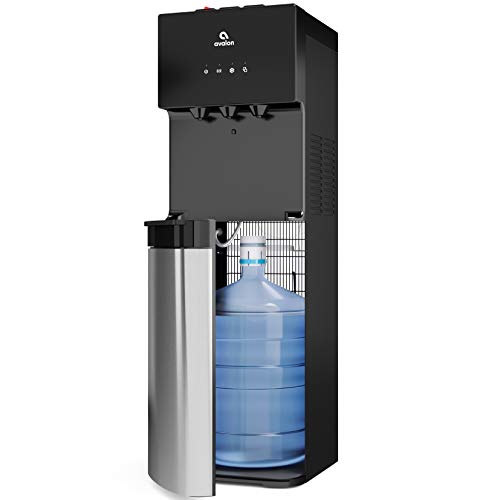
Avalon A4BLWTRCLR bottom-load dispenser
The Avalon A4BLWTRCLR is a bottom-load home dispenser with hot, cold, and room-temperature options and a brushed stainless cabinet appearance. Amazon’s verified item listing identifies the model family, while retailer specifications emphasize the exterior finish, child safety lock, and 3- or 5-gallon bottle compatibility. Do not treat a stainless exterior description as confirmation of stainless reservoirs: verify the tank materials with Avalon’s current documentation or support if that distinction is central to your decision.
Its key household appeal is the concealed bottle and familiar three-temperature setup. Measure the cabinet depth and door swing, leave the clearances the maker specifies, and consider the sound of compressor cooling in a quiet open-plan room. Check filter claims carefully: a bottled cooler generally dispenses the water delivered in the jug, and its buttons do not imply filtration. Confirm the seller’s return window and warranty coverage, especially when a marketplace listing is fulfilled by a third party.
View Avalon A4BLWTRCLR on Amazon
Picking the right temperature setup
Many home dispensers offer cold and hot water, while some add a room-temperature tap or button. Cold-water capacity and recovery depend on tank size, ambient conditions, and how quickly a household draws water. A cooler may not deliver a continuous stream at its coldest temperature after several large servings. If multiple people fill large bottles back-to-back, look for documented capacity and recovery information rather than relying on a “cold” label alone.
Hot dispensing can be useful for tea, instant meals, or a quick warm drink, but it also creates a scald hazard. A child-resistant lock or two-step control helps reduce accidental dispensing; it does not replace supervision. Place the cooler where a child cannot easily pull a cup of hot water onto themselves, and teach everyone how the lock works. Some models have a separate hot switch, which can be useful if the household rarely uses hot water and wants to disable heating. Check whether disabling hot mode affects the warranty or operating instructions.
Room-temperature water is a convenience feature, not a treatment setting. If you only need chilled water, a simpler cold-only appliance or a refrigerator dispenser may be enough. More temperature modes add controls and heating elements, so decide whether your household will use them before paying for them.
Dimensions, placement, and everyday ergonomics
Measure the floor area, height, width, and depth of the complete unit, including the bottle compartment door and drip tray. Then check the manufacturer’s ventilation clearances and the route through which the appliance must be carried. A cooler squeezed tightly between cabinets may be difficult to clean and may not have the airflow it needs. Avoid placing it directly beside an oven, radiator, or sunny window unless the manual permits that environment.
Consider how people will use it. A household with children may value reachable cold and room-temperature controls but prefer a hot tap that requires a deliberate lock release. Someone with limited strength may prefer bottom loading, while a top-load bottle makes the water level easy to see and can avoid pump-related complexity. If the dispenser stands in a shared living area, read owner feedback for noise concerns and place it on a stable, level floor.
Think about cup and bottle clearance. A tall reusable bottle may not fit under a short dispensing alcove. A removable drip tray gives more room for filling and can be rinsed separately. The spout’s position also affects splashing: a narrow cup opening under a fast stream may spill, so a slower or controlled flow can be useful in a family kitchen.
Cleaning and care for stainless parts
Stainless steel is not self-cleaning. Water-contact parts can collect mineral deposits or biofilm, and the outside can show fingerprints or water marks. Follow the product’s own use and care guide for how often to sanitize, which surfaces to clean, what solution to use, and how to flush the system afterward. Different coolers use different materials and seals; a cleaner tolerated by one model could damage another.
Do not assume bleach, vinegar, an acidic descaler, abrasive powder, or a scouring pad is safe because the tank is stainless. Chlorides and harsh chemicals can damage some stainless surfaces, while acids may harm seals or other internal components. Use only products and concentrations explicitly permitted by the manufacturer. Never mix cleaning chemicals. If the manual is missing, download the exact model’s instructions or contact the maker before sanitizing the reservoir.
Routine external care is usually simpler: wipe the cabinet with a soft damp cloth and dry it to reduce spotting, while avoiding abrasive pads that can scratch the finish. Clean a removable drip tray regularly and dry the area beneath it. Keep the spout and bottle collar free from dust, splashes, and hand contact. When changing a bottle, use clean hands and avoid touching the probe or the inside of the jug neck. Replace a bottle promptly if it is damaged or contaminated.
Before any maintenance, follow the manual’s power and draining instructions. Hot tanks can scald; turn off the heater and allow the unit to cool as directed. Do not open sealed panels or attempt electrical repairs unless the manufacturer authorizes the work. If a cooler leaks, smells unusual, stops heating or cooling, or shows corrosion at a water-contact joint, unplug it if safe and contact the maker or a qualified service provider.
What stainless steel can and cannot promise
A stainless reservoir may appeal to shoppers who prefer metal water-contact surfaces, but it does not guarantee better-tasting water, health benefits, or freedom from bacteria. Taste depends on the source water, the bottle, storage, and the appliance’s condition. Sanitation and timely maintenance still matter. Stainless exterior panels mainly affect appearance and wipeability, not water quality.
Ask whether the stated tank is the hot reservoir, cold reservoir, or both. Ask about connectors, tubing, taps, probes, and seals. If a listing mentions “stainless steel tank,” request a material specification for that named tank and the exact model. If the answer is vague, compare a different product with clearer documentation or decide based on other criteria instead.
Also consider water chemistry. Very hard water may leave mineral scale, while water with unusual acidity or high chloride content can be more challenging for materials. A water cooler is not a substitute for a water test if you have a concern about your household supply. Follow any local water-quality guidance and the manufacturer’s limits.
Service, warranty, and ownership costs
Check the warranty length, what it covers, whether labor and shipping are included, and which company handles claims. Save the receipt and model or serial number. Ask whether the warranty requires registration or an authorized seller. A low purchase price may be less appealing if the pump, faucet, bottle probe, or control board cannot be sourced later.
For a bottom-load dispenser, ask about bottle-pump or probe replacement. For a plumbed model, check filter cartridge names, replacement intervals, availability, and certification details. For any design, look for a published manual and a support contact that can answer material and maintenance questions. Return terms matter because a cooler may not fit the intended nook or may be noisier than expected.
Budget beyond the appliance: bottled models may require delivery fees, jug deposits, or storage; plumbed models may require installation and filters. Electricity use depends on insulation, compressor or heater design, room temperature, and how often the taps are used. If energy use is a priority, search the exact model in the official Energy Star product database where applicable or consult the manufacturer’s published energy figures. Do not infer efficiency from the stainless finish.
A practical buying checklist
- Confirm whether stainless refers to the exterior, a specific reservoir, or multiple water-contact parts.
- Match the exact model number on the manufacturer page, manual, and seller listing.
- Choose top-load, bottom-load, or plumbed based on lifting comfort, supply access, and maintenance tolerance.
- Decide whether the household will use hot, cold, and room-temperature dispensing.
- Check child-resistant controls and safe placement if hot water is enabled.
- Measure the unit, bottle compartment, dispensing clearance, door swing, and required ventilation space.
- Read the cleaning guide before buying; make sure you are comfortable with its sanitation routine.
- Check warranty, support, replacement parts, return policy, and recurring bottle or filter costs.
- Verify the current listing’s model, seller, included bottle, image, and claims before checkout.
Which type fits different households?
A top-load bottled cooler is a straightforward choice when you can safely lift a jug and want a visible water supply. A bottom-load unit suits households that dislike lifting but should be evaluated for pump access and service. A plumbed model may make sense when the installation location is fixed and reducing jug handling is a priority. In each case, the best match depends on how the family uses water, not on the finish alone.
For a stainless-steel reservoir specifically, prioritize clear model-level documentation. Brio’s 520 and 420 product descriptions identify stainless reservoirs for their specified versions; still compare the exact model code and live manual. Other products may offer a brushed stainless cabinet without a confirmed metal reservoir. Treat those as finish choices until the manufacturer states otherwise.
If the main goal is to reduce plastic handling, a bottleless connection may be relevant, but investigate installation and filters as a separate system decision. If the goal is an attractive appliance that hides a jug, an exterior stainless finish may be enough. If your priority is a verified reservoir material, do not let the cabinet appearance substitute for a written specification.
Frequently asked questions
Does a stainless-steel water cooler make water safer?
No. Stainless steel is a construction material, not a purification or disinfection process. Use safe drinking water and clean the dispenser according to the model’s instructions. A cooler’s filter claims should be evaluated separately, with exact certifications and contaminant data.
Is stainless steel on the outside the same as a stainless reservoir?
No. “Stainless finish” commonly describes the cabinet panels. A reservoir claim should identify a tank or water-contact component. Ask the manufacturer if the listing is unclear.
Are bottom-load coolers better for a home?
They can reduce the effort of lifting a heavy jug overhead and conceal the bottle. They also depend on a pump or bottle-drawing mechanism, so check service access, bottle compatibility, and warranty support. Top-load units are simpler to inspect and make the water level visible.
Can I clean a stainless reservoir with vinegar or bleach?
Only if the exact cooler’s manufacturer permits that cleaner and procedure. The tank may be stainless while seals, tubing, taps, and coatings are made from other materials. Follow the model-specific manual and never mix chemicals.
Do home coolers need filters?
Not necessarily. A bottled dispenser generally serves the water supplied in its jug and may have no filtration. A plumbed model may include a filter, but confirm what it removes, its certification, and replacement schedule. “Bottleless” does not automatically mean filtered.
How often should I sanitize a water cooler?
Use the schedule in the product manual and any guidance from your bottled-water provider. Household conditions and model design differ. Clean the dispensing area and drip tray regularly, and sanitize water-contact parts exactly as the manufacturer specifies.
Can a stainless cooler sit next to a refrigerator?
Often it can, provided the manufacturer’s clearance and electrical requirements are met and the location is not exposed to heat, direct sun, or moisture. Measure the available footprint and leave room to remove the bottle, open the lower door, and clean behind the unit.
Our recommendation
Start by choosing the loading format that works for your home, then decide which temperatures you will actually use. If a stainless reservoir is a requirement, favor a product page and manual that name the tank material for the exact model. Brio’s documented 520 and 420 versions offer examples with explicit reservoir language, while models such as the Avalon A4BLWTRCLR and Primo 900130-C should be checked carefully for the precise scope of stainless claims in the version being sold.
Before ordering, revisit the model page, download the manual, and compare the serial/model information in the listing. Verify current availability, seller identity, warranty, safety lock, jug fit, and cleaning instructions. For more guidance, see our office water cooler guide, our water cooler cleaning guide, and how we pick products. You can also read our affiliate disclosure.