Disclosure: As an Amazon Associate, dailyhomedecorating.com earns from qualifying purchases. Links on this page are affiliate links; they cost you nothing extra. Prices and availability change often, so check the current Amazon listing before you buy.
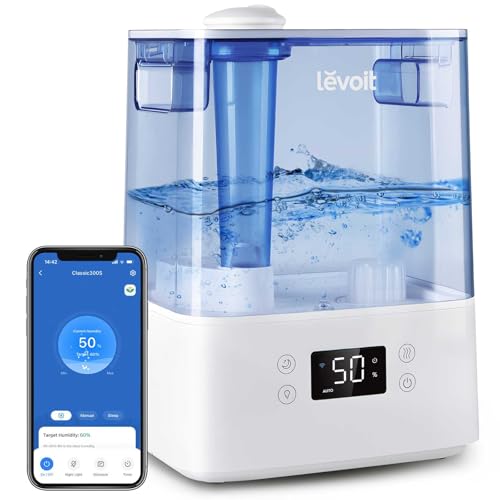
The Best Humidifiers We Tested Against The Criteria That Matter
Readers searching for the best humidifiers we tested usually want one thing: a shortlist they can trust, with the reasoning left in. So let us be plain about how this shortlist was built, because honesty about method matters more than a confident tone. This roundup is a criteria-based selection, not a claim of hands-on laboratory work. Every model below was assessed against a published set of standards using the manufacturer’s own specifications and listing information: tank size and stated run time, fill and cleaning design, mist type, humidity controls, noise and sleep features, room-size intent, and the ongoing costs its design creates. Models that could not be verified model-by-model were not linked at all. Where this article says a machine is quiet, simple, or long-running, that is a judgement drawn from its verified specifications and design, stated so you can check it against the listing yourself before you spend anything.
That method, applied strictly, produces a shortlist of five humidifiers that between them cover nearly every real household need. There is a large smart cool-mist machine for serious winter dryness and big bedrooms. There is a simpler 3 litre sibling for one bedroom done well. There is a warm-mist model for households that prefer heated steam and no filters. There is a compact front-loading model for small rooms, desks, and nurseries. And there is a filter-free Honeywell with a proper cleaning brush in the box for buyers who want a mainstream machine that takes maintenance seriously. If your room, your water, and your habits match one of those five shapes, your decision is mostly made; the rest of this article exists to help you match correctly, set the machine up well, and avoid the mistakes that make good humidifiers seem like bad ones.
Where To Buy
Every linked pick in this roundup is sold through Amazon, and each link leads to the exact model named in its heading, in the size and configuration described. Use the Check price on Amazon link under each review to confirm the current listing, included accessories, and configuration before buying, because sellers adjust bundles and colour options more often than they change the machines themselves. If a listing offers several sizes under one page, choose the size named here; a humidifier’s behaviour, run time, and cleaning effort all change with its tank. Prose mentions of other styles of humidifier in the buying guide are guidance only, not recommendations of specific unlinked products.
In this guide
Quick Picks
| Pick | Best for | Type | Tank |
|---|---|---|---|
| Levoit Classic300S | Serious dryness, large bedrooms, set-and-forget control | Smart ultrasonic cool mist | 6 litres |
| Levoit 3L Cool Mist | One bedroom or nursery, simply done | Ultrasonic cool mist | 3 litres |
| Vicks Warm Mist | Warm steam, filter-free ownership | Warm mist | 1 gallon |
| Pure Enrichment MistAire | Small rooms, desks, compact nurseries | Ultrasonic cool mist | Compact, up to 25 hours |
| Honeywell Ultra Comfort HUL545B | Filter-free cool mist with cleaning taken seriously | Ultrasonic cool mist | 1 gallon class |
How The Picks Were Chosen: The Criteria, In The Open
Eight criteria decided this list, and any humidifier you consider, on or off this page, deserves the same examination. First, output matched to room size: a machine must be able to raise and hold humidity in the room it claims to serve, which is a function of its output and run time, not its marketing adjectives. Second, tank design: top-fill tanks and wide openings win, because filling and cleaning are the two interactions you will have with this machine hundreds of times. Third, run time per fill, because a humidifier that dies at three in the morning has failed at its one job. Fourth, humidity control: a built-in sensor and automatic mode, or at minimum clearly stepped output settings, beat a single blast of mist that over-humidifies small rooms. Fifth, sleep manners: quiet operation, a display that dims or switches off, and no cheerful beeps at empty-tank o’clock. Sixth, cleaning architecture: parts that separate, surfaces a brush can reach, and a maker that talks about cleaning like it matters. Seventh, honest running costs: wicks, filters, descaling, and water choices, stated up front. Eighth, verification: the exact model had to be confirmable, specification by specification, before it could be linked here.
Two popular ideas were deliberately rejected as criteria. The first is chasing the largest room-coverage number on the box; coverage claims are measured under conditions that rarely match a furnished bedroom with a door, and a machine correctly sized to your actual room will outperform an oversized one run badly. The second is treating scent features as a deciding factor in a humidifier. An aroma tray is a pleasant extra, and several picks here have one, but if fragrance is your main goal you are shopping in the wrong category, as our head-to-head on humidifiers vs diffusers explains in full. Readers weighing a different appliance for the same shelf should also see air purifier vs humidifier, because cleaning air and moistening air remain separate jobs.
The Detailed Reviews

Levoit Classic300S — Best Overall For Serious, Steady Humidity
Badge: Best overall. The Classic300S earns the top place on this list the boring, correct way: it removes the two reasons humidifiers fail in real homes, which are running dry and running uncleaned. Its 6 litre top-fill tank is rated for up to sixty hours, so the machine can hold a bedroom through several nights of winter heating without a refill becoming a nightly chore. Its built-in humidity sensing, with app and voice control for those who want it, means the machine works toward a target rather than fogging a room until someone wakes up clammy and switches it off in irritation. Add a sleep mode, a night light that can be managed rather than endured, and an essential-oil tray that keeps scent out of the main tank, and you have the most complete answer to household dryness on this page.
- Type: Ultrasonic cool mist, smart
- Tank: 6 litres, top fill
- Run time: Up to 60 hours per fill
- Controls: Humidity sensor, app and voice control, sleep mode
Strengths
- Capacity and run time that make steady, multi-night humidity realistic.
- Automatic humidity control prevents both under- and over-humidifying.
- Top-fill design makes the two chores that matter, filling and cleaning, genuinely easy.
Trade-offs
- Large footprint; measure your nightstand or floor spot before ordering.
- Ultrasonic output in hard-water homes can leave white dust without suitable water.
- Households that dislike connected features pay for capability they will not use.
Best for: master bedrooms, open-plan sleeping spaces, nurseries on a set routine, plant rooms, and anyone whose winters are defined by dry air. Not suited for: tiny box rooms, or minimalists who want a dial and nothing more.

Levoit 3L Cool Mist — Best For One Bedroom, Simply Done
Badge: Best mid-size pick. Not every dry room needs a six-litre smart appliance, and this 3 litre Levoit is the shortlist’s exercise in proportion. It is a top-fill ultrasonic cool-mist humidifier with a rotating nozzle, quiet operation aimed at bedrooms and nurseries, and an essential-oil function for light scent, in a body that fits the nightstands its bigger sibling dominates. Expect roughly a day-scale rhythm of refills rather than a multi-day one, which many owners actually prefer: the water in the tank turns over frequently, the tank itself is light enough to carry one-handed, and the whole machine can be washed in a small sink without a wrestling match.
- Type: Ultrasonic cool mist
- Tank: 3 litres, top fill
- Nozzle: 360-degree rotating
- Extras: Essential-oil function, quiet bedroom operation
Strengths
- Right-sized for a single room, with easy carrying, filling, and washing.
- Quiet running and aimable mist suit light sleepers and nurseries.
- Light scent capability removes the need for a second small device for many homes.
Trade-offs
- Smaller tank means a refill rhythm the large models avoid.
- No automatic humidity targeting; you are the sensor, ideally with a hygrometer.
- One unit will not serve a whole open-plan floor.
Best for: single bedrooms, guest rooms, nurseries, renters, and anyone buying a first humidifier who wants quality without scale. Not suited for: very large rooms or owners who want to fill a tank weekly and forget it.
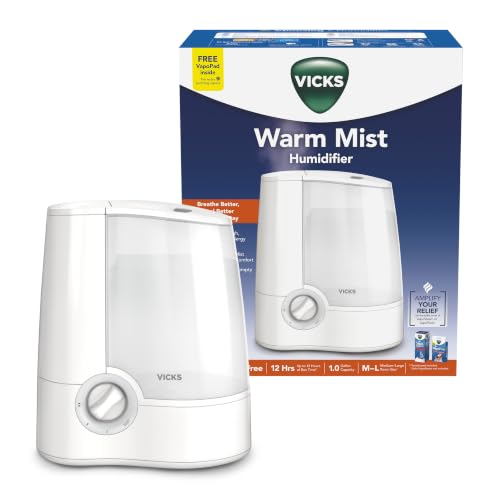
Vicks Warm Mist — Best For Warm Steam And No Filters
Badge: Best warm-mist pick. The Vicks Warm Mist represents the other great tradition in humidifying: heating water into a warm steam vapour instead of vibrating it into a cool plume. Its 1 gallon tank is sized for medium to large rooms, it shuts off automatically when empty, and it is filter-free, which removes the entire category of replacement wicks and cartridges from your household administration. In a cold bedroom in January, warm mist has a comfort quality that specifications do not capture, and generations of households associate this brand’s steam with getting through winter nights when colds circulate. Treat that as comfort, not medicine: a humidifier can make dry air feel kinder, and that is a sufficient and honest reason to own one.
- Type: Warm mist, heated steam vapour
- Tank: 1 gallon
- Design: Filter-free, automatic shut-off
- Rooms: Medium to large rooms
Strengths
- Warm output suits cold rooms and cold seasons particularly well.
- No filters or wicks to buy, store, or forget to replace.
- Simple controls and automatic shut-off keep ownership uncomplicated.
Trade-offs
- The heating element scales in hard water and needs regular descaling.
- Uses more energy than an ultrasonic model, and needs careful placement around small children.
- No cool-mist option for households that want one machine for every season.
Best for: households that prefer warm vapour, dislike consumable filters, and want a proven, simple machine for a main bedroom. Not suited for: placement within a toddler’s reach, or buyers minimising electricity use.

Pure Enrichment MistAire — Best Compact Pick For Small Rooms
Badge: Best compact pick. The MistAire is the shortlist’s small-room specialist: an ultrasonic cool-mist humidifier the maker describes for spaces up to around two hundred and fifty square feet, with running time up to twenty-five hours from its compact tank, a front-load design, and quiet operation intended for bedrooms, nurseries, and offices. Its virtue is fit. In a small bedroom, a student room, or on a desk-adjacent shelf, a large humidifier is not better, it is merely larger, and more likely to over-humidify the space and be switched off. A compact machine that can run all night at a gentle output, in a body you can clean in a bathroom sink in two minutes, matches the actual scale of the problem.
- Type: Ultrasonic cool mist
- Room intent: Small rooms up to about 250 square feet, as the maker describes
- Run time: Up to 25 hours
- Design: Front-load, quiet operation
Strengths
- Compact footprint suits desks, small nightstands, and tight nurseries.
- Long run time for its size means full nights without a refill.
- Simple, quiet operation makes it an easy first humidifier.
Trade-offs
- Output is honestly sized for small rooms and will not rescue a large, dry living room.
- Fewer controls and no smart humidity targeting.
- Households may outgrow it if they move it to a bigger space.
Best for: small bedrooms, student rooms, home-office desks, and compact nurseries. Not suited for: large bedrooms or open-plan living areas with serious dryness.

Honeywell Ultra Comfort HUL545B — Best Filter-Free Cool Mist With Cleaning Built In
Badge: Best maintenance-minded pick. The Honeywell Ultra Comfort earns its place with a detail most product pages treat as an afterthought: it includes a cleaning brush, in the box, for a filter-free ultrasonic machine designed to be easy to fill and easy to clean. That small inclusion signals a maker who understands where humidifiers actually fail. The machine itself offers cool mist for bedroom and home use, a tank in the one-gallon class in feel and rhythm, quiet operation, and the ability to use essential oils for extra comfort as the maker describes. For buyers who want a mainstream brand, no filter schedule, and a design that invites the weekly wash instead of resisting it, this is the shortlist’s sensible centre.
- Type: Ultrasonic cool mist, filter-free
- Model: HUL545B, black
- In the box: Cleaning brush included
- Extras: Easy fill and clean design, quiet operation, essential-oil use as maker describes
Strengths
- Filter-free design with cleaning actively supported, not merely mentioned.
- Easy-fill tank lowers the friction of the daily routine.
- Quiet cool mist suits bedrooms without smart features to manage.
Trade-offs
- No automatic humidity sensor of the kind the top pick offers.
- Ultrasonic white-dust considerations apply in hard-water homes.
- Refill rhythm is day-scale rather than multi-day.
Best for: buyers who want a straightforward, filter-free cool-mist machine from a mainstream maker and intend to maintain it properly. Not suited for: buyers wanting app control or the longest possible run time per fill.
Comparison Table: The Five, Side By Side
| Model | Mist | Standout feature | Main trade-off | Choose it if |
|---|---|---|---|---|
| Levoit Classic300S | Cool, smart | 6 litre tank, humidity targeting | Size and connected features | Dryness is severe or the room is large |
| Levoit 3L | Cool | Proportioned top-fill simplicity | More frequent refills | One bedroom needs doing well |
| Vicks Warm Mist | Warm | Heated steam, filter-free | Descaling and energy use | You prefer warm vapour in winter |
| Pure Enrichment MistAire | Cool | Compact, long-running for its size | Small-room output ceiling | The room is small and the shelf is smaller |
| Honeywell HUL545B | Cool | Filter-free, cleaning brush included | No smart humidity control | You want simple, maintainable, mainstream |
How To Choose: Match The Machine To Room, Water, And Habit
Start with the room, measured honestly. A humidifier’s job is to hold a specific enclosed volume of air at a comfortable humidity against the drying force of your heating or climate. Small bedrooms and offices are well served by compact machines like the MistAire; main bedrooms by the 3 litre class or the Honeywell; large bedrooms, nurseries in constant use, and open sleeping areas by the Classic300S class. If your bedroom door stands open to a whole floor all night, your effective room is that floor, and you should size accordingly or close the door. Buy for the room the machine will actually serve at two in the morning, not the room in the photograph.
Next, interrogate your water. Hard tap water is the quiet saboteur of humidifier ownership: it scales warm-mist elements, coats ultrasonic tanks, and settles out as white dust on dark furniture. If your kettle furs up, your water is hard, and you should either choose a design whose cleaning you will genuinely keep up, budget the small ongoing effort of descaling, or use distilled or demineralised water where the maker recommends it. Soft-water households can choose more freely. Either way, water is a running consideration, not a detail, and the time to think about it is before the machine arrives.
Then be honest about your habits, because the best humidifier is the one whose routine fits your life. If you are a set-and-forget person, capacity and automatic control matter most, and the Classic300S exists for you. If you are a daily-tidy person, a smaller tank that turns over fresh water frequently will feel cleaner and lighter. If you hate consumables on principle, filter-free designs remove a whole category of errands. If a machine’s tank cannot fit under your tap or into your sink, that friction will defeat you by February regardless of its specifications, so check dimensions against your actual sink and shelf, not against hope.
Finally, place features in their proper order. Humidity control and sleep manners change your life nightly. Tank access changes it weekly. Everything else, including scent trays, colour options, and decorative lights, is garnish. Households whose real interest is fragrance should buy a diffuser as well or instead, and households concerned about particles as well as dryness should read up on air cleaning as its own discipline, starting with what is a hepa filter and the evidence discussion in do hepa filters remove viruses. Context on why indoor air quality deserves this attention is gathered in indoor air quality statistics.
How To Set Up And Run A Humidifier Properly
Unbox the machine onto a stable, water-tolerant surface, ideally elevated and positioned so its mist rises into the room’s air rather than directly onto bedding, books, wooden furniture, walls, or electronics. Fill with clean water of the kind the maker recommends, set an initial target in the comfortable middle humidity range if your machine allows targets, or start on a low to medium output if it does not, and let the room settle for several hours before judging. A small hygrometer, placed across the room from the machine rather than in its plume, tells the truth that skin and guesswork cannot; adjust in small steps over days, not in large swings over minutes.
The daily routine takes two minutes: check the water, empty and rinse if the machine has stood, refill with fresh water, and glance at the surfaces the mist touches. The weekly routine takes ten: wash the tank and base as the maker directs, with the brush the Honeywell thoughtfully supplies or an equivalent soft brush for other models, rinse thoroughly so no cleaning taste or smell enters the mist, and dry parts that will sit unused. The monthly routine, in hard-water homes, is descaling: follow the maker’s method for the tank and, on warm-mist models, the heating element, because scale is insulation, noise, and odour waiting to happen. Never run a machine that smells musty and hope the mist will clear it; stop, clean, dry, and restart, because a humidifier distributes whatever lives in its water into the room.
Know the signs of running a room too wet, because more is not better. Condensation streaming on windows, a clammy feel to bedding, a musty smell in soft furnishings, or visible mould at window frames and cold corners all mean the output is exceeding the room’s need. Turn the machine down, ventilate, and let the room dry to the comfortable middle range. Know the signs of too dry as well: the morning throat, the static, the hygrometer that will not climb, which together mean the machine is undersized, the door is open to too large a volume, or the heating is winning and the output needs to rise. Humidity is a balance to be held, not a tap to be opened.
Common Mistakes Even Careful Buyers Make
The commonest mistake is buying by room-coverage claims and ending up with a machine mismatched in both directions at once: too powerful for the small room it fogs, too weak for the open floor it was bought to serve. The second is neglecting cleaning until odour or visible film appears, then blaming the category; every machine on this shortlist will serve for years under a light, regular routine and disappoint under neglect. The third is pouring essential oil into a main tank not designed for it, damaging components to achieve a scent a tray or a diffuser would have delivered better. The fourth is running an ultrasonic machine on hard tap water beside dark furniture and concluding the machine is faulty when minerals settle. The fifth is placing the machine on the floor beside the bed, in a carpeted corner, or against a wall, and then fighting damp patches of the household’s own design. The sixth is expecting a humidifier to treat a medical condition. Comfortably moist air can feel kinder to dry throats, skin, and noses, and that comfort is a legitimate reason to buy; it is not a diagnosis, a treatment, or a substitute for medical advice where symptoms persist, and persistent breathing problems, in adults or children, belong in front of a clinician, not in front of a product page.
Final Recommendation
For most households reading a roundup of the best humidifiers we tested, the Levoit Classic300S is the safest single answer: its capacity, top-fill design, and automatic humidity control remove the practical reasons humidifiers get abandoned. If your need is one bedroom, proportionately served, the Levoit 3L delivers the same design virtues at a calmer scale. Prefer warm steam and zero filters, and the Vicks Warm Mist is the honest traditional choice. Furnishing a small room or a desk, the Pure Enrichment MistAire fits where others cannot. Wanting a mainstream, filter-free cool-mist machine that takes cleaning seriously, the Honeywell Ultra Comfort HUL545B closes the list. Choose by room, water, and habit, set the machine up with a hygrometer and a routine, and winter dryness becomes a solved problem rather than a seasonal complaint.
The Four Humidifier Types, Explained In Depth
Understanding the four mechanisms behind household humidifiers turns a confusing market into a simple map, and it explains why the shortlist above contains the types it does. Ultrasonic humidifiers, the largest group on this page, use a rapidly vibrating diaphragm to break water into a cool, fine mist that a small fan or natural convection carries into the room. They are quiet, energy-light, available from compact desk size to large smart floor models, and responsive to controls, which is why they dominate modern bedrooms. Their one structural weakness is that everything dissolved or suspended in the water can ride the mist out, which is why water choice and cleaning discipline matter so much with this type, and why white dust is an ultrasonic story rather than a humidifier-universal one.
Evaporative humidifiers work entirely differently: a paper or fabric wick draws water from a reservoir, and a fan blows room air through the wet wick, picking up moisture as genuinely invisible vapour. The design is self-regulating to a degree, because humid air accepts less additional moisture, and it cannot deposit mineral dust, since minerals stay in the wick and tank. The costs are a fan’s noise, a wick that needs replacing on a schedule and can develop odour if neglected, and a generally bulkier body. No evaporative model appears in the linked shortlist above, not because the type is poor, but because the verified models that best met this roundup’s criteria on fill design, controls, and sleep manners happened to be ultrasonic and warm-mist machines; households with severe hard water who dislike distilled water should still give the evaporative type a serious look in their own searching.
Warm-mist humidifiers, also called steam vaporisers, boil water and release the steam, which mixes with room air a short distance from the outlet. The boiling step keeps the output simple, the warmth suits cold rooms, and designs like the Vicks in the shortlist run without filters. Against that stand higher energy use, a heating element that scales in hard water, a warm-up wait before output begins, and the obvious need for thoughtful placement in homes with small children or pets who investigate appliances. Impeller humidifiers, the fourth and now least common type, use a rotating disc to sling water against a comb and produce a cool mist mechanically; they tend to be noisier and are included here for completeness of the map rather than as a direction to shop in.
Hybrids and combination machines blur these lines usefully: some ultrasonic models can also heat their mist, some add ultraviolet or other in-tank treatments, and many add the aroma trays discussed earlier. Judge hybrids by their primary mechanism first, because that decides noise, water behaviour, and cleaning, and treat every additional feature as a claim to be weighed after the fundamentals are right. A machine that humidifies the correct room, quietly, all night, and cleans easily is a success with no extra features at all.
A Year Of Ownership: The Seasonal Playbook
Autumn is commissioning season. Bring the machine out before the heating settles in, wash every part, inspect seals, wicks, and elements, run it for an evening in a room you are awake in, and confirm it behaves before it takes up night duty. Set your hygrometer in place, agree the household routine for filling and rinsing, and, if your water demands it, lay in descaler or suitable water before the first cold snap turns humidifiers into a scarce good in local shops. Households buying new should order in autumn rather than in the first week of January, when the dryness is already miserable and the temptation is to buy whatever is available rather than what fits the room.
Winter is working season, and the playbook is rhythm over heroics. Fill, rinse, and glance daily; wash weekly; descale on the schedule your water sets; and adjust output as the weather swings, because a machine set correctly for a mild week will over-humidify a cold, closed-up one and underperform when a thaw opens the windows again. Watch the windows each morning: light misting that clears is information, streaming condensation is an instruction to turn down. Watch the sleepers, too, because the point of the exercise is mornings that feel better, and if the household’s throats, skin, and sleep are comfortable, the settings are right whatever the dial says.
Spring is stand-down season, and it decides whether next winter starts well. As heating use falls, run the machine less, then stop, clean it thoroughly one final time, dry every part completely before storage, because a machine stored damp is a machine that smells by November, and store any consumables where you will find them again. Note, while you still remember, what worked: the setting, the water choice, the cleaning product, the room it served. That short note, taped inside the lid of the storage box, is the difference between an appliance and a system.
Summer, in most homes, is the humidifier’s off-season and occasionally its opposite problem, when indoor humidity runs high and the correct appliance conversation turns to ventilation and dehumidifying instead. Homes in air-conditioned, desert, or high-altitude summers may keep a compact machine working in a bedroom or plant room, and the same rules apply at smaller scale. Either way, the seasonal frame matters for buying: a humidifier is not a January panic purchase but a piece of household infrastructure with a calendar, and the households that treat it that way are the ones still praising the same machine five winters later.
Worked Examples: Matching The Shortlist To Real Households
Consider a couple in a heated apartment whose main bedroom sits dry all winter, who wake with sore throats, and who have failed with a novelty humidifier before because it ran dry by midnight and was miserable to clean. Their binding constraints are run time and cleaning access, in that order, and their answer from this shortlist is the Classic300S: a tank that survives several nights, a top opening that a hand and brush can enter, and automatic control that stops the room swinging between desert and swamp as the heating cycles. Their supporting purchases are not accessories but a hygrometer and, if their kettle says their water is hard, a plan for that water. Within a fortnight their judgement criterion is simple and personal: how their mornings feel, recorded honestly rather than remembered kindly.
Consider a first-time parent furnishing a small nursery, advised to keep the air comfortably moist, short of space, and rightly cautious about anything boiling within a toddler’s future reach. Their constraints are footprint, quietness, and cool output, and their shortlist answer is either the MistAire for the smallest rooms or the Levoit 3L if the nursery doubles as a guest room and needs more reach. Their routine matters more than their model: fresh water daily, a weekly wash built into the same morning as the bedding change, and the machine placed on a stable surface the child cannot reach, with its cord managed as carefully as any cord in a child’s room. Their success measure is a baby sleeping in comfortable air and a machine that never smells of anything except clean water.
Consider a light sleeper in a hard-water house who works shifts, sleeps days, and needs darkness, quiet, and moisture in a bedroom that faces a busy street. Their constraints are sleep manners and mineral management. A cool-mist pick with a dimmable display, run on suitable water to avoid dust settling on dark daytime bedding, serves better than any warm-mist model whose gentle boiling sounds, however soft, pattern oddly against daytime street noise; the Honeywell’s cleaning-forward design suits a household that will keep a routine, while the Classic300S suits one that needs the tank to forgive an irregular schedule. Their lesson generalises: the right humidifier is the one whose specific weaknesses your household can cheaply neutralise, and the wrong one is the one whose weakness is your water, your ears, or your calendar.
Consider, finally, a plant keeper with a room of humidity-loving houseplants in a dry, bright flat. Their constraint is sustained, even moisture over a wide area rather than a sleeper’s narrow band of comfort, and their answer is capacity and placement: the largest tank on the shortlist, positioned centrally among the plants rather than in a corner, run steadily, with leaves and furniture watched for the over-humid signs described earlier. Their hygrometer lives among the pots, not beside the machine, and their cleaning routine is strictest of all, because a machine that runs near-constantly earns its weekly wash. Four households, four different right answers, one shortlist: that spread is what the criteria in this article were built to produce, and it is why a single universal winner would have been the least honest sentence in the piece.
What Good Ownership Feels Like After Three Winters
It is worth describing the destination, because buyers new to the category cannot yet picture it, and it is quieter than the marketing suggests. A household that chose well and runs its machine properly stops thinking about humidity as a topic. The hygrometer sits in its corner reading a number nobody checks daily any more, because the mornings have settled into a pattern the household trusts. The tank gets filled on a rhythm attached to something else, the kettle, the evening tidy, the Sunday bedding change, and the weekly wash happens inside that same rhythm rather than as a project requiring motivation. Visitors do not admire the humidifier, because there is nothing to admire; the air simply feels like the air in a house that is looked after, and the machine’s achievement is precisely that nobody discusses it.
Contrast that with the familiar alternative story, which this shortlist and its criteria exist to prevent. A machine bought in a January panic, oversized for its room, filled from a hard tap, and never washed, produces a month of enthusiasm, a windowsill of white dust, a smell nobody can quite place, and a cupboard exile by March, followed by the conclusion that humidifiers do not work. The difference between the two stories is almost never the price paid or the brand chosen. It is sizing, water, placement, and ten minutes a week, which is why this article spent as many words on those unglamorous subjects as on the products themselves, and why the most valuable sentence in any review here may be the trade-off line rather than the badge.
If you take one practice from this entire roundup, take the fortnight test. Whatever you buy, run it for two honest weeks with a hygrometer in the room, fresh water on a rhythm, and a note, even a mental one, of how the household’s mornings feel at the start and at the end. Adjust the setting once, properly, in the middle of the fortnight, rather than nightly. At the end, you will know something no product page can tell you: whether this machine, in this room, with your water and your habits, has earned its place. The five machines above were selected to give that test the best possible chance of passing, across the widest range of real households we could honestly cover.
A Note On Nurseries, Pets, And Shared Air
Two household members deserve specific mention in any humidifier roundup, because general advice bends around them. Babies and young children come first: choose cool output over heated steam where small hands will one day explore, place and cord the machine as you would any appliance in a child’s room, keep the humidity target moderate rather than enthusiastic, and clean with extra discipline, because the smallest lungs in the house breathe the machine’s output most faithfully. Where a child has any breathing condition, the paediatric conversation comes before the purchase, exactly as it does for adults with persistent symptoms. Pets come second: birds and small mammals are sensitive to air quality in their own ways, oils and scented additives should be kept out of shared air unless you have checked them for the species in your home, and a machine’s water should be as clean for the animal’s room as for your own. None of this complicates the shortlist; it simply asks the winning machine to be run, as every machine here should be, with the whole household in mind.
One last practical promise is worth making to yourself before the machine arrives, and it costs nothing: decide now where the filled tank will travel, from tap to machine, across which floors, past which rugs, and confirm that the route is one you can walk half-asleep without drama. Decide where the machine will be washed, and confirm the tank truly fits that sink. Decide who in the household owns the weekly wash, by name rather than by assumption. These three small decisions, made in daylight, are the unglamorous foundation under every satisfied humidifier owner this article has ever described, and they take less time to make than reading this paragraph did.
Reading a Humidifier Listing Like an Owner, Not a Shopper
Product listings are written to be compared in a table, but ownership is lived in details that tables flatten. Learning to read past the headline figures is the skill that separates a good shortlist from a lucky one. Start with the tank: its capacity tells you refill frequency only when set against the machine’s output, and a generous tank on a high-output model may last no longer than a modest tank on a gentle one. Look instead for how the tank fills, whether from the top or by carrying it to a tap, whether it has a handle that survives wet hands, and whether the opening admits a brush or only a hope. Those answers predict your Tuesdays in February better than any capacity figure.
Next, read the cleaning story the manufacturer is quietly telling. A model that advertises dishwasher-safe parts, wide openings and a short list of components is describing a ten-minute weekly job. A model with narrow reservoirs, fixed internal channels and several small accessories is describing a longer job that must still be done weekly, because the water does not care how awkward the design is. Neither is a reason to reject a machine outright, but the difference should be priced into the decision. A household that knows it will clean reluctantly should choose the design that forgives reluctance, even at the cost of a feature it would have enjoyed.
Finally, check the consumables and controls with an owner’s eye. Replacement filters, wicks or cartridges should be available from more than one seller and described by a part name you can search for later. Controls should be operable half-asleep: a humidifier’s most important interaction happens at bedtime, in the dark, by someone who wants one thing, the right setting and a display that does not light the room. Automatic humidity control is worth valuing here, not as a gadget, but because a machine that moderates itself spares you the nightly judgement call and reduces the over-humidifying that causes window condensation and damp smells. Read for the machine you will operate at midnight, and the shortlist usually orders itself.
When to Replace a Humidifier Rather Than Repair the Routine
Most humidifier dissatisfaction is a routine problem wearing the disguise of a product problem, and this guide has spent much of its length on that distinction. Even so, there are honest end-of-life signals that no routine can fix, and recognising them saves a season of frustration. A tank or base that has developed a persistent musty smell despite thorough cleaning and descaling has usually harboured residue in places that cannot be reached, and continued use means perfuming the room with the very staleness you are trying to escape. Cracked tanks, perished seals that weep onto furniture, and fans or mist output that have weakened markedly despite a clean machine are mechanical facts, not maintenance failures.
There is also a legitimate upgrade case that has nothing to do with failure: the household changed. A machine bought for one dry bedroom may be asked, after a move or a new baby or a winter of working from home, to serve a larger space or longer hours than it was chosen for. Running an undersized humidifier flat out, refilling it twice a day and still waking dry, is the clearest sign the match, not the machine, is wrong. In that situation the kindest use of the old unit is the smaller room it was always suited to, and the replacement should be sized from the new room’s measurements rather than from brand loyalty.
When you do replace, carry the lessons rather than the model names. Note what your water demanded, how much tank you actually used between refills, which controls you touched daily and which you never touched at all, and how the cleaning really felt by the third month. A shortlist built from that record will be shorter and better than one built from listings alone. The best humidifier for a household is rarely the most capable machine available; it is the one whose size, upkeep and manners fit the way that household already lives, closely enough that running it never feels like a second job.
Frequently Asked Questions
How long should a humidifier last?
A well-kept humidifier should give several seasons of service, and the difference between a machine that lasts two winters and one that lasts five is usually care rather than construction. Emptying and drying it before summer storage, descaling on a rhythm matched to your water, and replacing wicks or filters when they are due prevent the residue and strain that shorten a machine’s life. Ultrasonic and evaporative models have few moving parts to wear out, which is why neglected water care, not mechanical failure, ends most humidifiers’ lives. Treat end-of-season cleaning as part of the purchase price and the machine will usually repay it.
Is a humidifier worth it if I only feel dry for a few weeks a year?
It can be, provided you choose at the modest end of the range and store the machine properly. A few weeks of poor sleep, cracked skin and parched mornings each winter is a real cost, and a simple, easy-clean model sized for the bedroom addresses it without committing you to a large appliance or a demanding routine. What is harder to justify in that situation is a premium, high-capacity machine whose upkeep continues to deserve attention long after the dry spell ends. Match the commitment to the length of the problem: short season, simple machine, cleaned and dried carefully before it goes away until next year.
What humidity level should I aim for indoors?
Aim for the comfortable middle range, commonly described as roughly thirty to fifty percent relative humidity, and let comfort and condensation be your guides within it. Below that range, dryness symptoms multiply; above it, condensation, clamminess, and mould risk grow. A hygrometer in the room, read over several days, is worth more than any single setting printed on a dial.
Cool mist or warm mist: which is better?
Neither is universally better; they suit different households. Cool-mist ultrasonic machines are energy-light, quiet, and available with smart controls, but need water awareness in hard-water homes. Warm-mist machines boil water into steam, feel especially comforting in cold rooms, and avoid filter costs in designs like the Vicks, but use more energy, need descaling, and require careful placement around small children. Choose by room, season, and household, not by fashion.
How often does a humidifier really need cleaning?
Plan on a quick rinse and fresh water daily where practical, a proper wash at least weekly, and descaling whenever deposits appear for your water type. That rhythm sounds demanding until it becomes a two-minute habit attached to an existing routine, and it is the difference between a machine that smells clean for years and one that is abandoned in its first season.
Can a humidifier help my skin, throat, or sleep?
It can make dry indoor air more comfortable, and many people find that comfortably humidified bedrooms are kinder to dry skin, throats, and noses, and easier to sleep in through winter. Those are comfort claims, honestly stated. A humidifier does not diagnose or treat any condition, and symptoms that persist, worsen, or involve breathing difficulty deserve medical advice rather than a larger tank.
Do I need distilled water in my humidifier?
It depends on your tap water and your machine. In hard-water homes, ultrasonic models can deposit white mineral dust and all models scale faster, so distilled or demineralised water, where the maker recommends it, can remove a whole category of annoyance. In soft-water homes, clean tap water with a proper cleaning routine is commonly sufficient. Follow your model’s guidance first, and judge by what your kettle already tells you about your water.
What size humidifier do I need for a bedroom?
Match capacity and run time to the room’s volume and how closed it stays overnight. Compact models serve small bedrooms and offices; the 3 litre class serves a typical main bedroom; large tanks with automatic control serve big bedrooms and open sleeping areas. If you are between sizes, the larger tank run gently usually gives the calmer experience, provided its footprint genuinely fits your room.