Disclosure: As an Amazon Associate, dailyhomedecorating.com earns from qualifying purchases. Links on this page are affiliate links; they cost you nothing extra. Prices and availability change often, so check the current Amazon listing before you buy.
The search for the best ear plugs sounds simple until you stand in front of the shelf — physical or digital — and meet the crowd: foam cylinders in industrial quantities, silicone discs, mouldable pillows, sleek reusable rings with names like headphones, wax, flanged Christmas trees, and decibel figures shouted in four different measurement dialects. This guide sorts the crowd by the only question that matters — what are you trying to soften, and for how long at a stretch — and answers it with three verified picks that between them cover the modern reusable, the adjustable all-rounder, and the classic mouldable standby. Around the picks sits the knowledge that decides whether any ear plug works: fit, insertion, and honest expectations.
The framing is comfort, and it is chosen carefully. This page discusses ear plugs for sleep comfort, concentration, travel and everyday noise softening. It repeats manufacturers’ own stated reduction figures where the listings give them, clearly attributed, and it makes no medical claims: ear plugs are not presented here as treatment for any condition, and anyone with ear pain, hearing concerns, or a condition affecting the ear canal should take advice from a clinician or audiologist rather than from a shopping page. Within that discipline, there is a great deal of practical good to be done, because a well-chosen, well-fitted ear plug is one of the smallest and most effective comfort purchases a household can make.
Key Takeaways
- Fit is the product: a modest plug sealed properly outperforms a premium plug worn loosely, so insertion technique matters more than brand.
- Loop Quiet 2 is the modern reusable pick for sleep and focus, with a manufacturer-stated 24 dB SNR reduction and a washable, reusable design.
- Loop Switch 2 adds three adjustable modes, with stated figures spanning 20–26 dB SNR, for people whose day moves between focus, travel and social noise.
- Mack’s Pillow Soft Silicone plugs mould over the ear canal rather than inside it — a twelve-pair standby for sleep, swimming and study, with a manufacturer-stated 22 dB NRR.
- Reduction figures are laboratory numbers under ideal fit; treat them as comparisons between products, not promises about your street, your snorer or your building site.
In this guide
Quick Picks
Best reusable for sleep and focus: Loop Quiet 2 — ultra-comfy reusable ear plugs with a flexible, customisable fit, washable for nightly use.
Best adjustable: Loop Switch 2 — three modes in one pair, for the person whose noise problem changes between breakfast and midnight.
Best mouldable classic: Mack’s Pillow Soft Silicone — twelve pairs of mould-over-the-ear plugs for sleepers, swimmers, travellers and students, made in the USA per the listing.
How We Chose These Ear Plugs
The shortlist was built on verifiability, variety and honesty of figures. Verifiability: each pick is a current listing we could check, and every number in this guide traces to the manufacturer’s own stated figure in that listing, labelled as such. Variety: the three picks embody the three great plug philosophies — the shaped reusable insert, the adjustable multi-mode insert, and the mouldable cover — so a reader who rejects one philosophy still finds their answer on the page. Honesty: no pick is credited with powers its maker does not claim, no figure is converted between measurement systems to make it look bigger, and the guide will explain, in its own section, why the two rating dialects on this page — SNR and NRR — cannot be compared digit for digit. What was excluded matters too: anonymous bulk foam of unknown provenance, novelty plugs sold as fashion with no stated figures at all, and anything marketed with medical promises this page will not repeat.

Loop Quiet 2 — the Reusable Plug for Sleep and Deep Focus
Badge: Best for nightly sleepers, light sleepers in noisy homes, and concentration in shared spaces.
- Model: Loop Quiet 2 ear plugs
- Manufacturer-stated reduction: 24 dB SNR, per the listing
- Design: reusable and washable, flexible fit with customisable sizing
- Listing’s stated uses: sleep, deep focus, travel, noise sensitivity
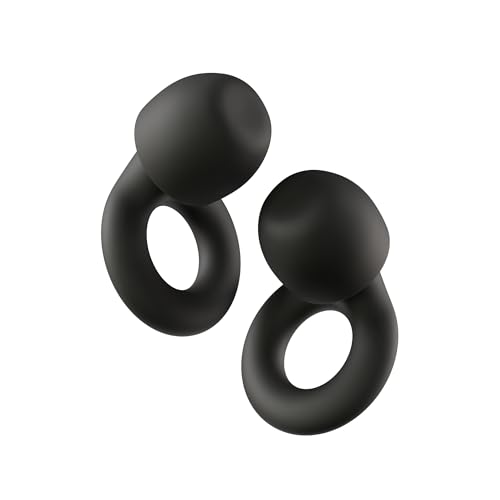
The Quiet 2 represents the plug’s modern reinvention: not a disposable cylinder but a small, designed object — a soft ring-and-tip form that sits in the ear’s bowl and seals the canal with a choice of tip sizes, so the fit can be tuned to the ear rather than endured by it. The listing’s language is comfort language — ultra-comfy, flexible, customisable — and for once the adjectives point at the real engineering, because the two reasons people abandon ear plugs are discomfort by 3 a.m. and a seal that fails when they roll over. A reusable that survives nightly use must solve both, and the washable construction closes the loop: a plug you can clean is a plug you will still be using in month six, which is where its economics and its hygiene both live.
The stated 24 dB SNR figure places it, by its maker’s own measurement dialect, in the solid middle of the sleep-and-focus class: enough softening to take the edge off a household’s night noises, a partner’s soundscape, traffic through a window and the dawn chorus of bins and birds, while leaving the wearer in a world where an alarm, a child or a doorbell still registers. That balance is the sleep plug’s whole art — isolation is neither achievable nor, for most households, desirable — and the Quiet 2’s stated uses in its listing read like a diary of the modern light sleeper: sleep first, then focus in open offices and shared flats, travel’s cabins and hotel corridors, and the general mercy of turning a too-loud world down one notch.
Strengths
- Customisable tip fit addresses the comfort problem that kills nightly plug habits.
- Reusable and washable, so the cost and waste are front-loaded rather than nightly.
- Discreet, designed appearance that does not announce itself across a pillow or a desk.
Trade-offs
- A shaped reusable costs more upfront than a box of disposables; losing one hurts accordingly.
- Side sleepers should test the fit against their pillow, as with any in-ear design.
- Readers wanting maximum stated reduction for very loud environments should compare the mouldable and foam classes too.
Best for: nightly sleep use, focus work and travel, in one washable pair. / Not suited for: the chronically plug-losing, who should keep a disposable standby, or anyone advised by a clinician to avoid in-ear plugs.

Loop Switch 2 — Three Modes for a Day That Changes Volume
Badge: Best for mixed days — focus, travel, socialising and festivals in one pair.
- Model: Loop Switch 2 adjustable ear plugs
- Manufacturer-stated reduction: 20–26 dB SNR across three modes, per the listing
- Design: adjustable modes, flexible fit
- Listing’s stated uses: focus, travel, socialising, festivals and more
The Switch 2 answers a subtler problem than loudness: variability. The knowledge worker’s morning needs the office softened but the meeting audible; the traveller’s afternoon needs the cabin’s roar down but the announcement intelligible; the evening’s concert or festival needs the volume’s edge off while the music and the friends remain present. One fixed plug serves each of these adequately and none of them well, so Loop built the adjustment into the plug — three modes, switched on the ear, spanning the maker’s stated range from the lighter end toward the fuller quiet of its sibling. The listing’s use list is the itinerary of exactly that day, and the product makes sense the moment your own day resembles it.
Judged as engineering, the appeal is the removal of friction: no pocketful of different plugs, no decision at the door, just one pair whose personality changes with a twist. Judged as comfort, it shares the family virtues — a flexible, fitted form designed for hours rather than minutes, and the reusability that makes a daily-carry object economically sane. Its honest limitation is the mirror of its virtue: a jack of three trades invites comparison with the dedicated tool at each end, and the sleeper who wants only the deepest quiet should buy the Quiet and its single-mindedness instead.
Strengths
- Three modes in one pair cover the day’s changing noise without carrying spares.
- Stated range lets the wearer choose conversation-friendly softening or fuller quiet.
- Same fitted, reusable comfort platform as its sleep-focused sibling.
Trade-offs
- Adjustability costs more than a single-purpose plug of similar quality.
- Mode-switching is a small mechanism to learn and to keep clean.
- Dedicated sleepers gain nothing from the social modes they will never engage.
Best for: commuters, open-office workers, frequent travellers and festival-goers with one pair to carry. / Not suited for: single-purpose sleep users, who should take the Quiet 2 and save the difference.

Mack’s Pillow Soft Silicone — the Mouldable Classic
Badge: Best for ears that dislike inserts, for swimming, and for keeping a standby everywhere.
- Model: Mack’s Pillow Soft Silicone earplugs, twelve pair
- Manufacturer-stated reduction: 22 dB NRR, per the listing
- Design: mouldable silicone that covers the canal opening rather than entering it
- Listing’s stated uses: sleeping, snoring environments, swimming, travel, concerts and studying
Mack’s represents the third philosophy, and for many ears it is the revelation of the page: instead of entering the ear canal, a soft silicone pillow is warmed in the fingers, flattened, and moulded over the canal’s opening, sealing it from outside. Every problem that is really a canal problem — soreness from inserts, a poor fit in an unusual canal, the swimmer’s wish to keep water out as well as noise down — dissolves in that single design decision. The listing’s stated uses sketch the territory: sleep in a snoring household, swimming, travel, concerts, studying. It is the plug of dorm rooms, hospital wards, camp sites and marital diplomacy, sold in a twelve-pair box that invites you to keep pairs in the bedside drawer, the washbag and the desk, and made in the USA according to its listing.
The mouldable method has its own technique, taught in this guide’s how-to: clean, dry ears and hands, a plug softened and shaped, pressed to cover the opening without being pushed into the canal, and replaced when it loses its tack and cleanliness — these are consumables, with each pair serving a limited run of uses, which the box’s dozen pairs acknowledge honestly. Its stated figure, in the NRR dialect, sits where the category’s useful middle sits; do not line it up digit-for-digit against the Loops’ SNR numbers, for reasons the next sections explain, and judge it instead on the testimony of its design: for the ear that rejects inserts, the best plug is the one that never asks to be inserted.
Strengths
- Moulds over the ear, solving fit and comfort for ears that hate canal inserts.
- Doubles as the swimmer’s plug, keeping the seal at the surface.
- Twelve pairs make it the natural standby for guests, travel and spares everywhere.
Trade-offs
- Consumable by design: pairs tire, soil and need replacing, unlike a washable reusable.
- Hair, oils and bedding can break the surface seal if the moulding is careless.
- The covered-ear feel is its own sensation, which some sleepers love and others notice all night.
Best for: insert-averse ears, swimmers, and households wanting an inexpensive standby in every drawer. / Not suited for: buyers who want one washable pair to serve for months, or the neatest in-ear profile.
SNR, NRR and Other Numbers That Refuse to Match
The two Loops on this page quote SNR — single number rating, the European dialect — while Mack’s quotes NRR, the noise reduction rating used in the United States. Both are laboratory figures derived under controlled fit, and they are calculated differently enough that placing them side by side as a league table misleads: a plug is not better because its dialect produces the larger digit. What the figures are for is comparing within a system and confirming that a product sits in the class its uses suggest — sleep and focus plugs in the moderate range, industrial foam at the heavy end. Real-world performance then depends, overwhelmingly, on the seal your ear and your technique achieve, which is why every serious guide, this one included, spends more words on fitting than on figures. Treat any plug marketing that converts, inflates or cherry-picks between dialects as a confession, and any plug that states its figure plainly in one dialect, as all three picks here do, as the beginning of an honest conversation.
How to Fit Ear Plugs So They Actually Work?
For shaped reusables like the Loops
Start with the tip size you judge closest, seat the plug so its tip enters the canal’s mouth while the ring settles into the ear’s bowl, and then judge by two tests: the world should soften evenly on both sides, and your own voice should sound slightly fuller in your head — the occlusion sign of a real seal. If one side leaks, change that side’s tip size before blaming the model; ears are individuals, and mixed sizes across a pair are normal. Give a new fit three nights before verdict: ears learn plugs the way feet learn shoes.
For mouldable silicone like Mack’s
Hands and ears clean and dry — this is non-negotiable, because the seal is a surface seal and oils are its enemy. Warm the pillow between your fingers, shape it into a disc slightly larger than the canal’s opening, and press it over the opening to seal, flattening the edges against the ear. Do not push it into the canal; the design’s whole virtue is that it stays at the surface. Keep hair out of the seal, and retire a pair when it will no longer mould cleanly or stay tacky.
For foam plugs generally
Though no foam pick anchors this guide, the classic technique belongs in any complete account: roll the plug into a thin crease-free cylinder, reach over your head to straighten the canal with the opposite hand, insert deeply and promptly, and hold it while it expands. Most foam disappointment is insertion disappointment — a plug worn at the canal’s doorstep performs like the doorstep, whatever its packet promised.
Choosing by Situation: A Field Guide
Sleep beside a snorer: comfort across eight hours outranks raw figures; start with the Quiet 2 if you tolerate inserts, the Mack’s if you do not, and expect softening, not silence — a household negotiation about the snoring itself is a clinician’s conversation, not a plug’s. Open-office focus: the Switch 2’s lighter mode keeps the room’s roar down and its humans intelligible. Flights and hotels: either Loop travels in a pocket and survives the trip’s hygiene; the Mack’s is the spare to lend a travelling companion. Swimming: the mouldable’s surface seal is the design brief itself. Concerts and festivals: adjustable softening preserves the music’s shape while taking its edge off — the Switch’s social modes were listed for exactly this. Study in a loud house: any of the three, chosen by ear-shape preference, plus the door-closed diplomacy that no plug replaces. Across all six, the pattern repeats: match the philosophy to the ear and the hour, fit it properly, and the category delivers its modest, genuine good.
Care, Hygiene and When to Replace
Reusables earn their keep only if they are kept: wash the Loops as their maker directs, dry them fully, and store them in their case rather than loose among the pocket’s archaeology. Inspect tips for tears and the body for damage; a torn tip is a failed seal waiting for its night. Mouldables are replaced on evidence — lost tack, visible soiling, a seal that will not hold — and never shared, a rule that applies to every plug on this page with the force of common sense. Foam, where you use it, is single-use by design and should be treated as such however frugal the temptation. And a plug of any kind that causes pain, or that you suspect has left a piece behind, ends the experiment immediately in favour of professional attention; comfort equipment that hurts has failed at its only job.
Common Mistakes
The first is buying by the biggest number, in whichever dialect shouts it, for a job — sleep — where the biggest number is often attached to the least comfortable object. The second is wearing plugs shallow and reviewing them as frauds. The third is expecting silence: plugs soften the world by a stated amount under good fit, and a wearer briefed for silence will call a working plug broken. The fourth is the eternal pair — reusables never washed, mouldables worn for a month, foam on its fifth night — hygiene being the tax every philosophy charges. The fifth is sleeping in plugs chosen for a building site, or working a loud shift in plugs chosen for a pillow: match the class to the task, and where the task is genuinely industrial noise, that is a workplace-safety conversation with standards of its own, beyond this page’s comfort brief.
Final Recommendation
For most readers, the Loop Quiet 2 is the modern default: fitted, washable, honestly figured, and designed for the two jobs — sleep and focus — that fill most plug-wearing lives. Choose the Loop Switch 2 if your day changes volume and you want one pair to change with it. Choose Mack’s Pillow Soft if your ears reject inserts, if you swim, or if you want the standby box that equips a household. Fit whichever you choose with the care this guide describes, keep it clean, and let it do the modest, real work of turning the world down to a level where rest and concentration are possible again.
Related reading: a subscription for the bedside table · the trimmer for the morning routine · helmets for the commute you are escaping · bedroom air for better nights · what the numbers on air quality mean · cooking smells that wake the house
Ear Plugs at Work: The Comfort End of a Serious Spectrum
Many readers meet ear plugs first at work, and the boundary of this guide’s brief deserves a clear walk along it. Offices, studios, libraries and other ordinary workplaces generate the comfort problems this page addresses — the open-plan roar, the neighbour’s calls, the concentration that needs a softer room to happen in — and the adjustable and reusable picks here serve them well. Industrial noise, construction, aviation ground work, shooting and similar exposures live under a different regime entirely: regulated, with rated protection chosen by assessment, fitted by instruction and sometimes doubled with muffs, under an employer’s duties and a safety professional’s eye. A reader whose workplace noise leaves their ears ringing, or requires raised voices at arm’s length, has left the comfort category and should pursue that regime through their employer’s safety channels rather than through any shopping page, this one included. The distinction is not a disclaimer ritual; it is the same fit-for-purpose doctrine the whole guide teaches, applied at the boundary where the stakes change. Within its territory — sleep, focus, travel, leisure — the plug is a comfort tool of genuine power. Outside it, respect the spectrum and take the professional road.
Combining Plugs With the Rest of the Quiet Toolkit
No plug works alone in a real household, and the combinations deserve a map. For sleep, plugs pair with the bedroom’s other defences — a door that closes, curtains that darken, a partner negotiation conducted in daylight — each covering the others’ gaps, since a plug softens sound but not light, heat or a mattress’s opinion. For focus, plugs pair with the etiquette technologies: the visible signal that says a colleague is in deep work, the booked quiet room, the noise machine that gives an open office a softer floor for everyone’s plugs to stand on. For travel, they pair with the eye mask and the neck pillow in the traveller’s ancient trinity, each addressing one channel of a journey’s assault. And for the festival and the concert, they pair with distance and judgement — the plug that lets you leave the front rows to the fearless and enjoy the same set from where the sound was mixed to be heard. Readers assembling a quiet toolkit should therefore buy the plug that fits their ear and their philosophy first, as this guide has argued, and then let the toolkit accrete around it in order of their own household’s evidence — which is to say, in the order of the noises that actually govern their nights and days.
Plugs, Phones and White Noise: Where the Plug Sits in Modern Sleep Culture
The contemporary bedroom is a negotiated soundscape, and the plug now shares its nightstand with rivals and allies this guide should acknowledge. White-noise machines and apps raise a floor of chosen sound that masks the household’s irregular noises — a strategy opposite to the plug’s, addition rather than subtraction — and many sleepers run the two together, the machine smoothing the room while the plug softens what remains. Earbuds and sleep headphones deliver the machine’s sound privately and add podcasts and audiobooks to the night’s menu, at the cost of bulk in the pillow and a battery’s agenda. The plug’s enduring advantages in this company are its simplicity and its silence: no charge, no content, no subscription, nothing between the sleeper and the dark but a seal and a habit. Households choosing among the strategies should diagnose their noise first, as this guide taught with situations: irregular household sounds favour masking, a loud steady environment favours the plug, a partner’s media habit favours the private delivery of earbuds, and most real bedrooms, being complicated, favour the layered answer. What none of the strategies replaces is the household conversation about the noise itself — the door, the schedule, the snoring’s clinical review — which remains, as it was in the diplomacy section, the load-bearing wall of the whole edifice of quiet.
The Plug as a Designed Object: Why Looks Entered the Category
It is worth pausing, before the questions, on the cultural fact the Loop picks embody: ear plugs acquired industrial design in this decade, and the change is more than cosmetic. A plug that looks like jewellery gets worn at the festival, the office and the dinner where its foam ancestor would have been left in the pocket out of vanity — and a plug worn is the only plug that works, which makes design a performance feature in the strictest sense. The case became part of the product for the same reason: an object with a home in a bag is an object that is present at the moment of need, while a plug loose in a pocket is a plug in the wash. Critics of the designed plug sometimes read its price as a tax on fashion, and the honest answer is the one this guide gives about all its picks: the premium buys the wearing, and the wearing is the mechanism. The mouldable classic at the other pole makes the counter-argument eternally — that a pennyweight of silicone, honestly figured and correctly moulded, needs no design language at all — and the shortlist’s inclusion of both poles is this page’s way of refusing to choose between two true theories of how objects succeed in lives.
A Buyer’s Walk Down the Whole Shelf, One Last Time
Stand, finally, in front of the complete shelf this guide opened with, and watch it sort itself under the doctrine you now own. The industrial foam, in its tubs and rainbow packs, is the volume answer — pennies a night, a seal earned by technique, the right purchase for the workplace drawer, the festival handout and the household that loses things — provided its rating suits the job and its disposability suits the conscience. The flanged and pre-moulded plugs are the swimmers’ and musicians’ cousins, each tuned to a tribe. The wax and mouldable silicone pillows are the surface sealers, the canal’s conscientious objectors, represented here by the Mack’s box that has outlasted every fashion on the shelf. And the designed reusables — the Loops and their growing tribe — are the category’s present tense: fitted, washable, figured honestly, and priced like the daily objects they intend to become. A buyer who can narrate that shelf has no further need of rankings, including this one; they need only their ear’s philosophy, their day’s itinerary and the fitting patience the how-to section taught. The three picks remain this page’s answers for the three great briefs — the night, the variable day, and the ear that says no to inserts — but the shelf is yours now, and it will still be there, better understood, the next time a snorer, a season or a city asks you to turn the world down.
The Plug in the Shared House: Flatmates, Families and the Night Shift
One social world remains unmapped, and it is the one where plugs are most often bought in plural: the shared house. Flatmates on different schedules create the purest form of the problem this category solves — one household’s evening is another’s night — and the plug functions there as a piece of social technology, allowing the living room its life and the bedroom its rest without either filing a complaint. The etiquette that grows around it is worth naming: the sleeper’s door is respected as a boundary, the waking household moderates its loudest joys in the small hours by agreement rather than by plug alone, and the Mack’s box in the hall drawer becomes a house resource, like the spare charger and the good scissors. Families run the same system at generational scale, with parents on early shifts, teenagers on geological ones, and a baby — the one resident whose noise nobody plugs against — resetting everyone’s calendar impartially. The shift worker, whose day sleep is the shared house’s sternest test, deserves the full toolkit this guide has assembled: the fitted plug, the darkened room, the household treaty, and the door sign that turns a family’s consideration into a system. Quiet, in a shared house, is never one person’s purchase. It is a culture — and the humble plug, bought in threes and kept in drawers, is that culture’s most democratic instrument.
The Economics of Quiet, Without a Single Price
This guide prints no prices, so let the economics be stated in the durable form. A pair of washable reusables divides its cost by the nights it serves, and a nightly sleeper runs that division into the hundreds within a year — at which point the designed plug has become one of the cheapest comforts in the house per use, cheaper than the pillow it shares. The mouldable box runs the opposite arithmetic, many pairs at a small cost each, and its economy is the economy of abundance: never rationed, never mourned, present in every drawer the night might need it. Foam, the shelf’s third economy, is priced like the consumable it is and forgives every loss in advance. None of the three arithmetics dominates the others, because they price different virtues — permanence, abundance, disposability — and the household that understands its own pattern of loss and loyalty can choose among them without a single figure changing hands in print. What all three agree on is the comparison that matters: against a broken night’s cost — in temper, in work, in the small change of a day lived tired — any honestly figured plug on this page is among the best-value objects a household owns, provided it fits, is kept clean, and is actually worn. The fitting, as ever, is the economy.
Setting Up a Household Quiet Kit, Drawer by Drawer
Let the guide’s advice be assembled, finally, into the kit it implies. In the bedside drawer: your fitted nightly pair — Quiet 2 for the insert ear, Mack’s for the surface ear — in its case, with a spare pair of whichever philosophy you chose behind it for the night one goes missing at midnight. In the hall or washbag: the travel reserve, a few mouldable pairs that ask nothing and forgive everything, ready for guests, journeys and the companion whose snoring was not in the brochure. At the desk: the adjustable pair, if your day changes volume, or a second Quiet standing duty where concentration is manufactured. In the swimming bag: mouldables, always, because the pool is where improvisation fails wettest. That is the whole establishment — three philosophies, four stations, no duplicates where they are not needed and no gaps where they are — and a household equipped to it will find that the subject of ear plugs, like the noise it governs, simply stops coming up. Which is, as this page has said of every tool it respects, the highest praise available: the quiet, achieved and then forgotten.
Carry the doctrine in one sentence, then: match the philosophy to your ear, fit it like you mean it, keep it clean, and let the stated figures — honestly read, in their own dialects — do no more and no less than place each plug in its class. The quiet that follows is not the absence of the world. It is the world, at a volume your life chose.
And if the first pair you try is not the pair you keep, count the experiment a success rather than a failure: you will have learned your ear’s philosophy, which is the one specification no listing can print and the one on which every future purchase in this category depends.
Frequently Asked Questions
Will ear plugs block out snoring completely?
No honest plug promises that, and you should distrust any that does. A well-fitted plug softens sound by its stated amount under good conditions; a nearby snorer will be reduced to a background presence for most sleepers rather than erased, which for many households is the difference between a broken night and a workable one.
What is the difference between SNR and NRR?
They are two laboratory rating systems — SNR in the European tradition, NRR in the American — calculated differently, so their numbers cannot be compared digit for digit across systems. Use each to place a product within its class, and let fit and comfort decide between finalists.
Are reusable ear plugs hygienic?
Yes, if they are washed and dried as the maker directs and stored in their case — which is precisely the routine that makes reusables economical. A reusable neglected is worse than a fresh disposable; the washable design is a promise you have to keep.
Can I sleep in ear plugs every night?
Many people do, using plugs designed for sleep comfort, kept clean and fitted without force. If you develop soreness, notice any ear trouble, or have any condition affecting your ears, stop and take professional advice — this page covers comfort choices, not medical ones.
Which plugs are best for swimming?
Mouldable silicone of the Mack’s type is the classic answer, because its surface seal keeps water at the canal’s opening rather than relying on an insert. Fit it on clean, dry ears exactly as directed, and treat it as the comfort equipment it is.
Why do my ear plugs keep falling out at night?
Usually fit, not fate: a tip size too small for the seal, a mouldable applied over hair or oily skin, or a foam plug inserted too shallow to hold. Work through the fitting steps for your type, try the neighbouring tip size, and give the corrected fit a few nights before changing products.
The Ear Itself: Why Fit Varies So Much Between People
No two ear canals are alike in the ways that matter to a plug: they bend, they narrow, they differ between a person’s left and right, and they change their mood with jaw movement, which is why a plug sealed at the desk can loosen mid-yawn on the pillow. This anatomy explains the whole shape of the modern market. Foam conquers variation by expansion, filling whatever canal it meets. Shaped reusables answer with tip sizes, accepting that one geometry cannot fit a species. Mouldables sidestep the canal entirely and seal at the surface, where human variation is gentler. When a plug fails you, the failure is almost always a mismatch between one of these strategies and your particular ears — which is why experienced plug users speak of finding their type the way glasses wearers speak of finding their frame, and why this guide’s shortlist deliberately contains all three strategies rather than three examples of one. If you have failed with inserts before, do not conclude that plugs are not for you until the mouldable philosophy has had its hearing; if mouldables slide off your ears by midnight, the shaped reusable’s anchored fit may be the answer your anatomy was waiting for. The ear is the specification sheet. Read it first.
A Brief History of Putting Things in Ears
The ear plug is ancient — legend gives wax plugs to sailors who preferred their sanity to a song — and its modern history is a march of materials. Wax and cotton served the nineteenth century’s factories and snorers; the twentieth added foam, whose slow expansion democratised a real seal and filled the world’s bedside drawers with orange cylinders; silicone arrived in both putty and pre-moulded forms; and the current decade has produced the designed object — plugs that look like jewellery, carry cases like earbuds, and treat the wearer’s appearance as part of the specification. That last development is not frivolity. A plug worn at a festival, in an office or across a dinner table lives a social life its ancestors never faced, and the Loop family’s design language exists because a generation asked for softening that did not look like surrender. The Mack’s in the same shortlist is the counter-argument that will never age: the cheapest, plainest object on the page, unchanged in philosophy for decades, still solving ears that the designed objects cannot. Between those two poles — design and putty — the whole modern category is strung, and a wise buyer visits both ends before deciding where their ears live.
Ear Plugs and the Household: A Small Diplomacy
Finally, the social life of the plug at home deserves its paragraph, because most sleep plugs are bought inside a relationship. A partner’s snoring, a teenager’s music through a wall, a shift worker’s daytime sleep in a house that refuses to tiptoe — each plug purchase is a small treaty in a household negotiation, and it works best as exactly that: a treaty, not a verdict. The shift worker’s household pairs plugs with blackout curtains and a door sign, understanding that the plug is one clause. The snoring household pairs them, where the snoring is significant, with the clinical conversation this guide keeps recommending, because a plug treats the listener’s night and not the sound’s source. Housemates who gift the Mack’s box to the light sleeper, travellers who carry a spare pair for a companion, parents who equip the student before the dorm — these small generosities are the category’s real culture, and they explain why a twelve-pair box and a washable pair so often end up in the same drawer. Buy for your ears, fit for your anatomy, and keep a standby for the people you live with; the quiet that results is a household achievement, and it is worth more than any single product on this page.
Travel, Commuting and the Portable Quiet
The plug’s second home is the journey, and journeys have their own acoustics. Aircraft cabins hold a broadband roar for hours; hotel rooms add corridor doors, unfamiliar plumbing and a street whose rhythm is not yours; trains and buses mix engine with conversation at exactly the distance conversation becomes intrusive. A reusable pair in a pocket case — either Loop answers here — converts each of these from endurance to management, and the adjustable Switch earns special mention for the traveller because a journey is the variable day in its purest form: terminal, cabin, taxi, hotel, each asking a different amount of the world. The mouldable standby plays the journey’s other role, the spare that rescues a companion, replaces a loss, and seals a swim in a hotel pool at the end of it. Pack both philosophies if your bag allows; they weigh nothing, and the journey they save is usually the one you least expected to need saving — the red-eye before the wedding, the thin-walled room before the interview, the festival campsite where dawn has a sound system.
Children, Students and Other People’s Ears
A word for the ears you buy for but do not own. Students are the classic beneficiaries — dormitories are acoustic democracies where nobody’s schedule wins — and the gift that lands is the one matched to the student’s actual ear philosophy, which the giver should ask about rather than assume. Children are a different matter entirely: ear plugs for children are a fit-and-supervision question, sizes are specific, and any use beyond the obvious — a loud event with a parent present — belongs in a conversation with the child’s clinician, whose guidance outranks a shopping guide’s every time. Guests are the easy case, and the one this guide endorses without reservation: a box of mouldables in the guest room of a house near a road, beside a railway or under a flight path is hospitality in its most practical form, the host’s acknowledgment that their home’s soundscape is not everyone’s lullaby. The thread through all three cases is the same as the thread through the whole page — ears are individual, comfort is the brief, and professional advice governs wherever the question stops being about comfort at all.
What a Decibel Figure Feels Like in Real Rooms
Because abstract numbers fail imaginations, here is the honest translation this guide permits itself. A stated reduction in the low-to-mid twenties, achieved with a genuine seal, does not delete a sound source; it demotes it — roughly the difference between the television in your room and the television in the next room with the door closed, between the conversation you are part of and the conversation you can ignore. Sounds do not soften equally, either: low rumble survives plugs better than bright, high sounds do, which is why a plug can make a snorer’s edge vanish while the bass of the household remains faintly present, and why music through plugs keeps its body while losing its bite. Alarms, voices calling your name and the household’s genuine emergencies are, for most wearers, still audible through sleep-class plugs — a fact that reassures new users more than any figure, and one more reason the moderate, honestly stated numbers on this page describe the right products for their jobs. If your need is greater than demotion — if a workplace’s machinery or a range’s report is the sound in question — you have left the comfort category, and the correct next step is the protective equipment and standards regime built for that world, not a bigger number on a sleep plug’s box.
The First Week With New Plugs: A Getting-Used-To Guide
Night one with any plug is a novelty, and novelties are noticed: the seal’s pressure, the amplified sound of your own breathing and heartbeat, the strange prominence of the pillow’s rustle transmitted through bone. Almost all of this fades across the first week as the ear and the brain recalibrate — the internal sounds recede once they are classified as uninteresting, and the fit that felt deliberate becomes automatic. Judge a new plug at night five, not night one, and adjust only one variable per night — tip size, insertion depth, moulding technique — so the experiment teaches you something. If a plug is genuinely painful, that is not a getting-used-to matter; stop, and if pain or any ear symptom persists, professional advice is the next step, full stop. But for the ordinary run of wearers, the week’s arc is reliable: from apparatus to habit to, eventually, the small panic of travelling without them. That panic is the category’s true review, written by your own nervous system, and it is worth more than any figure printed on any box — including the honestly stated ones this guide has used throughout.
Storing, Carrying and Not Losing Them
More plugs are lost than worn out, and the losses have a geography: nightstands’ edges, washbags’ dark corners, pockets that go through the wash, hotel rooms at checkout. The defences are dull and total. A case that lives in one place — the same drawer, the same bag pocket — beats a case that migrates. A bedside pair and a travel pair, divided by territory, end the forgotten-transfer problem that strands sleepers in silent, plugless hotels. Mouldables, being many, forgive losses that a single reusable pair cannot, which is the quiet economic argument for keeping the Mack’s box as the household’s strategic reserve even in a Loop household. And when a reusable is lost, replace it without self-reproach and consider its twin’s fate: an unmatched single is a spare tip donor and a reminder, not a pair. The household that solves storage solves the category; the plugs themselves, by the time of this guide’s shortlist, have long since solved the acoustics.