Disclosure: As an Amazon Associate, dailyhomedecorating.com earns from qualifying purchases. Links on this page are affiliate links; they cost you nothing extra. Prices and availability change often, so check the current Amazon listing before you buy.
This sectional sofa review starts with the mistake that sends more sectionals back than any fabric flaw or wobbly leg: the sofa never truly fit the home it was bought for. Not the room — the home. A sectional that looks perfect on a product page still has to survive a front door, a hallway, a stair turn, and sometimes an elevator, and then it has to leave enough walking space once it lands. So this review judges the sectional sofa as a class the way owners actually live with it: getting it in, arranging it, sitting, sprawling, hosting, napping, cleaning up after pets and children, and rearranging it when life changes. Named models appear as representatives of their types — a compact modular design, a chaise-led everyday sectional, a convertible sleeper — so the verdicts stay useful even as individual listings change.
Key Takeaways
- Verdict: a sectional earns its footprint when the room, the route into the home, and the household routine were all measured before anyone fell for a fabric.
- Best for: households that lounge together, host often, and want one generous seating landscape instead of scattered chairs.
- Not suited for: homes with a tight entry route, frequent movers, or anyone who rearranges furniture every few weeks.
- Chaise orientation — left-facing or right-facing — is decided by your room, not by preference, and getting it backwards is a quiet, lasting annoyance.
- Modular designs forgive mistakes; fixed, single-configuration sectionals punish them.
Short verdict. Buy a sectional for shared, sprawling, everyday comfort and it becomes the most-used object in the house. Buy one on looks alone, without measuring the delivery route or thinking through which side the chaise belongs on, and you own a very large daily reminder of a skipped half hour with a tape measure.
In this guide
Sectional Sofa Review: What a Sectional Sofa Is and Where It Fits
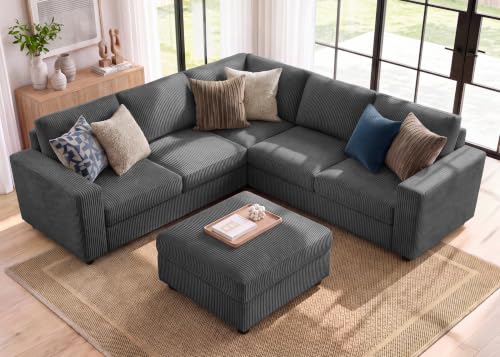
A sectional sofa is seating built from two or more connected sections arranged at an angle — most often an L shape, sometimes a U shape, and occasionally a curve. The corner is the whole point. Where a straight sofa seats people in a polite row, a sectional turns them slightly toward each other, creates a corner seat that everyone quietly competes for, and usually adds a chaise or an extended leg rest so one person can stretch out fully without leaving the conversation. It is furniture designed around how people actually behave in living rooms: sideways, barefoot, half-reclined, with a dog negotiating for the warm spot.
The category splits first by construction. A fixed sectional arrives as two or three large pieces that connect in one predetermined layout; the chaise is on the side the maker chose, and that is the side it stays on. A modular sectional is built from individual seats — armless chairs, a corner unit, an ottoman — that can be rearranged, added to, or separated as rooms and households change. Between them sit reversible designs, where the chaise can be attached on either side. That single distinction matters more than almost any fabric choice, because it decides whether the sofa can adapt when you move house, and we return to it throughout this review and in our sectional sofa buying guide.
The second split is function. Some sectionals hide a pull-out sleeper bed, turning the living room into a guest room. Some hide storage inside the chaise — a lift-up compartment that swallows spare blankets and board games. Some recline, with backs and footrests that move at one or both ends. Each function adds weight, mechanical complexity, and delivery difficulty, and each one changes what the sofa is like on an ordinary Tuesday, not just on the day guests arrive. A sleeper sectional that is slightly firmer to sit on is a fair trade for a household with weekly guests and a poor one for a household that hosts twice a year.
Where does a sectional fit best? In rooms where seating is the main event: family rooms, media rooms, open-plan living spaces where the sofa can also act as a gentle divider between living and dining zones. It fits worst in formal rooms used for standing conversation, in narrow rooms where its depth eats the walkway, and in rental homes where the next move is always near. If you are weighing the format against a conventional three-seater plus chairs, the honest summary is that a sectional trades flexibility for togetherness — and most families, once they have lived with the corner seat, refuse to trade back. Our companion piece, is a sectional sofa worth it, works through that trade in full.
The main shapes, in plain terms
The L shape is the default: a sofa run with a return on one end, either a chaise for stretching out or a full second sofa arm forming the corner. The U shape adds a return on both ends, which wraps a group inward and suits wide rooms and big households, but demands floor space in two directions and can overwhelm anything modest. Curved and pit-style sectionals exist for dedicated lounge spaces; they are wonderful to fall into and awkward at everything else, including fitting through doors. When a listing says chaise sectional, it means one extended seat for legs-up lounging rather than a second full seating row — a distinction first-time buyers routinely miss until delivery day.
Left-facing and right-facing, explained once and properly
Stand in front of the sectional, facing it, as if you were the television looking back. If the chaise or return extends to your left, the sectional is left-facing; if it extends to your right, it is right-facing. That is the convention most makers use, and it is the opposite of what many buyers picture, because they imagine sitting on the sofa rather than facing it. Getting this wrong does not make the sofa unusable, but it can put the chaise jutting into a walkway, block a doorway swing, or strand the good lounging seat on the far side from the lamp and side table. Reversible and modular designs remove the risk entirely, which is one reason they dominate the picks in this review.
Design, Build and Setup
Judge a sectional’s build from the inside out. The frame carries everything: hardwood and properly engineered frames feel planted and silent, while lighter frames announce themselves with creaks when a teenager launches into the corner seat. You cannot see the frame in a listing photo, so judge by behaviour — a sectional that flexes, rocks, or clicks at the joints in its first weeks is telling you how it will age. Cushion construction is the second tell. Dense foam wrapped in softer fibre holds its shape and supports upright sitting; very soft, low-density fills feel glorious in a showroom and slump into a hammock within a season of nightly use.
Suspension — the springs or webbing under the cushions — decides whether the seat feels buoyant or bottoming-out. Sinuous springs give a firmer, more supportive sit; webbing feels softer and can stretch over time. Neither is automatically better. What matters is the match with the household: upright sitters, older relatives, and anyone who works from the sofa want support they can get up from easily, while dedicated loungers prefer a deeper, softer sink. The honest test is the exit, not the entrance — if standing up from the corner seat requires a negotiation, the sofa will slowly stop being used by the people who struggle with it.
Setup is where sectionals diverge most from ordinary sofas. Modular pieces arrive as manageable boxes, connect with brackets or clips, and can be assembled by one patient person. Fixed sectionals arrive as a few very large pieces; the corner unit in particular is a bulky, awkward shape that tests doorways and stair turns. Most designs ask you to attach legs, align sections, and engage the connectors so the pieces do not drift apart on hard floors — a small job that becomes irritating if skipped, because a sectional that slowly separates at the corner opens a cushion-swallowing gap exactly where people sit most.

HONBAY Sectional Sofa — the modular representative
The HONBAY sectional represents the modular school: individual pieces that can be arranged as an L, rearranged when the room changes, and separated for moving day. Owners consistently value that forgiveness — the sofa that fits this year’s flat can become a different shape in next year’s house, and a single damaged or stained section is a smaller problem than a ruined one-piece sofa. In prose terms it sits in the entry-to-mid tier of the category, aimed squarely at renters, first-home buyers, and anyone who expects to move. Best for: households that rearrange or relocate. Not suited for: buyers wanting a heavy, formal, buy-it-for-decades statement piece.
Belffin Sectional Sofa — the chaise-led everyday representative
The Belffin sectional represents the popular chaise-led layout with storage thinking built in: a main sofa run, a chaise for full-length lounging, and hidden space doing quiet work underneath. This is the configuration most families picture when they say sectional, and it earns that status — one person stretched out, others upright, everyone facing the same screen or each other. It sits in the mid tier in prose terms, and its lesson for buyers is to check the chaise side against the room before ordering, because this style commits you to an orientation. Best for: family rooms with a settled layout. Not suited for: rooms whose furniture plan changes with the seasons.
Performance in Real Use
Everyday sitting and lounging
Day to day, a good sectional disappears under you. The corner seat becomes the household’s unofficial headquarters — deep enough to sit cross-legged, angled enough to face both the screen and the room. The chaise handles reading, laptop work, and the after-dinner slump. Where sectionals disappoint is seat depth mismatch: very deep seats strand shorter sitters with dangling feet and a cushion wedged behind their back, while shallow seats leave tall loungers feeling perched. Households of mixed heights should favour designs with movable back cushions or plan on throw pillows doing ergonomic duty — a cheap, effective fix that also lets each seat be tuned to its usual occupant.
Hosting, guests and sleeping over
For hosting, the sectional’s inward turn is its superpower. Conversation flows because nobody is craning around a straight row, and the corner works as a natural anchor seat for the person telling the story. Movie nights are equally well served, provided the chaise side matches the screen position — another orientation decision to make before ordering, not after. As emergency sleeping space, a chaise plus cushions handles one guest tolerably; a true sleeper sectional handles guests properly, at the cost of a firmer daytime sit and a much heavier delivery. Households weighing that trade should read the best queen sleeper sofas alongside this review before deciding the sleeper mechanism is worth its compromises.
Pets, children and real-life mess
Pets treat a sectional as a landscape, and the fabric decides how that story goes. Tightly woven fabrics release hair with a brush or a damp hand and resist claw snags; loose weaves and nubby textures trap hair and invite scratching. Removable, washable cushion covers are the single most pet-friendly feature a sectional can offer, ahead of any stain-resistant marketing claim, because they convert a disaster into a laundry load. With children, the corner becomes a fort, the chaise a runway, and cushion zips a temptation — expect to re-plump and re-align cushions as a weekly ritual, and favour designs whose covers and cushions can be rotated so wear spreads evenly instead of concentrating on one beloved seat.
Small rooms and open-plan spaces
In a small room, a compact sectional can actually outperform a sofa-plus-chairs arrangement, because one L-shaped piece seats more people on less wall than separate furniture scattered around a rug. The condition is discipline: low arms, raised legs that let light pass underneath, and a chaise that does not block the room’s main path. In open-plan spaces the sectional earns a second job as architecture — its back defines the living zone without a wall. That only works if the back is finished and presentable, which most are, and if the layout leaves a genuine walkway behind it rather than a squeeze gap that collects dust and resentment.
Strengths and Trade-Offs
Strengths
- Togetherness by design: the angled layout turns sitters toward each other, making conversation and shared screen time feel natural rather than arranged.
- Seating per footprint: the corner seat is found space — a genuinely comfortable extra place that a straight sofa of the same length simply does not have.
- A true stretch-out seat: the chaise gives full-length lounging without a recliner mechanism, a footstool, or leaving the group.
Trade-offs
- Delivery risk: large sections, especially corner units, are the most common reason a sofa purchase turns into a return negotiation.
- Layout commitment: a fixed-orientation sectional fits one room plan well and resists every future rearrangement.
- Cleaning geography: the corner and the junctions between sections collect crumbs and are the hardest areas to vacuum and maintain.
How It Compares
Set against a conventional sofa and armchairs, the sectional wins on shared lounging and loses on flexibility: chairs can migrate between rooms, a sectional mostly cannot. Set against a reclining sofa, the sectional usually offers more genuine seating and a cleaner look, while the recliner offers personalised comfort at each seat — households divided on that question should compare with our reclining sofa review before committing. Set against a sofa bed alone, a sleeper sectional is the fuller answer for homes that host often, while a plain sectional plus a good air bed is often the smarter spend for homes that host rarely.

LINSY HOME Sectional Sofa — the convertible representative
The LINSY HOME sectional represents the convertible, storage-minded branch of the family: seating that can reconfigure, a chaise that hides storage, and in some versions a sleeping solution for guests. Its appeal is density of function in homes that cannot dedicate a room to each job. In prose terms it sits in the entry-to-mid tier, and the caution that comes with all multifunction furniture applies — check that the everyday sit, the thing you will use daily, is comfortable in its own right, not merely acceptable between guest visits. Best for: compact homes hosting regularly. Not suited for: buyers who prioritise a deep, soft, purely luxurious sit above all else.
Mopio Sectional Sofa — the compact modern representative
The Mopio sectional represents the compact, clean-lined school aimed at apartments and smaller living rooms: lower profile, tidier arms, and proportions that respect a modest floor plan. It demonstrates the category’s best small-space trick — sectional comfort without sectional bulk — and in prose terms it sits in the mid tier. The trade is seat depth and sprawl; a compact sectional hosts a film night gracefully but will not swallow a whole extended family. Best for: apartment living rooms and first homes. Not suited for: large households needing maximum seats. Shoppers in that space should also scan the best apartment sectional sofas for the wider field.
Who Should Buy It and Who Should Skip It
Buy a sectional if your household genuinely gathers: film nights, long conversations, children migrating toward wherever the adults are sitting. Buy one if the room has a settled layout and a corner that is currently wasted. Buy modular if your life involves moving, or reversible if the room could plausibly be replanned. A pre-purchase checklist, in order: measure the full delivery route from street to final position, including every turn; tape the sectional’s footprint on the floor and live with the tape for a day; decide the chaise side by standing in the room, not by imagining the listing photo; choose fabric for your actual household, not your aspirational one; and confirm how the sections connect and whether covers come off for washing.
Skip a sectional if the entry route involves a tight stair turn you cannot honestly say it will pass — hope is not a measurement, and our guide to sofas for narrow doorways exists precisely because this failure is so common. Skip it if you rearrange furniture with the seasons, if the room must double as a through-route, or if most sitting in your home is upright and individual, in which case good chairs serve better. And skip the sleeper mechanism unless guests are frequent: you pay for it daily in weight and firmness whether or not anyone ever sleeps on it. The fuller balance sheet is in the sectional sofa pros and cons.
Setup, Care and Maintenance Essentials
On delivery day, clear the route completely, decide the final position before the pieces come in, and connect the sections on the spot where the sofa will live — dragging a connected sectional across a floor strains the very brackets that hold it together. Level it, check that connectors are fully engaged, and keep the assembly tools and spare parts in the storage chaise if it has one, or in a labelled bag taped underneath the frame. For the first weeks, rotate and flip cushions on a simple rotation so the favourite seat does not wear ahead of the others.
Routine care is mostly rhythm: vacuum the junctions and under cushions weekly, because the corner collects what the rest of the sofa sheds; brush pet hair before it works into the weave; blot spills immediately and never rub them outward. Fabric care differs by type — performance fabrics forgive water-based cleaning, while delicate weaves and leather-look finishes want gentler treatment, a subject covered in depth in the most comfortable sofa fabrics. Twice a year, pull the sectional out, clean behind and beneath it, check the connectors and legs for loosening, and let cushions air. A sectional maintained on that light schedule ages gracefully; one ignored for years tends to fail at the cushions first, and cushions are the part owners notice most.
Final Verdict
As a class, the sectional sofa is the most honest piece of living-room furniture on the market: it assumes people lounge, gather, sprawl, and stay a while, and it is built for exactly that. Its failures are almost never about comfort — they are about fit, orientation, and fabric chosen for the wrong household. Measure the route, tape the footprint, choose the chaise side from inside the room, and favour modular or reversible designs when life is likely to change, and a sectional will repay you every single evening. Readers still deciding between specific models should continue to sectional sofa reviews compared and the step-by-step method in how to choose a sectional sofa.
Fabrics and Finishes, Judged Honestly
Fabric is the decision you will touch every day, so it deserves more weight than the silhouette that caught your eye. Woven synthetic fabrics are the workhorses of the category: they resist fading in sunny rooms, shrug off most everyday spills when blotted promptly, and release pet hair more willingly than natural fibres. Their weakness is texture — some feel slightly flat or warm against bare skin in summer, which a cotton throw solves more cheaply than a fabric upgrade. Microfibre-style weaves are famously forgiving with children and dogs, though they show pressure marks and attract dust in dry, static-prone homes.
Natural and natural-blend fabrics breathe better and feel richer, and they ask more of you in return: quicker blotting, gentler cleaning, and acceptance that a sunlit window will fade them unevenly over the years. Leather and leather-look sectionals wipe clean in seconds and age with character, but they are colder in winter, warmer in summer, vulnerable to pet claws in a way woven fabric is not, and their corner sections are often the heaviest pieces in the whole delivery. Velvet-look fabrics deliver the most dramatic living-room transformation and show every sit mark until brushed — owners tend to either love the ritual or resent it within a month.
Colour deserves the same honesty. A sectional is the largest block of colour most rooms will ever contain, and it cannot be swapped like a cushion cover when tastes change. Mid-tone neutrals survive trends, children, and dogs with the least visible evidence; very light fabrics are a standing commitment to covers and cleaning; very dark fabrics display every crumb and pale pet hair like a noticeboard. If the household includes a shedding pet, matching the fabric tone loosely to the pet is the oldest and most effective trick in upholstery, and no amount of premium branding outperforms it.
Delivery Day: The Section Nobody Reviews and Everybody Needs
More sectional purchases go wrong between the truck and the living room than in any other phase, so treat delivery as part of the product. Before the day, walk the route with fresh eyes: prop open doors, note where they swing, look up at stairwell turns and low landings, and clear anything stored in hallways. Measure the tightest point and write it down — memory is optimistic, paper is not. If the route includes a stair turn, think about the corner unit as a rigid shape that must rotate in that space; a piece that fits through the door can still fail at the turn, which is why modular designs with smaller individual pieces are the safest answer to old houses and upper-floor flats.
When the pieces arrive, inspect fabric and legs before the crew leaves, connect the sections yourself if possible so you learn how the brackets engage, and position the sectional before connecting it — sliding a joined sectional strains joints and floors alike. Keep packaging until you have sat in every seat, opened any sleeper or storage mechanism, and confirmed the chaise is on the side you ordered. Mistakes in orientation do happen, and they are far easier to correct in the first hour than in the third week. Finally, photograph the assembled sofa and the room; if you later rearrange, move house, or need to reorder a matching piece, those pictures are worth more than the receipt.
Rivet Sectional Sofa — the tailored representative
The Rivet sectional represents the tailored, mid-century-influenced branch: cleaner lines, firmer and more upright seating, and a profile that suits living rooms that host conversation as much as film nights. In prose terms it sits in the mid-to-premium tier of the category, and its character is discipline — this is the sectional for households that found softer designs too slouchy and want back support they can sit in for hours, including for working from the sofa. Best for: upright sitters and design-led rooms. Not suited for: dedicated sprawlers who judge a sofa purely by how completely it swallows them on a Sunday afternoon.
Stone and Beam Sectional Sofa — the generous traditional representative
The Stone and Beam sectional represents the generous traditional school: deeper seats, fuller cushions, and the kind of proportions that anchor a large family room rather than decorate a small one. In prose terms it sits in the premium tier, and living with it is a commitment to scale — the room, the doorway, and the household all need to be ready for a substantial piece. Where it fits, few designs match its sense of permanence and settle-in comfort. Best for: large rooms and households buying for the long term. Not suited for: apartments, frequent movers, or any home whose entry route required optimism. Shoppers comparing generous builds may also like the best massage sectional sofas for powered comfort in a similar footprint.
Long-Term Ownership: Years Two to Ten
The reviews that matter most are the ones nobody writes, from year three, when the showroom memory has faded and the sofa is simply where life happens. By then, cushion care has decided the silhouette: rotated, plumped cushions keep the sectional looking tailored, while neglected ones slump first at the corner and the chaise end — the two seats everyone loves most. Connector brackets deserve an annual check, because a sectional that has slowly drifted apart scuffs floors and strains its own frame. Fabric that was chosen for the real household still looks honest; fabric chosen for an imaginary tidier household looks tired and faintly accusatory.
Expect the sectional to change the room’s habits permanently. Meals migrate toward it, work migrates toward it, and guests claim the corner with the confidence of regulars. That gravity is the product working as intended, and it is also why the orientation and fabric decisions echo for years. The encouraging truth from long-term owners is how rarely they regret the format itself: regrets cluster around size misjudged at ordering, chaise sides chosen from a photograph, and sleeper mechanisms bought for guests who came twice. Avoid those three, and the sectional sofa class earns the strongest verdict this review can give — it becomes the room, in the best sense. Readers comparing several models side by side before deciding should now move to the companion comparison piece linked in the verdict above.
Comfort, Posture and the Seats People Actually Fight Over
Every sectional develops a social map within a fortnight. The corner becomes prime territory because it offers two directions to lean, room to tuck feet up, and a view of both screen and room. The chaise is second prize — full-length comfort with an upright back. The middle seats of the long run, ironically the most conventional places to sit, are often the least claimed, especially in designs where seat cushions meet awkwardly at the junctions. When you test or read about a sectional, judge it by its worst seat, not its best: a household of four living daily with one bad seat owns a three-person sofa at a four-person price.
Posture separates good sectionals from merely soft ones. A seat that is too deep forces shorter sitters to choose between back support and feet on the floor; a seat that is too low makes standing an effort that older relatives will quietly avoid by not visiting the room. Back cushions that can be moved, flipped, or supplemented with a lumbar pillow forgive a wide range of bodies, which is why loose-cushion designs age more gracefully in mixed households than moulded, fixed backs. Arm height matters more than it photographs: arms at a natural resting height support reading and laptop work, while very low or very wide arms sacrifice either comfort or a whole seat’s worth of width.
Temperature and texture shape long sittings too. Smooth leather-look surfaces feel cool at first contact and warm up; deep-pile fabrics feel cosy immediately and can grow hot across a long film. None of this appears in a listing, and all of it decides whether the sectional is used for whole evenings or perched on briefly. The practical answer is layering: a breathable throw where people habitually sit extends both comfort and fabric life, and it is far cheaper to replace than a cushion cover.
What the Tiers Really Buy You
Since prices shift constantly, judge this category by tiers rather than numbers. At the entry tier you get the sectional shape and honest everyday comfort, with lighter frames, simpler fabrics, and cushions that will need plumping and rotation to stay presentable; for a first home or a rental, that is a rational purchase, not a compromise to apologise for. The mid tier is where most households should aim: sturdier frames, better cushion resilience, washable covers on many designs, and modular or reversible layouts that forgive a change of address. The premium tier buys depth of comfort, richer fabrics, quieter mechanisms on reclining or sleeper models, and the kind of build that still feels planted after years of teenagers, dogs, and film nights.
What extra money does not buy is immunity from the category’s classic mistakes. An expensive sectional with the chaise on the wrong side annoys its owners exactly as faithfully as a cheap one, and a premium corner unit fails a narrow stair turn with the same finality. Spend first on fit — configuration, orientation, fabric matched to the household — and only then on tier. A mid-tier sectional that fits the home perfectly will be loved longer than a premium one that had to be angled awkwardly against a wall because the planned position never worked. That ordering of priorities runs through every form of this cluster, from the buying guide to the worth-it analysis.
Three Rooms, Three Verdicts
Consider a narrow rental living room where the sofa must share space with a desk and a door that opens inward. A compact modular sectional earns a clear yes here — but only with the chaise placed along the wall rather than reaching into the room, and only because modular pieces can leave through the same tight door one at a time when the tenancy ends. The same room with a fixed, deep sectional would be a daily obstacle course, and the honest recommendation flips to a loveseat and a good chair. Format is never good or bad in the abstract; it is good or bad for a specific floor plan.
Now consider a family room in a house with children, a dog, and grandparents visiting weekly. Here the sectional is close to unbeatable: the corner absorbs homework sprawl, the chaise handles a grandparent’s afternoon rest, washable covers answer the dog, and the inward layout keeps conversation in one place instead of scattered across separate chairs. A mid-tier modular or reversible design with performance fabric is the sweet spot, and storage in the chaise quietly solves the blanket problem that otherwise colonises the arm of the sofa.
Finally, consider an open-plan space where the living area flows into dining. A sectional earns its place as a room divider, back to the dining zone, provided the household resists pushing it flat against a wall and instead floats it with a walkway behind. The verdict flips only when the open plan is also the home’s main thoroughfare — a sectional that everyone must squeeze past twenty times a day becomes furniture the household resents, however comfortable it is to sit on. In that layout, a straight sofa against the wall and chairs that can move will always win, and recognising it before ordering is the entire game.
A Note on Testing Claims and Showroom Tricks
A final reviewing caution applies to the whole category. A sectional feels different in a vast showroom or a staged listing photograph than it will against your wall, under your light, at your ceiling height. Colours shift, scale deceives, and a sofa that looked balanced in an empty warehouse can dominate a real room with a rug, a bookcase, and a television already in it. Protect yourself with the unglamorous tools: painter’s tape for the footprint, a cardboard outline for the chaise, photographs of your own room held beside the listing, and measurements written down rather than remembered. Owners who do this half hour of work almost never join the ranks of return statistics, whatever tier they buy at.
Equally, treat superlatives in any listing — plushest, most durable, hotel quality — as decoration rather than information. The information is in construction you can reason about: how the sections connect, whether covers come off, whether the chaise can change sides, how the cushions are built, and what the fabric asks of you in cleaning. A review can weigh those things honestly; a photograph cannot. That is the standard this piece has tried to keep, and it is the standard to hold every sectional listing to before the tape measure even comes out.
One last ownership observation ties the whole review together. A sectional is not really bought; it is adopted into the household’s routines, and its success is measured in unremarkable evenings rather than first impressions. The designs that succeed share a pattern — honest sizing, an orientation chosen from inside the real room, fabric matched to real pets and real children, and enough modularity or reversibility to survive one change of plan. The designs that fail were usually loved for a photograph. Keep the tape measure closer than the mood board, and the sectional you choose will be the rare large purchase that quietly justifies itself every day for years.
The Room Around the Sectional
A final reviewing note belongs to the sectional’s supporting cast, because no design in this review lives alone. The rug beneath it should reach under the front legs of every section, or the chaise reads as an afterthought. The lamp belongs at the chaise end, where the reading happens. A tray civilises the corner, which has no side table within reach, and a basket near the storage-free designs absorbs the clutter that a storage chaise would otherwise swallow. Households that arrange these small companions deliberately consistently rate the same sectional higher a year later than households that leave the room to improvise — the sofa is the platform, but the room is the experience, and this review’s verdicts assume a room that has been given the same honest thought as the sofa itself.
After the Boxes Are Gone: A Long-Term Second Look at the Sectional sofa
Most sectional sofa coverage stops at unboxing, yet almost everything that decides owner satisfaction happens afterwards. The first evening tells you about finish and first impressions; the third month tells you about durability, upkeep and whether the design still suits the way your household actually behaves. This section looks at the ownership phase in detail — the settling-in period, the first signs of wear worth watching for, and the small habits that separate owners who stay pleased from owners who start browsing replacements. If you are weighing HONBAY Sectional Sofa, Belffin Sectional Sofa or any similar design, treat the points below as the questions a good long-term review should answer.
The Settling-In Period: What Changes in the First Weeks
New materials and mechanisms relax. Fabrics soften, joints settle, finishes lose their showroom sharpness, and moving parts either bed in smoothly or start to complain. With a sectional sofa, use the first fortnight deliberately: operate everything daily, check fixings once after the first week, and keep a mental note of any sound, wobble or resistance that was not there on day one. Changes that stabilise after a small adjustment are normal settling; changes that keep progressing are early warnings, and they are far easier to raise with a seller while the purchase is recent.
Wear Worth Watching, and Wear Worth Ignoring
Not all wear is failure. Honest materials in the living room furniture category develop a patina — slight softening of edges, gentle colour shifts where hands and light fall — and most owners come to like it. The wear that matters is functional: looseness that returns after tightening, surfaces that mark from ordinary use rather than accidents, parts that need persuading, and finishes that fail at edges and corners first. Check those high-contact zones on any sectional sofa you already own, and look for honest close-up photographs of exactly those zones when you judge a replacement.
A simple ownership routine keeps a sectional sofa performing the way the early reviews promised:
- Once a month, spend two minutes checking fixings, feet, seals or moving parts — whichever your sectional sofa relies on — and correct small changes before they compound.
- Clean little and often with the mildest method that works, rather than rarely and aggressively, and always test any new cleaner on a hidden patch first.
- Rotate, rest or reposition the sectional sofa if one side takes all the light, heat or traffic, so wear spreads evenly instead of concentrating.
- Keep the manual, spare parts and any touch-up materials together in one labelled place; the day you need them is never the day you want to search.
- Photograph the sectional sofa once a year from the same spot; comparing pictures is the most reliable way to notice slow change you would otherwise miss.
Ask how the sectional sofa behaves on your worst floor, wall or surface rather than your best one, since homes are uneven and listings are photographed in perfect rooms. Keep the receipt, delivery note and a photograph of the label together, because warranty conversations go smoothly when dates and model details are at hand. If two people in the household disagree about the sectional sofa, let the person who will use or maintain it most have the deciding vote on practical questions. Beware of buying for the household you hope to become; the sectional sofa that serves the household you already are will be used this week, not someday. A tape measure, a spirit level and ten patient minutes prevent more sectional sofa regrets than any amount of comparison shopping after the fact. When a listing is vague about a dimension, material or included part that matters to you, treat the vagueness itself as information and look for a clearer seller. Photograph your room at the time of day you will use the sectional sofa most, and compare candidates against that light rather than against bright midday photographs. Small households should weight compactness and easy storage more heavily, while large households should weight durability and simple operation, because the failure modes differ. If the sectional sofa will serve children or older relatives, test the key actions with the weakest grip and the shortest reach in the house in mind. Leave a little capacity unused — in size, storage or power — because a sectional sofa run permanently at its limit ages faster and annoys sooner than one with headroom.
Ownership rewards attention in small doses. A sectional sofa that is checked monthly and cleaned gently will usually outlast a neglected premium model, and it will certainly stay pleasanter to live with. Judge any review — including the detailed assessments earlier in this guide — by whether it helps you through this long middle phase of ownership, because that phase, not the unboxing, is where the money is really spent.
Frequently Asked Questions
What is the difference between a sectional sofa and a normal sofa?
A sectional is built from connected sections arranged at an angle, usually an L or U shape, while a normal sofa is one straight run of seating. The angle creates a corner seat, turns sitters slightly toward each other, and often adds a chaise for stretching out. A sectional generally seats more people on the same wall length, but it commits you to a layout, arrives in larger pieces that are harder to deliver, and resists rearrangement. A straight sofa plus chairs is less enveloping but far more flexible when rooms or houses change.
How do I know if a sectional will fit through my door?
Measure the narrowest point of every doorway, hallway, and stair turn on the route, then compare those measurements with the smallest dimension of each sectional piece as it would pass through — remembering that pieces can often be tilted or turned to use diagonal space. Check the corner unit especially, since it is usually the bulkiest piece. If any point on the route is honestly doubtful, choose a modular design whose individual pieces are smaller, or a model whose sections separate fully. A tape measure session before ordering is the cheapest insurance in the whole purchase.
What does left-facing and right-facing actually mean?
Stand in front of the sectional and face it. If the chaise or return extends to your left hand, the sectional is left-facing; if it extends to your right, it is right-facing. The convention describes the sofa as you look at it, not as you sit in it, which is where most confusion starts. Decide which side you need by standing in your room and picturing the sofa in place: the chaise should land where lounging makes sense — near the lamp, clear of door swings and walkways — and not jut into the room’s main path.
Is a modular sectional better than a fixed one?
Modular is better when flexibility matters: pieces can be rearranged, added to, separated for moving, and replaced individually if one section is damaged. Fixed sectionals can feel slightly more solid and unified, and sometimes cost less for the same footprint, but the layout and chaise side are decided for you permanently. For renters, frequent movers, and indecisive room planners, modular is the safer long-term buy. For a settled family room with a layout that will not change for years, a fixed sectional in the correct orientation is a perfectly sound choice.
How do I keep pet hair and crumbs out of the corner?
Make the corner part of a weekly rhythm rather than a rescue mission. Vacuum the junctions between sections and under the cushions with a crevice tool, since that is where hair and crumbs migrate. Brush the fabric itself in the direction of the weave to lift hair before vacuuming. Removable washable covers, where fitted, should be washed before they look desperate. A throw over the corner seat — the most contested seat in most homes — takes the worst of pet and snack wear and can be laundered in minutes.
Can a sectional work in a small living room?
Yes, and often better than a sofa plus chairs, because one L-shaped piece seats more people against the walls and leaves the centre of the room open. The conditions are proportion and discipline: choose a compact design with lower arms and raised legs so the piece looks lighter, keep the chaise on the side that does not block the room’s main walking path, and tape the full footprint on the floor before ordering. If the taped outline leaves a comfortable walkway and the door still swings freely, the room can carry a sectional comfortably.
Related Guides
Continue with our sectional sofa buying guide, browse the best plush sectional sofas, or consider the gentler footprint of how to choose a reclining sofa if powered comfort matters more than corner seating.