Disclosure: As an Amazon Associate, dailyhomedecorating.com earns from qualifying purchases. Links on this page are affiliate links; they cost you nothing extra. Prices and availability change often, so check the current Amazon listing before you buy.
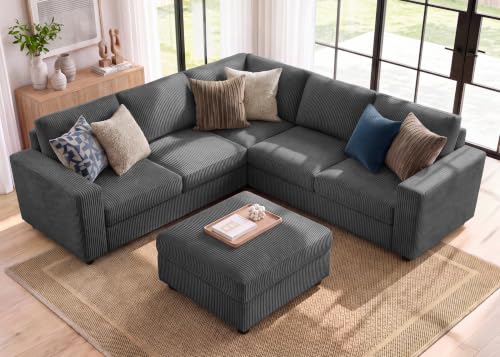
Asking is a sectional sofa worth it is really asking whether your household’s evenings are worth reorganising a room around — because that is the actual transaction. A sectional is not a chair you add; it is the largest, least movable object in the living room, bought in one committed decision about size, orientation, and fabric, and then lived with daily for years. For households whose life is gathering, lounging, and hosting in a settled home, it returns its cost in comfort so reliably that owners describe it as the best furniture decision they have made. For households in motion, behind difficult doorways, or with upright and individual sitting habits, the same money buys frustration at scale. This page works through both sides honestly, in prose tiers rather than prices, and ends with a checklist that settles the question for your specific home.
Key Takeaways
- Worth it if: your household gathers and lounges together, the room and the delivery route honestly fit, and your address is settled for years.
- Not worth it if: you move often, rearrange constantly, face a tight doorway or stair turn, or mostly sit upright and separately.
- The hidden costs are space, commitment, cleaning rhythm, and delivery risk — not money alone.
- Modular and reversible designs widen the worth-it zone; sleeper mechanisms narrow it unless guests are frequent.
- Value is decided before purchase, by tape measure and honest self-knowledge, more than by tier or brand.
Short answer. Worth it if your evenings are shared, your room can carry the footprint with its walkways intact, and the route into your home can pass the pieces — measure all three before believing it. Not worth it if any of those fails, because a sectional’s value is entirely in daily use, and a sectional that fights your home delivers its cost daily and its comfort rarely.
In this guide
Is a Sectional Sofa Worth It: What You Actually Get
What you actually get, first, is a change in how the household occupies its evenings. The corner and the chaise turn sitting from a row of separate experiences into one shared one: conversation angles inward, a film becomes an event the whole household inhabits, children gravitate to the same furniture as the adults instead of dispersing. Owners consistently describe this not as comfort but as togetherness, and it is the return on the purchase that no specification sheet captures. A household that currently scatters across a sofa and mismatched chairs will feel the difference in the first week, and it does not fade with familiarity — it becomes the room’s normal.
Second, you get capacity without sprawl. The corner seat is real, comfortable seating extracted from space a straight sofa wastes, and the chaise replaces the footstools and spare chairs that otherwise colonise a room. In small and medium homes this efficiency can be the difference between hosting a group gracefully and hosting it in shifts. Third, you get a finished room in one decision: one fabric, one delivery, one coherent centre of gravity that organises everything around it, including, in open-plan homes, the definition of the living zone itself. Fourth — and only where the variant matches the need — you get a guest bed or a room’s worth of hidden storage folded into furniture you were buying anyway.
It is worth being precise about what you do not get. You do not get flexibility: the sectional will not adapt itself to a rearranged room, a new hobby, or a different house unless you bought a modular design that can. You do not get a light cleaning burden. And you do not get insurance against your own mis-measurement — the format amplifies good decisions and bad ones with equal fidelity, which is why this cluster’s other pieces, from our sectional sofa buying guide onward, spend so much of their length on tape measures rather than fabrics.
The Real Costs Beyond Money
The first hidden cost is space — not the footprint alone, but the footprint’s authority. A sectional decides where everything else in the room goes, how people cross it, and what else the room can be used for. In a room whose life is seating, that authority is a benefit. In a room that must also be a play space, an exercise space, and an occasional office, the sectional’s immovable claim on the floor is a daily tax, paid in negotiations the sofa always wins. Households should price that tax honestly, in the currency of the activities the room will no longer comfortably hold.
The second cost is commitment. Orientation, configuration, and fabric are chosen once, under showroom conditions, and then defended by the furniture’s sheer size against every later change of mind. A fixed chaise on the wrong side is not a mistake you fix; it is a mistake you host. The third cost is the maintenance rhythm — weekly vacuuming of junctions, cushion rotation, cover washing, twice-yearly cleaning behind a piece too large to move casually — which is light per session and absolute in its refusal to be skipped without visible consequences. The fourth cost is delivery and departure risk: the route in must be measured, and one day the route out, into a different home with a different hallway, will present its own verdict. None of these costs appear on a price tag, and together they decide the worth-it question for more households than money does.
Who It Pays Off For
It pays off, first, for the gathering household in a settled home: shared evenings, frequent company, children and pets woven into the furniture’s life. For them the sectional is used at full capacity daily, its costs are absorbed into routines they would keep anyway, and its value compounds across years of evenings. It pays off, second, for the home without a guest room but with a guest habit — provided they choose the sleeper variant knowingly — and for the open-plan home that needs its living zone defined, where the sectional does architectural work no similarly priced alternative can do.
It pays off, third, for the household that buys modular against an uncertain future: the young household whose next home is unknown, the growing family, the renter with a forgiving landlord. For them the sectional’s value includes its own survival — it comes with them, re-forms in the new room, and never becomes the beloved sofa sold cheaply because a hallway said no. In each of these profiles the common thread is use: the sectional is worth it exactly to the extent that real life will occupy it, fully and often, in a home it genuinely fits.
Who Should Skip It
Skip it if your address is temporary or your floor plan is a work in progress, unless the design is modular — a fixed sectional bought into an unsettled life is the format’s most reliable regret. Skip it if the delivery route includes a doorway, hallway, or stair turn that your own tape measure says is doubtful; the households in sofas for narrow doorways territory need furniture designed for their geometry, not furniture that must be argued through it. Skip it if the household’s sitting is mostly upright, individual, and brief — good chairs serve that life better and can follow it from room to room.
Skip it, too, if the room must stay versatile above all else, or if the household includes someone for whom a deep, low seat is a genuine barrier and the upright alternatives in the category do not suit either — a seat a family member avoids is value destroyed, not deferred. And skip the sleeper variant, specifically, unless guests are frequent: it is the one common sectional purchase whose cost is paid daily and whose benefit may be collected twice a year. The fuller ledger behind these judgements is laid out in the sectional sofa pros and cons.
Strengths and Trade-Offs of Owning One
Strengths of ownership
- Daily, compounding use: unlike most large purchases, a sectional is used every evening, so its cost per hour of genuine comfort falls relentlessly.
- Social return: the inward layout measurably changes how a household gathers, talks, and hosts — value no chair can replicate.
- Room completion: one coherent decision finishes the seating and organises the space, ending the slow mismatch of accumulated chairs.
Trade-offs of ownership
- Irreversibility: size, orientation, and fabric errors cannot be corrected after delivery; they can only be returned, sold, or endured.
- Space authority: the sectional governs the room’s other uses permanently, which taxes versatile rooms daily.
- Maintenance rhythm: junctions, cushions, and covers demand light but unbroken weekly attention to age gracefully.
Alternatives to Consider
The strongest alternative is the straight sofa plus good chairs — the flexible classic. It loses the corner, the chaise, and the inward geometry, and it gains a room that can be rearranged in minutes, furniture that moves house piece by piece, and seats that can be replaced one at a time as they wear. For households in motion, that trade is not a compromise; it is the correct purchase, and the sectional’s worth-it answer flips to no without any shame in it. A loveseat with an ottoman serves small rooms and renters similarly, at the cost of capacity.
The second alternative is the reclining sofa, which spends the same money on personalised, per-seat comfort instead of shared geometry — the right trade for households whose members lounge separately and value a footrest and an adjustable back over a corner seat, a comparison developed in is a reclining sofa worth it. The third alternative is patience: a good smaller sofa now, and a sectional when the household, the address, and the floor plan have settled into the shape the sectional needs. Of all the alternatives, patience is the one worth-it analyses most often underrate, because a sectional bought two years later into a known home outperforms, across its life, a sectional bought today into a guessed one.

HONBAY Sectional Sofa — when modular makes it worth it
For uncertain households, this modular representative is the design that most often turns the answer to yes: it enters difficult homes piece by piece, rearranges as life changes, and moves house instead of being sold. In prose terms it sits at the entry-to-mid tier, and its value case rests on survival — a sectional that is still with you, re-formed, in your next home has repaid its cost in a way a finer abandoned sofa never will.
Belffin Sectional Sofa — when settled family life makes it worth it
For the settled family room, this chaise-led representative concentrates the format’s value: unified seating, daily chaise comfort, and storage that keeps the room livable. In prose terms it sits in the mid tier. Its worth-it case depends on the room staying settled and the chaise side being chosen from inside that room — conditions its ideal household meets without effort.

LINSY HOME Sectional Sofa — when guests make it worth it
For the home that hosts overnight guests regularly without a spare room, this convertible representative can be the most valuable furniture in the house, folding a guest room into the living room. In prose terms it sits at the entry-to-mid tier. Its case collapses if the guests are hypothetical — which is why its buyers should count actual guest nights in the last year, honestly, before ordering. Guest-heavy readers can compare the dedicated field in the best queen sleeper sofas.
How to Get the Most Value If You Buy
Value protection starts before the purchase: measure the route, tape the footprint, choose the orientation from inside the room, and match fabric to the household’s messiest ordinary week. Buy the tier your use justifies — heavy daily family use repays mid-tier construction, while a lightly used room in a temporary home does not — and prefer the variant whose compromises your household will never notice over the variant whose features photograph best. On delivery day, inspect everything, cycle every mechanism, and connect the sections in their final position.
Value compounds after purchase through rhythm: rotate cushions so wear spreads, wash covers before they look desperate, vacuum the junctions weekly, and keep a throw on the most contested seat so the household’s favourite spot ages slowest. Arrange the room to serve the sectional’s gravity rather than fight it — lamp at the chaise, tray at the corner, basket for the migrating clutter — and the sofa will return more evenings of genuine comfort per year than any other object in the home. That, in the end, is the entire worth-it equation: cost divided by evenings actually enjoyed, and it is an equation the buyer, not the brand, controls.
The Decision Checklist
Answer honestly, out loud, preferably with the tape measure still in hand. Does the delivery route pass, on measured numbers, for the largest piece? Does the taped footprint leave the room’s walkways and door swings intact after a full day of normal life? Is the chaise side obvious from inside the room — and if not, is the design reversible or modular? Will this household still be in this home, in roughly this layout, for years? Do the household’s evenings actually gather, lounge, and host? Is the fabric chosen for the real pets, children, and habits? If guests justify a sleeper, were they frequent last year — counted, not imagined?
The rule for closing: six or seven yeses, buy with confidence, at the tier your use justifies. Four or five, buy modular or reversible, or wait until the uncertain answers settle. Three or fewer, the honest answer is no — buy the flexible alternative, and let the sectional wait for the home it deserves. Readers who land on yes should proceed to the method in how to choose a sectional sofa and the models compared in sectional sofa reviews compared.
Mopio Sectional Sofa — when a small room makes it worth it
For apartments and smaller living rooms, this compact representative carries the format’s value into spaces that would reject larger designs: corner seating and chaise lounging without surrendering the walkways. In prose terms it sits in the mid tier. Its worth-it case is proportion — it is worth it precisely because it does not attempt the scale of its bigger relatives, and households should resist trading up in size at the cost of the room’s circulation.
Rivet Sectional Sofa — when posture makes it worth it
For upright sitters and households that work from the sofa, this tailored representative repays its cost in supported hours rather than sprawled ones. In prose terms it sits in the mid-to-premium tier. Its case is a reminder that value is personal: the most expensive sectional in this cluster would be worth less to this household than a disciplined design that keeps their backs comfortable through a working week.
Stone and Beam Sectional Sofa — when permanence makes it worth it
For a large, settled home buying once and buying for years, this generous traditional representative can be the highest-value purchase in the cluster, because its cost is divided by the largest number of evenings, seats, and years. In prose terms it sits in the premium tier. Its case depends entirely on the home being ready — route, room, and household all measured and settled — and collapses fastest of all if any of those was assumed rather than checked. Buyers at this end of the market may also weigh the best massage sectional sofas for powered comfort at a similar scale.
Value Over Time: The Cost-Per-Evening Test
The fairest way to judge any sectional’s worth is to divide its cost — money, space, and commitment together — by the evenings it will actually be enjoyed, and that arithmetic explains most of the disagreement about the format. A sectional in a gathering household’s settled living room is used heavily almost every day, by several people, for years; its cost per evening of comfort becomes trivially small, and its owners’ enthusiasm is simple mathematics wearing a smile. The identical sectional in a household that eats in the kitchen, watches in bedrooms, and hosts twice a year is used lightly and occasionally, and its cost per evening stays stubbornly high no matter how well it was made. The sofa did not change; the denominator did.
This is why worth-it advice that ignores the household is worthless, and why this page keeps returning to self-knowledge. Before pricing any design, a household should be able to describe its last ordinary week of evenings: where people sat, for how long, in what company, doing what. That week, honestly described, predicts the sectional’s denominator more accurately than any review, including this one. Households whose ordinary week is already sofa-centred, shared, and long will find the sectional worth it at almost any sensible tier. Households whose week is scattered, brief, and upright should believe their own evidence over the format’s considerable charm.
Renters, Owners and the Middle Cases
Tenure changes the answer in predictable ways. Owners of settled homes capture the format’s full value, because they can choose orientation for a room they control, keep the sofa for its whole life, and even plan renovations around it. Renters capture a narrower slice: they face the highest moving risk, the least control over doorways and layouts, and the shortest horizon over which to spread the cost — which is why the modular branch, bought at a sensible tier, is the only version of this purchase this page recommends to them without qualification. A renter in a modular sectional owns an asset that leaves with them; a renter in a fixed sectional owns a negotiation with every future landlord’s hallway.
The middle cases deserve their own sentence each. The household expecting a baby should weight washable covers and a corner that will become a feeding and reading nest — the sectional’s worth rises sharply in that season of life. The household expecting an older parent to move in should weight seat height and the exit test, and may find the answer flips to an upright design or to chairs. The household merging two homes should buy nothing committed until the merged furniture has been lived with for a season, because duplication and layout surprises are guaranteed. In every middle case, the pattern holds: the worth-it answer follows the household’s next chapter, not its current photograph.
Regret Patterns: What Owners Who Say No Actually Regret
Households who conclude a sectional was not worth it almost never blame the format’s comfort. Their regrets cluster, with remarkable consistency, around decisions made before delivery. The first is size chosen from a photograph: the sofa that looked balanced in a vast listing image and turned their living room into a soft obstacle course, taxing every crossing of the room for years. The second is orientation chosen the same way — a fixed chaise claiming the walkway side, exiling the household’s best lounging seat to the far side of the room from the lamp, the table, and the screen’s best angle. The third is the sleeper bought for imaginary guests, paid for in firmness on a thousand ordinary evenings and used on four.
The fourth regret is subtler: fabric chosen for an aspirational household. The pale, delicate sectional in a home with a muddy dog and artistic toddlers becomes a source of low-grade vigilance — throws deployed like sandbags, guests warned, the owner policing their own furniture — until the household realises it is paying, in attention, rent on a sofa it nominally owns. And the fifth is timing: the committed sectional bought weeks before a move, a baby, or a renovation rewrote the floor plan it was chosen for. None of these households bought a bad sofa. All of them bought a sofa for a home that existed in a photograph or a hope rather than in their own measured, honestly described life — which is why this page treats self-knowledge as a specification, as real as any frame or fabric.
The Sectional as Household Infrastructure
There is a way of seeing the purchase that clarifies its worth for households still undecided: a sectional is infrastructure, closer to a kitchen than to a chair. Like a kitchen, it is expensive, semi-permanent, chosen under uncertainty, and used by everyone every day; like a kitchen, its value is invisible when it works — evenings simply flow — and glaring when it does not. Households do not ask whether a kitchen was worth it in the abstract; they ask whether it fits how they cook. The sectional deserves the same question, asked with the same seriousness: not is it beautiful, not is it a bargain, but does it fit how this household actually sits, gathers, hosts, rests, and grows.
Framed that way, several puzzling cases resolve themselves. The household that entertains monthly and gathers nightly is not indulging itself with a large sectional; it is building the room its life already requires, and the purchase is worth it almost regardless of tier. The household that dines out, travels often, and treats its living room as a corridor to the bedrooms is not being frugal in refusing one; it is declining infrastructure it would not use, and the refusal is the financially literate act. Worth, in this category, is usage wearing a price tag — and usage is the one specification no listing can provide, because only the household knows it.
Testing the Decision Before You Commit
Households unsure of their answer are not stuck with guessing; the decision can be rehearsed. The tape rehearsal is the foundation: mark the exact footprint of the configuration you want, including the chaise, and live inside the outline for several ordinary days — not a careful hour, but real evenings with real crossings, pets, children, and clutter. Households are often surprised in both directions: some discover the taped shape organises a room they feared it would crush, and others watch their patience with the outline thin by the second evening and learn, cheaply, what the sofa would have taught them expensively.
The second rehearsal is social: borrow the experience. Spend a long evening on a friend’s sectional if one is available, and pay attention to the seats rather than the styling — where you migrated, whether the corner lived up to its reputation, how the chaise felt at hour three, how easily older guests rose. The third rehearsal is written: list last month’s actual evenings and guest nights from memory and calendar, and read the list as the sectional’s predicted workload. A purchase rehearsed three ways rarely surprises its owners, and the households in the regret patterns above are, almost without exception, households that rehearsed none.
The End of the Story: Moving On and Second Lives
A complete worth-it account includes the exit, because every sectional eventually leaves — for a new home, a grown child’s first flat, or a replacement — and the terms of that departure are set at purchase. Modular designs leave gracefully: separated, carried out piece by piece, re-formed elsewhere, or passed within a family in stages. Fixed designs leave as they arrived, as a logistics project, and their second life depends on someone else’s doorway being as generous as yours was. Households that buy with the exit in mind — separable pieces, replaceable covers, a configuration a smaller home could adopt — protect a meaningful share of the purchase’s value against the day life changes.
There is also honest value in a sectional’s final chapter within its first home. A design whose cushions can be re-covered, whose sections can be demoted to a playroom or a teenager’s den, and whose chaise can serve alone as a reading seat keeps returning utility long after it stops being the living room’s centrepiece. Worth, compounded across a first life, a second room, and possibly a second home, is where the format’s best purchases quietly become bargains — and it is one more reason the modular, separable, honestly built designs recur throughout this cluster as the value recommendations, whatever tier they occupy.
Two Households, Two Correct Answers
Consider a household of five in a house they expect to keep, with a dog, a film habit, and grandparents most Sundays. Their living room is the home’s headquarters and their current seating — a tired sofa and two chairs that match nothing — is the room’s weakest element. For them the sectional is not merely worth it; it is the single highest-value furniture purchase available, because every cost the format charges is one their routines already absorb, and every benefit lands daily. A mid-tier chaise-led design with washable covers, or a modular equivalent, will return its cost in evenings so reliably that the only real risk is buying too small.
Now consider a couple in a rented flat up a turning staircase, eighteen months from an expected move, who eat at the table, read in bed, and host friends at restaurants. For them the identical sofa is a poor purchase at any tier: it may not survive the staircase twice, it would govern a room they use lightly, and its cost would chase a life they do not lead. A loveseat and a good chair serve them better in every particular, and the money difference serves their future home. Both households are right, both read the same reviews, and the distance between their answers is exactly the distance this page exists to measure: not the distance between sofas, but between lives.
The Seasonal Test: A Year of Evenings in One Purchase
Project the purchase across a single year and its worth sharpens. Winter makes the sectional’s case at its strongest: dark evenings, films, blankets, the whole household drawn to one warm corner of the home, guests at holidays claiming the chaise like a reservation. Spring tests its flexibility, as windows open, rooms breathe, and households that rearrange for the season discover whether their configuration forgives them. Summer tests its fabric, in sunlight that fades the window end unevenly and in bare skin that judges every weave’s temperature honestly. Autumn, the hosting season, tests its capacity and, where fitted, its sleeper — the guest nights that either justify the mechanism’s daily rent or expose it as an expensive hypothesis.
A sectional that passes all four seasons in a household’s imagination, concretely pictured, is a sectional that will be worth it in fact. One that only passes the winter photograph — the season every listing is styled for — is a purchase being made for a quarter of its life. Run the year before you run the order: picture the room in each season, with its real light, its real guests, its real mess, and let the purchase earn each quarter separately. It is the last and most enjoyable test in this analysis, and households that take it rarely need the checklist’s arithmetic at all, because the answer has already announced itself, season by season, evening by evening.
What If You Already Own the Wrong One?
A worth-it analysis owes something to the households reading it too late — owners of a sectional that fights its room, faces the wrong way, or wears the wrong fabric — because their question, what now, has better answers than resignation. A wrong-side chaise on a fixed design can sometimes be answered by re-planning the room around the sofa rather than the sofa around the room: screens move, rugs turn, lamps relocate, and a layout that seemed impossible from the original plan occasionally emerges from the opposite wall. A too-large footprint can be answered, on modular designs, by removing or relocating a section, and on any design by demoting the piece to a larger room, a playroom, or a teenager’s den where its scale becomes a virtue. Wrong fabric can be answered with well-chosen throws and covers that change both the look and the cleaning burden in an afternoon.
And where none of that suffices, the honest answer — sell it while it is still in good condition, and buy the right one with the proceeds and the lesson — is not a defeat. It is the decision the checklist exists to make unnecessary the first time, and households that take it report the same relief as households that never needed it: the daily friction ends. Worth, in the end, is not a verdict on a purchase already made; it is a standard for the evenings still to come, and those evenings can be recovered at almost any point by a household willing to re-ask the question honestly.
The Answer, Restated for the Households Still Hovering
Some readers will reach this point with the checklist answered and the answer known, and will still hover — because the purchase is large, the commitment is long, and certainty feels like it should be purchasable somewhere. It is not, and the hovering itself contains information worth reading. Households hover when one answer on the checklist was given generously rather than honestly: the route that probably passes, the guests who might come, the layout that will probably settle. The cure is not more research; it is re-answering that one question at full honesty, or choosing the design — modular, reversible, right-sized — that makes the generous answer safe to have given. A sectional bought after that re-answering is bought in the only certainty this category offers: not that nothing will change, but that the purchase was honest about everything that could be known, and flexible about everything that could not.
One Last Distinction: Renting the Room Versus Owning the Evening
The deepest version of the worth-it question is not financial at all. A household that buys a sectional is deciding, in furniture, that its evenings deserve a permanent home — that gathering, lounging, hosting, and resting together are not occasional events to be improvised with chairs dragged from other rooms, but the centre of domestic life, worth building around. Households for whom that is true will find the purchase worth it even when individual line items disappoint, because what they bought was the evenings themselves, organised and made easy. Households for whom it is not true — whose centre of life is elsewhere, in kitchens, gardens, workshops, or the world outside — should decline the format without a moment’s guilt, however beautiful the photograph. The sectional is worth it when the life it serves is the life you actually live and love. That sentence, tested honestly against your own last month of evenings, is the whole analysis.
A Note for the Household That Decides Together
Most sectional purchases are made by households, not individuals, and the worth-it answer can differ by seat. One partner sprawls; the other sits upright with a laptop. One hosts; the other retreats. One will live in the corner; the other will inherit the junction seat. A purchase that is worth it for the household’s loudest lounger and quietly not worth it for its quietest sitter is a purchase half made, and its cost will be paid in the small currency of avoided rooms and claimed chairs. So run the checklist aloud, seat by seat and person by person, and let the design that emerges be the compromise everyone can inhabit — deeper where the lounger sits, supportive where the worker sits, washable where the dog sits. Sectionals, uniquely among furniture, can hold several different right answers in one frame. A household that chooses with all its members in the room, literally and figuratively, is the household whose worth-it verdict still stands, unanimously, years after the delivery crew has forgotten the address.
And if the verdict, arrived at together, is no — that too is a successful use of this page. A household that declines a sectional knowingly, and buys the flexible alternative its life actually requires, has not failed the format; it has passed the only test the format sets, which is honesty about fit. The sectional will keep. Lives change, homes settle, households gather — and when the evenings themselves start asking for a corner and a chaise, the checklist will be waiting, unchanged, to give the purchase its proper yes.
There is a small, final ritual worth recommending to households that have decided yes: before the delivery is booked, walk the route one last time with the order confirmation in hand, reading the chosen configuration aloud at each doorway, each hallway, each turn. It takes minutes, it feels faintly ceremonial, and it has caught — in the experience behind this analysis — more last-second mismatches than any other habit a buyer can adopt. Then book the delivery, clear the room, and wait for the evenings to begin repaying the decision, one gathered, stretched-out, corner-claimed night at a time.
That is the purchase at its best: not a gamble on a photograph, but a decision the whole household can explain, defend, and — most importantly — enjoy without a single reservation, from the first evening to the last one the sofa ever hosts.
The Break-Even Question: When a Sectional sofa Earns Its Space, and When It Honestly Does Not
Worth it is a personal verdict dressed as a product question. The same sectional sofa can be money well spent for one household and an expensive ornament for another, and the difference is almost never quality — it is frequency of use, fit with the space, and what it replaces. This section gives you a break-even way of thinking about the sectional sofa: a simple accounting of cost per use, space per benefit, and effort per result, plus the honest signs that your household should skip it, borrow it, or buy the simpler version instead. Run your own numbers through it before you decide.
The Arithmetic That Actually Matters
Start with cost per use. Take the full cost of owning the sectional sofa — purchase, any consumables, any accessories you genuinely need, and the space it occupies valued honestly — and divide it by a realistic count of uses in its first two years. Realistic is the key word: count the uses your calendar supports, not the uses your intentions promise in January. Then compare that figure with the alternatives you would actually use — hiring, borrowing, a service, or the simpler item you already own. A sectional sofa that wins that comparison on your real schedule is worth it almost regardless of its badge; one that only wins on an imagined schedule is not.
The Signs on Each Side of the Line
On the worth-it side: you already do the task or feel the gap weekly; you have measured the space and it fits with room to live around; someone besides the buyer will use it too; and you can name what it replaces or retires. On the skip-it side: the purchase is motivated by a rare event, a visitor, or a version of your routine you have never actually kept; the space only works if something else is moved into storage; or the honest plan is to change your habits first and buy later. Neither list is a judgement — households change, and a sectional sofa that fails the test this year may pass it easily after a move, a new job or a new family member.
Before you buy the sectional sofa, answer these five questions out loud or on paper:
- How many times did I genuinely need this in the last three months — not wished for it, needed it?
- What exactly does it replace, retire or stop me paying for, starting in its first month?
- Where does it live when idle, measured and checked, and what currently in that spot gets moved?
- Who else in the household will use it without being asked, and who will maintain it?
- If it stopped working in a year, would I replace it immediately, manage without, or feel quietly relieved?
Leave a little capacity unused — in size, storage or power — because a sectional sofa run permanently at its limit ages faster and annoys sooner than one with headroom. Notice which parts are replaceable and which are not; a sectional sofa whose wear parts can be swapped cheaply often outlasts a sealed design twice its price in spirit, if not in years. Consider the sectional sofa from the perspective of the person who cleans around it, because designs that trap dust, block access or demand special products quietly tax every week of ownership. Think about noise, light and heat as neighbours of the sectional sofa, not afterthoughts, since a choice that performs well but disturbs the room around it rarely stays popular for long. Remember that guests experience your sectional sofa without instructions, so anything that needs explaining, warning or demonstrating is worth simplifying before it is worth defending. Plan for the sectional sofa to be moved at least twice in its life — for cleaning, redecorating or a change of room — and favour designs that forgive being shifted, tilted or carried. Look at the edges and undersides when you judge build quality, because those are the places makers save money first and the places owners discover last. Ask how the sectional sofa behaves on your worst floor, wall or surface rather than your best one, since homes are uneven and listings are photographed in perfect rooms.
The last question is the sharpest: immediate replacement means the sectional sofa has become infrastructure in your home, and purchases like that are almost always worth it. Quiet relief means the opposite, however good the reviews were. Decide with your own arithmetic and your own answers, and whichever way the verdict falls you will have bought — or saved — with your eyes open, which is the only definition of value that survives contact with real life.
Frequently Asked Questions
Is a sectional sofa worth it for a small apartment?
It can be the best purchase a small apartment makes, because a compact sectional seats more people on less wall than a sofa plus chairs and leaves the centre of the room open. The conditions are strict: the pieces must pass the delivery route — modular designs are safest for upper floors — the footprint must survive the tape test with walkways intact, and the chaise must sit along a wall rather than across the room’s main path. Meet those conditions and the answer is yes; fail any one and a loveseat serves the same rooms better.
Is a sectional worth it if I might move in a year or two?
A fixed sectional, no — the risk that it will not fit or cannot enter the next home is too high, and selling large furniture under time pressure is where its value evaporates. A modular sectional changes the answer, because it separates into portable pieces, re-forms in the new space, and can grow or shrink with the household. If your heart is set on the format and a move is plausible, modular is not merely the safer choice; it is the only version of the purchase whose value survives the move.
Do sleeper sectionals offer good value?
Only in proportion to their use. A sleeper that hosts guests most months replaces a guest room and earns its compromises — extra weight, a firmer daily sit — many times over. A sleeper opened twice a year has taxed every ordinary day for two nights of benefit, and the same household would have been better served by a more comfortable plain sectional plus a good occasional bed. Count last year’s actual guest nights before deciding; the number, honestly counted, settles the question almost every time.
Is a sectional a good long-term investment compared with a sofa?
As furniture rather than finance, its long-term value is set by fit and care rather than by tier. A sectional that fits the home, faces the right way, and is maintained on a light weekly rhythm delivers daily use for years, and its cost per evening falls below almost any comparable purchase. A sectional that fights its room is a liability at any price. Modular designs hold one extra long-term advantage: individual pieces can be replaced or rearranged instead of the whole sofa being retired when one seat wears or life changes.
What is the biggest mistake that makes a sectional not worth it?
Skipping the measurements. A sectional that cannot pass the doorway or stair turn, or whose footprint swallows the room’s walkways, delivers its costs daily and its comfort rarely — and both failures are knowable in advance with a tape measure and an hour of honesty. The second-costliest mistake is choosing orientation from a photograph rather than from inside the room, and the third is buying features — above all a sleeper — for a life the household does not actually live. Every one of these is a decision error, not a product error.
When is a regular sofa the better buy?
When flexibility is worth more to your household than togetherness: when you rearrange often, move often, sit mostly upright and separately, or need the room to serve several purposes in rotation. A sofa plus chairs can be rearranged in minutes, moved piece by piece, and replaced one seat at a time, and for households in motion those virtues outweigh the corner seat and the chaise. The sectional’s value is real but conditional, and households whose lives meet the conditions of the alternative should buy the alternative without regret.
Related Guides
Decide the details with our sectional sofa buying guide, check the balance sheet in the sectional sofa pros and cons, or browse the best plush sectional sofas once the checklist says yes.