Disclosure: As an Amazon Associate, dailyhomedecorating.com earns from qualifying purchases. Links on this page are affiliate links; they cost you nothing extra. Prices and availability change often, so check the current Amazon listing before you buy.
Learning how to choose a room divider is mostly learning to ignore the photograph and interrogate the room. The deciding criteria, in order, are: the job the divider must do, the coverage that job requires, how fixed it may be, what the panels should be made of, and the covered — not stretched — size. This guide walks those decisions as numbered steps, then shows the method working on three real buyer profiles.
Key Takeaways
- Decide the job first; every later choice follows from it.
- Buy covered width, full stop — stretched measurements flatter every screen.
- Match fixings to your tenure: renters buy reversibility, owners may buy permanence.
- Respect the hard limits: no sound blocking, no climbing, nothing hung on panels.
In this guide
How to Choose a Room Divider: What You Need to Know Before Comparing
A room divider is a boundary you buy instead of building. The category spans folding screens, curtain tracks, bookshelf dividers, modular panel systems, sliding panels, and open frames — six formats that share a name and almost nothing else. Comparing models across formats is meaningless until the format itself is chosen, which is why the steps below spend their early effort on your room, your tenure, and your honest needs, and only reach products near the end. Bring three facts to the process: the opening’s measurements, the activities on both sides, and how long this layout must serve.
A sixty-second tour of the formats, so the steps that follow have a vocabulary:
Folding panel screens
The folding panel screen is the classic room divider: three to six hinged panels that zigzag across a space, fold flat for storage, and need no installation at all. That freedom is the whole appeal. You can claim a work corner in the morning, open the room back up for the evening, and slide the folded screen behind a door or under a bed when guests arrive. The trade-offs are just as consistent. A zigzag footprint eats floor space at both ends, the hinges create narrow sight gaps at certain angles, and a lightweight screen is, by design, easy to move — which also means easy to knock. For renters, studio tenants, and anyone whose layout changes seasonally, it remains the most forgiving place to start.
Curtain and track dividers
A ceiling-track or tension-rod curtain divides a room with fabric instead of furniture. It draws fully closed, stacks to almost nothing when open, and gives the softest, most complete visual coverage of any temporary option. It is also the most honest about what it is: a curtain blocks sight well, softens light, and does almost nothing else. Installation ranges from a no-drill tension rod to a screwed ceiling track, so renters need to read the fine print before falling in love with the look. Curtains pair naturally with the blackout fabrics many apartment dwellers already use for windows, and they wash, swap, and restyle more cheaply than any panel system.
Bookshelf and storage dividers
A low, open bookshelf used as a divider earns its floor space twice: it separates zones and stores the objects that would otherwise clutter both of them. Open-backed shelves keep light and air moving, which makes them the friendliest divider for small, dark rooms. The costs are permanence and weight. A loaded bookshelf does not fold away for a party, it anchors a layout, and it must be loaded thoughtfully — heavy items low, nothing precarious up high — so it stays stable. For a living room that needs a reading nook on one side and a play area on the other, with storage swallowed in between, this is often the most grown-up solution.
Panel and modular systems
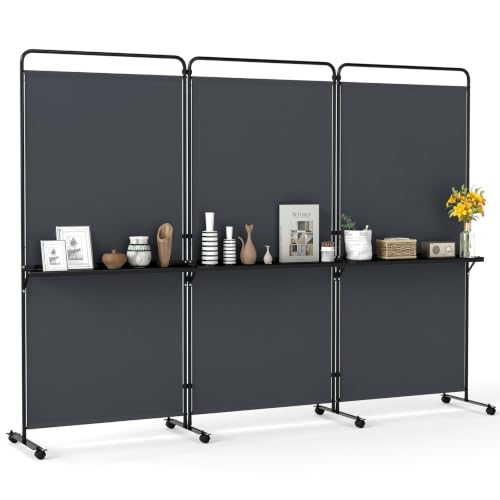
Modular panel systems — interlocking tiles, hanging panels, or framed sections that join in runs — sit between furniture and architecture. They can turn corners, span wider openings than a folding screen, and present a flat, deliberate wall-like face. In exchange they ask for planning: measuring, levelling, sometimes wall or ceiling fixings, and a real commitment to the layout. Renters should check lease terms carefully, and everyone should expect a longer, fussier setup than unfolding a screen. Where they shine is the semi-permanent home office carved from a living room, or the shared bedroom that will stay shared for years rather than weeks.
Sliding and barn-style panels
Sliding panels on a floor or ceiling track give a divider that behaves like a door: full closure, a clean flat line, and no zigzag footprint. They suit wide openings between a kitchen and living area, or a sleeping alcove that needs a real nightly ritual of closing off. The hardware is the product here — track quality decides whether the panel glides or grinds — and installation is a genuine DIY project with studs, levels, and dust. It is the least reversible option in this guide, and the most satisfying when the layout is truly settled.
Plant and open-frame dividers
An open frame, a row of tall plants, or a slatted screen divides by suggestion rather than by coverage. It marks a boundary, directs foot traffic, and gives the eye a place to stop, while light and conversation pass straight through. That makes it perfect between a dining area and a sitting area, where separation is about rhythm, not privacy. It makes it useless as a changing screen or a visual shield for a messy desk. Choosing this type is really choosing how much separation you honestly need — and many households, once they think it through, need far less than a solid wall of panels.
How to Choose a Room Divider in 7 Steps
Step 1: Name the Job in One Sentence
Write it down: hide a bed from a door, give a desk a backdrop, screen a guest corner, zone a dining area. One sentence, one job. If two jobs compete, rank them — the dominant job chooses the format, and the secondary job merely influences size and style. Buyers who skip this step shop by pattern and wonder why the screen feels wrong.
Step 2: Set the Coverage Level
Full standing privacy, seated privacy, or symbolic zoning — pick the lowest level that honestly does the job, because every level up costs daylight, floor, and money. Changing and sleeping need the top level; desks and daybeds usually need the middle; dining boundaries need only the suggestion.
Step 3: Choose How Fixed It May Be
Renters and the layout-restless: freestanding or tension-mounted only. Settled owners: tracks and panel systems enter the conversation. The rule is to buy the least fixed format that does the job — reversibility is value you keep, permanence is value you gamble.
Step 4: Pick the Panel Material
Solid for secrecy, woven or slatted for light with texture, fabric for lightness and softness, open frames for line alone. Then run the evening test in your head: a lamp behind this panel, a person in front of it — are you comfortable with what shows?
Privacy and light pull in opposite directions, and every divider is a negotiated settlement between them. A solid, opaque panel gives real visual privacy — a silhouette-free zone for changing, sleeping, or taking a call — but it also steals daylight from whichever side faces away from the window, and in a small room that borrowed darkness can make the far zone feel like a cupboard. Woven, slatted, and lattice designs let light filter through in patterns, keeping both sides bright while still breaking sight lines at most angles, though at night, with a lamp behind them, they can reveal more than you expect. Fabric panels sit in the middle: softly diffusing, private in daylight, faintly shadow-revealing under strong backlight. Test your shortlist mentally at two moments — midday and evening — because a divider that behaves beautifully at one can disappoint at the other.
Step 5: Size by Covered Width
Measure the opening. For folding screens, assume the stable zigzag covers meaningfully less than the stretched figure, and buy up a panel if you fall between sizes. Mark the footprint in tape, live with it a day, and confirm doors, vents, and walkways survive the plan.
Step 6: Apply the Safety and Sound Reality Checks
Stability deserves blunt honesty, because it is the topic divider listings gloss over. A freestanding folding screen stands by geometry, not by anchoring: the zigzag angle is its only engineering. Open the panels too flat and it becomes a sail waiting for a draught, a brushed shoulder, or a curious cat. Keep a healthy zigzag, place it on a level floor rather than a thick rug edge, and never treat it as furniture. Do not hang bags, coats, wreaths, or string lights heavy enough to pull on the panels. Do not position it where a climbing child or a large, boisterous dog can pull it over, and never use it as a safety barrier at stairs, fireplaces, or balconies. A divider that falls is not a defective divider; it is a light screen asked to do a heavy job.
One expectation needs correcting early, because it drives more returns than any other: a room divider does not meaningfully block sound. A folding screen may take the sharp edge off a voice and slightly dull the clatter from the other side, the way any object in a room absorbs a little echo, but conversations, television dialogue, and a partner’s alarm clock will pass around and over it almost undiminished. It creates visual privacy, not acoustic privacy. If noise is your real problem, the honest tools are different ones — a solid door, heavy curtains layered with seals, soft furnishings that tame echo, or a noise machine on the side that needs masking. Buy a divider for what it genuinely does, and it will not disappoint you on the thing it never promised.
Step 7: Set the Tier and Style
Last, and deliberately last: tier and looks. Daily folding earns hinge money; permanent placement earns finish money; temporary duty earns neither. For style, repeat one element the room already has — a wood tone, a colour, a line — and the divider reads as furniture instead of equipment.
With the method done, four representatives show what the steps produce at different tiers — the all-round screen, the workhorse, the temporary-layout fabric screen, and the settled-zoning system:

Giantex Room Divider
The Giantex Room Divider is a folding wood-frame screen with fabric or woven panels, positioned as a mid-tier everyday choice for living rooms and bedrooms. In daily use, what matters most is how honestly it matches the job you actually have. If you need a screen that moves daily, judge it on hinge smoothness, how quietly it folds, and whether one person can carry it without dragging the feet across the floor. If it will stand in one place for months, judge it on panel opacity, frame finish, and whether the silhouette still looks intentional once the novelty wears off. Treat any single model as a representative of its type first and a product second: the type decides whether the idea works in your room at all, and the model only decides how pleasantly it does it.
Best for: readers who want a proven folding-screen format with a clear tier position. Not suited for: anyone expecting a divider to block sound, hold hanging weight, or stand safely where children climb. Check the current listing for the exact panel count, finish, and dimensions before you buy, because variants within one product line differ more than the headline photos suggest.
JVGO Room Divider
The JVGO Room Divider is a folding screen with a simple, practical build, positioned as an entry-to-mid-tier workhorse for home offices and shared bedrooms. In daily use, what matters most is how honestly it matches the job you actually have. If you need a screen that moves daily, judge it on hinge smoothness, how quietly it folds, and whether one person can carry it without dragging the feet across the floor. If it will stand in one place for months, judge it on panel opacity, frame finish, and whether the silhouette still looks intentional once the novelty wears off. Treat any single model as a representative of its type first and a product second: the type decides whether the idea works in your room at all, and the model only decides how pleasantly it does it.
Best for: readers who want a proven folding-screen format with a clear tier position. Not suited for: anyone expecting a divider to block sound, hold hanging weight, or stand safely where children climb. Check the current listing for the exact panel count, finish, and dimensions before you buy, because variants within one product line differ more than the headline photos suggest.
Rose Home Fashion Room Divider
The Rose Home Fashion Room Divider is a fabric-panel folding screen, positioned as an entry-tier, lightweight option for renters and temporary layouts. In daily use, what matters most is how honestly it matches the job you actually have. If you need a screen that moves daily, judge it on hinge smoothness, how quietly it folds, and whether one person can carry it without dragging the feet across the floor. If it will stand in one place for months, judge it on panel opacity, frame finish, and whether the silhouette still looks intentional once the novelty wears off. Treat any single model as a representative of its type first and a product second: the type decides whether the idea works in your room at all, and the model only decides how pleasantly it does it.
Best for: readers who want a proven folding-screen format with a clear tier position. Not suited for: anyone expecting a divider to block sound, hold hanging weight, or stand safely where children climb. Check the current listing for the exact panel count, finish, and dimensions before you buy, because variants within one product line differ more than the headline photos suggest.
CozyBlock Room Divider
The CozyBlock Room Divider is a panel system with a more structured, modern look, positioned as a mid-to-premium option for semi-permanent zoning. In daily use, what matters most is how honestly it matches the job you actually have. If you need a screen that moves daily, judge it on hinge smoothness, how quietly it folds, and whether one person can carry it without dragging the feet across the floor. If it will stand in one place for months, judge it on panel opacity, frame finish, and whether the silhouette still looks intentional once the novelty wears off. Treat any single model as a representative of its type first and a product second: the type decides whether the idea works in your room at all, and the model only decides how pleasantly it does it.
Best for: readers who want a proven folding-screen format with a clear tier position. Not suited for: anyone expecting a divider to block sound, hold hanging weight, or stand safely where children climb. Check the current listing for the exact panel count, finish, and dimensions before you buy, because variants within one product line differ more than the headline photos suggest.
Common Mistakes
Buying stretched width. Expecting quiet. Setting the zigzag nearly flat. Hanging coats and bags on panels. Choosing the pattern before the format. Forgetting the folded-storage plan. Placing a screen where a child climbs or a radiator bakes. Each mistake is a step skipped — which is the kindest argument for simply following the steps.
Pro Tips
Tape the footprint before ordering. Photograph your room at night with lamps on, to judge backlight honestly. If torn between two heights, choose the lower one for living zones and the taller only for sleeping and changing. Keep the packaging until the screen has survived a full week of real life. And when a listing offers variants, read the variant’s own dimensions — within one product line, panel counts and finishes change the product more than the headline admits.
Worked Examples
The Studio Tenant
Job: hide a bed from the entry. Coverage: full. Tenure: renter, so freestanding. Material: solid or heavy fabric for night privacy. Size: covered width across the alcove, full height. Result: a mid-tier wood-frame folding screen, deep zigzag, folded behind the sofa on open-plan days.
The Home Worker in a Family Living Room
Job: a calm backdrop and a visible boundary. Coverage: seated. Tenure: owner, but the layout may evolve, so still freestanding. Material: fabric or woven, calm in colour, kind to daylight. Result: a mid-height screen placed for face-light, cables routed clear of the fold.
The Siblings Sharing a Bedroom
Job: dignity for two growing people. Coverage: full. Safety: paramount — heavy, wide, deep zigzag, out of climbing range, or a furniture divider instead. Material: opaque. Result: the sturdiest format the room allows, with the daylight cost accepted as the price of peace.
A Room-by-Room Fitting Walkthrough Before You Choose a Room Divider
Technique matters more with a room divider than most instructions admit, because the same product can feel clumsy or effortless depending on the order you do things in and the setup you repeat each time. Start by standardising your starting position: the room divider in the same place, at the same setting, height or configuration each time, so that any change in results tells you something about the job rather than about a forgotten adjustment. Check the floor, wall, ground or surface the room divider will meet, since level, texture, moisture and finish decide more about everyday performance in living room furniture settings than most shoppers expect when they are comparing listings on a screen. Slow down at the difficult part rather than speeding up, because most room divider tasks fail at the moment of impatience — the forced fit, the skipped check, the extra load — and a ten-second pause at that moment prevents most of the damage and most of the rework.
Consider the cleaning rhythm honestly: a room divider that needs attention after every use suits a household that enjoys small rituals, and frustrates a household that wants to finish a job and walk away, so match the upkeep to the temperament, not the intention. Decide in advance what good enough looks like for the job the room divider does in your home, because chasing a flawless result usually costs more time than the flaw itself, and most households are happier with a reliable ninety percent they actually repeat. Plan the storage home for the room divider before it arrives, naming the exact cupboard, corner, shelf, hook or stretch of floor, because a product without a home migrates around the house and slowly becomes the clutter it was bought to reduce. Measure before anything else, and measure the room divider in its working state rather than its packed or folded state, because handles extend, lids open, cords trail, doors swing and users stand somewhere, and all of that belongs in the measurement.
If a problem with the room divider repeats in the same spot or the same stage of the job, treat the pattern as the clue — patterns point to setup, surface or technique, while random problems point more often to the individual unit. For troubleshooting, start with the boring causes first: power, water, fit, blockage, alignment, a full container, a loose connection or a setting changed by the last person who used the room divider, because boring causes account for most apparent failures. Finally, remember that the best room divider for your home is the one whose size, habits and upkeep disappear into your routine, leaving only the result behind — a cleaner surface, a better-lit seat, a tidier shelf, an easier job — week after ordinary week. If you want a concrete listing check, take a name already shortlisted in this guide, such as Giantex Room Divider, JVGO Room Divider and Rose Home Fashion Room Divider, and verify that exact room divider listing against the measurements and compatibility questions above, field by field, rather than trusting the headline description alone.
Look at replacement parts and consumables for the room divider while you are still comparing, confirming that the pieces most likely to wear, clog, tear, fade or get lost can actually be obtained without replacing the whole product. Keep a short note of what you adjusted on the room divider during the first month, even just a line on your phone, since those notes turn vague impressions into a setup you can repeat, share or troubleshoot months later. When something about the room divider disappoints, change one variable at a time — position, setting, timing, load, accessory or technique — and give the change a fair trial, because changing three things at once leaves you with a better or worse result and no idea why.
Frequently Asked Questions
What is the most important factor when choosing a room divider?
The job. A single sentence naming what the divider must do — hide a bed, back a desk, screen guests — decides the format, the coverage, and the material in turn. Buyers who start with the job almost always end satisfied; buyers who start with a pattern often end with a beautiful screen doing the wrong work.
How many panels should a folding divider have?
As many as your covered width requires once the screen stands in a stable zigzag — which is more panels than the stretched measurement suggests. When between sizes, buy up: an extra panel deepens the zigzag, improves stability, and can fold back when you need less coverage. Too few panels is the one sizing error you cannot style your way out of.
Which material is best for privacy?
Solid wood or wood-composite panels give the truest privacy, day and night. Fabric panels are private in daylight but can reveal silhouettes under strong backlight, and woven or slatted panels trade secrecy for light by design. Match the material to your worst lighting moment, not your best.
Can I choose a divider if I rent?
Absolutely — choose freestanding screens, tension-rod curtains, or furniture dividers, all of which leave no trace at move-out. Avoid screwed tracks and wall-fixed panels unless your lease or landlord clearly allows them. Reversibility is a genuine feature: the divider improves this home and travels to the next.
Will a taller divider always be better?
No. Taller means more privacy and more shade, more wobble, and more visual subdivision. Living zones often work better with seated-height screens that zone without walling, reserving full height for sleeping and changing. Choose the lowest height that honestly does the job.
What should I avoid when choosing?
Avoid buying by stretched width, expecting sound blocking, planning to hang items on the panels, placing a freestanding screen where children climb, and skipping the folded-storage plan. Avoid also the subtlest trap: choosing a statement pattern your room cannot repeat anywhere else, which makes even a good divider look like a guest who never leaves.
When a Divider Is the Wrong Answer
Sometimes the honest recommendation is not to buy one. If the problem is noise, a divider will not solve it. If the problem is a permanently messy corner, a divider hides it from guests but not from you, and storage furniture solves the root cause. If two people need genuinely separate schedules in one room — a night-shift sleeper and a daytime worker — a screen softens the compromise but cannot complete it, and the money may serve better toward a layout change or a different room assignment. Naming what a divider cannot do is not pessimism; it is how the households who love theirs chose so well.
Living With a Divider Day to Day
The first week with a divider is about novelty; the third month is about habits. Notice whether you fold it away and forget to reopen it — a sign the boundary mattered less than you thought — or whether the divided zones have quietly become the most used corners of the home. Dust settles on top edges and in woven panels, so a weekly pass with a soft brush keeps screens looking intentional rather than neglected. Hinges loosen with daily folding; a quick check each season, and gentle handling instead of forcing a stiff panel, extends the life of the whole piece far more than any protective spray.
Measuring the Space Before Anything Else
Measure the opening you want to divide, then measure it again the way the divider will actually live there. A folding screen rated by its fully stretched width will cover noticeably less once it stands in a stable zigzag, so plan for the covered width, not the catalogue width. Check ceiling height against panel height, and walk the route the divider will travel from delivery box to final position — narrow hallways and tight stair turns defeat more purchases than room dimensions do. Mark the footprint on the floor with painter’s tape and live with the tape for a day. You will learn where feet, doors, and vacuum cleaners actually go, and whether the line you imagined is the line the room wants.
Children, Pets, and Honest Safety Limits
Repeat the safety rule without softening it: freestanding dividers can topple. In a home with climbing toddlers or large dogs, choose the heaviest, widest-based format you can, keep the zigzag deep, and place it where it cannot be pulled, pushed, or used as a climbing frame — or choose a furniture divider or a fixed track system instead. Never hang anything from the panels, never lean a divider against a heat source, and never use one to block access to stairs, pools, or fireplaces. A divider is a visual tool. The moment a household needs a physical barrier, it needs a different product category entirely.
Budget Thinking Without Price Tags
Divider pricing follows materials and mechanics more than brand badges. Entry-tier fabric screens cover the basics honestly and suit temporary layouts. Mid-tier wood-frame models add finish, hinge quality, and opacity — the things you notice daily. Premium pieces charge for furniture-grade joinery, designer patterns, and panel systems that behave like architecture. Spend where your use is heaviest: a screen folded twice a day earns better hinges, while a screen that never moves earns better looks. A useful discipline is to allocate by years of expected service; a divider bought for a six-month lease and one bought for a five-year home office should not be the same purchase.
Cleaning and Care by Material
Wood frames wipe clean with a barely damp cloth and dry immediately; standing moisture is the enemy of joints and finishes alike. Woven and rattan-style panels prefer a soft brush or a vacuum on its gentlest setting, working with the weave rather than against it. Fabric panels vary — some covers unzip for washing, others are spot-clean only — so check the care label before the first spill, not after. Metal frames need little beyond dusting and an occasional check for loosened screws. Whatever the material, store a folded screen dry, flat or upright without leaning weight on it, and out of the damp corners of garages and basements.
Renters, Leases, and Reversibility
For renters, the best divider is the one that leaves no evidence. Freestanding screens, tension-rod curtains, and furniture dividers all qualify; screwed tracks and wall-fixed panels need written permission in most leases. Photograph the walls and floor before setup, keep every fixing you remove, and favour options that fold or roll away for inspections and move-out day. Reversibility also protects you from your own changing mind: a layout that feels essential in the first month of a tenancy often relaxes by the third, and a divider you can store is a divider you will never regret buying.
Style: Making a Divider Look Deliberate
A divider looks like furniture when it speaks the room’s language: a frame finish that echoes a table or bookcase, a panel colour already present in a rug or cushion, a height that relates to nearby pieces rather than floating at random. It looks like clutter when it introduces a fourth wood tone, a clashing pattern, and a silhouette nothing else repeats. Repeat one element — colour, material, or line — on both sides of the divide, and the two zones still feel like one designed room. Plants, a shared palette, and consistent lighting temperature do more for cohesion than matching sets ever will.
Sight Lines: The Angle Nobody Tests
Stand where other people will actually stand — the doorway, the sofa, the kitchen counter — and check what the divider hides from there, not from directly in front of it. Folding screens leak sight lines at hinge gaps and at the ends, and a screen that looks complete head-on can reveal a desk, a bed, or a laundry pile from the angle guests really see. Walk the room, sit in the usual seats, and adjust the zigzag until the view is honest from every ordinary vantage point. Five minutes of angle-checking prevents the most common divider disappointment of all: a purchase that works in photographs and fails in the room.
Height: Taller Is Not Always Better
Panel height trades privacy against air and light. A tall screen closes a sleeping zone convincingly but can make a small room feel subdivided into cupboards, and it catches more draught and wobbles more readily. A lower screen — closer to seated eye level — hides a desk or a daybed while keeping the room’s volume visually intact, and it suits open-plan living areas where the goal is zoning rather than secrecy. Match height to the activity: full standing privacy for changing, seated privacy for working and lounging, and no more height than the job requires.
The Floor Underneath Matters
Hard floors let a screen’s feet slide, which loosens the zigzag over a week of bumps; felt pads or a low rug under the footprint hold the geometry and protect the finish. Thick pile carpet does the opposite, gripping the feet but letting the whole screen rock slightly, which argues for a deeper zigzag. Check for floor vents, radiators, and underfloor heating zones before settling a position, and keep woven and fabric panels away from sustained heat. The floor is half the divider’s engineering, and the half most buyers never consider.
One Divider, Two Rooms: Styling Both Sides
Every divider has two faces, and the neglected back face is why some rooms feel divided in the worst sense. Treat the reverse side as its own small wall: it may need the warmer colour, the calmer pattern, or simply enough visual weight to hold its zone. In a studio, the sleeping side usually wants the softer treatment and the living side the bolder one. If a model looks finished from only one direction, rotate your expectations before you buy — you will live with both sides equally.
Seasonal and Guest Flexibility
A divider earns extra value when it adapts: screening a guest bed during visits, shading a reading chair from summer glare, or opening fully for a gathering. Folding screens win this category outright, which is why households with changing needs should weight fold-flat storage heavily. Before buying, rehearse the folded dimensions against the real storage spot — behind the sofa, under the bed, inside the closet — because a screen with nowhere to go becomes permanent furniture whether you wanted that or not.
What Good Hinges Feel Like
On any folding screen, the hinges are the product. Good hinges move smoothly through the full fold in both directions, hold an angle without creeping, and show no wobble when you lift one end panel gently. Poor hinges grind, sag, and slowly teach the screen to lean. If you can inspect a model in person, fold it fully flat and reopen it three times; the third fold tells the truth the first one hides. Online, treat hinge descriptions and close-up photos as seriously as panel materials.
Dividers in a Home Office That Actually Works
A work zone behind a divider succeeds on small details: the screen tall enough to hide the desk from the room’s main seat, a background that looks calm on video calls, and enough clearance that your chair never clips a panel when you stand. Position the divider so daylight reaches your face rather than your screen, and keep cables from crossing the fold line where feet and hinges travel. The divider’s job is psychological as much as visual — a boundary your brain learns, so the workday has an edge even in one room.
Making a Rental Feel Like Yours
Dividers are a renter’s quiet superpower because they create rooms without asking permission. A screen can give a studio a bedroom’s dignity, a hallway a mudroom’s manners, and a shared house a boundary that housemates respect without a difficult conversation. Because nothing is fixed, the improvement travels with you at move-out, which makes a mid-tier, well-built screen a better rental investment than built-ins you would abandon. Choose neutral, durable finishes that will suit the next home as well as this one.
Measuring the Space Before Anything Else
Measure the opening you want to divide, then measure it again the way the divider will actually live there. A folding screen rated by its fully stretched width will cover noticeably less once it stands in a stable zigzag, so plan for the covered width, not the catalogue width. Check ceiling height against panel height, and walk the route the divider will travel from delivery box to final position — narrow hallways and tight stair turns defeat more purchases than room dimensions do. Mark the footprint on the floor with painter’s tape and live with the tape for a day. You will learn where feet, doors, and vacuum cleaners actually go, and whether the line you imagined is the line the room wants.
Renters, Leases, and Reversibility
For renters, the best divider is the one that leaves no evidence. Freestanding screens, tension-rod curtains, and furniture dividers all qualify; screwed tracks and wall-fixed panels need written permission in most leases. Photograph the walls and floor before setup, keep every fixing you remove, and favour options that fold or roll away for inspections and move-out day. Reversibility also protects you from your own changing mind: a layout that feels essential in the first month of a tenancy often relaxes by the third, and a divider you can store is a divider you will never regret buying.
Living With a Divider Day to Day
The first week with a divider is about novelty; the third month is about habits. Notice whether you fold it away and forget to reopen it — a sign the boundary mattered less than you thought — or whether the divided zones have quietly become the most used corners of the home. Dust settles on top edges and in woven panels, so a weekly pass with a soft brush keeps screens looking intentional rather than neglected. Hinges loosen with daily folding; a quick check each season, and gentle handling instead of forcing a stiff panel, extends the life of the whole piece far more than any protective spray.
Style: Making a Divider Look Deliberate
A divider looks like furniture when it speaks the room’s language: a frame finish that echoes a table or bookcase, a panel colour already present in a rug or cushion, a height that relates to nearby pieces rather than floating at random. It looks like clutter when it introduces a fourth wood tone, a clashing pattern, and a silhouette nothing else repeats. Repeat one element — colour, material, or line — on both sides of the divide, and the two zones still feel like one designed room. Plants, a shared palette, and consistent lighting temperature do more for cohesion than matching sets ever will.
Children, Pets, and Honest Safety Limits
Repeat the safety rule without softening it: freestanding dividers can topple. In a home with climbing toddlers or large dogs, choose the heaviest, widest-based format you can, keep the zigzag deep, and place it where it cannot be pulled, pushed, or used as a climbing frame — or choose a furniture divider or a fixed track system instead. Never hang anything from the panels, never lean a divider against a heat source, and never use one to block access to stairs, pools, or fireplaces. A divider is a visual tool. The moment a household needs a physical barrier, it needs a different product category entirely.
Cleaning and Care by Material
Wood frames wipe clean with a barely damp cloth and dry immediately; standing moisture is the enemy of joints and finishes alike. Woven and rattan-style panels prefer a soft brush or a vacuum on its gentlest setting, working with the weave rather than against it. Fabric panels vary — some covers unzip for washing, others are spot-clean only — so check the care label before the first spill, not after. Metal frames need little beyond dusting and an occasional check for loosened screws. Whatever the material, store a folded screen dry, flat or upright without leaning weight on it, and out of the damp corners of garages and basements.
When a Divider Is the Wrong Answer
Sometimes the honest recommendation is not to buy one. If the problem is noise, a divider will not solve it. If the problem is a permanently messy corner, a divider hides it from guests but not from you, and storage furniture solves the root cause. If two people need genuinely separate schedules in one room — a night-shift sleeper and a daytime worker — a screen softens the compromise but cannot complete it, and the money may serve better toward a layout change or a different room assignment. Naming what a divider cannot do is not pessimism; it is how the households who love theirs chose so well.
Budget Thinking Without Price Tags
Divider pricing follows materials and mechanics more than brand badges. Entry-tier fabric screens cover the basics honestly and suit temporary layouts. Mid-tier wood-frame models add finish, hinge quality, and opacity — the things you notice daily. Premium pieces charge for furniture-grade joinery, designer patterns, and panel systems that behave like architecture. Spend where your use is heaviest: a screen folded twice a day earns better hinges, while a screen that never moves earns better looks. A useful discipline is to allocate by years of expected service; a divider bought for a six-month lease and one bought for a five-year home office should not be the same purchase.
A Second Look at the Ends of the Divider
Most buyers judge a divider from the middle, but rooms experience it from the ends. The end panel is where sight lines leak, where the zigzag meets the wall or the walkway, and where a screen either resolves gracefully or stops abruptly mid-room. Angle the end panel slightly inward and the zone feels enclosed; leave it pointing into traffic and the whole arrangement feels accidental. If your opening is wider than one screen covers honestly, two smaller screens with a deliberate gap — treated like a doorway — usually look and work better than one screen stretched to its trembling limit.
Dividers and Light Fittings: Planning the Ceiling Too
A divider changes how a room’s existing lighting behaves. A tall screen can shadow a ceiling light’s reach, strand a pendant over the wrong zone, or block the path of a floor lamp you relied on. Before settling a position, switch on every light you use in the evening and check both zones: the work side needs light on the task, the rest side needs light that does not blast over the panels into a sleeper’s eyes. Sometimes the fix is as small as moving a lamp to the other side of the line — but it is far easier to discover that before the screen’s position hardens into habit.
The Conversation Test: Boundaries People Respect
A divider only works if the household honours it, and households honour boundaries that are legible. A screen that clearly closes a space — full height, definite line, a side that reads as a door’s promise — gets respected. A low, ambiguous marker in a busy family room gets walked around, leaned past, and talked over. When you choose coverage levels, you are really choosing how clearly you need to speak. Work zones for adults usually need only a polite suggestion; a teenager’s corner of a shared bedroom deserves the full sentence.
Renting the Look Before You Buy It
If indecision persists, stage the divider’s effect with what you own: a bookshelf turned perpendicular, a clothes rail dressed with a throw, a curtain strung on a temporary line. Live with the staging for a week of real mornings and evenings. You will learn the true covered width your room wants, the height your sight lines need, and whether the boundary improves the day or merely interrupts it. Staging costs nothing and converts the eventual purchase from a guess into a confirmation — the cheapest research in this entire category.
Why Neutral Panels Outlast Statement Patterns
Panel artwork dates faster than any other element of a room, because it occupies so much visual field. A bold botanical or a novelty print thrills for a season and then quietly argues with every new cushion, rug, and paint choice. Neutral, textured, or classically patterned panels behave like architecture: they support the room’s changing cast without demanding to star in it. If you crave the statement, make it with objects on either side of the divider — art, plants, textiles — which are cheap to change when the mood passes.
Related Guides
blackout curtains for small apartments
sectional sofas for apartments