Disclosure: As an Amazon Associate, dailyhomedecorating.com earns from qualifying purchases. Links on this page are affiliate links; they cost you nothing extra. Prices and availability change often, so check the current Amazon listing before you buy.
Weighing up loveseat pros and cons is the fastest honest way to decide, because a loveseat is a concentrated piece of furniture: its virtues and its limits are the same facts viewed from two sides. It seats two closely — a delight or a deal-breaker. It fits small rooms — a rescue or a restriction. This guide gives each pro and each con its own evidence, then translates the balance into advice for real households, smart buying checks, and the setup habits that shrink the cons list in practice.
Key Takeaways
- Pros lead on fit, flexibility, closeness and second-life value across rooms and moves.
- Cons lead on capacity, concentrated wear and lounging limits — none hidden, none exaggerated.
- The balance tips by household: twos win, crowds lose, nappers should look elsewhere.
- Most cons shrink with honest sizing, forgiving fabric and weekly care rhythms.
In this guide
Loveseat Pros And Cons: The Quick Verdict
Buy a loveseat if your sitting life is mostly two people, your room rewards compact furniture, or you need a flexible second seat with a future in another room. Skip it if three-plus sitters, daily full-length lounging or a cavernous single-seat room describe your evenings. Best for: couples, small homes, conversation layouts and reading corners. Not suited for: crowd hosting, sprawling nappers and anyone buying a placeholder for the larger sofa they truly need. The detailed evidence follows, pro by pro and con by con, so you can weigh the items that actually apply to your household rather than counting bullet points.
The Pros
Pro 1: It Fits Where a Sofa Cannot
Small rooms, narrow doorways, tight stair turns, studio corners — the loveseat’s compact footprint opens rooms that reject full sofas outright. Raised-leg designs lighten the visual load further. Fit is not a consolation prize; in a small home, a seat that fits properly, with walkways intact, is more comfortable than a larger seat that bullies the room.
Pro 2: It Is Built for Two-Person Closeness
Conversation, shared films, a child tucked beside a parent, a partner within easy reach of the same blanket — the loveseat’s defining geometry is intimacy. Households that value sitting together consistently name this as the reason their loveseat, not their sofa, is the favourite seat in the house.
Pro 3: It Moves, Rearranges and Changes Rooms Easily
A two-person lift, a doorway-friendly size and a shape that works in living rooms, bedrooms, offices and hallways give the loveseat a second and third life few large pieces achieve. Renters and rearrangers gain furniture that adapts to the next home instead of dictating it, and that adaptability is genuine long-term value.
Pro 4: It Anchors Small Rooms and Completes Large Ones
In small spaces it is a real focal point that leaves floor for living. In large spaces it pairs with a sofa to create conversation geometry no single piece can. Few furniture categories work honestly at both scales, and the styling effort is modest: a rug under the front legs, a table at arm height, a lamp, and the zone reads as designed.
Pro 5: Choice Is Enormous at Every Tier
Because loveseats sell in volume, every tier — entry, mid and premium — offers deep choice in silhouette, fabric and mechanism, from sleepers to recliners to Chesterfield formality. Competition keeps construction honest and makes swatches, spare covers and replacement parts easier to find than for niche furniture.
Pro 6: It Encourages Better Room Habits
A seat sized to its room leaves space for walkways, light and air, and rooms breathe better for it. Households often find the loveseat purchase triggers a healthier layout overall: fewer, better pieces, each with a job. The pro is subtle but real — proportion is a form of comfort that operates all day, not just while sitting.
A loveseat earns its keep in more roles than any other seat in the house. It is the apartment sofa, the second seat in a family room, the reading perch in a bedroom corner, the waiting bench in a wide hallway, and the conversation pair-maker opposite a full-size sofa. That versatility is exactly why honest sizing matters: a piece bought to do everything often does the main job worst. Decide the primary role first — daily main seating for two, occasional guest seating, or a decorative anchor that gets used lightly — and let every later decision about depth, fill and fabric serve that role before the secondary ones.
Two people sharing a loveseat is an intimate arrangement, and that is both the charm and the catch. There is no spare middle seat to absorb a handbag, a sleeping cat or a teenager’s sprawl. Couples who like sitting close call this the whole point; households who value personal space during long films may find a small sofa kinder. Seat width per person, arm height and cushion division all shape the truce: a single bench cushion feels roomier and more modern, while two defined seat cushions give each sitter a clear territory and stop the slow slide toward the middle.
The Cons
Con 1: Capacity Stops at Two
There is no honest third seat. Guests perch, teenagers overflow, and the household either accepts floor cushions as a lifestyle or resents the arithmetic. If your evenings regularly seat three or more in the good chairs, this con alone should end the discussion.
Con 2: Wear Concentrates on Two Seats
A sofa spreads a household’s sitting across three seats; a loveseat takes it all on two. The favourite seat ages visibly faster without rotation discipline, and spills land on a larger share of the whole piece. Care is not optional garnish here — it is the maintenance contract the format demands.
Con 3: Deep Lounging Is Limited
Compact frames mean shallower seats and less sprawl than full sofas. Dedicated nappers, tall loungers and anyone whose relaxation is horizontal will feel the ceiling of the format quickly. Scatter cushions and ottomans soften the limit but do not remove it.
Con 4: Mechanisms Squeeze Into Small Frames
Sleeper and reclining loveseats perform real engineering in tight space, and the compromises show: firmer sits, heavier pieces, more parts to keep clean and working. Pinch points demand respect — keep children’s and pets’ hands and paws clear — and sleeper mechanisms must be checked before folding bedding inside. Buyers wanting machinery should buy it knowingly, not incidentally.
Con 5: In a Big Room It Can Look Lost
A lone loveseat in a spacious room reads as under-furnished no matter how lovely the piece. Anchoring with rugs, tables and lighting helps, but households furnishing a large room around a single loveseat usually end up buying the sofa they postponed, making the loveseat an expensive rehearsal.
Con 6: Resale and Hand-Me-Down Audiences Are Narrower
Two-seat pieces suit fewer next households than three-seat sofas, so passing a loveseat on can take longer. This is a minor con — the same compactness makes it easier to keep and repurpose at home — but planners who rotate furniture frequently should count it honestly.
Sleepers and recliners add machinery, and machinery adds rules. A sleeper loveseat turns a small room into a guest room, but the mattress, mechanism and folded bedding all compete for the same compact frame. Always check a sleeper-sofa mechanism before folding it away with bedding inside — trapped bedding strains hinges and can tear fabric — and fold sheets flat or store them separately if the maker advises it. Reclining mechanisms have pinch points, so keep children’s and pets’ hands and paws clear of the moving parts, operate the recline slowly, and never let anyone reach under a raised footrest. Test the full open-and-close cycle while the room is empty and calm, not with an audience perched on the arms.
Tipping and stability deserve a calm sentence in every furniture plan. A tall, narrow piece — a high-backed loveseat pushed into service as a room divider, or any seat a child might climb — should be anchored or positioned so tipping is not a risk, following the principle that if it can rock, it can fall. Keep heavy objects off high backs and arms, teach children that arms are not steps, and place the piece on a level floor so all feet share the load. On uneven floors, shim or adjust until the frame sits square; a loveseat that rocks will loosen its own joints over time.
Moving a loveseat is a two-person job, full stop. Plan the route, clear it, remove cushions and legs where the design allows, and lift with two people sharing the weight evenly rather than dragging the piece by an arm, which twists the frame and can tear upholstery. Use sliders on hard floors and a blanket on corners for tight turns. A two-person lift protects backs as much as furniture: bend at the knees, agree the route and the resting spots in advance, and set the piece down rather than pushing on if a doorway fights back. Doors come off hinges more easily than loveseats come apart, and a calm ten minutes of preparation beats a scratched wall and a strained shoulder.
What the Trade-Offs Mean for You
Couples and solo households: the pros align almost perfectly with your life; the cons mostly describe households you are not. Families with older children: as a second seat, excellent; as the only seat, the capacity con will be litigated nightly. Hosts: weigh guest frequency honestly — monthly overnight guests justify a sleeper; weekly sofa crowds veto the format. Renters: the moving and second-life pros compound with every move, often tipping the balance decisively. Read your own row of this table and let it, rather than the total count of pros and cons, make the decision.
| Option | Seats honestly | Floor demand | Best at | Watch out for |
|---|---|---|---|---|
| Loveseat | Two | Compact | Closeness, small rooms, flexibility | Capacity, concentrated wear |
| Small sofa | Two plus a guest | Moderate | Forgiveness for crowds and naps | Can crowd a small room |
| Pair of armchairs | Two, separately | Flexible | Personal space, rearrangeable layouts | No shared seat, less presence |
How to Buy Smart: Checks That Protect You
Start with the room, not the catalogue photo. A loveseat lives or dies on proportion: how much wall it takes, how much floor it leaves for movement, and whether two people can sit down without negotiating for elbow room every single evening. Photograph your room from the doorway, note where people naturally walk, and mark the footprint on the floor with painter’s tape before you fall for any particular style. Living with the tape outline for a day teaches you more than an afternoon of scrolling, because you feel the pinch points — the corner that catches your hip, the coffee table that suddenly sits too close, the door swing that now clips the arm.
Measure three separate things and write them down. First, the space itself: wall length, depth available once walkways are respected, and the distance to the nearest facing seat or table. Second, the delivery path: every doorway, hallway turn, stairwell and landing between the street and the final spot, measured at its narrowest point. Third, the piece itself, using the maker’s stated overall width, depth and height rather than the seat dimensions alone. Measure doorways and stairs before ordering, not on delivery day, and compare the tightest point on the route with the smallest dimension of the packed or unpacked piece. If the numbers are close, choose a design with removable legs or a knock-down back, and keep the original packaging until the loveseat is in place and you are sure it stays.
Frames decide lifespan more than fabric does. A well-built frame feels planted: no creak when you sit on one corner, no wobble when you lean on an arm, and joints that stay silent when two people shift at once. Hardwood and properly engineered frames generally hold their shape longer than soft, fast-grown timber, while corner blocking and reinforced joints resist the racking forces that moving day and daily use apply. You cannot see most of this in a listing photo, so read the construction description carefully, favour makers who describe their joinery plainly, and treat vague language about sturdiness as a prompt to keep looking rather than as reassurance.
Smart buying converts cons into managed risks. Capacity risk is managed by the honest guest audit. Wear risk is managed by fabric choice, removable covers and a rotation habit you start in week one, not month six. Fit risk is managed by measuring doorways and stairs before ordering and by the tape test. Mechanism risk is managed by testing the full cycle on delivery and keeping moving parts clean and clear. Every con in this guide has a corresponding check; a loveseat bought with the checks done is a different ownership experience from the same loveseat bought on impulse.

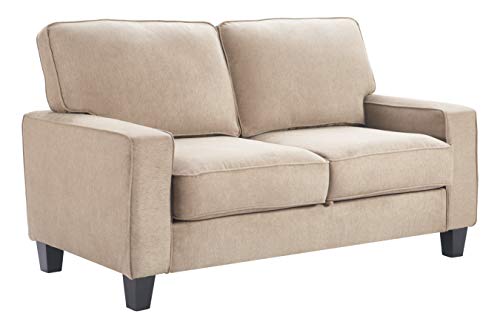
Serta Palisades Loveseat — Plush Comfort, Mid Tier
The Serta Palisades loveseat line is a comfort-led line from a brand better known for mattresses, generally positioned around plush everyday sitting and straightforward apartment-friendly assembly. Treat it here as a prose reference point rather than a linked recommendation: availability, colours and construction details change, and this guide deliberately makes no claim about its current listing until verification is complete. Judge it the way this guide judges every candidate — by the frame description, the cushion construction, the fabric in your hand as a swatch, and the fit against your taped floor outline.
Best for: households whose priorities match plush comfort, mid tier. Not suited for: anyone expecting it to solve a problem it was never sized for — a compact two-seat cannot host a crowd, and a formal silhouette will not turn into a lounger because you wish it would. If this line makes your shortlist, measure your delivery route against its stated overall dimensions, order the swatch, and check the current Amazon listing before you buy.
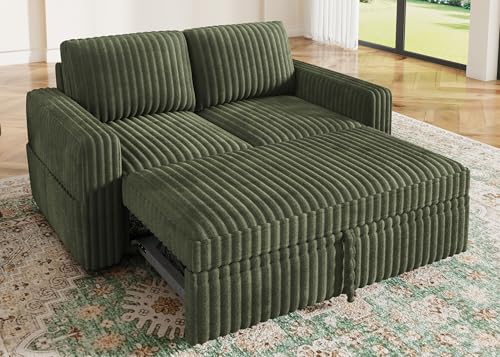
HONBAY Loveseat Sofa — Compact Apartment Practicality
The HONBAY loveseat sofa line is a practical, space-conscious line often chosen for apartments, home offices and spare rooms where a compact footprint matters most. Treat it here as a prose reference point rather than a linked recommendation: availability, colours and construction details change, and this guide deliberately makes no claim about its current listing until verification is complete. Judge it the way this guide judges every candidate — by the frame description, the cushion construction, the fabric in your hand as a swatch, and the fit against your taped floor outline.
Best for: households whose priorities match compact apartment practicality. Not suited for: anyone expecting it to solve a problem it was never sized for — a compact two-seat cannot host a crowd, and a formal silhouette will not turn into a lounger because you wish it would. If this line makes your shortlist, measure your delivery route against its stated overall dimensions, order the swatch, and check the current Amazon listing before you buy.
Setup and Care That Reduce the Cons
Care is mostly rhythm, not effort. Vacuum upholstery weekly with a soft brush attachment, working into the creases where grit collects and quietly saws at fibres. Rotate and plump cushions on the same schedule so wear stays even. Blot spills immediately rather than rubbing them, test any cleaner on a hidden patch first, and keep strong sunlight from camping on one arm all summer — a curtain, a throw or a seasonal shuffle of position all help. Wooden legs appreciate a dust and an occasional wipe; metal mechanisms appreciate being kept free of crumbs and pet hair. Small, regular attention is what separates a loveseat that looks loved at year five from one that looks tired at year two.
Styling a loveseat is an exercise in scale. A pair of cushions in a contrasting texture usually beats a crowd of small ones that leave nowhere to sit. A throw belongs folded over one arm, ready for use, not arranged like a shop display nobody may touch. Side tables should sit roughly level with the arm so a drink lands safely, and a lamp behind or beside the seat turns it into a reading corner rather than a waiting area. Rugs should reach at least under the front legs so the piece feels anchored to the room instead of parked on it. Leave breathing room around the piece where you can; a loveseat with a little air on each side looks intentional, while one wedged wall-to-wall looks like a measuring mistake.
Budget thinking works best in tiers rather than fixed numbers. Entry-tier loveseats prioritise getting a presentable, comfortable two-seat into the room and often ask for assembly at home. Mid-tier pieces usually spend the extra on frame construction, denser cushions and fabrics that age more gracefully. Premium tiers buy joinery, upholstery tailoring and design detail you feel in daily use rather than see in photos. Whichever tier you choose, reserve a little of the budget for the unglamorous essentials: swatches, delivery that includes placement rather than doorstep drop-off where you need it, protective pads, and a throw or cover if your household includes muddy paws. Check the current listing before you buy, since ranges, colours and availability change often.
Set the piece level so the frame shares load evenly, anchor or position tall, narrow arrangements so tipping is not a risk, and plan moves as two-person lifts with cushions off. Add an ottoman or a firm floor cushion and the lounging con softens; add a washable throw where life actually happens and the wear con slows. The cons never vanish — that is not the promise — but in well-run households they shrink to footnotes while the pros run the house.
Sustainability and longevity are the same conversation here. The loveseat that serves ten years beats three cheap replacements on every measure that matters: cost over time, waste, and the daily pleasure of sitting on something that still feels solid. Repairable designs, replaceable covers and makers who sell spare legs or cushions extend that life further. When a loveseat does reach the end, donate, sell or pass it on if it is sound, and recycle textiles where facilities exist. Buying once and buying well is not a slogan; for the biggest soft furnishing in a small room, it is simply arithmetic.
Small rooms ask the most of a loveseat, and reward it the most. In a studio or small apartment, the loveseat is often the entire sofa, the guest seat and the visual anchor at once, so every compromise shows. Raised legs, lighter colours and a shallower depth keep the room breathing, while storage arms or a sleeper mechanism can earn back the inches elsewhere. Resist the urge to pair a loveseat with two bulky armchairs in a small space; one loveseat, one light chair and open floor will feel more generous than a full suite squeezed in. The goal is a room that invites sitting, not a furniture showroom that forbids walking.
In larger rooms the loveseat changes jobs. It becomes the supporting seat: opposite the main sofa for conversation, angled by a fireplace, paired with its twin across a rug, or standing alone as a bedroom or library perch. Here the risk is not crowding but insignificance — a small piece adrift in a big room needs anchoring with a rug, a table and lighting that define its territory. Matching the main sofa exactly is optional; echoing a colour, a leg finish or a fabric family is usually enough to make the pairing look chosen rather than accidental.
best sofas for homes with kids
best sofas that are easy to move
The Balance in Real Households
Think about the view from the loveseat, not just the view of it. The seat you use daily deserves the room’s best outlook — a window, a fireplace, artwork, or at least the room itself — rather than a blank wall and the back of a door. When you tape the footprint, sit on the floor inside the outline and look where your eyes will actually rest. This ten-second test has redirected more loveseat placements than any styling rule, and it explains why some beautifully arranged rooms feel oddly unrewarding to sit in while plainer rooms become favourites.
Electrical reality deserves one practical paragraph. Lamps, chargers and the occasional recliner motor all need sockets, and a loveseat floated in the middle of a room can strand its sitters far from power. Plan the lighting and charging around the placement before the piece arrives: a floor lamp with its own presence, a side table that hides a charging cable gracefully, and no cords trailing across walkways where feet and vacuum cleaners will find them. Reclining models need their power or battery arrangements understood in advance, so the mechanism never sits idle for want of a socket nobody planned.
The second-hand and hand-me-down route deserves respect in any honest guide. A sound used loveseat with a good frame can be the smartest seat in the house, especially for spare rooms, first homes and children’s eventual flats. Inspect it like a new purchase: sit on both seats, check the frame for creaks and wobble, smell the upholstery with your guard down, and ask about pets, smokers and mechanism history where relevant. Budget for a professional clean and possibly new cushion inserts, plan the two-person lift and route measurement exactly as for a delivery, and a used loveseat can deliver years of service that shame many new purchases.
Renters face a specific version of every question in this guide, sharpened by deposits and doorways. A loveseat is often the largest seat that reliably survives a rental career: it passes most stairwells once measured, fits most living rooms once taped, and leaves with you intact. Protect the landlord’s floors with pads from day one, keep wall clearance so backs do not scuff paint, and photograph the room’s condition around the placement. When the next home is bigger, the loveseat graduates to second-seat duty rather than the skip, which is the renter’s version of a pension plan for furniture.
A word about trends, because loveseat silhouettes cycle like everything else. Curved backs, boucle textures, low-slung profiles and statement colours each have their season, and each season’s photographs look dated on a schedule nobody controls. The households that stay happiest longest tend to buy the silhouette and fabric as durable neutrals and let cushions, throws and art carry the trend of the moment — the replaceable layers absorb fashion’s churn while the expensive frame stays out of it. If you love a bold current style, buy it knowingly and enjoy it fully; just do not mistake a trend purchase for a decade purchase, because the care and budget decisions differ.
Accessibility is a genuine design consideration, not an afterthought. A seat that is too low or too deep can turn sitting down and standing up into a daily negotiation for older sitters or anyone with limited mobility. Firmer cushions, supportive arms at a helpful height and a seat that lets feet rest flat make a loveseat welcoming across generations. If grandparents are regular and beloved guests, include their sit — and their rise — in your trial week, because a loveseat that works for every generation in the family earns a kind of value no specification sheet captures.
Finally, remember that a loveseat is bought for evenings, not for photographs. The right test of every claim in this guide is a Tuesday: work done, light fading, two people or one settling into the seat with a drink and nowhere to be. Furniture that serves Tuesdays faithfully will serve celebrations without trying. Keep that ordinary evening in mind through every measurement, swatch and comparison, and the purchase tends to make itself — calmly, correctly, and without a return label in sight.
Consider the light in the room before you finalise anything. A loveseat placed opposite a window lives in silhouette for half the day and in glare for the other half, and fabrics read a full shade darker or lighter depending on where the piece sits. Move the tape outline, not just the colour swatch, through the room’s light: morning, midday and lamplight each cast a vote. Deep colours anchor bright rooms beautifully and can swallow a dim one, while pale upholstery in a sun-washed room may need texture — a weave, a cushion, a throw — to keep it from reading flat. The loveseat you see in the listing was photographed under studio light that your room will never reproduce, so your own room’s light is the only honest showroom you have.
Think about sound, too, because soft furniture is acoustic furniture. A loveseat absorbs the echo that makes small hard rooms feel restless, and a room with a rug, curtains and an upholstered two-seat simply sounds calmer than the same room with hard seating alone. If your living room rings when people talk, a fabric loveseat is part of the cure. Leather and tight weaves reflect a little more sound than deep fabric upholstery, a small point that matters in media rooms and open-plan spaces where the television and conversation compete. None of this appears in a specification list, yet households notice it within the first evening and appreciate it for years.
Hosts should think about the geometry of offering a seat. A loveseat invites a guest to sit beside you, which is warm for friends and family and occasionally presumptuous for a new acquaintance who would prefer their own chair. Rooms that regularly receive mixed company do well to pair the loveseat with at least one independent seat, so guests can choose their own degree of closeness. That choice is a small courtesy that good hosts engineer into a room without ever mentioning it. The loveseat remains the favourite seat for the people who know each other best, which is exactly the hierarchy most households want.
Children change the calculation in predictable ways. A loveseat at child scale is a sofa a small person can climb onto, curl across and claim entirely, and many families find it becomes the children’s seat by popular vote. Choose accordingly: forgiving fabric, cushions that survive being rearranged into forts, and a frame that tolerates being a landscape. Keep the standing safety rules in view — mechanisms and pinch points are adult territory, tall narrow pieces get anchored or positioned so tipping is not a risk, and arms are for arms, not for standing on, however often the rule needs restating in the early weeks.
Dogs and cats cast their own votes. Dogs tend to claim one end of a loveseat and defend it as ancestral land; a washable throw stationed at that end converts the claim into a manageable arrangement. Cats prefer height and texture, and a loveseat back in a sunny spot will be occupied territory within the week — a fabric that releases hair under a brush or vacuum is the pragmatic response. In both cases the household that plans for the animal’s actual behaviour, rather than the behaviour in the training manual, keeps both the furniture and the peace in better condition.
Seasonality is an underrated test. A loveseat that is perfect in January — deep, warm, layered with throws — should still be pleasant in July, when the same depth can feel like a wool coat. Removable layers are the answer: throws and cushion covers that rotate with the seasons let one piece serve both. Light-coloured summer covers over a darker base, or simply stripping the piece back to its clean lines in hot months, refreshes a room for the cost of storage space. Households in strongly seasonal climates should ask, before buying, how the candidate will feel at the opposite end of the year from the purchase date.
Living With the Balance, Day to Day
Wall art and shelving above a loveseat follow the same proportion logic. A single wide piece or a balanced grouping that spans most of the loveseat’s width ties the seat to the wall and completes the zone; a small lonely frame floating high above achieves the opposite. Keep the bottom of any arrangement high enough that a tall sitter’s head never threatens it, and anchor anything heavy with proper fixings rather than optimism. In homes with children, treat the wall above a climbable seat with the same caution as the piece itself — what hangs above furniture should be as secure as the furniture is stable.
Temperature comfort is a fabric story too. Leather feels cool at first touch in summer and chilly in an unheated winter room until body warmth wins; deep fabric upholstery feels neutral year-round but holds warmth on hot evenings; textured weaves breathe a little better than flat ones. None of this decides a purchase alone, yet households in extreme climates feel it daily. A throw is the great equaliser in winter, and a light cotton cover or simply choosing the shadier placement answers most summer complaints. Buy for your climate’s majority, and layer for its extremes.
Consider the loveseat’s role in the room’s traffic of objects. Coffee reaches it, books accumulate on it, remotes migrate into its creases and chargers colonise its arms. A small tray on the seat is a losing strategy; a side table at arm height, a basket for the migrating objects and a weekly crease-check during vacuuming keep the ecosystem tidy. Households that design for the objects’ real behaviour, rather than issuing rules the objects will ignore, keep a loveseat looking composed with far less effort. This is interior design at its most honest: logistics wearing a pleasant face.
When two households merge, furniture negotiates the peace. A loveseat brought from a previous home carries proportions and memories that may not match the new room, and the tape test applies to heirlooms and beloved pieces exactly as it does to new purchases. Sometimes the answer is a new room role — the living-room loveseat becomes the bedroom’s reading seat and harmony is restored. Sometimes a slipcover in a unifying fabric settles the visual argument while the frame argument was never real. Treat inherited and carried-over pieces with the same clear eyes as a listing, and they will usually find their correct place in the merged home.
Photographs lie about scale in a specific, correctable way: wide lenses stretch rooms and shrink furniture, so a loveseat that looks delicate online may land with real presence, and a room that looks generous may be a lens effect. Counter the distortion with numbers — the maker’s overall dimensions against your tape outline — and with any photograph that includes a door, a person or a standard chair for scale. Makers who show their pieces in real rooms with real references are doing you a measurable favour. Trust dimensions over images every time the two disagree, because dimensions are the part of the listing that cannot be art-directed.
The ethics and economics of delivery deserve a calm look. Doorstep delivery is cheaper and, for a loveseat, often entirely manageable with two able people, a measured route and sliders ready. Room-of-choice and packaging-removal services cost more and earn it when stairs, tight turns or limited help enter the picture. Decide which you need before checkout rather than during a doorstep negotiation, and remember the standing rules either way: inspect before signing where the service allows, photograph anything amiss immediately, and keep packaging until the trial verdict is in. Delivery is part of the product experience, and planning it is part of buying well.
A loveseat can be a deliberate step in a longer furnishing plan rather than a final answer. Households furnishing gradually often buy the loveseat first — it is the most versatile seat, serves immediately as the main seat, and later steps sideways into a partner or corner role when the larger sofa arrives. Planned this way, today’s purchase should anticipate tomorrow’s: a fabric family that will welcome company, a silhouette that pairs rather than competes, and construction good enough to still deserve its place in phase two. Furniture bought as a chapter, not a sentence, tends to be kept, used and liked for far longer.
Sleep quality enters the loveseat conversation through the sleeper variants, and honesty matters here. A sleeper loveseat serves occasional guests kindly and nobody should promise it rivals a real bed for a fortnight’s stay. Improve what can be improved: air the mechanism and mattress before the visit, use proper bedding rather than a sleeping bag apology, and check the mechanism before folding bedding inside when the visit ends. Hosts who perform this small theatre of care find guests sleep better than the hardware alone would predict — hospitality, like comfort, is partly engineering and partly attention.
Allergies and air quality are practical selection criteria for some households. Smooth upholstery that wipes clean and releases dust easily can suit allergy-conscious homes better than deep pile fabrics that harbour what vacuuming misses, while removable washable covers serve both camps. Keep mechanisms and under-seat spaces on the cleaning rota, because the dust a loveseat collects out of sight still shares the room’s air. None of this requires specialist products — it requires choosing the surface your cleaning habits can genuinely keep on top of, and then keeping the rhythm the choice assumes.
In the end, every loveseat decision in this guide reduces to fit: fit the room, fit the route, fit the bodies, fit the habits, fit the years you intend to keep it. Pieces that fit on all five counts stop being furniture you evaluate and become furniture you simply live with, which is the highest state household objects achieve. Pieces that fail one count tend to be forgiven when the other four are strong; pieces that fail three are replaced, whatever they cost. Run the five fits honestly and the market’s enormous choice narrows, calmly, to the handful of loveseats that were always actually for you.
Storage is the loveseat’s quiet subplot. Most designs offer none, which is why the space beneath and beside the piece matters: a low base wastes the under-seat void, while raised legs at least let flat items, a board-game box or a folded throw live underneath without visual clutter. Side tables with drawers, a lidded basket at one end and a console behind a floated loveseat all compensate gracefully. Households short on storage should count this honestly before choosing a sleeper mechanism, which occupies the under-seat space entirely — the bed you gain costs the storage you might have had, and in a small home that trade deserves a conscious decision rather than a delivery-day discovery.
Noise from mechanisms and frames tells a story over time. A new loveseat should sit silently: no creak at the corner, no spring complaint when the heavier sitter lands, no mechanism clunk that startles the room. Small sounds in week one rarely shrink; they are the frame’s early autobiography. During the trial period, sit deliberately on every part of the piece, work recliners and sleepers through quiet cycles, and listen the way you would in a silent house at midnight. Reporting a noise inside the return window is a simple conversation; living with it for a decade because the window quietly closed is a familiar and avoidable regret.
The relationship between a loveseat and its rug deserves precision. The rug should extend beyond the loveseat’s footprint on the sides your feet use, so heels rest on softness rather than a hard edge, and the front legs at minimum should stand on the rug to anchor the grouping. A rug that is too small makes even a good loveseat look provisional, as if it were visiting the room. If a new rug is not in the budget, rotating an existing rug or borrowing one from a quieter room often solves the geometry for free. Proportion here is not decoration; it is the difference between a seat that belongs and a seat that is merely present.
Where the Trade-Offs Show Up in Daily Use: Loveseat in Practice
This section exists to move past the tidy two-column summary and watch where each advantage and disadvantage actually appears during an ordinary week. It adds a layer that a feature list cannot give you, grounded in the living room furniture context this loveseat will actually live in. Where this guide names examples such as Serta Palisades loveseat line, HONBAY loveseat sofa line, use them as test cases for the checks below rather than as shortcuts past them.
Finally, plan the first fortnight. Decide where the loveseat will live from day one, what it replaces, what accessory or companion it needs straight away and what small job you will use to learn its habits while returning it is still simple. Keep the packaging until that learning period is over, note anything that surprises you, and deal with a mismatch early rather than adapting yourself around a poor fit for years. The households that end up happiest with a loveseat are rarely the ones that researched longest; they are the ones that checked fit honestly, bought for the ordinary week, and paid attention during the first days instead of assuming the decision ended at checkout.
One more angle is worth your time: the second-order costs. A loveseat changes what happens around it. It can demand a different cleaning product, a new storage habit, a moved piece of furniture, a rearranged cupboard or a standing arrangement with the people you live with. List those knock-on effects before you buy and decide whether you accept them as part of the deal. Sometimes the answer is an easy yes, and the loveseat earns its place by improving the whole routine around it. Sometimes the honest answer is that the supporting changes are the real project, and the purchase should wait until you are ready for them. Either answer is useful; the only bad outcome is discovering the knock-on effects by accident, one irritation at a time, after the decision can no longer be revisited.
It also helps to separate the problems a loveseat can solve from the problems it merely moves. If the underlying difficulty is space, the answer may be a smaller format or a different location rather than a more elaborate model. If the difficulty is time, look for the option that removes steps rather than the one that performs each step slightly better. If the difficulty is that several people want different things, a compromise design that everyone rates as good enough will usually outlast a specialist design that one person loves and everyone else avoids. Naming the real problem in one sentence, out loud, before you order, is a surprisingly powerful filter, and many shoppers find that the sentence itself points at a different loveseat than the one they started out researching.
Start with the unglamorous measurements. For a loveseat, the numbers that decide satisfaction are rarely the headline ones in a listing; they are doorway width, turning space on the stairs, floor clearance and the distance to the nearest table or lamp. Write the real dimensions of your space down, including the awkward constraints you normally work around without thinking, and hold every contender up against that sheet rather than against a showroom photograph. Then walk the route the loveseat will take on delivery day and during normal use. A choice that fits on paper but fights you every time it is moved, opened, cleaned or stored will lose its shine quickly, however strong its other qualities look in a comparison table.
Frequently Asked Questions
What is the biggest advantage of a loveseat?
Fit with presence: it delivers a real, comfortable, focal-point seat for two in rooms where a full sofa would crowd walkways and overwhelm the space. Close behind is flexibility — a loveseat rearranges, changes rooms and moves house with a simple two-person lift, giving it second and third lives that larger pieces rarely achieve. For households of two, those two advantages usually decide the matter.
What is the biggest disadvantage of a loveseat?
Capacity. Two seats is a hard ceiling, and households that regularly need a third good seat will feel it weekly. The honest test is your last month of evenings: count how often a third person wanted the good seating. If the answer is often, believe the count and buy the small sofa instead — no fabric or frame upgrade fixes arithmetic.
Do loveseats wear out faster than sofas?
The same household use concentrates on two seats instead of three, so visible wear arrives sooner without care. Rotation, plumping, prompt spill care and a forgiving fabric close most of the gap, and a sound frame outlasts its first cushions on either format. Judge longevity by construction language and care habits together, not by category alone.
Is a loveseat a good choice for a family?
As a second seat in a family room, very often yes — it completes conversation layouts and becomes a favourite two-person spot. As the family’s only seat, usually no, unless the family is small and the room is smaller. Many families land on the hybrid: a proper sofa for capacity, a loveseat for closeness, and peace at film time.
Can I make a loveseat more comfortable for lounging?
Partly. A supportive ottoman at the right height, a firm cushion behind the back on deep seats, and a throw for the curled-up hours all extend what the format can do. What you cannot do is add length the frame does not have, so committed full-length loungers should test honestly during the trial week and use the return window if the ceiling of the format shows itself.
Are sleeper loveseats a pro or a con?
Both, depending on guest frequency. Monthly guests: a clear pro, turning daily seating into occasional bedding. Rare guests: the mechanism’s weight, firmness and care are cons you pay for a feature you barely use. Test the mechanism fully, keep pinch points clear of hands and paws, and check the mechanism before folding bedding inside, whichever way you decide.


