Disclosure: As an Amazon Associate, dailyhomedecorating.com earns from qualifying purchases. Links on this page are affiliate links; they cost you nothing extra. Prices and availability change often, so check the current Amazon listing before you buy.
If you are working out how to choose a loveseat, the honest shortcut is this: decide the job first, measure second, and fall in love with a style last. A loveseat is a two-person seat with nowhere to hide — too deep, too wide, too firm or too fragile, and both sitters know it every evening. This guide walks through the decision in the order that prevents regrets, from room measurements and delivery routes to frames, cushions, fabrics and the small safety checks that keep a good purchase good for years.
Key Takeaways
- The deciding factors, in order: fit in the room, fit through the door, seat comfort for two, frame construction, then fabric and style.
- Tape the footprint on the floor and live with it for a day before ordering anything.
- Measure doorways, stairs and hallway turns before ordering — the delivery route rejects more loveseats than taste does.
- Reversible cushions, removable legs and honest construction descriptions are the quiet signs of a loveseat built to last.
In this guide
What You Need to Know Before Comparing Loveseats
Start with the room, not the catalogue photo. A loveseat lives or dies on proportion: how much wall it takes, how much floor it leaves for movement, and whether two people can sit down without negotiating for elbow room every single evening. Photograph your room from the doorway, note where people naturally walk, and mark the footprint on the floor with painter’s tape before you fall for any particular style. Living with the tape outline for a day teaches you more than an afternoon of scrolling, because you feel the pinch points — the corner that catches your hip, the coffee table that suddenly sits too close, the door swing that now clips the arm.
Measure three separate things and write them down. First, the space itself: wall length, depth available once walkways are respected, and the distance to the nearest facing seat or table. Second, the delivery path: every doorway, hallway turn, stairwell and landing between the street and the final spot, measured at its narrowest point. Third, the piece itself, using the maker’s stated overall width, depth and height rather than the seat dimensions alone. Measure doorways and stairs before ordering, not on delivery day, and compare the tightest point on the route with the smallest dimension of the packed or unpacked piece. If the numbers are close, choose a design with removable legs or a knock-down back, and keep the original packaging until the loveseat is in place and you are sure it stays.
Frames decide lifespan more than fabric does. A well-built frame feels planted: no creak when you sit on one corner, no wobble when you lean on an arm, and joints that stay silent when two people shift at once. Hardwood and properly engineered frames generally hold their shape longer than soft, fast-grown timber, while corner blocking and reinforced joints resist the racking forces that moving day and daily use apply. You cannot see most of this in a listing photo, so read the construction description carefully, favour makers who describe their joinery plainly, and treat vague language about sturdiness as a prompt to keep looking rather than as reassurance.
Cushion fill shapes both comfort and maintenance. High-resilience foam holds a tailored line and bounces back, but can feel firm for the first weeks. Foam wrapped in softer fibre feels welcoming sooner and needs regular plumping to stay even. Loose, fibre-filled back cushions invite lounging yet slump into a lived-in look that some rooms carry beautifully and others read as tired. Reversible cushions are a quiet advantage: rotating and flipping them spreads wear across both faces and both seats, so the favourite spot does not age twice as fast as its neighbour. Whatever the fill, sit the way you actually sit — upright, curled, feet up — because a cushion that supports reading may not support napping.
One more foundation before any comparison: be honest about who sits, and how. Two adults of very different heights share a loveseat less equally than they share a sofa, because there is no third seat to retreat to. Note who reads, who naps, who works with a laptop, and who simply perches for ten minutes with coffee. A loveseat chosen for the household’s real habits — rather than its imagined dinner-party habits — is the one still being praised in year three.
How To Choose A Loveseat in 7 Steps
Step 1: Define the Primary Job
Name one job: main sofa in a small home, second seat in a family room, bedroom reading perch, office waiting seat, or sleeper for occasional guests. Write it down, because every later trade-off resolves faster when the primary job is explicit. A main-sofa loveseat needs deeper comfort and tougher fabric; a decorative perch can trade some of both for looks. Households that skip this step tend to buy the prettiest compromise and then ask it to do the hardest job in the house.
Step 2: Measure the Room and Tape the Footprint
Measure the wall, the depth you can honestly give up, and the distances to facing seats and tables. Tape the outline on the floor, put the coffee table and side tables where they would live, and walk the room’s normal routes for a day. If the tape makes the room feel pinched on paper, the real piece — which adds height, arms and visual weight — will feel worse. Shrink the target size now, while shrinking is free.
Step 3: Measure the Delivery Route
Walk from the street to the taped outline with a tape measure, recording every doorway, turn and stair at its narrowest. Measure doorways and stairs before ordering, and compare the tightest point with the loveseat’s smallest overall dimension, not its seat size. Note ceiling height on stair turns, where long pieces must tilt. If the route is tight, shortlist designs with removable legs or backs, and tell the delivery team about the tricky turn in advance rather than apologising to them on the day.
Step 4: Judge the Frame and Suspension
Read construction descriptions like an inspector. Look for clear language about frame materials, reinforced corners and joinery, and for suspension described by type rather than by adjectives. A loveseat that will be sat on daily by two adults works its frame far harder than its size suggests, because the same two seats absorb all the use a sofa would spread across three. Vague descriptions are not a deal-breaker on their own, but they move a candidate down the list behind makers who say plainly how the piece is built.
Step 5: Sit-Test the Cushion Logic
You cannot sit on an online listing, so reason carefully from the fill description and plan a real trial at home. Decide whether you want a firm, supportive sit that holds posture for reading and working, or a softer, sinking sit for curling up — then check that the fill matches the wish. Plan to rotate and flip cushions weekly at first; if that small ritual sounds impossible in your household, favour fills that hold their shape with less attention, and accept the firmer first impression as the price of low maintenance.
Step 6: Choose Fabric for Your Real Household
Order swatches of the two or three finalists and put them through a home trial: daylight and lamplight, a rubbed coffee drip, a brush of pet hair, a week on the arm of your current seat. Choose the fabric that forgives your household’s actual mess, in a colour that works with the floor and wall you have rather than the ones in the listing photo. If children, pets or enthusiastic snackers are involved, a removable, washable cover or a forgiving performance weave will repay its unglamorous practicality every single week.
Step 7: Check Mechanisms, Stability and the Small Print
If the design reclines or folds into a bed, plan how you will test the mechanism through its full cycle on delivery day, keeping hands and paws clear of pinch points. Check sleeper-sofa mechanisms before folding bedding inside them, and store bedding separately if the maker advises it. Confirm the return terms, what delivery actually includes, and whether legs and covers are replaceable. Finally, picture placing the piece: level floor, anchored or positioned so a tall, narrow profile cannot tip, with a two-person lift planned for any future move rather than a hopeful solo drag.
Suspension is the hidden half of comfort. Webbing, sinuous springs and pocketed systems each distribute weight differently, and the right choice depends on whether you prefer a buoyant, hammock-like give or a flatter, more supportive sit. A loveseat that feels perfect for twenty minutes in a showroom can feel very different after a two-hour film, so judge support by duration, not first impressions. If you shop online, favour clear descriptions of the seat construction and generous return terms, and plan a proper trial at home during the first week, sitting for full evenings rather than polite five-minute tests.
Fabric choice is a lifestyle decision disguised as a colour decision. Tightly woven fabrics generally resist pilling and snagging better than loose weaves, and performance textiles shrug off the everyday spills of a busy household more gracefully than delicate natural fibres. Leather develops character and wipes clean, yet shows scratches and asks for occasional conditioning. Velvet brings depth of colour and a formal glow, but shows pressure marks and needs gentle brushing. Whatever you choose, order swatches and live with them: check the colour in morning and evening light, rub them against the clothes you actually wear, and test how pet hair, crumbs and dust show up, because a fabric that hides your household’s real debris is worth more than one that photographs beautifully.
Arms set the posture of the whole piece. Track arms give a crisp, modern outline and save width, which matters in narrow rooms. Rolled arms add traditional softness and a place to lean, at the cost of extra inches. Pillow arms invite sprawling but eat into usable seat width. Armless and low-arm designs feel open and suit rooms where the loveseat floats rather than hugs a wall. Think about how you use arms in practice — propping a book, resting a laptop, leaning sideways with your legs tucked up — and let that honest answer, rather than the silhouette alone, guide the choice.
Gear for This Guide: Loveseat Lines Worth a Closer Look
The four lines below span the tiers and styles most loveseat shoppers actually compare. They are presented in prose, without links, until verification is complete — use them as archetypes for your shortlist, and apply the seven steps above to each one without favouritism.
Ashley Furniture Signature Design Loveseat — Traditional Comfort for Family Rooms
The Ashley Furniture Signature Design loveseat line is a mainstream, widely available line with traditional and transitional styling, rolled or track arms depending on the model, and upholstery options that suit family living rooms. Treat it here as a prose reference point rather than a linked recommendation: availability, colours and construction details change, and this guide deliberately makes no claim about its current listing until verification is complete. Judge it the way this guide judges every candidate — by the frame description, the cushion construction, the fabric in your hand as a swatch, and the fit against your taped floor outline.
Best for: households whose priorities match traditional comfort for family rooms. Not suited for: anyone expecting it to solve a problem it was never sized for — a compact two-seat cannot host a crowd, and a formal silhouette will not turn into a lounger because you wish it would. If this line makes your shortlist, measure your delivery route against its stated overall dimensions, order the swatch, and check the current Amazon listing before you buy.
Rivet Revolve Loveseat — Modern Lines for Smaller Rooms
The Rivet Revolve loveseat line is a modern, clean-lined line with a mid-century feel, tapered legs and tailored upholstery that suits smaller, design-conscious rooms. Treat it here as a prose reference point rather than a linked recommendation: availability, colours and construction details change, and this guide deliberately makes no claim about its current listing until verification is complete. Judge it the way this guide judges every candidate — by the frame description, the cushion construction, the fabric in your hand as a swatch, and the fit against your taped floor outline.
Best for: households whose priorities match modern lines for smaller rooms. Not suited for: anyone expecting it to solve a problem it was never sized for — a compact two-seat cannot host a crowd, and a formal silhouette will not turn into a lounger because you wish it would. If this line makes your shortlist, measure your delivery route against its stated overall dimensions, order the swatch, and check the current Amazon listing before you buy.
HONBAY Loveseat Sofa — Compact Practicality for Apartments
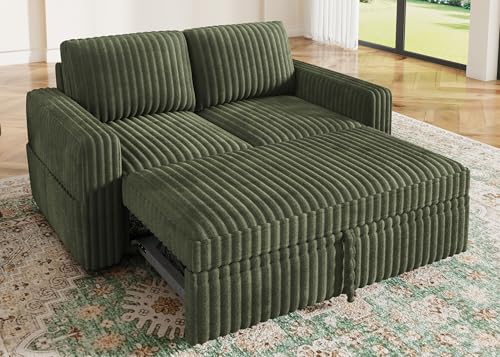
The HONBAY loveseat sofa line is a practical, space-conscious line often chosen for apartments, home offices and spare rooms where a compact footprint matters most. Treat it here as a prose reference point rather than a linked recommendation: availability, colours and construction details change, and this guide deliberately makes no claim about its current listing until verification is complete. Judge it the way this guide judges every candidate — by the frame description, the cushion construction, the fabric in your hand as a swatch, and the fit against your taped floor outline.
Best for: households whose priorities match compact practicality for apartments. Not suited for: anyone expecting it to solve a problem it was never sized for — a compact two-seat cannot host a crowd, and a formal silhouette will not turn into a lounger because you wish it would. If this line makes your shortlist, measure your delivery route against its stated overall dimensions, order the swatch, and check the current Amazon listing before you buy.
Yaheetech Loveseat Sofa — Entry-Tier Ease for First Homes
The Yaheetech loveseat sofa line is an entry-tier, easy-to-assemble line frequently chosen for first apartments, rental rooms and multipurpose spaces on a careful budget. Treat it here as a prose reference point rather than a linked recommendation: availability, colours and construction details change, and this guide deliberately makes no claim about its current listing until verification is complete. Judge it the way this guide judges every candidate — by the frame description, the cushion construction, the fabric in your hand as a swatch, and the fit against your taped floor outline.
Best for: households whose priorities match entry-tier ease for first homes. Not suited for: anyone expecting it to solve a problem it was never sized for — a compact two-seat cannot host a crowd, and a formal silhouette will not turn into a lounger because you wish it would. If this line makes your shortlist, measure your delivery route against its stated overall dimensions, order the swatch, and check the current Amazon listing before you buy.
Common Mistakes When Choosing a Loveseat
The classic mistake is buying the seat dimensions and forgetting the overall dimensions, so the loveseat that should fit the wall cannot turn the hallway corner. Close behind: choosing fabric from a screen instead of a swatch, assuming two people who love each other will love sharing an armrest-free inch of space during every film, and ignoring the return terms until the trial week has quietly expired. Another quiet error is pairing a loveseat with oversized companions — a huge coffee table and two bulky chairs — until the small room holds furniture beautifully and people barely at all.
Legs and base change both looks and logistics. Tapered wooden legs lift a loveseat visually, making small rooms feel lighter and letting a vacuum or robot cleaner pass underneath. Plinth and skirted bases read heavier and more traditional, hide the floor gap, and collect dust where you cannot easily reach. Removable legs are a delivery-day gift on tight staircases, so check whether legs unscrew before assuming a piece cannot make the turn. On hard floors, fit protective pads from day one; on rugs, consider whether pointed legs will dent the pile and whether a low, even base would sit more kindly.
A loveseat earns its keep in more roles than any other seat in the house. It is the apartment sofa, the second seat in a family room, the reading perch in a bedroom corner, the waiting bench in a wide hallway, and the conversation pair-maker opposite a full-size sofa. That versatility is exactly why honest sizing matters: a piece bought to do everything often does the main job worst. Decide the primary role first — daily main seating for two, occasional guest seating, or a decorative anchor that gets used lightly — and let every later decision about depth, fill and fabric serve that role before the secondary ones.
Two people sharing a loveseat is an intimate arrangement, and that is both the charm and the catch. There is no spare middle seat to absorb a handbag, a sleeping cat or a teenager’s sprawl. Couples who like sitting close call this the whole point; households who value personal space during long films may find a small sofa kinder. Seat width per person, arm height and cushion division all shape the truce: a single bench cushion feels roomier and more modern, while two defined seat cushions give each sitter a clear territory and stop the slow slide toward the middle.
Pro Tips From Rooms That Got It Right
Shopkeepers and stylists repeat a few habits worth stealing. Photograph your shortlist’s silhouettes in black and white; without colour flattery, proportion problems stand out. Sit in your current favourite chair with a tape measure and record the seat height and depth that suit your legs, then compare candidates against your own body rather than against averages. Keep one wildcard on the shortlist — a style you did not expect to like — because loveseats are small enough that a brave choice transforms a room instead of overwhelming it. And when two finalists tie, choose the one with replaceable parts and the clearer construction description; ties are broken by year five, not by day one.
Worked Examples: Three Buyers, Three Right Answers
The studio tenant. One room, one seat that must do everything, and a stairwell turn that rejects anything rigid and long. The right answer is a compact, raised-leg design with removable legs, a forgiving mid-tone fabric and cushions firm enough for working from the seat during the day. A sleeper mechanism tempts, but the honest diary says guests stay twice a year, so the inches go to everyday comfort instead.
The family-room pair. The loveseat faces the main sofa across a rug, hosting conversation and overflow teenagers. Here durability leads: the toughest fabric on the shortlist, reversible cushions, and arms at a height that survives being sat on by someone who was told not to. Style echoes the sofa’s fabric family without matching it exactly, and the tape test confirms two chairs are not also needed.
The bedroom reader. A quiet corner, a floor lamp, one devoted reader and the occasional second person with tea. Depth and back support outrank everything; a softer fill is welcome because use is gentle and daily rather than heavy. The swatch test happens against the bedroom’s evening light only, because that is the light the chair will actually live in.
Sleepers and recliners add machinery, and machinery adds rules. A sleeper loveseat turns a small room into a guest room, but the mattress, mechanism and folded bedding all compete for the same compact frame. Always check a sleeper-sofa mechanism before folding it away with bedding inside — trapped bedding strains hinges and can tear fabric — and fold sheets flat or store them separately if the maker advises it. Reclining mechanisms have pinch points, so keep children’s and pets’ hands and paws clear of the moving parts, operate the recline slowly, and never let anyone reach under a raised footrest. Test the full open-and-close cycle while the room is empty and calm, not with an audience perched on the arms.
Tipping and stability deserve a calm sentence in every furniture plan. A tall, narrow piece — a high-backed loveseat pushed into service as a room divider, or any seat a child might climb — should be anchored or positioned so tipping is not a risk, following the principle that if it can rock, it can fall. Keep heavy objects off high backs and arms, teach children that arms are not steps, and place the piece on a level floor so all feet share the load. On uneven floors, shim or adjust until the frame sits square; a loveseat that rocks will loosen its own joints over time.
Moving a loveseat is a two-person job, full stop. Plan the route, clear it, remove cushions and legs where the design allows, and lift with two people sharing the weight evenly rather than dragging the piece by an arm, which twists the frame and can tear upholstery. Use sliders on hard floors and a blanket on corners for tight turns. A two-person lift protects backs as much as furniture: bend at the knees, agree the route and the resting spots in advance, and set the piece down rather than pushing on if a doorway fights back. Doors come off hinges more easily than loveseats come apart, and a calm ten minutes of preparation beats a scratched wall and a strained shoulder.
Care is mostly rhythm, not effort. Vacuum upholstery weekly with a soft brush attachment, working into the creases where grit collects and quietly saws at fibres. Rotate and plump cushions on the same schedule so wear stays even. Blot spills immediately rather than rubbing them, test any cleaner on a hidden patch first, and keep strong sunlight from camping on one arm all summer — a curtain, a throw or a seasonal shuffle of position all help. Wooden legs appreciate a dust and an occasional wipe; metal mechanisms appreciate being kept free of crumbs and pet hair. Small, regular attention is what separates a loveseat that looks loved at year five from one that looks tired at year two.
Bringing It Home: Delivery, Placement and First-Week Checks
Styling a loveseat is an exercise in scale. A pair of cushions in a contrasting texture usually beats a crowd of small ones that leave nowhere to sit. A throw belongs folded over one arm, ready for use, not arranged like a shop display nobody may touch. Side tables should sit roughly level with the arm so a drink lands safely, and a lamp behind or beside the seat turns it into a reading corner rather than a waiting area. Rugs should reach at least under the front legs so the piece feels anchored to the room instead of parked on it. Leave breathing room around the piece where you can; a loveseat with a little air on each side looks intentional, while one wedged wall-to-wall looks like a measuring mistake.
Budget thinking works best in tiers rather than fixed numbers. Entry-tier loveseats prioritise getting a presentable, comfortable two-seat into the room and often ask for assembly at home. Mid-tier pieces usually spend the extra on frame construction, denser cushions and fabrics that age more gracefully. Premium tiers buy joinery, upholstery tailoring and design detail you feel in daily use rather than see in photos. Whichever tier you choose, reserve a little of the budget for the unglamorous essentials: swatches, delivery that includes placement rather than doorstep drop-off where you need it, protective pads, and a throw or cover if your household includes muddy paws. Check the current listing before you buy, since ranges, colours and availability change often.
Delivery day rewards preparation. Clear the route, prop doors open, protect floors and corners, and have the tape outline waiting so the piece lands in the right spot the first time. Inspect the loveseat before signing anything: sit on both seats, check seams and legs, work any mechanism through its full cycle, and photograph anything that looks off while the delivery team is still present. Keep packaging until you have lived with the piece for a few days and passed the return window’s early tests, because repacking a loveseat from scratch is a puzzle nobody enjoys. Once it is placed, resist rearranging everything else the same evening; live with the new anchor for a week and let the room settle around it.
Sustainability and longevity are the same conversation here. The loveseat that serves ten years beats three cheap replacements on every measure that matters: cost over time, waste, and the daily pleasure of sitting on something that still feels solid. Repairable designs, replaceable covers and makers who sell spare legs or cushions extend that life further. When a loveseat does reach the end, donate, sell or pass it on if it is sound, and recycle textiles where facilities exist. Buying once and buying well is not a slogan; for the biggest soft furnishing in a small room, it is simply arithmetic.
During the first week, run the trial like you mean it: full evenings, both seats, every posture your household actually uses. Check that the loveseat sits level, that mechanisms — where fitted — move smoothly with hands and paws kept clear, and that the fabric behaves as the swatch promised. Decide inside the return window, not after it, and keep the packaging until you have decided. A loveseat chosen by process rather than impulse rarely needs returning, but the option is part of the process.
best sofas for narrow doorways
best sofas that are easy to move
Choosing Well: Light, Life and the Long View
Consider the light in the room before you finalise anything. A loveseat placed opposite a window lives in silhouette for half the day and in glare for the other half, and fabrics read a full shade darker or lighter depending on where the piece sits. Move the tape outline, not just the colour swatch, through the room’s light: morning, midday and lamplight each cast a vote. Deep colours anchor bright rooms beautifully and can swallow a dim one, while pale upholstery in a sun-washed room may need texture — a weave, a cushion, a throw — to keep it from reading flat. The loveseat you see in the listing was photographed under studio light that your room will never reproduce, so your own room’s light is the only honest showroom you have.
Think about sound, too, because soft furniture is acoustic furniture. A loveseat absorbs the echo that makes small hard rooms feel restless, and a room with a rug, curtains and an upholstered two-seat simply sounds calmer than the same room with hard seating alone. If your living room rings when people talk, a fabric loveseat is part of the cure. Leather and tight weaves reflect a little more sound than deep fabric upholstery, a small point that matters in media rooms and open-plan spaces where the television and conversation compete. None of this appears in a specification list, yet households notice it within the first evening and appreciate it for years.
Hosts should think about the geometry of offering a seat. A loveseat invites a guest to sit beside you, which is warm for friends and family and occasionally presumptuous for a new acquaintance who would prefer their own chair. Rooms that regularly receive mixed company do well to pair the loveseat with at least one independent seat, so guests can choose their own degree of closeness. That choice is a small courtesy that good hosts engineer into a room without ever mentioning it. The loveseat remains the favourite seat for the people who know each other best, which is exactly the hierarchy most households want.
Children change the calculation in predictable ways. A loveseat at child scale is a sofa a small person can climb onto, curl across and claim entirely, and many families find it becomes the children’s seat by popular vote. Choose accordingly: forgiving fabric, cushions that survive being rearranged into forts, and a frame that tolerates being a landscape. Keep the standing safety rules in view — mechanisms and pinch points are adult territory, tall narrow pieces get anchored or positioned so tipping is not a risk, and arms are for arms, not for standing on, however often the rule needs restating in the early weeks.
Dogs and cats cast their own votes. Dogs tend to claim one end of a loveseat and defend it as ancestral land; a washable throw stationed at that end converts the claim into a manageable arrangement. Cats prefer height and texture, and a loveseat back in a sunny spot will be occupied territory within the week — a fabric that releases hair under a brush or vacuum is the pragmatic response. In both cases the household that plans for the animal’s actual behaviour, rather than the behaviour in the training manual, keeps both the furniture and the peace in better condition.
Seasonality is an underrated test. A loveseat that is perfect in January — deep, warm, layered with throws — should still be pleasant in July, when the same depth can feel like a wool coat. Removable layers are the answer: throws and cushion covers that rotate with the seasons let one piece serve both. Light-coloured summer covers over a darker base, or simply stripping the piece back to its clean lines in hot months, refreshes a room for the cost of storage space. Households in strongly seasonal climates should ask, before buying, how the candidate will feel at the opposite end of the year from the purchase date.
Think about the view from the loveseat, not just the view of it. The seat you use daily deserves the room’s best outlook — a window, a fireplace, artwork, or at least the room itself — rather than a blank wall and the back of a door. When you tape the footprint, sit on the floor inside the outline and look where your eyes will actually rest. This ten-second test has redirected more loveseat placements than any styling rule, and it explains why some beautifully arranged rooms feel oddly unrewarding to sit in while plainer rooms become favourites.
Electrical reality deserves one practical paragraph. Lamps, chargers and the occasional recliner motor all need sockets, and a loveseat floated in the middle of a room can strand its sitters far from power. Plan the lighting and charging around the placement before the piece arrives: a floor lamp with its own presence, a side table that hides a charging cable gracefully, and no cords trailing across walkways where feet and vacuum cleaners will find them. Reclining models need their power or battery arrangements understood in advance, so the mechanism never sits idle for want of a socket nobody planned.
The second-hand and hand-me-down route deserves respect in any honest guide. A sound used loveseat with a good frame can be the smartest seat in the house, especially for spare rooms, first homes and children’s eventual flats. Inspect it like a new purchase: sit on both seats, check the frame for creaks and wobble, smell the upholstery with your guard down, and ask about pets, smokers and mechanism history where relevant. Budget for a professional clean and possibly new cushion inserts, plan the two-person lift and route measurement exactly as for a delivery, and a used loveseat can deliver years of service that shame many new purchases.
Renters face a specific version of every question in this guide, sharpened by deposits and doorways. A loveseat is often the largest seat that reliably survives a rental career: it passes most stairwells once measured, fits most living rooms once taped, and leaves with you intact. Protect the landlord’s floors with pads from day one, keep wall clearance so backs do not scuff paint, and photograph the room’s condition around the placement. When the next home is bigger, the loveseat graduates to second-seat duty rather than the skip, which is the renter’s version of a pension plan for furniture.
A word about trends, because loveseat silhouettes cycle like everything else. Curved backs, boucle textures, low-slung profiles and statement colours each have their season, and each season’s photographs look dated on a schedule nobody controls. The households that stay happiest longest tend to buy the silhouette and fabric as durable neutrals and let cushions, throws and art carry the trend of the moment — the replaceable layers absorb fashion’s churn while the expensive frame stays out of it. If you love a bold current style, buy it knowingly and enjoy it fully; just do not mistake a trend purchase for a decade purchase, because the care and budget decisions differ.
Accessibility is a genuine design consideration, not an afterthought. A seat that is too low or too deep can turn sitting down and standing up into a daily negotiation for older sitters or anyone with limited mobility. Firmer cushions, supportive arms at a helpful height and a seat that lets feet rest flat make a loveseat welcoming across generations. If grandparents are regular and beloved guests, include their sit — and their rise — in your trial week, because a loveseat that works for every generation in the family earns a kind of value no specification sheet captures.
Finally, remember that a loveseat is bought for evenings, not for photographs. The right test of every claim in this guide is a Tuesday: work done, light fading, two people or one settling into the seat with a drink and nowhere to be. Furniture that serves Tuesdays faithfully will serve celebrations without trying. Keep that ordinary evening in mind through every measurement, swatch and comparison, and the purchase tends to make itself — calmly, correctly, and without a return label in sight.
Final Checks Before You Commit
Storage is the loveseat’s quiet subplot. Most designs offer none, which is why the space beneath and beside the piece matters: a low base wastes the under-seat void, while raised legs at least let flat items, a board-game box or a folded throw live underneath without visual clutter. Side tables with drawers, a lidded basket at one end and a console behind a floated loveseat all compensate gracefully. Households short on storage should count this honestly before choosing a sleeper mechanism, which occupies the under-seat space entirely — the bed you gain costs the storage you might have had, and in a small home that trade deserves a conscious decision rather than a delivery-day discovery.
Noise from mechanisms and frames tells a story over time. A new loveseat should sit silently: no creak at the corner, no spring complaint when the heavier sitter lands, no mechanism clunk that startles the room. Small sounds in week one rarely shrink; they are the frame’s early autobiography. During the trial period, sit deliberately on every part of the piece, work recliners and sleepers through quiet cycles, and listen the way you would in a silent house at midnight. Reporting a noise inside the return window is a simple conversation; living with it for a decade because the window quietly closed is a familiar and avoidable regret.
The relationship between a loveseat and its rug deserves precision. The rug should extend beyond the loveseat’s footprint on the sides your feet use, so heels rest on softness rather than a hard edge, and the front legs at minimum should stand on the rug to anchor the grouping. A rug that is too small makes even a good loveseat look provisional, as if it were visiting the room. If a new rug is not in the budget, rotating an existing rug or borrowing one from a quieter room often solves the geometry for free. Proportion here is not decoration; it is the difference between a seat that belongs and a seat that is merely present.
Measuring and Checking Before You Order: A Pre-Purchase Walkthrough for a Loveseat
This section exists to turn the advice into a sequence you can follow with a tape measure, a phone for notes, and ten unhurried minutes before you commit. It adds a layer that a feature list cannot give you, grounded in the living room furniture context this loveseat will actually live in. Where this guide names examples such as Ashley Furniture Signature Design loveseat line, Rivet Revolve loveseat line, HONBAY loveseat sofa line, use them as test cases for the checks below rather than as shortcuts past them.
One more angle is worth your time: the second-order costs. A loveseat changes what happens around it. It can demand a different cleaning product, a new storage habit, a moved piece of furniture, a rearranged cupboard or a standing arrangement with the people you live with. List those knock-on effects before you buy and decide whether you accept them as part of the deal. Sometimes the answer is an easy yes, and the loveseat earns its place by improving the whole routine around it. Sometimes the honest answer is that the supporting changes are the real project, and the purchase should wait until you are ready for them. Either answer is useful; the only bad outcome is discovering the knock-on effects by accident, one irritation at a time, after the decision can no longer be revisited.
It also helps to separate the problems a loveseat can solve from the problems it merely moves. If the underlying difficulty is space, the answer may be a smaller format or a different location rather than a more elaborate model. If the difficulty is time, look for the option that removes steps rather than the one that performs each step slightly better. If the difficulty is that several people want different things, a compromise design that everyone rates as good enough will usually outlast a specialist design that one person loves and everyone else avoids. Naming the real problem in one sentence, out loud, before you order, is a surprisingly powerful filter, and many shoppers find that the sentence itself points at a different loveseat than the one they started out researching.
Start with the unglamorous measurements. For a loveseat, the numbers that decide satisfaction are rarely the headline ones in a listing; they are doorway width, turning space on the stairs, floor clearance and the distance to the nearest table or lamp. Write the real dimensions of your space down, including the awkward constraints you normally work around without thinking, and hold every contender up against that sheet rather than against a showroom photograph. Then walk the route the loveseat will take on delivery day and during normal use. A choice that fits on paper but fights you every time it is moved, opened, cleaned or stored will lose its shine quickly, however strong its other qualities look in a comparison table.
Next, rehearse the week, not the ideal day. Picture the loveseat inside movie nights, reading sessions, guests staying longer than planned and children treating every edge as a climbing frame. Most disappointment comes from buying for the best-case scenario: the tidy version of the household, the motivated version of yourself, the weather or the guest list you hope for rather than the one you usually get. If the loveseat only makes sense when everything goes to plan, it is the wrong size, the wrong format or the wrong purchase for now. If it still looks useful on the tired, rushed, slightly chaotic version of the day, it has passed the most honest test there is, and the remaining questions are about detail rather than direction.
Frequently Asked Questions
How big should a loveseat be for two adults?
Big enough that both sitters get a defined seat, an arm or a cushion edge to lean on, and room to shift without apologising. Judge by overall width and seat width together, then confirm with the tape test in your own room. If either sitter regularly works, reads or naps on it, favour the more generous candidate on your shortlist rather than the neater one.
Should I choose a loveseat or a small sofa?
Choose the loveseat when the room, the delivery route or the conversation layout genuinely favours a compact two-seat, and when the household sitting on it is honestly two. Choose a small sofa when a third person, a sprawling teenager or a napping adult joins regularly. The tape outline and a week of observing your current seating habits answer this better than any showroom opinion.
What is the most durable loveseat fabric for pets?
Tightly woven, forgiving fabrics generally cope best, because claws find fewer loops to catch and hair brushes off rather than weaving in. Order swatches and test them against your own pet’s hair and habits before deciding. A removable cover you can wash is worth more than any promise printed in a listing, and a mid-tone that hides hair between vacuums is a quiet daily mercy.
How do I know a loveseat will fit through my door?
Measure the narrowest point of every doorway, hallway and stair turn on the route, then compare it with the loveseat’s smallest overall dimension — often its height or depth once legs are removed. Measure before ordering, not on delivery day. If the margin is slim, choose removable legs or a knock-down back, and warn the delivery team about the tight turn in advance.
Are sleeper loveseats comfortable for guests?
A sleeper loveseat is a thoughtful solution for occasional guests in a small home, provided you test the mechanism, fold it fully before the first visit, and check the mechanism before folding bedding inside it. For frequent or long-stay guests, a dedicated bed will always win, but for a night or two a well-chosen sleeper loveseat beats an air mattress on the floor by a wide margin.
When should I replace a loveseat instead of repairing it?
Consider replacement when the frame creaks or wobbles after tightening and levelling, when cushions stay flattened despite rotation and rest, or when the fabric has worn through in the main seats. Cosmetic tiredness alone can often be answered with covers, cushions and a deep clean. If the frame is sound, reupholstery or new cushion inserts can give a loved loveseat a second life.


