Disclosure: As an Amazon Associate, dailyhomedecorating.com earns from qualifying purchases. Links on this page are affiliate links; they cost you nothing extra. Prices and availability change often, so check the current Amazon listing before you buy.
So, is a bento lunch box worth it? The honest answer is that it depends on a single variable more than any other: how often you will use it. Worth it if you pack lunch three or more times a week, eat composed meals of a main plus sides, and want portion structure and flavour separation without thinking about either. Not worth it if you pack rarely, live on soups and single bulky dishes, or know that a daily washing routine will not survive your evenings. A bento box is not an expensive object, but it is a commitment device — its value is created entirely by repetition, and repetition is the one thing no manufacturer can sell you. This article works through what you actually get, what it really costs beyond money, the households it pays off for, the ones it does not, and a short checklist that will give you a personal verdict in about two minutes.
One clarification before the arithmetic: worth it is not the same question as is it good. The bento lunch box is a good product category — mature, well made at every tier, genuinely useful. Plenty of good products are not worth it for a given household, and plenty of modest products are, because worth is a relationship between an object and a routine. Everything below is about that relationship. The products named are real designs described in prose at qualitative tiers — entry, mid and premium — and for any of them, check price on Amazon on the current listing before deciding.
Key Takeaways
- Frequency is destiny: used daily, even a premium bento pays for itself quickly in saved bought lunches and reduced waste; used monthly, no tier is worth it.
- What you actually get is structure — separation, portions, variety and a one-item routine — not merely a container.
- The real costs are routine costs: daily washing, packing time while you learn, and a second box for rotation.
- It pays off most for daily commuters, school-lunch households and portion-aware eaters; it pays off least for soup lovers, bulk preppers and occasional packers.
- The cheapest way to answer the question is a month with an entry-tier box, which converts speculation into evidence.
Is a Bento Lunch Box Worth It: What You Actually Get
Strip away the marketing and a bento lunch box delivers four concrete things. The first is separation: a meal whose components arrive as they were packed, crisp against crisp and dry against dry, with sauces and juices held in their compartments or in a small pot. Anyone who has opened a single tub to find a sandwich fused with salad dressing understands that this is not a refinement but the difference between a packed lunch that competes with buying one and a packed lunch that loses to it. Separation is what makes home-packed food feel like a meal rather than a compromise, and it is the benefit owners cite most, in the plainest language: lunch tastes like it was supposed to.
The second delivery is portion structure. The compartments are a pre-commitment: fill the box and lunch is decided, in quantities set by the mould rather than by morning appetite or evening leftovers anxiety. For people who find that an enormous lunch ruins their afternoon, or who are following any pattern of eating that benefits from bounded portions, this quiet architecture does work that willpower otherwise must. The third delivery is variety — the small empty compartment that prompts a handful of berries, a few nuts, a piece of cheese — which accumulates across a week into a measurably more varied diet without a single recipe being consulted. The fourth is operational: one object to pack, carry, open, empty and wash, replacing the small fleet of tubs, pots and bags that otherwise constitutes a packed lunch, with all the lid-matching and drawer archaeology that fleet entails.
There is also a fifth delivery, harder to price and foolish to dismiss: the packed lunch becomes a small daily pleasure rather than a chore of leftovers. A composed box, opened at noon, feels like something made for you. That feeling is a large part of why bento households keep packing in February, when resolutions have died and the café queue is warm and short. Any honest account of what you get has to include it, because sustainability — of the habit, not the material — is where the money is. A lunch system you enjoy is a lunch system you use, and use is the entire worth-it equation.
In this guide
The Real Costs Beyond Money
The sticker is the smallest cost of a bento box, and at the entry tier it is trivial; even the premium tier is modest against a month of bought lunches. The real costs are charged in other currencies. The first is the washing routine: a bento must be washed the day it is used, gaskets periodically removed and cleaned beneath, and the box dried and stored unlatched. In minutes this is small — a rinse and a wash while dinner cooks — but it is daily, and it is non-negotiable in a way that a plain tub, which tolerates the dishwasher and the occasional forgotten night, is not. Households should price this honestly: the routine is the subscription the box charges, and if your evenings cannot pay it, the box will quietly stop being used, and an unused box is worth nothing at any tier.
The second cost is the learning curve of packing. The first week with compartments is slower than tipping food into a tub; layouts must be learned, items must sometimes be cut to fit, and the occasional misjudged lunch — the wrap that would not close, the apple that needed wedging — is tuition. This cost is temporary and most households amortise it within a fortnight, but it arrives at the worst moment, in the first days when enthusiasm is being tested. The third cost is the system cost: most daily users end up buying a second box for rotation, and some designs need their accessories — dip pots for steel, a fitted bag for insulation — before they perform as advertised. None of these costs is large; together they mean the true price of a bento habit is the box, its twin, its pots and a few minutes a day. Set against a daily saving on bought lunch, that remains an excellent trade for frequent packers — and a pointless one for anyone whose packing frequency is low, because the routine costs are charged per use while the benefits compound per week.
There is a fourth, subtler cost: rigidity as a lifestyle. A bento household plans lunch a little — not much, but some — because compartments reward a composed meal and punish improvisation. People who experience that planning as a pleasure, even a small creative act, will find the cost negative; people who experience it as one more demand will find the box a tiny daily tax on their spontaneity. Worth-it verdicts that ignore temperament are how good boxes end up in the backs of cupboards, so count yours.
Who It Pays Off For
The Daily Commuter
The clearest case. Five lunches a week means the box’s cost per use falls to nearly nothing within a month at any tier, the separation and structure benefits are collected daily, and the washing routine folds into an existing evening pattern. Against the alternative — bought lunches, or a tub whose contents merge by noon — the bento wins on money and on morale simultaneously. If this is you, the only real question is which design, and our bento lunch box buying guide answers it; the worth-it question is already settled by your calendar.
The School-Lunch Household
For parents, the payoff is measured in lunches eaten rather than lunches saved. Compartmented boxes get finished: picky eaters accept separated food, variety sneaks in through small spaces, and a child-operable latch returns independence to the lunch hall. Across a school year of daily use, even a premium insulated box — hot food in a cold classroom — costs very little per lunch, and the alternative it displaces is often a rotation of bought snacks and rejected sandwiches. The household with two children in rotation boxes has built a small system whose efficiency compounds: one wash load, one packing pattern, no morning decisions.
The Portion-Aware Eater
For anyone using structure to eat deliberately — managing energy across the afternoon, following professional guidance, or simply preferring a bounded lunch — the bento’s compartments are a tool that works without attention. The value here is not financial at all; it is that the box externalises a decision the eater otherwise makes daily, imperfectly, at the moment of packing. People in this group report the highest satisfaction in the category, because the product’s core mechanism is aimed exactly at their problem. For them the premium tiers are often worth it too, since the box is closer to equipment than to kitchenware.
Who Should Skip It
The Soup and One-Pot Devotee
If your lunch is regularly soup, stew, curry or a single generous portion of one dish, the bento’s compartments are not a feature but an obstruction, and its seals are not rated for your menu. A flask and a plain leakproof tub will serve you better every day of the week. The insulated bento with a flask is the border case — worth it if you also want the cold compartments around the hot main, not worth it if the flask is the whole point, in which case buy the flask.
The Occasional Packer
If packed lunch is a twice-a-month event, the arithmetic collapses: the routine never forms, the box lives in a cupboard, and its cost per use stays high forever. A decent plain container you already own does this job. Spend the money on the lunches you actually buy and enjoy them without guilt; the bento will still exist when your routine changes, and routines, not products, are what should trigger this purchase.
The Bulk Meal Prepper
If your system is a Sunday batch of one or two dishes portioned into identical tubs, fixed compartments waste fridge space and fight your portions. Bento can still earn a supporting role — the composed day’s lunch filled from the batch tubs — but as the primary system it is not worth it for you, and the honest recommendation is to upgrade your tubs instead. The wider storage thinking in our storage baskets guide for organised kitchens will serve your system better than any bento.
Strengths and Trade-Offs of Owning One
Strengths of ownership: lunch that tastes as packed, with flavours and textures intact; portions that decide themselves; variety that accumulates without planning; one object to pack, carry and wash; a habit that sustains itself because the meal is genuinely enjoyable. Trade-offs of ownership: a daily washing routine that cannot slip; food that must sometimes be cut to fit the compartments; no temperature control in plain designs; capacity ceilings for large appetites; wear concentrated in latches and gaskets. Neither list is a surprise after the sections above, and that is the point: a bento box is one of the most knowable purchases in the kitchen. Its worth to you can be predicted from your calendar, your menu and your evenings with unusual accuracy — which is why the checklist at the end of this article works, and why we trust it more than any general verdict, including our own.
Alternatives to Consider
Worth-it is always relative to the alternative, and three deserve a fair hearing before you commit.

The Entry-Tier Trial: Sistema To Go Bento Box
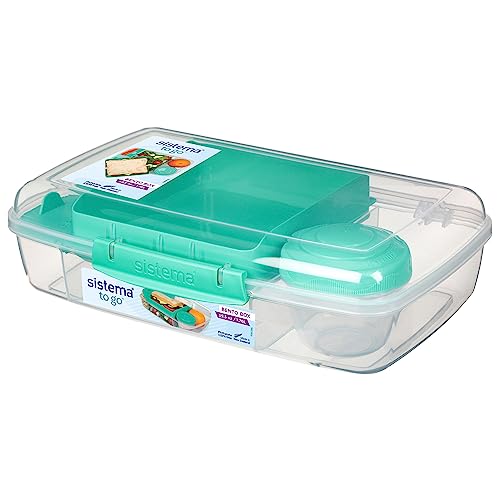
If your hesitation is uncertainty rather than money, the cheapest resolution is evidence: an entry-tier box like the Sistema To Go, with its compartmented base, clip lid and small wet-food pot, runs the format honestly for the price of a couple of bought lunches. A month with it answers every question in this article for your household specifically. If the habit forms, upgrade with knowledge; if it does not, you have bought information cheaply and gained a perfectly serviceable spare container. Tier: entry — check price on Amazon.
The Capability Upgrade: OmieBox
If your hesitation is that plain bento cannot do the one thing your lunch needs — arrive hot — the alternative is not to abandon the format but to buy its insulated branch. The OmieBox pairs a vacuum flask with cold compartments in one insulated box, at a premium tier and with real bulk. It is worth it precisely for the households the plain format fails: schoolchildren in warm rooms, workers without microwaves, anyone whose menu is hot at heart. Tier: premium — check price on Amazon.
The Permanence Play: PlanetBox Rover
If your hesitation is that plastic boxes are consumables in disguise, the alternative within the format is stainless steel. The PlanetBox Rover’s five-compartment steel tray trades sealing and microwaving for years of service without staining or odour — worth it for dry, composed lunches and households that buy once. Judge it by cost per year rather than cost per purchase and its premium tier reads differently. Tier: premium — check price on Amazon. The model-by-model evidence for all three alternatives is gathered in our bento lunch box reviews.
How to Get the Most Value If You Buy
Value is maximised by behaviour more than by bargain-hunting. Buy the right size first — an unused premium box is the worst value in the category, and a correctly sized mid-tier box used daily is the best. Buy the second box sooner than feels necessary; rotation removes the washing deadline that kills more bento habits than any product flaw, and the pair’s cost per use beats the single box’s within a term. Keep the dip pot in the system regardless of your box’s seal, because it rescues the wettest lunches and extends the menu the box can honestly carry. Pack the night before while the habit is young, and let cooked food cool before sealing, so condensation never taxes you for a problem technique solves free.
Maintain the wear parts as if they were the product, because they are: wash gaskets properly, dry before storing, store unlatched, and replace a tired gasket rather than a whole box when the system allows it. Use the box for more than the weekday lunch — picnics, travel days, hospital visits, the cinema run with snacks for children — because every extra use is value the sceptic’s arithmetic forgot to count. And revisit the decision annually: appetites, jobs and children change, and the household that re-asks the worth-it question each year owns a succession of right boxes instead of one ageing compromise. The format rewards the attentive owner disproportionately, which is another way of saying its value is substantially in your hands after purchase — a property it shares with every good tool.
The Decision Checklist
Answer yes or no, honestly, and count. Do you pack lunch at least three times a week? Does your typical lunch compose into a main plus separable sides? Would portion structure help rather than annoy you? Can the box be washed the day it is used, most days? Does the intended user open things easily — or can you choose a latch they can? Is your wettest regular food containable by a gasket or a small pot, rather than being soup? Do you have a bag the box fits flat in? Five or more yeses: a bento lunch box is worth it for you, and the remaining question is only which one — how to choose a bento lunch box will walk you there. Three or four: run the entry-tier trial for a month and let evidence break the tie. Two or fewer: skip it without regret, and spend the money on a better flask or better tubs, which are the right answers to the questions your lunch is actually asking. Whatever your count, write it down with the date: routines drift, and a dated verdict is a useful thing to argue with next year, when the calendar, the menu or the household has changed and the question deserves a fresh answer rather than an inherited one.
The Equation, Household by Household
Because worth is a relationship, it helps to watch the same box change value as it moves between households. In the first, a commuter packs five days a week and was spending on bought lunches twice a week out of packed-lunch fatigue. The bento’s separation and structure remove the fatigue, the bought lunches fall away, and the box — even at the premium tier, even bought in duplicate for rotation — is recovered financially within the first month or two, with the rest of the year as pure gain in money and morale. In the second household, a parent packs for two children. The boxes cost more in total, the washing is heavier, and the return arrives as uneaten food’s disappearance: lunches that come home finished instead of three-quarters full, and a shopping bill that stops leaking into emergency snacks. The equation balances by half-term and then compounds quietly for years, because children’s routines are the most stable routines in any house.
In the third household, a couple packs twice a week between them, improvising from leftovers. The box is used just often enough to demand its washing and never often enough to build fluency; packing stays slow, the compartments fight the improvised food, and within a season the box is holding batteries in a drawer. Nothing about the product changed between these households — the same box, the same tier — and everything about its worth did. That is the single most important idea in this article, and it is why we resist the universal verdict the question seems to invite. Is a bento lunch box worth it is not a product question wearing a question mark; it is three smaller questions — how often, what food, whose evenings — and households that answer those honestly already know their verdict before the checklist confirms it.
What Owners Report a Year Later
The most useful evidence about worth is not gathered at purchase but at the first anniversary, and a pattern emerges from owners who have lived with these boxes that long. The satisfied share three traits that have nothing to do with which model they bought. They pack at a rhythm — the night before, or in a fixed morning slot — so the box is part of a routine rather than a daily decision. They sized honestly, which usually means the box looks smaller than the one they first reached for. And they forgave the format its known limits early, keeping a flask for soup days and a tub for the occasional enormous leftover, instead of demanding one container win every lunch. Their reports are almost boring: the box works, lunch is better, the subject rarely comes up. Boredom, in year-later owner reports, is the sound of worth confirmed.
The dissatisfied reports are equally patterned, and equally unrelated to brand. They describe boxes bought for a routine that existed only aspirationally — the daily packed lunch that was going to begin in January — or for an eater whose preferences were never consulted, or at a size chosen from a photograph. A smaller group reports the genuine product failures: latches that tired, gaskets that could not be replaced, seals that never were. Those reports cluster, tellingly, at the entry tier bought as a destination rather than as a trial. Read together, the year-later evidence says the worth-it question is decided less by the box than by the honesty of the purchase — which is excellent news, because honesty is free and available before checkout, unlike most upgrades.
The Environmental Ledger, Kept Honestly
A reusable box displaces single-use packaging every day it is used, and for a daily packer that displacement is substantial across a year: the cling film, foil, sandwich bags and shop packaging that a packed-lunch habit otherwise consumes. Against that credit sits the debit of the box itself — a manufactured object, in plastic or steel — which is paid off in proportion to use. A steel box used for years is among the most defensible objects in a kitchen. A plastic box used daily for a few years is a sound trade. A premium box used twice is a small monument to good intentions, and its ledger never balances. The environmental argument, followed honestly, lands in exactly the same place as the financial one: frequency decides. Buyers motivated by waste should therefore spend less time choosing between materials and more time ensuring the routine that makes any material worthwhile — the right size, the workable latch, the second box for rotation — because a used plastic box beats an unused steel one on every ledger this article keeps.
When the Answer Changes
Worth is not a permanent verdict, and several common life changes reopen the question. A new job with a microwave — or without one — can move a household between the plastic and insulated answers overnight. A child starting school creates a bento household where none existed; a child leaving school dissolves one. A change in appetite, a new pattern of eating, working from home — each rewrites the frequency and menu variables on which the whole equation rests. The practical habit is to re-run the checklist when life changes rather than assuming the old answer holds, and to treat the box you own as evidence rather than as a commitment: the household that packed daily for years and now packs never should sell or pass the box on without a pang, because its worth was real while the routine lasted. Products outlive routines in every kitchen; the skill is noticing when yours has changed.
Objections, Answered in Turn
The case against is worth stating in its strongest form, because a verdict that survives objections is worth more than one that ignores them. Objection one: it is just a plastic box with dividers, and the dividers are a gimmick. The answer is that the dividers are the entire mechanism — separation, structure and variety all follow from them — and a mechanism does not become a gimmick by being simple; it becomes one only if it does not work, and the year-later owner evidence says it works for the households it suits. Objection two: a normal container and a small pot do the same job. They do most of it, with more items to wash, more lids to match and no portion architecture; for many households that difference is worth nothing, and for daily packers it is worth the whole purchase. Both things are true, for different readers, which is this article’s thesis rather than a problem with it.
Objection three: the good ones cost too much for a lunch box. Measured against bought lunches, the premium tier is recovered in weeks by a daily packer; measured against a drawer of existing tubs, any price is too much if the structure benefits do not move you. The objection is really a frequency statement in disguise. Objection four: children lose them. They do, occasionally — and the correct response is a tier decision, not abstinence: school boxes are bought at the tier a household can lose without tears, which is a genuine argument for the entry and mid tiers in the school bag and against engraving the premium steel with a family crest. Objection five: it is a fad. The format’s lineage — centuries of composed, compartmented meals, and decades of the modern designs reviewed across this site — suggests otherwise; fads do not usually survive contact with the school run for this long. None of these answers will move a reader whose checklist says no, and none should: they exist to show that the yes, where the checklist gives one, is not naivety.
The Benefits Audit: Small Gains That Compound
Beyond the headline benefits, owners accumulate a set of minor gains that rarely feature in the purchase decision and often dominate the anniversary verdict. Lunch packing becomes faster across the first month — not because the box changes, but because a fixed layout turns decisions into habits, and a practised packer assembles a bento in minutes with the kettle on. The fridge becomes easier to read: leftovers are assessed as compartments rather than as tubs, and the two spoonfuls of salad that would once have been binned acquire an obvious destination. Food shopping sharpens in the same direction, towards the berries, cheeses, dips and small good things that compartments reward, and away from the single large item that must carry a whole lunch. Children gain a small, real autonomy — surveying a whole lunch at a glance and choosing their order — that teachers notice and parents undervalue until they see a child struggle with a box that denies it.
There are social and sensory gains too, easy to mock and hard to dismiss after a year of them. A composed lunch draws a moment of appreciation at noon that a tub does not, and in a working day short on such moments, the effect on the afternoon is not nothing. Eating from compartments paces a meal — items are finished one by one rather than grazed into a mixture — and many owners report simply enjoying lunch more, which loops back into the habit’s durability. None of these gains appears on a specification sheet, and none would justify a purchase alone. Together, across hundreds of lunches, they are frequently the difference between a box that is used and a box that is merely owned — and since use is the entire worth-it equation, the small gains are not decoration on the argument. They are, in the long run, a large part of the argument itself.
Tiers and Timing: Buying at the Right Moment
When a purchase happens matters almost as much as what is bought. The start of a school year and the start of a new job are the category’s natural moments, because a new routine is forming anyway and the box can be built into it from day one rather than retrofitted into habits that have already set. Buying in the first flush of a resolution is riskier: enthusiasm is at its peak and information about the actual routine at its lowest, which is precisely the combination the entry-tier trial exists to protect against. The disciplined sequence — trial during the routine’s first month, considered purchase in the second — sounds slower than buying the premium box on day one and is, in total, much faster, because it skips the return, the replacement and the drawer of honourable mistakes.
Tier timing follows the same logic. The entry tier is for information. The mid tier is for the proven routine — the point at which a household knows its size, its seal needs and its latch, and is buying refinement in exactly the places its trial exposed. The premium tier is for the settled household purchasing a capability or a decade, and it is best bought slightly later than instinct suggests, when the routine has survived a change of season and the buyer’s confidence is evidence rather than mood. None of this requires patience of an heroic order; it requires about a month. Households that grant the category that month almost always end up calling their box worth it, and the correlation is not a coincidence — it is the mechanism by which worth is manufactured.
The Verdict for the Undecided
If you have read this far without the checklist settling it, you are probably in the honest middle: a few packings a week, a menu that mostly composes, evenings that mostly allow a wash. For that reader, our verdict is deliberately unglamorous — the question is worth a small experiment, not a large decision. Take the entry-tier trial for one month, timed to a real stretch of your routine rather than a holiday, and judge by three observations: how often the box was used without being forced, how the lunches compared with the tub era, and whether the washing ever once felt like a grievance. Two good answers out of three mean the format earns a mid-tier place in your kitchen. Anything less means the honest answer for your household, at this season of your life, is no — and a no arrived at by evidence is a successful outcome of this article, not a failed sale. The bento lunch box is worth it for the households it fits, at the moment their routine fits it. Everything else is timing, and timing, unlike lunch, can always be revisited.
What Worth It Looks Like at Each Tier
The verdict also changes shape by tier, and it is worth seeing the three versions plainly. At the entry tier, worth it is a low bar honestly cleared: a box that teaches the format, survives a school year or two of service as a main or a spare, and costs less than the lunches it displaces in its first fortnight. Entry boxes fail the worth test only when they are asked to be destinations — bought repeatedly as their clips tire, three cheap boxes across two years quietly outspending the mid-tier box that would have served throughout. At the mid tier, worth it is the category’s centre of gravity: seals that contain real food, trays that reheat and wash separately, latches built for thousands of cycles. For the standard commuter and school households, this is where the equation is most comfortably positive, and it is the tier we would steer the undecided towards once the trial has spoken.
At the premium tier, worth it becomes a claim about time or temperature and must be audited as such. The steel claim — years of service — is verified by simply dividing the tier by the years a proven routine will run; for a daily user the annual figure becomes trivial, and for a twice-weekly user it does not, which is why the same box is a bargain in one kitchen and an indulgence in another. The insulation claim — hot food — is verified against the calendar of cold mornings and microwave-free rooms it will actually serve. Premium purchases that survive this audit are among the most satisfying in the kitchen, because their owners can state, in one sentence, what the money bought. Premium purchases that cannot be stated that way are the ones that end up reviewed, a year later, with the phrase “nice, but” — and this entire article exists so that yours is not among them.
A Final Note on the Word Worth
It is worth noticing, at the end, that the objects households call worth it share a profile that has little to do with their specifications. They are used constantly, they fit the life around them without negotiation, and they ask for a small, predictable care in exchange for a small, predictable pleasure. The bento lunch box, at its best, is exactly such an object — which is why its worth is so unusually decidable in advance. You do not need to guess whether you will enjoy a novel material or master a complex appliance; you need only consult your calendar, your menu and your sink. If those three witnesses testify in its favour, buy with confidence at the tier your audit specifies. If they hesitate, run the trial. If they object, believe them, and know that the same three witnesses will give you a better answer next season, when the routine they describe has changed — as routines, unlike lunch boxes, always do.
The Earn-Its-Place Test: When a Bento Lunch Box Repays the Space It Takes
Worth-it questions about a bento lunch box are really questions about frequency, so start by honestly counting how often the job it does actually arises in your household in a normal month, not in the motivated week when you decided to shop for one. Multiply that frequency by the friction it removes each time — minutes saved, mess avoided, a workaround retired, a room made usable for longer each day — and the value of a bento lunch box stops being a feeling and becomes a rough but usable number. Share the checklist result with anyone who shares the space, since a bento lunch box chosen by one person and resented by another rarely survives, however sensible the purchase looked on paper. Measure before anything else, and measure the bento lunch box in its working state rather than its packed or folded state, because handles extend, lids open, cords trail, doors swing and users stand somewhere, and all of that belongs in the measurement.
The deciding experiment is to live one ordinary week noticing every moment the bento lunch box would have been used, marking each one down, because a week of real tally marks settles the worth-it question better than another evening of comparison shopping. Decide in advance what good enough looks like for the job the bento lunch box does in your home, because chasing a flawless result usually costs more time than the flaw itself, and most households are happier with a reliable ninety percent they actually repeat. Finally, remember that the best bento lunch box for your home is the one whose size, habits and upkeep disappear into your routine, leaving only the result behind — a cleaner surface, a better-lit seat, a tidier shelf, an easier job — week after ordinary week. Seasonal thinking helps more than expected: a bento lunch box bought in one season will meet different light, humidity, mud, heat, guests and routines in another, so judge its size, storage and upkeep against the hardest season it will face.
Photograph your setup once the bento lunch box is working well — the position, settings, arrangement or layout you settled on — so that after a move, a deep clean or a seasonal break you can recreate the arrangement that worked instead of rediscovering it. Borrowed enthusiasm is the trap here: a bento lunch box can be excellent and still not be worth it for you, if your neighbours, your feed or your guests use theirs weekly while your own routine would reach for it a handful of times a year. Use a simple decision checklist at the end: the bento lunch box fits the measured space, suits the real frequency of the job, matches the household’s cleaning temperament, has obtainable parts, and has a named storage home — five yeses make a confident order. Check the floor, wall, ground or surface the bento lunch box will meet, since level, texture, moisture and finish decide more about everyday performance in food storage & organization settings than most shoppers expect when they are comparing listings on a screen.
A bento lunch box earns its place fastest in households where the job is frequent and the current workaround is genuinely annoying, and slowest where the job is seasonal, occasional, or already handled well by something you own. If a problem with the bento lunch box repeats in the same spot or the same stage of the job, treat the pattern as the clue — patterns point to setup, surface or technique, while random problems point more often to the individual unit. Consider the cleaning rhythm honestly: a bento lunch box that needs attention after every use suits a household that enjoys small rituals, and frustrates a household that wants to finish a job and walk away, so match the upkeep to the temperament, not the intention. Test the bento lunch box in the first week under deliberately ordinary conditions rather than saving it for a special occasion, so that any problem surfaces while returning, exchanging or adjusting your setup is still simple.
Look at replacement parts and consumables for the bento lunch box while you are still comparing, confirming that the pieces most likely to wear, clog, tear, fade or get lost can actually be obtained without replacing the whole product. Read the manual’s warnings page for the bento lunch box even if you read nothing else, because that page is a compressed list of every way the product has ever been misused, and it tells you exactly which of your own habits needs adjusting. Think about who else will use the bento lunch box and what they will do differently: shorter reach, less patience, stronger habits, no interest in the manual, and a tendency to leave things wherever they were last set down.
Frequently Asked Questions
Is a bento lunch box worth it for one person?
Yes, if that person packs frequently — in fact the single daily commuter is the format’s strongest case, because every benefit is collected by the same person who pays the routine costs, and the cost per use falls fastest. A single person packing twice a month is the opposite case. The household size matters far less than the packing frequency of the individual eater, so run the checklist per person rather than per kitchen: it is entirely normal for the answer to be yes for one member of a household and no for another.
How long does a bento lunch box take to pay for itself?
Against bought lunches, quickly — a daily packer typically recovers even a premium tier’s cost within weeks, because the saving per packed lunch is large relative to the price of any box in the category. Against the alternative of packing in tubs you already own, the box never pays for itself in cash; it pays in lunch quality, portion structure and routine simplicity, which are real returns but not financial ones. Be clear about which comparison you are making, because the worth-it answer differs: as a replacement for bought lunch, almost always worth it; as an upgrade to a working tub system, worth it only if the structure benefits matter to you.
Is a premium bento lunch box worth it over a budget one?
Only when the premium buys something your routine uses. Stainless steel’s premium buys years of service — worth it for the proven daily user with dry lunches. Insulation’s premium buys hot food — worth it where no microwave exists. A premium charged for styling or bundle extras buys little that survives a month. The reliable sequence is to prove the habit at the entry or mid tier, then let the premium purchase be an informed upgrade rather than a hopeful one; households that reverse the sequence own the category’s most expensive regrets.
Is a bento lunch box worth it for kids?
For school-age children who eat packed lunch daily, usually yes — the payoff arrives as lunches actually eaten, variety accepted and a box the child operates independently, and across a school year the cost per use is small at any tier. The conditions are the latch and the size: a box a child cannot open, or one sized so a proper lunch looks lost in it, is not worth it at any price. For children who eat school dinners most days, the frequency test fails and a simple container suffices for the occasional packed day.
What if I only pack lunch a few times a week?
Two or three times a week is the genuine borderland, and the checklist is built for you. If your lunches are composed and you value the structure, the mid tier usually justifies itself across a year; if your lunches are improvised and wet, it does not. The entry-tier trial exists precisely for this case — a month of real use at minimal cost replaces speculation with your own data, and the trial box remains useful as a spare whichever way the verdict lands. Do not let anyone, including this article, decide a borderline case by rhetoric when a cheap experiment can decide it by evidence. Borderline readers should also note that frequency is not fixed: a new term, a new job or a new school can move a household from twice a month to daily in a single week, at which point yesterday’s no becomes today’s obvious yes — and the trial box bought for the experiment is already in the cupboard, ready to be promoted.
Does a bento lunch box save money?
It can, through three channels: packed lunches displacing bought ones, which is the large saving; variety from small compartments reducing the odds and ends wasted from the fridge; and portion structure reducing the supplementary snacks a disappointing lunch triggers. None of these is automatic — the box must be used, and used with food that would otherwise be bought or binned. The savings claim should be made modestly: a bento box is a tool that makes a money-saving habit pleasanter and therefore more durable, and the durability of the habit, across a year, is where the real money is.
Related Reading
Decided it is worth it? Choose the model with our step-by-step guide on how to choose a bento lunch box and compare designs in our bento lunch box review. Still weighing the format itself? Bento lunch box pros and cons argues both sides. For the rest of the kitchen system, see our mini fridges guide and home organisation deals. And if your verdict landed on the borderline, remember the shape of the experiment this article recommends: one inexpensive box, one honest month, three simple observations. It is the cheapest certainty available in the whole category, and it has the unusual virtue of being useful even when its answer is no — because a household that has tested its own routine knows something about itself that no review, however thorough, could have told it.


