Disclosure: As an Amazon Associate, dailyhomedecorating.com earns from qualifying purchases. Links on this page are affiliate links; they cost you nothing extra. Prices and availability change often, so check the current Amazon listing before you buy.
Roundups of bento lunch box reviews usually fail in one of two ways: they crown a single winner as if all lunches were identical, or they describe six boxes so even-handedly that no decision survives the reading. These bento lunch box reviews try to do the useful thing instead. Each model below gets a full individual review — what it is, how it behaves in daily use, its strengths and its honest limitation — and each review ends with the specific eater it suits and the eater it will frustrate. Read the reviews for the two or three models that match your life, then use the comparison table and the choosing notes at the end to settle between them.
The field divides by material and mission. Plastic trays are the versatile mainstream; one children’s specialist outclasses everything else for small hands; one insulated design owns hot food; one steel tray owns longevity; one two-tier design owns elegance; and one entry-tier box owns the role of inexpensive experiment. Every model here is real and widely sold, described in prose at a qualitative tier — entry, mid or premium — and for any of them, check price on Amazon on the current listing, because bundles with bags, cutlery and spare trays shift the value from month to month.
Key Takeaways
- Best all-round adult box: the Bentgo Fresh pattern — gasketed plastic, removable tray, main-plus-sides layout.
- Best for young children: Bentgo Kids, because the single latch and honest portions respect the actual user.
- Best for hot food: OmieBox, the insulated flask design; nothing else in the roundup serves a hot main.
- Best for longevity: PlanetBox Rover in stainless steel, with the steel terms — no microwave, no liquid seal — accepted.
- Best design object: Monbento MB Original, the two-tier box adults actually enjoy carrying.
- Best first experiment: Sistema To Go, the entry-tier way to learn whether the format suits you.
How These Bento Lunch Box Reviews Were Put Together
Each review below weighs the same evidence in the same order, so the models can be compared fairly. First, construction: materials, lid and latch design, gasket access, and whether the tray separates for washing. Second, layout against real food: what a typical lunch for the intended eater looks like inside this specific geometry, including what does not fit. Third, the pattern of long-term owner experience — the praises and complaints that recur after months of daily use, which are a far better guide than any first impression. Fourth, the terms of ownership: washing, reheating, carrying, and the wear parts that will decide lifespan.
We do not use numerical scores, and we pay no attention to the ratings figures on listings, which fluctuate and aggregate different bundles. A box is good here if it is good at its stated job for its stated eater, and every review names the eater it fails as plainly as the eater it serves. Where a model appears in our other coverage, we have kept the verdict consistent: the category-level assessment is in our single bento lunch box review, and the format’s trade-offs are argued in bento lunch box pros and cons. This page’s job is narrower and more practical: model by model, which one, for whom, and why.
In this guide
The Reviews

Bentgo Fresh — The Adult All-Rounder
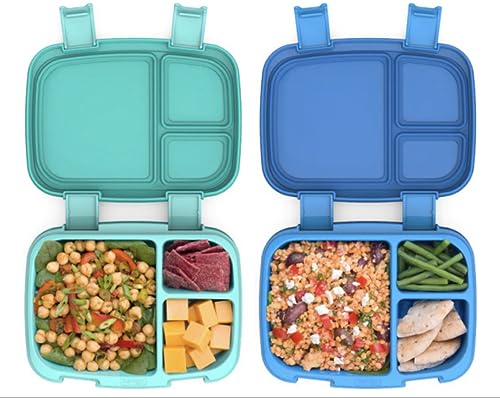
The Bentgo Fresh is the model against which other adult plastic bento boxes are measured, and a month with it explains why. The format is a removable four-compartment tray inside a lidded shell: a generous main space, two medium sides and a small well. The lid carries a silicone gasket and closes with latches that spread pressure evenly, and in daily use that seal is the story — dressed salads, yoghurt and juicy fruit travel through a commute without incident, and the compartments stay separate because the dividers meet the lid properly. The tray lifts out to be microwaved and washed on its own, which keeps the shell and gasket out of the dishwasher’s fiercest heat and is, we suspect, why these boxes age more gracefully than their one-piece rivals.
The layout matches the canonical adult lunch — sandwich or leftovers, a salad or vegetable side, fruit, and something small and enjoyable — with a naturalness that suggests the designers pack lunch themselves. Limitations are real but ordinary. The latch routine is two-handed. The footprint needs a genuine lunch bag rather than a handbag’s spare corner. Strongly coloured food will eventually leave a souvenir in the plastic, as it does in all plastic. And there is no answer here to hot food; this is a room-temperature and reheatable box, full stop.
Strengths: trustworthy seal; removable tray for reheating and washing; layout that fits real adult lunches. Trade-offs: two-handed latching; generous footprint; plastic’s eventual staining. Best for: adults packing varied lunches daily. Not suited for: children, small bags, hot food. Tier: mid — check price on Amazon.

Bentgo Kids — The Children’s Specialist
Children’s lunch boxes fail in predictable places — latches small hands cannot work, portions sized by adult optimism, trays that trap the evidence of lunch in un-washable corners — and the Bentgo Kids reads like a point-by-point answer to that list. Five small compartments sit in a removable tray; a single latch closes the lid; the shell has a rubberised, drop-friendly build. The portioning is the quiet brilliance: filled, the box is a right-sized lunch for a young child, and the five spaces invite the variety that picky eaters accept precisely because nothing touches anything else.
In school use, the design’s virtues compound. The child opens it alone — the feature on which all others depend. The tray comes out at home and the day’s archaeology washes away in one piece. The seal handles the yoghurt-and-fruit end of the children’s menu credibly. The honest limitations are growth and scope: appetites will outgrow this box, sometimes sooner than the buyer hopes, and there is no hot-food option for the child who wants pasta. Neither is a flaw; both are the terms of a specialist. Buy it for the years it fits and it will be among the hardest-working objects in the house.
Strengths: genuinely child-operable; honest portions; removable tray; tough shell. Trade-offs: outgrown in time; no hot food; styling firmly for the young. Best for: nursery and primary school children. Not suited for: older children and teenagers. Tier: entry to mid — check price on Amazon. Parents weighing the format itself should read whether a bento lunch box is worth it for family routines.
OmieBox — The Hot Food Answer
Every other review in this roundup accepts the bento format’s oldest limitation: lunch is eaten at the temperature the room decides. The OmieBox refuses it. The design is an insulated box with a removable vacuum flask at its heart; hot food goes in the flask, cold food in the compartments around it, and the whole meal travels as one object with a handle. Pasta, soup, rice dishes and leftovers become school and office lunches in buildings with no microwave, and cold items gain protection from warm classrooms as a side effect of the insulation.
The costs of the capability are visible at a glance: this is the bulkiest and heaviest box in the roundup, with the most parts to wash, and it sits at the premium tier. The flask’s portion is sized for a child or a modest adult main, so a large appetite will find the hot component small even when the whole box is large. Filling technique matters — pre-warming the flask with hot water before adding hot food is the difference between properly hot and merely warm at noon. Judged as a tray, it is overbuilt; judged as the only design here that changes what lunch can be, it has no rival. For the right household — a child tired of sandwiches, a worker with no reheating facilities — it is not the expensive option but the enabling one.
Strengths: genuine hot food alongside cold; insulation helps everything; sturdy, cheerful build. Trade-offs: bulk and weight; modest flask portion; most parts to wash; premium tier. Best for: school lunches and microwave-free workplaces. Not suited for: minimalists and very large appetites. Tier: premium — check price on Amazon.
PlanetBox Rover — The Stainless Steel Standard
The PlanetBox Rover is the review in this roundup most likely to still be in service in a decade. Its five-compartment tray is pressed from stainless steel, its lid latches flat, and its supporting cast of accessory pots handles the dips and dressings the unsealed lid cannot. Nothing stains, nothing holds a smell, nothing cracks when the box meets concrete, and food presented in the steel compartments has a composed, appetising look that owners mention with surprising affection. This is the plastic-averse household’s box, and the buy-it-once household’s box.
The terms must be accepted whole. Steel cannot be microwaved, so reheating means a plate and a minute’s decanting. The lid is not a liquid seal, so wet food travels in the accessory pots or not at all. The box is heavier than plastic and sits at the premium tier, which concentrates the mind wonderfully: this is a purchase to make when the routine is proven, not to test a hypothesis. Within its terms, though, the Rover is close to beyond criticism — the rare product whose long-term owner reports read like the first-week ones, because so little about it can deteriorate.
Strengths: exceptional longevity; no staining or odours; beautiful food presentation; simple, honest construction. Trade-offs: no microwave; no liquid seal without pots; weight; premium tier. Best for: dry, composed lunches for adults and older children. Not suited for: reheating routines and saucy food. Tier: premium — check price on Amazon.
Monbento MB Original — The Design-Led Two-Tier
The Monbento MB Original is the box in this roundup that adults describe as an object rather than a container: two tiers, an intermediate lid, a clean silhouette and a finish that belongs on a desk rather than in a kit bag. The two-tier logic is genuinely useful — a main in the lower tier, salad, fruit or dessert above, each sealed from the other — and the option to carry a single tier on a light day gives it a flexibility no one-piece tray can match. Cutlery from the same range completes a system that feels considered end to end.
Its constraints are the constraints of elegance. Total capacity is moderate, and the tiers prefer flat, composed food; a tall sandwich or a bulky portion of leftovers exposes the format quickly. The stacking routine — tier, lid, tier, band — is slower than a single latch, and small children should look elsewhere in this roundup. But for the adult whose lunch is a composed pleasure rather than a refuelling event, the MB Original is the box most likely to be carried daily for the simplest of reasons: its owner enjoys carrying it. In a category where the best box is the one that leaves the house, that is a performance feature.
Strengths: design and finish; flexible one-or-two-tier use; good seals for a stacking box. Trade-offs: moderate capacity; dislikes tall food; slower routine. Best for: design-conscious adults and course-style meals. Not suited for: large appetites and young children. Tier: mid to premium — check price on Amazon.

Sistema To Go Bento Box — The Entry-Tier Experiment
The Sistema To Go bento occupies the most underrated role in the category: the inexpensive way to find out whether divided lunches suit your life before committing to the mid or premium tiers. In its common form it offers a compartmented base, a clip lid and a small separate pot for yoghurt or dressing — a sensible layout that teaches the bento habit honestly. It is light, widely available, and cheap enough to serve as a spare, a gym-bag box or a second box for washing rotation while the main box is still being chosen.
Expectations should match the tier. The clips and hinges are the design’s long-term question marks, the seal is adequate rather than exceptional, and the styling is purely functional. None of that prevents it from doing its real job, which is diagnostic: a month of lunches in a Sistema tells you your size, your layout preference and your tolerance for the washing routine, and that knowledge makes the eventual upgrade — in our bento lunch box buying guide terms, the informed purchase — almost impossible to get wrong. Some households discover the experiment is enough and simply replace it like-for-like when it tires, which is also a legitimate outcome.
Strengths: accessible tier; light and simple; sensible layout with a wet-food pot. Trade-offs: clips and seal are not built for years; purely functional looks. Best for: first-time users, spares and rotation. Not suited for: buyers wanting a long-term daily driver. Tier: entry — check price on Amazon.
Side-by-Side Comparison
| Model | Material / type | Seal | Microwave | Tier | Choose it if… |
|---|---|---|---|---|---|
| Bentgo Fresh | Plastic tray | Gasketed, strong | Tray yes | Mid | You want the adult default |
| Bentgo Kids | Plastic tray, child size | Gasketed | Tray yes | Entry–mid | The eater is a young child |
| OmieBox | Insulated with flask | Gasketed + flask | No | Premium | Hot food is the point |
| PlanetBox Rover | Stainless steel | Unsealed lid; pots for wet food | No | Premium | You are buying for years |
| Monbento MB Original | Two-tier plastic | Sealed tiers | Tiers yes | Mid–premium | You eat in courses and value design |
| Sistema To Go | Plastic with pot | Clip lid, adequate | Yes | Entry | You are testing the format |
The table compresses; the reviews above are the evidence. Two patterns are worth naming. First, sealing and microwaving travel together in plastic and are both surrendered, deliberately, by steel — there is no model here that offers everything, which is why the choice must start from your food rather than from a feature list. Second, the premium tier buys two unrelated things — temperature and permanence — and confusing them is the most expensive mistake in the category: the OmieBox will not outlast the Rover, and the Rover will never serve hot soup.
Choosing Between Them: Five Buyer Profiles
The weekday commuter with a sandwich-or-leftovers lunch, a laptop bag and an office microwave should take the Bentgo Fresh and stop reading; it is the shortest path in this roundup to a solved problem. The parent of a four-to-eight-year-old should take the Bentgo Kids for its latch and portions, or the OmieBox if the child campaigns for hot food — and should buy two of either if the household’s evenings are short on washing. The plastic-averse household with dry, composed lunches should take the PlanetBox Rover and its accessory pots, accepting the plate-at-lunchtime routine as the price of permanence.
The design-conscious course eater — salad above, main below, desk lunch as a small event — should take the Monbento MB Original. The curious newcomer, unsure whether bento is a revelation or a fad, should take the Sistema, run the experiment for a month, and then either upgrade with knowledge or walk away having spent very little to learn something real. Readers who do not recognise themselves in any profile should return to first principles in how to choose a bento lunch box, step by step, which diagnoses size, material and layout from the lunch outward.
What a Month of Ownership Looks Like, Model by Model
Reviews end at purchase; ownership does not, so a short forecast for each model, based on the pattern of long-term owner experience. The Bentgo Fresh settles into invisibility — its owners stop thinking about it, which is the highest praise daily equipment earns — with the first faint stain somewhere around a strongly coloured curry. The Bentgo Kids becomes a school-morning fixture; its month is measured in lunches finished and a latch still snapping shut with its original certainty. The OmieBox changes a household’s menu: hot leftovers start being cooked with tomorrow’s lunch in mind, and its flask routine — pre-warm, fill, seal — becomes as automatic as a kettle.
The PlanetBox Rover’s month is notable for nothing happening to it at all, which is precisely its proposition; its owners’ attention goes to the food, and the accessory pots become familiar small citizens of the lunch bag. The Monbento’s month is about pleasure retained — it is still the box its owner would choose to be seen with — and about learning the tiers’ appetites: which foods belong above, which below, which lunches exceed it and go in something else without resentment. The Sistema’s month is a decision forming: either it has quietly become sufficient, or its owner now knows exactly which upgrade their lunches require. Every one of those outcomes is a success of a different kind, and none of them is available to the buyer who chooses by photograph.
Care Notes That Apply Across the Roundup
All six models share one care creed: wash promptly, dry thoroughly, store unlatched. Gaskets — on the Bentgo pair, the OmieBox and the Monbento tiers — should be lifted out periodically and the channel beneath washed; that hidden line is where odours begin. Trays that separate should do the dishwasher work while shells and lids are treated more gently, a division of labour that extends every plastic design’s life. Steel asks least: wash, dry, done. The OmieBox’s flask rewards pre-warming for hot food and should be washed the same day, because a sealed flask keeps its contents’ aroma as faithfully as their heat. And every model in this roundup benefits from the room-temperature rule: food sealed in warm steams itself, and no seal in this roundup can protect lunch from its own condensation.
Storage at home deserves a sentence, because six-model roundups end in real cupboards. Trays nest or stack best when a household standardises; mixed systems colonise shelves the way mixed storage always does — the same reason we advise standardising in our favourite storage baskets for organised cupboards. Choose the model, commit to it, and let the cupboard stay calm.
The Roundup by Food Type
Models reveal themselves against specific foods, so here is the whole roundup re-sorted by what is actually in the box. For sandwiches and wraps, the Bentgo Fresh’s main compartment is the natural home — sized for the real thing, sealed against its neighbours — with the Monbento’s lower tier a close second for the course eater and the PlanetBox entirely comfortable provided the sandwich is not dressed to run. For salads, the gasketed plastic models win outright: leaves in a main space, dressing in the small well or a pot, crispness preserved to noon in a way the unsealed Rover cannot promise without its pots. For rice, grains and pasta eaten at room temperature or reheated, the Fresh and the Monbento tiers lead again, with reheating as the divider — plastic trays go in the microwave, steel’s contents go on a plate.
For hot food, the roundup has exactly one answer and it is not close: the OmieBox’s flask turns soup, pasta and leftovers into lunches in buildings where every other model here serves them cold. For grazing lunches — cheese, crackers, olives, nuts, cut fruit — the five-compartment layouts shine, the Rover most elegantly and the Bentgo Kids at child scale, because grazing is separation’s home fixture. For yoghurt, dips and anything spoonable, trust the gasketed compartments of the Bentgo pair, the OmieBox’s sealed spaces and the Sistema’s little pot, in that order, and keep all of them out of the Rover’s open tray. Read your own three most common lunches down this list and the correct model usually announces itself before the choosing profiles are even needed.
Accessories and Bundles, Reviewed
Most of these models are sold in more than one configuration, and the bundle can matter as much as the box. The PlanetBox ecosystem is the most developed: lidded dip pots that make the steel system honest about wet food, and carry bags sized to the tray. If you buy the Rover, budget for the pots from day one — they are not an upsell but the missing half of the design. The OmieBox’s useful extras are spare seals and, for some households, a second flask routine rather than accessories at all; its bundle question is usually colour and whether a utensil set is included. The Monbento range offers cutlery designed to travel with the tiers, and of all the cutlery in this roundup it is the set most likely to still be complete in a year, because it has a designed home.
The Bentgo models are frequently bundled with insulated bags, and here the advice is to judge the bag as seriously as the box: a bag sized to the tray, with room for an ice pack, extends every model’s cold-food performance and contains the consequences of any seal’s bad day. The Sistema needs no ecosystem, which is part of its charm. Across all six, be wary of bundles whose value is counted in tiny pots and novelty picks; the accessories that earn their keep are the ones matched to a named weakness of the box — pots for steel, bags for commuters, spare trays for school households. Everything else is cupboard stock in waiting.
Long-Term Durability Notes
Since several of these reviews rest on longevity claims, the evidence deserves its own summary. Stainless steel’s record is the simplest: the Rover’s tray has essentially one failure mode, a latch tired after years, and its surface neither records meals nor absorbs them; owners measure its life in school careers. Plastic durability divides by design rather than by brand. Tray-and-shell models, where the food-contact part separates and the gasketed shell is spared the dishwasher’s worst, age slowest; one-piece boxes with living hinges age fastest, the hinge whitening and the latch softening across a couple of years of daily flexing. Gaskets are the quiet determinant — a gasket that can be removed, washed and eventually replaced keeps a box sealing; a bonded gasket makes the whole box a consumable on the gasket’s schedule.
The OmieBox’s durability is a tale of two materials: the flask is a vacuum vessel with a long natural life, while the insulated shell and its seals age like the plastic they are. Its owners’ long-term reports centre on the flask still performing while cosmetic wear accumulates outside — an acceptable bargain, since performance is the purchase. The Monbento’s tiers and seals follow the better plastic pattern, helped by owners who, having bought a design object, tend to treat it like one. The Sistema’s clips are its known horizon; at its tier, a couple of school years is a fair return, and its owners generally agree. The practical conclusion across the roundup: durability is bought in the lid, the latch and the gasket, and the reviews above have weighted exactly those parts — because a bento box is not worn out by lunch, but by being opened, closed and washed ten thousand times.
Head-to-Head: The Three Comparisons Buyers Actually Face
Most buyers who reach this roundup are not choosing among six; they are choosing between two, and it is usually one of three pairs. The first is the Bentgo Fresh against the PlanetBox Rover — plastic’s convenience against steel’s permanence. Decide it with two questions. Do you reheat lunch in its container, or carry wet food without wanting accessory pots? Then the Fresh. Is your lunch dry and composed, your horizon measured in years, and your patience for plastic’s ageing short? Then the Rover. Buyers who answer yes to both sets of questions — they exist — should know the Rover plus pots plus a plate is a workable system, while the Fresh plus an acceptance of eventual replacement is the other; there is no third answer, and choosing the compromise you mind least is the whole decision.
The second pair is the Bentgo Kids against the OmieBox, and it is decided by a single menu question: does the child need hot food? If school lunch is sandwiches, wraps, fruit and snacks, the Kids is lighter, simpler, cheaper to duplicate for rotation, and entirely sufficient — the OmieBox’s capability would be carried unused. If the child is bored of cold lunch, eats in a cold climate, or has a school with no reheating and a long morning, the OmieBox transforms the menu and earns its bulk. Weight is the tiebreaker for very young children, in the Kids’ favour; appetite for variety is the tiebreaker for older ones, in the OmieBox’s.
The third pair is the Monbento MB Original against the Bentgo Fresh, elegance against utility. Both are adult plastic; the Fresh seals harder, fits more, and reheats in a removable tray, while the Monbento carries better, courses better and flexes between one tier and two. Office traditionalists with big, wet, reheated lunches belong to the Fresh; grazers, salad-course eaters and the design-led belong to the Monbento. It is the pleasantest dilemma in the roundup, because both answers are good — the rare comparison where the buyer’s taste, rather than the products’ faults, casts the deciding vote.
Where Reasonable Reviewers Disagree
Honesty requires noting the points where this roundup’s verdicts are contestable. Some reviewers rank the Rover first overall, arguing that longevity and materials should outweigh sealing and reheating for every buyer; we think that mistakes a virtue for a universal, since a box that cannot carry your actual lunch fails before its durability is ever tested. Some rank the OmieBox as the best children’s box outright; we hold that for the many children whose lunch is cold by preference, its weight and tier buy an unused capability, and the simpler box wins. And some dismiss the Sistema as too basic to review alongside premium models; we include it deliberately, because the experiment it enables is the highest-value purchase in the category for the genuinely undecided.
There is also a live disagreement about two-tier designs generally: admirers call them the adult format, sceptics call them two small lunches in a trench coat. Our position is the Monbento review above — the format is real but narrow, superb for course-style eating and the wrong answer for volume. Readers should know these disagreements exist, not to doubt the reviews but to locate their own lunch within them: every contested verdict in this roundup turns on the same axis, which is not the boxes at all, but what the buyer eats, where they eat it, and how much routine they are willing to run. The boxes are known quantities. The variable is you.
A Note on Sizes Across This Roundup
Sizing is where roundup readers most often go wrong after reading, because the reviews describe layouts in words and the purchase is made by eye from photographs. So, plainly: the Bentgo Kids is a young child’s box, and no photograph’s scale should talk a parent of a ten-year-old into it. The Bentgo Fresh is a full adult box that assumes a lunch bag. The OmieBox is the largest object here in every dimension that matters in a school bag, and its flask portion is the smallest main in the roundup — a combination that confuses buyers until they understand the flask is a component, not the meal. The Rover is a generous adult tray that lies flat and travels slim. The Monbento’s two tiers together hold a moderate adult lunch; either tier alone holds a light one. The Sistema is the modest all-rounder, sized for an average lunch and an average bag.
The discipline that prevents sizing regret is embarrassingly low-tech: take the lunch you ate most recently, lay it on the counter, and compare it — item by item — with the compartment map of the model you favour, which every review above describes. If an item has no home, the model is wrong for you regardless of its other virtues, and the roundup’s structure is designed to make the next candidate obvious: same mission, different geometry. More lunches are ruined by geometry than by any other property in this category, and it is the one property entirely knowable before purchase.
The Verdicts, One Line Each
For readers who have scrolled to the end for the short version — having read the long one, we hope — here is the roundup compressed. Bentgo Fresh: the adult default, sealed, reheatable, sensibly laid out, mid tier. Bentgo Kids: the young child’s box, defined by a latch small hands can work and portions that respect small appetites. OmieBox: the temperature specialist, premium and bulky, alone in serving hot food. PlanetBox Rover: the permanence purchase, steel and unsealed, for dry composed lunches across years. Monbento MB Original: the design-led two-tier for course eaters who carry light and care how things look. Sistema To Go: the honest experiment at the entry tier, and a useful spare thereafter.
And the roundup’s single piece of advice, if advice must be single: buy for the lunch you packed last, in the bag you actually carry, for the hands that will actually open it. Every model above is the best in this roundup for somebody, and the reviews exist to help you work out — before the purchase, in words rather than in returns — whether that somebody is you. When two models remain tied after all of it, choose the one whose limitation you will encounter less often; in daily equipment, the rarer irritation is the only kind that stays small.
One last pattern from across the roundup deserves naming, because it predicts satisfaction better than any single specification: owners who chose their model from their lunch report contentment, and owners who chose from a photograph report a search for accessories to fix the mismatch — pots for a steel box bought for wet food, bags for a tray bought too large, replacement lids for latches never suited to the hands using them. The models are not hiding their natures; every review above states its model’s nature in its first paragraph. The cheapest accessory in the entire category is a minute spent matching that nature to your own table, and it is the one purchase this roundup most hopes to sell you.
Reading Owner Feedback Like a Reviewer
Because this roundup leans on the pattern of long-term owner experience, it owes readers the method for checking our work. When you read owner feedback on any of these models, sort for time before sentiment: a complaint about a latch from someone in their second school year outweighs a dozen first-week raves, because the latch question is a time question. Look for the specific over the general — “the gasket needs reseating after washing” is usable information, while a bare verdict, positive or negative, is weather. Notice what owners of each model never mention: Rover owners do not discuss staining, because there is none to discuss; Fresh owners do not discuss hot food, because the box never promised it. Absences are data about which promises a design actually makes.
Discount two categories of feedback entirely. Delivery and packaging grievances tell you about logistics, not lunch boxes. And grievances that describe a mismatch this roundup has already named — steel bought for soup, a child’s box bought for a teenager — tell you about the purchase, not the product; they are, if anything, confirmations of the reviews above. What remains after that filtering is the signal this roundup is built from: the same two or three praises and the same one or two complaints, recurring across years, per model. When your own reading converges on the same pattern, you can buy with the confidence that you are not purchasing a first impression but a track record — which, for an object you will open twice a day for years, is the only confidence worth having.
Reading Bento Lunch Box Reviews Against Your Own Space and Routine
A single review session can flatter or condemn a bento lunch box unfairly, so this section slows the judgement down and looks at what only repeated, ordinary use tends to reveal. Run the bento lunch box through your least favourite version of its job first, not the easiest demonstration: the awkward corner, the rushed weekday timing, the fuller load, the lower light, or whatever condition in your routine makes this category work hardest. When something about the bento lunch box disappoints, change one variable at a time — position, setting, timing, load, accessory or technique — and give the change a fair trial, because changing three things at once leaves you with a better or worse result and no idea why. Decide in advance what good enough looks like for the job the bento lunch box does in your home, because chasing a flawless result usually costs more time than the flaw itself, and most households are happier with a reliable ninety percent they actually repeat.
Pay attention to the second and third use rather than the first, because the first use of a bento lunch box measures your learning curve while the later uses measure the product itself, and confusing those two is the commonest reviewing mistake. Finally, remember that the best bento lunch box for your home is the one whose size, habits and upkeep disappear into your routine, leaving only the result behind — a cleaner surface, a better-lit seat, a tidier shelf, an easier job — week after ordinary week. If a problem with the bento lunch box repeats in the same spot or the same stage of the job, treat the pattern as the clue — patterns point to setup, surface or technique, while random problems point more often to the individual unit. A well-judged bento lunch box explains itself to that second person without a lecture, with controls, grips, openings or adjustments that make sense on contact, and that intuitiveness is worth recording because guests, partners and teenagers will all test it.
For troubleshooting, start with the boring causes first: power, water, fit, blockage, alignment, a full container, a loose connection or a setting changed by the last person who used the bento lunch box, because boring causes account for most apparent failures. Look at replacement parts and consumables for the bento lunch box while you are still comparing, confirming that the pieces most likely to wear, clog, tear, fade or get lost can actually be obtained without replacing the whole product. Seasonal thinking helps more than expected: a bento lunch box bought in one season will meet different light, humidity, mud, heat, guests and routines in another, so judge its size, storage and upkeep against the hardest season it will face. Photograph your setup once the bento lunch box is working well — the position, settings, arrangement or layout you settled on — so that after a move, a deep clean or a seasonal break you can recreate the arrangement that worked instead of rediscovering it.
Use a simple decision checklist at the end: the bento lunch box fits the measured space, suits the real frequency of the job, matches the household’s cleaning temperament, has obtainable parts, and has a named storage home — five yeses make a confident order. Share the checklist result with anyone who shares the space, since a bento lunch box chosen by one person and resented by another rarely survives, however sensible the purchase looked on paper. Think about who else will use the bento lunch box and what they will do differently: shorter reach, less patience, stronger habits, no interest in the manual, and a tendency to leave things wherever they were last set down. If you want a concrete listing check, take a name already shortlisted in this guide, such as Bentgo Fresh, Bentgo Kids and OmieBox, and verify that exact bento lunch box listing against the measurements and compatibility questions above, field by field, rather than trusting the headline description alone.
Keep a short note of what you adjusted on the bento lunch box during the first month, even just a line on your phone, since those notes turn vague impressions into a setup you can repeat, share or troubleshoot months later. Test the bento lunch box in the first week under deliberately ordinary conditions rather than saving it for a special occasion, so that any problem surfaces while returning, exchanging or adjusting your setup is still simple. Keep the packaging of a larger bento lunch box until those first ordinary tests are done, flattened if space is tight, because re-boxing an awkward shape from scratch is the hidden difficulty inside many otherwise straightforward returns. Read the manual’s warnings page for the bento lunch box even if you read nothing else, because that page is a compressed list of every way the product has ever been misused, and it tells you exactly which of your own habits needs adjusting.
Frequently Asked Questions
Which bento lunch box is the best overall?
For a typical adult packing a varied lunch daily, the Bentgo Fresh is the best overall in this roundup: it seals wet food, reheats in its tray, washes easily and sits at the mid tier. Overall is a weighted average, though, and the weights are personal — a child is better served by the Bentgo Kids, a hot-food eater by the OmieBox, a longevity buyer by the PlanetBox Rover. Treat overall as the default for the undecided commuter, not as a verdict on the other five, each of which beats it at the job it was designed for. If you are genuinely undecided between the Fresh and everything else, the deciding experiment is your next three lunches: pack them mentally into each candidate’s layout as described in its review, and notice which box required you to edit the food least. That box — the one your real lunch fits without negotiation — is your best overall, whatever any roundup, including this one, declares on the subject.
Which bento lunch box do these reviews recommend for kids?
The Bentgo Kids for most young children, because its single latch can be worked by small hands, its five compartments match a child’s grazing style, and its portions make a full box a right-sized lunch. The OmieBox is the recommendation when hot food matters — it is heavier and at the premium tier, but it is the only children’s option here that serves a hot main. Whichever you choose, rehearse opening and closing at home first; independence at the lunch table is the feature that decides whether any children’s box succeeds.
Are the premium models in these reviews worth their tier?
Each premium model buys something specific, and worth follows specificity. The OmieBox buys temperature — hot and cold food in one box — which no technique can extract from a plain tray. The PlanetBox Rover buys time: years of service without staining, scenting or cracking. If you need what they sell, both are fairly priced by cost per use within a school term or two of daily packing. If you do not need it — you reheat at work, or your plastic tray is thriving — the premium tier buys you nothing but weight or novelty, and the mid-tier default is the smarter purchase.
How many bento lunch boxes should a household own?
One per daily eater is the minimum that works; two per eater is the configuration that works effortlessly, because the system stops depending on last night’s washing. Households often reach two by different routes: a main box plus a Sistema as the rotation spare, or two identical children’s boxes for school. Identical pairs stack and store best and share lids and trays, which is why we suggest living with one box for a month before buying its twin — by then you will know whether it deserves one. Households packing for several children often standardise on one model in different colours, which keeps the morning assembly line simple and the evening wash interchangeable, and that small operational calm is worth more, across a school year, than any marginal difference between two good models.
Do any of these bento lunch boxes leak?
The gasketed plastic models — the Bentgo pair and, for its compartments, the OmieBox — contain wet foods like yoghurt and dressings through normal carrying, provided the gasket is seated and the box is not overfilled. The Monbento’s tiers seal well for a stacking design. The PlanetBox Rover’s lid is unsealed by design; its accessory pots carry wet food instead. The Sistema’s clip lid is adequate for a dip pot and damp foods but is not the seal to trust with anything runny at an angle in a bag. No tray in this roundup should carry soup; that is the flask’s job, and only the OmieBox has one.
Which of these reviews’ picks is easiest to clean?
The PlanetBox Rover, by construction: steel, no gasket, nothing to trap residue, and a surface that releases food and odour alike. Among plastic designs, the removable-tray models — both Bentgo boxes — clean most easily because the part that held the food separates completely and can soak or go in the dishwasher while the shell is wiped. The OmieBox asks the most work, having the most parts, and the Monbento sits in between with its tiers and intermediate lid. All of them clean easily on the day; all of them punish a forgotten weekend.
Related Reading
For the category in depth, read our bento lunch box review; for types, tiers and criteria, the bento lunch box buying guide; and for the rest of the organised kitchen, our guide to mini fridges for small spaces and home organisation deals. Whichever model you choose, give it a month of real lunches before judging it — every box in this roundup has a learning curve measured in days, and the verdict that matters is the one your routine delivers at the end of that month, not the one a first morning suggests.


