Disclosure: As an Amazon Associate, dailyhomedecorating.com earns from qualifying purchases. Links on this page are affiliate links; they cost you nothing extra. Prices and availability change often, so check the current Amazon listing before you buy.
This end table review takes the category itself as the product under test. That is the honest way to review a piece of furniture most people buy once and live with for years: not by crowning one finish, but by examining how the modern end table — in its classic shelf format, its lightweight flat-pack form, its tiered storage variant and its decorative accent shape — actually performs in real rooms, at real sofas, under real lamps and drinks and toddlers. We look at design and build, at setup, at performance across the four jobs households actually give these tables, and at the strengths and trade-offs that decide whether a given design earns its place. One finding runs through everything that follows and it is worth stating at the top: an end table is the most tip-prone common furniture in the home, because it is tall relative to its footprint, and the designs that manage that physics honestly are the ones worth your money. Everything else — finish, styling, storage — is secondary to a table that stands planted at your elbow for a decade. If you want the two-sided summary first, read end table pros and cons; if you want the value verdict, read is an end table worth it. This review is the long version.
Key Takeaways and Verdict
- The category passes its core test easily: nothing else puts a lamp-lit surface at elbow height beside a seat for so little floor space.
- Build quality spreads wider than price suggests. Assembly care, bracing and base width separate the planted tables from the wobblers more than tier does.
- Stability is the review criterion that matters most. Wide bases, low-loaded shelves and a wall anchor where children are concerned turn a tip-prone format into a safe one.
- Storage format is the second criterion: open shelves, tiers and drawers produce three different ownership experiences from the same footprint.
- Height accuracy against your own sofa arm decides daily comfort; it cannot be judged from a listing photograph.
Best for: sofa-side and reading-chair service in living rooms and bedrooms, in households willing to measure first and anchor where needed. Not suited for: use as seating, steps, play furniture, or unanchored service in a toddler’s climbing zone.
In this guide
End Table Review: What an End Table Is and Where It Fits
An end table is a small occasional table designed to stand at the end of a sofa, beside an armchair, or next to a bed, holding the objects a seated person reaches for: a lamp, a drink, a book, a phone, the remote. The name describes the original placement — the end of the sofa — and the category is also sold as side tables, with the terms used interchangeably by most makers. What defines the category is not the name but the geometry: a top sized for one person’s immediate needs, raised to roughly the height of the arm of the seat it serves, on a footprint small enough to occupy the leftover space in a seating group.
That geometry explains both the category’s endurance and its one serious weakness. Endurance, because the need it serves is permanent — people sit, and what they hold must go somewhere at elbow height. Weakness, because height on a small footprint is inherently tippy geometry, and every design in this review is, in effect, a different manufacturer’s answer to that single physical problem. The classic answer is width and symmetry: four legs at the corners, a shelf low down adding both storage and ballast. The budget answer is minimal material: slim panels or poles, light weight, easy shipping — and a table that must be placed and loaded with its lightness in mind. The storage answer adds tiers or drawers, gaining capacity and, when loaded low, stability. The decorative answer pursues silhouette — round tops, sculptural bases — and must be judged case by case, because a beautiful base can be a wide, planted base or a narrow, theatrical one, and only one of those belongs beside a family sofa.
Where does the category fit in the wider room? It is the connective tissue of the seating group. The coffee table serves the room’s centre communally; the end table serves the individual seat personally. Rooms that lack one feel it in small ways all evening — the mug on the floor, the book on the cushion, the phone charging across the room — and rooms that have the right one stop noticing it entirely, which is the fate of all good occasional furniture. It also moonlights: as a nightstand, as a hallway landing strip, as the plant stand and the printer’s neighbour in a home office. Few categories at this size offer so many second careers, and that versatility is part of the value case examined later in this review.
Design, Build and Setup
Across the designs examined for this review, construction follows three patterns. Panel construction — engineered wood panels joined by cam locks and screws — dominates the entry and mid tiers and produces the classic shelf-table and tiered formats. Frame construction pairs a metal or wood frame with panel shelves and tops, and tends to assemble squarer, with the frame’s rigidity doing the anti-wobble work. Solid and decorative construction — turned legs, round tops, finished hardwood or mixed materials — serves the accent end of the market, where joinery quality varies most and inspection matters most.
Three build details predict long-term behaviour better than any other. The first is bracing: a lower shelf or stretcher bars tying the legs together transform a table’s resistance to racking, the side-to-side looseness that becomes wobble. The second is fixing quality and quantity — tables that give the assembler real purchase at every joint stay tight; tables that rely on a few cams at the corners loosen in the first season. The third is the foot: four feet meeting the floor evenly, with pads, on a footprint as wide as the design allows. None of these can be assessed from a hero photograph. All of them can be assessed in the first ten minutes after assembly, which is why this review treats setup as part of the product.
Setup, done properly, runs as follows. Assemble on a soft surface, fixings tightened in sequence and fully only at the end. Stand the table in its final position before loading it. Run the stability test: press down firmly on each corner of the top in turn, then rock the table gently on both axes. Correct any lift or rock at the fixings or with a felt-pad shim under one foot. Decide the load plan before placing objects: lamp toward the wall side of the top with its cord routed where no foot can catch it, heaviest books on the lowest shelf, everyday drinks on a coaster away from the seat-side edge. In a home with children — or visiting children, which is the same thing on a slower schedule — fit an anti-tip strap or bracket to the wall as the final step of setup, not as a later project. A table set up this way is a different product from the same table assembled loosely and loaded carelessly, and much of the category’s mixed reputation is explained by that gap.
What Listings Do Not Tell You
A review should name the information gap plainly. A listing will give you dimensions, materials and a styled photograph; it will not give you the three facts this review has identified as decisive. It will not tell you how the table behaves under a firm press on its front corner, because that behaviour emerges from assembly and flooring as much as from design. It will not tell you whether its height matches your sofa, because that fact lives in your room, not in its warehouse. And it will not tell you how its finish looks after a year of coasters mostly used — that evidence exists only in other households’ living rooms. None of this is a reason for cynicism; it is a reason for process. Buy from sellers with workable returns, test the table in position during the first week, and treat the listing’s numbers as the start of the specification rather than the whole of it. The tables in this review were assessed with that gap in mind, which is why their write-ups lead with format, stance and household fit — the things that survive contact with a real room — and leave the changeable details to the current listing, where they belong.
Performance in Real Use
Reading and Lamp Duty
The end table’s defining job is to carry a lamp and a book at the side of a reader, and the category performs it superbly when the height pairing is right. Table plus lamp should land the light near a seated reader’s shoulder level: high enough to fall on the page without the reader hunching toward it, low enough that the bulb does not glare across the room. In use, the formats separate. A classic shelf table gives the reader a top for the current book and a shelf for the queue — the arrangement most readers settle into. A tiered design suits the multi-book, multi-project reader whose materials are presentable. A small accent table serves the single-book minimalist beautifully and the three-book reader not at all. The failure mode in this use case is rarely the table’s fault: it is the unmeasured purchase, a table whose top sits awkwardly against the chair’s arm so every reach is a small negotiation. Measure the arm, and this use case is the category at its best.
Drinks, Snacks and Everyday Traffic
Daily traffic is the stress test: mugs arriving hot, glasses sweating condensation, plates balanced during a film, the constant set-down and pick-up of seated life. Here the review findings are practical. A top with any kind of raised edge or lip forgives the small slides that a flat top does not. Finishes that wipe without ceremony — good laminates, sealed woods, metal — age gracefully under this traffic; delicate decorative finishes record every ring and need coasters enforced as household law. Space discipline matters more than space: a top that fits lamp, coaster and current book with margins empty feels generous, while a larger top loaded to its edges feels chaotic and knocks drinks. And stability under traffic is the quiet criterion — a planted table ignores the bumped elbow and the reaching child; a wobbly one turns each into a small spill risk. The category performs this job well in proportion to how honestly it was chosen: surface rehearsed against real objects, finish matched to real habits.
Storage and Clutter Control
Judged as storage, end tables divide sharply by format, and this review’s advice is to buy the format as deliberately as the table. Open shelves store beautifully what displays well — books, baskets, a folded throw — and expose everything else. Tiers multiply display storage vertically and suit organised, visible lives. Drawers and cabinets are the only formats that truly hide: chargers, remotes, medication, controllers, the whole unphotogenic apparatus of the modern sofa. Performance in this use case is therefore not a property of the category but of the match. The households that report their end table “doesn’t hold enough” almost always bought open when they lived closed, or a bare top when they needed a drawer. The households that praise theirs bought the format their clutter required — a distinction the buying checklist below turns into questions you can answer before ordering.
Family Life and the Safety Test
The hardest use case, and the one this review weights most heavily, is the family room with young children. The scenario is not exotic: a toddler cruises the sofa, reaches the table’s edge, and pulls up to standing with their full weight on the top’s rim — the precise load a tall, narrow table is worst at resisting. Add the climbing stage, the dangling lamp cord, the hot drink at the edge, and the end table’s family performance is a safety assessment, not a convenience one. The designs that pass are the four-square ones: wide base, legs at the corners, shelf loaded low with heavy books, lamp set toward the wall with its cord out of reach, and — the decisive step — an anti-tip anchor fixing the table to the wall so the pull-up load meets a structure, not a balance point. Pedestal, drum and cantilever designs, and featherweight frames, should not be given this job unanchored, and no end table of any design should be a climbing structure, a seat or a step. With those conditions met, the category serves family rooms well for years; without them, this review cannot recommend it for that room at all, and the safer alternatives in end table pros and cons should be considered first.
Working From the Sofa and Laptop Duty
The modern end table has acquired a job its designers did not anticipate: supporting the laptop worker who has migrated from desk to sofa. Judged strictly on that job, the standard end table is a compromise. Its top is sized for a lamp and a book, not a laptop and a notebook side by side, and its height is set for reaching, not typing — a laptop on an end table beside you invites a twisted, sideways working posture that an hour forgives and a working day does not. Where the category does serve the sofa worker is as the support act: the drink, phone and notebook station beside the seat while the laptop lives on the lap or a proper lap desk, keeping liquids at a safe, stable distance from the keyboard. Households whose primary need is genuinely working from the sofa should look at the C-table format — accepting its light-load, cantilever limits — or reconsider the desk. Households whose need is the evening’s light admin alongside the film will find the end table, as ever, exactly sufficient, and considerably steadier than the alternatives.
Guest Rooms, Hallways and Second Careers
A review of this category should also grade its second careers, because most end tables will hold more than one job across their lives. As a nightstand, the format performs well when it brings a drawer and when its height is re-judged against the mattress rather than assumed from its sofa years. As a hallway landing strip it performs conditionally — the surface is ideal for keys and post, but the placement is the highest-traffic in the home, so only a wall-hugging, anchored table should be given the post. As a plant stand or a display plinth it performs beautifully and asks only that the plant’s water never sits on the finish. The pattern across careers is the category’s signature: the service is always excellent, and the condition is always stability, re-earned at each new placement. A table that is re-tested and re-anchored at every move will serve all of these roles across decades; a table that is simply carried and plonked will eventually fail one of them.
Renters, First Homes and Temporary Rooms
The final use case is the one the category quietly serves best of all: the household that is not settled. Renters cannot anchor into every wall — though many leases permit the small fixing an anti-tip strap needs, and removable anchor options exist for those that do not — and first homes rearrange themselves monthly as life arrives. In these rooms the end table’s virtues compound: it is light enough to move without help, small enough to fit whatever gap the current layout offers, and useful in every room it may be moved to. The lightweight designs that this review cautions against as family-room anchors are, in an adult rental, entirely sensible — placed against a wall, loaded lightly, and valued for exactly the portability that makes them wrong for a toddler’s territory. Context is the whole of furniture judgement, and this category, judged in context, has a format for nearly every household stage. The task is never to find the best end table in the abstract; it is to find the one whose strengths match your current rooms and whose weaknesses your current life will never test.
Materials Under Review
Material choice shapes the ownership experience as much as format, so this review grades the main options on the criteria that have run throughout: stability contribution, surface behaviour under daily traffic, and care burden. Solid wood scores highest on the first and third of longevity measures — its weight plants the table, its surface can be maintained and often repaired, and it ages into a room rather than out of it. Its care burden is real but simple: coasters, prompt wiping, and respect for standing water at joints and edges. Quality veneer over a stable core behaves similarly in daily life and asks the same discipline, with less forgiveness for deep damage.
Engineered panels with modern laminate finishes are the category’s pragmatic centre, and this review’s verdict on them is more favourable than furniture snobbery allows. A well-braced laminate table wipes clean in seconds, resists the daily condensation-and-coffee traffic that marks softer finishes, and holds its looks for years. Its weaknesses are structural honesty: the lightest panel builds wander and loosen, and moisture left sitting at a seam can swell what a wipe would have saved. The material is not the risk; the build weight is. Metal frames earn their place for rigidity — a framed table assembles square and telegraphs looseness early as a rattle, which is a maintenance prompt rather than a failure — while asking for felt pads under objects to keep the top quiet and unmarked. Glass tops are the specialists: visually weightless in small rooms, instantly cleanable, and the least forgiving choice in family service, where only tempered glass on a wide, anchored base should be considered at all. Woven and rattan designs bring texture and lightness in equal measure and belong, on this review’s evidence, beside adult chairs in low-traffic corners where their charm is the point and their lightness is never tested.
Across all materials, one detail outperformed every other in predicting satisfaction: the edge treatment of the top. Eased, rounded edges forgave the hip brushes, forearm rests and small-forehead encounters of real rooms; sharp square edges in hard materials collected complaints out of proportion to their size. When two tables are otherwise equal in your shortlist, choose the kinder edge. It is the detail you will physically meet most often, and the one no specification table will ever mention.
Strengths and Trade-Offs
- Strengths: unmatched reach-per-footprint — a lamp-lit personal surface at elbow height for a fraction of a coffee table’s floor space.
- Strengths: versatility across rooms and roles; the same table serves sofa, bedside, hallway and office across its life.
- Strengths: honest value at every tier, because the mechanical job is simple and a well-chosen modest table performs it nearly completely.
- Trade-offs: inherent tip-proneness of tall, narrow geometry, manageable only by design choice, load discipline and anchoring.
- Trade-offs: a small top that punishes clutter-generous households unless a storage format is chosen deliberately.
- Trade-offs: quality that depends unusually on assembly care, so outcomes vary more within a model than the listing suggests.
How It Compares
Within the category, the four representative designs in this review map the territory. They are presented prose-first; compare them on format and stance, and check the current listing for details that change.
Convenience Concepts Oxford End Table — the Classic Benchmark
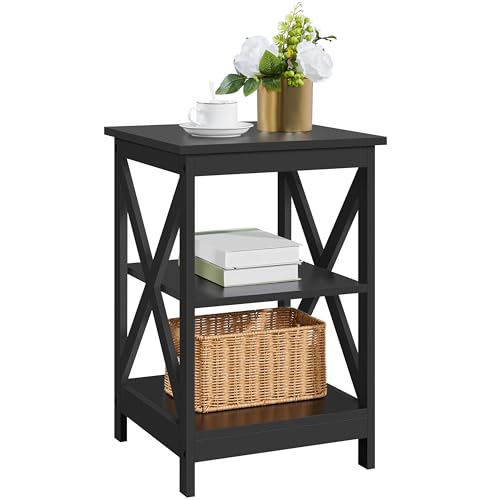
The Oxford represents the traditional shelf table against which the category is judged: defined top, lower shelf, four-square stance. In this review’s terms it is the balanced performer — strongest on stability and everyday storage, unremarkable only in that its open shelf displays what it stores. For a first end table in a family living room, this is the format to beat.
Furinno Simplistic End Table — the Lightweight Option
Furinno’s Simplistic represents the entry, lightweight school: minimal material, compact footprint, simple assembly. Its performance is honest within its limits — a surface where a surface is needed, in rooms where loads are light and traffic is adult. Its limits are the category’s limits concentrated: it must be placed against a wall, loaded lightly, and anchored if children are about. Judged as a spare-room or first-apartment table, it does its job; judged as a family-room anchor piece, it is out of its depth.

Yaheetech End Table — the Tiered Storage Option
Yaheetech’s tiered designs push the storage use case hardest, stacking open levels in one footprint. For readers and crafters whose materials display well, this is the highest-capacity format per inch of floor. The checks that matter are flex under load, shelf by shelf, and the discipline to keep the heaviest items lowest — advice that is good for every table and essential for a tall tiered one.
Kate and Laurel End Table — the Decorative Option
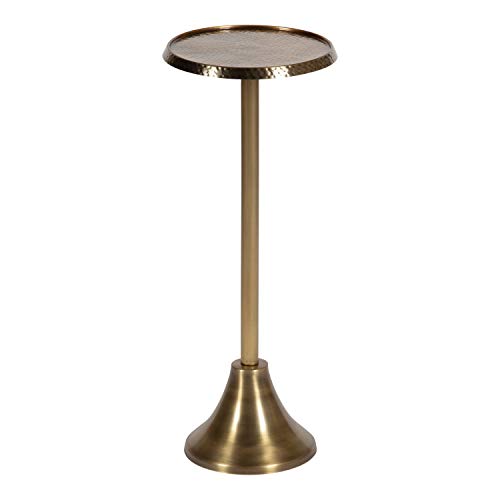
At the premium, decorative end, Kate and Laurel’s designs are bought for silhouette and finish, and they deliver the styling performance the tier promises. This review’s conditions still apply in full: inspect the base’s width against the table’s height, run the corner-press test on delivery, and protect the finish with coasters as a matter of routine. A decorative table that passes the stability test is a legitimate finishing piece; one that fails it is an ornament in the wrong job.
Against neighbouring categories, the end table’s position is secure. A coffee table cannot serve the individual seat; a C-table serves the laptop better and everything else worse, on a cantilever that demands light loads; nesting tables offer flexibility at the price of the least stable individual pieces. The comparisons are drawn out in end table reviews, and the small-space specialists among all of them are gathered in end tables sized for small spaces.
Value, Assessed Honestly
Value in this category is unusually easy to reason about, because the service is so countable. An end table in daily use is reached for dozens of times a week — every drink set down, every book retrieved, every lamp switched — across a lifespan measured in years or decades. Spread across that many uses, even a premium decorative table costs a trivial amount per service, and a modest table that is correctly chosen is close to free. The value traps are not at the price points; they are at the decision points. A cheap table that wobbles, wanders and is replaced in two years is the expensive option wearing a small price tag. A premium table bought at the wrong height is a costly ornament. A mid-tier table, measured for, assembled carefully and maintained on the light schedule this review describes, is the value peak of the category for most households — not because mid-tier is magically correct, but because the category’s performance ceiling is set by fit and stability rather than by expenditure, and fit and stability are bought with attention more than money.
There is one more value consideration, easily missed: the cost of the table’s absence. Households without a surface at the seat pay in floor clutter, in drinks knocked from sofa arms, in lamps that cannot be placed where reading happens, in the low-grade friction of a room that does not quite work. None of those costs appear in a budget, but they are paid nightly. Set against them, the honest price of the category — a measured purchase, a fitted anchor, a packet of coasters — is among the best trades in the furnishing of a home, and it is why this review, for all its conditions and cautions, lands where it lands: buy one, buy it properly, and it will repay you every single evening.
Who Should Buy It, Who Should Skip It — and the Pre-Buy Checklist
Buy an end table if your evenings are seat-based — reading, films, tea, conversation — and your current surfaces are the floor, the sofa arm and the cushion beside you. Buy one if your room’s light is all overhead and a lamp at the seat would change your evenings. Buy one if the clutter of seated life needs a home at its source. Skip it, or choose a different format, if the seat in question is a climbing frame for a toddler and anchoring is impossible; if what you actually need is a desk, a dining surface or serious closed storage; or if the only available gap narrows a walkway everyone uses — a table that is bumped daily is a table being tested daily.
Before ordering, run this checklist. One: measure the arm height of the seat, cushions as sat on, and shortlist tables whose tops sit close to it. Two: measure the gap and the walkway, and refuse any footprint that narrows the passage. Three: rehearse the load — lamp, drink, book, phone — on a tray or marked paper the size of the candidate top. Four: choose the storage format your clutter honestly needs: bare top, shelf, tiers or drawer. Five: interrogate stability — base width against height, legs at corners over inset or pedestal, heft in hand over featherweight. Six: plan the anchor if children live in or visit the home, and buy the strap with the table. Seven: keep the packaging until the table has passed a week in place, because height and proportion verdicts are delivered by your room, not by a photograph. The method behind each step is expanded in how to choose an end table and the criteria in the end table buying guide.
Setup, Care and Maintenance Essentials
Maintenance for this category is light but not optional, and most of it protects the two things this review cares about: stability and surface. Monthly, dust the top and shelves so grit never builds up under objects and grinds the finish. As a habit rather than a schedule, use coasters under every drink and wipe condensation the same day; finishes forgive almost everything except water left sitting on seams. Every few months, and after any move however small, re-run the ten-second stability check — corner presses, a gentle rock on both axes — and re-tighten any fixing that has loosened, because in this category a developing wobble is a safety item, not a cosmetic one. Check the anchor strap at the same time. Once a year, look at the table as a stranger would: feet even, shelf loads still low and heavy, lamp still inside the footprint, cord still routed safe. That is the whole regime. Tables maintained this way serve for many years and stay boring, which for a piece of furniture standing within reach of your drink and your children is the highest praise available.
Singles, Pairs and Placement: the Review Widens
No end table is reviewed by life in isolation; it is reviewed as part of a seating group, and the group changes the grades. A single table, placed at the end of the sofa that is actually sat in, is the highest-value configuration for most households — full service where the use is, no crowding where it is not. A matched pair earns its keep in formal rooms and in households where both ends of the sofa are genuinely occupied every evening; its hidden cost is symmetry pressure, the temptation to keep both tops identically arranged rather than usefully arranged. Mismatched tables, balanced in height so their lamps form a level line, suit lived-in rooms and let each seat get the format it needs — a drawer table at the clutter-generating end, an accent table at the reading end. This review’s preference, for what it is worth, is function first and symmetry second: two different tables at the same height look intentional; two identical tables at the wrong height look like a showroom that failed its occupants.
Placement within the group deserves the same rigour as the purchase. The table should stand close enough to the seat that the surface is reachable without leaning — a gap you must stretch across defeats the category’s purpose — and its front face should not project past the sofa’s front line into the walkway, where passing hips will find its corners. Against the wall is the default for a reason: the wall closes one direction of travel, one direction of tipping, and gives the anchor its fixing. In open-plan rooms where the sofa floats, the table floats with it, and the stability criteria in this review apply at double strength — choose the widest base and the lowest load, because there is no wall to help and traffic passes on every side. The seating layouts in sofas and chairs for a small room and the game-night arrangements in coffee tables for board games both show, from their own angles, how much of a room’s comfort is decided by these few centimetres of placement.
The First Month of Ownership: What to Watch
Reviews usually end at the purchase; this one follows the table home, because the first month decides which version of the product you own. In week one, watch the height verdict: if every reach still registers as a reach, the table is the wrong height for the seat, and the exchange window is the time to act on that knowledge rather than adapt to it. Watch, too, the load rehearsal meeting reality — the object that did not fit the rehearsal tray will appear now, and whether it finds a shelf, a drawer or the floor tells you if the format choice was honest. In weeks two to four, watch the joints. Flat-pack and framed tables settle: fixings that were tight at assembly relax a fraction as the structure takes its working loads, and the ten-minute re-tighten at the end of the first month is the single highest-value maintenance act in the table’s life. A table re-tightened on schedule tends to stay tight for years; a table left to loosen teaches its wobble to deepen.
Watch the traffic patterns as well. Every household discovers its real walkway by living in it, and the table that stands a few centimetres into the true path will collect the bumps that prove it. Moving a table a hand’s width toward the wall in month one is not a failure of planning; it is planning finishing its work with better data. And if children are in the house, watch the first pull-up, the first lean, the first attempt to use the top as a drum — not to scold, but to confirm that the anchor, the low loading and the lamp placement you set up are meeting the real child rather than the imagined one. Ownership of this category, done attentively for one month, becomes effortless for years afterward. That is the deepest finding of this review: the end table is not a purchase, it is a short project with a long and pleasant tail.
Final Verdict
The end table earns its place in this review’s judgement — conditionally, which is the only honest way any verdict on this category can be given. The condition is not price or brand; it is process. Measured against its seat, chosen in the format its household’s clutter requires, interrogated for base width and stance, assembled with care, loaded low and anchored where children are concerned, an end table is one of the best-value pieces of furniture in the home: a small, daily, decades-long improvement to the hours people spend sitting down. Bought by photograph, placed by hope and loaded by habit, the same category produces the wobblers and tippers that give it a mixed name. The designs are not the variable. The choosing is. Choose like it matters — at elbow height, every evening, it does.
For the record of this review, the category scores as follows in summary. For reach and daily usefulness, it is the strongest small furniture you can buy. For storage, it is exactly as strong as the format you select and no stronger. For safety, it is a category that must be set up, not merely bought — wide base, low load, anchor fitted — and households that accept that condition get a safe product, while households that ignore it are relying on luck at the height of their smallest members. For longevity, it rewards ten minutes of monthly attention with decades of service. Those are the findings, the conditions are in your hands, and the companion guides in this series — the end table buying guide, the head-to-head end table reviews and the step-by-step how to choose an end table — exist to help you act on them.
A Note on How This Review Was Put Together
This review assesses the end table as a category, using representative designs across its main formats — classic shelf, lightweight flat-pack, tiered storage and decorative accent — and judging each against the same criteria: stability in position, height fit against real seating, storage matched to real clutter, surface behaviour under daily traffic, and care burden across the first year and beyond. Product details that change between listings are deliberately left to the current listings; the findings here concern format, construction and household fit, which change far more slowly and matter far more. Where this review disagrees with the category’s marketing, it does so on the side of the household: no finish outranks a planted stance, and no styling outranks a fitted anchor in a child’s home.
A Closer Look: What to Inspect on a End Table Before You Commit
Listings present a end table at its best, so this section slows the assessment down and looks at the evidence an individual model offers: its construction, its finish, its listing detail and the checks you can run before and just after it arrives. The aim is a verdict based on inspection rather than impression.
Start With Your Space and Your Routine
Keep the care routine simple enough to repeat: a end table that needs ten minutes of attention weekly will usually get it, while one that needs an hour monthly often gets none. Where the end table has a surface you will set things on, lean on, or load, consider the heaviest realistic load in your household rather than the lightest display load in the photos. Think about the season in which the end table will work hardest, and judge it against that season rather than the mild week in which you happen to be shopping. Decide in advance which single feature you would refuse to compromise on, and let that one priority settle ties between otherwise similar end table choices.
Pay attention to how the end table is described for the parts you cannot see, and treat vague language there as a reason to ask questions rather than as reassurance. A return is easiest when you have kept the packaging until you are sure, so give the end table a fair trial period in its real position before you break down boxes and dispose of padding. Apply the same checks to each shortlisted example, whether that is the Convenience Concepts Oxford End Table; the Yaheetech End Table; the Kate and Laurel End Table, because consistent testing is what makes the differences between models visible. If the listing offers accessories for the end table, decide which ones solve a problem you already have, and set aside the ones that only solve problems the listing itself invented.
Storage is part of ownership, so decide now where the end table, its accessories and its seasonal extras will go when they are not in use, and measure that space too. Think about who else will use the end table, how often, and in what way, because a choice that suits one person perfectly can frustrate everyone else in the household. Look for the detail photographs in the listing, not just the wide shots, and zoom in on edges, joints, fasteners, controls and finishes, which is where build quality usually shows itself first. Households with children or pets put different demands on a end table than the listing photographs suggest, so judge edges, stability and cleanability against your real household, not a styled one.
When Small Problems Appear
Take a break between shortlisting and ordering if you can, and return to the listings with fresh eyes, because fatigue makes almost any end table look acceptable late in a long search. A closer look at any single end table should start with the unglamorous evidence: the underside, the back, the inside and the fittings, because review photographs concentrate on the angles that flatter it most. Colour and finish samples in listings are taken under controlled light, so expect the end table to look different at home and favour options that sit comfortably with the tones already in the room. Read the listing for what it does not say as carefully as for what it does, because missing information about materials, assembly or care is itself a useful signal when you compare end table options.
Beware of choosing a end table for a rare occasion, such as a large gathering once a year, if that choice makes everyday use worse for the other fifty-one weeks. Where the end table meets the floor, the wall or another surface, check what protects both sides, because scuffs and marks in those contact zones are the most common early complaint. Dust, moisture, sunlight and heat each age Living Room Furniture items in different ways, so match the finish and material of the end table to the conditions of the room or outdoor spot it will occupy. Take a photograph of the space before you order and mark the intended position of the end table on it, then revisit that photo whenever a listing tempts you toward a larger or different style.
Small problems are easiest to solve in order: check position first, then adjustment, then cleaning, and only then conclude that the end table itself is at fault. When you examine a end table in detail, work from the largest element to the smallest, checking overall proportions first, then construction, then finish, and only then the small features sellers emphasise.
A Short Decision Checklist
- Who will use the end table most, and any limits they have
- Where the end table and its accessories will be stored when not in use
- The one feature you will not compromise on
- What your current arrangement does well that the end table must not lose
- What your current arrangement does badly that the end table must fix
- How the end table will be cleaned in an ordinary week
- Packaging kept until the end table has passed its first trial in place
- The material and finish, matched to light, moisture and wear in its spot
Taken together, these checks take only a little time, yet they answer the questions that decide whether the end table suits your home, your household and your routine, and they do so before money changes hands rather than after.
Frequently Asked Questions
What should I look for first when reviewing an end table?
Stability, before finish or styling. Look for a base wide relative to the table’s height, legs set near the corners rather than inset, bracing or a lower shelf tying the structure together, and enough heft to feel planted. Then check height against your sofa arm and storage format against your clutter. A table that fails the stability look-over should not reach the styling stage of your decision at all.
How can I tell if an end table is good quality?
Judge it after assembly, in position: no rock under a firm press on each corner of the top, no flex when the everyday load of lamp and books is in place, joints that stay tight after the first weeks, and a finish that wipes clean without ceremony. Quality in this category is behaviour, not branding — a modest table that stands planted and tight is a better product than a costly one that wobbles.
Are end tables safe in a home with toddlers?
They can be, with the safest format and deliberate setup: a wide-based, four-square table, heavy books on the lowest shelf, the lamp toward the wall with its cord out of reach, and an anti-tip anchor fitted to the wall. Avoid pedestal, cantilever and featherweight designs in toddler territory, and never let any end table serve as a climbing structure, seat or step. If anchoring is impossible, choose low, wide storage furniture instead.
What size end table works best beside a sofa?
The size your own measurements describe: a top close to the height of the sofa’s arm, so reaching sideways feels natural, and a footprint that fills the gap beside the seat without narrowing the walkway. Rehearse the actual load — lamp, drink, book, phone — on a surface of the candidate size before ordering. Fit is personal to your sofa and your habits, which is why this review gives a measuring method rather than a universal dimension.
How long should an end table last?
A well-built, well-maintained end table should serve for many years — it has no moving parts to wear out beyond drawer runners where fitted. Its lifespan is decided by joint tightness, finish care and stability maintenance: re-tighten fixings when they loosen, protect the top with coasters, and re-check the anchor after moves. Tables retired early are usually retired for wobble or water damage, both of which the care routine in this review exists to prevent.
Is an end table better than a side table?
They are the same category under two names — end table describes placement at a sofa’s end, side table describes position beside any seat. Quality, size and stability vary by design, not by which name the listing uses. Shop by your measurements, the storage format and the stability checks, and let the name be the least important word in the listing.


