Disclosure: As an Amazon Associate, dailyhomedecorating.com earns from qualifying purchases. Links on this page are affiliate links; they cost you nothing extra. Prices and availability change often, so check the current Amazon listing before you buy.
An end table buying guide should start with an unfashionable truth: this is one of the smallest pieces of furniture in your home, and it is also one of the easiest to buy badly. An end table sits within arm’s reach of the seat you use most, it holds the drink, the book, the remote, the phone charger and the lamp, and it does all of that from a footprint small enough to fit in the leftover gap beside a sofa. Get the height wrong and every reach becomes a small annoyance. Get the footprint wrong and the table either crowds the walkway or leaves half its surface out of comfortable reach. Get the stability wrong — and tall, narrow end tables are the most tip-prone furniture in a typical living room — and a leaning toddler or a bumping vacuum cleaner can bring the whole thing, lamp and drink included, down in one motion. This guide walks through every decision in the order it actually matters: placement and measurement first, then shape and footprint, then storage format, then construction and stability, then materials and care, and only then the specific models worth considering. If you are still weighing up whether the category suits your room at all, the companion pieces in this series cover the value question in is an end table worth it and the honest two-sided view in end table pros and cons.
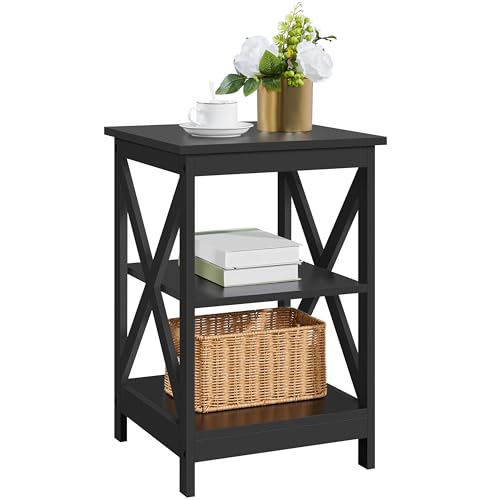
Key Takeaways
- Measure before you shop: the right end table height is decided by the arm of the sofa or the frame of the bed it will stand beside, not by what looks good in a product photo.
- Stability is a safety feature, not a nicety. Tall, narrow tables tip more easily than low, wide ones, so base width, weight distribution and wall anchoring matter — especially in homes with young children.
- Decide the storage question early. An open table, a table with a shelf, a table with drawers and a cabinet-style table are four different pieces of furniture that happen to share a name.
- Load capacity should be judged qualitatively: a table that feels planted and flex-free under a lamp and a stack of books is doing its job; a table that rocks or bows is not, whatever its listing claims.
- Buy for the seat it serves. A reading chair, a deep sofa and a bedside each ask for a different table, even in the same room.
In this guide
End Table Buying Guide Basics: What an End Table Does and the Main Types
An end table — often sold interchangeably as a side table — is a small occasional table placed at the end of a sofa, beside an armchair, or next to a bed. Its job is reach: to put the things your hands need within easy distance of a seated or reclining person, without the commitment of a coffee table in the middle of the room. That sounds simple, but the category has split into distinct types, and choosing the type matters more than choosing the finish.
The Classic Four-Leg Table
The traditional end table is a square or rectangular top on four legs, sometimes with a lower shelf. It is the most versatile format: the open space beneath it keeps a small room feeling airy, the lower shelf takes books, baskets or a folded throw, and the symmetrical footprint is inherently steadier than pedestal designs. Its weakness is exposure — everything you store on it is on display, and clutter shows immediately. For most living rooms, though, this is the default against which everything else should be compared, and the format most of the picks later in this guide follow.
The Pedestal and Drum Table
Pedestal tables stand on a single central column; drum tables are solid or semi-solid cylinders. Both read as sculptural accents and both work well in tight corners where four legs would fight with skirting boards, radiator pipes or the curved base of an armchair. The trade-off is physics. A single central support concentrates the tipping risk: push down on the edge of the top and the whole table wants to rotate around that column. A wide, heavy base mitigates this, a narrow decorative base does not. If you choose this type for a home with children, the base diameter and the table’s overall heft deserve more scrutiny than the finish.
The C-Table
The C-table has a base designed to slide under a sofa or bed, so the top cantilevers over the seat or the mattress. It is the laptop-and-tea specialist of the category, and for working from the sofa it has no real rival. But a cantilever is a lever: the top is only as steady as the base is wide and heavy, and the format is fundamentally less stable than a table standing on its own four legs. Treat a C-table as a task surface for light items — a drink, a notebook, a laptop — and never as something to lean on while standing up, and never as a surface a child should pull themselves up against.
The Storage End Table
Storage end tables add drawers, a cabinet door, or both, turning the table into a small piece of case goods. This is the right answer when the seat it serves generates clutter: remotes, chargers, coasters, reading glasses, medication, the tangle of modern seated life. Drawers hide it all and keep the top clear for a lamp and a drink. The costs are weight, price tier and a heavier visual presence — a cabinet-style table in a small room can feel like a filing cabinet that wandered in from the office if the proportions are off. Measure the gap it will fill with particular care.
The Nesting and Accent Table
Nesting tables — a graduated pair or trio that tuck together — belong to a neighbouring category, but they compete for the same spot beside the sofa, and they are the flexible option when you host more often than you sit alone. Their strength is occasional surface on demand; their weakness is that the smaller tables in a set are usually the lightest and least stable pieces of furniture you will own. If flexibility tempts you, the dedicated guide in this series at how to choose an end table works through the stability checks that matter most for lightweight designs.
Top Picks at a Glance
The six designs below cover the main ways households actually use an end table. They are presented prose-first in this draft: compare them on format, footprint and intended seat, and check the current listing for the details that change. Badges reflect role, not ranking — the best table here is the one whose format matches your seat and your room.
| Pick | Badge | Format | Tier positioning |
|---|---|---|---|
| Convenience Concepts Oxford End Table | Best Overall | Classic table with lower shelf | Mid |
| Furinno Simplistic End Table | Best Budget | Compact open-frame table | Entry |
| Yaheetech End Table | Best for Storage Shelves | Multi-tier open shelving | Entry to mid |
| Nathan James Mina Side Table | Best Accent Look | Round accent table | Mid |
| VASAGLE End Table | Best for Industrial Style | Frame table with shelf tiers | Mid |
| Kate and Laurel End Table | Best Decorative Pick | Decorative accent table | Premium |
Every pick is examined in its own mini-review later in this guide. First, the criteria — because the same table that is perfect beside a reading chair can be wrong beside a deep sectional, and no badge survives the wrong measurements.
How Tall Should an End Table Be?
This is the question that decides whether an end table feels effortless or faintly irritating for the entire time you own it, and it is answered with a tape measure, not a catalogue. The working principle is simple: the top of the table should sit close to the height of the arm of the sofa or chair it serves — near enough that you can set down a drink or pick up a book with a natural sideways motion of the forearm, without reaching up or stooping down. A table noticeably taller than the arm forces an awkward lift-and-over motion and crowds the seat visually; a table noticeably shorter forces a dip every time, and tall glasses on a low table sit in the danger zone of swinging cushions and elbows.
Measure the arm height of your actual seat, from the floor to the top of the arm, with the cushions in their normal, sat-on state rather than freshly plumped. Then measure the gap the table must occupy: the width between the seat and the wall, the next piece of furniture, or the edge of the walkway. Finally, check the lamp arithmetic if a lamp is part of the plan — the combined height of table plus lamp should put the light at a comfortable level for reading from the seat, roughly around shoulder height of the seated person, so the bulb is neither glaring down from above nor shining up from below. None of this requires a specific number from a listing; it requires three measurements from your own room, taken before you fall in love with a finish. The step-by-step version of this measuring routine is set out in how to choose an end table, and it is worth doing even if you think you already know your sofa’s dimensions — most people who guess, guess wrong.
How Much Surface and Storage Do You Really Need?
Walk through an honest evening at the seat the table will serve. A lamp claims a permanent footprint. A drink needs a coaster’s worth of space and a safety margin from the edge. Then the rotating cast arrives: a book or e-reader, a phone, a remote, reading glasses, perhaps a small plate. Lay those items out on a tray or a sheet of paper the size of the tabletop you are considering and look at what is left. If the answer is nothing, the top is too small — or your storage needs to go vertical, into a shelf or drawer below, so the top stays a landing strip rather than a pile.
Storage format is a lifestyle decision disguised as a furniture decision. Open shelves suit households whose clutter is presentable — books, a basket, a folded throw — and who tidy by straightening. Drawers suit households whose clutter is not presentable — chargers, cables, remotes, medication, game controllers — and who tidy by closing. Cabinet doors suit bulk: board games, a spare blanket, the router you would rather not look at. Be honest about which household you are. An open table bought by a drawer household becomes a visible mess within a month, and the table gets blamed for a mismatch that was decided at the moment of purchase. Readers furnishing compact rooms should also look at how the format plays in genuinely tight footprints in end tables sized for small spaces, where the surface-versus-storage trade-off is at its sharpest.
Will It Tip? Stability, Bases and Child Safety
Here is the section most buying guides skip, and it is the most important one in this guide. End tables are tall relative to their footprint — that is their defining geometry — and tall, narrow furniture is the furniture most likely to tip. A table tips when weight lands outside its base: a child pulling up on the edge, a toddler hanging off the side nearest the sofa, a heavy lamp placed at the back corner, an adult using the top as a handhold to stand. The physics are unforgiving and they do not care how sturdy the table felt in the showroom when you pushed it straight down in the middle.
Judge stability by design, not by marketing language. A wider base relative to height is steadier than a narrow one. Four legs splayed or set near the corners of the top resist tipping better than legs inset toward the centre. A lower shelf loaded with books lowers the centre of gravity and genuinely helps. A single pedestal or a cantilevered C-frame concentrates risk and deserves extra caution. Weight helps too — a table with some heft resists the casual bumps of daily life better than a featherweight frame — but weight is no substitute for footprint, and a heavy top on a narrow base is the worst combination of all.
In a home with young children, go further. Choose the widest, lowest, most four-square design that fits the gap. Load the lower shelf with the heaviest books you own. Keep the lamp toward the wall side of the top, not the room side. And anchor the table to the wall with an anti-tip strap or bracket — the same furniture-anchoring hardware used for bookcases and dressers works for a tall end table, it costs almost nothing in effort, and it converts a tipping hazard into a fixed piece of furniture. If the table will stand somewhere a child can climb, treat anchoring as part of installation, not an optional extra, and re-check the anchor whenever the table is moved for cleaning. No end table should ever be used as a step, a seat or a climbing frame, and a table that cannot be made steady in your room should not be bought for your room, however well it matches the sofa.
Which Material Fits Your Household?
Material decides how an end table ages in your specific home, and the right answer depends on what will actually happen to it. Solid wood and quality wood veneer shrug off the daily knocks of family life, can often be touched up or refinished, and carry the visual warmth most living rooms want — at a higher tier and with real weight. Engineered wood with a good laminate or melamine finish is the pragmatic middle: consistent looks, easy wiping, honest performance for drinks and books, provided coasters do their job and standing water is not left to sit on seams and edges. Metal frames — usually paired with wood-look or glass tops — bring slim profiles and an industrial or modern note, and they wipe clean without complaint, though they can ring hollowly when a mug lands and they show fingerprints at their polished worst.
Glass tops deserve a specific word. They keep a small room visually open and they clean beautifully, but in a home with children they raise two issues: the edge is at exactly the height a falling toddler meets first, and a tipping incident involving a glass top is a worse incident. Tempered glass is the only acceptable form here; if a listing does not say tempered, treat the table as a no for a family room. Rattan, wicker and other woven designs are light and characterful, but light is the operative word — they are the easiest tables in this guide to knock over and the hardest to anchor convincingly, so place them beside adult reading chairs, not on toddler patrol routes. Whatever the material, the care rule is the same: coasters under drinks, felt pads under lamps, and a wipe-down routine that keeps grit from grinding into the finish under every mug you slide.
One more material consideration deserves emphasis because it is decided once and lived with daily: the edge. The edge of the top is the part of the table your forearm meets, your hip brushes and a child’s forehead is level with. Square, sharp-cornered tops in hard materials are the least forgiving; eased or rounded edges are kinder in every one of those encounters and lose nothing in function. When you compare two otherwise equal tables, choose the kinder edge — it is a small detail in a listing and a large one in a home. The same logic applies to shelf edges and drawer fronts at shin height along the walkway: furniture you live beside should be finished like it expects to be lived beside.
How to Prioritise by Use Case
The Family Living Room
Prioritise stability and closed storage. A four-leg or cabinet-style table, anchored to the wall, with drawers for the remote-and-charger sprawl and a top big enough for a lamp plus supervised drinks. Avoid glass, avoid pedestals, avoid anything light enough for a child to drag. This is the profile where the classic format earns its keep, and where the honest limitations of the category — set out in end table pros and cons — should be read before, not after, purchase.
The Reading Chair Corner
Prioritise height accuracy and top space for a book stack. A reading corner lives or dies on the lamp-and-table height combination and on having room for the current book, the next book, glasses and a drink without a stacking puzzle. A lower shelf is worth more here than a drawer; the accent-style picks below suit this profile best, and pairing the corner with the right chair matters as much as the table — see sofas and chairs for a small room for the seating side of the equation.
The Small Apartment
Prioritise footprint discipline and visual lightness. Open frames, slim legs and a lower shelf that earns its space keep a compact room from feeling furnished in boxes. Measure the walkway honestly: a table that narrows a passage everyone uses will be bumped daily, and every bump tests its stability. In the smallest rooms a nesting format or a C-table may serve better than a fixed table, accepting their stability limits in exchange for surfaces that disappear when not needed.
The Guest Room and Bedside Duty
An end table moonlighting as a nightstand needs a drawer or shelf for guest clutter, a top that fits a lamp, a water glass and a phone with room to spare, and a height judged against the bed frame and mattress top rather than a sofa arm. Guests will not anchor your furniture or learn its quirks, so choose the inherently steady design, not the one that is fine once you know how it behaves.
The Picks, Reviewed in Miniature
A note on tiers before the details: tier here describes positioning, not worth. An entry-tier table placed correctly, loaded lightly and anchored where needed will serve a renter better than a premium decorative table placed badly ever will. Conversely, a premium finish cannot rescue the wrong height. Read each mini-review for the household it suits, and let your measurements and your floor plan — not the badge order — make the final call. Where a pick overlaps a neighbouring category, the dedicated review at end table reviews compares the formats against each other in more depth.
Convenience Concepts Oxford End Table — Best Overall
The Oxford follows the classic pattern — a defined top, a lower shelf, a frame that reads as traditional living-room furniture — and that is exactly why it anchors this list. The lower shelf does the quiet work: books stored low keep the centre of gravity down and the top clear. It suits the standard sofa-side gap in a standard living room, and its conventional proportions make the height-matching exercise straightforward. Best for: most sofa-side placements in family living rooms. Not suited for: anyone needing hidden storage — everything on that shelf is on show.
- Strengths: classic four-square stability; lower shelf adds storage and ballast; versatile traditional styling.
- Trade-offs: open storage shows clutter; traditional look may sit oddly in a strongly modern room.
Furinno Simplistic End Table — Best Budget
Furinno’s Simplistic line is the entry tier’s representative: a compact, open, lightweight table for the gap that simply needs a surface. Its honesty is its virtue — it does not pretend to be heirloom furniture — and for a first apartment, a dorm-adjacent setup or a spare-room corner it covers the basics. The caution is the category caution in its purest form: light tables are the easiest to tip and to drag, so place it against a wall, load it lightly, and anchor it if children are in the house. Best for: renters and first homes needing a simple surface. Not suited for: a primary family-room table or anywhere a child will pull up on it unanchored.
- Strengths: entry-tier positioning; compact footprint; simple assembly format.
- Trade-offs: lightweight build demands careful placement; minimal storage.

Yaheetech End Table — Best for Storage Shelves
Yaheetech’s end table designs lean on open multi-tier shelving: several levels of display-and-store space in one sofa-side footprint. For the reader with a rotating stack, the crafter with a project basket, or anyone whose side-table contents are presentable, the tiers turn vertical space into order. The same openness is the limitation — nothing hides — and tiered frames should be checked for flex once loaded, shelf by shelf, before the lamp goes on top. Best for: book-heavy reading corners and organised open storage. Not suited for: hiding clutter, or homes that need a toddler-proof closed cabinet.
- Strengths: generous tiered storage; books low down aid stability; versatile placement.
- Trade-offs: fully open storage; needs a flex check under real load.

Nathan James Mina Side Table — Best Accent Look
The Mina is the design-led pick: a round accent format that softens a room full of rectangles and works as well beside a reading chair as at the end of a sofa. Round tops have a genuine practical edge in family homes — no sharp corners at child head height along the walkway — but a round accent table’s footprint and base deserve the stability once-over described earlier, and its top holds less than a rectangular table of similar width. Best for: reading corners and styled living rooms wanting a softer silhouette. Not suited for: maximising surface area or heavy lamp-and-book loads.
- Strengths: corner-free round top; accent styling; flexible placement.
- Trade-offs: smaller usable surface; base stability needs checking in situ.

VASAGLE End Table — Best for Industrial Style
VASAGLE builds around the metal-frame-and-panel formula: a defined frame, shelf tiers below, and an industrial-leaning look that pairs naturally with modern sofas and media furniture. The frame format tends to assemble into a squarer, more planted feel than all-panel lightweight designs, and the shelves take baskets well. Check frame joints after assembly and again after the first weeks of use; a quarter-turn of loosening is the difference between planted and wobbly. Best for: modern and industrial-leaning rooms wanting shelf storage. Not suited for: traditional rooms, or anyone unwilling to re-check fixings.
- Strengths: framed construction; useful shelf tiers; contemporary styling.
- Trade-offs: industrial look is room-specific; fixings need periodic checks.
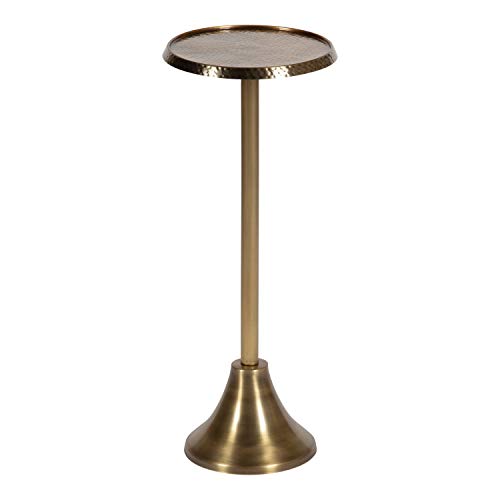
Kate and Laurel End Table — Best Decorative Pick
Kate and Laurel occupy the decorative end of the category: tables chosen as much for silhouette and finish as for surface. At the premium tier, what you are buying is the room’s finishing touch — the piece guests notice. The buying discipline still applies in full: a decorative table in a family traffic line must pass the same stability and anchoring checks as any other, and delicate finishes deserve coasters without exception. Best for: styled living rooms, guest rooms and adult reading corners. Not suited for: high-traffic family zones or drink-heavy everyday use without protection.
- Strengths: decorative design and finishes; elevates a finished room.
- Trade-offs: premium positioning; finishes need care; check stability like any tall table.
First Setup and Care Essentials
Assembly is where an end table’s long-term stability is decided. Build it on a soft surface to protect the finish, tighten fixings in sequence rather than fully one at a time, and then — the step almost everyone skips — stand it in its final position and test it before anything goes on top. Press down on each corner of the top in turn. Rock it gently front to back and side to side. A new table should feel planted; any wobble at this stage is a fixing to re-tighten or a floor to shim with a felt pad, not a character trait to live with. If the table is tall for its footprint, or children live in or visit the home, fit the anti-tip anchor to the wall now, while the gap behind the sofa is still accessible, not later when the table is loaded and the moment has passed.
Position the load with the same care. The lamp goes toward the wall side of the top, its weight inside the table’s footprint, with its cord routed so nobody’s foot can catch it and drag the table by the lamp. Heavy books live on the lowest shelf, never stacked high on the top. Drinks live on coasters, away from the edge nearest the seat cushions, where a reaching arm is most likely to clip them. Then settle into a light maintenance rhythm: dust weekly so grit never builds up under objects, lift rather than slide anything heavy across the top, check the fixings and the anchor every few months, and re-check after any move, however small. None of this is elaborate. It is simply the difference between a table that serves quietly for years and one that wobbles, stains and eventually tips its way out of the house. The full ownership picture, good and bad, is weighed up in end table review.
Mistakes to Avoid
The first mistake is buying by photograph: choosing the table that looks right against a sofa in a styled image whose proportions have nothing to do with your room. Measure your arm height, your gap and your walkway, and let those numbers shortlist the tables before taste gets a vote. The second mistake is ignoring the stability question because the table is for adults — adults lean, adults bump, adults use a tabletop as a handhold when the knee is sore, and visiting children do not read your house rules. The third is under-buying surface: a top that fits the lamp and nothing else turns every drink into a negotiation. The fourth is the opposite storage error — a cabinet table so deep it eats the walkway, or open shelves bought by a household whose clutter needed a drawer. The fifth is skipping the anchor because fitting it felt like a job for later; later is how tipping accidents are scheduled. And the sixth, quieter mistake is forgetting the rest of the room: an end table is one element in a seating group, and the groups that work are planned together, as the layouts in coffee tables for board games and swivel chairs for the living room show from their own angles.
Round, Square or Rectangular: How Shape Changes the Table
Shape is not a styling afterthought; it changes how the table behaves in the room. A square table is the natural partner to a sofa end, filling the corner of the seating group completely and giving the lamp a centred, balanced home with equal margins on every side. It is the easiest shape to anchor and the easiest to judge for stability, because its footprint and its top describe the same geometry. A rectangular table suits the longer gap — beside a chaise end, along the flank of a deep sofa, or in the wider space beside a bed — and its extra depth front-to-back is genuinely useful for the lamp-plus-book-plus-drink arrangement. Its risk is overhang: a rectangle that extends past the front of the sofa arm puts its front corners into the walkway, where hips and passing children meet them.
A round table trades surface efficiency for safety and flow. It holds less than a square of the same width — the corners it gives up are where books and remotes naturally live — but it has no corner to catch a hip, a thigh or a small forehead, and it lets a tight walkway breathe. In a home with toddlers moving at speed along the sofa line, that trade is often worth making deliberately. Oval tables split the difference and suit narrow rooms where the table sits between the sofa and a close wall. Whichever shape you choose, run the same test: stand where a person walks past, at the speed people actually walk, and see what your body wants to avoid. The table your body avoids is the table that will be bumped, and every bump is a stability test you did not schedule.
Matching an End Table to the Rest of the Room
An end table does not need to match the coffee table, the media unit or the other end table — but it does need to belong. The reliable way to achieve that is to repeat one element: the same wood tone family, the same metal finish as the lamp or the sofa legs, or the same design language of leg and line. Repeating one element ties the piece in; repeating all of them produces the showroom-suite look that makes a room feel bought rather than lived in. Height is part of belonging too. The two tables flanking a sofa, if they differ, should sit at a similar height so the lamps they carry form a level line of light — uneven lamp heights are one of those details guests cannot name but always notice.
Scale deserves the same honesty as measurement. A delicate accent table beside a deep, overstuffed sofa looks lost and, more practically, puts its small top a long way from the seated person’s hand across the sofa’s wide arm. A massive cabinet table beside a slim apartment sofa reverses the problem, crowding the seat and stealing the room’s air. Photograph your seating group from the doorway before you buy, and look at the gap the table must fill with fresh eyes. Then, when the table arrives, photograph it again in place before you load it. Rooms are composed in three dimensions and judged in two — the photo test catches proportion errors that the tape measure cannot, while the tape measure catches the height errors the photo cannot. Use both, in that order, and the table you keep will be the table the room actually needed.
Before You Order: A Practical Fit and Listing Check for the End Table
Most of the groundwork for choosing a end table is covered above, so this section turns to the stage where orders are actually placed: verifying fit, reading listings critically and checking the practical details that photographs tend to hide. Work through it with your measurements and your shortlist in front of you.
Start With Your Space and Your Routine
Seasonal checks suit most Living Room Furniture items well, so tie a quick inspection of the end table to a job you already do, such as changing clocks or clearing gutters. Guests notice different things than owners do, so if the end table will be used by visitors, test it from a fresh user’s point of view, without the habits you have already built around it. If you shop with someone else, agree the must-haves together before looking, so that the end table you choose is a shared decision rather than one person’s compromise discovered later. Look for the detail photographs in the listing, not just the wide shots, and zoom in on edges, joints, fasteners, controls and finishes, which is where build quality usually shows itself first.
Build your shortlist in two passes: first remove every end table that fails a hard requirement such as size, capacity or placement, then compare what remains on quality and feel rather than on features alone. Read the listing for what it does not say as carefully as for what it does, because missing information about materials, assembly or care is itself a useful signal when you compare end table options. Apply the same checks to each shortlisted example, whether that is the Convenience Concepts Oxford End Table; the Nathan James Mina Side Table; the Yaheetech End Table, because consistent testing is what makes the differences between models visible. Plan where the packaging and any old item being replaced will go on delivery day, a small step that prevents a rushed, careless first setup of the new end table.
Equally, list what your old end table did well, because replacements sometimes quietly lose a virtue you relied on, such as a size, a shape or a simplicity the new model has redesigned away. Photograph the end table as delivered, before assembly or first use, so that any later question about condition, parts or finish can be answered from evidence rather than memory. When something about the end table starts to annoy you, note whether the cause is the product itself, its position, or the way it is being used, since each cause has a different and usually cheaper fix. If the end table will be seen every day, its proportions matter as much as its function, so hold the listing dimensions up against a familiar piece nearby to judge the visual weight honestly.
When Small Problems Appear
If the end table needs assembly, read the instruction preview if one is offered, count the steps honestly against the time you have, and check whether a second pair of hands is recommended. If a end table comes in several sizes or configurations, choose by the measured demands of your space and household rather than by the middle option, which is a common default that suits nobody in particular. Keep the fittings, spare parts and instructions that come with the end table together in one labelled place, because the part you need in a year is always the one that was put somewhere safe. A return is easiest when you have kept the packaging until you are sure, so give the end table a fair trial period in its real position before you break down boxes and dispose of padding.
A slight wobble, a stiff action or a small misalignment on day one rarely improves on its own, so address it during setup while adjustments are still easy to make. Decide in advance which single feature you would refuse to compromise on, and let that one priority settle ties between otherwise similar end table choices. Consider the busiest version of the day, not the calmest one, and ask whether the end table still works when people are hurrying, carrying things or sharing the same space. If a part of the end table can be replaced, refreshed or re-covered separately, that option can extend its useful life well beyond the point where a sealed design would be thrown out.
Check the dimensions given in the listing against your own measurements rather than relying on the room name in a photograph, since staged photos routinely make Living Room Furniture pieces look smaller than they are.
A Short Decision Checklist
- Delivery path, from the door to the final position
- What your current arrangement does badly that the end table must fix
- Assembly needs, tools required and whether help is needed
- The measured space, including clearance to use and clean around the end table
- Packaging kept until the end table has passed its first trial in place
- The main job the end table must do, written in one sentence
- Where the end table and its accessories will be stored when not in use
- The one feature you will not compromise on
Taken together, these checks take only a little time, yet they answer the questions that decide whether the end table suits your home, your household and your routine, and they do so before money changes hands rather than after.
Frequently Asked Questions
What is the difference between an end table and a side table?
In practice, very little. Retailers use the terms almost interchangeably for the same small table placed beside seating. End table traditionally describes placement — at the end of a sofa — while side table describes position beside any seat, including a bed or armchair. Shop by measurements, format and stability rather than by which of the two names a listing uses, because the name guarantees nothing about size or construction.
How do I stop an end table from tipping over?
Choose a wide base relative to the table’s height, keep heavy items low and toward the wall side, and anchor the table to the wall with an anti-tip strap or bracket if it is tall, narrow, or anywhere near children. Test stability in its final position by pressing on each corner of the top. If it rocks or lifts under a firm edge press, fix the cause — fixings, floor level or placement — before using it.
Can an end table be used as a nightstand?
Yes, provided the height works against the bed rather than a sofa arm and the storage suits bedside life. Judge the top height against the mattress top so a seated-in-bed reach feels natural, favour a drawer or shelf for the nighttime clutter of chargers, glasses and books, and apply the same stability rules — a bedside table gets leaned on in the dark by sleepy people, which is its own argument for a planted, anchored design.
How much weight can an end table hold?
Judge it qualitatively rather than by a number on a listing. A well-built end table in normal use carries a lamp, a stack of books and everyday drinks without flex, creak or bow — and that is the load it exists for. It is not a seat, not a step and not a stand for heavy equipment. If a table flexes or rocks under its ordinary lamp-and-books load, the fixings or the design are at fault and the load should come off until it feels planted.
Should both ends of a sofa have matching end tables?
They do not have to. Matching pairs give a formal, settled look and equal service to both seats, but a single table on the side that is actually used, or two different tables balanced in height and visual weight, can work just as well and often suits real rooms better. What matters is that each table present is the right height for its seat and steady in its spot — symmetry is a styling choice, stability is not.
Where should I place an end table in a small living room?
Beside the seat that gets used most, tight to the sofa so the surface is within easy reach, and clear of the walkway line everyone actually walks. In compact rooms, open-frame designs keep the space feeling light, and slim footprints protect the passage width. For more small-space layouts and sizing trade-offs, see end tables for modern homes.
End Tables Beyond the Sofa: Other Placements That Work
The end table’s small footprint makes it the most redeployable piece in the house, and thinking about its second and third placements is a legitimate part of buying well. Beside a bed it becomes a nightstand, judged against the mattress rather than a sofa arm. In a hallway wide enough to take it without narrowing the passage, it becomes a landing strip for keys and post under a mirror — though a hallway table must be the steadiest of all, because hallways are where people move fastest and steadiest themselves least, and an anchored placement against the wall is the only sensible one. In a home office corner it holds the printer’s overflow, the reference books or the coffee that should never share a desk with a keyboard. In a child’s room it should simply not be — the combination of climbing instinct and tall narrow furniture is the one this guide has warned against throughout, and low, wide storage belongs there instead.
This redeployability has a buying implication: neutral, well-built tables outlive specific room schemes, while strongly themed decorative pieces are married to one look. If you expect to move home, rearrange often, or hand furniture down, the classic formats in the mid tier are the rational buy. If the room is finished and staying finished, the decorative pick earns its premium by completing it. Either way, the fundamentals do not change with the postcode: right height for the seat beside it, footprint wide enough for its height, load kept low and inside the base, anchor fitted where children are concerned. A table that meets those four tests will serve in any room you put it in; a table that fails them will fail in every room, politely and then suddenly.
The Pre-Purchase Checklist, in Order
Everything in this guide condenses into a short sequence you can run in one evening. First, the tape measure: arm height of the seat, width and depth of the gap, width of the walkway the table must not narrow. Write the three numbers down — memory edits measurements in favour of the table you want. Second, the load rehearsal: gather the lamp and the everyday objects the table will hold, arrange them on a tray or a marked-out sheet of paper the size of the candidate top, and confirm the arrangement breathes. Third, the household audit: who will bump this table, lean on it, pull up on it, or climb toward it, and does the design — wide base, low storage, anchor fitted — answer that honestly? Fourth, the format decision: open shelf, drawer, cabinet or bare top, chosen by the clutter you actually produce, not the clutter you wish you produced. Fifth, the room test: one repeated material or finish to tie the table in, proportions judged against the seat it serves, and lamp heights considered as a pair across the sofa.
Run in that order, the checklist takes twenty minutes and prevents every common end table regret this guide has described: the reach that annoys, the top that overflows, the wobble that worries, the finish that fights the room. Run out of order — taste first, tape measure later — it prevents none of them. The shoppers who end up happy with this smallest of furniture purchases are not the ones who spent the most; they are the ones who measured once, chose the format honestly, and treated stability as a feature worth buying. Your sofa-side hours are among the most repeated hours of your home life. The table at your elbow should be worthy of them, and now you know exactly how to make sure it is.


