Disclosure: As an Amazon Associate, dailyhomedecorating.com earns from qualifying purchases. Links on this page are affiliate links; they cost you nothing extra. Prices and availability change often, so check the current Amazon listing before you buy.
Every product family has a top rung where the domestic brief ends and something more serious begins, and this coway airmega prox review concerns Coway’s: the Airmega ProX, the largest instrument in the line, built for volumes that defeat the mainstream parishes — the vast open floor, the double-height living space, the home studio, the hall, the semi-commercial room that a household’s life has quietly become.
Scale changes the questions. At the ProX’s size the review must ask not only about filtration and automation — the family’s mature competences, present here in full — but about placement in architectural space, about the economics of very large filters, about noise propagated across big volumes, and about the border discipline that keeps a maximum machine out of ordinary rooms where it would be an expensive weather system rather than a purifier.
The programme’s framing, applied again: orthodox particles are the trade, carbon is a stage, health claims stay environmental, and the exact model’s specification — in a line whose largest machines vary by channel — is the buyer’s document of record. The ProX is covered with the family’s verified machines linked beside it, for households whose measurement may land them one rung down after all.
Coway Airmega Prox Review: The Short Version
| Pick | Known for |
|---|---|
| Coway Airmega ProX | The named purifier |
| Coway Airmega 350 | The sibling below |
| Coway Airmega 300 | The verified large-room sibling |
| Blueair Blue Pure 211+ | The simple displacement rival |
| Austin Air HealthMate | The deep-carbon alternative |
The Coway Airmega ProX is the family’s maximum instrument: a large, powerful purifier for genuinely vast domestic rooms and semi-commercial spaces — open floors, studios, halls and houses whose volume defeats every mainstream parish. It carries the Airmega design and automation to a commercial scale, with filters and a price to match. For ordinary living rooms it is authority without a parish; for the spaces it was built for, it is one of the few domestic-line machines that does not have to apologise for the volume.
In this guide
Scale as a specification: the vast parish
The ProX’s parish begins where the 350’s ends: volumes measured in the thousands of cubic feet, ceilings that double the ordinary room’s air, open plans that join kitchen, living and hall into a single airshed. Serving such a volume is a displacement problem of another order — the machine must move a small weather system’s worth of air through its filters, repeatedly, at a volume of sound a hall can absorb and a living room must forgive.
The family’s engineering scales to it with the line’s characteristic composure: a large bench, a powerful but governed fan, and the sensor-and-auto layer managing the whole as plant rather than as appliance. In a vast space the auto mode is not a convenience but a necessity, because no household will manually govern a machine of this size across a day’s events — and a maximum machine left at one speed by a resigned owner is a parish half-served at full price.
The borders are as real at the top as at the bottom. Beyond the ProX lies the commercial category proper — ducted systems, multiple units, facilities management — and the honest household at that border should price both: the ProX as the largest domestic answer, and a pair of 300-class machines as the distributed one. The scenarios below argue the border cases, because at this scale the wrong architecture costs more than any single machine.
Placement and presence in architectural space
A machine of this size is furniture whether it wants to be or not, and the ProX’s design accepts the condition with the family’s polish: a substantial tower that expects a considered post — against the vast room’s long wall, breathing freely, its output crossing the space’s living zone. In a hall or studio that post is easy; in a double-height living room it is an interior decision, and households should make it with the room’s designer, if any, in the conversation.
Noise behaves differently at scale: the same fan that would dominate a bedroom becomes a room tone in a hall, and the ProX’s working speeds are tuned for the volumes it serves. The corollary is the border discipline this review keeps stating — in an ordinary living room the machine’s presence, acoustic and physical, is disproportionate to the parish, and disproportion is how good machines acquire bad reviews.
Servicing at scale is a two-handed, scheduled affair: very large filters, a post that must be kept clear, and a machine whose sheer size makes neglect visible. Institutions and serious households will recognise the rhythm as plant maintenance; casual households should recognise it as a warning, and buy the rung their commitment actually reaches.
The maximum ledger: filters, energy and tenure
The ProX’s filters are the family’s largest, priced accordingly, on a schedule its automation announces. Across a decade in a vast space the consumable total is a facilities line rather than a household one, and it should be budgeted as such — compared against the two-machine strategy’s doubled smaller filters, and against the commercial category’s contracts, before the purchase rather than after the first reminder.
Energy follows the air delivered, and at this scale the honest comparison is with the room’s other plant: a vast space’s heating and cooling dwarf the purifier’s draw, and the ProX’s efficiency per unit of clean air is the family’s mature standard. The ledger’s real weight is the filters and the tenure — a machine of this class is bought for a decade in a space that justifies it, and its cost per year, in the right volume, is defensible in a way its cost per month in the wrong one never will be.
Support continuity closes the ownership case: plant at this scale is a relationship with the maker’s network, and Coway’s depth — filters stocked, parts available, a line with a past — is the ProX’s silent specification, worth more at the top of the ladder than at any rung below it, because the alternatives at this size thin out quickly.
The parish above the household
There is a scale at which a room stops being a room and becomes a venue: the village hall, the place of worship, the large studio, the commercial floor — volumes measured in hundreds of cubic metres, occupied by dozens, governed by committees and caretakers. The ProX is Coway’s machine for that scale, and its review must change register accordingly: the buyer is a facilities decision, the housekeeping is a rota, the ledger is a budget line, and the machine’s success is measured in a season of gatherings rather than in a sleeper’s mornings.
That register change is the article’s first service, because the ProX is occasionally bought by households seduced by altitude — the biggest number in a beloved line — and installed in rooms it can only embarrass. Plant in a parlour serves neither. The review’s borders, stated in its criteria and patrolled throughout, exist to keep the machine in the country it was built for, where it is not an extravagance but an answer.
One governor or two: the vast room’s architecture
The vast room’s standing question — one large machine or several smaller ones — deserves the ProX’s section because the ProX is the one-machine answer at its most complete. The case for one governor is coherence: a single sensor’s judgement of the whole volume, a single service rhythm, a single point of purchase and of failure. The case for several is zoning: parishes within the volume, redundancy when one machine rests, and placement that follows the currents rather than commanding them.
The honest arithmetic runs on the room’s own facts: its division by use, its doors’ habits, its occupancy’s pattern, its servicing hands. A hall used whole, by crowds, on a schedule, favours the governor; a sprawling, subdivided, continuously occupied volume favours the zones. This review declines to crown either, because the crown belongs to the room — and a facilities buyer who runs the arithmetic will find the ProX’s documentation, unusually, willing to help them run it against the maker’s own interest.
The line’s summit and what it proves
The ProX completes an argument this cluster has now graded at six rungs: that one formula — pre-filter, genuine HEPA, carbon, judged automation — can scale from a nursery’s bedside to a hall’s governance without changing its creed. That scalability is a maker’s deepest specification, because it means the knowledge, the filters’ philosophy and the support’s grammar are continuous across the whole range of rooms a life contains. A household, a school and a hall can all be served by one line’s logic, and the people maintaining them can be fluent in a single system.
Summits also reveal their lines’ limits, and honesty requires the note: above the ProX lies the genuinely industrial — ducted systems, building plant, the engineer’s rather than the maker’s country. The ProX is the last purifier, in the appliance sense, before that country begins. Its review is therefore also a border post for the whole programme: beyond here, this cluster’s criteria — written for rooms people live and gather in — give way to a different profession’s, and the review says so rather than bluffing past the fence.
The Picks in Detail: Coway Airmega Prox Review Contenders
Coway Airmega ProX — The named purifier
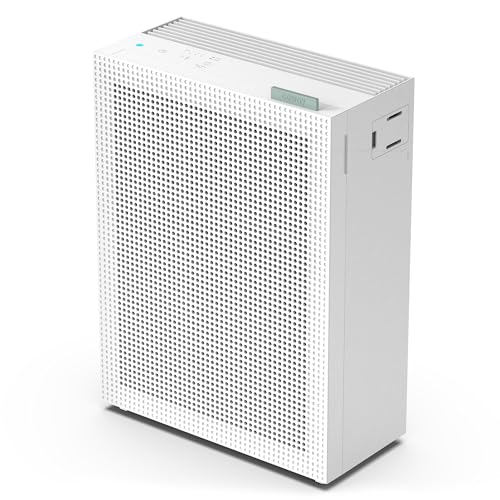
The ProX is the Airmega line at maximum: the family’s filtration, automation and polish scaled to the volumes that defeat every mainstream parish — vast open floors, double-height rooms, studios and halls. Governed by its auto layer and posted like plant, it converts a small weather system of indoor air into a utility, which at this scale is the only definition of success that matters.
Its debits are scale’s own: the family’s largest filters, a presence that must be designed into its room, and a price that assumes a decade in a justifying volume. Households inside that brief get one of the few domestic-line machines equal to their space; households outside it are directed down the family’s ladder by this review, rung by measured rung.
| Filtration | True HEPA with carbon stage, large format |
|---|---|
| Control | Sensor, auto mode |
| Best room | Vast and open spaces |
Strengths
- Maximum parish: vast and double-height volumes served
- Family automation governing a very large fan
- Design and support depth at a commercial-leaning scale
Trade-offs
- The family’s largest filter ledger
- A presence that must be designed into the room
- Authority without a parish in ordinary rooms
Best for: vast open floors, studios, halls and semi-commercial spaces in homes
Not suited for: ordinary living rooms and every space the 300 or 350 serves
Positioning: coway airmega prox review — the Coway Airmega ProX appears as a prose pick rather than a linked one; the maker’s own current listing is the place to confirm its terms.
Coway Airmega 350 — The sibling below
The 350 holds the border country beneath the ProX: the largest ordinary domestic rooms, at a rung’s remove in scale and ledger. Its own review in this cluster grades it fully — including its market variance and the verification its purchase requires — and for most houses that measure honestly, it is where the climb stops.
The ProX exists for the measurement that outgrows it. Households should let the tape, not the ambition, decide between the siblings, because at this end of the ladder each rung is a decade of filters priced in real money.
Strengths
- The largest ordinary domestic parish in the family
- Same automation lineage at a lower ledger
- Suits most houses’ maximum real need
Trade-offs
- Specification variance requires verification
- Still a flagship filter commitment
- Outgrown by genuinely vast volumes
Best for: the largest ordinary domestic rooms
Not suited for: vast, double-height and semi-commercial volumes
Positioning: coway airmega prox review — the Coway Airmega 350 is covered in prose, not as a linked pick; compare it on the maker’s own current terms before deciding.
Coway Airmega 300 — The verified large-room sibling
For the merely large room, the family’s 300 is the instrument this programme could verify and link: dual intakes, full intelligence, a parish covering most houses’ main rooms. Its review in this cluster is the detailed account, and it is the correct destination for households whose vast-room ambitions the tape measure moderates.
Two 300s, it should be noted, are also the ProX’s distributed rival for genuinely large spaces — a strategy with redundancy’s virtues and a doubled filter relationship’s costs, argued in this review’s scenarios.
Strengths
- Verified specification and availability in this programme
- Dual-intake parish for large rooms
- Pairs as a distributed strategy for vast spaces
Trade-offs
- One unit’s parish ends below the ProX’s
- Flagship filters at every post
- Carbon remains a stage
Best for: large rooms, and vast rooms served by a pair
Not suited for: single vast volumes wanting one governing machine
Positioning: coway airmega prox review — the Coway Airmega 300 is covered in prose, not as a linked pick; compare it on the maker’s own current terms before deciding.
Blueair Blue Pure 211+ — The simple displacement rival
Blueair’s big tower is the large room’s simple answer, verified and linked in this programme — and in a vast space its parish ends a rung below the ProX’s, which is precisely its role in this list: the honest alternative for households whose measurement lands at the top of the mainstream rather than beyond it.
Its sock, its silence about connectivity and its displacement are all virtues the ProX’s buyer should weigh before climbing past them, because scale bought beyond need is the most expensive kind of headroom.
| Filtration | HEPASilent, large format |
|---|---|
| Control | Manual speeds |
| Best room | Large living spaces |
Strengths
- Large-room displacement with furniture camouflage
- No connected layer to retire
- Verified linked pick with official imagery
Trade-offs
- Parish ends below the vast volumes
- Manual government of its fan
- Premium large filters
Best for: large rooms at the mainstream’s top end
Not suited for: genuinely vast and double-height spaces
Positioning: coway airmega prox review — the Blueair Blue Pure 211+ is covered in prose, not as a linked pick; compare it on the maker’s own current terms before deciding.
Austin Air HealthMate — The deep-carbon alternative
The Austin answers a different vastness: the house whose problem is chemical as much as volumetric — traffic, renovation, smoke country — with a deep carbon bed no Coway carries. Its full review in this cluster is the carbon bench’s standard, and households at the ProX’s scale with a gas-led brief should cross-examine it before scale alone decides.
It will not match the ProX’s displacement or automation, and its parish is a generous room rather than a hall. But vastness is not every large space’s problem, and the household whose air is measured in chemistry rather than in cubic feet will find the steel box the more honest instrument.
| Filtration | True HEPA plus deep carbon/zeolite |
|---|---|
| Control | Three-speed dial |
| Best room | Large rooms |
Strengths
- Deep carbon and zeolite bed for gas-led briefs
- Five-year filter proposition in steel
- A decade-scale build with no connected layer
Trade-offs
- Smaller parish than the ProX’s
- Loud at full speed, plain in design
- No sensing or automation
Best for: large rooms with chemical and odour briefs
Not suited for: genuinely vast volumes and automation seekers
Positioning: coway airmega prox review — Austin Air HealthMate is described rather than linked; this programme links only verified listings, so confirm its terms with the maker.
How the Coway Airmega Prox Review Field Compares
The ProX’s rivals are a short list by design: the largest machines of the other serious lines, commercial units wearing domestic clothes, and the two-machine strategy — a pair of 300-class towers dividing a vast room between them. Against that last rival the ProX argues consolidation: one post, one filter relationship, one auto mode governing the whole volume, against the pair’s redundancy and distributed placement. Vast rooms have been won both ways, and this review’s scenarios argue the cases.
Within the family the ProX is the ladder’s top rung, above the 350’s border country. Its existence disciplines the whole range’s honesty: because the ProX exists, no smaller Coway needs to pretend upward, and households measuring their rooms can trust the family’s borders in both directions — the review’s recurring compliment to this maker’s professionalism, paid here at the top of the ladder.
Buying Guide: Judging Coway Airmega Prox Review on the Right Criteria
A maximum-scale machine is judged by whether its parish is real — measured volume, honestly served — and by whether its ownership ledger suits the spaces that need it. The criteria below grade the ProX on scale’s own terms and patrol the border where the 300 and 350 should have been bought instead.
Judge measured volume before anything else on the page: at maximum scale the tape measure is the purchase: cubic volume, ceiling height and openings decide the rung, and aspiration in either direction is priced in a decade of filters The ProX is bought by measurement or not at all: its parish is the genuinely vast — halls, great commercial rooms, volumes with ceiling heights in their specifications — and this criterion grades the match before the machine.
Governance of a large fan. a maximum machine must be auto-governed to be worth its parish, because no household manually manages plant across a day’s events for a decade Moving a hall’s air is a governance problem — when to work, when to rest, how to answer a room’s events — and the family’s judged automation, at this scale, is an energy policy as much as a feature.
Placement as architecture: the post is an interior decision at this scale — breathing room, the living zone’s crossing, a designer’s consent — and a machine without a post is a machine without a parish At the ProX’s scale, placement is a building decision: currents, doors, occupancy patterns — and the review grades the machine partly on how honestly its documentation admits that.
Judge the facilities ledger before anything else on the page: the largest filters, budgeted as a facilities line across a decade and compared against the two-machine strategy, are the ownership’s true terms Its consumables and servicing belong in a facilities budget, with a facilities rhythm — the household-scale buyer should read that ledger as a border notice, not as a price.
Support continuity at the top deserves its own line in your notes. alternatives thin out at maximum scale, so the maker’s network depth — filters and parts in year eight — carries more weight here than at any rung below A low-volume flagship’s lifeline is its maker’s line continuity — the same formula’s filters and knowledge spanning from the bedside 100 to this hall — and Coway’s span is the evidence.
Border honesty in both directions. the ProX must refuse ordinary rooms as firmly as smaller machines refuse vast ones, and households should hold it to that refusal as a condition of trusting it in its own The ProX’s review refuses both sales that flank it: the large household upsold into plant, and the hall undersold into domestic machines — the border, patrolled in both directions, is the article’s discipline.
Coway Airmega Prox Review in Real Households
The double-height living space: The ProX’s founding room: a volume that humbled two mainstream machines in succession, finally governed by an instrument sized for it. Posted on the long wall, auto managing the day, the space’s air became a utility within a week — the outcome the household had twice paid smaller machines to promise.
Picture the home studio or salon for a moment. A working space in a converted building — clients, materials, a door that opens all day — needs plant, not a gadget. The ProX’s scale, automation and support suit the semi-commercial brief, and its ledger belongs in the business’s costs beside the heating’s, where its owners in this scenario correctly filed it.
Picture the hall of a large house for a moment. Halls and landings are a house’s lungs, and a vast hall’s purifier serves every room that opens off it — partially, honestly, as a background standard rather than a bedroom’s guarantee. Households should buy the ProX for a hall with that understanding, and keep bedroom machines for bedrooms’ promises.
Picture one prox or two 300s for a moment. The vast room’s architecture debate: one governing machine with one filter relationship, against a distributed pair with redundancy and two posts. Rooms with two natural posts and a household that values redundancy argue for the pair; rooms with one post and a plant temperament argue for the ProX. The tape and the floor plan decide, and both architectures have won real rooms.
The ordinary living room, mistakenly: The ProX in a standard living room is this review’s standing warning: a weather system in a parish, disproportionate in presence, noise and ledger. The household should buy the 300, demote its ambitions, and enjoy a machine at its ease — the ladder’s discipline exists to prevent exactly this purchase.
How To Get Coway Airmega Prox Review Right, Step by Step
Step 1: Measure the volume like a facilities manager. Cubic volume, ceiling height, openings, sources and occupancy. At this scale the measurement is a professional act, and it chooses among the 350, the ProX and the pair without appeal.
Step 2: Price the architectures, not just the machines. One ProX against two 300-class units: posts, filters across a decade, redundancy’s value. The comparison is the purchase at this tier, and it should be written down.
Step 3: Design the post with the room. Long wall, breathing room, the living zone’s crossing — agreed with whoever owns the room’s design. Plant that is placed by negotiation stays placed; plant that is placed by surprise migrates.
Step 4: Commission the auto layer and audit it seasonally. Sovereignty by default, with a seasonal review of its judgement against the space’s events. Maximum machines are reviewed like boilers: rarely, formally, and on a calendar.
Step 5: Budget the filters as a facilities line. Price, schedule and a decade’s total in the household’s or the business’s plant budget. The ProX’s ownership is a facilities relationship, and it should be filed as one from the first day.
Step 6: Review the architecture when the space changes. Extensions, new uses, a changed business: the parish is a measurement and measurements expire. A yearly sentence of re-measurement keeps the right plant in the right volume as the building evolves.
Mistakes That Undermine Coway Airmega Prox Review
Buying scale as insurance. Headroom at this tier is not free: it is paid in filters, presence and price for a decade. Insurance against a volume you do not have is the most expensive policy in the category.
Skipping the two-machine comparison. For genuinely vast spaces the distributed pair is a real architecture with real virtues. Households that never price it have not finished shopping at this scale, whatever they buy.
Posting it like an appliance: A maximum machine shoved in a corner is plant without a parish. Its post — central to the volume’s life, breathing freely — is an architectural decision and should be made as one.
Governing it manually sounds harmless in the showroom and expensive at home. Owners who drive a ProX by hand out of habit pay flagship money for plant and operate it as a fan. The auto layer’s sovereignty is the purchase; give it the week’s audit and then let it govern.
Expecting bedroom promises in a hall: A vast space’s background standard is not a closed room’s guarantee. Households that grade the ProX by a nursery’s criteria will blame it for the architecture of openness itself.
Going Deeper on Coway Airmega Prox Review
The ProX is where this cluster’s long argument about parish discipline reaches its logical end. Every machine in these reviews has been graded by the fit between its volume and its room’s; the ProX simply makes the stakes architectural. At maximum scale a purifier stops being an appliance purchase and becomes a building decision, with a building decision’s disciplines — measurement, architecture, facilities budgeting, decadal tenure — and the households that apply those disciplines get plant; the ones that apply a shopper’s habits get a very large ornament.
There is a compliment to the maker folded into the top rung’s existence that deserves its final statement. A family that builds an honest maximum — and honest borders beneath it — is a family that can be trusted at every rung, because it has refused the industry’s favourite lie, that one machine stretches. The ProX’s presence in the catalogue is the 100’s and the Mighty’s guarantee: their parishes end where they say, because the next parish is staffed. Ladders are honest only when every rung exists.
The two-machine alternative deserves its respectful closing word, because it is the ProX’s most interesting rival and the vast room’s genuine fork. Distribution buys redundancy, placement freedom and graceful degradation; consolidation buys governance, simplicity and a single relationship. Neither is the sophisticated choice in the abstract — the floor plan is the sophistication, and the households that read theirs honestly are the ones whose vast rooms end up governed, by whichever architecture, for a decade.
So the ProX’s verdict is a surveyor’s, like the Mighty’s at the ladder’s other end: it stands at the top of a family’s honest ladder, sized for the volumes that defeat everything beneath it, and successful exactly in proportion to the measurement that placed it there. Buy it by the cubic foot, post it like plant, budget it like facilities — and a vast room’s air becomes what a bedroom’s became under the Mighty: a subject the household no longer has to discuss.
The ProX’s deepest point is about where domestic technology ends. This programme’s reviews are written for households — for sleepers, parents, cooks and their rooms — and the ProX stands at the exact altitude where the household’s criteria (manners, mornings, the filter’s toll in a family budget) dissolve into an institution’s (occupants, seasons, a caretaker’s round). A review that pretended the household criteria still governed here would be lying in a familiar accent. The ProX deserves, and has received, a change of register — and readers who feel the change have located the border this whole cluster is built along.
There is a final satisfaction in the line’s completeness that this deep section should record. A maker whose formula serves a nursery’s six square metres and a hall’s six hundred, with the same creed and a continuous grammar of filters and judgement, has built something rarer than a product range: a system of air, in which every room a life passes through can be served by knowledge the life already has. The ProX is that system’s roof. Reviews grade machines; occasionally, at a summit, they get to grade an architecture — and this one holds.
The ProX’s closing note belongs to the people its parish serves without their ever knowing its name: the congregation that breathes easier through a service, the class that concentrates through an afternoon, the patients in a waiting room whose air was somebody’s specified responsibility. Plant that serves strangers anonymously is civilisation in its working clothes, and the ProX — governed, logged, humming at the top of a domestic line that learned its creed in nurseries — is a respectable piece of it. This programme’s reviews end, at this summit, with respect for the register the machine works in.
Keeping the ProX: the caretaker’s rhythm
Plant is kept by rhythm: filters ordered ahead against the schedule, the change logged in the building’s book, the sensor’s lens on the same round as the alarms’ and the extinguishers’. The ProX’s keeping asks no more than that register — and no less; a hall’s machine maintained on a household’s whim will fail the hall at the gathering that matters, which is the one failure mode its parish cannot forgive.
The rhythm has a seasonal shape the caretaker learns in the first year: the pollen term, the heating season’s dust, the summer’s open doors. A machine governed by a sensor keeps its own diary of those seasons, and the wise caretaker reads the diary annually and re-plans the filters against it — the facilities version of the household habits this programme teaches at every smaller scale.
Who buys the ProX, and who should not
Its right buyers are identifiable by their paperwork: a measured volume, a gathering’s calendar, a budget with a plant line, hands assigned to its keeping. Village halls, studios, places of worship, large practices and schools — institutions whose air is a duty of care to dozens — are its parish, and for them its price divides by occupants into one of the cheapest specifications in this entire programme.
Its wrong buyers are identifiable by their adjectives: the household that wants ‘the best’, the living room that wants ‘the flagship’, the buyer for whom scale is a feeling. This review addresses them with the programme’s usual courtesy and unusual firmness: the 300 will serve your room better, at a household’s ledger, and the money saved will fund its filters for a decade. Altitude is not a parish. Measurement is.
The ProX in a school, a surgery and a hall: three site notes
The school’s ProX works the timetable’s air: diligence through the occupied day, a clear-down between sittings, rest through the empty night — a rhythm its sensor learns in a week and its caretaker checks in a term. The surgery’s works a different ethic: continuous, unobtrusive, logged — a machine whose record is part of the practice’s duty of care, produced for inspectors as readily as for lungs. The hall’s works the calendar’s peaks: weddings, meetings, the winter’s gatherings, each met from rest and returned to it.
Three institutions, three registers, one machine — the site notes are this review’s evidence that the ProX’s parish is a type of responsibility rather than a type of room. Wherever air is owed to people by an organisation, the facilities logic applies, and the ProX is the line’s answer written in that logic’s own hand.
Commissioning the ProX: a buyer’s protocol
Plant is commissioned, not merely bought, and the ProX’s purchase deserves the protocol its parish implies: the volume measured with its ceiling, the occupancy’s pattern documented across a representative week, the placement walked with the currents, the servicing hands named, the filters’ standing order placed before the machine arrives. Institutions that commission so will grade the ProX as its owners do — as plant that performs. Institutions that buy it as a large appliance will grade it as an expensive one, and the difference will be theirs, not the machine’s.
The protocol’s last step is the review’s own: record the decision’s reasoning in the building’s book, so that the successor committee — for plant outlives committees — inherits the evidence rather than the anecdote. A line of machines built on continuity deserves buyers who practise it, and the ProX’s best owners, to judge by their documentation, do.
Field Notes on Coway Airmega Prox Review
There is a compliment to the maker folded into the top rung’s existence that deserves its final statement. A family that builds an honest maximum — and honest borders beneath it — is a family that can be trusted at every rung, because it has refused the industry’s favourite lie, that one machine stretches. The ProX’s presence in the catalogue is the 100’s and the Mighty’s guarantee: their parishes end where they say, because the next parish is staffed. Ladders are honest only when every rung exists.
For the record, at maximum scale a purifier is plant, and plant is bought by measurement, architecture and facilities budgeting rather than by shopping — the ProX’s review is written in that grammar deliberately a family’s ladder is honest only when every rung exists, and the ProX’s presence at the top is what allows every smaller Coway’s parish to end where its specification says the two-machine strategy is the ProX’s most interesting rival because it trades governance for redundancy, and floor plans — not brands — are the correct arbiters between them noise is a parish-relative quantity: the fan that would dominate a bedroom is a room tone in a hall, which is why maximum machines acquire bad reviews only when they are miscast
In practice, the largest filters in a family are a facilities line, and households that budget them as one — across a decade, beside the heating — are the owners still satisfied in year eight support continuity matters most where alternatives are fewest, and at maximum scale the maker’s network is not a courtesy but the product’s second half in the end the ProX is the answer to a measured question about volume, and like every machine in this cluster it succeeds exactly where the measurement placed it cost per occupant inverts at the ProX’s scale: the most expensive machine in this cluster becomes, divided by a hall’s congregation, the cheapest clean air in the programme — a reminder that price is a property of the parish, not of the box
A related point: a hall’s air is a duty-of-care document: schools, practices and places of worship increasingly keep their purification as they keep their fire safety — specified, serviced and logged — and the ProX is built for that filing cabinet as much as for the room the line’s span — one creed from a bedside to a hall — means a caretaker trained on a family’s smallest machine is already fluent in its largest, a continuity no assembled fleet of rival brands can offer an institution in the end the ProX is the purifier as public service: unglamorous, governed, logged, and measured by the gatherings it serves — the category’s farthest reach, and a fitting summit for the line this cluster has climbed its cost divided by a congregation, a classroom or a practice’s patients is the programme’s cheapest clean air — a figure its institutional buyers compute first and its household admirers never should
In real homes, the machine’s governance is legible to a caretaker’s round in seconds — working, resting, calling for its filter — which at plant scale is a safety property: a system whose state can be read at a glance is a system that gets read its presence in a hall quietly raises the venue’s standard: hirers ask about the air as they ask about the heating, and the ProX’s existence in the book is part of the building’s offer and the line’s continuity means the hall’s caretaker and the nursery’s parent are, in filtration terms, colleagues — trained by the same creed, fluent in the same grammar, at opposite ends of one architecture a hall’s machine is audited by its absences: the gathering that did not smell of its own crowd, the term without the usual cough’s tenancy — evidence no one collects and everyone breathes
Note, too, that its servicing rhythm aligns with the building’s other plant, so the caretaker’s round — alarms, extinguishers, filters — becomes a single liturgy of care that a new keeper can be taught in a morning the model’s buyers include the cluster’s most loyal: institutions that met the creed in the maker’s domestic machines and specified the summit when their own volumes demanded it and its scale gives its eco rest a civic dimension: a hall’s fan resting through the week’s empty days is an energy policy a committee can minute, and increasingly does
Coway Airmega Prox Review: Cases Worth Studying
The hall that stopped being the house’s lung problem. A large house’s double-height hall had defeated, in sequence, a mainstream tower and a pair of bedroom machines pressed into service. Measured properly at last — volume, openings, the staircase’s chimney effect — the space took a single maximum instrument on its long wall. Within a season the hall’s background standard had risen enough that the bedrooms’ machines were demoted to night duty. The case is the ladder’s whole philosophy: the right rung, reached by measurement, after two rungs reached by hope.
Final Recommendation on Coway Airmega Prox Review
The Coway Airmega ProX review concludes that the family’s maximum instrument is equal to its brief: vast volumes governed with the Airmega line’s automation, polish and support, at a facilities-scale ledger stated plainly. It is the correct machine for a small and measurable set of rooms, and an expensive error outside them.
Take the 350 for the largest ordinary rooms, the 300 for the verified large room or the distributed pair, the Blueair 211+ for simple displacement, and the Austin when the vastness is chemical. Take the ProX when the tape measure — cubic, honest, repeated — insists, and expect a decade of plant-grade silence on the subject of your largest room’s air.
Frequently Asked Questions About Coway Airmega Prox Review
What is the Coway Airmega ProX for?
The family’s maximum parish: genuinely vast domestic volumes and semi-commercial spaces — double-height rooms, open floors, studios, halls — where mainstream purifiers, including the family’s own 300 and 350, are honestly outscaled. It is plant for a house’s largest air, governed by the family’s automation. For volumes beyond the domestic: halls, places of gathering, large commercial and community rooms — the top of a line that begins at a bedside, serving the parish where purifiers become plant.
ProX or two Airmega 300s — which is better for a vast room?
It depends on the room’s architecture. One ProX offers a single governing machine, one filter relationship and one post; a pair of 300s offers two posts, distributed coverage and redundancy at a doubled consumable relationship. Rooms with one natural post favour the ProX; rooms with two favour the pair. Measure, price both architectures, and let the floor plan arbitrate. The architecture question of the large parish: two judged machines in two zones against one governor of the whole — the room’s division, its currents and its servicing rhythm decide, and this review’s sections lay out the arithmetic.
Is the ProX too much for a normal living room?
Yes — and the review regards that as a compliment to both the machine and the household that declines it. Its presence, noise profile and filter ledger are proportioned to vast volumes; in an ordinary room the 300 serves better in every dimension that matters, at a fraction of the commitment. Yes — plainly, and the review’s border honesty exists to say so: a normal living room is the 300’s parish, and the ProX there is plant in a parlour, with a facilities ledger to match.
How much are ProX filters?
The family’s largest, on the machine’s announced schedule, and properly budgeted as a facilities line across a decade. Price the current set through the maker’s channels before purchase — at this scale, channel and specification verification are part of the buying discipline. Facilities-grade, on the maker’s schedule, ordered ahead as plant consumables are — the figure belongs in a budget with a boiler’s servicing, not beside a household’s groceries.
Does the ProX handle odours and smoke?
Smoke particles at scale, yes; gases and odour with the family’s carbon stage, which freshens rather than feasts. Vast spaces with a chemical brief should cross-examine the Austin’s deep bed for their worst room and treat the ProX as the volume instrument it is — the two machines answer different vastnesses. A hall’s background and events, at its carbon’s proportion; a commercial kitchen’s output belongs to extraction, and no purifier in this programme outranks a hood at source.
Is the ProX loud?
In the volumes it was built for, its working speeds read as a room tone — the scale absorbs what a bedroom would not. In a small room it would be a weather system, which is this review’s border argument in acoustic form: the machine’s voice is proportioned to its parish, and the parish is the buyer’s first verification. At full governance it is a large fan at work, in rooms whose scale absorbs it; at its judged rest it is silent — the parish’s bargain, at the largest scale this cluster grades.
Reading: coway airmega prox review — from our own guides: Coway Airmega 350 reviewed Coway Airmega 300 reviewed Austin Air HealthMate compared best HEPA air purifiers what is a HEPA filter quiet air purifiers