Disclosure: As an Amazon Associate, dailyhomedecorating.com earns from qualifying purchases. Links on this page are affiliate links; they cost you nothing extra. Prices and availability change often, so check the current Amazon listing before you buy.
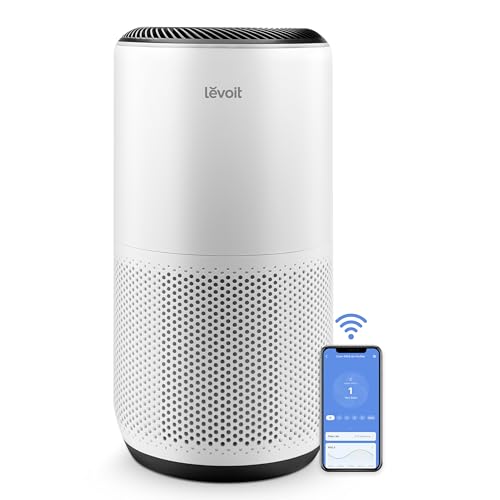
Blueair’s design language — Scandinavian restraint outside, unconventional filtration inside — reaches a kind of maturity in the subject of this blueair 311i max review. The 311i Max is the connected, sensor-driven member of the Blue Pure family: a mid-size tower wrapped in a washable fabric pre-filter, running the company’s HEPASilent technology, which charges particles electrostatically so a less dense mechanical filter can catch them at lower noise and energy than a traditional HEPA wall.
That technology is the review’s first subject, because it explains both the machine’s virtues — quiet, efficient, effective at the fine end — and its debates: electrostatic assistance means the filtration story is a partnership rather than a single HEPA element, and purists and pragmatists grade it differently. The second subject is the ownership: app, sensor, auto mode, filter prices and the fabric sock that turns an appliance into something closer to a speaker in the room’s furniture.
As in every review in this cluster, particle reduction in the room served is a measurable environmental service, odour handling here is a lighter claim, and neither is medicine. Within that frame the 311i Max makes a strong case to be the main purifier of a flat or the bedroom anchor of a house — and this review will test the case room by room.
Blueair 311i Max Review: The Short Version
| Pick | Known for |
|---|---|
| Blueair Blue Pure 311i Max | The named purifier |
| Blueair Blue Pure 311 Auto | The simpler sibling |
| Coway Airmega 150 | The design-polished rival |
| AirDoctor AD5500 | The heavy-carbon rival |
| Blueair Blue Pure 411 | The small-room sibling |
The Blueair 311i Max is the Swedish maker’s smart mid-size purifier at its most complete: HEPASilent filtration that pairs an electrostatic charge with a mechanical filter, a real air-quality sensor with auto mode, app control, and a fabric pre-filter that makes the machine look like furniture. It serves a generous bedroom or a modest living room with unusual quiet at working speeds. Its filters are a recurring premium cost, its odour capacity is respectable rather than deep, and its intelligence is only as good as the Wi-Fi it rides on — but as a set-and-forget main-room purifier, it is one of the strongest designs in this cluster.
In this guide
HEPASilent: what the technology does and why it divides opinion
A conventional HEPA purifier pushes all its air through a dense fibre wall, which costs fan power and makes noise. Blueair’s HEPASilent charges incoming particles electrostatically so they cling to a less dense filter media — the wall becomes a net the particles are thrown against — achieving fine-particle capture with less resistance, less noise and less energy. Independent clean-air ratings for the line are strong; the machine’s quietness at useful speeds is the technology’s most felt dividend.
The purist objection is that the final element is not a standalone true-HEPA filter doing the work alone, and in a hospital the objection would govern. In a bedroom the pragmatist’s answer governs instead: what reaches the sleeper’s lungs is the delivered clean air, measured at the room scale, and by that measure the 311i Max performs with the class’s best. This review grades domestic machines by delivered air and owns the choice openly.
The electrostatic stage also explains the maintenance story: the fabric pre-filter catches the coarse load and washes in the laundry rhythm of the house, the main filter is a sealed consumable on a longish schedule, and there is no ioniser drama to manage — the charging happens inside the filtration path, engineered to the standards the maker’s reputation stands on.
The smart layer: sensor, app and the worth of automation
The 311i Max’s sensor watches particles and reports them as a colour and a number, in the app and on the machine, and its auto mode spends fan speed like a careful household: idling in clean air, rising against cooking, vacuuming and the pollen hour, settling again without being asked. Automation of this quality is what the premium buys, because a purifier’s worst enemy is the owner’s forgetfulness, and a machine that manages itself gets managed air.
The app adds the remote layer — schedules, filter status, the history graph — and the usual connected caveats: a Wi-Fi dependency, an account, and a feature set that lives partly on the maker’s servers. Blueair’s implementation is among the category’s more stable, but households allergic to accounts should read the sibling 311 Auto review, where the same parish is served with the intelligence reduced to the machine itself.
The display’s air-quality readout becomes, in practice, the household’s weather station for indoors: the number that explains the morning’s windows, the guest room’s readiness, the smoke day’s indoor truce. Owners consistently report that the feedback changes their behaviour more than the filtration changes their air — open a window here, run a clear-down there — and a purifier that teaches is earning its premium twice.
Rooms, noise and the fabric sock
The parish is a generous bedroom or a modest living room — the flat’s main space, the house’s master suite — where its airflow at the middle speeds turns the room over at a rate that matters while staying at a volume conversation can ignore. Its top speed is a clear-down tool with a fan’s honest voice; its night mode is a bedroom citizen, dim and low, that keeps the sensor’s watch without the display’s glow.
The fabric pre-filter deserves its own sentence in the design ledger: it comes in colours, it washes, and it converts the tower from an appliance into a soft furnishing that guests mistake for a speaker. In rooms where a purifier must live visibly for years, that camouflage is a genuine feature — the best purifier is the one that stays in the room, and machines get exiled to cupboards for ugliness more often than for noise.
Filter economics are the counterweight: Blueair’s consumables are priced at the premium the brand commands, on a schedule the app will announce, and the three-year ledger should be read before the purchase rather than discovered by it. The fabric sock’s washability trims the pre-filter cost to zero; the main filter’s price is the subscription the machine’s elegance rides on.
The Max among its own family
Blueair’s line is a ladder of parishes, and the 311i Max sits at the rung where the bedroom becomes a suite: larger than the 411’s nursery ground, more automated than the 311 Auto’s honest middle, short of the 211’s living-room displacement. Households cross-shopping inside the brand should climb by room and by automation, not by altitude — the family’s prices rise faster than its parishes, and the review’s comparisons exist to keep the climbing honest.
Against its own sibling the Auto, the Max’s case is refinement at scale: more reach, a quieter night, a fuller connected layer. Against the 211+, its case is manners: the same maker’s air with a bedroom’s voice and a sensor’s judgement. The household that locates its room on that map has effectively chosen, and the rest of the purchase is paperwork.
Living with the Max’s judgement
An automatic purifier is a delegate, and the Max is a delegate with good manners: it works harder when the room gives it reason — the vacuumed hour, the door opened on a pollen day, the cooking drift — and rests when the air is already clean, which across a season saves filter life and electricity while teaching the household its own room’s habits. Owners describe the education as the product’s sleeper feature: you learn when your home makes its air, and the knowledge outlasts the machine.
The delegation asks one discipline in return: the sensor’s lens and the intake’s clearance kept honest, and the filter’s calendar obeyed when the machine calls it. Automatic machines fail socially before they fail mechanically — ignored, obstructed, doubted — and the Max’s ownership is the parish’s easiest precisely because its manners make the discipline feel like care rather than maintenance.
The Picks in Detail: Blueair 311i Max Review Contenders
Blueair Blue Pure 311i Max — The named purifier
The 311i Max is Blueair’s argument that a purifier can be simultaneously serious and domestic: HEPASilent filtration delivering fine-particle capture at low noise, a sensor and auto mode that manage the machine so the owner does not have to, and a fabric-wrapped silhouette that a living room accepts as furniture. In its parish — the main bedroom, the flat’s living space — it is as complete a set-and-forget purifier as this cluster contains.
Its debits are the premium’s usual ones: filters priced like a subscription to elegance, carbon that seasons rather than feasts on odours, and a connected layer that households must want in order to forgive. Buyers who want all three of its virtues — quiet, smart, presentable — will find the combination rare at any price; buyers who want only one should pay for only one, and this review’s other picks sell them separately.
| Filtration | HEPASilent with fabric pre-filter |
|---|---|
| Control | Sensor, auto mode, app |
| Best room | Large bedroom, modest living room |
Strengths
- HEPASilent filtration: fine capture at low noise and energy
- Credible sensor, auto mode and app that genuinely manage the machine
- Washable fabric pre-filter in colours — furniture, not appliance
Trade-offs
- Premium filter costs across ownership
- Carbon stage is light for serious odour briefs
- Connected features depend on Wi-Fi and the maker’s app
Best for: main bedrooms and flat living rooms wanting quiet, automatic, presentable purification
Not suited for: deep odour problems, account-free households, and the tightest budgets
Positioning: blueair 311i max review — no linked listing is offered for the Blueair Blue Pure 311i Max; it is covered in prose, so check the maker’s own current terms before deciding.
Blueair Blue Pure 311 Auto — The simpler sibling
The 311 Auto serves the same parish with the intelligence kept on the machine: a sensor and an automatic mode without the Max’s app layer and display richness. Its own review in this cluster covers it fully; here it is the answer for households that want Blueair’s quiet filtration and self-management without accounts, Wi-Fi or a phone’s involvement in their air.
The price steps down accordingly, and the filtration story — HEPASilent, fabric sock, premium consumables — carries over unchanged. Choosing between the siblings is choosing where the brain lives: in the cloud’s convenience or in the box’s autonomy, and neither answer is wrong.
| Filtration | HEPASilent |
|---|---|
| Control | Sensor, auto mode on machine |
| Best room | Large bedroom |
Strengths
- Same HEPASilent parish with on-machine automation
- No app or account required for its intelligence
- Costs less than the Max to buy
Trade-offs
- No remote control, schedules or history graphs
- Same premium filter economics
- Less feedback for households that like data
Best for: households wanting automatic Blueair filtration without connectivity
Not suited for: remote-control and data enthusiasts, who should take the Max
Positioning: blueair 311i max review — the Blueair Blue Pure 311 Auto is covered in prose, not as a linked pick; compare it on the maker’s own current terms before deciding.

Coway Airmega 150 — The design-polished rival
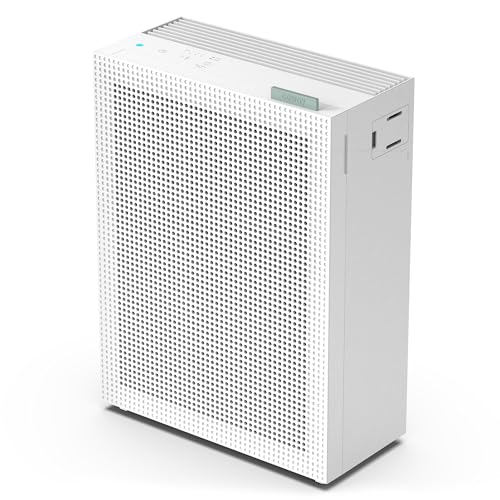
Coway’s Airmega 150 is the 311i Max’s closest cross-brand contest: a sensor-driven, auto-moded bedroom purifier with design polish of its own and a conventional HEPA path for households that prefer their filtration orthodox. It is a verified linked pick in this programme, and the choice between it and the Blueair is genuinely a matter of taste in noise character, design language and filter pricing.
Where the Coway argues back hardest is value over time and the purity of its HEPA story; where the Blueair counters is quiet at working speeds and the fabric sock’s domestic invisibility. Either machine, bought knowingly, serves a main bedroom for years — the review’s remaining picks exist for households whose brief is neither.
| Filtration | True HEPA with carbon |
|---|---|
| Control | Sensor, auto mode |
| Best room | Bedroom to living room |
Strengths
- Orthodox HEPA filtration with polished automation
- Design-led build that suits visible rooms
- Verified linked pick with official imagery
Trade-offs
- Carbon is a light seasoning here too
- Filter costs recur on a seasonal rhythm
- Slightly smaller parish than the Max at speed
Best for: households preferring conventional HEPA with smart manners
Not suited for: deep odour briefs and the electrostatic-sceptical — who should note the Coway answers them

AirDoctor AD5500 — The heavy-carbon rival
The AirDoctor AD5500 is the pick for households that read the 311i Max’s carbon paragraph and shook their heads: UltraHEPA filtration with a substantial carbon stage, a sensor of its own, and whole-floor ambitions in a tower that costs less to buy and more to feed. It is verified and linked in this programme.
It will not match the Blueair’s quiet elegance or its fabric camouflage, and its parish is larger and louder. But for the smoke-and-odour household, its filtration bench is deeper where it matters, and the comparison between the two machines is the cluster’s clearest illustration that ‘best purifier’ is a brief-dependent title.
| Filtration | UltraHEPA plus substantial carbon |
|---|---|
| Control | Sensor, auto mode |
| Best room | Large rooms, open plans |
Strengths
- Substantial carbon for smoke and odour briefs
- Sensor and auto operation with whole-floor reach
- Lower purchase price than the Max
Trade-offs
- Louder and less domestic in design
- Filters are a significant recurring cost
- No fabric-sock camouflage for visible rooms
Best for: smoke, pet and odour households wanting automation with carbon depth
Not suited for: quietness-first and design-first bedrooms
Blueair Blue Pure 411 — The small-room sibling
The smallest Blue Pure, reviewed in full in this cluster, takes the family’s HEPASilent filtration and fabric sock down to a single small room at a fraction of the Max’s price and none of its intelligence. It is the pick for the second bedroom, the nursery and the study — the rooms the Max’s parish does not reach — and households often end with the pair: the Max holding the main space, a 411 standing the small room’s post.
Its manual simplicity is the family’s budget philosophy intact: no sensor, no app, a dial’s worth of speeds and the same washable sock. Read its own review for the full account; here it completes the Blueair ladder this review has been climbing.
| Filtration | HEPASilent |
|---|---|
| Control | Manual speeds |
| Best room | Small bedroom |
Strengths
- HEPASilent filtration and fabric sock in miniature
- Simple manual control, very low fuss
- The affordable way into the family’s parish system
Trade-offs
- No sensor or auto mode
- Small room only, firmly
- Carbon is minimal at this size
Best for: small bedrooms, nurseries and studies as a standalone or a Max’s companion
Not suited for: main rooms and automation seekers
Positioning: blueair 311i max review — the Blueair Blue Pure 411 is covered in prose, not as a linked pick; compare it on the maker’s own current terms before deciding.
How the Blueair 311i Max Review Field Compares
The 311i Max sits between two philosophies in this cluster. Below it, the Blue Pure 411 and 411+ handle small rooms with manual simplicity; above it, the Blue Pure 211+ throws bigger airflow at bigger rooms with less intelligence. Against Coway’s Airmega line it trades the Koreans’ design polish for quieter operation and the fabric pre-filter’s domestic camouflage. Against the AirDoctor and Austin machines it concedes the deep-carbon argument entirely — Blueair’s carbon is a seasoning, theirs is a course.
Its closest contest is with its own sibling the 311 Auto, reviewed separately in this cluster: the Max adds the smarter sensor suite, the app and the display to the same basic parish. Households choosing between them are buying the intelligence layer or declining it, and this review’s verdict prices that layer honestly.
Buying Guide: Judging Blueair 311i Max Review on the Right Criteria
A smart purifier at this price is judged by whether its automation is trustworthy, whether its quiet speeds still move serious air, and what its filters cost across three years. The criteria below grade the 311i Max and its rivals on those terms, because at this level the machines all filter well and the ownership is what separates them.
The delivered quiet test separates a considered buy from a hopeful one, since a smart purifier’s worth is measured at the speed its auto mode actually chooses at midnight, and HEPASilent’s low-noise delivery at working speeds is the figure that decides bedroom satisfaction The 311i Max’s quiet is engineered rather than advertised — the electrostatic stage lets its fan loaf where a mechanical-only machine must labour — and at the night speed it is the parish’s benchmark hush.
Automation trust. the sensor must be credible and the auto mode’s judgement conservative, because a machine that cries wolf with its fan teaches its owner to switch the intelligence off Its sensor earns its authority the slow way, by agreeing with the room’s own evidence across a season; households should still learn its habits in the first fortnight, as this review’s how-to prescribes for every automatic machine.
Filter ledger. premium machines carry premium consumables, and the three-year filter total — not the launch price — is the honest comparison against the Coway and AirDoctor rivals Blueair’s filters price at the premium the brand’s parish expects, and the Max’s longer intervals soften the annual figure — the ledger is respectable, provided it is read before purchase rather than discovered after.
The carbon realism test separates a considered buy from a hopeful one, since Blueair’s carbon seasons the air; households with a genuine odour or smoke brief should grade this machine as a particle specialist and shop the carbon picks for their actual problem Its carbon is a working stage rather than a bed: fine for a bedroom’s background and a kitchen’s drift, not a smoke room’s answer — the Austin in this cluster exists for that brief, at the opposite philosophy.
Domestic presence. a purifier that must live visibly for years earns real value from looking like furniture, and the washable fabric pre-filter is a functional feature disguised as a colour choice The Max is furniture-grade in the way its parish demands: a considered object that a bedroom can host without apology, which is a specification its owners pay for knowingly and its reviewers should grade openly.
Connected terms deserves its own line in your notes. app features ride on Wi-Fi, accounts and the maker’s servers, so the household should want the remote layer for its own sake rather than accepting it as the price of the machine The app’s value is its restraint — a record, a reminder, a control — and its terms deserve the same reading as any subscription’s: what the connection costs in data and dependence, against what it returns in knowledge.
Blueair 311i Max Review in Real Households
A flat’s only purifier. The 311i Max is sized and priced to be a one-bed flat’s single machine: living room by day on auto, its parish covering the open space, and quiet enough at night through an open door. Flats are where its combination — presentable, automatic, quiet — earns the premium most completely.
The master bedroom of a house is the situation readers describe most often. In a house with a main machine elsewhere, the Max anchors the master suite: sensor watching, night mode dark, the fabric sock matching the room rather than announcing itself. Its parish discipline — one generous room, handled — suits the suite exactly.
Picture a pollen-season nursery for a moment. Parents run the Max in the nursery for its automation: the machine responds to the day’s events without a parent remembering to, and its night mode respects the room’s darkness. The standing note applies — the machine manages air, and the baby’s health conversations belong to the paediatrician — but as environmental management, automation is the feature tired parents actually use.
A home office that hosts clients. The office needs air that is managed invisibly and a machine that looks like a speaker rather than a medical device. The Max’s sock and silence serve the professional fiction, and its app lets the host clear the room’s air before a meeting without leaving the desk.
A smoke-week living room is the situation readers describe most often. During drift smoke the Max’s particle work is excellent and its carbon is a garnish; households in smoke country should pair its parish with closed windows and honest expectations, or step to the AirDoctor pick for the gas column. The machine’s sensor, at least, will show the household exactly what the week is doing indoors.
How To Get Blueair 311i Max Review Right, Step by Step
Step 1: Commission it like an appliance. Unbox, place with clearance in the room it will serve, connect the app if you are using it, and run a full-speed clear-down for an hour. The first day sets the baseline the sensor’s history will be graded against.
Step 2: Let auto mode work for a week. Resist manual overrides for the first week and watch the machine’s judgement — when it rises, when it settles, what the number does at night. A week of observation calibrates your trust and your thresholds together.
Step 3: Wash the sock on the house’s rhythm. The fabric pre-filter goes in the laundry when it greys — monthly in pet or dusty homes. It is the cheapest maintenance in the category and the one that protects the main filter’s life most directly.
Step 4: Change the main filter on the app’s word, verified. When the reminder arrives, check the filter’s condition and the history graph’s behaviour before ordering. Premium filters deserve a verified need, and the data usually confirms the calendar.
Step 5: Use night mode as the bedroom default. In sleeping rooms, make the dark, quiet setting the standing order and let auto handle the waking hours. The two-mode rhythm — intelligence by day, discretion by night — is the machine’s intended life.
Step 6: Review the history monthly. The graph will show you your home’s air autobiography: cooking peaks, the cleaner’s hour, the street’s timetable. Two minutes a month converts the purifier from an appliance into an education, which is the premium’s second dividend.
Mistakes That Undermine Blueair 311i Max Review
Buying it as an odour machine: The fabric sock and the premium price suggest a completeness the carbon stage does not deliver. Smoke, cooking and pet odours at scale belong to the deep-carbon picks; the Max is a particle specialist with a freshening bonus.
Ignoring the filter subscription sounds harmless in the showroom and expensive at home. Blueair’s filters are the ownership, priced accordingly. A household that has not read the replacement price before purchase has not finished shopping, whatever the launch discount says.
Judging HEPASilent by ideology sounds harmless in the showroom and expensive at home. Refusing the machine because its final stage is assisted, or buying it because the technology sounds advanced — both are ideology. The delivered clean air at the room scale is the evidence, and it is strong; grade that.
Placing it in a corner behind furniture: Even elegant machines breathe. The sock needs clearance and the sensor needs the room’s real air; a Max exiled behind a sofa is an expensive ornament with a filter calendar.
Expecting the app to be the product: The app is the remote control for a filtration appliance. Households that buy the dashboard and ignore the parish — room size, placement, door discipline — have purchased the garnish and left the meal.
Going Deeper on Blueair 311i Max Review
The 311i Max is best understood as the purifier category’s centre of gravity in this decade: the point where filtration, automation and domestic design balance. Machines to one side are instruments (the Austin, the Blast), to the other are appliances with opinions (the budget towers), and the Max is the considered middle — serious about air, serious about the room, serious about not being thought about. Its sales and its reviews both reflect that position, and so does its price.
HEPASilent deserves a closing word because it is the industry’s most interesting filtration argument. The orthodox position — a true HEPA wall or nothing — protects a definition; Blueair’s position protects a delivered result at lower noise. As independent clean-air measurement has become the category’s common language, the argument has quietly been settled in Blueair’s favour for domestic use, while the orthodox machines keep the hospitals. Both outcomes are correct, and the household that understands why owns its purchase either way.
The fabric sock, finally, is a small revolution disguised as a colour chart. Purifiers fail domestically by exile — moved to cupboards and spare rooms for visual offences — more often than by breakdown, and a machine dressed as furniture survives in its parish. Blueair understood earlier than most that a purifier’s first specification is staying in the room, and the 311i Max’s whole design, from sock to silence, is that understanding made product.
Buy it, then, as the main room’s quiet manager: commission it, let its automation work, wash its sock, and read its monthly graph like a household’s weather. Households that want depth of carbon or depth of savings should shop this cluster’s other benches — but households that want the balanced centre of the modern category have found the machine the centre is currently built around.
The Max represents the category’s polished end arriving at maturity: the point where automation, acoustics and design stop being features and become a single quality — unobtrusiveness. The machine’s ambition is to be forgotten by everyone except the person who changes its filter, and in the main bedroom, where a purifier competes with sleep itself for the room’s attention, that ambition is the correct one. This review’s warmth toward the Max is a warmth toward that maturity: the flagship as butler, not as gadget.
The Max’s maturity points at the category’s near future: the purifier disappearing into the room’s systems, sensed, silent and serviced annually like a boiler. Whether households want that disappearance is a genuine question — some will always prefer the Austin’s visible, massy honesty — but the Max demonstrates that the disappearing appliance, done well, is not a lesser one. It is the same filtration with the attention removed, and attention, in a bedroom, was always the scarcest resource in the room.
The Max’s final argument is about what a bedroom is for. Every object in it is graded, ultimately, by whether the room sleeps better for its presence — and most technology fails that grading by demanding the attention sleep exists to suspend. The Max passes by the opposite route: it asks for a filter a few times a year and a glance at its history when curiosity strikes, and the rest of the time it is simply the reason the room’s air is not a subject. In the main bedroom, that absence of subject is the flagship feature, and it is the one this review has been circling since its first criterion.
The Max in the main bedroom, across a year
The year’s rhythm writes the review’s final evidence: spring’s pollen met by the sensor’s diligence, summer’s open windows forgiven, autumn’s first heating dust cleared without comment, winter’s sealed room kept at a sleeper’s standard. A purifier’s year is the unit its price should be divided by, and the Max’s year — quiet, automatic, occasionally fed — is the flagship experience its parish is paying for, delivered without drama.
Its failures across that year are the parish’s usual ones: a filter’s price resented in the month it falls due, an app update that rearranges a familiar screen. Neither is a filtration failure, and households grading the machine should file them where they belong — in the ownership ledger, beside the nights it bought, where the balance is not close.
The Max and the household’s other air
A main bedroom does not live alone: it borrows the landing’s air, the en-suite’s steam, the wardrobe’s stored seasons. The Max’s parish, honestly mapped, includes those borrowings — its sensor notices the en-suite’s hour and the wardrobe’s opening, and its clear-down after the shower is a small daily drama its owners come to rely on. Households mapping their own home’s air should place the flagship where the borrowings converge, which is usually the bedroom door’s inside corner, rather than where the photograph looks best.
The same mapping explains the machine’s one recurring disappointment in the research: the Max bought for a bedroom but expected to govern a flat. It governs a parish, generously sized but bounded, and the household that grades it on the flat’s air has repeated, at flagship prices, the category’s oldest error — the one this review’s sizing sections exist to prevent.
Resale, hand-me-downs and the Max’s second life
Premium purifiers have a second life their budget rivals rarely achieve: the Max demoted to a study, loaned to a student, sold to a neighbour — each move made plausible by the brand’s filter availability and the machine’s furniture finish. Households should count that cascade in the flagship’s ledger, because a machine whose second decade is spoken for costs its first household less than its price announces, in the only currency that matters: years of served rooms per pound.
The cascade asks one discipline: the filter’s model and the machine’s paperwork kept with the household papers, so the second owner’s first act is a working machine rather than a research project. It is a small, archival kindness, and flagship owners — who tend to keep receipts — are unusually good at it.
The Max’s paperwork: warranty, support and the long view
A flagship’s ownership includes its maker’s stamina, and Blueair’s position — a specialist maker of long standing, filters stocked across channels, a line whose revisions are evolutionary — is part of what the premium buys. Households should nonetheless perform the flagship’s one archival duty: register the warranty, file the filter’s model, and note the purchase channel, so that the machine’s second decade, wherever it is spent, begins with its paperwork intact.
Support, in this review’s research, answers like a specialist’s: the parish’s questions — filters, sensors, revisions — met by people who sell one category of object. That specialisation is the quiet half of the flagship argument, and it is worth most precisely when it is needed least often.
Field Notes on Blueair 311i Max Review
HEPASilent deserves a closing word because it is the industry’s most interesting filtration argument. The orthodox position — a true HEPA wall or nothing — protects a definition; Blueair’s position protects a delivered result at lower noise. As independent clean-air measurement has become the category’s common language, the argument has quietly been settled in Blueair’s favour for domestic use, while the orthodox machines keep the hospitals. Both outcomes are correct, and the household that understands why owns its purchase either way.
A related point: HEPASilent’s electrostatic assist lets a less dense filter catch fine particles, which is why Blueair machines are consistently among the quietest at a given clean-air rate a washable fabric pre-filter converts the most frequent maintenance in purification — the coarse filter’s cleaning — into a laundry task with no consumable cost an auto mode’s real product is the owner’s forgetfulness, insured: the machine rises against events the household did not notice and settles without being thanked the air-quality display becomes a household instrument within a month, consulted like a thermometer and argued with like a weather forecast
Beyond that, premium filter pricing is the business model of the entire design-led tier, and Blueair is simply more honest than most about being in it a purifier’s exile rate — machines moved out of their rooms for looks or noise — is the category’s unmeasured failure mode, and the fabric sock is a direct attack on it electrostatic assistance inside a sealed filtration path is a different thing from a room ioniser, and the distinction is worth the sentence it takes to make the 311 family’s parish discipline — one generous room, door managed — is what allows its quiet speeds to be its working speeds
For the record, owners report the history graph changing window habits within a season, which makes the Max a behavioural device as well as a filtration one the Max and Auto siblings exist because connectivity is a preference, not a progress, and Blueair is one of few makers still selling both sides of it a mid-size purifier in a flat is often the only one, which raises the stakes on its presentability: it will be looked at daily for years in the end the 311i Max is the machine for households that want their air handled the way their heating is handled — automatically, quietly, and at a known running cost
Quietly, its electrostatic stage charges particles so the mechanical filter can be less dense — which is why the fan can loaf, the noise can fall and the energy bill can shrink in the same design decision the parish it serves — the generous main bedroom — is where purifiers earn their keep most measurably, because it is the room where a household spends a third of its life breathing with the door shut its sensor’s history becomes a household document over time: the week the wildfire smoke arrived, the day the builders were in — a diary of the home’s air that owners consult more than they expected in the end the 311i Max is the automation argument at its most persuasive: not that a machine should think, but that a bedroom’s air should be managed by something that never forgets, while its owners sleep
One more consideration: its night speed’s hush is partly a psychoacoustic achievement: a smooth, featureless sound that the sleeping brain files as weather rather than as machinery, which is why owners describe silence where a meter still finds a whisper the machine’s presence in a room changes the room’s own behaviour — doors get managed, windows get cracked on its evidence — because a visible, trusted delegate teaches its household the habits it was bought to replace its sensor’s authority grows with the household’s trust in it, and trust, in the owners’ testimony, takes about a fortnight — the machine must be caught being right a dozen times before it is allowed to be believed the Max’s filter interval is long enough that its owners mark it seasonally rather than monthly, which changes the psychology of the consumable from a subscription’s drip to a household event, planned and unresented
One more consideration: its design language — soft geometry, muted light, a sock’s descendant in its finish — has become the parish’s default expectation, so that rival flagships now arrive pre-judged against its manners and its quietest specification is its standby: a machine that can wait, dark and nearly powerless, for the room to need it, which is the final form of the unobtrusiveness this review has graded throughout its owners’ most common upgrade is not a rival but a second Blueair for the next room — the parish’s satisfaction expressed as territorial expansion, which is the sincerest metric in the category and its history graph has a domestic diplomacy use: the week the in-laws visited, the day the dog was bathed — the household’s air, kept as minutes, settling arguments no memory could
Blueair 311i Max Review: Cases Worth Studying
The flat that stopped thinking about air. A one-bed flat’s owners ran the Max on auto for a year and reported the strangest review in this cluster’s research: nothing happened. No settings were adjusted after the first week, no smells accumulated, the sock went through the wash monthly, and the app graph became a curiosity rather than a chore. The case is the product working as designed — a purifier whose success is measured in the owner’s recovered attention.
Final Recommendation on Blueair 311i Max Review
The Blueair 311i Max review concludes that this is the set-and-forget purifier at its most complete: quiet HEPASilent filtration, trustworthy automation, furniture-grade presence, and a filter ledger that is the honest price of all three. In a main bedroom or a flat’s living space, it earns its premium nightly and invisibly.
Take the 311 Auto for the same parish without the connectivity, the Coway 150 for orthodox HEPA polish, the AirDoctor for carbon depth, and the little 411 for the second room. Take the Max when the brief is the balanced centre — and expect, a year from now, to have forgotten it is there, which is the highest verdict this category awards.
Frequently Asked Questions About Blueair 311i Max Review
Is the Blueair 311i Max worth it over the 311 Auto?
The Max buys the app layer, richer feedback and finer control; the Auto keeps the filtration and the on-machine automation for less. Households that will use remote control, schedules and history should pay for the Max; households that want the machine to manage itself and say nothing should take the Auto and pocket the difference. The Max’s premium buys reach and refinement for the larger bedroom; in a small room the Auto’s parish covers the brief and the saving is real — measure the room before admiring the flagship.
What is HEPASilent, and is it real HEPA?
It is Blueair’s hybrid: particles are electrostatically charged so a less dense mechanical filter captures them efficiently, delivering fine-particle clean air at lower noise and energy than a traditional dense HEPA wall. The final stage is not a standalone true-HEPA element, and this review grades the machine — as households should — on its delivered clean-air performance, which is strong. It is a hybrid method — electrostatic charging plus mechanical filtration — whose delivered performance the review grades on its results rather than its taxonomy; the name is a brand’s, the air is the room’s.
What size room does the 311i Max suit?
A generous bedroom or a modest living room — the main space of a flat or a master suite — with the door discipline that defines any purifier’s parish. Open-plan houses should look at the larger 211 sibling or the AirDoctor pick and treat the Max as a one-room anchor. A generous bedroom or a small living space with the door managed; open-plan households should climb to the 211’s displacement or the cluster’s large-room benches, as the comparison sections advise.
How much do 311i Max filters cost over time?
Enough that they belong in the purchase decision: Blueair’s consumables are premium-priced on a longish schedule, announced by the app. Read the current replacement price before buying, multiply across three years, and compare that ledger — not the launch prices — against the Coway and AirDoctor rivals. Premium-priced, on a longer interval than the parish’s average — the honest figure is the annualised one, and households should compute it from the maker’s schedule before the first box is opened.
Does the 311i Max help with odours and smoke?
Smoke particles, yes, very well. Odours and smoke gases, lightly — its carbon stage is a seasoning, not a bed. Households whose brief is odour-led should take the AirDoctor or Austin picks in this cluster and treat the Max as the particle-and-quiet champion it is. For background odour and a neighbour’s drift, its carbon stage serves; for a smoking household’s chemistry, this review sends the brief to the deep-carbon machines without hesitation.
Is the 311i Max quiet enough for a bedroom?
At its night and auto-idle speeds, yes — quietness at working speeds is the HEPASilent design’s headline virtue, and the display dims for sleep. Its top speed is a clear-down voice, not a sleeping companion, and the two-mode rhythm in this review’s how-to is how its owners actually live with it. At its night speed it is among the quietest machines in the cluster at any price — the parish’s light sleepers are its home constituency, and the trial of one night usually settles the question.
Reading: blueair 311i max review — from our own guides: Blueair Blue Pure 311 Auto reviewed Blueair Blue Pure 411 reviewed Coway Airmega 150 in the Airmega 100 review air purifier versus humidifier best HEPA air purifiers what is a HEPA filter