As an Amazon Associate, Daily Home Decorating earns from qualifying purchases. Product information and images may change; confirm the exact configuration, dimensions, materials, seller, and terms before purchase.
Choosing a sofa for a room with high ceilings is a question of proportion, not simply height. This guide shows how to balance a sofa with windows, artwork, curtains, rugs, and lighting while keeping the seating comfortable and the room easy to use.
Why high ceilings change sofa selection
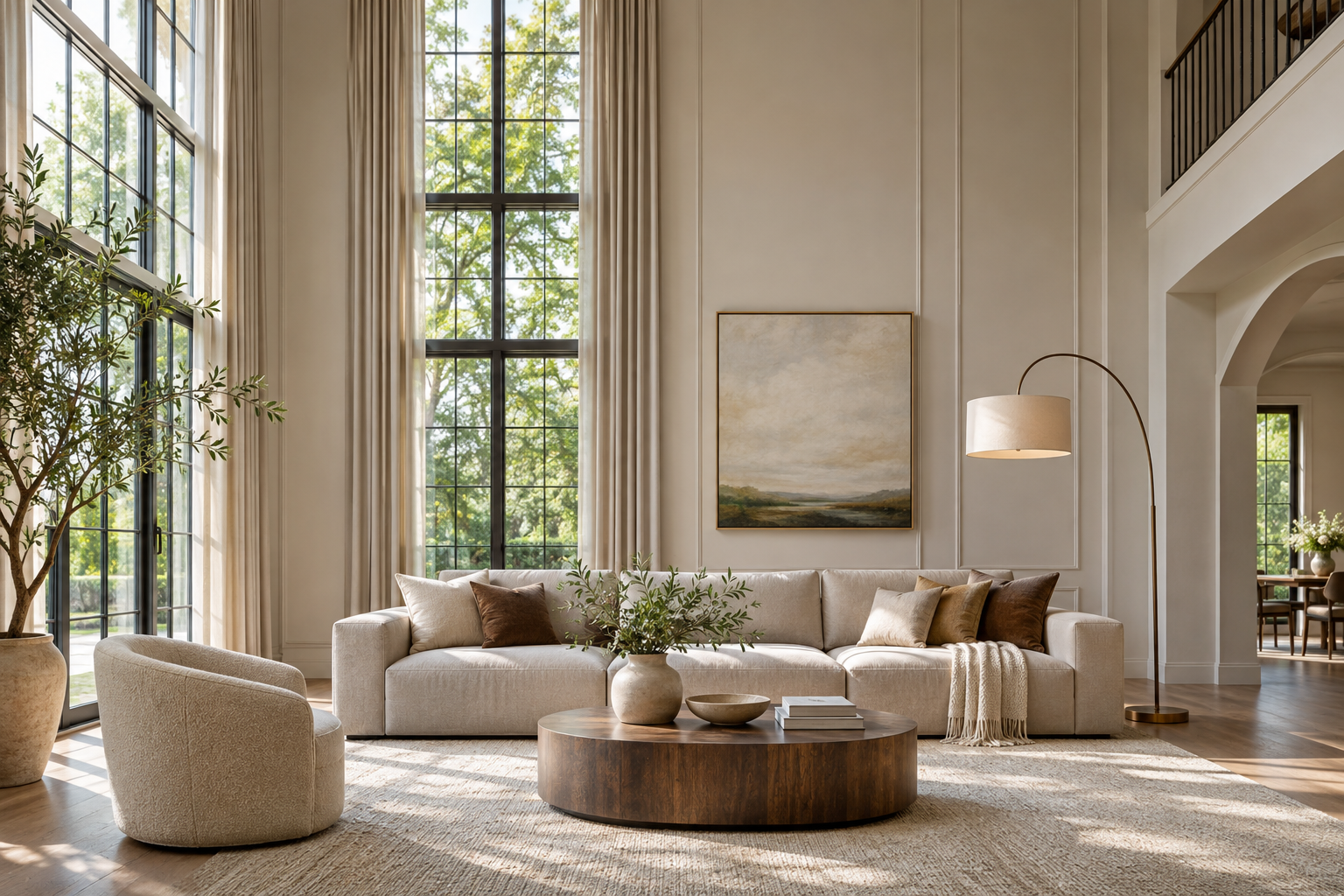
A room with high ceilings can make ordinary furniture feel visually small, but the answer is not always a taller or larger sofa. The seating group should feel proportionate to the room while preserving comfort, circulation, and a welcoming scale. A low sofa can look elegant in a tall room when it is balanced by a large rug, a substantial coffee table, tall curtains, or carefully sized wall art. A high-back sofa may add vertical presence but can also block windows or make the seating area feel heavy. Begin by assessing the whole room, its focal points, and where people sit. Then choose a sofa that supports the way the room is used and use surrounding elements to connect floor and ceiling.
Measure the room’s vertical and horizontal dimensions
Record ceiling height, room width and length, window height, fireplace dimensions, and the available wall area behind the sofa. Note beams, sloped ceilings, crown molding, and lighting fixtures that affect how furniture will look or fit. Measure the sofa’s width, depth, and back height, including loose cushions that may rise above the frame. A sofa back that looks moderate in a catalog can appear low beneath a two-story ceiling, while a tall sofa may dominate a small seating zone. Sketch the room with the main dimensions and mark a few furniture heights for reference. Measurement helps distinguish a room that needs more visual weight from one that simply needs better vertical decoration.
Choose the sofa scale first
Select the sofa according to the number of regular users, the room’s layout, and the available floor space. A longer sofa or sectional can provide physical and visual weight in a large room, but should not block pathways or swallow the seating zone. In a narrow room with high ceilings, a medium-width sofa may be more comfortable than a massive sectional. Look at arm thickness, seat depth, leg visibility, and cushion volume in addition to total length. These features affect the sofa’s visual mass. A high ceiling is not a reason to oversize every piece. Scale the seating group as a whole and preserve enough room for chairs, tables, and clear routes.
Back height and the window view
A high-back sofa can create a stronger vertical line, but check whether it will cover windows, trim, artwork, or a fireplace view. Compare the back height with the sill and the main sightline from the entrance. A low-back sofa can keep a room open and let curtains or wall treatments carry some of the vertical emphasis. If a high-back piece is needed for comfort, place it against a solid wall rather than in the middle of a view. Ask for the product’s exact back height and whether cushions are included in the measurement. Product titles can use “high back” informally, so confirm dimensions and photographs of the actual selected configuration.
Use curtains to connect floor and ceiling
Tall curtains can make a high room feel composed by drawing the eye upward and framing windows behind a sofa. Hang the curtain rod near the ceiling or molding when the window design and wall construction allow it, and let fabric fall close to the floor. Ensure the curtains can move freely behind the sofa and are not trapped by cushions. The color and texture should relate to the sofa without matching every detail. If the sofa has a tall back, check that it does not press the fabric forward. Window treatment installation should follow proper hardware and wall anchoring instructions, especially with long or heavy panels. Curtains can add vertical rhythm without requiring an oversized sofa.
Artwork and wall balance
Large walls above or behind a sofa can look empty if the art is too small. Choose artwork or a group of pieces that relates in width to the sofa and sits at a comfortable viewing height. A single large piece creates a focal point, while a gallery grouping can add detail and fill more vertical space. Keep the arrangement proportionate; a very large frame may overwhelm a delicate sofa. Use secure hanging hardware rated for the art’s weight and wall type. If the sofa is not against a wall, consider a tall bookcase or floor lamp to provide vertical structure, but leave clear access and avoid obstructing windows. Art can balance ceiling height while allowing the sofa to remain comfortable and appropriately scaled.
Lighting for a tall room
High ceilings often need layered lighting rather than one overhead fixture. Combine ceiling lighting with floor lamps, table lamps, or wall lights that bring illumination closer to the sofa. A tall floor lamp can add vertical presence and task light, while a shaded table lamp creates a more intimate seating area. Check the height and reach of the lamp so it does not interfere with movement or block a view. Use bulbs with comfortable color temperature and follow fixture wattage and installation guidance. A dramatic chandelier can define the room, but it should not be the only light source. Light at several levels helps a tall room feel welcoming at night.
Pair the sofa with a rug and table
A large rug can anchor a sofa in a tall, open room and define a seating zone within a broad floor plan. Choose a size that accommodates the front legs of the sofa and nearby chairs. The coffee table should fit the sofa’s length and seat height without making the middle feel crowded. A substantial wood or stone table may help balance a tall room, but its shape and scale must still leave comfortable clearance. The combination of sofa, rug, and table creates a horizontal base, while curtains, art, and lighting create vertical movement. Coordinate the materials and tones so the room feels connected rather than assembled from unrelated statement pieces.
Traditional and modern approaches
A traditional room may use a rolled-arm sofa, patterned rug, wood table, and tall drapes to create a layered composition. A modern room may balance a low sofa with large-scale artwork, a generous rug, and simple architectural lighting. Both approaches can work with high ceilings. The key is consistency in proportion and a clear focal point. Avoid stacking ornate furniture, large artwork, and heavy window treatments unless the room has enough space to support them. A simple sofa can be a useful anchor when other elements provide visual height. Conversely, a distinctive high-back sofa may be enough on its own, with quieter accessories around it.
A three-seat sofa as a reference

An API result includes an 89-inch three-seat sofa with deep seating and an apartment-oriented description. A moderate-width piece may suit a room where high ceilings are paired with limited floor width. Check its actual back height, arm thickness, seat dimensions, and construction before evaluating whether it belongs in the room. A sofa’s width alone does not tell you how substantial it will look: the back, arms, legs, and upholstery texture all matter. Compare the product with the room sketch and nearby furniture. This listing is a comparison point for scale and configuration, not a tested recommendation for every high-ceiling room.
A set with two sofa sizes

A product listing surfaced for a loveseat and three-seat sofa set with high-density foam described in the title. A coordinated pair can help furnish a large room, but the set may be too much for a compact seating zone. Confirm what pieces are included in the selected option and measure each unit separately. Look at whether the backs and arms create a suitable visual line under the ceiling and whether the upholstery works with the rug and curtains. A matching set can feel formal; mixing a sofa and chairs may create a lighter arrangement. Verify current dimensions, assembly, delivery, and return terms before deciding.
A large modular sofa option

An API result for a 118-inch chenille sofa describes wide seats and back cushions. A longer modular piece can add horizontal presence in a large room, but the word “oversized” should prompt careful measurement. Check the overall footprint, module dimensions, seat depth, and arrangement options. A broad sofa can dominate a room if the surrounding tables, rug, and pathways are too small. Modular components may offer flexibility if they can be separated and rearranged; verify connectors and package sizes. Consider whether the sofa’s back height works with windows and wall art. Use the live listing for comparison and confirm that the selected configuration matches the photographs.
Create a focal point
A fireplace, artwork, a broad window, or a view can anchor a high-ceiling room. Orient the sofa so people can see and use the focal point, then position chairs to create conversation rather than lining every piece against a wall. If the focal point is vertical, the sofa can remain lower and the room still feels balanced. If the sofa is the main focal point, give it enough clear space to read as intentional. Avoid competing focal points on every wall. A clear hierarchy makes a large room feel calmer and prevents the sofa from looking isolated beneath a high ceiling.
Arrange furniture in zones
Large rooms may need more than one seating zone. A primary sofa grouping can serve conversation, while a reading chair or small loveseat occupies a brighter corner. Use rugs, lighting, and side tables to define each area without adding unnecessary walls. Keep clear paths between zones and to the room entrance. High ceilings can make furniture appear disconnected if the pieces are spread too far apart, so arrange seats close enough for conversation. The sofa should relate to its table and chairs as a group, not float in the middle of a vast floor. Test the layout with painter’s tape before moving heavy furniture.
Color and texture for vertical balance
Color affects how much visual weight a sofa carries. Dark or saturated upholstery may ground a tall room, while light fabric can keep a large piece from feeling heavy. Texture adds interest but can also increase visual mass; chenille or boucle may read differently from a smooth tight weave. Consider the wall color, floor, rug, curtains, and natural light. A neutral sofa can provide a stable base while art and curtains introduce color above it. A statement sofa works best when the rest of the palette supports it. View fabric swatches in the room at different times of day because tall windows can change the color dramatically.
Keep proportion separate from comfort
A visually balanced sofa is not automatically a comfortable one. Check seat depth, seat height, arm position, cushion firmness, back angle, and support for the people who will use it. A low-profile sofa can look refined but may be difficult for some users to rise from. A deep seat can suit lounging but may require a supportive pillow for upright sitting. Do not choose an uncomfortable piece solely to fill vertical space. Use curtains, bookcases, lamps, and art to solve the room’s visual scale while choosing the sofa for its actual seating function. Comfort should be tested separately from appearance.
Common mistakes in high-ceiling rooms
One mistake is buying an oversized sofa just because the ceiling is tall. Another is leaving a large wall empty above a low sofa, or filling it with art that is too small. A tiny rug can make even a large sofa appear to float. Heavy curtains can overwhelm a narrow room, and a tall sofa may block a window or disrupt sightlines. Avoid placing all furniture against the walls; this can make the center feel empty and conversation difficult. Measure the entire seating group, test its placement, and use a few vertical elements to connect the room. Scale should be considered in both directions: width across the floor and height on the walls.
Questions to ask before buying
Ask for the sofa’s overall width, depth, back height, seat height, and the dimensions of any modular pieces. Confirm whether listed height includes loose cushions and whether arms or legs detach for delivery. Ask about frame and cushion construction, upholstery care, warranty, assembly, and returns. For a tall room, consider where the sofa sits relative to windows, artwork, and lamps. Request fabric samples if color is important. Check whether the selected listing option matches the photos and whether the price includes all pieces shown. Clear product details make it easier to compare sofas and keep the room plan realistic.
Frequently asked questions
Should a sofa be taller in a room with high ceilings? Not necessarily. Curtains, art, lighting, and bookcases can provide vertical balance while the sofa stays comfortable. Are high-back sofas good for tall rooms? They can add presence, but check window views and actual back height. How do I keep a low sofa from looking small? Anchor it with a larger rug, art, curtains, and balanced side pieces. Can a sectional work in a tall narrow room? It can if its footprint and pathways fit; tape the layout first. How high should art hang above a sofa? Place it for comfortable viewing and relate its scale to the sofa and wall, while using secure hardware.
Final checklist
Measure the room and sofa in three dimensions. Choose the sofa for comfort, then use rugs, curtains, artwork, shelving, and layered lighting to balance ceiling height. Keep the main seating zone close enough for conversation and preserve clear paths. Check back height against windows and trim. Confirm construction, upholstery, delivery, assembly, and return details. Test the layout with tape and view it from the entrance as well as from the seats. A high-ceiling room feels complete when the sofa and surrounding elements form a balanced whole rather than competing for attention.
Related guides: high-back sofa guide, sofa and coffee table pairing, and Home & DIY.
Certain content on this site comes from Amazon and may change. Amazon product images and listing details are supplied through Amazon Creators API. Confirm the exact option, seller, dimensions, materials, and current terms before purchase.
Use bookshelves and plants with care
Tall bookcases, cabinets, and indoor trees can help connect the floor to a high ceiling, but they should not simply fill every vertical gap. Place them where they serve a purpose and leave enough visual breathing room around the sofa. A bookcase near the seating group can add storage and define a zone, while a plant can soften a corner near a window. Check ceiling height and plant light needs before choosing a location. Secure tall furniture to the wall according to the manufacturer instructions and wall type. Keep shelves and planters out of the main path and away from heat sources. A few well-placed vertical elements usually feel more intentional than a crowded perimeter.
Consider acoustics in a large room
High-ceiling rooms can feel echoing, especially when they contain hard floors, large windows, and minimal fabric. A sofa and upholstered chairs contribute some softness, but they are only part of the acoustic picture. Rugs, curtains, cushions, and books can reduce the sense of a bare room while also adding color and texture. If the room is used for conversation or television, arrange seating close enough that people do not need to raise their voices across a wide space. Avoid adding bulky furniture solely to absorb sound; choose pieces that also support the room layout. The goal is a comfortable atmosphere, not filling every open surface.
Evaluate the room from several viewpoints
Walk through the room and check the arrangement from the entrance, the sofa, and nearby connecting spaces. A sofa that looks balanced from directly in front may appear too low or too heavy from a side doorway. Look at how its back aligns with window trim and wall art, and confirm that lamps do not create glare. Take a photo from the main entrance and compare the visual balance across the floor and walls. If the room still feels top-heavy, adjust art or curtains before replacing a comfortable sofa. If the sofa feels isolated, bring the chairs and table closer or enlarge the rug. Small layout changes can often correct a mismatch in scale.
Let the adjoining rooms guide the palette
In an open floor plan, the high-ceiling room should relate to nearby spaces. Repeat one color, wood tone, or metal finish in the sofa group so the room feels connected without making every object match. A rug can introduce a transition between the seating area and the next room. If the sofa is a strong color, use quieter curtains and art nearby; if the sofa is neutral, artwork or accent pillows can add contrast. Sample materials under the room light and view them from the adjoining doorway. This helps maintain a coherent palette across spaces that may have different ceiling heights or window exposures.
Protect proportions as the room changes
Large rooms may be rearranged as family needs change. Keep the sofa dimensions and layout sketch so future chairs, tables, or rugs can be compared against the same scale. If the sofa is modular, confirm what replacement pieces remain available and how the connectors work. A flexible arrangement can preserve balance if the room later serves as a work or gathering space. Avoid permanent choices that make it difficult to open windows, move lamps, or change seating orientation. A well-proportioned room should remain useful after the first decorating plan.