As an Amazon Associate, Daily Home Decorating earns from qualifying purchases. Product information and images may change; confirm the current listing, selected configuration, dimensions, materials, seller, and terms before buying.
Pairing a sofa and coffee table for a formal living area is a balance of proportion, style, comfort, and clear circulation. Use this guide to compare sofa silhouettes, table shapes and heights, materials, storage, and room layouts before choosing pieces that feel composed and remain practical for conversation and hosting.
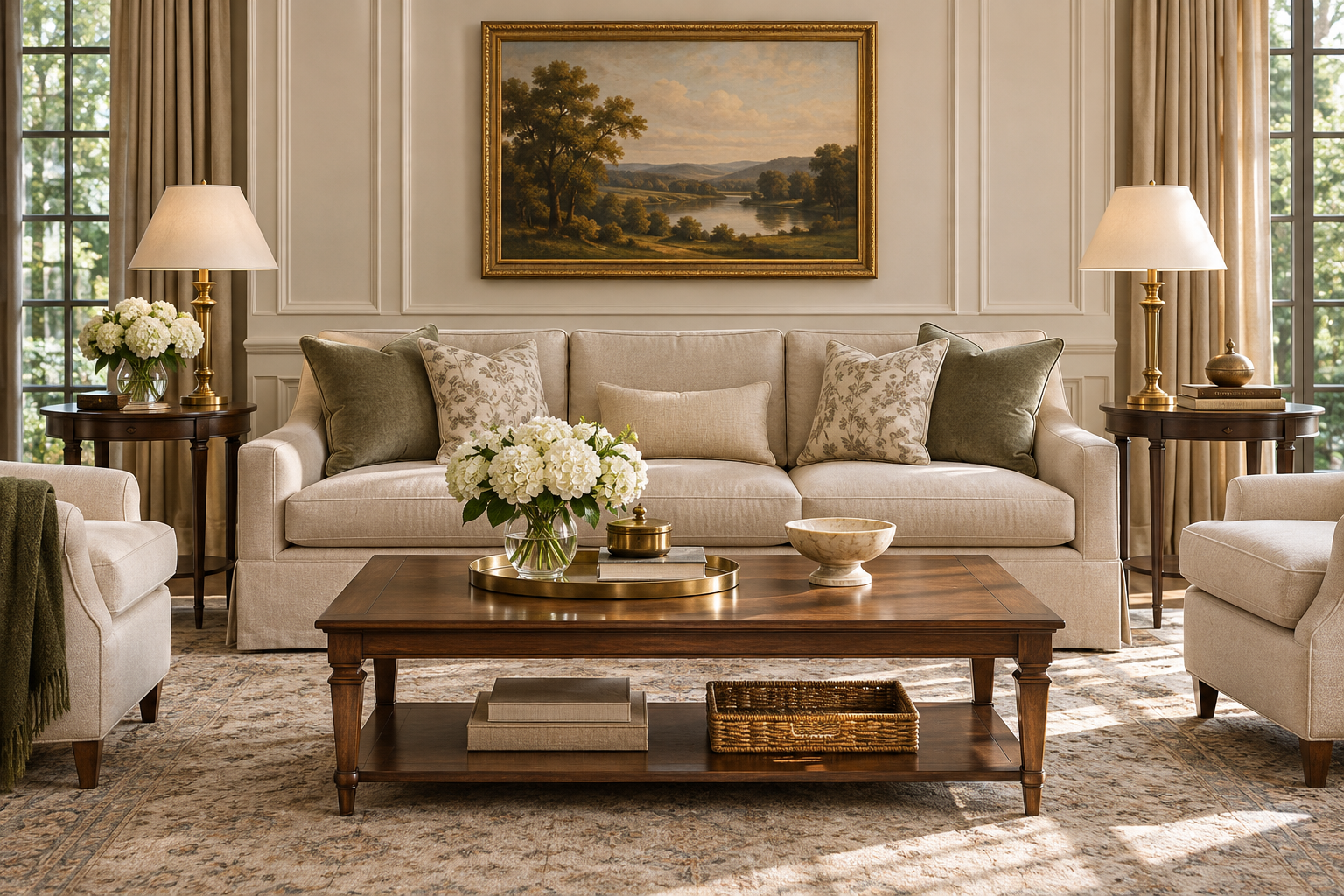
What a formal living area asks of furniture
A formal living area is often used for conversation, hosting, reading, or a quieter break from the busiest rooms in the home. It may still need to feel comfortable, but the layout usually benefits from a clear focal point, balanced proportions, and enough open space to move naturally. Pairing a sofa with a coffee table is one of the main decisions because the two pieces occupy the center of the room and establish how people gather. Start by considering who uses the room, how often guests sit there, and whether the sofa will face a fireplace, windows, artwork, or another seating group. A thoughtful pairing makes the room feel composed without making it stiff or difficult to use.
Measure before choosing a style
Measure the room, sofa footprint, table footprint, and main walking routes before shopping. Record the usable width between walls, door swings, fireplace hearths, and nearby chairs. A coffee table that fits in a product photograph may crowd a narrow room when real paths are included. Mark the sofa and table dimensions on the floor with tape, then walk around the arrangement. Leave comfortable clearance for knees and passage, and check that drawers or shelves can open without hitting a chair. If the room is used for entertaining, preserve a path between the entrance and the seating. Measurements help you decide whether one long sofa and a rectangular table make sense or whether a smaller oval table would soften the center.
Choose the sofa silhouette first
The sofa usually sets the scale and style direction. A rolled-arm sofa can read traditional and substantial, while a clean-lined sofa may make a formal room feel more current. Deep seats and broad arms take up more visual space than their length alone suggests. Note the sofa’s actual width, back height, seat depth, arm profile, and leg visibility. These features affect how much table surface is useful and how open the room feels. If the sofa is already in place, use its upholstery, wood tone, and silhouette as the starting point. If buying both pieces, select a sofa first and let the coffee table respond to it. This makes it easier to balance materials and proportions instead of choosing two statement pieces that compete.
Match table proportions to the sofa
A coffee table should relate to the sofa’s length and the seating group, not simply fill the center of the room. A very short table can look lost in front of a long sofa; an oversized slab can make the arrangement feel heavy and restrict access. Measure the usable sofa width, then compare several table lengths. Consider how many people need a reachable surface at once and whether the room includes side tables. In a conversation layout with chairs facing the sofa, center the table where both sides can use it. A pair of smaller tables can provide flexibility, but they need enough visual weight to hold the arrangement together. Use a floor plan to test the proportions before committing.
Get the height right
Table height affects both appearance and reach. Compare the coffee table’s top with the compressed seat cushion, not only the sofa’s stated seat height. A table close to seat height can be convenient for serving, while a lower table may feel more relaxed and leave sightlines open. A high table can appear formal but may be awkward if it interferes with knees or blocks the sofa’s visual line. Check the top height against any thick cushion or throw that changes the actual seat level. If household members have different mobility needs, have them test a similar arrangement before choosing. The right height should make it easy to set down a drink or book while preserving comfortable leg room.
Select a shape that works with the room
Rectangular tables complement long sofas and can make a formal arrangement feel orderly. Oval or round tables soften the center and allow easier movement around corners. A square table can work with a wide sofa or a symmetrical seating group, but may dominate a narrow room. Consider the arms, legs, and shape language already present. A curved sofa may pair well with an oval top; a straight, tailored sofa may suit a simple rectangle. The table should coordinate with the sofa without copying every line. If the room has many angular details, a rounded top can add contrast. If the sofa and chairs are already curved, a rectangular table may provide a quiet anchor.
Coordinate wood and upholstery
Formal rooms often combine several materials, such as upholstered seating, wood tables, metal lighting, and woven rugs. Rather than matching every wood finish exactly, repeat a tone or undertone that connects the pieces. Warm cherry, walnut, oak, and painted finishes each create a different effect. Compare samples in the room’s natural and evening light because color shifts across the day. For upholstery, consider whether the sofa is a neutral foundation or the main color statement. A wood coffee table can introduce warmth beneath a cool fabric, while glass or pale stone may keep a dark sofa from feeling too heavy. Aim for a small palette of coordinated finishes instead of a collection of unrelated showpieces.
Consider traditional and transitional pairings
A traditional sofa with carved or rolled details often pairs naturally with an oval wood coffee table, especially when the room includes classic trim or antique accents. A transitional arrangement can combine a tailored sofa with a restrained table that has a familiar material but simpler lines. The goal is to let each piece contribute without turning the room into a period set. If the sofa is ornate, choose a table with a quieter base. If both pieces are plain, use a distinctive wood grain or a decorative table edge to add character. Check how the legs and apron look from across the room, since formal spaces are often viewed from an entrance as well as from the seating itself.
An oval wood table as a comparison point

An API result for a solid wood oval coffee table lists a glass top and storage shelf. That combination can offer a traditional outline with a lighter-looking surface, but check the exact construction, dimensions, and finish on the live listing. Glass changes the way the table interacts with a rug and can show fingerprints, so consider whether the household is willing to maintain it. The shelf may be useful for books or remotes, but stored objects should not make a formal room look cluttered. Treat the listing as one example for comparing an oval footprint, materials, and storage, not a hands-on product endorsement. Measure its full depth and height against the sofa before deciding.
A carved table and a classic sofa

A second API result describes an oval cherry-walnut coffee table with a drawer and shelf. A carved or detailed table can complement a traditional sofa, but it needs room around its edges so the craftsmanship remains visible. Check whether the table’s finish coordinates with existing wood furniture and whether the drawer opens toward a clear path. A decorative apron can reduce usable knee space, especially when the sofa sits close. If the room includes a fireplace, avoid crowding the hearth with a deep table. The table’s title is only a starting point; verify current details and the selected option’s measurements before treating the listing as a candidate.
Storage without visual clutter
A coffee table with a shelf or drawer can keep reading material, coasters, or remotes nearby, but storage should support the room’s use rather than become a catchall. A formal living room can feel tidy when frequently used objects have a defined home. A drawer hides smaller items, while an open shelf keeps books accessible and visible. Think about the visual result from the main doorway. If the shelf will be seen from multiple seats, keep its contents restrained and aligned. Check how much knee clearance remains underneath and whether the table is easy to clean around. A simple top may suit a room that already contains cabinets or built-ins; choose storage only when it solves a recurring need.
Glass, wood, stone, and mixed materials
Wood brings warmth and pairs comfortably with many traditional sofas. Glass can visually lighten a small or dark arrangement, though it requires frequent cleaning and may be less suitable for homes with young children. Stone or stone-look surfaces add a crisp, substantial note, but check weight and floor protection. Metal bases can introduce contrast and make a table feel less bulky, while mixed wood and metal may suit transitional interiors. Compare the material with the sofa fabric, flooring, and nearby tables. A material should be selected for maintenance as well as appearance. If drinks and snacks are common, inspect the care instructions and consider whether the surface resists marks, heat, and spills.
Rug size and table placement
A coffee table should sit comfortably on the area rug and relate to the sofa legs and chairs. A rug that is too small can make the furniture feel disconnected, while a very large rug can hide floor space that helps define the seating group. Decide whether the front legs of the sofa and chairs will sit on the rug, and position the table so it remains centered within that shared zone. Pattern and color also affect the formal character: a subtle motif can add depth, while a bold pattern may compete with detailed upholstery. Consider the rug’s pile height when choosing table legs, because short legs can catch or wobble on thick rugs.
Lighting and sightlines
Formal seating often faces a focal point such as a fireplace, artwork, or window. Keep the coffee table low enough that it does not interrupt views across the room. Place lamps on side tables or use a floor lamp to illuminate reading without crowding the coffee table surface. A glass top can reflect light and windows, which may be attractive or distracting depending on the angle. Check the arrangement from the entrance and from each seat. The room should look balanced from multiple viewpoints, not only from the front of the sofa. Leave enough open space for people to see one another during conversation and to walk around the table without brushing into lamps or decorative objects.
Comfort and accessibility
A formal appearance should not make the room uncomfortable to use. Ensure that people can sit down and rise without stepping around table corners or reaching too far for a surface. Rounded edges can help in a tight circulation path. Consider whether an older adult or someone using a mobility aid needs extra clearance. Check the sofa seat height and table height together, and avoid placing fragile décor where it could be knocked over during normal movement. If the room hosts gatherings, think about where temporary chairs will go and whether guests can access the sofa without crossing in front of others. A practical layout feels generous because the pathways and surfaces work smoothly.
Decorating the tabletop
A simple tabletop arrangement can make the room feel intentional without taking away usable space. Try a low tray, a small stack of books, or one contained floral arrangement. Keep objects low enough that guests can talk across the table and see the sofa. Leave a clear section for drinks and serving dishes. A tray can group smaller items and make them easy to move when the table is needed. Use a few repeated colors or materials from the room rather than adding many unrelated accents. If the table has glass, use coasters to reduce marks and consider a tray to keep objects from sliding. The best styling allows everyday use while supporting the formal mood.
Pairing sofa and table in a narrow room
In a narrow room, a rectangular table may leave little space at the ends, so consider a narrower profile or oval shape. A smaller table with a side table can provide useful surfaces without crowding the center. Choose a sofa with visible legs or a moderate arm width if the room needs more visual openness. Keep the coffee table centered on the sofa rather than on the entire room if the seating group is offset. Protect a clear route from the entrance to the window. A formal arrangement can still feel airy when furniture footprints are scaled to the room and the rug defines a compact zone.
Pairing in a large formal room
A large room can make a modest coffee table look isolated. Consider a longer table, a pair of matching tables, or a table with more visual weight, provided the sofa and chairs can still reach it. A broad rug can connect the seating group and prevent the pieces from floating. If there are two sofas, a square or round central table may serve both more fairly than a small rectangle. Repeat wood tones or metal finishes in lamps and side tables to tie the larger area together. Do not fill every open space: a formal room benefits from balance and breathing room as much as from furniture.
Budget and buying checks
Compare the whole cost, including delivery, assembly, returns, and any floor protection. A solid wood or stone table may require a two-person delivery or special placement. Check whether the table arrives assembled or needs installation, and whether its weight is manageable for the intended room. For the sofa, compare upholstery care, frame information, cushion support, and warranty. A higher price does not automatically guarantee a better pairing. Choose materials and features that solve real needs, then compare options with similar dimensions and construction. Save the product specifications so you can check the delivered furniture against the order and contact the seller if something is missing or damaged.
Common mistakes to avoid
Avoid choosing a coffee table that matches the sofa’s style but not its scale. Avoid a height that is awkward from the seat, or a sharp-cornered table that blocks a narrow route. Do not assume a listing photo shows the exact finish or dimensions of the selected version. A glass top can look light but may add cleaning work; a storage shelf can become visual clutter if it is overfilled. Another common mistake is buying the table before accounting for the rug and chairs. Measure the whole seating group, test the footprint, and review product details rather than making a decision from a styled image alone.
Questions to ask before ordering
Confirm table length, width, height, weight, materials, finish, storage, assembly, and delivery method. For the sofa, check overall and seat dimensions, cushion construction, upholstery care, and the warranty. Ask whether the return requires freight pickup and who pays for it. If buying both pieces, verify that their finishes and heights work together using actual measurements or samples. Check the household’s walking paths and ensure the table can be reached from the seats. Keep the product pages and order confirmation for reference. These questions make the pairing easier to evaluate and help avoid a mismatch that is expensive or inconvenient to correct.
Frequently asked questions
How high should a coffee table be? Compare its top with the sofa’s compressed seat; a similar or slightly lower height is often comfortable, but personal use matters. Should the coffee table match the sofa? It should coordinate in scale and finish, but need not be a matching set. What shape works with a formal sofa? Rectangles and ovals are common; choose based on sofa length, pathways, and room geometry. Is a glass table suitable for a formal room? It can feel visually light, but requires cleaning and care around children. How much clearance should I leave? Measure for comfortable reach and walking space, then test with tape in the room. Do I need a storage table? Choose storage if it serves a regular purpose and can be kept orderly.
Final checklist
Measure the room and mark the sofa, rug, table, and walking routes. Choose the sofa silhouette and scale, then select a coffee table with a complementary shape and a comfortable height. Compare wood, glass, stone, and metal finishes in the room’s light. Check storage, knee clearance, assembly, delivery, care, and return terms. View the arrangement from the entrance and from every seat. Leave enough open surface for guests and enough open floor for people to move. A successful formal living area pairing feels considered and welcoming because its proportions, materials, and function support the room’s real use.
Related guides: coffee tables for curved sofas, luxury sofa buying guide, and Home & DIY.
Certain content on this site comes from Amazon and may change. Amazon product images and listing details are supplied through Amazon Creators API. Confirm the exact option, seller, dimensions, materials, and current terms before purchase.
Build the room in a sensible order
If the room is still being furnished, settle the largest constraints first: sofa footprint, focal point, rug, and traffic routes. Then choose the coffee table and the smaller lighting or accent pieces. This order limits the chance that a beautiful table forces the sofa too close to a doorway or leaves a chair without a useful surface. If the sofa is already owned, start with its measurements and fabric, then look for a table that supports the way people use the room. In either case, gather samples and dimension drawings before ordering. A formal room is easier to coordinate when each decision responds to the pieces already selected and to the clearances that the room requires.