As an Amazon Associate, Daily Home Decorating earns from qualifying purchases. Product information and images may change; confirm current specifications, intended use, seller, dimensions, and terms before ordering.
The best sofas for restaurants depend on where guests sit, how often furniture is used, and what the cleaning and service routine requires. Compare commercial seating, upholstery, capacity, layout, delivery, and warranty before choosing sofas for a lounge, dining area, or waiting space.
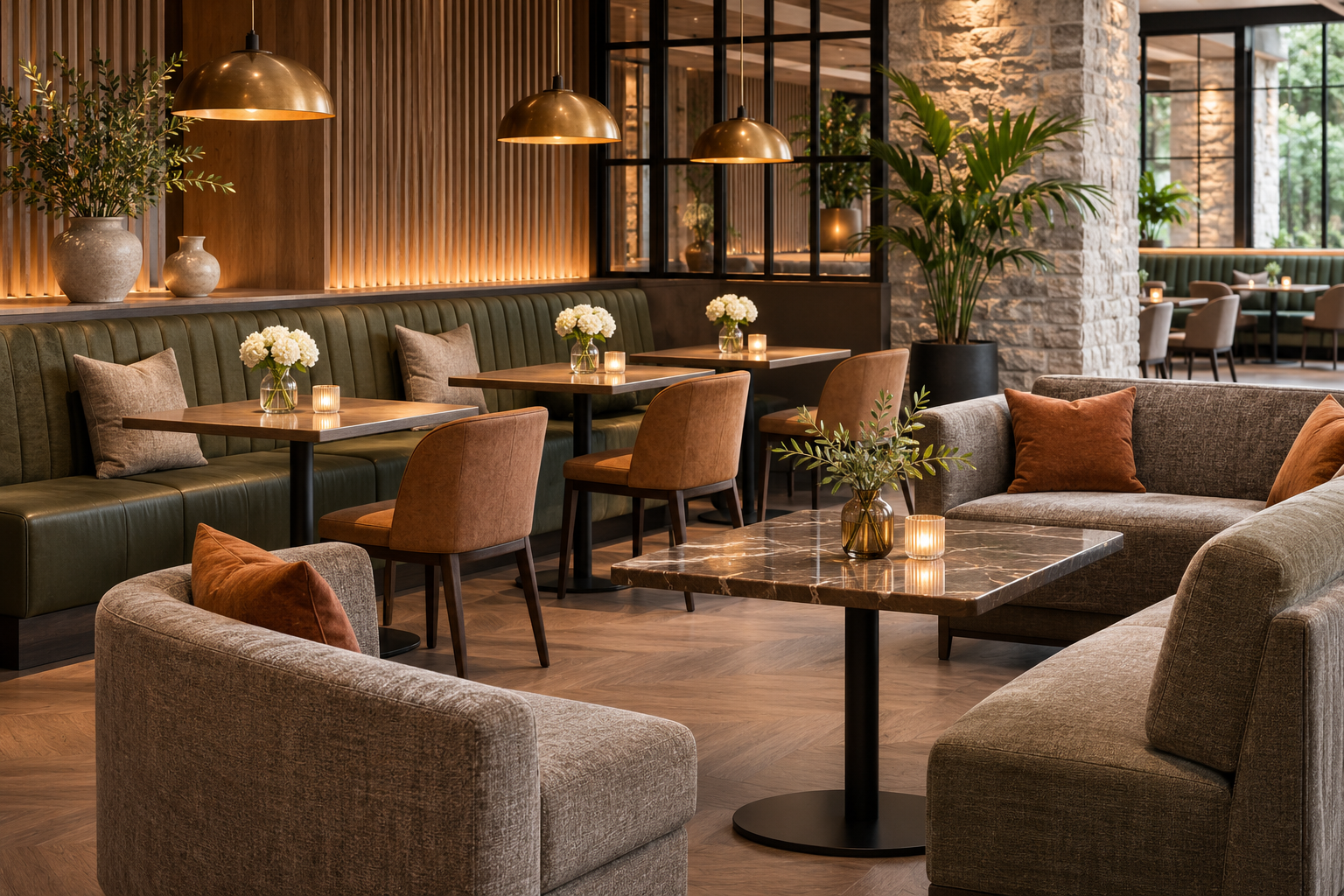
What restaurants need from a sofa
A restaurant sofa serves a different role from a living-room couch. It must support the way guests arrive, wait, dine, and move through the space, while fitting the brand and the cleaning routine. Some restaurants use sofas only in a reception or lounge area; others place banquettes or modular seating beside dining tables. The best choice depends on traffic, turnover, available floor area, meal service, and the type of guests. Start by defining where the sofa will go and how often people will use it. Then compare cleanability, frame and cushion construction, seat height, dimensions, and delivery. A stylish sofa that obstructs circulation or cannot be maintained easily is not a good commercial fit.
Clarify the seating function
Decide whether the sofa is for a waiting area, lounge, dining zone, private room, or casual family space. A waiting sofa may need to accommodate short stays and frequent turnover; a lounge sofa may need deeper seating and more comfort for longer visits. A sofa used beside a dining table should have a suitable seat height and an easy-to-clean surface. Restaurant booths and banquettes are different from freestanding sofas and may require custom dimensions or wall attachment. Write down who will sit there, how long they stay, and what staff need to do around it. This use case will guide the furniture type and prevent buying a residential couch that does not support restaurant operations.
Measure aisles and service routes
Measure the available footprint and every path around the sofa. Include the route from the entrance to tables, kitchen access, restrooms, exits, and staff stations. A sofa and coffee table can look compact on a floor plan while leaving too little room for guests or employees to pass. Mark the full outline with tape and test doors, chairs, and trays in the layout. Measure the delivery route as well, including doorways and turns. Keep required access routes clear according to applicable building and fire-safety requirements; check with local authorities or a qualified professional for your jurisdiction and occupancy. Furniture placement should support service and accessible movement rather than reduce usable circulation.
Choose the right sofa type
A freestanding sofa can be moved or reconfigured, which helps when a restaurant changes its layout. A modular sectional may create a lounge area or fit around a corner, but each piece and connector must be stable. A banquette makes efficient use of a wall and can increase seating along a table, though it is less flexible and may require installation. A reception bench can suit a waiting area but may not offer the comfort or seat height needed for dining. Decide whether mobility, capacity, or permanence matters most. Confirm whether the sofa is sold as a single piece or part of a set and verify what comes in the package.
Upholstery and cleaning workflow
Spills, food, grease, and repeated cleaning are routine concerns in a restaurant. Compare upholstery materials by their care instructions, stain resistance claims, abrasion information, and compatibility with the cleaners staff already use. Do not assume that “leather,” “leatherette,” or “performance fabric” can be cleaned with any product. Test a swatch using approved methods and follow the manufacturer’s guidance. Removable covers can help only if they can be laundered or replaced and the restaurant has time to manage them. Tight, smooth surfaces may be easier to wipe than deeply textured fabrics, while some materials can feel warmer or less comfortable. Choose for the actual cleaning process, not just the product description.
Frame, suspension, and load information
Commercial seating is used repeatedly by different people, so construction details matter. Ask about the frame material, joint reinforcement, suspension, cushion fill, and stated weight capacity. Check whether feet or casters are secure and whether the sofa remains stable when someone sits near an edge. A product labeled for commercial use should still be reviewed for its intended setting and care. Compare warranty language for residential versus commercial use; some makers limit coverage if the item is used in a restaurant or business. Do not infer long-term durability from a photograph or a high weight-capacity phrase alone. Ask for product specifications and service support before selecting pieces for frequent use.
Seat height and dining comfort
The seat height and depth influence whether guests can sit comfortably at a nearby dining table. A low lounge sofa may look inviting but can make eating awkward, especially for shorter guests. A firm seat and stable back may be better for meal service than a deep, soft couch. Test the relationship between the sofa seat, table edge, and people’s knees. Consider arm height and whether the arms block access to the table. If the seating is for a lounge separate from dining, a lower and deeper sofa may be appropriate. Match dimensions with the intended activity rather than treating every restaurant sofa as interchangeable.
Capacity, turnover, and spacing
Estimate how many people the sofa should seat during normal service and peak periods. A long couch may technically fit more people than a loveseat, but customers need elbow room and safe access. Check the manufacturer’s recommended seating capacity and weight limits. Do not pack seating so closely that guests cannot enter or exit easily. For busy restaurants, leave space for staff to clean around and beneath the sofa. Modular pieces can help create flexible groups, but connectors must keep units from drifting apart. Consider how cushions hold up to frequent use and whether replacement parts are available. Capacity should be balanced with comfort, circulation, and the room’s operating needs.
A modular reception sofa example

An API result for a commercial modular couch describes a curved sectional for hotel lobbies, offices, and restaurants. Modular seating can help define a lounge or waiting area, but confirm the exact module count, dimensions, connectors, upholstery, and weight capacity. A curved configuration can create an inviting group while using more floor area than a straight bench. Check whether the listing’s photos show the configuration included in the selected option. Make sure each module stays in place under frequent use and can be cleaned around. Treat the product as a comparison example, not a tested recommendation.
A mobile sofa for flexible layouts
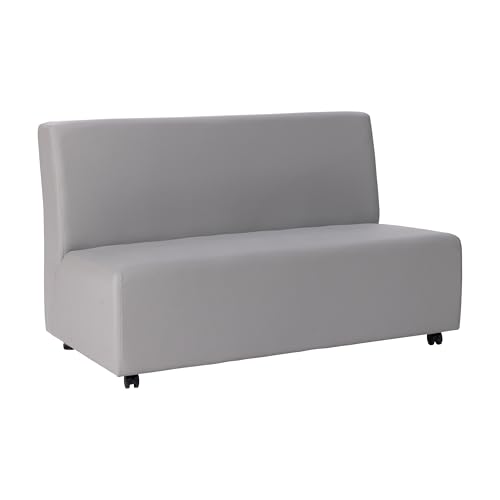
A product surfaced through the Creators API for commercial use describes an upholstered armless sofa with locking casters. Mobility can help staff rearrange a lounge for different service patterns, but the casters should lock securely and the floor should be compatible. Confirm whether the unit is intended for commercial use, the weight capacity, and how to inspect or maintain the wheels. Avoid moving a sofa while guests are seated. Check that cables, table edges, and rugs do not create trip points. A mobile sofa can be practical for a flexible room, but only if its stability and movement procedures fit the restaurant’s operations.
A reception bench with back support
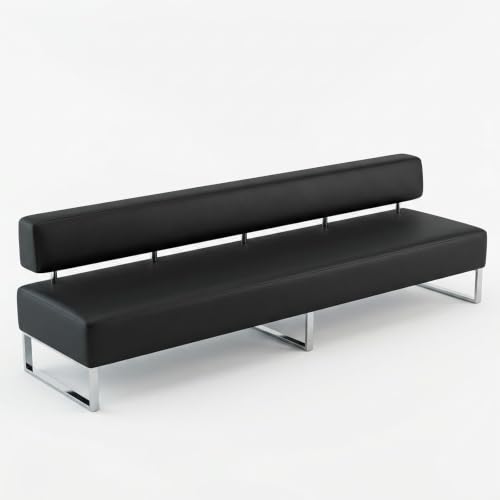
An API result for a PU leather reception bench describes modular waiting-room seating with a backrest. A bench may work in a queue or lobby where people sit briefly, but compare its dimensions and cushion comfort before using it for a dining lounge. Check seam construction, wipe-clean instructions, and whether the material is suitable for repeated cleaning. Verify its load rating and stability. If multiple benches connect, confirm how they attach and whether staff can separate them for cleaning. A waiting-room label does not guarantee that the item suits a restaurant dining area; the exact use and manufacturer guidance should determine the choice.
Color and brand presentation
Sofa color and shape can reinforce a restaurant’s identity, but high-traffic seating needs practical consideration. Light fabrics may brighten a room but show spills sooner; dark surfaces can show dust, lint, or scratches. A bold color can make a lounge recognizable, while a neutral sofa may coordinate with changing seasonal decor. Request samples and view them under the restaurant’s lighting. Coordinate the sofa with flooring, tables, menu colors, and wall finishes without making every surface compete for attention. If the restaurant plans to replace upholstery periodically, ask whether covers or replacement cushions are available. Style should support the guest experience and maintenance plan at the same time.
Fire safety and local requirements
Commercial spaces may have specific requirements for furniture placement, accessible routes, materials, or fire performance. Requirements vary by location and building use. Before buying, ask the local building or fire authority, landlord, insurer, or qualified design professional which rules apply to the restaurant. Obtain the manufacturer’s documentation for materials and intended use, but do not assume that a generic product label establishes compliance. Keep required exits and paths unobstructed, and review the layout when furniture changes. The sofa is one part of the room’s safety plan; its placement, upholstery, and nearby tables all matter. Confirm applicable requirements before installation.
Accessibility and guest movement
Guests may use mobility aids, have limited balance, or need more room to sit and stand. Plan paths, turning space, seat height, and access to nearby tables with the whole room in mind. A sofa with a low seat can be difficult for some guests, while a fixed booth may limit transfer options. Provide a mix of seating where possible and avoid making every option dependent on one furniture type. Check relevant accessibility requirements with local authorities or a qualified professional; this guide is not a compliance checklist. Staff should be able to assist without moving furniture into a required route. Thoughtful spacing improves comfort for guests and makes service easier.
Dining tables, side tables, and lighting
A restaurant sofa often works with a coffee table, side table, or dining table. Check table height relative to the sofa seat and leave enough knee space. A low table may suit a waiting lounge but be awkward for meals. Use stable tables that do not wobble and avoid sharp edges in narrow routes. Lighting should make the seating area comfortable and help guests read menus without glare. If the sofa is part of a lounge, a side table near each group can reduce reaching across seats. Coordinate table material and sofa upholstery for practical cleaning as well as visual appeal.
Delivery, assembly, and installation
Commercial pieces may arrive in several cartons or require assembly. Confirm package size, weight, number of boxes, delivery location, installation, and packaging removal. Measure the route from the delivery truck to the final place, including service doors and elevators. If the sofa is modular, identify how each part connects and whether installation is included. Schedule delivery when the restaurant can safely close or cordon off the area. Keep packaging until the pieces have been inspected and assembled. For built-in banquettes or wall-mounted seating, use a qualified installer and confirm wall construction and anchoring requirements.
Maintenance and replacement planning
Build sofa care into staff procedures. Follow manufacturer cleaning instructions and train staff to use approved products. Inspect seams, feet, casters, connectors, and cushions regularly. Record the model and order information so replacement parts or matching pieces can be identified later. Ask whether upholstery, covers, or cushions can be replaced without buying a whole new sofa. Keep a plan for isolating a damaged piece from service. Frequent inspection can catch loose hardware before it affects guest comfort. Maintenance costs are part of the furniture’s lifetime cost, not an afterthought.
Budget beyond the sticker price
Compare the full installed cost: sofa, freight, assembly, delivery inside the building, accessories, cleaning, and future replacement. A lower-priced residential sofa may not include commercial-use warranty coverage. A modular system can require more pieces than expected, and a reception bench may need a separate table. Ask for lead times and whether replacement upholstery is available. If the restaurant buys multiple pieces, confirm that colors and materials match across production batches. Compare options with the same seat count and intended use. Cost per usable seat can be more informative than the price of one sofa alone.
Common buying mistakes
Do not select a sofa solely from a staged photo or a generic commercial label. Check dimensions, upholstery care, weight limits, warranty terms, and the exact pieces included. Do not block an aisle, exit, or accessible route to add seats. Avoid a deep residential couch at a dining table unless guests can use it comfortably. Do not assume casters lock or that a modular piece stays connected without checking. Avoid buying before verifying delivery access and local requirements. A short review of layout, operation, and maintenance can prevent a stylish purchase from becoming a difficult piece of restaurant equipment.
Questions to ask vendors
Ask what environment and use frequency the sofa is designed for, what the frame and suspension use, and how to clean the upholstery. Request dimensions, weight capacity, packaging details, assembly instructions, warranty terms for commercial use, and replacement-part availability. Confirm whether a set includes every piece shown and whether modules connect. Ask about lead time, delivery placement, and return freight. If the sofa will be near a dining table, request exact seat height and depth. Get safety or fire documentation from the manufacturer if local authorities require it. Clear answers make it easier to compare vendors and avoid assumptions.
Frequently asked questions
Can I use a residential sofa in a restaurant? Possibly, but confirm commercial-use warranty terms, cleaning, and construction before purchasing. What upholstery is easiest to clean? It depends on the material and approved cleaners; verify the care instructions and test a swatch. Are modular sofas good for restaurants? They can offer flexible layouts if modules connect securely and are stable. Should a restaurant use a sofa at a dining table? Only if seat height, depth, and table clearance work for guests. What safety rules apply? They vary by jurisdiction and building; check with local authorities or a qualified professional.
Final checklist
Define where and how the sofa will be used. Measure the floor plan, delivery route, and service paths. Confirm seat height, capacity, upholstery care, frame details, connectors, and commercial warranty. Check exact package contents and assembly. Review accessibility and local safety requirements with the appropriate authority or professional. Include delivery, cleaning, maintenance, and replacement in the budget. Test the layout with tape before ordering. A suitable restaurant sofa should support guests, staff, and the operating routine while fitting the brand and the room.
Related reading: sofa materials and quality guide, sofa and table pairing guide, and Home & DIY.
Certain content on this site comes from Amazon and may change. Amazon product images and listing details are supplied through Amazon Creators API. Confirm the exact option, seller, dimensions, materials, and current terms before purchase.
Plan seating for peak and quiet periods
Restaurant traffic can vary significantly by day and hour. Consider whether the sofa will be used during a wait, between dining reservations, or throughout service. A fixed sofa can make a room feel welcoming but may limit the ability to combine tables during busy periods. Mobile or modular seating can provide flexibility, though staff need a safe and consistent way to move it. Leave enough room for guests to enter and exit without asking others to move. If the restaurant has a queue, place seating where waiting guests do not block the entrance or service counter. Mapping both the quiet-period layout and peak-period movement can reveal whether a sofa is a useful asset or an obstacle.
Coordinate with dining furniture
When sofas sit near dining tables, compare table height, seat height, and arm clearance using actual measurements. A low lounge sofa may be appropriate for drinks but uncomfortable for a full meal. Check the table apron and leg position so guests have room for their knees. A nearby side table can serve a lounge group without requiring people to balance food on the sofa. Match the tabletop and upholstery for cleaning: a surface that is easy to wipe can simplify service, but approved cleaners should be compatible with both materials. The seating should make it easy for servers to reach guests and clear dishes without squeezing between furniture.
Set expectations for wear and repair
Frequent use will eventually create wear, even when the sofa is designed for commercial spaces. Ask how the upholstery, cushion covers, feet, connectors, and casters can be repaired or replaced. Keep the product model and finish information with purchasing records so matching pieces can be ordered later. If the restaurant buys several sofas at once, request spare upholstery or replacement cushions where available. Inspect furniture regularly for loose hardware, damaged seams, or unstable feet and take pieces out of service if they are unsafe. Planning for repair can extend the useful life of the seating and reduce the chance that one damaged unit disrupts the whole room arrangement.
Test a sample layout with staff
Before ordering several pieces, tape the sofa footprint in the intended area and ask staff to walk through a simulated service route. Check whether guests can sit comfortably while employees carry trays past the seating. Confirm that doors, table chairs, and cleaning equipment still have room to move. A paper plan helps, but a short in-person layout review can catch details that are difficult to see on screen. If possible, trial one unit before purchasing a complete set and gather feedback from both staff and guests.