Affiliate disclosure: DailyHomeDecorating.com may earn from qualifying purchases through links in this article. As an Amazon Associate, this site earns from qualifying purchases. Product examples and images below were retrieved through Amazon Creators API; we have not tested them on leather recliners. Cover fit and leather compatibility vary. Verify measurements, selected layout, care instructions, seller, and return terms on the live listing.
The best sofa cover for a leather recliner needs to protect the seating area without slipping on a smooth finish or interfering with the footrest. Recliners have moving hinges, controls, cables, separate cushions, and sometimes a center console. A generic one-piece sofa cover may bunch or block those parts. Start with your sofa’s construction and manufacturer care instructions, then compare covers designed for the same layout.
This guide explains what to measure, how one-piece and multi-piece covers differ, how to keep controls and mechanisms clear, and how to care for both the cover and leather. Amazon Creator API examples are included as starting points, not tested recommendations.
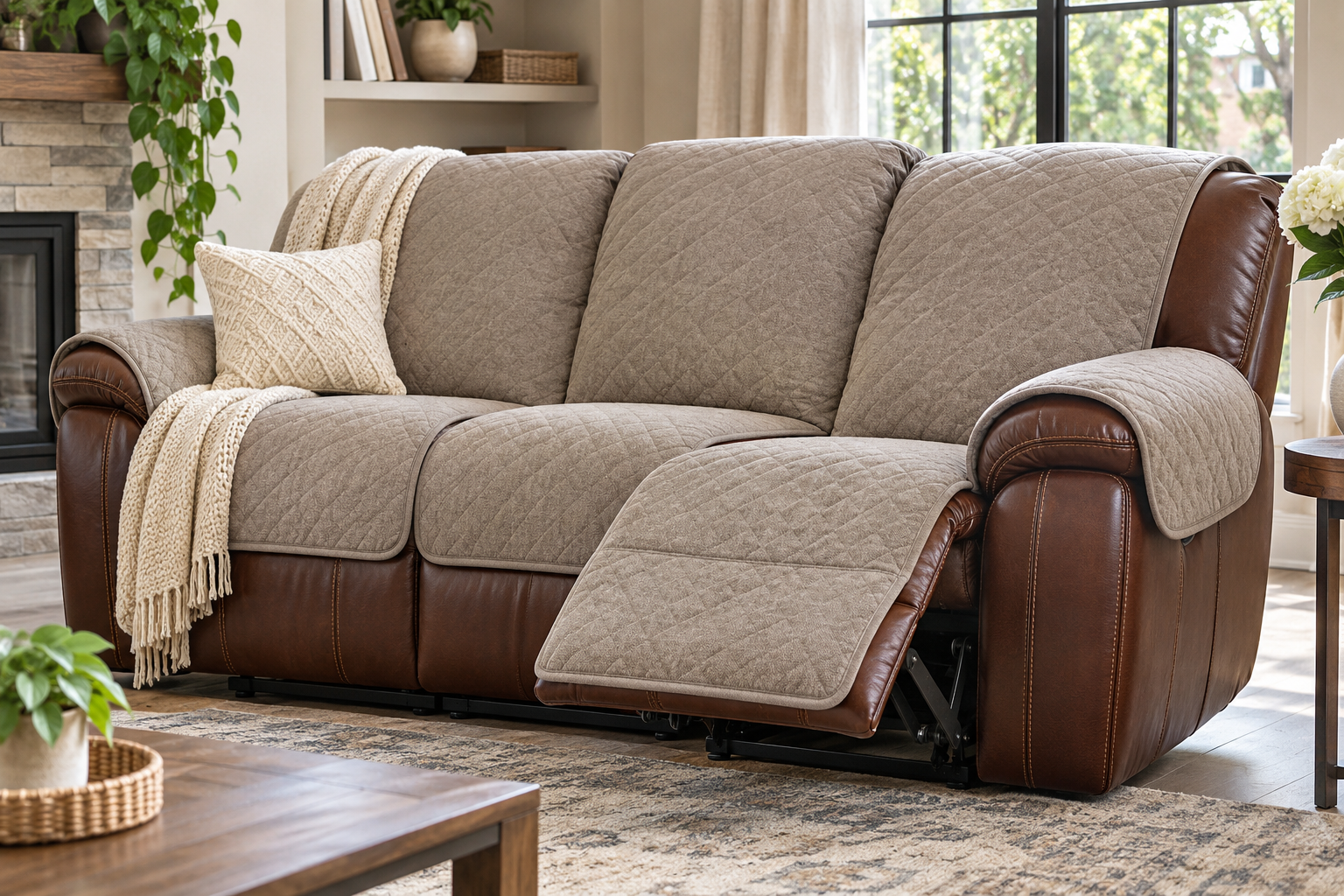
Start with the recliner’s construction
The best sofa cover for a leather recliner needs to fit both a smooth upholstery surface and a moving footrest mechanism. A one-piece throw may slide or bunch when the seat reclines; a multi-piece stretch cover can fit more closely but takes longer to install. Identify whether your sofa has separate seat cushions, a center console, split backs, or power controls before shopping.
Measure the complete sofa in its upright position and note the number of seats and independent recliners. Check whether each headrest and footrest moves separately. A cover listing that says “three-seat recliner” may still require a particular arm, console, or cushion layout. The model name alone is not enough to confirm a fit.
Check whether the leather is protected
Leather finishes vary, and smooth surfaces can give stretchy covers less grip than textured fabric. Before using any cover, check the sofa maker’s care instructions and whether it recommends a breathable barrier or warns against certain materials. Do not assume a waterproof layer is safe for long-term contact with leather; trapped moisture or heat can affect a finish.
If the sofa is new or under warranty, ask the manufacturer whether a slipcover could affect care or warranty terms. A cover that rubs against a coated surface may cause friction marks. Use a clean, dry interior and remove the cover periodically to inspect for moisture, color transfer, or trapped debris.
Measure width, depth, and arm shape
Measure from outside arm to outside arm, overall back height, seat depth, and arm width. Include recliner headrests and any wings or side panels. Compare these measurements with the cover’s range, not just a generic “fits most” label. If the cover is stretch fabric, check the maximum and minimum dimensions and how it anchors under the sofa.
Measure each cushion separately if the product uses individual panels. Arm shape matters: broad, rolled, or padded arms may need their own pieces. A cover that fits the seat but is too short across the arms can pull loose when someone sits down or raises the footrest.
Choose one-piece or multi-piece coverage
A one-piece throw or slipcover is quick to install and can protect the main seating area, but it may shift on a reclining sofa. Multi-piece sets use separate panels for backs, seats, arms, and sometimes footrests. They can look more fitted and allow the recliner to move, although each piece must be installed in the correct position.
Check the package list and diagrams. A set described as eight pieces may count headrest and footrest panels separately. Verify that the cover set includes each independent seat and any center console. If the sofa has cupholders or storage, check whether they remain accessible after fitting.
Make sure the footrest can move freely
A recliner cover must not wrap tightly across the hinge or undercarriage. Check how the footrest extends and whether a panel is designed to cover the moving section. Keep fabric away from the mechanism and power cable. Follow the cover maker’s installation directions, and test the recliner slowly before anyone sits on it.
If the sofa has power controls, USB ports, or a side lever, ensure the cover does not block or press them. Do not tuck fabric into a moving mechanism unless the manufacturer instructs you to. Stop using the recliner if the fabric catches, the footrest is obstructed, or the cover pulls the upholstery.
Fit separate cushions and a center console
Some recliners have split seat cushions, attached backs, a shared center console, cupholders, or storage. A generic cover may conceal the console or prevent access to controls. Check whether the product is intended for a console sofa and whether the center section has its own panel. Measure cushion width and attachment points.
For separate cushions, individual covers may stay in place better than one large panel, but can create seams. Verify whether the design accommodates attached cushions or only removable ones. If cushions do not detach, the cover needs a suitable opening or shape; do not force a panel over a fixed headrest.
Select fabric for grip and care
Stretch polyester blends can fit curved furniture, while quilted protectors may add padding or absorb small spills. The cover’s texture affects grip on leather and comfort against skin. Check fiber content, wash instructions, shrinkage guidance, and whether the underside has a non-slip surface. Product titles may use “leather look” to describe the cover material rather than the sofa.
A waterproof layer can help with spills but may be less breathable. Read the manufacturer’s directions about how long it can remain on the leather. Washable covers still need correct laundering and drying to preserve elastic. Choose the maintenance routine you will actually follow.
Choose a color and finish
A brown or black cover may blend with leather upholstery, while a contrasting color can make a room feel updated. Ask whether the cover is intended to resemble leather or simply protect it with fabric. Product images can vary by lighting and monitor, so compare swatches or customer photos when available.
Check whether the cover’s color may transfer onto light leather, especially if it becomes damp. A clean test cloth on a hidden area can reveal early transfer, but follow both manufacturers’ advice. Avoid leaving an unfamiliar dyed cover on the sofa for long periods before checking how the materials interact.
Prevent slipping and bunching
Look for elastic hems, straps, foam anchors, or separate fitted pieces. Ask where straps attach and whether they can reach under a reclining sofa without interfering with the mechanism. Smooth leather may make friction-based covers move more easily, so plan to readjust and inspect the fit after recline cycles.
Do not use pins, adhesives, or clips that could puncture or mark leather. If the cover shifts repeatedly, stop and choose a better-fitting product rather than tightening it across the moving parts. Some cover makers say their accessories may not grip every leather finish; verify the product’s current guidance.
Keep controls, ports, and access clear
Power recliners can have switches, USB ports, and cables near the arms or side panels. Make sure the cover leaves those areas exposed and does not press a control accidentally. Keep cables visible enough to inspect and away from the footrest path. A cover should not interfere with the sofa’s electrical components.
If the recliner has a center console, cupholders, or storage compartment, check how the cover opens around those features. A cover that hides a lever or blocks access can become frustrating and may create a safety issue. Follow the furniture maker’s operating instructions after installation.
Protect leather without trapping dirt
Before fitting a cover, clean the leather only as directed by the furniture manufacturer and allow it to dry fully. Dust or grit trapped beneath a cover can rub against the finish as people sit and move. Remove the cover periodically, vacuum or wipe the sofa according to its care instructions, and let both surfaces dry before replacing it.
Covers are not substitutes for leather care. Use only products approved for the sofa’s leather type; household cleaners and conditioners may damage some finishes. If the leather is cracked, peeling, or sticky, consult the sofa maker before covering it, because the cover may worsen friction or conceal deterioration.
Wash and reinstall correctly
Read the cover label for water temperature, cycle, drying method, and whether elastic or waterproof layers need special handling. A cover can shrink or lose its shape if washed incorrectly. Mark which panel belongs to each recliner seat before washing; multi-piece sets can be confusing to reinstall.
Let a washed cover dry completely before placing it on leather. Check that no moisture is trapped between the cover and sofa. Refit each piece loosely at first, then smooth the fabric without stretching it across moving hinges. Test each recliner independently after reinstalling.
Check the return policy and product details
Listings may combine two-seat, three-seat, loveseat, console, and non-reclining variants. Open the exact selected option and verify piece count, dimensions, fabric, included straps, and washability. Read reviews for the same layout; a cover that fits a standard couch may not fit a power recliner with a center console.
Check return eligibility and who pays return shipping if the cover does not fit. Keep packaging until all sections have been installed and tested. Save the cover model and sofa measurements so you can reorder matching panels if needed.
Product examples from Amazon
The cards below were returned by Amazon Creators API searches for leather-look recliner covers and recliner sofa protectors. We have not physically tested them on leather. Some covers use stretch fabric, and others have waterproof panels; these are not interchangeable. Check each product’s compatibility, measurements, recliner layout, and care instructions.
The words “leather look” in a cover title describe the cover finish and do not mean the product is made from leather. Verify whether a selected color or size is a different variation. Check the current listing for price, seller, stock, included panels, and return terms.

ANARACHON Leather Look Recliner Couch Cover, 8-Pieces Stretch Recliner Sofa Covers, Soft Reclining Slipcover, Washable Furniture Protector for Pets (3 Seater, Brown)
Check sofa layout, measurements, leather compatibility, and mechanism clearance.

KinCam Waterproof Recliner Sofa Covers Washable, 3 Seater, Chocolate | Anti Slip Recliner Sofa Slipcover with Pocket, Reclining Couch Cover for Pets Dog, Furniture Protector with Elastic Strap
Check sofa layout, measurements, leather compatibility, and mechanism clearance.

TAOCOCO 100% Waterproof Recliner Sofa Cover Non Slip Couch Cover for 3 Seat Reclining Sofa, Split Reclining Couch Covers 3-Piece with Straps, Washable Sofa Slipcover for Kids Pets(3 Seater, Chocolate)
Check sofa layout, measurements, leather compatibility, and mechanism clearance.

Easy-Going Stretch Couch Covers for Sofa Washable Large Dark Gray | 1-Piece Sofa Covers for 3 Cushion Couch Furniture Protector Couch Slipcover Soft with Elastic Bottom for Kids Pets
Check sofa layout, measurements, leather compatibility, and mechanism clearance.
Common cover mistakes
A frequent mistake is buying by seat count alone. Two three-seat recliners can have different arm widths, console shapes, and headrests. Other errors include covering the hinge, blocking the power switch, assuming a waterproof surface can stay on leather indefinitely, or washing a cover without checking the care label.
Do not force a tight cover over fixed cushions or use hardware that could scratch leather. Measure the sofa, compare the cover diagram, and test the full recline before regular use. If the cover moves or catches, remove it and reassess.
Frequently asked questions
Will a sofa cover stay on leather? Fit depends on the leather finish, cover material, and anchors; smooth surfaces can make some covers slide. Can recliners use slipcovers? Yes, if the cover is designed for the sofa’s moving sections and does not obstruct the mechanism. Does a waterproof cover protect leather? It may shield from spills, but follow both makers’ instructions about breathability and use duration.
Can I use a regular couch cover on a recliner? It may bunch or block movement; verify compatibility with the exact layout. Should a cover be left on all the time? Follow the cover and sofa manufacturer’s guidance and inspect the surface regularly. How do I measure? Include arms, headrests, seat cushions, console, and the full reclining layout.
Final thoughts
The best cover for a leather recliner fits the sofa’s separate seats, console, controls, and moving footrests while remaining compatible with the leather finish. Measure carefully, choose a recliner-specific design, keep fabric clear of hinges and cables, and inspect beneath the cover regularly. Follow the care instructions for both the furniture and the cover.
For broader maintenance and layout advice, see our sofa recoloring guide, two-sofa layout guide, and affiliate disclosure.
Understand split recliner layouts
A sofa can have two seats that recline independently, a fixed middle seat, or a console between recliners. Measure each section and identify where the split occurs. A set designed for three attached reclining seats may not fit a two-seat loveseat with a center console. Use the product diagram to compare every panel.
Ask whether the cover leaves the center seat uncovered or includes a console panel. If the sofa has a fold-down table, cupholders, or charging ports, confirm how those features remain accessible. A cover should follow the contours without hiding controls or entering the moving seams.
Choose between full protection and targeted covers
A full slipcover protects arms, back, seats, and footrests, while smaller throws or arm protectors cover the areas that receive the most wear. Targeted covers are easier to remove and may shift less, but leave other leather exposed. Decide whether your main concern is spills, pet hair, friction, or general appearance.
If you use a cover only on the seat, check that its edge does not get pulled into the recliner mechanism. Arm covers should not block side controls. A fitted full set may look more uniform, while a throw can be a simpler temporary layer. Compare how each choice affects recliner access.
Consider pets and spills realistically
A washable or water-resistant cover can make cleanup easier, but protection claims depend on seams, fit, and how quickly spills are addressed. Check the product’s stated care directions and whether it is machine washable. A cover is not a substitute for cleaning the leather beneath it after a spill.
Pet claws can catch elastic or seams, and hair may collect between panels. Choose a fabric that can be vacuumed and laundered as directed. Remove the cover periodically to clean underneath and inspect the leather for moisture or rubbing. Do not leave a damp cover in contact with leather.
Follow the furniture maker’s leather-care instructions
Leather types and finishes respond differently to cleaners and protective products. Use the sofa maker’s approved care instructions rather than applying generic cleaners or conditioners. A cover can reduce direct contact, but it may also trap dust, oils, or moisture if left undisturbed. Inspect the leather and cover routinely.
For a new or expensive recliner, ask the retailer whether a particular cover material is compatible with its finish. If the leather becomes sticky, cracked, or discolored, remove the cover and seek advice before applying a repair product. The cover maker’s directions do not override the sofa manufacturer’s care requirements.
Keep seams and anchors off high-friction points
Elastic bands and straps can rub where the recliner bends. Examine where the cover anchors under the seat and whether those points shift during movement. Do not tighten straps so much that seams pull or cushions deform. If the cover needs foam tuckers, check whether they are safe for the leather and cushion construction.
After installation, recline and return each seat several times while watching the cover. Look for bunching at the knee fold, arm seam, and back hinge. If a panel repeatedly slides toward a moving joint, re-fit or remove it rather than letting it catch during everyday use.
Confirm cover size after washing
Some stretch fabrics can change fit if washed or dried outside the care instructions. Check whether the cover needs to be line dried or laid flat. A waterproof backing may require a gentle wash. Refit the panels only after they are completely dry and return to their intended shape.
Keep the model label and washing instructions. If the cover has several sections, label each piece before laundering. Reinstall the headrest, seat, arm, and footrest panels in the correct order. Test the recliner operation after every wash.
Common recliner cover fit problems
A panel may be too short for a tall headrest, too narrow for a broad arm, or too loose around a fixed center console. Another common issue is a cover that fits while the recliner is closed but binds when the footrest extends. Check the fit in both positions and confirm the manufacturer’s compatibility chart.
If a cover will not stay in place on smooth leather, do not add adhesive or sharp fasteners. Look for a compatible multi-piece design or use a smaller washable protector. Keep the mechanism clear and remove the cover if it interferes with safe movement.
Make a simple fit checklist
Before ordering, record the sofa brand and model, total width, back height, seat depth, arm shape, number of seats, console type, headrest shape, and whether each footrest moves independently. Compare those details with the cover’s dimensions and piece diagram. This makes it easier to spot a mismatch before the package arrives.
After delivery, fit one panel at a time and compare the finished look with the product photos. Check that stitching and elastic sit away from the recliner hinges. Save the packaging until you have tested the fit, controls, and full recline. If the cover binds or slips, remove it and use the return window.
Certain content on this site comes from Amazon and may change. Product names, images, features, and availability are supplied through Amazon Creators API or the live listing. Confirm current details before purchase.
Measure the whole recliner and test the cover through a complete recline cycle before regular use.