Disclosure: As an Amazon Associate, dailyhomedecorating.com earns from qualifying purchases. Links to Amazon on this page are affiliate links; they cost you nothing extra. Prices and availability change often, so check the current Amazon listing before you buy.
The best silicone for hot tubs is a question with a trap inside it, and the trap is the word “for.” Silicone sealant has real, important jobs around a hot tub — sealing a fitting, bedding a light lens, closing a cabinet seam — and one job it must never be given: as a casual repair for the water-bearing surfaces and liners of the spa itself, above all the inflatable liners that dominate this series. Used in the right places, the right silicone is a hot tub’s quiet maintenance hero. Used in the wrong places, it is a smeared, non-bonding, warranty-complicating mess that makes the eventual real repair harder. This guide maps both territories honestly: the silicone types are prose-only picks, since the verified pool contains no sealant products, and the pool’s three inflatable spas are linked as the worked examples whose materials decide where silicone may and may not go.
The spa-specific cautions are what separate this guide from its bathroom sibling, Best Sealant For Tubs. Hot tub silicone work happens around chlorinated or brominated water, heat-cycled plumbing, and — in the inflatable world — PVC and vinyl surfaces that silicone adheres to poorly and can damage in the attempt. The governing rule is short enough to tape inside the equipment door: if the spa’s maker did not specify silicone for that joint, the default answer is no, and the correct material is the maker’s gasket, fitting, or patch system. Everything below is the long version of that rule, with the legitimate uses given their full due.
Where to Buy
The linked spas in this guide are sold on Amazon, where you can check current prices and listing details. The silicone types are hardware and marine-supply staples; buy the formulation your spa’s manual names, in the smallest cartridge that covers the job, and check the date — sealant ages on the shelf.
- Neutral-cure 100% silicone sealant type (prose-only pick — see review)
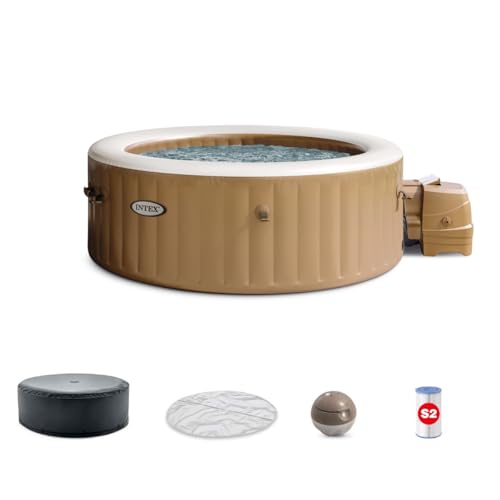
- INTEX 28425EH PureSpa Bubble Massage Spa Set — Check on Amazon
- Coleman SaluSpa Miami Energy-Efficient AirJet Inflatable Hot Tub — Check on Amazon
- Bestway SaluSpa Cancun Energy-Efficient Inflatable Hot Tub — Check on Amazon
- RTV silicone gasket-maker type for equipment fittings (prose-only pick — see review)
- Aquarium-grade silicone type for glass and rigid acrylic work (prose-only pick — see review)
In this guide
Quick Picks
| Pick | Badge | Why it earns its place |
|---|---|---|
| Neutral-cure 100% silicone sealant | Best Overall | Prose-only: the hot-tub-safe default — no acetic bite for metals, plastics, or electronics-adjacent joints. |
| INTEX 28425EH PureSpa Bubble Massage Spa Set | Best Worked Example — Large Inflatable | Fiber-Tech PVC construction: the case study in where silicone does not belong. |
| Coleman SaluSpa Miami AirJet Inflatable Hot Tub | Best for Cold-Climate Equipment | Freeze Shield plumbing and fittings — gasket territory, with silicone at the margins. |
| Bestway SaluSpa Cancun Inflatable Hot Tub | Best Compact | The same Tritech material lessons in the smaller spa. |
| RTV silicone gasket-maker | Best for Equipment Fittings | Prose-only: formed-in-place sealing for pump and heater unions where the maker allows it. |
| Aquarium-grade silicone | Best for Rigid Surfaces | Prose-only: high-strength, additive-free silicone for glass and rigid work — with strict limits. |
Key Takeaways
- Neutral-cure 100% silicone is the only general silicone class to keep near a hot tub; acetic-cure bath silicone can corrode metals and irritate sensitive components.
- Silicone does not bond reliably to inflatable PVC/vinyl liners and is not a liner repair — patches and the maker’s systems are.
- Most hot tub joints are gasket joints by design. A weeping union usually needs a gasket or an O-ring, not a bead.
- Legitimate silicone jobs exist: specified fittings, lens and niche seals, cabinet and equipment-compartment seams, and rigid-surface work.
- When the manual names a product or a method, the manual wins over every guide, including this one.
- Smearing silicone over a leak without diagnosis traps water, hides corrosion, and complicates the real repair.
How These Picks Were Chosen
The selection mirrors the sealant guide’s logic with spa-specific discipline. The silicone picks are prose-only types — neutral-cure sealant, RTV gasket-maker, aquarium-grade silicone — described by cure chemistry, adhesion profile, and proper territory, with no brands and no invented specifications, because the pool contains no sealants. The three linked spas are the pool’s complete inflatable range, chosen as worked examples because their construction materials are exactly what a silicone decision must respect: the Intex’s Fiber-Tech PVC structure, and the SaluSpas’ Tritech and MaxHold builds with their pumps, heaters, and dispenser systems. Each spa review maps where silicone is legitimate around that spa — and where the maker’s gaskets, fittings, and patch systems own the job instead.
Excluded: the pool’s water-care chemicals (a different maintenance family, though their world — chlorinated, heated, circulating water — is precisely why spa silicone choices are stricter than bathroom ones), the indoor tubs (their sealing is the bathroom guide’s subject), and the faucet trim kit, which is not a tub. A methodological note: cure chemistries and adhesion behaviors stated here are the general trade consensus; the specific spa manual and the specific sealant label, read together, govern any real joint. Where they conflict with anything in this guide, they win, and the guide says so in its own text.
The 6 Best Silicone for Hot Tubs — Reviewed
Neutral-Cure 100% Silicone Sealant
Our badge: Best Overall
This pick is prose-only, described as a type: neutral-cure 100% silicone is the hot tub world’s default sealant because of what its cure does not release. Where common bath silicone cures by releasing acetic acid — the vinegar smell — neutral-cure formulations release benign byproducts instead, making them safe neighbors for the metals, plastics, and coated components that crowd a spa’s equipment compartment. Around a hot tub, the legitimate jobs are specific: sealing a fitting or penetration the maker specifies for sealant, bedding a light or control component per its instructions, closing cabinet and equipment-door seams against weather, and renewing the specified seals on rigid spa shells at their service points.
Strengths
- No corrosive cure byproducts — the metal- and plastic-safe silicone class.
- Permanent flexibility across the spa’s heat cycles and outdoor temperature swings.
- Strong adhesion to the rigid materials of spa equipment: metals, rigid plastics, glass, acrylic sheet.
Trade-offs
- Still not a liner material: adhesion to flexible PVC/vinyl remains poor.
- Cures slower than acetic types in some formulations — respect the full window before refilling or energizing.
- Costs more than commodity bath silicone, and should — it is a different product.
| Type | Prose-only — sealant type, no pool product |
| Chemistry | 100% silicone, neutral cure (general category guidance) |
| Best pairing | Maker-specified fittings, lenses, cabinet and equipment seams |
The working discipline mirrors good sealing everywhere, with spa amendments. The joint must be dry — a genuine challenge around water equipment, which is why most legitimate spa silicone work happens at a drain-down service, not as a mid-season smear. Old sealant and its residue come fully out; silicone will not bond to its own ghost. The bead is laid, tooled once, and cured for the label’s full window before water or power returns — a spa refilled against uncured sealant contaminates its water and ruins the joint in a single decision. And the record matters: note the product and date in the spa’s log, because the next technician — often future you — deserves to know what chemistry lives in that joint. The bathroom version of this craft is in Best Sealant For Tubs; the spa version adds heat, chemistry, and consequence.
Best for: Maker-specified sealing around hot tub equipment and rigid shells / Not suited for: Inflatable liners, underwater improvisation, or gasket joints
Choose this type as the only general silicone in the spa toolkit. Skip the acetic bath tube entirely for spa work — its savings are imaginary and its corrosion is not.

INTEX 28425EH PureSpa Bubble Massage Spa Set
Our badge: Best Worked Example — Large Inflatable
The INTEX 28425EH PureSpa Bubble Massage Spa Set is this guide’s principal case study because it is the pool’s largest inflatable: a 210-gallon, four-person spa whose Fiber-Tech beam construction — thousands of fibers giving the PVC walls their structure — defines exactly the material silicone cannot help. A puncture or seam issue on this spa is a patch-system event: the maker’s repair approach for PVC, applied to a clean, dry, deflated area, is the fix with a track record. Silicone smeared on a liner fails by physics — poor adhesion to the flexible, plasticized surface, a bead that rolls off at the first flex — and worse, its residue contaminates the area for the patch that should have been used.
Strengths
- Fiber-Tech structure holds shape and pressure with minimal material stress at seams.
- Complete system — pump, heater, cover, hard water and saltwater-ready care — with maker-documented service paths.
- Large installed base means patch and parts knowledge is widely documented.
Trade-offs
- PVC liner repairs are patch-only territory; no sealant shortcuts exist.
- Equipment fittings are gasket-and-union designs — weeps there are hardware diagnoses, not bead invitations.
- No named freeze-protection system in the verified data, so winter service windows need planning.
| Color | Tan |
| Size | 4-Person |
| Dimensions | 22.25 x 25.375 x 32.75 inches (package); spa outer 77 x 28 inches per features |
| Weight | 99.66 pounds |
Where silicone legitimately appears around this spa: essentially at its perimeter, not its person. The ground cloth and site are sealant-free. The pump and heater unions seal by their designed fittings. The control panel’s world is electronics, where sealant belongs only if the maker put it there. If the spa is sited on a deck or beside structures, neutral-cure silicone may serve the surroundings — a cabinet seam, a storage box lid — and that is the honest extent of it. Owners who internalize this boundary find inflatable ownership simpler than its reputation: patches for the liner, gaskets for the plumbing, silicone for the specified margins, and the water-care routine from guides like Best Salt Water Hot Tubs For Sale for everything else. The spa rewards the discipline with the multi-season life its construction promises.
Best for: Owners wanting the large inflatable with clear material rules / Not suited for: Anyone hoping sealant extends an inflatable’s repair options — it does not
Choose it with a patch kit in the same order. Skip it if your maintenance temperament is improvisational — inflatables reward the by-the-book hand.

Coleman SaluSpa Miami Energy-Efficient AirJet Inflatable Hot Tub
Our badge: Best for Cold-Climate Equipment
The Coleman SaluSpa Miami Energy-Efficient AirJet Inflatable Hot Tub brings the cold-climate equipment case: a Freeze Shield system protecting pump and liner, a ChemConnect dispenser, insulated Tritech construction, and a pump unit that inflates, heats, filters, and powers the 120 AirJets. Its silicone lesson is about temperature and systems: every fitting on this spa lives through heat cycles in summer and freeze defense in winter, and its seals are engineered gaskets and unions chosen for exactly that service. When a union weeps on a Miami, the diagnosis is a gasket’s age, a union’s tightness, or a freeze event’s damage — and the cure is the part, not a bead.
Strengths
- Freeze Shield reduces the freeze-damage repairs that tempt owners toward sealant improvisation.
- Integrated pump unit concentrates all water connections into designed, serviceable fittings.
- MaxHold and Tritech construction resists the puncture-and-flex wear of four-season use.
Trade-offs
- Integrated systems mean some repairs are unit-level, not component-level.
- Silicone anywhere near the dispenser’s chemistry path is a contamination risk — keep it out.
- Two-to-four-person scale, as with its sibling.
| Color | Black |
| Size | Energy Efficient 2.0 |
| Dimensions | 71 x 71 x 26 inches |
| Weight | 101.2 pounds |
The winter-service rhythm is where this spa and silicone almost meet, legitimately: at a drain-down — for deep cleaning, for storage, for the seasonal service the winter guides prescribe — the owner has the one window in which specified seals can be inspected and, where the manual directs, renewed. That is the rhythm to adopt for all spa sealant work: scheduled, dry, unhurried, and documented, rather than reactive and wet. The New England and winter-portable guides in this series — Best Hot Tubs For New England and Best Portable Hot Tubs For Winter — build their calendars around exactly such windows. A Miami owner who services seals at the autumn drain-down and stores or winter-runs the spa correctly will likely never meet the midnight-leak scenario in which bad silicone decisions are born.
Best for: Four-season owners who service on a calendar / Not suited for: Reactive, mid-season improvisation of any kind
Choose it if your climate is cold and your habits are scheduled. Skip it if they are not — no spa survives a reactive owner in a freeze climate, with or without silicone.

Bestway SaluSpa Cancun Energy-Efficient Inflatable Hot Tub
Our badge: Best Compact
The Bestway SaluSpa Cancun Energy-Efficient Inflatable Hot Tub completes the inflatable case studies with the same platform — Tritech layers, MaxHold beams, Freeze Shield, ChemConnect, 120 AirJets — in the compact wicker-finished format. Its silicone review can be shorter because the material verdict is identical, and that identity is itself the lesson: across brands and finishes, inflatable spas share one construction language — flexible PVC-family liners, integrated pump units, gasket-sealed unions — and therefore one silicone rulebook. Learn it once, on any of these three spas, and you know it for the class.
Strengths
- Same engineered fitting-and-gasket architecture as its sibling — no sealant-dependent joints.
- Compact volume makes drain-down service windows fast and inexpensive.
- Durable layered construction tolerates the seasonal moves its service calendar requires.
Trade-offs
- Pool data lists placeholder dimensions; features confirm 71 x 26 inches — verify on the listing.
- Liner repair is patch-only, as with every inflatable here.
- Small volume means any contamination event — including stray sealant in the water — concentrates fast.
| Color | Grey Wicker |
| Size | Energy Efficient 2.0 |
That last trade-off deserves emphasis as the compact spa’s special caution. In 71 inches of water volume, a pea-sized smear of uncured sealant that somehow enters the water is a proportionally larger contamination than in a 400-gallon hard-shell — clouding, filter load, and a drain-and-refill to clear it. The rule that follows is absolute for small spas: no sealant work of any kind while the spa is filled, and no sealant near the waterline at any time unless the maker specifies it there. The Cancun’s service windows are mercifully cheap — a compact volume drains and refills quickly — so the discipline costs little. Owners planning the spa’s patio life will find its placement story in Best Place For Hot Tubs, and its family routine in Best Hot Tubs For Families; its silicone story, complete, is: patches, gaskets, calendar, restraint.
Best for: Compact-patio owners wanting the class-standard material rules / Not suited for: Anyone seeking a spa that tolerates improvisation
Choose it for its fit and finish, and keep its sealant tube in the house’s bathroom drawer — which is where, for an inflatable, it belongs.
RTV Silicone Gasket-Maker for Equipment Fittings
Our badge: Best for Equipment Fittings
The second prose-only type is the equipment specialist: RTV (room-temperature vulcanizing) silicone gasket-makers, formulated to form seals in place on pump housings, heater flanges, and similar equipment joints. In the hot tub world their territory is narrow and real — certain makers specify an RTV or a silicone lubricant/sealant at particular unions and sensor ports — and it is bounded by the same law as everything in this guide: the spa manual names the joint, the product, or it does not happen. Within that boundary, RTV’s virtues are genuine: it conforms to imperfect flange faces, tolerates heat and spa chemistry, and services joints that no pre-cut gasket exists for.
Strengths
- Forms to the joint: seals flange faces and threads where gaskets cannot be cut.
- Heat- and chemical-resistant formulations suit equipment-compartment service.
- A little goes far — fitting-scale jobs consume fitting-scale material.
Trade-offs
- Excess squeeze-out inside plumbing can break loose and foul jets, valves, and the heater — restraint is a skill.
- Not a substitute for a specified gasket where one exists; doubling systems invites failure.
- Cure must complete before the system is pressurized or heated.
| Type | Prose-only — RTV type, no pool product |
| Chemistry | RTV silicone gasket-maker (general category guidance) |
| Best pairing | Maker-specified pump, heater, and sensor joints on rigid spas |
Technique, for the specified joints only: surfaces clean and dry, a thin continuous film rather than a fat bead — the seal forms in the squeeze, and everything beyond the joint’s faces is future debris — assembly within the product’s working time, hand-tight plus the specified fraction, and a full cure before water and power. Silicone grease, a related but distinct product, deserves its sentence: on O-rings and gaskets, a maker-approved silicone lubricant helps seals seat and survive — it is a lubricant, not a sealant, and confusing the two is how gasket joints get glued into their next failure. Keep both, label both, and let the manual assign their jobs.
Best for: Specified equipment joints on rigid spas, serviced at drain-down / Not suited for: Inflatable plumbing, gasket replacement, or mid-season leaks
Choose this type when the manual names the joint. Skip it when it does not — silence in the manual is an answer, and the answer is gasket.
Aquarium-Grade Silicone for Glass and Rigid Work
Our badge: Best for Rigid Surfaces
The final prose-only type is the purist: aquarium-grade silicone, formulated without the mold inhibitors and additives of bath sealants, with high tensile strength for structural glass joints. Its hot tub relevance is peripheral but real — glass and rigid acrylic elements in and around spa installations, certain rigid-shell repairs the shell’s maker specifies for silicone, and the general principle it embodies: for water-immersion joints on rigid materials, additive-free, high-strength silicone is the reference standard, and bath-tube chemistry has no business there.
Strengths
- Additive-free formulation made for permanent water immersion on rigid materials.
- High strength: the structural end of the silicone family.
- Clear grades disappear on glass and acrylic sightlines.
Trade-offs
- Rigid materials only — it shares the family’s non-bond to flexible liners.
- No mold inhibitors: wrong for bathroom-style exposed beads.
- Longer full-cure expectations before immersion.
| Type | Prose-only — silicone type, no pool product |
| Chemistry | High-strength, additive-free silicone (general category guidance) |
| Best pairing | Glass and rigid acrylic elements, maker-specified shell work |
Its inclusion closes the guide’s taxonomy with a usable map: neutral-cure for specified equipment and seams, RTV for specified formed gaskets, aquarium-grade for rigid immersion joints, bath silicone for the bathroom and never the spa, and nothing at all for liners and gasket joints. An owner who can recite that map owns the subject. The rigid-shell context it serves is the hard-shell world described in Best Hot Tubs Under $6000 — spas whose makers publish real service documentation, where silicone’s specified roles are written down and this guide’s types can be matched to them line by line.
Best for: Rigid glass/acrylic elements and specified shell joints / Not suited for: Liners, exposed bathroom beads, or unspecified repairs
Choose this type for rigid, immersed, specified work. Skip it everywhere else — specialization is its virtue and its boundary.
Comparison Table
| Pick | Role | Silicone verdict | Primary repair system | Check price on Amazon |
|---|---|---|---|---|
| Neutral-cure silicone | Prose-only type | Default for specified joints | — | Check price on Amazon |
| INTEX PureSpa | Linked example | Never on liner | Maker patch system, gaskets | Check price on Amazon |
| Coleman SaluSpa Miami | Linked example | Margins only, at service | Gaskets, unions, unit service | Check price on Amazon |
| Bestway SaluSpa Cancun | Linked example | Margins only, never filled | Maker patch system, gaskets | Check price on Amazon |
| RTV gasket-maker | Prose-only type | Specified fittings only | — | Check price on Amazon |
| Aquarium-grade silicone | Prose-only type | Rigid immersion joints | — | Check price on Amazon |
How to Choose the Best Silicone for Hot Tubs
Start from the joint, not the tube
Identify the exact joint and ask what the spa’s maker specified for it: gasket, O-ring, patch, RTV, or sealant. The manual’s answer ends the shopping. Silicone chosen before the joint is identified is a solution wandering in search of a problem it may create.
Choose neutral cure for anything near the spa
If a general sealant is genuinely needed around hot tub equipment, neutral-cure 100% silicone is the class: no acetic corrosion near metals and electronics, durable flexibility outdoors. Acetic bath silicone stays in the bathroom that Best Sealant For Tubs covers.
Respect the liner law absolutely
Flexible PVC and vinyl liners: patches and maker systems only. No silicone type — neutral, RTV, aquarium, or miracle — bonds durably to them, and residue sabotages the patch that follows. This is the single most valuable sentence in the guide; the buying choice it dictates is a patch kit beside every inflatable.
Match specialty types to specified work
RTV where a formed gasket is specified; aquarium-grade where a rigid immersion joint is specified; silicone grease — a lubricant, not a sealant — where O-rings need seating help. Specialty products earn their shelf space only when a manual assigns them a joint.
Buy small, fresh, and documented
Fitting-scale jobs need fitting-scale cartridges; large tubes age open in the drawer. Record the product and date in the spa log for every joint you seal — the next service begins with knowing what is already there.
How Do You Seal a Hot Tub Fitting Correctly?
At a scheduled drain-down, with the system depressurized, dry, and cool: identify the fitting’s specified sealing method from the manual. If it is a gasket or O-ring — the common case — remove the old seal, clean the faces without scoring them, fit the new seal (with maker-approved silicone lubricant if specified), and reassemble to the specified tightness: snug and even, not heroic, since crushed gaskets leak as surely as loose ones. If the manual specifies RTV or sealant, clean and dry the joint completely, clear all old material, apply the thin film or bead the product directs, assemble within its working time, and honor the full cure before refilling or energizing. Then the verification that closes every service: refill, run, and inspect the joint dry-eyed through a full heat cycle before calling it done.
Problem: A union weeps slowly after reassembly — The gasket is aged, pinched, or the faces carry grit. Drain to below the joint, open it, inspect and replace the seal — do not bury the weep under external sealant, which cannot hold pressure and hides the evidence.
Problem: Silicone from a previous owner is smeared on a fitting — Remove it completely at the next service: peel, scrape plastic-safely, and clear residue per the new product’s directions, then seal the joint by its specified method. You are undoing a category error, not adding a layer.
Problem: A pinhole in an inflatable liner — Patch it with the maker’s PVC repair method on a clean, dry, deflated surface, cured fully before inflation. Silicone’s only role in this event is staying in the drawer.
Problem: The sealant skinned over before the joint was assembled — The bead sat past its working time, so the surfaces met a cured skin instead of wet silicone and the bond failed silently. Strip it fully, reapply, and assemble within the minutes the label allows — on hot days, work in smaller sections, because warmth shortens working time further.
Problem: Sealant got into the spa water — Stop the system, remove any visible material, and treat it as a contamination event: filter, and if clouding or residue persists, drain and refill. Prevention — never sealing a filled spa — is the entire cure, learned once.
Why Silicone Fails on Liners: The Material Science in One Section
Silicone sealants bond by gripping a surface’s microscopic texture with a chemistry tuned for rigid, stable materials. Inflatable liners defeat them three ways at once. The PVC surface is plasticized — its flexibility comes from compounds that migrate slowly to the surface, continuously renewing a release layer that adhesives cannot hold. The surface itself moves: every inflation cycle, temperature swing, and bather’s lean flexes the joint through ranges no cured bead can follow without peeling. And the water side conspires: warm, sanitized water works at the bead’s edge relentlessly. The result is not a weak bond but a temporary one, measured in days to weeks — long enough to convince the owner it worked, short enough to fail at the worst moment, and leaving behind a residue field that the correct patch must now be cleaned of before it can bond. Understanding this is worth more than any product recommendation in the category, because it converts a recurring purchase into a permanent piece of judgment.
Gaskets, O-Rings, and Unions: The Sealing System You Actually Own
A hot tub’s real sealing architecture deserves its portrait. Pumps meet plumbing through unions whose faces compress a gasket or O-ring; heaters seal on flanged gaskets; jets body-seal against the shell with gaskets and retaining nuts; sensors sit in compression fittings. Every one of those joints is designed to be opened, resealed with an inexpensive part, and returned to service — a maintenance philosophy of renewable seals, exactly parallel to the bathroom’s renewable bead in the sealant guide. The owner’s corresponding kit is not a caulk gun but a small parts box: the spa’s gasket and O-ring sizes, a tube of silicone lubricant where approved, the maker’s patch kit, and the manual. Owners who stock the box find spa leaks boring — a drained hour, a fresh seal, a verified refill. Owners who stock only sealant find them dramatic. The difference is not skill; it is inventory philosophy, and it is chosen long before the first weep appears.
Common Buying Mistakes
Buying bath silicone for spa work
Acetic cure near spa metals and electronics is a slow corrosion project, and bath formulations’ additives are unwelcome near spa water systems. Neutral cure is the spa-side default; the bathroom tube stays in the bathroom.
Sealing over a pressurized leak
External sealant cannot hold water pressure, and the smear hides the joint’s real condition while water migrates into places it damages. Drain, open, replace the seal — the unglamorous sequence is the only one that ends leaks.
Patching a liner with silicone “just for now”
“For now” ends mid-season, at pressure, usually at night — and the residue then taxes the real patch. The patch kit costs little and works immediately; there is no interval in which silicone is the right temporary answer.
Doubling a gasket with sealant “for insurance”
Sealant under a gasket can prevent the gasket from seating evenly, converting a sound joint into a leaking one. Insurance that causes the accident is not insurance. One specified system per joint.
Skipping the cure before refilling
Uncured sealant in spa water contaminates the fill and ruins the joint simultaneously. The cure window is measured in the product’s hours, not the owner’s patience, and the drain-down schedule exists to make honoring it easy.
Final Recommendation
Keep exactly one general silicone in the spa kit: a fresh, neutral-cure 100% silicone, reserved for the joints your spa’s manual actually specifies — and let the pool’s best spa, the INTEX 28425EH PureSpa Bubble Massage Spa Set, stand as the model of the wider discipline: patches for liners, gaskets for plumbing, silicone for the specified margins. The runner-up for cold-climate owners is the Coleman SaluSpa Miami — Check on Amazon — serviced on a calendar, at drain-down, by the book. The best silicone for hot tubs turns out to be a judgment before it is a product: the right chemistry, on the right joint, at the right service moment — and the confidence to leave the tube in the drawer for every other job.
Silicone and Spa Chemistry: Why the Water Fights Back
A hot tub is a chemically active environment in a way a bathtub never is, and silicone work inside it inherits that activity. The water is warm — heat accelerates every chemical process, including the degradation of a marginal seal. It is sanitized — chlorine and bromine are oxidizers that probe organic materials for weakness, and a sealant’s exposed edge lives in their current for years. It circulates — flow worries at any lifted edge the way wind worries at a loose shingle, patient and mechanical. And it is maintained — shocked, balanced, occasionally drained and refilled — so a joint’s chemistry is cycled through more environments in a year than a bathroom bead meets in five. This is why the spa world’s sealing conservatism is not superstition: gaskets of engineered elastomer, chosen by the maker for exactly this chemical weather, outlast improvised chemistry in it. Silicone earns its specified places — the dry side of fittings, the equipment compartment, the rigid immersion joint the maker designed for it — precisely because those places shelter it from the full assault or because its formulation was chosen for them. The owner who understands the water’s hostility stops asking why the rules are strict.
A Sealant Audit: Walking Your Spa Like a Technician
Once a year, at a drain-down, walk the spa with a flashlight and the manual, and audit every seal you own. Unions first: dry paper towel held under each joint through a run cycle betrays the weep your eyes would miss. Jet bodies and the equipment compartment floor next — a dry floor is the report you want; any dampness has an address, and finding it at audit is the difference between a gasket and a motor. Inspect any existing sealant with suspicion and a fingernail: sound silicone is firm, bonded at both edges, and uniform; failing silicone lifts, strings, discolors, or hides a damp line behind it — and previous owners’ improvisations should be scheduled for removal and proper re-sealing by the specified method, not layered over. Check the liner or shell surface for the residue fields of old mistakes, and note them for patch planning. Record the audit in the spa log with dates and findings. Ten minutes of this, yearly, is the entire difference between a spa whose seals are managed and a spa whose seals are discovered — and discovery, in water equipment, is always the expensive tense.
The audit is also the right moment to check the conditions any sealing work will cure in, because silicone cures by reacting with moisture in the air, and its timetable is written for mild, mid-humidity weather. A joint sealed in a cold garage in January may need far longer than the label’s headline cure time before it can be trusted under water, and a joint sealed in summer heat skins faster, shrinking the working window described in the how-to above. Schedule sealant work for a mild stretch of days, note the actual temperature beside the audit entry, and extend the cure whenever conditions run cold or very dry. Technicians plan around the weather because the chemistry does; the audit is where a household adopts the same habit.
Reading a Sealant Label Like a Technician
The last skill this guide can give you is label literacy, because every silicone decision eventually happens in a store aisle with two cartridges in hand. Read for the cure system first — neutral cure is the spa-side word, and labels that say “low odor” without naming the cure deserve a second look at the fine print. Read for substrate claims next: the product should name the materials of your joint — metal, rigid plastic, glass — and a cartridge that names only bathroom surfaces is telling you its territory. Check the service claims that matter around a spa: temperature range that covers a heater compartment’s warmth, water and weather resistance stated for exterior or immersion-adjacent service where your joint needs it, and mold resistance only where the joint is an exposed bead rather than a hidden seal. Note the skin and cure times and plan the service window around the full cure, not the skin. Check the date code; sealant that has sat for years skins in the tube and cures weakly, and the discount bin is no bargain at a pressurized joint. Finally, match the cartridge to the job’s scale — fitting work wants the small tube, because opened silicone ages in weeks and a spa’s sealing needs are measured in grams per year. The owner who reads labels this way stops buying “silicone” as a commodity and starts buying specified materials for specified joints — which is, in one sentence, the entire argument of this guide.
When the Answer Is a Technician: Silicone’s Professional Boundary
There is a class of spa leak that should end the DIY conversation on sight, and naming it protects both the spa and the owner. Water appearing inside the equipment compartment near electrical components is a power-off, call-a-technician event — no sealant judgment is exercised in a wet electrical space, ever. A heater flange that weeps after one honest gasket replacement is reporting corrosion or a warped face, which is a parts diagnosis, not a bead invitation. A shell crack — as distinct from a fitting weep — is a structural repair with its own materials and methods, on which silicone has no vote. And a leak whose location cannot be found after a dry-eyed audit is a dye-test and experience problem; professionals find in an hour what owners smear over for a season. The pattern across all four is the guide’s recurring law in its sternest form: sealant is for specified joints in known condition, and everything else is diagnosis first. Owners sometimes experience the technician’s bill as the price of failure. It is more accurately the price of the boundary — the line where a maintenance material ends and a pressurized, heated, electrified water system begins — and respecting that line is the most professional act a home spa keeper performs.
The Drawer Test: What Your Spa Kit Says About You
Open the drawer or box where your spa supplies live and read it as a stranger would. A kit built on this guide’s philosophy contains a patch kit with its adhesive in date, a small envelope of the spa’s gaskets and O-rings labeled by joint, a tube of maker-approved silicone lubricant, the test strips and their chart, the manual or its photograph on your phone — and, yes, one fresh cartridge of neutral-cure silicone, small, dated, and unopened, waiting for the specified joint that may not need it this year. A kit built on the other philosophy contains three half-used tubes of mystery sealant, a caulk gun, and optimism. The two kits predict their owners’ winters with uncomfortable accuracy. Rebuilding the first kit from the second costs one order and one honest afternoon of removing old improvisations at a drain-down — and it is the cheapest transformation available in spa ownership, because it converts every future leak from a drama into a procedure.
Frequently Asked Questions
What type of silicone is safe for hot tubs?
Neutral-cure 100% silicone is the safe general class around hot tub equipment — no corrosive cure byproducts near metals and components. Use it only on joints the spa maker specifies for sealant; most spa joints are gasket joints by design.
Can I use silicone to fix a leak in my inflatable hot tub?
No. Silicone does not bond durably to flexible PVC liners and its residue interferes with proper repairs. Liner leaks are fixed with the maker’s PVC patch method on a clean, dry, deflated surface. Plumbing weeps are fixed with gaskets and O-rings.
Why is my hot tub union leaking after I resealed it?
Usually an aged or pinched gasket, grit on the sealing faces, or uneven tightness — or sealant was added where a gasket alone was specified, preventing even seating. Open the joint at a drain-down, replace the seal, and reassemble cleanly.
Is aquarium silicone good for hot tubs?
For its niche — rigid glass or acrylic joints under immersion, where a maker specifies it — yes; it is strong and additive-free. It shares the family’s inability to bond to flexible liners and lacks mold inhibitors for exposed bathroom-style beads.
Can I apply silicone to a filled hot tub?
No. Sealant needs clean, dry surfaces and a full cure before water contact; a filled spa offers neither, and uncured material in the water is a contamination event. All spa sealant work belongs at a scheduled drain-down.
What should I keep in my hot tub repair kit instead of sealant?
The maker’s patch kit for the liner, spare gaskets and O-rings in your spa’s sizes, maker-approved silicone lubricant for seating seals, and the manual. Add the neutral-cure silicone for specified joints — as the kit’s specialist, not its foundation.
How long must silicone cure before I refill the spa?
As long as the product’s full cure specification says — not its skin-over time, which is only the surface drying. Most neutral-cure silicones want a full day or more before immersion, and thick beads, cold air, and dry air all extend that clock, because cure progresses inward from the exposed surface. Refilling early is the commonest silent failure in spa sealing: the joint looks finished, the water softens the uncured core, and the weep returns within the week carrying flakes of sealant into the system. Build the cure into the drain-down schedule and let the spa sit empty for the stated period; the patience is the product.


