Where to buy
Check the latest price, availability and delivery on Amazon. Orders are placed on Amazon. We may earn a commission from qualifying purchases.
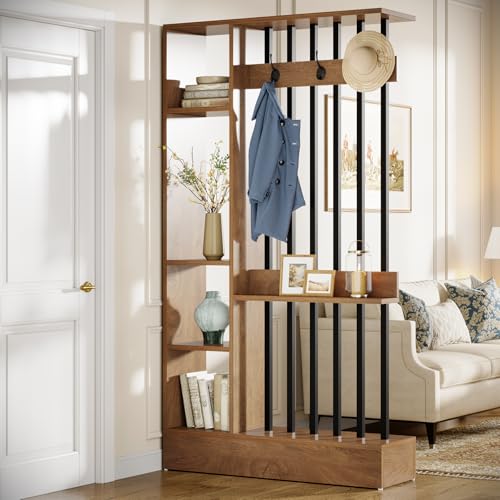
- Best overall for modern homes: Tribesigns Wall Room Divider Bookcase with Shelves and Coat Hooks, Brown — Check on Amazon
- Best minimalist wall: VEVOR Retractable Side Awning Room Divider, 118 x 71 in, Black — Check on Amazon
- Best bright screen: VEVOR 6-Panel Louvered Wood Room Divider, White — Check on Amazon
- Best warm-wood screen: HOMCOM 6-Panel Room Divider with 3 Display Shelves, Walnut — Check on Amazon
- Best wide soft wall: Sorbus 8-Panel Room Divider, Mesh Hand-Woven Design — Check on Amazon
- RoomDividersNow Ceiling Track Room Divider Set, Large (12-18 ft) — prose-only pick, see the review below for why
Read the full guide ↓
Disclosure: As an Amazon Associate, dailyhomedecorating.com earns from qualifying purchases. Links to Amazon on this page are affiliate links; they cost you nothing extra. Listing details such as price and availability change often, so check the current Amazon listing before you buy.
The search for the best room divider for modern homes under $700 starts with a problem the modern home created for itself. Open-plan layouts, pale palettes, full-height glass and furniture chosen for its lines all look wonderful — right up until the moment life needs a boundary: a work call in the living room, a guest bed in the studio, a reading chair that deserves a territory of its own. The traditional answers fight the architecture. Heavy carved screens import a style the room never asked for; cheap fabric panels read as dorm equipment against considered furniture. What a modern interior needs from a divider is what it asks of everything else in it: clean geometry, honest materials, nothing ornamental that does not earn its place, and — the modern home’s secret requirement — the ability to disappear. A room designed as one space must be able to become one space again in under a minute.
The under-$700 tier serves that brief unusually well, because it contains the formats modern interiors actually use. A geometric bookcase divider in black metal and warm wood that reads as part of the furniture plan. A retractable fabric wall that pulls across a loft opening and vanishes into a slim cassette — division as an event, not an object. A white louvered screen with plantation lines that disappear against pale walls. And, for homes ready to commit, a ceiling-track curtain system: the divider as architecture, gliding on an aluminum track, floor-length fabric moving like a soft wall. Each pick below is verified against a real Amazon listing with a recorded price sighting inside this budget, or described honestly without a link where a current price could not be verified. There is a quick picks table, the design-first method behind the choices, full reviews, a comparison table, a modern-specific buying checklist, the style mistakes that date a room, and an FAQ for the design-minded.
Our headline advice: most modern homes should start with the Tribesigns bookcase divider, because its black-frame geometry and open shelves continue the language of contemporary furniture instead of interrupting it. Lofts and studios that prize the undivided room should start with the retractable wall — the only pick that leaves literally nothing behind when it is open. And homes with the ceiling and the commitment for it should read the ceiling-track review carefully: it is the most architectural solution here, and the one that makes guests ask who your contractor was.
In this guide
Quick Picks
Short on time, or comparing several options at once? Each row below names a buyer type and the product that suits it, with a link to the listing where one is verified for this tier.
| Buyer type | Pick | Why it stands out | Link |
|---|---|---|---|
| Best overall for modern homes | Tribesigns Wall Room Divider Bookcase with Shelves and Coat Hooks, Brown | Black-frame geometric shelving that divides with your objects — check price on Amazon | Check on Amazon |
| Best minimalist wall | VEVOR Retractable Side Awning Room Divider, 118 x 71 in, Black | Ten feet of matte fabric that retracts to nothing — check price on Amazon | Check on Amazon |
| Best bright screen | VEVOR 6-Panel Louvered Wood Room Divider, White | White louvers that filter light and nearly disappear — check price on Amazon | Check on Amazon |
| Best warm-wood screen | HOMCOM 6-Panel Room Divider with 3 Display Shelves, Walnut | Walnut paulownia with display shelves for edited vignettes — check price on Amazon | Check on Amazon |
| Best wide soft wall | Sorbus 8-Panel Room Divider, Mesh Hand-Woven Design | Neutral woven texture at architectural length — check price on Amazon | Check on Amazon |
| Best ceiling-track system | RoomDividersNow Ceiling Track Room Divider Set, Large (12-18 ft) | A full-height curtain wall that glides on an aluminum track — prose-only, see review | See review |
How These Picks Were Chosen
The budget filter was applied as always: every linked pick has a recorded price sighting at or under $700 for the exact configuration reviewed, with sightings kept in the research notes published with this guide — check the current price on Amazon before you buy. One pick, the ceiling-track system, is prose-only: its listing and specifications are verified, but its Amazon page showed no featured offer at research time, so no current price inside the budget could be confirmed. It is reviewed in full, with the reason stated, rather than linked on a guess.
The design filter did the real work. Modern interiors punish the wrong divider twice — once as furniture, once as a photograph background — so we screened for line, material and palette discipline: black metal and warm engineered wood, white louvered timber, unpatterned coated fabric, woven texture in neutral tones. Out went busy carvings, faux-distressed finishes and prints that would argue with a contemporary room. We read maker listings and specification pages, cross-checked dimensions against independent retail coverage, and favored products whose photographs could plausibly have been taken in the rooms our readers live in. Within that discipline we kept the format spread honest — bookcase, retractable, folding screens and track — because modern homes divide in different ways and a single-format guide would serve none of them well.
We did not use these dividers ourselves, and one honesty note applies throughout: no divider here is a wall. None seals sound, carries a door or closes a ceiling gap except the track format, which reaches the ceiling by design. What they divide — sightlines, light, territory, mood — is exactly what open-plan living usually needs divided, and at this tier they do it in materials a design-conscious household can live with for years.
Best Room Divider for Modern Homes Under $700: The 6 Picks, Reviewed
Tribesigns Wall Room Divider Bookcase with Shelves and Coat Hooks, Brown
Who it suits: Modern living rooms and studios where the divider should read as furniture — a geometric shelving wall that continues the room’s design language.
The Tribesigns is the divider a modern interior would design for itself. A black metal frame carries warm brown engineered-wood shelves in an open geometric grid — about 47.2 inches wide, 11.8 inches deep and 70.9 inches tall — with a row of coat hooks integrated into the design. Stood between zones, it does not read as a divider that wandered in from a furniture warehouse; it reads as the shelving unit the room was already missing, which happens to stand where a boundary was needed. The open grid is the key modern gesture: objects, books and plants occupy the shelves and become the visual texture, so the division is made of your own things rather than a manufacturer’s pattern.
In a studio, that quality compounds. The unit zones sleeping from living while displaying the collection that makes the space yours, and the coat hooks quietly build the entryway the floor plan forgot — coats and bags on the arrival side, calm on the living side. The listing includes an anti-tip device, and on a tall open unit it should be fitted as directed; a modern room’s clean lines are not an argument against a safety strap hidden behind the frame. Loaded with restraint — the modern rule is a third empty space on every shelf — it looks deliberate from both sides, which no solid screen can claim: its back is its front.
Its limits are the honest ones of its format. At just under four feet wide it zones rather than spans; a wide loft opening needs it paired with open space or a second element, not stretched beyond its geometry. It requires assembly, and once styled it stays put — this is a furniture decision, not a weekly rearrangement. But for the defining modern problem — how to divide without cluttering — a divider that is also the display shelf is the most elegant answer in this guide.
- Black metal and warm wood geometry that matches contemporary furniture instead of fighting it.
- Open shelves divide with your own objects — the back is the front, finished from both sides.
- Coat hooks build a studio entryway; anti-tip device included for the tall frame.
Honest limitation: Only about four feet wide, so it zones rather than closes a wide opening, and it needs assembly plus anchoring.
Choose it if your divider must look like part of the furniture plan from both sides. Skip it if you need to span a wide opening or seal sightlines completely — the retractable and track picks do that work.
VEVOR Retractable Side Awning Room Divider, 118 x 71 in, Black
Who it suits: Lofts, studios and minimalist interiors where the divider should exist only when it is needed — and leave no trace when it is not.
Minimalism’s divider problem has a pure solution, and this is it. The VEVOR retractable mounts a slim cassette at the edge of an opening; pull the handle and a coated fabric wall draws across 118 inches — nearly ten feet — standing 71 inches tall and latching at the far side. The room is divided by a single matte black surface with no panel divisions, no hinges, no pattern: the least visual noise any divider in this guide produces. Retract it and the division does not fold into a corner or lean behind a door — it ceases to exist, and the open plan is exactly the room the architect drew. For interiors whose whole point is the undivided volume, that vanishing act is not a feature among others; it is the entire argument.
The specification supports the aesthetic. The frame is powder-coated aluminum alloy; the fabric is a high-density 280 g/m² polyester with a PU coating, waterproof and UV-resistant, holding a smooth tension that reads as a wall rather than a curtain — no sag, no billow, no grommet line. The spring retraction is controlled and one-handed. Black is the finish that suits the format’s intent: a graphic plane that pairs with the black window frames and fixtures of contemporary interiors, and photographs as a deliberate shadow rather than an apology.
Commitment is the price. The cassette and receiver must be screwed to a wall, post or floor fitting, so this is an owner’s solution or a long-lease one, fixed to a single opening. The fabric divides sight completely but sound only softly, and a pet can duck a bottom gap if the fitting leaves one — install it low and true. Judged as modern design, though, it achieves what screens cannot: a boundary with no object attached to it. When it is open, there is nothing to forgive.
- A wall with no object: matte fabric across ten feet, retracting into a slim cassette.
- Coated fabric holds smooth tension — no sag, grommets or curtain billow to date the room.
- Aluminum and black finishes match contemporary frames and fixtures.
Honest limitation: It must be screwed in place and divides one opening only — an owner’s format, not a renter’s.
Choose it if your interior prizes the undivided room and the opening is permanent. Skip it if you cannot fix hardware, or you want the divider to carry display and storage — the Tribesigns does that.
VEVOR 6-Panel Louvered Wood Room Divider, White
Who it suits: Bright modern rooms — Scandinavian, coastal, Japandi — where a white louvered screen adds texture without adding visual weight.
Some modern rooms do not need a graphic black plane; they need light, texture and air, and the VEVOR louvered screen is cut precisely for them. Six panels of paulownia wood in a clean white European louvered style stand 66.9 inches tall and span 95.3 inches unfolded. Louvers are a modernist inheritance — the plantation shutter’s geometry — and in a pale interior they perform a trick solid panels cannot: they divide while dissolving, breaking sightlines at eye level yet letting the room’s daylight and air move through the slats, so the screen reads as a filter rather than a wall. Against white walls it nearly disappears; what remains is shadow, rhythm and texture.
At 18.8 pounds it is also the most agile pick here, folding to about 66.9 by 15.7 by 4.3 inches — a single panel’s footprint — for storage in a closet. Modern rooms rearrange: the screen that screens a desk this season becomes the backdrop for a reading chair next season and the guest-corner divider at the holidays, and a divider light enough to move without planning is the one that keeps being useful. The paulownia frame is honest about its lightness — stand it in a proper zigzag and it is composed; it is a visual instrument, not a barrier.
Choose it where the modern palette is pale and the mood is calm: a bright living room, a dressing corner, a serene home office that must look composed on camera. Its privacy is the soft kind — direct views blocked, glow and movement shared — so a sleeping corner behind a lit workspace is beyond its brief; the retractable above seals that problem. Within its brief, it is the screen most likely to be mistaken for part of the architecture, which in a modern home is the highest compliment a divider can earn.
- White louvered paulownia: shutter geometry that divides while daylight moves through.
- At 18.8 pounds it rearranges as easily as modern rooms do, and folds to one panel for storage.
- Nearly disappears against pale walls — texture and shadow instead of visual weight.
Honest limitation: Louvered privacy is soft — glow and silhouettes pass — and the light frame needs its zigzag, not a traffic lane.
Choose it if your palette is pale and the divider should feel like architecture, not furniture. Skip it if you need a sealed sleeping corner — the retractable wall or the track curtain closes a room fully.
HOMCOM 6-Panel Room Divider with 3 Display Shelves, Walnut
Who it suits: Modern homes with warm minimalism — oak floors, walnut accents, Japandi tones — where a timber screen with display shelves fits the material palette.
Modern is not only black metal and white; the warm wing of contemporary design — walnut, oak, linen, clay — needs a divider in its own materials, and the HOMCOM is that pick. Six panels of paulownia wood in a walnut finish stand 67 inches tall in a louvered slat design, folding both ways and storing flat. The tone sits naturally against the wood floors and mid-tone furniture of warm modern rooms, where a black or white divider would strike the only cold note in the space. Louvered slats keep the division breathable, filtering light across the room rather than hoarding it on one side.
Its modern credential is the set of three display shelves that slot across the panels. Contemporary interiors run on edited display — a ceramic, a plant, two books, space around them — and the shelves turn the divider into the room’s display moment instead of a blank to be apologized for. Styled with restraint, the screen reads as a designed vignette from the living side and a warm timber backdrop from the other. The shelves are ledges for lighter objects; treat them as composition, not storage, and they reward the discipline.
The trade-offs are the format’s usual ones, honestly stated: louvers soften rather than seal, so this is a zoning instrument for living spaces rather than a sleeping-corner wall, and the screen must stand in its zigzag like any folding divider. It arrives as a screen rather than a kit, so the styling can begin the evening it lands. For the warm-modern household, it is the pick that divides the room while agreeing with everything already in it.
- Walnut paulownia matches the warm material palette of contemporary wood interiors.
- Display shelves turn the divider into an edited vignette — ceramics, plants, space.
- Louvered slats filter light across the room instead of hoarding it on one side.
Honest limitation: Louvers soften sightlines rather than sealing them, and the shelves are display ledges, not storage.
Choose it if your modern palette runs warm — walnut, oak and linen — and the divider should agree with it. Skip it if you want graphic black minimalism or a sealed division — the retractable serves both better.
Sorbus 8-Panel Room Divider, Mesh Hand-Woven Design
Who it suits: Large modern living spaces — lofts, great rooms, gallery-like interiors — where a wide, low-contrast woven wall defines zones without hard edges.
Scale is the modern problem the Sorbus solves. Great rooms and lofts do not need a six-foot gesture in the corner; they need a boundary at architectural length, and eight woven panels spanning roughly 128 to 130 inches flat at about 69 inches tall provide it. The hand-woven mesh in neutral tones is the right surface for a contemporary space: texture without pattern, presence without contrast, a wall that reads as a material rather than a picture. Double hinges let it zigzag, curve in a gentle arc, or turn a corner, so the division can follow the room’s geometry instead of imposing a screen’s geometry on it — at about 23 pounds, repositioning it for a dinner party or a photo shoot is a one-person decision.
Light behavior seals its modern case. A great room divided by a solid wall loses its defining asset — the long wash of daylight across the whole volume. The Sorbus’s weave shares that light: the far zone stays daylit, the near zone gains territory, and the room’s proportions survive the division. At night the effect reverses gracefully into a lantern glow when one side is lit. It is the divider for households that love their open plan and merely need it to multitask.
Its honesty notes: the weave is the softest privacy in this guide after the louvers — silhouettes soften rather than vanish, and sound is untouched — and the wall’s flexibility, while forgiving, reads less architectural than a track or retractable system. It is a textile solution, with a textile’s virtues. For a modern great room that must stay bright, wide and reconfigurable, those virtues are exactly the specification.
- Eight woven panels at architectural length — a boundary sized for great rooms and lofts.
- Neutral hand-woven texture: material presence without pattern or contrast.
- Shares daylight across the division, so the open plan’s best asset survives.
Honest limitation: The softest privacy here after the louvers — silhouettes soften, sound passes — and it reads textile, not architecture.
Choose it if your space is wide, bright and reconfigures often. Skip it if you want the hard-edged permanence of a track system or the seal of the retractable.
RoomDividersNow Ceiling Track Room Divider Set, Large (12-18 ft)
Who it suits: Homeowners ready for the architectural solution: a ceiling track and floor-length curtain that glides like a soft wall and reaches the ceiling no screen can touch.
Every other pick in this guide is furniture. The RoomDividersNow ceiling track is architecture. An aluminum track fixes to the ceiling — this Large set covers spaces 12 to 18 feet wide — with roller hooks, installation hardware, a saw for cutting the track to length, and end caps included; hang floor-length curtain panels from it and the room gains a wall that glides. The effect is the one modern interiors keep photographing: a soft, full-height plane that slides open to a stacked bundle at one side and closed to a continuous surface that meets the ceiling, eliminating the light gap every freestanding screen leaves above it. In a loft with nine-foot ceilings, that last detail is the difference between a divider and a division.
The system’s virtues compound in use. Rollers move the curtain with a finger’s pressure and no floor footprint at all — nothing stands in the room, nothing folds into a corner, the floor plan stays exactly as open as it was drawn. The track is aluminum and low-profile, reading as a ceiling detail rather than a mechanism. Because the curtain is a separate choice, the fabric becomes a design decision of your own: heavyweight blackout for a sleeping division, linen-look for a light-sharing one, replaced in an afternoon when the room’s palette changes. No other pick here lets you re-skin your divider.
Why is there no Amazon link on this pick? Because honesty about price is the rule of this guide: we verified this track set’s listing, contents and coverage, but its Amazon page showed no featured offer at research time, so no current price could be confirmed inside the under-$700 budget — and a complete installation must also budget its curtain panels, which are sold separately. Rather than link it on a partial number, we describe it prose-only: price the track and the curtain together on the listing before comparing it with the furniture picks. It also asks for what architecture always asks — ceiling fixings, a ladder, and commitment to one opening. For the modern home ready to make the division permanent and beautiful, it is the ceiling of this category in every sense.
- Full-height division that meets the ceiling — no light gap above the divider.
- Glides on rollers with zero floor footprint; the room’s plan stays exactly as drawn.
- Curtain fabric is your own design choice, replaceable when the palette changes.
Honest limitation: No verified current price inside this budget could be confirmed, curtains are a separate purchase, and it needs ceiling fixings.
Choose it if you find the complete track-plus-curtain cost inside this budget and want the architectural solution. Skip it if you rent, or your ceilings cannot take fixings — the freestanding and retractable picks ask less of the building.
Prose-only pick — no Amazon link, for the pricing reason stated above.
Comparison Table
| Product | Type | Best use | Link |
|---|---|---|---|
| Tribesigns Wall Room Divider Bookcase | Bookcase divider, 47.2 x 70.9 in | Zoning in the room’s own design language | Check on Amazon |
| VEVOR Retractable Room Divider, 118 x 71 in | Retractable fabric wall, 118 x 71 in | Lofts that must return to fully open | Check on Amazon |
| VEVOR 6-Panel Louvered Wood Divider | Folding louvered wood screen, 66.9 in tall | Pale interiors needing light texture | Check on Amazon |
| HOMCOM 6-Panel Divider with Shelves | Folding wood screen with shelves, 67 in tall | Warm contemporary palettes and display | Check on Amazon |
| Sorbus 8-Panel Room Divider | Folding woven screen, 8 panels, ~69 in tall | Great rooms at architectural width | Check on Amazon |
| RoomDividersNow Ceiling Track Set, Large | Ceiling track curtain system, 12-18 ft | Full-height architectural division | See review |
How to Choose the Best Room Divider for Modern Homes Under $700
- Match the divider’s language to the room’s. Black metal and warm wood for industrial-modern, white louvers for pale minimalism, walnut for warm contemporary, matte black fabric for graphic interiors. A divider is one of the largest surfaces in the room; a language clash cannot be styled away.
- Decide how the room returns to whole. Modern rooms are designed open, so the divider’s open state matters as much as its closed one: retracting into a cassette, gliding to a stack, folding behind a door, or standing styled as furniture. Choose the disappearance your room can accommodate.
- Protect the daylight. Open plans live on long light. Woven and louvered dividers share it; solid and coated dividers hoard it; track curtains let you choose the fabric’s opacity yourself. Plan a lamp for any zone a sealing divider leaves windowless.
- Respect the ceiling line. In tall modern rooms the gap above a 67-inch screen is a visible design decision. If it will bother you, the answer is a format that reaches up — track or floor-to-ceiling tension — not a taller screen that almost does.
- Keep the object count low. A bookcase divider that replaces a shelf unit, a retractable that replaces nothing because it vanishes — modern rooms reward dividers that reduce the total number of things in them.
- Finish both sides. Contemporary rooms are seen from every angle. Open shelving, dual-sided surfaces and curtains have no wrong side; a screen with an unfinished back will eventually face a sofa and lose the argument.
- Measure like an architect. Opening width, ceiling height, the stack or fold space at the side, and the swing of nearby doors. Folding screens cover about three-quarters of their flat width in a working zigzag; tracks and retractables cover their rated span.
- Buy the five-year finish. Trends in prints and faux finishes date faster than any other element in a room. Neutral materials — timber, weave, matte fabric — are the finishes still agreeing with the room when everything else has been rearranged twice.
The same budget is re-examined under family traffic in Best Room Divider For Families Under $700 and under a strict footprint discipline in Best Room Divider For Small Spaces Under $700 — both worth reading before a modern home with children or a compact plan commits.
Dividing Without Clutter: The Modern Rules
Modern interiors fail by addition: every object must argue for its floor space, and a divider is a large object. The picks that succeed in contemporary rooms share a discipline — they either multitask (the bookcase that stores, the shelf screen that displays), vanish (the retractable, the gliding curtain), or filter (louvers and weave that divide light instead of blocking it). The ones that fail are merely present: a patterned screen with nothing to say to the room’s palette, standing in a corner being apologized for. Before buying, apply the photograph test — picture the divider in the room’s most-photographed angle, from both sides, open and closed. If any of those four pictures bothers you, the product is wrong however good its specifications are.
Scale deserves its own sentence in modern rooms, because contemporary spaces run large and their ceilings run high. A divider that is too small reads as clutter; a divider at architectural scale reads as a decision. That is why this guide’s wide picks — the eight-panel weave, the ten-foot retractable, the eighteen-foot track — matter more in modern homes than in any other lens: they are sized for the volumes modern floor plans actually build. Match the divider’s ambition to the room’s, and the division looks intentional from the first day.
Styling the Division: Making Six Picks Look Intentional
A divider in a modern home succeeds or fails at the styling stage, and each format in this guide has its own discipline. The bookcase divider lives or dies by editing: contemporary shelving reads as design when roughly a third of each shelf is empty air, when objects are grouped in odd numbers with one tall item per run, and when the palette of books and ceramics stays inside the room’s existing tones. Load it like a warehouse and it becomes storage that happens to stand in the middle of the room; style it like a gallery and guests will assume it was commissioned. Stand back every few shelves and photograph it — the camera is merciless about clutter in a way the eye, which loves its own possessions, is not.
The screens style by context rather than content. A louvered or woven divider wants breathing room: a plant at its base to soften the floor line, a floor lamp at one end to give the boundary a reason to end there, and nothing hung on the panels themselves, which converts architecture into a noticeboard. The walnut screen with display shelves is the exception that proves the rule — its shelves are the styling, and they obey the same editing law as the bookcase: one plant, one ceramic, one small stack of books, and air. The retractable and the track curtain style by fabric and by what stands near their closed plane: a single large object — a bench, a console, a leaning artwork on the adjacent wall — keeps a closed fabric wall from reading as a void, and when the wall is open, the cassette or track should be the only evidence, which means keeping its stack zone and its floor line rigorously clear.
Lighting is the final styling instrument, and modern rooms, which live by it, reward the attention. A divider changes a room’s light map the day it arrives: zones behind woven and louvered screens take a filtered share of the window and often need nothing more; zones behind sealing dividers need their own source, ideally at the height the zone is used — a reading light at chair height, not a ceiling light that flattens both sides. Put the new lamp on the divider’s first evening, not after a month of squinting, and switch the divided room’s scenes on together at dusk to judge the whole composition at once. The modern test is simple: if a photograph of the divided room could sit in the portfolio of the person who designed the undivided one, the styling has succeeded.
Renting a Modern Look: Dividers Without Commitment
Not every modern home is owned, and the design-conscious renter faces the sharpest version of this guide’s problem: the most architectural formats ask the most of the building. The good news is that the modern aesthetic does not actually depend on installation. The bookcase divider and the folding screens in this guide are freestanding furniture, and a rented interior styled around them loses nothing to an owned one — the geometry, the materials and the light behavior are identical, and the landlord’s walls remain untouched. What the renter gives up is only the ceiling line: the track’s full-height glide and the retractable’s screwed cassette. Even there, the conversation is often shorter than expected; a cassette’s handful of screws, offered with a promise to fill and paint at move-out, is a request many landlords grant precisely because it is so small.
Renters should also think in terms of the next home, because modern furniture earns its keep by moving well. The folding screens here fold flat and travel in a car; the bookcase divider disassembles to flat panels; both will divide the next apartment’s different geometry without complaint, since neither was ever fitted to this one’s measurements. The formats that do not travel — a track cut to one ceiling, a retractable fitted to one opening — are the owned home’s luxury, and a renter who buys them anyway should price in the near-certainty of leaving them behind as a gift to the next tenant. Buy the division your tenure can amortize, style it without mercy, and the rented modern home gives up nothing worth naming.
Common Buying Mistakes
- Importing a traditional carved or printed screen into a minimalist room and spending a year trying to style around the argument.
- Forgetting the gap above the screen in a tall-ceilinged room, then noticing it in every photograph.
- Choosing a sealing divider for a windowless zone and discovering the new room needs a lamp, a budget and an electrician’s opinion.
- Buying a four-foot zoning piece to close a ten-foot opening — scale mismatch reads as clutter, not division.
- Leaving a divider’s unfinished back facing the main seating because the product photos only ever showed the front.
- Installing a track system and economizing on the curtain; the fabric is the visible surface, and it carries the whole effect.
- Chasing a trend print at furniture scale — the largest patterned surface in the room sets its date stamp.
- Ignoring the open state: no stack space for the curtain, no fold space for the screen, no cassette clearance for the retractable.
Final Recommendation
- Most modern homes: Tribesigns Wall Room Divider Bookcase — geometry, storage and a finished face from both sides.
- Lofts and minimalists: VEVOR Retractable Room Divider — the boundary that leaves nothing behind.
- Pale, bright interiors: VEVOR 6-Panel Louvered Wood Divider — shutter lines that dissolve into the light.
- Warm contemporary rooms: HOMCOM 6-Panel Divider with Shelves — walnut tones and an edited display.
- Great rooms: Sorbus 8-Panel Room Divider — architectural length with daylight shared.
- The architectural commit: RoomDividersNow Ceiling Track Set — price track and curtain together, inside this budget, before ordering.
Our top two for modern homes are the Tribesigns, because it divides in the room’s own design language, and the retractable VEVOR, because it is the only division that fully respects the open plan it serves. The modern home does not need less division than other homes — it needs division with better manners, and at this tier those manners are genuinely available. Households whose first constraint is floor area rather than style will find the compact treatment in the small-apartments guide in this series.
Frequently Asked Questions
What type of room divider suits a modern home best?
The type that matches the room’s own language and disappears gracefully: geometric open shelving for furniture-led interiors, a retractable fabric wall for lofts and minimalists, white louvers for pale rooms, and a ceiling-track curtain where the division should be architectural. The common thread is discipline — neutral materials, clean lines, no ornament that does not earn its place.
How do I divide an open-plan room without ruining the look?
Divide with light-sharing or vanishing formats, and zone rather than chop: a woven or louvered boundary keeps the daylight moving, a bookcase divider zones with objects you already display, and a retractable or track curtain restores the full open plan in seconds. Keep the palette inside the room’s existing materials and the division reads as design, not interruption.
Do room dividers work in lofts with high ceilings?
Yes, with the right format. Freestanding screens block sightlines at human height and work perfectly for zoning, but they leave a gap above that tall rooms make visible. For a full-height effect, choose a ceiling track with floor-length curtains or a floor-to-ceiling tension system — the formats designed to meet the ceiling.
Will a bookcase divider look like a divider or like furniture?
Furniture — that is its design intent. An open geometric shelving unit in black metal and warm wood reads as part of a contemporary furniture plan, especially styled with restraint and finished from both sides. It zones a room at furniture width rather than spanning an opening, so plan it as a piece of the layout, not a wall substitute.
Are retractable dividers a good fit for minimalist interiors?
They are arguably the best fit of all: closed, a single unpatterned plane; open, literally nothing in the room. The costs are commitment — screwed fixings and one fixed opening — and a fabric surface that divides sight completely but sound only softly. For a minimalist loft, that trade is usually an easy yes.
What colors and finishes date least in a divider?
Natural timber, black metal, white, and unpatterned neutral textiles. These are materials rather than motifs, and they survive rearrangements and palette changes around them. Large-scale prints and faux-distressed finishes carry the strongest date stamps — at divider scale, they set the room’s year whether you want them to or not.


