Where to buy
Check the latest price, availability and delivery on Amazon. Orders are placed on Amazon. We may earn a commission from qualifying purchases.
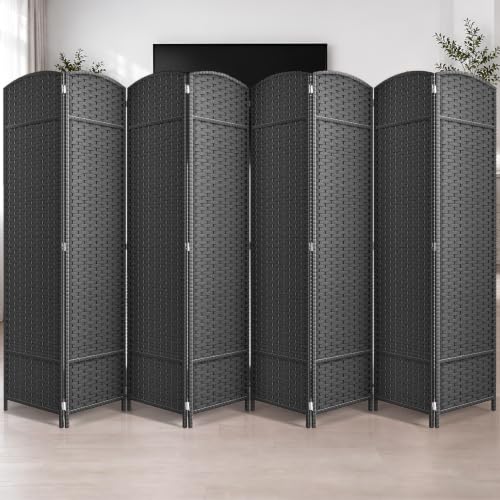
- Best overall for families: Sorbus 8-Panel Room Divider, Mesh Hand-Woven Design — Check on Amazon
- Best with display shelves: HOMCOM 6-Panel Room Divider with 3 Display Shelves, Walnut — Check on Amazon
- Best light wood screen: VEVOR 6-Panel Louvered Wood Room Divider, White — Check on Amazon
- Best for family storage: Tribesigns Wall Room Divider Bookcase with Shelves and Coat Hooks, Brown — Check on Amazon
- Best for a playroom split: VEVOR Retractable Side Awning Room Divider, 118 x 71 in, Black — Check on Amazon
- Bonnlo 6-Panel Wood Room Divider, Natural Paulownia — prose-only pick, see the review below for why
Read the full guide ↓
Disclosure: As an Amazon Associate, dailyhomedecorating.com earns from qualifying purchases. Links to Amazon on this page are affiliate links; they cost you nothing extra. Listing details such as price and availability change often, so check the current Amazon listing before you buy.
Shopping for the best room divider for families under $700 is a different exercise from shopping for a divider for a quiet adult household, because a family divider leads a harder life. It will be leaned on by a teenager carrying laundry, bumped by a ride-on toy, used as the wall of a blanket fort, hidden behind during hide-and-seek, and wiped down after encounters with juice, markers and whatever the dog brought in. It stands in the traffic of the house, not in a styled corner. So this guide judges every pick the way a parent actually will: does it stand steadily when brushed, does it forgive knocks without splintering or toppling, does it clean up with a damp cloth, does it pinch small fingers, and does it divide the room in a way that helps family life — a play zone that contains the toys, a homework corner with a fighting chance of quiet, a guest bed screened off when grandparents visit.
The under-$700 budget is genuinely good news for families, because the things that make a divider family-proof are exactly what this tier buys: real timber instead of paper-thin weave, metal hinges instead of plastic, enough weight and width to stand in a proper zigzag, and — on the one tall unit here — a factory anti-tip device. Below you will find six picks across the formats that survive family use, each verified against a real Amazon listing with a recorded price sighting inside this budget, or described honestly without a link where a current price could not be verified. There is a quick picks table, the safety-first method behind the choices, a full review of each pick written around children, pets and traffic, a comparison table, a family-specific buying checklist, the mistakes parents make in this category, and a frank FAQ — including the question every parent asks first, which is whether any divider can keep a toddler out. It cannot, and this guide will not pretend otherwise.
Our headline advice: start with the Sorbus eight-panel if your family space is wide, because its woven wall flexes instead of fighting back when it is bumped, and its span turns a living room into a play zone and an adult zone in one move. Choose the HOMCOM if you want timber with display shelves for the things that must stay up high and out of small hands. And wherever a tall divider stands in a family home, fit its anti-tip hardware the day it arrives — that single habit matters more than any product choice on this page.
In this guide
Quick Picks
Short on time, or comparing several options at once? Each row below names a buyer type and the product that suits it, with a link to the listing where one is verified for this tier.
| Buyer type | Pick | Why it stands out | Link |
|---|---|---|---|
| Best overall for families | Sorbus 8-Panel Room Divider, Mesh Hand-Woven Design | Eight flexible woven panels that forgive bumps — check price on Amazon | Check on Amazon |
| Best with shelves | HOMCOM 6-Panel Room Divider with 3 Display Shelves, Walnut | Timber screen with display shelves above small-hand height — check price on Amazon | Check on Amazon |
| Best light screen | VEVOR 6-Panel Louvered Wood Room Divider, White | An 18.8 lb screen for corners that change daily — check price on Amazon | Check on Amazon |
| Best for storage | Tribesigns Wall Room Divider Bookcase with Shelves and Coat Hooks, Brown | A bookcase wall with hooks and an anti-tip device — check price on Amazon | Check on Amazon |
| Best playroom split | VEVOR Retractable Side Awning Room Divider, 118 x 71 in, Black | A wipe-clean wall that retracts for party day — check price on Amazon | Check on Amazon |
| Best plain timber | Bonnlo 6-Panel Wood Room Divider, Natural Paulownia | Six natural paulownia panels, nothing to climb — prose-only, see review | See review |
How These Picks Were Chosen
The budget filter came first, applied as always to a real listing for the exact configuration reviewed: every linked pick has a recorded price sighting at or under $700, with the sighting history kept in the research notes published alongside this guide — check the current price on Amazon before you buy. One pick is prose-only because its Amazon page showed no featured offer at research time, so its price inside this budget could not be confirmed; it is described fully, with the reason stated in its review, rather than linked on a guess.
The family filter came second, and it removed more products than the budget did. Out went every screen with a reputation for tipping in a straight line, every divider whose panels are thin paper that a thrown toy would puncture, and every tall unit sold without any means of anchoring. In stayed the builds a household can lean on: double-hinged woven panels that flex under impact, solid paulownia frames with metal hinges, a bookcase divider that ships with an anti-tip device, and a retractable wall whose coated fabric wipes clean. We read maker listings and specifications, cross-checked dimensions and materials against independent retail coverage, and weighed the failure modes owners report — wobble, pinch points, finishes that mark — more heavily than the virtues, because in a family home the failure modes are the product.
One honesty note frames the whole guide: a room divider is a visual boundary, not a safety barrier. Nothing here replaces a baby gate at a stair, keeps a determined toddler in or out, or stops a large dog that wants through. What a good family divider does is organize behavior — it gives children a legible map of where play happens, where homework happens and where the adults’ things live, and it gives parents sightline control without a building project. Judged on that job, the six picks below are the strongest this budget offers.
Best Room Divider for Families Under $700: The 6 Picks, Reviewed
Sorbus 8-Panel Room Divider, Mesh Hand-Woven Design
Who it suits: Families splitting a wide living space into a play zone and an adult zone, especially in open-plan homes and basements where the span is measured in double digits.
The Sorbus earns the family headline spot on one mechanical virtue: it bends. Eight panels of hand-woven mesh on a wood frame span roughly 128 to 130 inches flat at about 69 inches tall, and when a child runs a shoulder into it — not if, when — the woven wall flexes, sheds the impact and settles back, where a rigid carved screen would rock, chip or go over. The double hinges fold in both directions, so the wall can zigzag across a basement, curve around a play kitchen, or turn an L that pens the toy zone while leaving the walkway to the kitchen open. At about 23 pounds it is also the wide divider a parent can shift alone when the room needs to become a birthday party by Saturday.
Daily family life suits its other properties too. The mesh weave is wipe-down friendly and hides the evidence of small hands better than a flat painted surface, which shows every print. It passes light and air, so the play side never becomes the dark side — important when the window wall belongs to the adults’ half. And because it folds completely flat, it stores behind a sofa or in a closet when grandparents visit and the room must be whole again. Set it in a confident zigzag, keep the fold angles generous, and it stands with the forgiving steadiness that family traffic demands.
The limits deserve the same plain language. A woven wall is a suggestion to a determined toddler, not an obstacle — it will not hold a climbing child, and no divider in this guide will. Its see-through factor rises at night with a lamp behind it, so it organizes a play zone better than it screens a sleeping one. And the top edge will move if a large dog launches through at speed; the weave forgives it, but the household should know the wall is flexible by design. For the central family job — one wide, forgiving, light-sharing boundary between the toys and the grown-ups — it is the most practical purchase at this tier.
- Eight woven panels span close to eleven feet flat — one purchase divides a whole family room.
- Flexible weave absorbs bumps and brushes instead of chipping, rocking or toppling.
- Wipes clean, shares daylight with the play side, and folds flat when the room must be whole.
Honest limitation: It is a visual boundary only — it will not stop a climbing toddler or a determined dog, and silhouettes show at night with light behind it.
Choose it if your family room is wide and the divider will be bumped weekly. Skip it if you need a screen for a sleeping baby in a lit room — the solid and retractable picks seal sightlines better.
HOMCOM 6-Panel Room Divider with 3 Display Shelves, Walnut
Who it suits: Families who want a timber screen with somewhere to put the things that must live up high — plants, framed photos, the good vase — safely above small-hand altitude.
The HOMCOM brings real timber to the family room: six paulownia wood panels, 67 inches tall, in a louvered slat design with a warm walnut finish, folding in both directions and storing flat. Paulownia’s family virtue is its weight-to-strength balance — this is a genuine hardwood screen that one parent can still carry to another room when the guest bed comes out. The louvered slats soften sightlines while letting air move, which matters when the divider stands near a radiator or across the room’s only airflow path to the children’s corner.
Its signature feature is a family feature in disguise: the three display shelves that slot across the panels lift display objects to adult height. Every family home has a category of things — plants that must not be eaten, photographs in glass, the ceramic made at school that must be honored but not handled — that need a home above the reach of a three-year-old and below the ceiling. The shelves provide exactly that, on a piece of furniture the room needed anyway. Treat them as display ledges for lighter objects, keep anything heavy or precious off the top shelf of all, and the arrangement is stable and sensible.
Set up in a family home, the rules are the usual ones, stated plainly: stand it in a zigzag, never pulled straight; keep it out of the direct line between the toy box and the garden door, because traffic lanes are where screens get hit at speed; and check the hinges after the first month of family use, as you would any folding furniture in a house with children. The louvers will show dust sooner than a flat panel — a soft brush on a Saturday morning is the whole maintenance regime. For families who want the divider to look like furniture and behave like a good citizen, this is the timber pick.
- Solid paulownia panels with metal hinges — a real wood screen that still moves by one adult.
- Display shelves lift plants, photos and breakables above small-hand altitude.
- Louvers soften sightlines while letting air through to the children’s side of the room.
Honest limitation: Shelves are display ledges for lighter objects only, and the screen must stand zigzagged — never straight — in a traffic lane.
Choose it if you want timber, display space up high, and a screen that folds away for guests. Skip it if your household’s main need is a sealed sleeping corner — louvers filter light rather than blocking it.
VEVOR 6-Panel Louvered Wood Room Divider, White
Who it suits: Families who want a light, bright screen for a child’s room divider, a homework corner or a dressing area — one that a parent can move daily without a struggle.
At 18.8 pounds, the VEVOR is the screen a parent will actually reposition — and in family life, the divider that moves is the divider that gets used. Six louvered paulownia panels in a clean white finish stand 66.9 inches tall and span 95.3 inches flat, folding down to a single panel’s footprint (about 66.9 by 15.7 by 4.3 inches) for storage behind a door. That combination makes it the natural homework-corner screen: unfold it at four o’clock to give a schoolchild a visual wall between the desk and the television, fold it away at six, and the room is a family room again. The white finish brightens a child’s room instead of darkening it, and the louvered slats let a parent keep a soft supervisory awareness of the other side — silhouettes and movement register, details do not.
Its lightness is also its discipline. This is a light hardwood screen, and it must be stood in a proper zigzag with generous fold angles; pulled straight in a hallway it will wobble at a brush-past, and it is the wrong pick to stand between a toddler and anything that matters. Place it where its job is visual — a corner, an alcove, the side of a room rather than the middle of a race track — and it behaves impeccably. The water-based painted finish wipes clean of the usual pencil and snack evidence with a damp cloth.
For a shared children’s bedroom, one honest note: the louvers share light generously, so if one child reads late and the other sleeps early, this screen softens the problem rather than solving it — the retractable pick below seals a sleeping corner far more completely. But for the daily choreography of family rooms — homework, dressing, video calls, quiet corners — a screen this light and this storable is the one that fits the routine instead of fighting it.
- The lightest wood screen here at 18.8 pounds — one parent moves it in seconds, daily if needed.
- Folds to one panel’s footprint and stores behind a door between uses.
- White louvered finish brightens a child’s room and wipes clean with a damp cloth.
Honest limitation: Too light to stand in a traffic lane or to barrier anything — it is a visual screen for corners and alcoves, stood in a zigzag.
Choose it if the divider’s job changes daily — homework corner today, guest screen tomorrow. Skip it if you need to seal a sleeping corner against light — choose the retractable wall instead.
Tribesigns Wall Room Divider Bookcase with Shelves and Coat Hooks, Brown
Who it suits: Families drowning in stuff: the divider that corrals books, games, baskets and coats while it zones the room — with the anti-tip hardware family furniture must have.
Every family room has two problems, and the Tribesigns is the only pick here that solves both: the room needs dividing, and the family’s things need somewhere to go. It is a freestanding bookcase wall — about 47.2 inches wide, 11.8 inches deep and 70.9 inches tall — with open shelves and a row of coat hooks on an engineered-wood and metal frame. Stood at the edge of the play zone, it holds the board games, the library books, the basket of chargers and the school bags on its hooks, while its back turns the corner into a defined territory. Children read storage dividers instinctively: the shelf wall is the border of the play country, and borders that hold the toys get respected more than borders that only block the view.
The safety specification is the reason it leads the family storage category: the listing includes an anti-tip device, and on a tall unit that children will pull books from, that device is not an accessory — it is the product. Fit it to the wall exactly as directed, load heavy items on the lowest shelves, keep climbable arrangements of boxes away from its face, and the unit stands as planted furniture. The open-backed shelves also keep a family room feeling airy and let a parent see through the stored objects to the play side, a small supervision dividend that solid screens do not pay.
Its limits are scale and permanence. At under four feet wide it zones rather than closes a room — it will anchor one end of a division, ideally paired with open floor or a screen, rather than span a wide opening alone. It needs assembly, and once loaded it stays where it was built. But for the family whose divider budget competes with a storage budget, this is the purchase that retires both problems in one footprint — and the coat hooks by the door may end the school-bag-on-the-floor era in your house.
- Divides and stores: shelves for games and books, hooks for coats and school bags.
- Anti-tip device included — fit it on day one and load heavy items low.
- Open shelves let parents see through to the play side while zoning the room.
Honest limitation: Only about four feet wide, so it anchors a division rather than spanning one, and it needs assembly plus wall anchoring.
Choose it if your room needs storage as much as separation, especially near the entry. Skip it if you need to close a wide opening — pair it with a screen, or start with the Sorbus.
VEVOR Retractable Side Awning Room Divider, 118 x 71 in, Black
Who it suits: Families with a playroom, basement or loft that must transform — a full wall between the play zone and the rest of life, retracted away when the whole space is needed.
Some family divisions are not corners but transformations: the basement that is a playroom all week and a guest suite on Friday, the loft where the children sleep when cousins visit, the open room that hosts a birthday party once a month and a homework club every afternoon. The VEVOR retractable is built for exactly that rhythm. Its cassette fixes at one side of the opening and a coated fabric wall pulls across 118 inches — nearly ten feet — at 71 inches tall, latching at the far side. Across, it is the most complete division in this guide: one continuous surface with no panel gaps for small fingers to post toys through and no louver glow. Retracted, it disappears, and the room is its full size again with nothing folded in a corner for a toddler to pull over.
The family specifications are quietly excellent. The fabric is a high-density 280 g/m² polyester with a PU coating — waterproof and wipe-clean, which in a playroom translates to juice, paint-fingers and the occasional felt-tip incident coming off with a damp cloth instead of living on the wall forever. The frame is powder-coated aluminum, the spring retraction is smooth and one-handed for a parent carrying a child on the other hip, and the whole system weighs 18.8 pounds. Because it mounts at the side of an opening rather than standing in the middle of a room, there is nothing freestanding to topple — a genuine safety structural advantage in a house with climbers.
The costs are commitment and installation. It must be screwed to a wall, post or floor fitting, so it belongs to homeowners or long leases, and it divides only its own opening. A determined toddler can duck under a bottom edge if the installation leaves a gap, so fit it low and check the clearance as you would a gate. And like every pick here it divides sight, not sound — the playroom will still be audible, merely invisible. For the family whose room changes jobs weekly, no folding screen keeps up with a wall that appears and vanishes on demand.
- Pulls across nearly ten feet and retracts completely — nothing freestanding to topple or store.
- Coated fabric wipes clean of juice, paint and felt-tip; aluminum frame shrugs off playroom humidity.
- The most complete visual seal here — no panel gaps, no louver glow, one continuous surface.
Honest limitation: Needs screwed fixings and divides one opening only; fit it low so small children cannot duck under the bottom edge.
Choose it if your playroom or basement changes jobs weekly and the opening is permanent. Skip it if you rent without permission to fix hardware — the freestanding picks need no screws.
Bonnlo 6-Panel Wood Room Divider, Natural Paulownia
Who it suits: Families who want a plain, honest natural-wood screen — six paulownia panels with no shelves, no print and nothing to climb, poke or post toys through.
The Bonnlo is the traditionalist’s family screen: six panels of natural paulownia wood, about 5.9 feet tall and roughly 108 inches wide unfolded, hinged to fold in the classic zigzag and finished in a plain natural tone that suits a family room without competing with everything in it. There is a real argument for plainness in a house with children. No display shelves invite climbing or demand dusting around ornaments; no artwork print dates or dominates; no louvers post small toys through to the other side. It is a wall of warm wood that does one job — stand between the play zone and the rest of the room — and does it with the calm of furniture that has existed in family homes for a century.
Paulownia suits the role: a genuine hardwood light enough for one adult to fold and carry, with a grain that forgives the small dents of family life more gracefully than a painted finish, which chips white at every knock. In its working zigzag the span honestly covers about seven feet — enough for a sleeping corner, a changing area for a baby, or the end of a living room given over to trains. Folded, it stands flat in a closet or behind the sofa, out of the way and out of reach.
Why is there no Amazon link on this pick? Because honesty about price is the rule of this guide: we verified this screen’s listing and specifications, but its Amazon page showed no featured offer at research time, so no current price could be confirmed inside the under-$700 budget. Rather than link it on hope, we describe it prose-only: if you find this exact six-panel natural variant listed inside this budget when you shop, it is a legitimate contender for the most fuss-free family screen here — confirm the panel count and finish on the listing itself, because the same name covers several sizes. Families who need a link-verified price today should start with the HOMCOM or the Sorbus above.
- Six plain paulownia panels — nothing to climb, post toys through, or dust around.
- Natural finish forgives family dents better than painted surfaces, which chip at every knock.
- Folds flat for storage and covers about seven feet honestly in its working zigzag.
Honest limitation: No verified current price inside this budget could be confirmed, so it carries no link here.
Choose it if you find the exact six-panel natural variant inside this budget and want timber without fuss. Skip it if you need storage, shelves or a sealed sleeping corner — the Tribesigns and the retractable serve those jobs.
Prose-only pick — no Amazon link, for the pricing reason stated above.
Comparison Table
| Product | Type | Best use | Link |
|---|---|---|---|
| Sorbus 8-Panel Room Divider | Folding woven screen, 8 panels, ~69 in tall | Wide play-zone division that flexes under bumps | Check on Amazon |
| HOMCOM 6-Panel Divider with Shelves | Folding wood screen with shelves, 67 in tall | Timber division plus display space up high | Check on Amazon |
| VEVOR 6-Panel Louvered Wood Divider | Folding louvered wood screen, 66.9 in tall | Homework corners and daily-moving divisions | Check on Amazon |
| Tribesigns Wall Room Divider Bookcase | Bookcase divider, 47.2 x 70.9 in | Zoning plus toy, book and coat storage | Check on Amazon |
| VEVOR Retractable Room Divider, 118 x 71 in | Retractable fabric wall, 118 x 71 in | Playrooms and basements that transform | Check on Amazon |
| Bonnlo 6-Panel Wood Room Divider, Natural | Folding wood screen, 6 panels, 5.9 ft tall | Plain natural timber with no fuss | See review |
How to Choose the Best Room Divider for Families Under $700
- Start with the topple test. Stand every candidate in its working shape and ask what happens when a child brushes it at running speed. Wide zigzags, flexible weaves and wall-anchored units pass; straight-line screens in traffic lanes fail. Placement is half the product: corners and alcoves forgive, race tracks do not.
- Anchor anything tall. If the divider is a shelving unit, fit its anti-tip device to the wall the day it arrives, load heavy items on the lowest shelves, and never let boxes become steps against its face. This single habit is worth more than any brand choice.
- Choose surfaces that wipe. Coated fabrics, woven mesh and painted or natural wood all clean with a damp cloth. Raw paper weaves and delicate prints do not forgive juice, paint or felt-tip — in a family home, cleanability is a specification, not a preference.
- Mind fingers and hinges. Double hinges that fold both ways are standard on good screens, but teach children that the folds are not doors, and keep the screen’s fold line out of the path of ride-on toys, which find hinges the way magnets find iron.
- Match privacy to the family job. Play zones want light-sharing division (mesh, louvers) so the play side stays bright and supervisable; sleeping corners want sealing division (solid panels, retractable fabric) so a baby can nap while the house lives on the other side.
- Plan the transformation. Family rooms change jobs — playroom, guest room, party room, homework room. The divider that folds flat, retracts away or rolls with the routine will be used for years; the one that blocks the transformation will be resented by Christmas.
- Divide behavior, not just space. The most successful family dividers make territories legible to children: toys live behind the shelf wall, homework happens inside the screen corner. A divider a child can read is a divider a child respects.
- Keep sound expectations honest. Every pick here divides sight, not sound — a napping baby behind any of them still hears the house. If true quiet is the goal, that is a door-and-partition project, and no purchase in this guide should be made expecting it.
Design-conscious parents can see the same budget spent with a style-first lens in Best Room Divider For Modern Homes Under $700, while the general guide at Best Room Divider Under $700 compares these formats without the family filter.
Family Life With a Divider: Placement Rules That Matter
Where a divider stands decides whether it is a help or a hazard, and family placement follows three rules. First, never stand a folding screen in its straightest, tallest-strung shape in the line between two doors — that is the household’s highway, and everything on a highway gets hit. A generous zigzag in a corner or along a wall stands for years; a straight screen in a walkway falls by Friday. Second, give the divider a territory job with a visible logic: the shelf wall at the edge of the play zone, the screen around the homework desk, the retractable across the basement. Children cooperate with divisions they understand, and a divider that moves rooms every week teaches them it means nothing. Third, keep the fall zone clear: nothing precious, hard or breakable should live within a panel’s length of a freestanding screen, so that the one time it does go over — a dog, a cushion fight, a learning-to-walk pull-up — the incident is a noise, not an injury or a loss.
Supervision geometry is the quieter benefit worth planning for. Louvered and woven dividers let a parent register movement and presence on the play side without hovering inside it, which is exactly the balance older children want: a territory of their own that still feels connected to the house. Sealing dividers serve the opposite need — a sleeping baby, a child doing timed exam practice, a parent on a work call — and the wisest family homes use one of each: a soft divider for the everyday zoning, a sealing one for the hours that need a wall. Both live inside this budget, which is the real dividend of the under-$700 tier for families.
Setting Up a Family Divider Safely, Step by Step
Product choice is only half of family safety; setup is the other half, and it follows a sequence worth doing deliberately on the day the divider arrives. Begin with placement before assembly: walk the room’s traffic lines — door to kitchen, sofa to bathroom, toy box to garden — and mark the lanes in your head. The divider’s final position should touch none of them. A screen belongs along a wall, across a corner or at a zone’s edge, where the household’s movement flows around it rather than through it. If the only available position crosses a lane, choose a fixed format — the retractable or the anchored bookcase — because freestanding furniture in a lane is a countdown, not a risk.
For folding screens, the setup ritual is the zigzag. Open the screen fully, then fold alternate panels to generous angles — think of a wide W rather than a tight accordion — and test it with a firm two-handed push at shoulder height from both sides. A correctly folded screen absorbs the push by flexing its angles; a screen pulled too straight answers with a rock. Adjust until the push test passes, then check the feet: every panel’s base should sit flat, with a felt pad or a rug edge under any foot that rocks on hard flooring. For the shelving divider, assembly day is anchoring day: build it empty, position it, fit the anti-tip strap to a wall stud exactly as the maker directs, and only then load it — heaviest items lowest, nothing climbable stacked against its face, and a household rule that the shelves are not a ladder, stated once and enforced always.
For the retractable, installation is the safety work: fix the cassette and receiver plumb and low enough that the fabric’s bottom edge runs close to the floor along its whole span, then pull the wall across a dozen times to confirm the latch holds and the retraction is smooth. Walk the closed wall with a child’s eye view — kneel to toddler height and look for the gaps a small person would find interesting: under the fabric, around the cassette, behind the first fold of a screen. Those gaps are where fingers and toys will go, and most of them close with placement rather than hardware. Finish with the family briefing, which sounds excessive and works anyway: show children the divider’s job, let them open and close the formats they are allowed to touch, and make the boundary a piece of household geography they helped install. Dividers that are explained get respected; dividers that appear mysteriously get tested. A month later, repeat the push test and the hinge check — family furniture settles, straps loosen, and the five-minute re-check is the cheapest insurance in this entire guide.
Common Buying Mistakes
- Expecting a divider to contain a toddler. Dividers organize space; gates and doors contain children. Buying one to do the other’s job disappoints everyone.
- Skipping the anti-tip strap on a shelving divider because it felt solid empty — a loaded, pulled-on bookcase is a different object from an empty one.
- Standing a screen straight in a walkway, then blaming the product when family traffic knocks it flat.
- Choosing a delicate print or paper weave for a play zone, where cleanability decides whether the divider survives the year.
- Loading display shelves with heavy or precious objects at climbing height.
- Buying a sealing divider for a play zone and leaving the play side dark, or a light-sharing divider for a nursery and leaving the baby in the glow.
- Forgetting the transformation test: a divider that cannot fold, retract or move will fight every birthday party, guest visit and furniture rearrangement.
- Treating hinges as toys’ moving parts — teach children the folds are not doors before the first pinched finger teaches them instead.
Final Recommendation
- Most families: Sorbus 8-Panel Room Divider — the wide, forgiving wall between the toys and the grown-ups.
- Timber with display space: HOMCOM 6-Panel Divider with Shelves — breakables up high, screen down low.
- Daily-moving corners: VEVOR 6-Panel Louvered Wood Divider — light enough for the homework-corner routine.
- Storage-starved rooms: Tribesigns Wall Room Divider Bookcase — fit the anti-tip strap and load it low.
- Transforming playrooms: VEVOR Retractable Room Divider — a wipe-clean wall that vanishes on party day.
- Plain natural timber: Bonnlo 6-Panel Wood Room Divider — verify the live price inside this budget before ordering.
Our top two for families are the Sorbus, because width and forgiveness are the two things family traffic tests daily, and the Tribesigns, because the family room’s second problem is always storage. Fit the anchors, place screens out of the highways, choose surfaces that wipe — and the divider stops being furniture you protect and becomes infrastructure the household runs on. Apartment families working with leases and smaller rooms will find the no-drill, small-footprint treatment in the small-apartments guide in this series, and compact homes of every kind are covered by the small-spaces guide.
Frequently Asked Questions
Can a room divider keep a toddler in or out of an area?
No — and any listing that implies otherwise should be distrusted. Every divider in this guide is a visual boundary that a determined toddler can push, climb or duck under. Use dividers to organize family space and signal territories; use gates and doors where a child must actually be contained, especially anywhere near stairs, kitchens or exits.
Which divider type is safest in a house with children?
The safest format is the one that cannot fall: a retractable wall fixed at the side of an opening has nothing freestanding to topple. Next come wall-anchored shelving dividers with their anti-tip devices fitted. Folding screens are safe when stood in a generous zigzag out of traffic lanes — placement and anchoring matter more than brand.
How do I stop a shelving divider from tipping?
Fit the anti-tip device to a wall stud exactly as the maker directs, on the day the unit is built — not after it is loaded. Load the heaviest items on the lowest shelves, keep step-like arrangements of boxes away from its face, and re-check the strap whenever the unit is moved. A tall divider a child can pull books from should be treated like any tall bookcase in a family home.
Which divider is easiest to clean after children?
Coated and woven surfaces win: the retractable’s PU-coated fabric and the Sorbus’s woven mesh both wipe down with a damp cloth, and natural wood forgives small dents without showing chips. Painted finishes clean well but show every mark until you wipe them; delicate prints and raw paper weaves are the hardest to keep in a play zone.
Will a divider give my child a quieter homework corner?
It will give a visually quieter one, which for most children is the larger half of concentration: a screen removes the television, the siblings and the room from the desk’s sightline. It will not remove their sound. Pair the divider with the house rule that the corner is a quiet zone, and the combination works better than either alone.
Can these dividers survive a large dog?
They survive a calm large dog indefinitely and a launching one occasionally. Woven panels flex under impact, anchored units ignore it, and a retractable has nothing standing to knock over. What no divider survives gracefully is being used as a scratching post or a gate substitute — train the boundary as you would a doorway, and the divider’s job stays visual.


