Where to buy
Check the latest price, availability and delivery on Amazon. Orders are placed on Amazon. We may earn a commission from qualifying purchases.
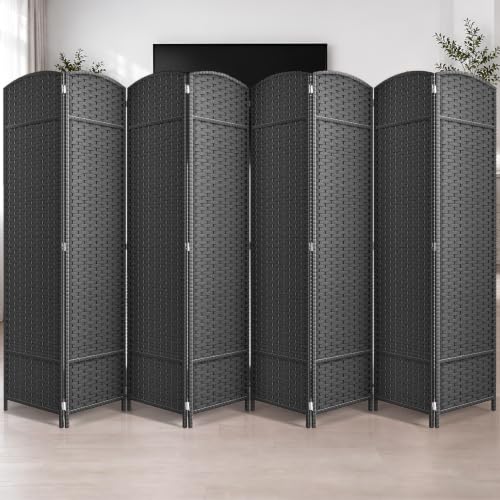
- Best overall for families: Sorbus 8 Panel Room Divider, Mesh Hand-Woven Design, Double Hinged — Check on Amazon
- Best for supervised play zoning: VEVOR Wood Room Divider, 6 Panel Louvered, 66.9 Inches Tall — Check on Amazon
- Best for splitting a shared kids’ bedroom: Bonnlo Wood Room Divider, 6 Panel, 5.9 Ft Tall — Check on Amazon
- Best for family photos and display: HOMCOM 6 Panel Room Divider with 3 Display Shelves, Walnut — Check on Amazon
- Best for a big family room or basement: ECOMEX 8 Panel Wood Room Divider, Louvered — Check on Amazon
See 1 more Amazon option
- Best for a calm reading corner: Rose Home Fashion Bamboo Room Divider, 6 Panel, 5.6 Ft Tall — Check on Amazon
Read the full guide ↓
Disclosure: As an Amazon Associate, dailyhomedecorating.com earns from qualifying purchases. Links to Amazon on this page are affiliate links; they cost you nothing extra. Listing details such as price and availability change often, so check the current Amazon listing before you buy.
The best room divider for families under $1000 has a harder job than any other divider in the house, because a family divider is never just dividing space — it is refereeing it. It splits one bedroom between siblings who need a border they can both respect. It carves a homework corner out of a noisy kitchen-diner, a play zone out of a living room adults would also like to use, and a guest sleeping spot out of a room that spends the rest of the week as a den. And it does all of that in the one environment where furniture gets climbed near, crashed into, drawn towards with sticky hands, and repositioned by whoever lost the argument about where it should stand. A divider that is merely pretty will not survive that brief. A divider that is merely sturdy will not be forgiven for the light it steals or the fingers it pinches.
So this guide applies a family filter to the same under-$1000 tier covered in our general roundup of the Best Room Divider Under $1000. Every pick below was judged first on the things families actually report caring about after the first month: whether the screen stands steady in a sensible configuration and does not rely on being stretched straight; whether its surfaces wipe clean after the inevitable encounter with juice, felt-tip or mystery stickiness; whether its hinges and panel edges are free of the obvious pinch and splinter hazards; whether it is light enough for one adult to move during a room reset but substantial enough not to skate across the floor when a toddler leans on the room, if not on the screen itself. Only after those tests did we rank the things every guide ranks — width, height, opacity and looks. A family divider also has to grow with the family: the screen that pens a play corner for a four-year-old this year should be able to split a teenagers’ shared room in five years’ time, and the picks here were chosen with that second and third life in mind.
Our short answer: start with the Sorbus 8 Panel woven screen, whose wipe-clean fibre panels, double hinges and roughly 128 inches of adaptable width make it the most forgiving divider a busy household can own. If your family’s problem is supervision — keeping an eye and ear on a play zone while you cook — the louvered VEVOR is the pick, because its slats divide the room without sealing it. If the problem is two children and one bedroom, the tall, solid Bonnlo draws the firmest line. The full reviews below give the family-specific checks for each pick, the honest limitations parents should hear before buying, and the placement rules that keep any tall screen sensible around children. If the budget is tighter, Best Room Divider For Families Under $700 applies the same family filter one rung down.
In this guide
Quick Picks: best room divider for families under $1000
Short on time? Match your family’s actual friction point to the screen built for it. Every pick sits under the $1000 ceiling — check the live listing for the current price.
| Family situation | Pick | Why it stands out | Link |
|---|---|---|---|
| Best overall for families | Sorbus 8 Panel Room Divider | Wipe-clean woven panels, about 128 in of double-hinged width, light at roughly 23 lb | Check on Amazon |
| Best for supervised play zoning | VEVOR 6 Panel Louvered Wood Room Divider | Slats divide the room while parents keep sight and sound of the play zone | Check on Amazon |
| Best for a shared kids’ bedroom | Bonnlo 6 Panel Wood Room Divider | 71 in tall solid panels draw a real border between two children’s spaces | Check on Amazon |
| Best for family display | HOMCOM 6 Panel Room Divider with 3 Shelves | Three removable shelves, each rated to 22 lb, for photos, plants and treasures | Check on Amazon |
| Best for big family rooms | ECOMEX 8 Panel Wood Room Divider | Eight louvered wood panels, about 128 in wide, arrives fully assembled | Check on Amazon |
| Best for a reading corner | Rose Home Fashion Bamboo Room Divider | Gentle bamboo zoning at 5.6 ft — a calm nook without a visual wall | Check on Amazon |
How we chose these room dividers for families
The family filter starts with stability, because it is the specification no product photo shows. A folding screen stands by geometry: zigzagged, it is a stable structure; stretched straight, it is a line of hinged panels waiting for a reason to fold itself flat. We favoured screens whose panel counts and hinge designs make generous, stable configurations easy — two-way hinges throughout this guide — and we note in each review how the screen wants to be stood in a house where it will be brushed past daily. Weight cuts both ways for families. A screen an adult cannot move alone will never be moved, and family rooms need to re-form constantly; but a screen so light that it travels when leaned against is a nuisance. The picks here sit in the sensible middle: all are one-adult moves, none is a featherweight toy.
Second, surfaces. Family dividers live at hand height for small people, which means they are touched constantly and cleaned often. Woven polypropylene fibre wipes down without complaint and does not splinter; painted wood finishes wipe clean and can be touched up; natural bamboo is beautiful and best kept for calmer corners with older children. We also looked at panel construction for the failure modes of childhood: thin slats that invite poking fingers and posted toys, fragile paper-style panels that puncture, and sharp unfinished edges. Louvered picks are recommended here for supervised, open-plan zoning — where an adult is present and the slats’ see-and-hear-through quality is the point — rather than as barriers toddlers will be left behind.
Third, adaptability across childhood. The expensive mistake is buying a divider so specific to a toddler’s play corner that it is useless by primary school. Eight-panel screens that can run long today and fold into a shorter, denser screen tomorrow, and six-panel screens that can migrate from playroom to shared bedroom to guest duty, earn their place on value over a decade, not a season. Finally, we checked the practicalities: no-assembly designs that can be working within minutes of a delivery, finishes that do not demand precious handling, and folded sizes that store in a cupboard or garage without drama. What survived is six screens that divide family space in six genuinely different ways.
The best room dividers for families under $1000 in detail
1. Sorbus 8 Panel Room Divider, Mesh Hand-Woven — best overall for families
Who it suits: Most families, most rooms, most weeks of the year. The Sorbus is eight double-hinged panels of hand-woven polypropylene mesh on a poplar frame, standing 69 inches tall and stretching to about 128 inches wide, yet weighing only about 23 pounds complete. That combination — maximum adaptable width, minimum fuss — is exactly what family space demands. This week it walls off a play zone at the end of the living room; next month it splits the spare room for visiting cousins; next year it gives a teenager a private end of a shared bedroom. Because the panels fold in both directions, the same screen runs long and low-zigzagged, turns corners around furniture, or concertinas into a short, dense divider for a narrow gap.
The woven fibre is the family-friendly heart of the design. It has no slats to post toys through, no paper to puncture, and no finish to chip: it wipes clean after sticky-hand contact, tolerates the humidity of a bathroom-adjacent dressing corner, and does not dent when a ride-on toy loses an argument with it. The weave is substantially opaque in normal light, so a child changing behind it or a guest sleeping behind it gets real privacy, while still softening daylight instead of blocking it outright. Stood in a proper zigzag — which eight panels make easy — it is steady in the way family furniture needs to be, and at 23 pounds a parent can fold it flat and carry it to a cupboard one-handed while holding a child’s hand with the other, a specification no manufacturer lists and every parent understands.
Pros: Wipe-clean, dent-resistant woven panels suit daily family contact. About 128 in of width covers the widest family zoning jobs. Double hinges reconfigure for corners, L-shapes and short dense runs. Light enough for easy one-adult moves and storage. No slats, paper or fragile finishes for small hands to damage.
Honest limitation: Under strong backlight — a lamp directly behind the screen at night — the weave can silhouette shapes, so for a guest bed place the light on the room side, not behind the screen. The woven texture also traps dust over time and wants a vacuum brush pass more often than smooth wood. And while it folds flat, eight panels make the thickest folded stack in this guide; measure the cupboard before assuming it lives there.
Choose it if you want one divider that follows the family from play corner to teen border. Skip it if you need absolute blackout privacy at night with lights behind the screen. Check on Amazon for current colours, and View on Amazon to confirm the extended width against your room.
2. VEVOR Wood Room Divider, 6 Panel Louvered — best for supervised play zoning
Who it suits: Parents who need a boundary children respect but adults can see and hear through. The VEVOR’s six louvered wood panels stand 66.9 inches tall and open to roughly 94.5 inches, and the slatted design is the whole point for a play zone: it marks a clear “toys live here” territory in an open-plan room while a parent cooking ten feet away keeps visual and audio contact with what is happening behind it. Anyone who has tried to supervise through a solid screen — or given up and folded the screen away — will recognise the value immediately. It is equally good around a homework desk, where the slats cut the distraction of the television’s movement without isolating the child doing the homework.
The two-way 360-degree hinges let the screen zigzag for stability, wrap an L around the end of a sofa to close a play corner, or fold flat against a wall when the room turns back into adult space for the evening. The solid wood frame gives it a planted, furniture-like feel that suits a living room it will share with the family’s best seating. A note of family honesty about louvered screens generally: the slats are a boundary for children old enough to understand boundaries. For toddlers in the climbing-and-posting stage, treat any louvered screen as a supervised-zone divider, keep it out of the fall line of climbing furniture, and prefer the woven Sorbus as the barrier a very small child will actually lean against.
Pros: Slats preserve sight and sound for supervision while marking territory clearly. Two-way hinges form stable zigzags and corner Ls. Solid wood build suits permanent living-room placement. Folds flat for evening room resets. Height blocks seated sight lines from the rest of the room.
Honest limitation: Louvers are not a full privacy barrier — at oblique angles and under backlight, shapes show through the slats, so it is the wrong screen for a changing area. Slatted wood also asks for dusting along each slat, and small toys will occasionally be posted through the gaps by experimental toddlers, which is charming exactly once.
Choose it if your divider’s job is supervised zoning in shared living space. Skip it if the zone behind it needs true privacy. Check on Amazon for finish options, and View on Amazon for the full dimensions.
3. Bonnlo Wood Room Divider, 6 Panel — best for a shared kids’ bedroom
Who it suits: Two children, one bedroom, and a peace treaty that needs a physical border. The Bonnlo is the tallest screen in this guide at 71 inches, with six solid paulownia panels spanning about 108 inches extended, and solid is the operative word: unlike louvered or woven screens, its panels block sight completely at every angle and under every light. Each child gets a side that is genuinely theirs — a bed, a small desk, a shelf of treasures — and the squabbles move from “I can see your mess” to the more negotiable territory of noise and borrowed chargers. For a child who reads late and a sibling who sleeps early, that visual wall is the difference between a shared room that works and one that generates a nightly negotiation.
Paulownia keeps the screen light enough for a parent to reposition during a room reorganisation, and the water-based paint finish wipes clean and presents a smooth, splinter-free face — worth checking on any wood screen destined for a children’s room, and a box the Bonnlo ticks. It needs no assembly, so the border can be in place the same afternoon the decision is made. Stand it in a firm zigzag rather than a straight line, keep the walkway to the door clear on both sides, and consider which side gets the window before you commit: solid panels block light as completely as they block views, so the far side of the room will want its own lamp for reading and homework. That is a fair trade for real privacy, and it is better planned than discovered.
Pros: Tallest pick at 71 in — a convincing border for siblings. Solid panels give complete visual privacy at all angles. Light paulownia build is easy for adults to reposition. Wipe-clean painted finish, no assembly. Wide enough at about 108 in to split most shared bedrooms.
Honest limitation: It blocks light as fully as it blocks views, so the window-far side needs its own lighting. The light build means configuration matters — zigzag it properly, especially in a room where it will be brushed past with school bags daily. Styling is plain and functional; in a carefully themed children’s room it is a neutral backdrop rather than a feature.
Choose it if sibling privacy is the problem to solve. Skip it if the room has one small window and both children need its light. Check on Amazon for colours, and View on Amazon to verify the height against the room.
4. HOMCOM 6 Panel Room Divider with 3 Display Shelves, Walnut — best for family display
Who it suits: Families whose divider will stand in the living room and be looked at every day — and who would like it to hold the things that make a house feel like theirs. The HOMCOM is a six-panel paulownia louvered screen, 67 inches tall in walnut, with three removable display shelves that slot across the panels, each rated to 22 pounds. School photos, a plant, the current library books, a child’s rotating exhibition of artwork and treasures: the shelves turn a partition into the family’s display furniture, and they brace the fold of the screen at the same time, so the configured shape feels settled rather than provisional.
Family use asks two honest things of this design. First, shelf discipline: 22 pounds per shelf is a plant-and-books rating, not a bookcase rating, and in a family home the shelves should hold the light and the loved, with heavy storage kept on a proper Best Bookshelf For Families Under $1000. Keep breakable treasures on the shelf height that matches the age of the household — high shelves for the good frames while children are small, lower ones for the rotating art gallery they curate themselves. Second, accept that a loaded shelf divider is a settled piece of furniture: you unload it before you refold it. For most living rooms that is no hardship, because the divider’s job there is permanent — zoning the family room into seating and play or work areas — and the shelves are precisely what makes it look like it belongs.
Pros: Shelves add display space families genuinely use. Shelf bracing makes the layout feel stable and settled. Louvered panels keep light moving through the family room. Walnut finish suits warm, lived-in interiors. Shelves remove and the screen folds flat when needed.
Honest limitation: Loaded shelves make reconfiguration a two-step job — unload, then fold. Shelf capacity is for display, not bulk storage. The louvered panels share the family trait of partial see-through at angles, so this is a zoning divider, not a privacy wall for changing behind.
Choose it if the divider is a permanent living-room feature and display space is scarce. Skip it if you refold your divider weekly. Check on Amazon for availability, and View on Amazon to see the shelf arrangement.
5. ECOMEX 8 Panel Wood Room Divider, Louvered — best for big family rooms
Who it suits: Families dividing a genuinely large space — the long living room, the basement family room, the open-plan ground floor where the children’s end and the adults’ end need to coexist. Eight louvered paulownia panels span about 128 inches at 67 inches tall, and the screen arrives fully assembled, which in a busy household is not a luxury but a scheduling mercy: the divider is working the same evening it arrives, not waiting for a free weekend and a second adult. The 360-degree hinges fold either way, so the long run can zigzag across a basement, turn an L to enclose a play end, or fold back to a shorter screen as the family’s use of the room changes.
The louvered panels suit big family rooms for the same reason they suit play zoning: they divide territory while sharing light and air, so the children’s end does not feel exiled and adults can hear what is happening at the far end of the room. In a basement, where light is precious and often comes from small windows at one end, that light-sharing is the difference between a divider that gets used and one that gets folded away by February. The smooth wood surfaces dust quickly — a real consideration at this size, since eight panels of anything is a cleaning commitment — and the fully assembled construction means no hinge-alignment homework before it earns its keep.
Pros: Fully assembled — working the day it arrives. About 128 in of coverage for large rooms and basements. Louvers share light and air across a big divided space. Two-way hinges adapt the long run to L and zigzag layouts. Smooth panels are quick to dust.
Honest limitation: The delivery box is large because the screen is assembled — check door and stair access first. Louvers give partial privacy only, so it will not create a true guest bedroom out of a basement corner where someone needs to change. Paulownia is light wood; in the highest-traffic pinch points of a family room, expect the screen to need its zigzag kept honest.
Choose it if the room is big and your assembly time is zero. Skip it if access is tight or the zone needs full opacity. Check on Amazon for finishes, and View on Amazon for dimensions.
6. Rose Home Fashion Bamboo Room Divider, 6 Panel — best for a reading corner
Who it suits: The family that needs a calm corner more than it needs a wall. At 5.6 feet tall, the Rose Home Fashion’s natural bamboo panels in a solid wood frame will not hide a standing adult — and for a reading nook, that is precisely right. Tucked into a living-room corner with a chair, a cushion and a small lamp, it creates the feeling of a separate, quieter place for a child with a book (or a parent with one) without the visual heaviness of a full-height screen in the middle of family life. The bamboo filters light softly, so the nook glows rather than glooms, and the whole screen is light enough to fold away when the corner returns to general use.
Bamboo suits this gentler role in a second way: it is the calmest-looking material in this guide, and children read rooms the way adults do — a natural, soft-textured corner invites settling in a way a barrier does not. The solid wood frame gives the panel edges structure that all-bamboo budget screens lack. Keep it in dry, indoor conditions, treat it as furniture for the quieter end of the house rather than the crash zone of a playroom, and it will serve for years — first as the story corner, later perhaps as the screen behind which a teenager’s desk gains a little dignity. It is the specialist pick in this guide, and it knows it.
Pros: Natural bamboo creates a genuinely calm, inviting nook. Light and quick to fold away or move. Soft light filtering suits reading corners. Solid wood frame adds edge structure. Six panels wrap a corner neatly.
Honest limitation: At 5.6 ft it offers seated privacy only — nobody should buy it as a dressing screen. Natural bamboo tone varies between panels and batches. It is a dry-room, gentle-duty screen, not the pick for a boisterous playroom or a steamy bathroom.
Choose it if you are building a reading or quiet corner. Skip it if you need standing-height privacy. Check on Amazon for availability, and View on Amazon for panel dimensions.
Comparison table
| Pick | Panels | Height | Extended width | Material | Family strength |
|---|---|---|---|---|---|
| Sorbus 8 Panel | 8 | 69 in | ~128 in | Woven PP fibre, poplar frame | Wipe-clean, adaptable, no slats or paper |
| VEVOR Louvered | 6 | 66.9 in | ~94.5 in | Wood, louvered slats | See-and-hear-through supervised zoning |
| Bonnlo 6 Panel | 6 | 71 in | ~108 in | Solid paulownia, painted | Full privacy border for siblings |
| HOMCOM with Shelves | 6 | 67 in | 6-panel span | Paulownia, louvered, walnut | Display shelves for family treasures |
| ECOMEX 8 Panel | 8 | 67 in | ~128 in | Paulownia, louvered | Big-room division, zero assembly |
| Rose Home Fashion Bamboo | 6 | 5.6 ft | 6-panel span | Bamboo, solid wood frame | Calm reading-corner zoning |
How to choose a room divider for a family home
Start with the argument you are actually settling. Family dividers fail when they are bought for a vague sense of “more privacy.” Name the job in one sentence — the siblings need a border, the play zone needs containing, grandmother needs a sleeping corner with dignity, the homework desk needs shelter from the television — and the right screen usually selects itself from the table above. A border needs height and opacity (Bonnlo). Containment with supervision needs slats (VEVOR, ECOMEX). A sleeping corner needs opacity and width (Sorbus, Bonnlo). A corner that invites calm needs the opposite of a wall (Rose Home Fashion).
Run the stability routine before anything else. Whatever you buy, stand it in a zigzag or an L, never stretched straight; put felt pads under the feet on hard floors so it does not creep; and place it so that if it is ever knocked, it falls toward a wall or heavy furniture rather than into a walkway. Keep the route to doors and bathrooms genuinely clear — a divider that narrows a night-time path to a squeeze will be resented by every barefoot person in the house. These are placement habits, not product features, and they matter more to family life with a tall screen than any specification on the box.
Match the surface to the age of your children. Under-fives put hands and toys on everything: favour wipe-clean woven fibre or painted finishes, avoid delicate paper-style panels, and treat louvered screens as supervised-zone dividers rather than barriers. Primary-age children need borders that survive being brushed, bumped and occasionally redecorated with stickers — woven and painted surfaces forgive all three. Teenagers need the one thing younger children do not care about: real visual privacy, which means solid panels or a woven screen with the lamp on the right side of it.
Buy for the second job, not just the first. Children’s needs turn over fast, and a divider is a decade-long piece of furniture if you let it be. Before ordering, ask what the screen does when the current problem outgrows itself. Eight-panel screens reconfigure the most dramatically; shelf screens settle into permanent furniture; the bamboo screen graduates from story corner to desk backdrop. The cheapest divider is the one you do not replace in three years. Families working through a whole room at once may also find Best Bookshelf For Families Under $1000 useful alongside the shelf-equipped pick here.
Measure twice: the opening and the cupboard. The screen needs to cover the opening at a stable zigzag — roughly three quarters of its extended width is usable — and it needs a home when folded. Check both numbers before ordering, including the folded thickness of an eight-panel stack. A divider with nowhere to go during a party or a floor-clean becomes a divider that lives in the way, and family goodwill toward it evaporates.
Common mistakes families make with room dividers
Stretching the screen straight to make it reach. A straight-run screen is an unstable screen, full stop — and in a family home it will be tested by the first passing school bag. Buy enough width to zigzag. Putting the lamp behind the woven screen. Woven and louvered screens silhouette under backlight; for a guest bed or a teen’s corner, keep the light source on the room side. Loading display shelves like a bookcase. The HOMCOM’s shelves are rated at 22 lb each for display — plants, frames, a few books — and heavy or top-loaded shelves make any screen tippy. Blocking the night route. If the divider narrows the path to the bathroom or a child’s bed, move the divider, not the family. Expecting sound control. A divider settles visual arguments only; siblings will still hear each other perfectly, and homework focus improves because the television is out of sight, not out of earshot. Buying a toddler-specific screen. A divider bought only for the play-corner years is money spent twice; choose the screen that can grow into the shared-bedroom and guest-duty years.Buying for the photograph, not the room. Styled listings show screens in vast, empty, sunlit rooms; family rooms are none of those things. Judge a screen by its dimensions against your measured opening, its surface against your children’s ages, and its folded size against your actual cupboard — the photograph will take care of itself once the screen is doing a real job in a real room. Forgetting who moves it. If one adult in the house cannot fold and carry the screen alone, it will effectively become a permanent wall with none of a wall’s benefits; every pick in this guide is a one-adult move for exactly that reason.
Safety and placement notes for homes with children
A folding screen is tall furniture, and tall furniture deserves the same common-sense placement families give a bookcase. Stand it in a stable zigzag or L configuration on a level floor. Keep it out of the direct fall line of climbing furniture, bunk ladders and the sofa arm children launch themselves from. Do not place it where a child could pull it over by hanging on a panel edge — screens are for standing behind, not on, and a quick household rule to that effect, set on day one, is the whole policy most families need. Check hinges occasionally for stiffness or looseness, keep shelf loads light and low on shelf-equipped models while children are small, and fold the screen away entirely during the brief, glorious chaos of a house full of visiting cousins. None of this is onerous; it is the ordinary care tall furniture asks for, and the picks in this guide — double-hinged, sensibly weighted, free of fragile panels — are chosen to make it easy to give.
One more placement habit is worth adopting in a busy house: give the screen a home position and a parking position, and teach both to the whole family. The home position is its working configuration — the zigzag across the play zone, the border down the shared bedroom. The parking position is where it folds to when the room opens up: flat against a named wall, behind a named door, in a named cupboard. Screens that wander — folded “temporarily” in a hallway, leaned in a doorway — are the ones that get knocked, resented and eventually exiled to the garage. Screens with two known addresses stay in service for years, because everyone in the house, including the smallest person who can fold a panel, knows where it belongs in both states of the room.
Five family scenarios, five answers
The studio-flat parent. A parent in a studio or one-bedroom flat, with a baby or toddler, needs the sleeping corner to feel separate without making the living space feel smaller. The answer is the Sorbus run in a gentle zigzag across the sleeping end: opaque enough for a parent to read in bed while the living end stays lit for the evening, woven enough not to darken the room, and light enough to fold back on the mornings when the whole flat needs to be one room again. As the child grows, the same screen becomes the play-corner boundary without spending another penny.
The homework wars. Two primary-age children, one kitchen table, endless distraction. Here the divider’s job is not privacy but attention: a louvered VEVOR stood between the homework end of the room and the television end removes the moving pictures from sight while keeping the children in earshot of a parent cooking nearby. The slats matter — a solid wall would isolate, and isolated homeworkers migrate; a slatted boundary keeps the household connected and the worksheet visible. When homework ends, the screen folds flat and the room is whole for dinner.
The shared-bedroom treaty. Siblings sharing a room need the Bonnlo’s firm line: solid panels, full height, a side each. The detail that makes it work is not the screen but the ceremony — both children help place it, both choose what goes on their side, and the border becomes theirs rather than imposed. Give the window-far side a good lamp in the same delivery if you can; light envy is the one grievance a solid screen can create, and it is cheap to prevent.
The grandparent visit. When grandparents stay, the family room becomes a guest room at night, and dignity is the specification. A woven Sorbus or solid Bonnlo around the guest bed, lamp on the room side, a chair inside the screened area for clothes, and the visit runs smoothly without anyone surrendering a bedroom. The screen folds away each morning, which matters more than it sounds: the house should feel like a home hosting family, not a dormitory, by breakfast time.
The teenager’s end of the room. A teenager sharing with a younger sibling, or claiming a corner of a family room for study, needs the strongest privacy in this guide and the least negotiation about it. The Bonnlo again, or the Sorbus with disciplined lamp placement, gives a visual territory that supports revision, calls with friends and the simple developmental need to be unobserved for a while. Families report this is the divider’s highest-value job: not the prettiest, but the one that lowers the household temperature the most.
Final recommendation
For most families, buy the Sorbus 8 Panel Room Divider. It wipes clean, reconfigures endlessly, covers the widest openings in this guide, and will still be useful when the play corner has become a revision desk. If your daily problem is supervising a play zone from the kitchen, the louvered VEVOR is the smarter tool; if it is two children in one bedroom, the tall solid Bonnlo draws the line that ends the argument. The HOMCOM earns its place in living rooms that need display space, the ECOMEX in big rooms and assembly-free households, and the bamboo Rose Home Fashion in the quiet corner every family home deserves. Whichever you choose, stand it in a zigzag, keep the night route clear, and let it grow with the family — that is what the under-$1000 ceiling is really buying. If display is your deciding factor, start with the HOMCOM shelf divider instead.
Which divider is easiest to live with day to day? The one whose upkeep matches your household’s rhythm. Woven panels forgive fingerprints and wipe down in seconds; painted wood touches up invisibly; louvered and bamboo screens ask a little more dusting and give back a calmer, more finished room for it. Families who know they will never dust a slat should buy the Sorbus and be happy; families who love the look of wood should buy the slats and keep a microfibre glove in the same cupboard as the screen’s parking spot.
FAQ
Are folding room dividers safe around toddlers? With sensible placement, yes — stand the screen in a stable zigzag, keep it away from climbing furniture, and teach the household rule that screens are not for leaning or hanging on. Woven and solid panels suit toddler-adjacent zoning best; treat louvered screens as dividers for supervised areas while children are very small.
Can a room divider really split a shared children’s bedroom? Yes — it is one of the most common and successful uses. Choose a tall, solid or near-opaque screen (the 71-inch Bonnlo is built for exactly this), give each side its own light, and agree the border with both children when it goes up. It will not block sound, but visual territory is usually the argument that matters.
Which divider material is easiest to clean? Woven polypropylene fibre wipes down fastest and tolerates humidity; painted wood is a close second. Natural bamboo wants gentle dusting and dry conditions, and louvered wood needs a brush along the slats to stay looking clean.
How do I stop the screen being knocked over? Configuration, not weight, is the answer: a zigzag or L footprint, felt pads on hard floors, and placement out of the main traffic line. Never run a folding screen fully straight across an opening.
Will a divider help my child focus on homework? It helps with the visual half of distraction — the television, the siblings’ game, the room’s movement leave the line of sight. It does not reduce noise, so pair it with the household’s existing quiet-time rules rather than expecting silence.
Can grandparents use a divider for privacy when they visit? Absolutely — a woven or solid screen around a guest bed gives a visiting grandparent a changing-private corner without anyone giving up a room. Choose opacity over louvered styles for this job, and place lighting on the room side of the screen.
We rent — will a room divider damage the floors or walls? No. A freestanding screen touches nothing but the floor, needs no fixings, and leaves no marks when it leaves. On hardwood or laminate, put felt pads under the panel feet so the screen cannot scuff as it is repositioned; on carpet it simply stands. It is one of the few room transformations that is completely deposit-safe, which is why so many renting families start here.
How wide should a divider be for a shared bedroom? Wide enough to run from the wall to past the foot of the beds at a stable zigzag — for most shared bedrooms that means a screen extending to at least 108 inches, and 128 inches if the room is large or the beds are arranged along the long wall. Measure the run, add a third for the fold, and if you fall between sizes, choose the wider screen: spare panels fold back neatly, but a too-short screen cannot be stretched into privacy.


