Where to buy
Check the latest price, availability and delivery on Amazon. Orders are placed on Amazon. We may earn a commission from qualifying purchases.
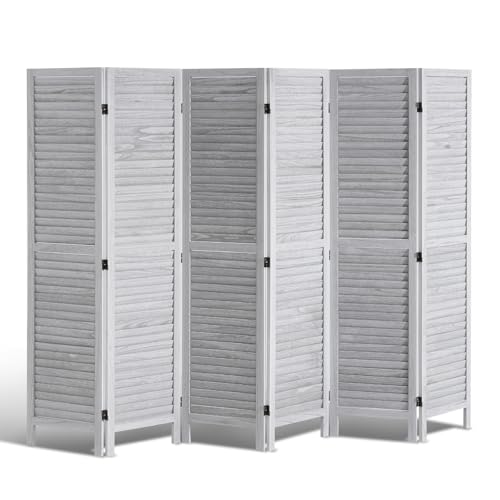
- Best overall for modern homes: VEVOR Wood Room Divider, 6 Panel Louvered Folding Privacy Screen, 66.9 Inches Tall — Check on Amazon
- Best minimalist long wall: ECOMEX 8 Panel Wood Room Divider, Louvered — Check on Amazon
- Best Scandinavian solid screen: Bonnlo Wood Room Divider, 6 Panel, 5.9 Ft Tall — Check on Amazon
- Best warm modern display: HOMCOM 6 Panel Room Divider with 3 Display Shelves, Walnut — Check on Amazon
- Best textured backdrop: Sorbus 8 Panel Room Divider, Mesh Hand-Woven Design — Check on Amazon
See 1 more Amazon option
- Best Japandi organic touch: Rose Home Fashion Bamboo Room Divider, 6 Panel, 5.6 Ft Tall — Check on Amazon
Read the full guide ↓
Disclosure: As an Amazon Associate, dailyhomedecorating.com earns from qualifying purchases. Links to Amazon on this page are affiliate links; they cost you nothing extra. Listing details such as price and availability change often, so check the current Amazon listing before you buy.
The best room divider for modern homes under $1000 has to pass a test that older-style screens never faced: it has to look like it belongs in a room that was designed, not accumulated. Modern interiors are unforgiving of visual clutter. Lines are clean, palettes are restrained, materials are honest, and every object in an open-plan space is visible from every other part of it — which means a divider in a modern home is never background. It is a wall you chose, and it will be judged like one. The good news is that the same qualities that make modern rooms demanding also make them ideal for dividers: open plans need zoning more than any other layout, and a well-chosen screen can supply the architecture the builder left out, defining a work zone, a reading zone or a dining zone without a single permanent alteration.
This guide filters the under-$1000 tier through a design lens, building on the construction standards of our general roundup of the Best Room Divider Under $1000. Every pick here first had to be a competent divider — freestanding, double-hinged, sensibly sized, honestly built — and then had to earn its place aesthetically: slatted wood that echoes modern joinery, pale solid panels in the Scandinavian register, walnut warmth for the softer modern palette, woven texture for rooms that need relief from flat surfaces, and natural bamboo for the Japandi corner. We also weighted the modern practicalities: how a screen reads as a video-call backdrop, whether it plays well with low-profile furniture heights, and whether its finish palette can sit beside the oak, black metal, boucle and concrete tones that dominate contemporary rooms. A divider that dates the room it stands in has failed, however well it divides.
Our short answer: start with the VEVOR louvered screen, whose horizontal slats give a modern room a ready-made architectural feature — part screen, part shadow-play — while dividing it without darkening it. If your space is long and minimal, the eight-panel ECOMEX lays down a calm, repetitive rhythm of wood slats that reads as a designed wall. If your modern is Scandinavian rather than architectural, the pale solid Bonnlo is the quietest object in this guide. The reviews below explain the design logic of each pick, where each honestly jars, and how to place a screen so a modern room looks curated rather than partitioned. Working to a tighter budget, Best Room Divider For Modern Homes Under $700 applies the same design filter one rung down.
In this guide
Quick Picks: best room divider for modern homes under $1000
Short on time? Match your room’s design language to the screen that speaks it. Every pick sits under the $1000 ceiling — check the live listing for the current price.
| Design language | Pick | Why it stands out | Link |
|---|---|---|---|
| Best overall for modern homes | VEVOR 6 Panel Louvered Wood Room Divider | Architectural slats, 66.9 in tall, striped light and shadow, two-way hinges | Check on Amazon |
| Best minimalist long wall | ECOMEX 8 Panel Wood Room Divider | Eight louvered panels of calm repetition, about 128 in wide, fully assembled | Check on Amazon |
| Best Scandinavian solid | Bonnlo 6 Panel Wood Room Divider | Pale solid paulownia, 71 in tall, the quietest visual in this guide | Check on Amazon |
| Best warm modern display | HOMCOM 6 Panel Room Divider with 3 Shelves | Walnut louvres plus three display shelves rated to 22 lb each | Check on Amazon |
| Best textured backdrop | Sorbus 8 Panel Room Divider | Hand-woven texture relieves flat modern surfaces, about 128 in wide | Check on Amazon |
| Best Japandi organic touch | Rose Home Fashion Bamboo Room Divider | Natural bamboo in a solid wood frame, soft light, 5.6 ft tall | Check on Amazon |
How we chose these room dividers for modern homes
Modern rooms punish the wrong divider in specific ways, so the selection started with silhouette. Contemporary furniture sits low and horizontal; a divider with fussy arches, ornate carving or country detailing fights that language from the first glance. We favoured screens whose visual grammar is repetition and line — slats, plain panels, woven grids — because repetition is how modern architecture makes large surfaces feel calm. Second came finish discipline: each pick had to offer at least one finish that sits inside a contemporary palette, whether that is natural pale wood, a painted neutral, deep walnut or undyed bamboo, and we note in the reviews which palettes each finish serves and which it argues with.
Third, light behaviour, because modern open plans are usually glazed open plans. A divider in a bright, white-walled space is a light instrument: louvered screens stripe it, woven screens diffuse it, solid screens stop it and make a deliberate shadow zone. None of those is a defect — they are three different design moves — and the reviews treat them as such, matching each screen to the rooms where its light behaviour is an asset. Fourth, backdrop quality. The modern divider spends much of its life in the background of video calls and photographs of the room, so we favoured surfaces that read as intentional texture on camera — slat rhythm, weave, plain matte — over surfaces that read as temporary.
Underneath the aesthetics, the engineering filters from our other guides applied unchanged: freestanding stability in a zigzag, two-way hinges for corner and L configurations, extended widths that cover real openings after the fold takes its share, and weights one person can manage when the room needs to re-form for guests. Assembly burden counted too — two of these picks need none at all, and none needs more than unfolding and positioning. What survived is a shortlist that divides modern space in six distinct design voices, from architectural to organic.
The best room dividers for modern homes under $1000 in detail
1. VEVOR Wood Room Divider, 6 Panel Louvered — best overall for modern homes
Who it suits: Modern rooms that need a divider with architectural presence. The VEVOR’s six louvered wood panels stand 66.9 inches tall and open to roughly 94.5 inches wide, and the horizontal slat rhythm does what good modern joinery does: it gives a large surface a measured, repeating order that the eye reads as calm. In an open-plan living space it behaves like a slatted timber wall of the kind architects specify at ten times the price — screening a work zone or a guest bed while passing light in soft stripes that change across the day. Place a lamp or a window behind it in the evening and the screen becomes the room’s most photogenic object, which is not a trivial virtue in a home that hosts video calls and the occasional photograph.
The 360-degree two-way hinges are the functional half of the design story: the screen can run straight with a stability zigzag, turn an L to close a corner desk zone, or fold flat against a wall when the plan opens up for entertaining. The solid wood frame keeps the silhouette crisp — no sagging fabric, no visible tube frame — and the available finishes in this line run to the natural and painted neutrals modern rooms use. Its height is well judged for contemporary furniture: tall enough to clear low-profile sofas and credenzas decisively, short enough not to loom in rooms with standard ceilings.
Pros: Slatted design reads as architecture, not equipment. Striped light keeps divided zones bright and alive. Two-way hinges enable corner and L layouts. Crisp solid-wood silhouette suits low modern furniture. Strong video-call and photograph backdrop.
Honest limitation: Louvers give partial privacy — shapes can show at oblique angles and under backlight — so it is a zoning screen, not a dressing screen. The slats also collect visible dust and want regular brushing to keep the crisp look that is the whole point. And its strong horizontal rhythm can compete with other slatted or striped elements; if your room already has slat-front cabinetry, choose a plainer pick.
Choose it if your modern room wants a divider that doubles as a design feature. Skip it if you need full opacity or your décor already runs on stripes. Check on Amazon for finishes, and View on Amazon for dimensions.
2. ECOMEX 8 Panel Wood Room Divider, Louvered — best minimalist long wall
Who it suits: Long, calm, minimal spaces — the loft-style living room, the gallery-like open plan — where the divider’s job is to lay down one quiet, repetitive gesture across a wide opening. Eight louvered paulownia panels span about 128 inches at 67 inches tall, and at that length the louvered rhythm becomes something different from the six-panel version: a genuine slatted wall, even and meditative, that can separate a sleeping zone or a studio’s work end without a single visual exclamation mark. Minimalism lives on repetition at scale, and this is the only pick that supplies it in wood.
It arrives fully assembled, which suits the minimalist brief in an unexpected way: no fixings, no leftover hardware, no half-built weekend — the wall simply unfolds into place. The 360-degree hinges fold either direction, so the long run can hold a shallow zigzag for stability, turn a corner, or fold back to a shorter screen if the layout changes. Paulownia keeps eight panels manageable in weight, and the smooth wood surfaces need only dusting to stay gallery-clean. In a minimal room, place it with restraint: the screen is the texture, so let the zones it creates stay spare, and resist lining its base with objects.
Pros: Eight panels of even slat rhythm read as a designed wall. Fully assembled — unfolds into place in minutes. Louvers share light across a long divided space. Two-way hinges allow L and zigzag configurations. Pale wood suits Scandinavian-minimal palettes.
Honest limitation: The assembled delivery box is large — verify door and stair access in apartment buildings before ordering. Louvered privacy is partial, as with all slatted screens. And in a small room the eight-panel scale is simply too much object; this pick earns its place only where the opening is genuinely wide.
Choose it if your space is long, minimal and short on architecture. Skip it if the room is compact or access is tight. Check on Amazon for finishes, and View on Amazon for the dimension diagram.
3. Bonnlo Wood Room Divider, 6 Panel — best Scandinavian solid screen
Who it suits: The Scandinavian and soft-minimal interior, where the correct amount of visual noise is almost none. The Bonnlo’s six solid paulownia panels, finished in water-based paint, present an unbroken, quiet surface 71 inches tall and about 108 inches wide extended — the tallest and calmest object in this guide. Where louvered screens perform, the Bonnlo simply stands there, pale and plain, and lets the room’s other materials — oak, wool, linen, one good plant — do the talking. It is the divider for the bedroom corner, the serene work nook, the space where the screen should lower the heart rate rather than stripe the light.
Solid panels bring the practical Scandinavian virtues along with the aesthetic ones: complete visual privacy at every angle, a wipe-clean painted surface, no assembly, and a light build that makes seasonal room changes easy. The height earns its keep in modern bedrooms, where a screen that truly separates a dressing area or a crib corner from the bed needs to clear standing sight lines, and 71 inches does what the 67-inch class cannot quite. Plan its light honestly: a solid screen makes a shadow zone, and in a north-facing room the desk behind it will want a proper lamp — which, styled well, becomes part of the nook rather than an apology for it.
Pros: Plain solid surface is the quietest modern silhouette here. Tallest pick at 71 in for real privacy. Complete opacity suits bedrooms and dressing corners. Wipe-clean water-based paint finish. Light, no assembly, easy to reposition.
Honest limitation: It blocks light entirely, so the zone behind it needs its own lighting plan. The styling is deliberately plain — in a maximalist or traditional room it will look underdressed rather than minimal. Paulownia is soft and light; keep the zigzag honest in busy walkways.
Choose it if your modern is pale, plain and calm. Skip it if your room depends on borrowed light. Check on Amazon for colours, and View on Amazon to confirm dimensions.
4. HOMCOM 6 Panel Room Divider with 3 Display Shelves, Walnut — best warm modern display
Who it suits: The warmer branch of modern design — walnut, brass, boucle, low evening light — where a divider should feel like furniture and hold beautiful things. The HOMCOM pairs a six-panel louvered paulownia screen, 67 inches tall in a walnut finish, with three removable display shelves rated to 22 pounds each. Styled with a plant, a ceramic piece and a small stack of art books, it becomes the kind of composed vignette modern rooms use instead of ornament; and the shelves brace the screen’s fold, so the arrangement stands with the settled confidence of a bookcase rather than the provisional air of a screen. If you are also furnishing the zone it creates, a low Best Coffee Table For Modern Homes Under $1000 in a matching tone completes the composition.
The walnut tone is the decision to make with open eyes. It is gorgeous against white walls, warm greys and the earthy end of the modern palette, and it will fight a room built on grey-wash oak or cool blue-greys. The louvered panels keep the display from becoming a dark wall — light filters through the slats around the objects, which is exactly the layered look warm modern rooms aim for. Treat the shelves as a stylist would: fewer objects, larger ones, breathing room between them. A divider-shelf crowded with small items reads as storage; the same shelf with three considered pieces reads as design.
Pros: Walnut warmth suits the softer modern palette. Display shelves create a styled focal point. Shelves brace the fold for a settled, furniture-like stance. Louvers keep light moving around displayed objects. Shelves remove and the screen folds flat if needed.
Honest limitation: Loaded shelves fix the configuration until unloaded — this is a settled piece, not a daily re-folder. Shelf capacity is display-grade, not bookcase-grade. The walnut finish is palette-specific and will clash with cool-toned floors.
Choose it if your modern room runs warm and needs a display moment. Skip it if your palette is cool or you reconfigure weekly. Check on Amazon for availability, and View on Amazon to see the shelf layout.
5. Sorbus 8 Panel Room Divider, Mesh Hand-Woven — best textured backdrop
Who it suits: Modern rooms suffering from flatness. All that smooth plaster, flat-front cabinetry and plain upholstery can leave a contemporary space feeling like a render rather than a room, and the Sorbus is the cure that also divides: eight panels of hand-woven polypropylene mesh on a poplar frame, 69 inches tall and about 128 inches wide extended, bring a fine, tactile grid texture that catches light unevenly and gives plain walls something to talk to. As a backdrop — behind a desk on video calls, behind a sofa, behind a dining setup — it reads as intentional texture, closer to a woven wall hanging at architectural scale than to a screen.
The double-hinged panels configure freely, and the woven construction is forgiving in ways modern rooms quietly need: it does not show fingerprints like gloss finishes, does not dent, wipes clean, and tolerates the humidity of an open-plan kitchen-diner’s bathroom-adjacent corners. At about 23 pounds it is also the easiest wide screen here to fold away when the room hosts a gathering and the zones dissolve for the night. Its privacy is high in normal light — the weave is a genuine screen, not a net — with the single honest caveat of all woven constructions: a bright lamp directly behind it will silhouette, so light your zones from the room side.
Pros: Fine woven texture relieves flat modern surfaces. Excellent backdrop for calls and room photography. About 128 in of adaptable, double-hinged width. Wipe-clean, dent-resistant, humidity-tolerant. Light for its size; folds away for open-plan evenings.
Honest limitation: Strong backlight silhouettes through the weave. The texture gathers dust and wants a vacuum brush pass periodically. The woven look is softer and more organic than strict minimalism prefers — in a hard-edged gallery interior, the louvered picks sit more naturally.
Choose it if your modern room needs texture as much as division. Skip it if your style is strict, hard minimalism. Check on Amazon for colours, and View on Amazon for dimensions.
6. Rose Home Fashion Bamboo Room Divider, 6 Panel — best Japandi organic touch
Who it suits: Japandi and organic-modern rooms, where the palette is natural and the worst crime a divider can commit is looking manufactured. The Rose Home Fashion screen is natural bamboo in a solid wood frame — six panels, 5.6 feet tall — and its fine bamboo texture, warm undyed tone and soft light filtering are exactly the material language of the style: think of it as the divider equivalent of a linen curtain or a paper lamp. It suits the reading corner, the meditation or yoga zone, the bedroom’s calm end, and any modern room whose scheme runs on rattan, pale oak, clay and green plants.
Its 5.6-foot height defines its design role honestly: this is a seated-zone screen, a softener of sight lines rather than a wall, and in Japandi interiors that gentleness is the point — the room stays one breathing space, with a corner that feels held. The screen is light to move and folds flat, so the corner can open up entirely when the practice or the book moves elsewhere. Natural bamboo varies in tone from panel to panel; in a style that prizes wabi-sabi honesty that variation is a feature, but if your modern is the precise, matched-grain kind, look at the Bonnlo or the louvered picks instead, and if you need two of these screens to match, order them at the same time.
Pros: Authentic bamboo texture for Japandi and organic schemes. Soft, warm light filtering flatters natural palettes. Light, portable and quick to fold away. Solid wood frame gives clean edges. Calm presence that never shouts “partition.”
Honest limitation: Seated privacy only at 5.6 ft — standing sight lines pass over it. Natural tone variation between panels and batches. Prefers dry indoor conditions; not a bathroom-zone screen.
Choose it if your modern runs natural and calm. Skip it if you need full-height privacy or a precision-matched finish. Check on Amazon for availability, and View on Amazon for panel dimensions.
Materials in a modern room: what each surface really does
Slatted wood is the defining divider material of current interior design, borrowed from the slat walls and fluted cabinetry that dominate contemporary joinery. Its gifts are rhythm and light-play; its costs are dusting and partial privacy. In a modern room it pairs naturally with oak floors, black metal and upholstered neutrals, and it is the safest choice when the divider will be photographed or seen on camera daily. Choose slats when the room needs a feature and the zone behind the screen is a place people sit, work or gather — not where they change.
Solid painted wood is the minimalist’s material: a flat, matte, uninterrupted plane. It is the only divider surface that can genuinely disappear in a pale room, and the only one that gives complete privacy, which is why it owns the bedroom and dressing-corner jobs in this guide. Its discipline is light — it creates true shade — and its styling demand is confidence: a big plain surface in a modern room must be placed with the same intent as a piece of abstract art, aligned and anchored, or it reads as a leftover panel from a building project.
Woven fibre brings the hand-made into rooms that risk feeling machined. The fine grid of a woven screen softens hard light, hides the minor scuffs of real life better than any smooth finish, and reads as texture rather than pattern, which makes it the most combinable surface in this guide — it sits beside slats, stone, boucle and leather without arguing with any of them. Its honest costs are dust retention in the weave and silhouetting under hard backlight, both manageable with a vacuum brush and sensible lamp placement.
Natural bamboo is the organic modern material: visibly grown rather than manufactured, warm without stain, and light in every sense. It belongs to the Japandi and biophilic branches of modern design, where its slight irregularity is the luxury. It asks for dry rooms and gentle duty, and it gives back a calm no other material in this guide quite matches. If your modern scheme includes plants as major citizens rather than accessories, bamboo is probably your screen.
Walnut-finish wood with shelving is the furniture-maker’s answer: a divider that behaves like a designed bookcase from the front and a louvered screen from the side. In warm modern rooms it solves the “blank wall” problem and the storage problem in one footprint. Its discipline is editing — the shelves must be styled, not filled — and its palette is specific, but in the right room it is the pick guests ask about, which for a divider is the highest available praise.
Comparison table
| Pick | Panels | Height | Extended width | Material | Design voice |
|---|---|---|---|---|---|
| VEVOR Louvered | 6 | 66.9 in | ~94.5 in | Wood, louvered slats | Architectural, striped light |
| ECOMEX 8 Panel | 8 | 67 in | ~128 in | Paulownia, louvered | Minimalist wall of repetition |
| Bonnlo 6 Panel | 6 | 71 in | ~108 in | Solid paulownia, painted | Scandinavian quiet |
| HOMCOM with Shelves | 6 | 67 in | 6-panel span | Paulownia, louvered, walnut | Warm modern display |
| Sorbus 8 Panel | 8 | 69 in | ~128 in | Woven PP fibre, poplar frame | Textured backdrop |
| Rose Home Fashion Bamboo | 6 | 5.6 ft | 6-panel span | Bamboo, solid wood frame | Japandi organic |
How to choose a room divider for a modern home
Let the room’s existing lines choose the screen’s pattern. Modern rooms each have a dominant geometry — horizontal in low-slung living spaces, vertical in double-height lofts, grid-like in rooms of flat panels and square forms. Louvered screens extend horizontal calm; solid panels echo flat-front minimalism; woven grids suit rooms of squares and texture. The divider that looks designed is the one whose repetition rhymes with something already in the room: slatted cabinet fronts, a fluted wall panel, the weave of a rug. If nothing in the room repeats, choose the quietest option — plain solid — because neutrality never clashes.
Treat the divider as a light instrument. Walk the room at the times of day you actually live in it and note where light comes from and where it dies. A louvered screen between the window and the living zone throws living stripes across the floor — beautiful, and worth planning furniture around. A solid screen creates a deliberate shade zone, perfect for a media corner or a bed, wrong for a desk that then fights gloom all afternoon. A woven screen diffuses, softening a harsh south-facing glare into something a work zone can sit in. Choose the behaviour first and the product second.
Scale the screen to modern furniture heights. Contemporary seating is low, and a divider works visually when it clears the sofa backs and credenzas decisively — the 67-to-71-inch class in this guide does — while staying well below ceiling height so the room’s volume still reads as one space. Width matters the same way: a screen that covers the opening with a shallow, elegant zigzag looks intentional; one stretched flat and desperate looks like a compromise. Buy width generously and fold the surplus; surplus panels are composition, missing inches are apology.
Style the zones, not just the screen. A modern divider succeeds when the areas it creates are furnished as places, not leftovers: the work zone gets its lamp and chair aligned to the screen, the reading zone gets its side table, the dining zone its pendant centred on the table rather than the room. One plant or one object at the screen’s end anchors it into the composition. If you are furnishing the whole scheme at this tier, Best Bookshelf For Modern Homes Under $1000 pairs naturally with the display pick in this guide. Keep the screen itself uncluttered — in modern rooms the divider is architecture, and architecture does not need decorating.
Check the backdrop test. Sit where your camera sits for calls and look at what fills the frame. Modern professionals increasingly choose dividers the way they choose art: by how the background reads. Slat rhythm and woven texture both photograph as intentional; a plain solid screen photographs as a calm blank, which suits some brands of professionalism better. Either is defensible — what fails the test is a screen whose finish fights the room’s palette on camera, because you will see it every working day.
Respect the ceiling and the skirting line. Two small proportions decide whether a screen looks built-in or brought-in. The first is the gap at the top: in a room with standard ceilings, a 67-to-71-inch screen leaves a comfortable band of wall above it, preserving the sense of one volume; in a low-ceilinged room, favour the shorter end of that range so the screen does not crowd the ceiling line. The second is the floor line: a screen whose feet and panel bottoms sit cleanly, without rocking on uneven boards, reads as furniture. Check your floor’s level where the screen will stand — older modern conversions often slope — and remember that a zigzag configuration forgives a gentle slope far better than a straight run does.
Common mistakes in modern rooms
Choosing ornament in a minimalist scheme. Carved, arched or country-styled screens are the fastest way to date a modern room; if the space is contemporary, the divider’s pattern should come from repetition, not decoration. Matching wood tones too hard. A screen that almost-matches the floor looks like an error; either match exactly in the same species and finish, or contrast deliberately — pale screen on dark floor, walnut on pale. Ignoring the evening look. Louvered and woven screens transform after dark under lamplight; check the effect before committing a screen to a media room where backlight silhouettes will perform nightly. Centring the screen on the room instead of the sight lines. Modern rooms are viewed from their seating, not their floor plans — place the divider for the view from the sofa and the desk chair. Over-accessorising the shelf divider. Three considered objects read as design; fifteen small ones read as overflow storage. Forgetting the folded state. Even in a design-led home the screen sometimes folds away — know its folded dimensions and its storage home before it arrives.
Styling notes: placing a divider in a contemporary interior
Modern placement rewards restraint and one bold decision. The bold decision is usually orientation: run the screen to be read as a wall segment aligned with the room’s architecture — parallel to the main sofa wall, or perpendicular to the window wall so its slats catch the light — rather than at a casual diagonal, which reads as temporary in a contemporary scheme. Anchor one end visually: a tall plant, a floor lamp, or the end of a low credenza gives the screen a designed termination instead of a floating edge. Leave the floor in front of it clear; modern rooms breathe through their floor planes, and a divider standing in open floor looks intentional where one crowded by objects looks like storage.
Colour discipline completes the job. If the screen’s finish is the warmest object in the room, repeat that warmth once more — a cushion, a bowl, a book spine — so it reads as palette rather than accident. If the screen is pale in a pale room, give its zone one dark anchor, a black lamp or a deep-toned chair, to keep the composition from floating away. And light the screen itself when you can: a wash of evening light across slats or weave turns the divider into the room’s evening feature, which is the moment modern interiors are usually photographed, hosted and enjoyed.
Three modern rooms, three dividers
The work-from-home loft. A converted loft, all concrete, glass and one long living volume, needs a work zone that feels professional at 9 a.m. and disappears at 7 p.m. The VEVOR louvered screen is the answer this room keeps arriving at: stood perpendicular to the window wall, it gives the desk a slatted architectural backdrop for calls, stripes the afternoon light across the floor rather than blocking it, and folds flat against the wall for evenings and weekends. The design detail that sells it is the shadow play — in a loft short on architectural features, a screen that manufactures light patterns is doing double duty as the room’s art.
The Scandinavian family flat. Pale floors, white walls, oak and wool, and a bedroom that must sometimes be two rooms. Here the Bonnlo’s solid pale panels are the only honest choice: they vanish into the palette instead of performing against it, they give the dressing corner or the child’s bed end complete privacy, and their height makes the division feel architectural rather than apologetic. The flat’s one window means the far zone needs its lamp planned from the start — a paper pendant or a soft-shaded table lamp keeps the nook inside the same gentle light language as the rest of the home.
The warm contemporary townhouse. Walnut kitchen, brass details, boucle sofa, art on the walls — this room does not need quiet, it needs a divider with enough presence to hold its own among designed objects. The HOMCOM’s walnut louvres and display shelves give it that presence: styled with ceramics and art books, the screen becomes the room’s second vignette, echoing the kitchen’s walnut and giving the dining zone a composed backdrop. The lesson generalises — in a room full of intentional objects, a divider must be one too, and a plain screen, however competent, reads as the one thing that was not chosen.
A note on rental modernity. Many modern homes are rented homes, and the divider is the renter’s strongest architectural tool precisely because it changes nothing permanently. A slatted screen can supply the feature wall the lease forbids painting, zone the open plan the landlord will not partition, and leave with you when the lease ends. If you are furnishing a rental at this tier, weight the no-assembly, fold-flat picks highest — the ECOMEX and Bonnlo arrive working and leave no trace — and photograph the room before and after; the transformation a well-chosen screen makes in a plain white rental box is the best argument for the category.
A final design caution. Modern rooms are edited rooms, and a divider is an addition that must survive the edit. Before ordering, perform the subtraction test in your head: remove one existing object from the zone the screen will stand in — the floor lamp that will crowd it, the side table that will fight its line — because a screen added to an unedited room makes two problems look like one. The rooms where dividers look designed are the rooms where something else gracefully left.
Final recommendation
For most modern homes, buy the VEVOR 6 Panel Louvered Room Divider. Its slatted architecture divides an open plan without darkening it, photographs beautifully, and sits naturally beside contemporary furniture. If your space is long and minimal, the ECOMEX’s eight-panel wall is the bolder, calmer gesture; if your modern is Scandinavian, the pale solid Bonnlo is the quiet answer; for warm modern rooms that need a styled moment, the HOMCOM’s walnut shelves earn their floor space. The Sorbus brings texture to flat interiors and backdrops, and the bamboo Rose Home Fashion softens Japandi corners like nothing else here. All sit comfortably under the $1000 ceiling — spend the decision on design fit, not on price, and the divider will look like it was specified with the room. Warm-palette readers should start with the HOMCOM shelf divider.
FAQ
What style of room divider suits a minimalist home? Repetition without ornament: louvered slat screens and plain solid panels in pale or natural finishes. Avoid carved, arched or rustic-distressed styles, which belong to other design languages and will date a minimal room on contact.
Do louvered dividers look good on video calls? Yes — the slat rhythm reads as an intentional architectural backdrop and is a popular choice for home offices for exactly that reason. Keep a soft light source on your side of the screen so the stripes read as texture rather than shadow bars across the frame.
How do I stop a divider looking temporary in an open-plan room? Align it with the room’s architecture, anchor one end with a plant or lamp, furnish the zones it creates as real places, and choose a finish that either matches or deliberately contrasts the floor. Temporariness is a styling outcome, not a product category.
Should the divider match my floor? Match exactly or contrast clearly — near-matches are the only wrong answer. Pale screens on dark floors and walnut screens on pale floors both work as deliberate contrast; a screen one shade off the floor reads as a mistake.
Can a room divider work in a loft with high ceilings? Yes, and lofts need zoning more than most homes. Standard 67–71 inch screens still divide at human sight-line level, which is where zoning happens; the space above stays open, preserving the loft volume. For very long loft runs, the eight-panel picks cover the width without looking stretched.
Is bamboo too traditional for a modern home? In Japandi and organic-modern schemes, bamboo is a core material, not a traditional one — its fine texture and undyed tone are exactly what those styles specify. In hard-edged, high-gloss minimalism it can feel soft; there, choose slatted or solid panels instead.
How many panels does a modern open-plan room need? Enough to cover the opening at a shallow zigzag with panels to spare — for most living-room zoning that is a six-panel screen extending to 94 inches or more; for runs beyond about seven feet, step up to an eight-panel screen. In modern rooms the surplus-fold look is a feature: a gentle, even zigzag reads as deliberate rhythm, and a screen bought generously never has to perform the stretched-flat compromise that makes dividers look temporary in photographs and in person alike.
Can a divider replace a feature wall? Functionally, in rented and open-plan homes, yes — a slatted or textured screen supplies the visual anchor a feature wall provides, with the advantages of being movable and removable. It will not do a wall’s other jobs (hanging heavy art, mounting a television), so treat it as the room’s visual anchor rather than its structure.
What finishes are safest with a modern palette? Undyed natural wood, pale painted finishes, walnut and undyed bamboo cover nearly every contemporary scheme between them. The discipline is commitment: pick the screen’s tone against your largest fixed surface — usually the floor — and either match its family or contrast it clearly. Grey-washed and orange-toned finishes are the ones that date fastest and clash widest, and none of the picks in this guide depends on them.


