Best Powermatic Table Saws
The best Powermatic table saw depends on the workshop and the cut workload. Powermatic’s lineup includes cabinet-style saws for smaller dedicated shops, higher-capacity PM2000B configurations for professional woodworking, and the larger PM3000B for industrial or production environments. Within a family, rip capacity, motor, voltage, fence rails, ArmorGlide table surface, and included accessories can vary by stock number.
This brand-specific guide compares Powermatic model lines and purchase configurations rather than repeating a general saw-type primer. It focuses on how PM1000, PM1000T, PM2000B/BT, and PM3000B/BT differ in intended scale, electrical planning, fence capacity, surface, dust handling, and workshop fit. It is based on current manufacturer pages and manuals, not hands-on testing: we did not test performance, accuracy, noise, vibration, or durability, and we do not rank current prices. Verify the exact SKU, package, voltage, and manual before ordering because names alone do not identify the whole configuration.
For an overview of table-saw types, see our best table saws guide. For category comparisons, read best cabinet table saws and best hybrid table saws. If the shop footprint and workflow are your main concerns, see best table saws for home-shop use. For a brand comparison from another manufacturer, see best DEWALT table saws.
Affiliate disclosure: This article may contain affiliate links. If you buy through one, DailyHomeDecorating.com may earn a commission at no extra cost to you. Comparisons should be based on the exact manufacturer’s documentation and the buyer’s needs.
Amazon product examples to compare

ASIN: B00E8N4UXS

ASIN: B00E7Z7WQY

ASIN: B07CW13KM2
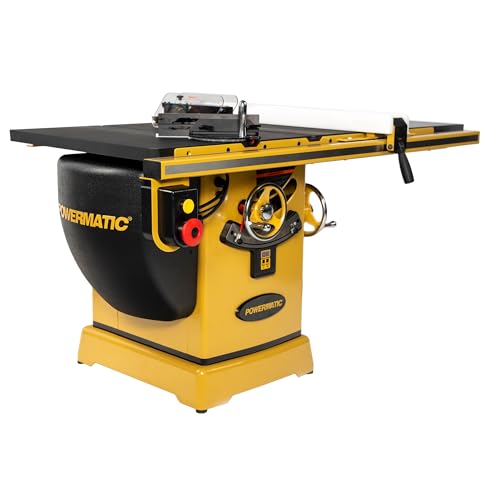
ASIN: B0CFM95YQ5
Certain content that appears on this site comes from Amazon. This content is provided “as is” and is subject to change or removal at any time. Product examples and images are supplied through Amazon Creators API; confirm specifications and availability on the current listing.
Quick answer: match the series to the shop and power you have
For a smaller professional or advanced home shop, start by comparing the PM1000 configurations. Powermatic’s official pages describe PM1000 as a 10-inch cabinet-style saw available with different fence rip widths and a single-phase electrical configuration that can be run from the specified 115/230V supply. The PM1000T adds the ArmorGlide-coated table option in documented configurations. Confirm whether the selected stock number includes a 30-inch or 52-inch rail setup and what voltage it ships prewired for.
For more demanding professional woodworking and a larger motor choice, compare PM2000B/BT configurations. The manufacturer lists different motor powers, rail widths, single- and three-phase electrical options, workbench extensions, and ArmorGlide variants. These differences affect circuit planning, installation, handling, and total cost. A 5 HP or three-phase configuration is not automatically an upgrade for a small shop if the electrical infrastructure cannot support it.
PM3000B/BT is a larger 14-inch, high-capacity series that Powermatic describes for professional and industrial environments. Its larger blade, motor, three-phase requirements in listed configurations, and heavier overall setup make it a specialized purchase. Buyers should confirm facility electrical service, material-handling workflow, floor space, and service needs with the manufacturer or dealer before ordering.
How to read Powermatic model names and configurations
Powermatic publishes table saws under model-family names such as PM1000, PM1000T, PM2000B, PM2000BT, PM3000B, and PM3000BT. A family name is not enough to identify the saw you will receive. The stock number can encode motor voltage, horsepower, rip width, rail arrangement, table surface, and included options. A 30-inch rip package and a 50- or 52-inch package can require very different room layouts.
The brand’s official table-saw catalog lists many configurations under the same model family. For example, PM2000B listings include different motor sizes and voltages, rail lengths, workbench variants, and optional routing or sliding-table accessories. Confirm every attribute from the exact stock number and current product page. Retailer titles often abbreviate the specification and may not show the full configuration.
The suffix “T” in current Powermatic product pages is associated with ArmorGlide table treatment for PM1000T, PM2000BT, and PM3000BT variants. Check the maker’s product listing for the exact coating and assembly. Do not assume every model in the family includes it or that table treatment removes the need for care.
PM1000 and PM1000T: cabinet-style format for smaller shops
The PM1000 is a 10-inch cabinet-style table saw positioned by Powermatic for professional and advanced home woodworking shops. The official product pages describe single-phase 115/230V operation, a 1-3/4 HP motor, a cast-iron table, a 4-inch dust port, and fence packages with different rip widths. Some pages describe the 30-inch option as a compact footprint; 52-inch rail configurations provide more fence travel but expand the shop envelope considerably.
For buyers who want to run on the specified household-voltage configuration, the PM1000 family may be more practical than a higher-horsepower 230V cabinet saw, provided the dedicated circuit, cord, and instructions match. Do not assume “standard household power” means any outlet or circuit is suitable. Check the saw’s nameplate, manual, and local wiring requirements.
The PM1000T is the corresponding ArmorGlide configuration in current listings. Powermatic describes the coating as low-friction and corrosion-resistant. That may appeal to woodworkers concerned with material glide or protecting a table surface, but the coating does not replace ordinary cleaning, support, or rust-prevention practices. Compare the exact rip capacity and package alongside the PM1000 version; coating is only one of several purchase factors.
Who might prefer a PM1000?
- Advanced home woodworkers who want a cabinet-style saw with listed single-phase options.
- Small professional shops that need a 10-inch saw and a fence package matched to their stock.
- Users who value the PM1000’s documented motor and voltage choices but do not need the PM2000/PM3000 scale.
- Buyers considering ArmorGlide who want that feature on the PM1000T configuration.
Consider a different class if the shop needs a portable saw, a very large motor, production duty, or a compact folding setup. Even the PM1000 is a cabinet-style machine with substantial weight and installation needs; it is not a jobsite saw.
PM2000B and PM2000BT: higher-capacity professional configurations
The PM2000B is a 10-inch cabinet saw offered in multiple motor and electrical configurations. Powermatic’s official pages list 3 HP and 5 HP variants, different rip capacities and rail systems, single-phase 230V options and three-phase 230/460V configurations, depending on SKU. Workbench extensions, router-lift packages, and other accessories may also appear as separate configurations. The PM2000BT is listed with ArmorGlide table treatment.
This family is for buyers who need to specify a machine as a system. Motor power and voltage should be determined by the material, workload, and electrical service; fence capacity by panel and stock width; and accessory packages by actual workflow. A wider rail system adds floor space and support needs. A 5 HP motor may demand a different electrical installation from a 3 HP version, so compare nameplate and manual instead of relying on the model family.
The PM2000B manual is an essential document for assembly, blade guard and riving knife, fence installation, blade alignment, electrical connection, and maintenance. The Accu-Fence and rail system also has a separate manual. If the saw will be assembled by a dealer or installer, confirm who is responsible for leveling, alignment, and commissioning.
Who might prefer a PM2000B/BT?
- Professional shops that need a 10-inch cabinet platform with higher motor options.
- Woodworkers who regularly rip substantial stock or wider panels and can support the full workpiece safely.
- Shops with a known single- or three-phase electrical setup compatible with the selected model.
- Users who need specific Accu-Fence rail, workbench, or ArmorGlide configurations.
For a small garage with limited circuits, floor space, or dust extraction, a PM1000 or another class may be more practical. Choose the PM2000B only after the motor and configuration are matched to infrastructure and work.
PM3000B and PM3000BT: larger industrial-scale saws
The PM3000B is a 14-inch table-saw family. Powermatic’s listed PM3000B example uses a 7-1/2 HP motor and three-phase electrical service, with a 50-inch rip configuration; the model family includes other options and an ArmorGlide version. The manufacturer describes this series for professional woodworking and industrial environments. Exact specifications, including voltage, phase, fence rails, and motor, are tied to the stock number.
The 14-inch format and higher horsepower can be useful for specialized production cuts and demanding workloads, but they bring practical consequences: larger blades and accessories, substantial shipping and placement needs, more electrical planning, and a larger workshop footprint. The buyer should verify machine access from delivery point to installation area, the required electrical service, dust collector capacity, replacement blade availability, and trained service support.
For most home shops or small studios, a 14-inch industrial saw may be more machine than necessary. The best use case is a facility with matching production needs and infrastructure. If your work is mainly standard furniture, cabinetry, and general ripping, compare whether a PM1000 or PM2000B configuration covers the work more efficiently.
Powermatic model-line comparison
| Family | Documented role | Configuration choices to verify | Likely fit |
|---|---|---|---|
| PM1000 / PM1000T | 10-inch cabinet-style saw; Powermatic positions it for professional and advanced home shops. | 30- or 52-inch rip package; 115/230V single-phase options; PM1000T ArmorGlide finish. | Smaller dedicated shop where listed single-phase configuration and 10-inch capacity fit. |
| PM2000B / PM2000BT | 10-inch professional cabinet-saw line with higher motor choices. | 3 or 5 HP; rail and rip configuration; 230V single- or 230/460V three-phase options by SKU; ArmorGlide and workbench variants. | Professional shop that needs larger motor choices and can support installation. |
| PM3000B / PM3000BT | 14-inch high-capacity line for professional or industrial environments. | Motor, voltage/phase, rail and ArmorGlide package by stock number. | Production environment with matching electrical service, space, and workload. |
This table describes product-family roles, not comparative test results. Manufacturer specifications and available options may change. Check the exact product page and manual for current details.
Fence, rip capacity, table surface, and accessories
Powermatic’s product pages frequently pair a saw with Accu-Fence rails. Rip capacity describes the maximum fence distance from the blade for a particular configuration; it is not a promise that one person can safely feed a full sheet. Choose the rail width based on the stock you use and the floor space available. Longer rails need clear room at the side and may require outfeed and side supports.
Fence accuracy depends on alignment, setup, and locking, not only the brand name. Read the Accu-Fence manual and follow its installation and adjustment procedure. Verify the fence is parallel to the blade and locks securely before use. If the saw ships in several boxes, ensure the table, rails, extensions, fence, and hardware are all present.
PM1000 and PM2000 models generally use a 10-inch blade in current listed configurations, while PM3000 is shown with a 14-inch blade. The exact motor and blade compatibility, dado capacity, arbor, guard, and riving knife are specified in each manual. Do not buy a dado stack or specialty blade from family name alone; confirm exact compatibility.
ArmorGlide is a model-specific surface option. Compare it with the standard table finish in terms of how it fits your shop conditions and maintenance habits. A treated table still needs protection from scratches, corrosion, glue, and abrasive dust. Keep the surface clean and use only care products allowed by the manufacturer.
Power and electrical planning by exact SKU
Electrical setup is one of the most important Powermatic comparisons. PM1000 listings show 115/230V single-phase operation, with prewiring details by configuration. PM2000B listings span multiple motor ratings and power types. The PM3000B example reviewed is a 230/460V three-phase configuration. These are not interchangeable, and the phrase “Powermatic cabinet saw” tells you little about circuit requirements.
Read the product nameplate and manual for voltage, amperage, phase, plug type, breaker or circuit requirements, and any conversion instructions. Have electrical changes handled by a qualified electrician. Do not rewire a saw or change a plug based on an online forum or another model’s manual. A correct saw that cannot be powered safely is not a practical purchase.
Consider startup current, existing shop loads, dust collector, lighting, and other machines on the same circuit. If the saw and collector will run together, verify the electrical plan supports both. Route cords and hoses away from the operator and stock path.
Workshop layout, delivery, and dust collection
Cabinet saws need a clear envelope for the operator, stock, fence rails, and outfeed. Measure the machine with the chosen rail and extension package, not just its central cabinet. Check doorways, stairs, floor load, turning radius, and access for future motor or service work before arranging delivery.
Powermatic product pages commonly list a 4-inch dust port on the cabinet models cited here. Confirm the exact port and any guard-level extraction connection in the manual. A 4-inch port still needs a suitably sized collector and well-routed hose. Keep guards and dust fittings installed; do not modify the saw in a way that blocks cooling or movement.
The open workspace behind and beside a table saw affects safety. Leave room for long boards, panel support, and a clear retreat path. If the chosen rip capacity exceeds the room’s available side clearance, choose shorter rails or a different workflow. A track saw or circular saw can break down full sheets before safer final rips on a table saw.
Buying checklist for Powermatic table saws
- Choose the family. Decide whether PM1000, PM2000B, or PM3000 scale fits your workload.
- Record the exact stock number. Verify motor, voltage, phase, rip width, fence rails, surface, and included accessories.
- Match capacity to materials. Check blade diameter, depth, fence travel, dado compatibility, and support needs.
- Plan electrical service. Confirm nameplate, manual, circuit, plug, and any electrician work before delivery.
- Measure installation and operating space. Include rails, table extensions, dust hose, motor access, infeed, and outfeed.
- Compare ArmorGlide and standard surfaces. Decide whether the coating and care requirements suit your shop.
- Inspect safety equipment. Verify guard, riving knife, anti-kickback pawls, switch, and emergency access.
- Review manuals and accessories. Check the saw, fence, rail, mobility, extension, and dust documentation.
- Confirm delivery and assembly. Plan unloading, leveling, alignment, and commissioning.
- Check service support. Verify warranty, parts, dealer coverage, and authorized service availability.
Research method and manufacturer sources
This article uses current Powermatic product pages, official manuals, and safety guidance. It does not include hands-on tests, measured comparisons, or price rankings. Product availability and specifications are time-sensitive; verify the exact stock number before purchase.
Powermatic’s official table-saw category page lists model families and a range of configurations. Its pages for the PM1000 30-inch configuration, PM1000T ArmorGlide configuration, PM2000B 3 HP configuration, and PM3000B 7.5 HP configuration provide current manufacturer descriptions and configuration details.
Powermatic links operating manuals from the product pages. The PM2000B operating instructions and parts manual covers setup, operation, and maintenance for that series. The Accu-Fence and rail manual applies to PM2000B/PM3000B installations. Use the exact manual for your stock number and revision.
For safety, OSHA’s table-saw machine-guarding guidance discusses guards, kickback, blade condition, material support, and safe positioning. Follow the manufacturer’s manual and applicable local workplace requirements.
Safety and setup
A Powermatic table saw should be commissioned according to its manual. Secure the cabinet, level the table and extensions, align the blade with the miter slot, align the fence, and confirm the guard and riving knife fit the installed blade. Install the correct power source and dust connection before use. If any component is missing, damaged, or misaligned, stop and contact service.
- Use the blade guard, riving knife, and anti-kickback pawls for operations where the manual specifies them.
- Keep hands outside the blade path and use suitable push devices for narrow stock.
- Support both infeed and outfeed material without pinching the kerf.
- Use a blade suited to the material and cut, and remove damaged blades from service.
- Stand out of the likely kickback path; never force warped or unstable stock through the saw.
- Disconnect power before blade changes, alignment, cleaning, or service.
- Use eye and hearing protection and manage dust with an appropriate collector.
More horsepower or a larger fence does not make an unsafe setup safe. Learn the emergency stop, keep bystanders away, and obtain hands-on instruction if you are new to cabinet saws.
Maintenance and ownership
Keep the cast-iron or ArmorGlide table clean, dry, and protected according to the manual. Inspect the blade, throat plate, guard, riving knife, fence, rails, and switch before use. Check alignment after transportation, blade changes, or impacts. Keep dust from accumulating around the motor, cabinet, and dust port.
Follow the manual for lubrication, motor service, belt inspection, cleaning, and electrical checks. Do not assume that all Powermatic saw families share the same service intervals. Use genuine or manufacturer-approved replacement parts where specified. Register the saw and keep its model, serial, and stock number for parts requests.
For ArmorGlide surfaces, use the maker’s approved cleaning and care methods. Avoid abrasive pads or chemicals that could damage the finish. A coated top may reduce friction or resist corrosion as described by Powermatic, but it still needs routine protection and careful handling.
Frequently asked questions
Which Powermatic table saw is best for a home shop?
The PM1000 family is the one Powermatic specifically positions for advanced home shops in the reviewed product pages, but the correct version depends on voltage, rip capacity, rails, and space. Confirm exact SKU and circuit requirements.
What is the difference between PM1000 and PM1000T?
PM1000T is listed with an ArmorGlide-treated table surface. Both families have configuration variations, so compare exact stock number, rip width, prewired voltage, included accessories, and current manual.
What is the difference between PM2000B and PM2000BT?
PM2000BT listings identify the ArmorGlide surface option. PM2000B and BT also come in different motor, voltage, rip-capacity, and accessory configurations. Use the exact manufacturer page rather than assuming a single specification applies to all.
Does Powermatic PM2000B require 230V?
Some listed PM2000B configurations are 230V single-phase; others are three-phase variants. The requirement is stock-number-specific. Check the nameplate and manual and consult an electrician before installation.
What is PM3000B designed for?
Powermatic positions the PM3000B as an industrial or professional high-capacity line. Its listed configurations include larger blade and motor options, so it is intended for shops with matching electrical service, space, and workload.
Is ArmorGlide worth it?
That depends on your shop environment and preference for a low-friction, corrosion-resistant surface. Compare the exact model price, care requirements, and availability, and keep in mind that all tables need cleaning and protection.
Does rip capacity mean I can cut full plywood sheets alone?
No. Rip capacity describes fence travel, not safe solo handling. Full panels can be difficult to control. Plan for support and help, or break them down with a guided circular or track saw before table-saw cuts.
Can I use a dado stack on a Powermatic saw?
Only if the exact model, arbor, throat plate, guard setup, and manual allow it. Check maximum dado width and required accessories for the stock number before purchasing or installing a stack.
How do I choose among the best Powermatic table saws?
Choose the PM family by workload and infrastructure, then verify the exact stock number for motor, voltage, phase, rip width, fence, table surface, and accessories. Read the manual and plan room, dust collection, and safe support before ordering.
Final buying perspective
The best Powermatic table saw is the one whose exact configuration matches your power, space, material, and workload. PM1000 offers a smaller cabinet-style path with listed single-phase options; PM2000B/BT expands motor and configuration choices; PM3000B/BT serves a larger industrial scale. Fence width, ArmorGlide, and horsepower matter only when the whole installation supports them. Use current manufacturer pages and manuals to compare SKUs, and plan delivery, electrical service, dust collection, and safety setup before the saw arrives.