Where to buy
Check the latest price, availability and delivery on Amazon. Orders are placed on Amazon. We may earn a commission from qualifying purchases.
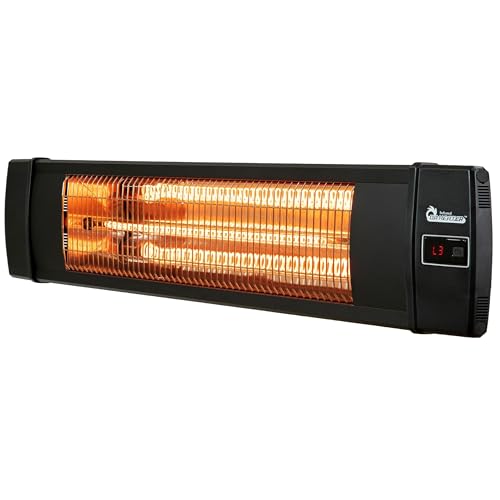
- Best for apartment balconies: Dr. Infrared Heater DR-238 Carbon Infrared Heater, 1,500W, Wall or Ceiling Mount — Check on Amazon
- Best weather-sealed electric: SereneLife Portable Infrared Indoor and Outdoor Electric Space Heater, 1,500W, IP65 — Check on Amazon
- Best with no installation at all: Heat Storm Tradesman 1,500W Infrared Heater, Tripod Combo with Remote — Check on Amazon
See more Amazon options — ground-floor patios and courtyards only, where your lease and local fire code allow flame
- Smallest propane option, ground-floor use only: Mr. Heater 9,000 BTU Portable Buddy Radiant Propane Heater (MH9BX) — Check on Amazon
- Best flame tower for a ground-floor patio: Pamapic 89-Inch Pyramid Patio Heater, 48,000 BTU Propane Flame Tower (Black) — Check on Amazon
- Best for a shared courtyard seating area: DWVO 48,000 BTU Pyramid Patio Heater with Wraparound Table, 89-Inch — Check on Amazon
Read the full guide ↓
Disclosure: As an Amazon Associate, dailyhomedecorating.com earns from qualifying purchases. Links to Amazon on this page are affiliate links; they cost you nothing extra. Listing details such as price and availability change often, so check the current Amazon listing before you buy.
The search for the best patio heater for apartments under $300 has to start with the sentence most guides bury: on the majority of apartment balconies, a flame heater is not a purchase decision, it is a prohibited one. Fire codes adopted across most of the United States — the International Fire Code’s Section 308.1.4 is the widely adopted example — bar open-flame devices on combustible balconies and within ten feet of combustible construction in multi-family buildings, and fire departments apply that rule to gas patio heaters by name. Leases and condo rules usually say the same thing in plainer language. So this guide is organised the honest way around: the first three picks are electric infrared heaters, which produce no flame, no fumes and no fuel storage, and which are the only category that can lawfully and sensibly warm most apartment balconies and small rented patios. The propane picks come after, clearly fenced, for the apartment situations where flame can be legitimate — a ground-floor patio with real clearance, a deeded terrace on non-combustible construction, a shared courtyard your building allows heaters in.
That ordering is not a consolation prize for apartment dwellers; in important ways electric infrared is the better apartment technology outright. It is silent. It produces nothing your upstairs neighbour can smell. It stores nothing flammable on a small balcony, asks for no tank exchanges in a building with no easy cylinder storage, and it turns on from a remote while you are already sitting down. Its warmth is directional, which suits apartment geometry — a balcony or small patio is a defined wedge of seats, exactly the shape an infrared bar heats best. The under $300 budget covers the strongest plug-in class in full: 1,500 watts is the most a standard North American outlet supplies to a heater, and every electric pick here runs at that ceiling with change to spare for the features that make apartment life easier — remotes, timers, weather sealing and mounts that hand your floor space back.
Every pick was verified against its manufacturer’s specifications and its exact Amazon listing through Amazon’s own catalogue data, and checked against U.S. Consumer Product Safety Commission recall records; none of the six has an open recall. One scope note, stated plainly: this guide cannot clear your specific balcony. Codes are adopted and amended locally — a few jurisdictions have modified or declined the model balcony rule — and your lease, your building’s rules and your local fire marshal each get a vote that outranks any article. What this guide can do is rank the options that make sense under the rules as they most commonly stand, and tell you exactly which questions to ask before any flame comes home. Prices in this category move with the season, so the guide prints no static prices: under $300 is the tier each pick was verified inside during research, and the live figure is the one on the listing — check price on Amazon before you buy.
In this guide
Quick Picks
Short on time? The first three rows are the balcony-safe electric picks. The last three are propane options included only for ground-floor patios, terraces and courtyards where flame is genuinely permitted — read the safety section before considering them.
| Buyer type | Pick | Why it stands out | Link |
|---|---|---|---|
| Best for balconies | Dr. Infrared Heater DR-238 Carbon Infrared Heater, 1,500W | Wall or ceiling mounted: no flame, no fumes, no floor space, three heat settings and a remote | Check on Amazon |
| Best weather-sealed | SereneLife Infrared Electric Space Heater, 1,500W, IP65 | IP65-approved electric infrared for exposed balconies and decks, wall-mounted hanging design with remote | Check on Amazon |
| Best no-install | Heat Storm Tradesman 1,500W Infrared Heater, Tripod Combo | Freestanding on a tripod — warmth with zero drilling, then it folds away into a closet | Check on Amazon |
| Ground-floor propane | Mr. Heater 9,000 BTU Portable Buddy (MH9BX) | The smallest serious propane radiant: 1 lb cylinders, oxygen and tip-over shut-offs — ground-floor, open-air use only | Check on Amazon |
| Ground-floor tower | Pamapic 89-Inch Pyramid Patio Heater, 48,000 BTU | Full flame tower for a ground patio with real clearance — never for a balcony | Check on Amazon |
| Shared courtyard | DWVO 48,000 BTU Pyramid Heater with Wraparound Table | Tower heat plus a table, for a permitted shared seating area at ground level | Check on Amazon |
How these picks were chosen
The first filter for this guide was not performance; it was permissibility. We mapped the apartment situations a reader can actually be in — elevated balcony on a multi-family building, ground-floor patio, rented terrace, condo deck, shared courtyard — against the rules that govern each, and only then ranked hardware. That process put electric infrared first by structure, not by preference: it is the only heater family with no open flame, no combustion gases and no stored fuel, the three things balcony rules exist to control. Within the electrics, we required the full plug-in class output of 1,500W, a stated outdoor weather rating, and a mounting or placement system that suits small spaces; all three electric picks clear that bar, and each solves the placement problem differently — fixed mount, weather-sealed mount, and no mount at all.
Verification standards were the same as across this batch. Every pick had to resolve to an exact Amazon listing whose brand, model and title matched the manufacturer’s specification material, cross-checked through Amazon’s own catalogue data, and every pick was screened by brand and model against Consumer Product Safety Commission recall records. The propane picks were held to an additional apartment-specific standard: they had to be includable honestly, with their restrictions stated in the review rather than footnoted. The small Buddy runs on 1 lb cylinders and carries both an oxygen depletion sensor and a tip-over shut-off; the two towers are full-size appliances whose reviews say, in so many words, ground floor or not at all. What did not survive: tabletop flame heaters marketed at balcony shoppers without the verification to back them, any natural-gas model — plumbed fuel in a rental is a non-starter, and the category’s most recent CPSC recall was a natural-gas patio heater sold online — and any electric without a genuine outdoor rating, because a balcony is an outdoor environment whatever the roof situation.
A word on the budget. Apartment readers sometimes assume the under $300 tier is wasted on them because the famous products in it are towers they cannot use. The opposite is true. The tier buys the best plug-in electrics outright — there is no meaningful 1,500W upgrade above these picks at any price, only harder-wired 240V units that renters cannot install anyway — and it leaves room in the same budget thinking for the unglamorous accessories apartment heating actually runs on: a weatherproof outlet cover, a proper outdoor-rated extension solution where the manual allows one, and a small fan to move radiant warmth around a deep balcony. Spend on placement and permission, not on watts you cannot plug in.
Apartment heater safety and the rules that decide for you: IFC 308.1.4, NFPA and your lease
This is the most important section in this guide, and it is deliberately blunt.
The balcony rule. International Fire Code Section 308.1.4 provides that charcoal burners and other open-flame devices shall not be operated on combustible balconies or within ten feet of combustible construction. Its exceptions are narrow: one- and two-family dwellings, balconies and buildings protected by an automatic sprinkler system, and small LP-gas cooking devices using a container of no more than about one pound of propane. Most apartment and condo balconies are combustible construction in a multi-family building, which puts them squarely inside the prohibition, and fire departments state explicitly that gas-fuelled devices such as patio heaters fall under it. NFPA 1, the Fire Code published by the National Fire Protection Association and adopted in many jurisdictions alongside or instead of the IFC, carries parallel restrictions on open flames and fuel storage in multi-family occupancies, and NFPA guidance keeps recreational flame well away from structures. Local amendments exist — at least one state has formally declined to adopt the model balcony section — which is exactly why the operative instruction is: check your city or county fire code and ask your fire marshal’s office if you are unsure. “A website said it was fine” is not a defence anyone accepts after an incident.
Your lease is a second code. Even where the fire code leaves a gap — a sprinklered building, a non-combustible terrace, a ground-floor patio — most leases and condo declarations independently prohibit grills, heaters and fuel storage on balconies, and a lease violation needs no fire to cost you: fines, forced removal and deposit consequences are the ordinary outcomes, and an insurer’s view of an unpermitted flame heater after any incident is harsher still. Read the lease clause before the product page. If it is ambiguous, get the answer from management in writing.
Fuel storage is its own problem. A 20 lb propane cylinder has no lawful or sensible home in most apartments: codes restrict transporting larger cylinders through common interior routes and storing them inside dwellings, and no balcony rule exception blesses a spare tank in a closet. This alone disqualifies tower heaters for most apartment households even before the flame question. The 1 lb cylinders the small Buddy uses sit inside the size class the IFC exception contemplates for cooking devices — but note the exception’s wording covers cooking devices, and a heater is not one; treat the Buddy as a ground-floor, open-air patio appliance and do not stretch an exception written for camp stoves into a balcony heating permit.
Carbon monoxide. Any propane heater produces carbon monoxide as it burns. On an open ground patio it disperses; on a balcony — recessed, railed, often roofed, with a sliding door leaking air into a bedroom behind you — the margin is thinner and the exposure path shorter. Never run a combustion heater in a screened or enclosed balcony, never where exhaust can drift into open windows (yours or a neighbour’s), and understand that the Buddy family’s oxygen depletion sensor is an emergency safeguard for the recreational enclosures its manual describes, not a balcony approval.
The electric rules are simpler but real. Electric infrared has no flame and no fumes, which is why it survives every rule above — but it is still a 1,500W appliance. Plug it directly into a suitable outlet as the manual directs; do not run it on a lightweight indoor extension cord; keep its clearances from curtains, stored cushions and the balcony’s combustible rail; mount it at the manual’s height, out of casual reach; and on an exposed balcony choose a weather-rated model and a weatherproof outlet arrangement. A heater you are allowed to keep, used within its manual, beats a spectacular one that management orders removed in November.
The best patio heater for apartments under $300: detailed reviews
Best for apartment balconies: Dr. Infrared Heater DR-238 Carbon Infrared Heater, 1,500W
Who it suits. The DR-238 is the default answer for the standard apartment problem: a balcony or small covered patio, a couple of chairs, and a renter or owner who needs warmth that no rule, lease or neighbour can object to. It is a slim carbon infrared bar, about 35 inches long and around 8 lb, that mounts to a wall or ceiling on the included brackets and then occupies exactly zero of the floor space an apartment dweller cannot spare.
What it does well. Carbon infrared heats people, not air: switch it on and the warmth lands on skin and clothing in its wedge immediately, which is the correct physics for a balcony where heated air would simply leave. Three settings — 900W, 1,200W and 1,500W — cover the range from a mild evening’s edge-taker to a genuinely cold night, the remote means nobody gets up to adjust it, and it plugs into a standard 120V outlet, so the whole installation is brackets, a drill and an existing socket. The listing rates it IP55 for indoor and outdoor use. It is silent, produces no combustion gases, stores no fuel, and its running cost is a metered trickle — 1.5 kilowatt-hours per hour at full power — with no tank logistics in a building where tank logistics are the whole problem.
- No flame, no fumes, no fuel storage: the configuration balcony rules leave alone
- Wall or ceiling mount returns your entire floor to furniture
- Three settings and a remote; standard 120V plug-in installation
- Instant, silent, directional heat aimed at the seats
The honest limitation. Directional is the operative word: the DR-238 warms the wedge it points at, so a long balcony with seats at both ends is two heaters’ work, and wind across an open balcony thins radiant comfort noticeably. Its manual is also more conservative than its listing’s weather rating — it recommends primarily sheltered external use and warns against rain exposure — so mount it under whatever cover your balcony offers and treat IP55 as splash protection. The manual’s mounting requirements (at least six feet off the floor, clear of side walls) need a balcony with a suitable wall or ceiling; a glass-railed, roofless balcony may offer neither.
Choose it if you have any mountable surface and an outlet: it is the apartment pick. Skip it if your balcony has nothing to mount to — the tripod pick below exists for you. Check on Amazon
Best weather-sealed electric: SereneLife Infrared Electric Space Heater, 1,500W, IP65
Who it suits. The SereneLife is the DR-238’s answer for the less sheltered apartment: the open deck, the balcony without a roof above it, the terrace that takes real weather. Its listing carries an IP65 approval — a stronger weather-sealing claim than the DR-238’s IP55 — in a wall-mounted hanging format built for patios, decks and gazebos, which makes it the electric to shortlist when “under cover” is not a promise your space can keep.
What it does well. The fundamentals match the class: 1,500W of infrared from a standard supply, a remote control so the high-mounted unit is adjusted from a chair, and a hanging wall-mount design that keeps it out of the traffic and the weather layer at floor level. Infrared’s apartment virtues all apply — instant directional warmth, silence, no flame, no fumes, nothing stored, nothing exchanged — and the higher sealing rating buys peace of mind through the rainy weeks when a lesser-rated unit would have you bringing it inside or worrying about it outside. For a small apartment footprint, a heater that lives permanently on the wall, ready in one click, is worth more than a theoretically stronger heater that lives in a closet behind the bikes.
- IP65-approved for outdoor use — the strongest weather claim among these electrics
- 1,500W infrared with remote control, wall-mounted hanging format
- Permanently installed and instantly ready: no setup ritual per evening
- No flame, fumes or fuel — balcony-rule-proof by category
The honest limitation. It shares infrared’s universal constraints — one directional wedge, diminished by crosswind — and a wall-mounted hanging unit is a fixed decision: when you move out, the brackets and the aiming conversation happen again at the next address, and renters need the same mounting permission conversation as for any fixture. As with all electrics, it also needs its outlet situation solved properly, with the manual’s guidance on cords followed exactly.
Choose it if your apartment outdoor space is exposed to weather and you want the fit-and-forget electric. Skip it if you cannot mount anything at all, or your space is fully sheltered and the DR-238’s three-step output range suits you better. Check on Amazon
Best with no installation: Heat Storm Tradesman 1,500W Infrared Heater, Tripod Combo
Who it suits. Some renters cannot drill: the lease says so, the wall is glass, the balcony is all rail. The Tradesman answers them — a 1,500W infrared heater head on a tripod stand, freestanding wherever you set it down, adjustable in aim, and foldable into a closet or a car boot when the season or the tenancy ends. It is also the pick for apartment dwellers whose heating needs are plural: balcony tonight, garage workspace tomorrow.
What it does well. The tripod format trades the mounted bars’ permanence for total placement freedom within cord reach, and aim matters with infrared — a head you can tilt and swivel at standing height puts the wedge exactly on the seats, the workbench or the doorway group. Output is the full plug-in class figure of 1,500W, a remote is included so the tripod’s height is no inconvenience, and the whole thing assembles and strikes without tools or holes. For a first apartment heater it is also the lowest-commitment experiment in this guide: if balcony life turns out to be a three-evenings-a-year habit, nothing was installed, nothing was plumbed, and the heater simply becomes the household’s portable warmth for the next place.
- Zero installation: no drilling, no brackets, no landlord conversation about fixtures
- Aimable tripod head puts the infrared wedge precisely on the seats
- Full 1,500W plug-in output with remote control
- Folds away for storage or moving day — the renter’s format
The honest limitation. A tripod is a floor object, and on a small balcony floor is the scarcest resource there is; its legs claim a footprint a mounted bar never touches, and a freestanding heater can be knocked in a way a wall unit cannot — place it out of the walkway, mind the cord as a trip hazard in its own right, and bring it in when storms threaten rather than testing a stand against balcony wind. It also shares the electric family’s need for a proper outlet and the infrared family’s directionality.
Choose it if mounting is impossible or your tenancy is short. Skip it if your balcony floor is already fully committed — mount the DR-238 and reclaim the space. Check on Amazon
For ground-floor patios only: Mr. Heater 9,000 BTU Portable Buddy Radiant Propane Heater (MH9BX)
Who it suits — and where. The Portable Buddy is included for one apartment situation only: the ground-floor unit with its own open-air patio, real distance from the building, and a lease that permits propane appliances at ground level. There — and only there — it is a genuinely good tool: the smallest serious propane radiant heater in this batch, running on 1 lb disposable cylinders, with two heat settings of 4,000 and 9,000 BTU and the Buddy family’s defining safety pair, an oxygen depletion sensor and an automatic tip-over shut-off. It is not a balcony heater, and this review will not pretend otherwise: an elevated combustible balcony in a multi-family building is exactly the setting the fire code removes it from.
What it does well. Within its permitted setting, the virtues are real. It is grab-and-go: light enough to carry one-handed, lit in seconds, and radiating forward onto the two or three chairs in front of it with the immediacy only radiant heat has. The maker rates it for spaces up to about 225 square feet in the enclosed contexts it was designed around; outdoors, read that as a strong personal-zone heater for a small group. The 1 lb cylinder format avoids the storage and transport problems of a 20 lb tank — no spare-tank closet dilemma, no hauling cylinders through common areas — and with the maker’s hose accessories it can run from a 20 lb tank at ground level for long evenings where that is permitted and practical. Its safeguards are engineered and long-proven in the recreational market it comes from.
- Smallest propane format here: 1 lb cylinders, no 20 lb tank to store or haul
- Oxygen depletion sensor and tip-over shut-off fitted as standard
- 4,000 and 9,000 BTU settings for a personal seating zone
- Carry-anywhere portability between patio, garage door and campsite
The honest limitation. The restrictions are the review. Not for balconies. Not for enclosed or screened spaces. Not where the lease forbids propane, full stop — and many do. The maker’s own indoor language covers small recreational enclosures and emergency heating under strict ventilation conditions, with the heater never left running while anyone sleeps; an apartment living room is not on that list and this guide does not add it. Fuel runtime on 1 lb cylinders is measured in hours, and the cylinders’ cost per evening exceeds bulk propane. If your situation is the standard apartment balcony, the correct action is to scroll back up to the electrics.
Choose it if you have a ground-floor open patio, permission in writing, and a small group to warm. Skip it — without exception — if your outdoor space is an elevated balcony or your lease bans gas appliances. Check on Amazon
For permitted ground patios: Pamapic 89-Inch Pyramid Patio Heater, 48,000 BTU
Who it suits — and where. A minority of apartment homes come with a genuinely substantial ground space: a townhouse-style patio, a deeded ground terrace on concrete, a duplex garden. Where that space is at ground level, non-combustible underfoot, at least ten feet from combustible construction as the heater’s own clearances require, and the lease or condo rules permit it, a full flame tower becomes a legitimate apartment purchase — and the Pamapic is the tower this batch recommends everywhere: 48,000 BTU, quartz glass tube, the complete safety trio of tilt shut-off past 45 degrees, flameout protection and overheat protection, wheels for repositioning its roughly 62 lb, and a fitted cover in the box.
What it does well. Everything that makes it the base guide’s overall pick applies at ground level: variable flame from the control valve, pulse ignition, a standard 20 lb tank concealed in the base, a footprint of about 23 inches square, and a column of visible flame that turns a plain ground patio into a room. For the ground-floor apartment whose patio is effectively a small garden, it delivers the full-size experience the balcony electrics honestly cannot — 360-degree radiant warmth for a ring of seats, with light to sit by.
- Full 48,000 BTU tower output with variable flame control
- Tilt, flameout and overheat protection all fitted
- Wheels and included cover for a heater that lives outdoors
- The definitive flame centrepiece — where, and only where, the setting allows it
The honest limitation. For most readers of this article, the limitation is total: it cannot go on your balcony, its 20 lb tank cannot live in your apartment, and its clearances — 24 inches to sides and rear, 36 above, and ten feet from combustible construction under the balcony rule’s logic — exclude most apartment outdoor spaces by measurement alone. It is also, like all pyramids, wind-sensitive. This pick is in the guide so that the ground-patio minority gets a verified recommendation instead of a guess; it is not a loophole.
Choose it if your apartment home has a permitted, ground-level, non-combustible patio with measured clearance. Skip it if any word in that sentence does not describe your home. Check on Amazon
For shared courtyards: DWVO 48,000 BTU Pyramid Patio Heater with Wraparound Table
Who it suits — and where. The last pick addresses the apartment building’s shared spaces: the courtyard, the residents’ terrace at grade, the ground-level common patio where a housing association or building management permits a heater and a seating group gathers communally. The DWVO’s wraparound table makes it the natural centre for that setting — a 48,000 BTU pyramid tower whose four-sided table holds the group’s drinks at the exact point everyone orbits.
What it does well. The tower specification is complete: quartz flame tube, electronic ignition, adjustable flame, tilt sensor and flame-out protection with automatic shut-off, built-in wheels for the roughly 58 lb unit, and a PVC cover for storage between seasons — a real consideration for a heater owned in common and stored in a shared cage or shed. In a courtyard setting its social geometry is the point: heat and table in one footprint, at the centre of a ring of chairs, with the flame visible from every seat.
- Wraparound table: the shared-space centrepiece for a seated group
- Full 48,000 BTU tower heat with tilt and flame-out shut-offs
- Wheels and a storage cover for communal ownership practicality
- One footprint does the work of heater plus furniture
The honest limitation. Shared space means shared permission: management or the association must agree, the 20 lb tank’s storage must be solved lawfully outdoors, and the courtyard must give it the same clearances and ten-foot separation from combustible construction as any flame appliance. None of that is a balcony conversation at all — this heater never belongs on one. Within a building’s politics it is also a purchase somebody must own, insure and maintain; the guide’s advice is to make that a written, minuted decision, not a whip-round.
Choose it if your building has a permitted ground-level common area and a group to gather in it. Skip it if permission is assumed rather than granted. Check on Amazon
Comparison table
| Pick | Type | Output | Where it may be used | Best for |
|---|---|---|---|---|
| Dr. Infrared DR-238 | Electric infrared, mounted | 900 / 1,200 / 1,500W | Balconies and covered patios | The default apartment pick |
| SereneLife Infrared | Electric infrared, mounted | 1,500W | Exposed balconies and decks | Weather-sealed, fit-and-forget |
| Heat Storm Tradesman | Electric infrared, tripod | 1,500W | Anywhere with an outlet | No-drill renters |
| Mr. Heater Portable Buddy | Portable propane radiant | 4,000 / 9,000 BTU | Ground-floor open patios only | Small permitted ground spaces |
| Pamapic Pyramid | Propane flame tower | 48,000 BTU | Permitted ground patios only | Townhouse-style ground terraces |
| DWVO Pyramid with Table | Propane flame tower | 48,000 BTU | Permitted shared courtyards only | Communal seating at grade |
How to choose a patio heater for an apartment
Establish permission before product
The apartment buying sequence is: lease, building rules, local fire code, then listings. Ten minutes with the lease’s appliance and balcony clauses saves a purchase that management can order off the property. If flame is contemplated anywhere, the fire code questions are mechanical — is the surface combustible, is the building multi-family, can ten feet from combustible construction and the maker’s clearances both be satisfied, is the space sprinklered — and your local fire marshal’s office will answer them for your address. Get a yes in writing where a landlord or association is involved.
Size the electric to the seats, not the balcony
Infrared heats a wedge. Count the chairs that will actually be occupied, picture them as one group, and aim one 1,500W wedge at that group. A second small seating zone is a second heater’s job, not a reason to strain one unit across a long balcony. Mounted height is part of sizing: the manual’s minimum mounting height exists so the wedge lands at body level across the seats rather than scorching the nearest head and missing the farthest knees.
Plan the outlet like it matters — it does
Every electric pick here draws up to 1,500W, near the practical ceiling of a household circuit. The heater wants its own outlet, plugged in directly as the manual directs, on a circuit that is not already carrying the evening’s other loads. Balcony outlets should be weatherproof in use, and any cord routing must avoid the trip-hazard-across-the-doorway arrangement that small balconies invite. Solve this on paper before ordering; it is the apartment equivalent of measuring clearances.
Think about the neighbours as a specification
Apartment heat is a social product. Electric infrared wins the neighbour test on every axis — no fumes drifting up, no flame visible over a rail at midnight, no noise — and even its glow is a fraction of a flame tower’s. If your building’s peace depends on not being the unit everyone notices, that is not a soft consideration; it is the difference between a heater you keep and a complaint with your name on it.
Renting? Plan the exit on day one
Apartment heating decisions have a second timeline that homeowners never face: the end of the tenancy. A mounted heater leaves bracket holes to fill and a fixture conversation to close out; a tripod leaves nothing at all. Neither is a reason to choose the worse heater, but both belong in the purchase arithmetic — especially in a first rental, where the deposit is real money and the balcony’s next occupant is a stranger. Photograph the wall before you drill, keep the screws and the manual in one labelled bag, and the whole installation unwinds in twenty minutes on moving day. The buyers who plan that exit are, not coincidentally, the ones whose landlords answer the permission email with a yes.
Common mistakes to avoid
Buying the tower first and reading the lease second. The single most common apartment heating error. The order in this guide — permission, then product — is the whole game.
Assuming the 1 lb exception is a heater permit. The fire code’s small-cylinder exception is written for cooking devices. It does not convert a propane heater into an approved balcony appliance.
Running a propane heater on a screened balcony “just for an hour.” Screens and a roof turn open air into a semi-enclosure where combustion gases linger — the carbon monoxide scenario the rules exist to prevent. There is no short version of this that is safe.
Storing a 20 lb tank “temporarily” indoors. Temporarily has a way of becoming permanently. Cylinders live outdoors or not at all; if your home offers no lawful outdoor storage, it is telling you the tower is not your heater.
Daisy-chaining an electric heater through a light extension cord. A 1,500W load on an indoor cord is an overheating risk with a plug on it. Direct outlet connection, per the manual, on a circuit with capacity to spare.
Mounting infrared at the wrong height. Too low is a burn and clearance hazard; too high wastes the wedge on the ceiling’s edge. The manual’s mounting figures are the product working as designed.
Apartment heating through the seasons
Spring and autumn are when an apartment balcony earns its rent, and when a mounted electric earns its wall: the evening drops a few degrees, one click of a remote answers it, and dinner stays outside. Summer use is the late-evening hour — the mounted bar at its lowest setting taking the chill off a nightcap, the tripod carried out for guests and back in before bed, nothing stored, nothing burning. Winter is where apartment honesty matters most. A 1,500W wedge makes a sheltered balcony genuinely pleasant in a coat-and-blanket evening down to temperatures that surprise people, but an exposed balcony in a hard, windy frost defeats any heater this budget allows, and the correct apartment answer that night is the sofa. The year-round win is storage: electrics ask for nothing — a wipe, a mount check — and the renter who moves takes the tripod in a car boot or leaves two discreet bracket holes to fill, which is the entire lifecycle cost of the format.
Final recommendation
For the overwhelming majority of apartment readers: mount the Dr. Infrared DR-238 and stop shopping. It is the strongest plug-in electric format, it asks for no floor, no fuel and no permission beyond a fixture, and it will still be warming your evenings — lawfully, quietly, without a single conversation with management — when every flame tower bought against a lease has been sold at a loss. Choose the SereneLife instead if your space takes real weather, and the Heat Storm tripod if you cannot drill a single hole. The propane picks are good heaters in their permitted places — a ground patio with clearance and written permission — and this guide recommends them there without hesitation. What it will never recommend is the gamble that defines this category’s bad outcomes: a flame on a balcony that a code, a lease and common sense have all already answered.
FAQ
Can I use a propane patio heater on my apartment balcony?
In most multi-family buildings, no. International Fire Code Section 308.1.4 — adopted across most of the US — prohibits open-flame devices on combustible balconies and within ten feet of combustible construction, fire departments apply it to gas patio heaters explicitly, and most leases ban them independently. Narrow exceptions exist (sprinklered buildings, one- and two-family homes, tiny cooking devices), and local rules vary, so check your fire code and lease — but the default answer is no, and electric infrared is the balcony solution.
Are electric patio heaters allowed on apartment balconies?
Generally yes, because they have no open flame, produce no combustion gases and store no fuel — the three things balcony rules regulate. You still need to follow the manual: proper mounting height and clearances, a direct connection to a suitable outlet, and any building rules about fixtures or drilling. A heater with a genuine outdoor weather rating is the right specification for an exposed balcony.
What about a small tabletop propane heater — is that allowed?
Do not count on it. The fire code’s small-cylinder exception is written for LP-gas cooking devices with about a one-pound container; a heater is not a cooking device, and many leases ban gas appliances on balconies without exceptions. A tabletop flame also still produces carbon monoxide and sits at elbow height among drinks and sleeves. The electric picks in this guide solve the same problem without the argument.
How much warmth does a 1,500W electric heater actually give on a balcony?
Enough for its job: a defined wedge covering two to four seated people with immediate, direct radiant warmth, adjustable down for mild evenings. It will not heat the balcony’s air or help seats outside its aim, and wind across an open balcony reduces it — which is why placement and mounting height, covered in the how-to-choose section, decide real-world performance more than the wattage figure does.
My lease says nothing about heaters. Can I use a propane tower on my ground-floor patio?
Lease silence is not permission where fire code speaks: you still need a non-combustible surface, the maker’s clearances, and ten feet from combustible construction, plus lawful outdoor storage for the tank — and prudence says ask management in writing anyway, because “the lease didn’t forbid it” is a weak position after any incident. If all of those genuinely line up, the Pamapic in this guide is the verified tower to buy.
Will a patio heater annoy my neighbours?
An electric infrared heater gives neighbours almost nothing to object to: no smell, no noise, minimal light. A flame tower is visible, produces combustion odour that drifts, and on a balcony would usually be prohibited anyway. In shared buildings, the social licence is part of the specification — another reason the electrics lead this guide.
Related guides
Working with a different budget or a ground-level space? These guides on this site cover the neighbouring apartment tiers and the furniture that shares a small patio:


