Where to buy
Check the latest price, availability and delivery on Amazon. Orders are placed on Amazon. We may earn a commission from qualifying purchases.
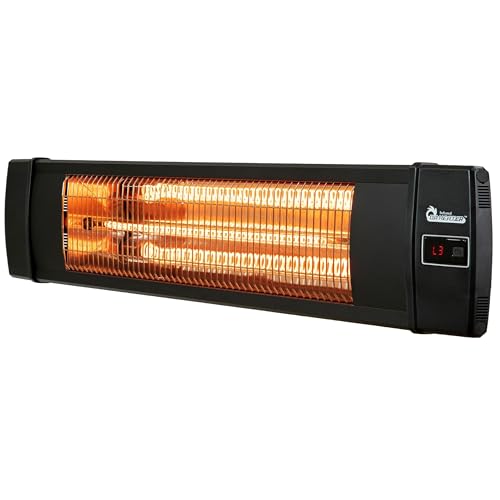
- Best overall for apartments: Dr. Infrared Heater DR-238 Carbon Infrared Outdoor Heater — Check on Amazon
- Best wall-mounted value: SereneLife Wall-Mounted Infrared Patio Heater, 1500W, IP65 — Check on Amazon
- Best for covered balconies: EnerG+ Hanging Infrared Electric Outdoor Heater with LED and Remote — Check on Amazon
See 3 more Amazon options
- Best no-drill option: Dr. Infrared Heater 1500W Portable Infrared Heater (Freestanding / Ceiling / Mounting) — Check on Amazon
- Best with display and timer: VEVOR Infrared Heater, 1500W with Remote Control and LED Screen — Check on Amazon
- Best weatherproof pick: Heat Storm Tradesman 1500 Watt Weatherproof Infrared Heater — Check on Amazon
Read the full guide ↓
Disclosure: As an Amazon Associate, dailyhomedecorating.com earns from qualifying purchases. Links to Amazon on this page are affiliate links; they cost you nothing extra. Listing details such as price and availability change often, so check the current Amazon listing before you buy.
Here is the truth that most roundups skip: the best patio heater for apartments under $150 is almost never a propane heater, no matter how good the propane heater is. Apartment balconies sit inside a web of fire codes, lease clauses and building rules that were written after real balcony fires, and those rules treat open-flame and gas-fueled heating devices as a hazard to the whole building, not a personal choice. The good news is that the restriction points to the technology that suits a small balcony best anyway. Electric infrared heaters produce no flame, no exhaust and no carbon monoxide, take up little or no floor space when mounted or hung, warm the people in front of them instantly, and cost a predictable amount of electricity per evening. Every pick in this guide is electric, verified, and chosen for the realities of a rented balcony: limited outlets, limited space, a landlord’s rules, and neighbors above, below and beside you.
Start with the rules, because they decide the shopping list. Section 308.1.4 of the International Fire Code — the model code adopted, often with amendments, by most U.S. jurisdictions, with parallel provisions in NFPA 1 — prohibits open-flame cooking devices on combustible balconies and within 10 feet of combustible construction in multi-family buildings. Fire marshals in many cities apply the same logic, and often explicit local amendments, to gas patio heaters: a propane tower or tabletop burner on a typical apartment balcony is an open-flame device next to combustible railings, siding and the balcony above. The code’s narrow exceptions do not rescue a patio heater in most buildings: the sprinkler exception depends on the balcony itself being sprinklered, and the small-cylinder exception is written around cooking devices with a nominal 1 lb LP-gas container — and even where a 1 lb tabletop might arguably fit a code exception, the overwhelming majority of leases and HOA rules ban gas appliances and propane storage on balconies outright, and propane cylinders generally may not be stored inside the unit or carried through common enclosed areas. Local rules vary, and a ground-floor patio with direct outdoor access is a different situation from a fourth-floor balcony — but the only safe procedure is the one this guide follows: check your lease, check your building’s rules, and when in doubt ask the property manager or local fire marshal before any combustion appliance comes home. We will not recommend a product whose normal use requires breaking those rules.
Within the electric lane, the choice is about mounting and aim. A wall- or ceiling-mounted infrared bar over your two chairs is the permanent, zero-floor-space answer. A hanging heater suits a covered balcony or pergola where the ceiling is the only free surface. A freestanding model avoids drilling entirely — important when the lease forbids holes — at the cost of some floor space and stability management. All six picks below plug into a standard outlet, all are rated for outdoor use, and all were cross-checked against manufacturer information and the CPSC recall record before earning a place here.
In this guide
Quick picks: the best patio heater for apartments under $150 at a glance
| Pick | Best for | Power | Mounting | Standout feature |
|---|---|---|---|---|
| Dr. Infrared Heater DR-238 | Most apartment balconies | 900 / 1,200 / 1,500W | Wall or ceiling bar | Carbon infrared, IP55, remote, timer |
| SereneLife Wall-Mounted Infrared Heater | Value wall mounting | 1,500W | Wall | IP65 rating, remote control |
| EnerG+ Hanging Infrared Heater | Covered balconies, pergolas | 1,500W, 3 settings | Hanging chain | Built-in LED light, remote, adjustable height |
| Dr. Infrared Heater 1500W Portable (DR-298 family) | Renters who cannot drill | 1,500W | Freestanding, ceiling or wall | Three placement options, remote |
| VEVOR Infrared Heater 1500W | Control from the chair | 1,500W, 3 levels | Wall or stand | LED display, timer, remote |
| Heat Storm Tradesman 1500W | Exposed, weather-beaten balconies | 1,500W | Tripod / mount combo options | Weatherproof build, remote |
The short version: mount the DR-238 if you may drill, hang the EnerG+ if your balcony has a ceiling and no free wall, and choose the freestanding Dr. Infrared model if your lease forbids holes. The detailed reviews explain the trade-offs, and the sections after them cover the code and lease checks, the electrical checks, and the mistakes that get apartment heaters returned — or confiscated.
How these picks were chosen
The first filter was legal and practical, not thermal: every pick had to be electric, because electric infrared is the only heater category that is broadly compatible with apartment leases, balcony fire-code provisions and propane-storage prohibitions. Any product whose normal apartment use would require violating IFC §308.1.4-style rules or a typical lease was excluded by design — that is why you will find no propane tower, tabletop burner or fuel-burning portable in the pick list, however well reviewed those products are for houses. Propane options are discussed honestly in the FAQ, including the narrow ground-floor situations where the answer can differ, but they are not recommended here.
The second filter was verification. Each pick is a real, currently listed model whose identity, power rating, mounting style and weather rating could be confirmed against the manufacturer’s listing and documentation, and whose Amazon listing could be cross-checked through the site’s own product data. We checked the U.S. Consumer Product Safety Commission recall database for every brand and model; nothing with an open recall on the heater itself appears in this guide. The third filter was apartment fit: a standard 120V plug (no 240V hardwired units), an IP44-or-better weather rating for balcony exposure, a remote control — because nobody wants to cross a cold balcony to change a setting — and either a mounting system that uses minimal hardware or a freestanding design that uses none. Physical size mattered too: a balcony heater that eats the space it warms is a failed product, so compact bars, hanging units and slim freestanding designs outranked bulky towers of warm air.
Finally, we weighted honest limitations. Infrared heat is directional, and balcony heaters live or die by aim, mounting height and distance to the seats. Picks that publish their wattage steps, timer range and weather rating plainly ranked above picks with inflated coverage claims, because on a balcony the difference between marketing and physics is about three feet.
The picks in detail
1. Dr. Infrared Heater DR-238 — best overall for apartments
Who it suits: The apartment dweller with a defined balcony seating spot — two chairs and a small table — who can put a few screws into a wall or ceiling beam and wants the heater to disappear into the background of balcony life.
The DR-238 is a carbon infrared bar that mounts on a wall or ceiling with adjustable brackets and plugs into a standard 120V outlet. Its three settings — 900W, 1,200W and 1,500W — cover the realistic range of balcony evenings: low for a mild night when you only want the chill off your shoulders, high for the first cold snap of autumn. Carbon infrared warms people and surfaces directly rather than heating air, which is exactly right for a balcony, where any warmed air is one breeze away from belonging to your neighbor. The housing carries an IP55 rating, so wind-driven rain at the balcony edge is within its brief, and the included remote and shutoff timer mean the heater can live above head height, out of the way, and still be fully controlled from your chair. There is no flame, no exhaust, no fuel to store — nothing for a lease to object to and nothing for the balcony above to fear.
Pros:
- Zero floor space once mounted; nothing to trip over or knock off the balcony
- Carbon infrared heat is instant, silent and wind-resistant compared with warm-air heaters
- Three power settings plus remote and timer — set it and stay seated
- IP55 weather rating suits exposed balcony positions
- No combustion, no CO, no propane storage — the lease-friendly option
Honest limitation: It warms the seats it is aimed at and little else; rearrange the balcony furniture and you must re-aim or remount. Mounting needs a suitable surface at a safe height with the maker’s clearances respected — on a balcony with a low ceiling and a ceiling fan already installed, finding a compliant spot can be genuinely difficult, and renters must confirm that drilling is permitted before the first hole.
Choose it if your balcony layout is settled and drilling is allowed. Skip it if your lease forbids wall penetrations entirely (see the freestanding pick below) or your balcony is an open, roofless terrace where a bar’s beam covers only part of a larger space.
Check on Amazon — check price on Amazon; a thermostat-equipped variant exists if you want set-and-forget temperature control.
2. SereneLife Wall-Mounted Infrared Patio Heater — best value wall mount
Who it suits: The renter or owner who wants the mounted-bar experience at the friendliest price in this guide, and whose balcony wall is the natural heater location — above the door, or high on the wall the chairs face.
SereneLife’s wall-mounted infrared heater delivers the full 1,500W from a slim bar with an IP65 weather rating — a step above the DR-238’s IP55 on paper, meaning stronger protection against water jets, which matters on balconies that take driven rain. A remote control handles power and settings from your seat. The design brief is plainly apartment-shaped: mount it high, aim it down at the seating, and forget it exists until the evening turns cold. Like every heater here it produces no combustion gases and stores no fuel, so the compliance conversation with a landlord starts and ends with the mounting screws.
Pros:
- IP65 rating — the strongest weather protection among the wall bars here
- Full 1,500W infrared output with remote control
- Slim profile suits narrow balconies
- Value positioning within the under-$150 budget
Honest limitation: SereneLife is a broad consumer-electronics brand rather than a heating specialist, and it shows in the supporting material: documentation is thinner than Dr. Infrared’s, and the mounting hardware and instructions reward a careful read before you drill. The unit also leans on its remote — keep it somewhere findable, because balcony season ends quickly when every adjustment means standing up.
Choose it if budget leads and your wall takes weather. Skip it if you want the deepest documentation and the most established heating-only brand — that is the DR-238’s home ground.
Check on Amazon — check price on Amazon, and measure your wall run and outlet distance before ordering.
3. EnerG+ Hanging Infrared Electric Outdoor Heater — best for covered balconies
Who it suits: Balconies and pergolas with a solid ceiling or beam and no free wall — a common apartment layout where the only unused surface is overhead — and anyone who likes the idea of the heater doubling as the balcony’s evening light.
The EnerG+ hangs from an included chain at an adjustable height and combines a 1,500W infrared element with a built-in LED light, both run from the remote. Three heat settings (stepping down through lower wattages for mild evenings) let you match output to the night, and the maker’s documentation for this heater family is unusually clear about the clearances a hanging unit needs: open space above the unit, clearance to the sides, and a safe distance below it to heads and furniture. Overhead placement has a natural advantage on a balcony — heat radiates down onto the seating like a mild sun, nothing occupies the floor or the wall, and the unit is physically out of reach of children, pets and chair backs. It plugs into a standard household outlet, and with no combustion involved, the covered-balcony problem that rules out propane simply does not arise.
Pros:
- Hanging design uses the ceiling — often the only free surface on a balcony
- Heat and LED light in one unit, both on the remote
- Three heat settings down to gentle warmth for mild nights
- Adjustable hanging height helps you respect clearances and aim the heat
Honest limitation: A hanging heater is only as good as its anchor: the ceiling or beam must genuinely support it, which rules out some lightweight pergola roofs and any balcony where the “ceiling” is the underside of the balcony above finished in a material you may not drill. Its radiant footprint is a pool of warmth beneath the unit rather than a wide wash, so seating must live under it. And like all overhead heat, it warms heads and shoulders most — on the coldest nights, feet still want a rug and warm socks.
Choose it if your balcony is covered and the ceiling is yours to use. Skip it if there is no trustworthy overhead anchor — a wall bar or freestanding model is the safer architecture.
Check on Amazon — check price on Amazon, and confirm your ceiling height against the clearance figures in the manual before you buy.
4. Dr. Infrared Heater 1500W Portable Infrared Heater — best no-drill option
Who it suits: Renters whose leases forbid drilling, screwing or anchoring anything to the building — a stricter and more common clause than many tenants expect — and anyone whose balcony layout changes with the season.
This member of the Dr. Infrared family is built around placement freedom: it can stand freestanding, or mount to a ceiling or wall if your situation later allows. Run it standing and there are no holes, no anchors and nothing to patch at move-out — the entire installation is choosing a spot, aiming the head at the chairs, and plugging in. Output is the full 1,500W infrared with a remote control, from the same heating-focused maker as the DR-238, so the core warmth story is identical: instant, directional, silent heat with no combustion. On a small balcony the freestanding footprint is the one real cost, and the sections below cover how to place it so it earns its square footage.
Pros:
- No installation at all in freestanding mode — fully lease-safe and move-out friendly
- Can convert to wall or ceiling mounting later if rules or homes change
- 1,500W infrared output with remote, from a heating-specialist brand
- Repositionable — aim it at the dining set tonight, the reading chair tomorrow
Honest limitation: Anything freestanding on a small balcony is something to walk around, and a heater with a hot face must stand where it cannot be knocked by a chair leg or brushed by a passing hip. It also sits lower than a mounted bar typically can, which narrows its throw. If your balcony is truly tiny, the honest answer may be the hanging EnerG+ instead.
Choose it if your lease says no holes, full stop. Skip it if floor space is your scarcest resource — mounted and hanging picks give the same heat for zero square feet.
Check on Amazon — check price on Amazon; keep the box if you move often, since this unit travels well.
5. VEVOR Infrared Heater, 1500W with Remote and LED Screen — best controls
Who it suits: The balcony user who treats heat like lighting — adjusted often, timed precisely — and wants to see the setting at a glance rather than guess from a row of identical beeps.
VEVOR’s infrared heater pairs its 1,500W output with the control set this category usually reserves for indoor appliances: a remote, an LED display on the unit, three power levels and a timer. On a balcony, the timer is the feature that earns its keep — set the heater to switch off after the evening winds down and there is no cold trip outside at midnight, and no heater left running against an empty chair. Placement is flexible between wall mounting and stand use, so it can start life freestanding under a strict lease and move to a wall in a later home. VEVOR’s documentation for this model is written for porches, dining areas and studios as well as patios, which reflects how apartment buyers actually use these heaters: the same unit warms the balcony in October and the drafty home-office corner in January.
Pros:
- LED display plus remote — settings you can verify from your chair
- Timer for automatic shutoff; three power levels
- Wall or stand placement suits changing leases and layouts
- Instant infrared heat, no combustion, standard outlet
Honest limitation: VEVOR sells an enormous catalogue, and support quality varies by product line; keep your purchase records, and test every function in the first week while returns are painless. The display’s brightness is also a minor balcony etiquette point — if your seating faces a neighbor’s window, check the unit’s night-time glow before committing to a wall position.
Choose it if timers and visible settings matter to you. Skip it if you prefer the longest-established heating brands and the simplest possible controls — the DR-238 is the plainer, proven tool.
Check on Amazon — check price on Amazon, and confirm which stand or bracket hardware is included in the current listing.
6. Heat Storm Tradesman 1500 Watt Weatherproof Infrared Heater — best for exposed balconies
Who it suits: High-floor balconies and open terraces that take real weather — wind-driven rain, dust, full sun — where a heater’s housing and seals matter as much as its wattage.
Heat Storm builds the Tradesman line for job-site toughness, and that heritage suits the harshest apartment microclimate: the top-floor balcony. The 1,500W infrared element sits in a weatherproof housing designed to live outdoors, the remote keeps adjustments contact-free, and the Tradesman family offers tripod and mount combinations, so the same heater can stand in a corner this year and hang or mount in a different home later. Infrared delivery is again the right physics for an exposed balcony: there is no flame to blow out and no warmed air to lose — the heat lands on you and the chair, and the wind can only steal the portion that misses.
Pros:
- Weatherproof construction aimed at genuinely exposed outdoor use
- 1,500W infrared with remote control
- Flexible tripod / mounting configurations across the Tradesman line
- No combustion — compliant with the balcony rules discussed throughout this guide
Honest limitation: The work-site aesthetic is honest but industrial; on a carefully styled balcony it looks like equipment, because it is. Output flexibility is also simpler than the VEVOR’s — this is a heater you set and leave, not one you fine-tune through an evening. And on the windiest nights, even infrared loses the battle at the edges: position it close to the seating and accept a smaller warm zone.
Choose it if your balcony takes weather and you value durability over looks. Skip it if design harmony matters or your balcony is sheltered, where the slimmer bars above are prettier and just as warm.
Check on Amazon — check price on Amazon; a tri-mount combo version is also listed if you want every mounting option in one box.
Side-by-side comparison
| Heater | Power | Placement | Weather rating | Installation | Best role |
|---|---|---|---|---|---|
| Dr. Infrared DR-238 | 900–1,500W | Wall / ceiling bar | IP55 | Brackets, a few screws | Settled balcony seating |
| SereneLife Wall-Mounted | 1,500W | Wall bar | IP65 | Wall bracket | Value wall mounting |
| EnerG+ Hanging | 1,500W, 3 settings | Ceiling / beam, chain | Outdoor rated, LED model line | Ceiling anchor | Covered balconies, pergolas |
| Dr. Infrared Portable 1500W | 1,500W | Freestanding / ceiling / wall | Outdoor rated | None in standing mode | No-drill leases |
| VEVOR Infrared 1500W | 1,500W, 3 levels | Wall or stand | Outdoor rated | Optional bracket | Timers and visible settings |
| Heat Storm Tradesman | 1,500W | Tripod / mount | Weatherproof housing | None in tripod mode | Exposed, windy balconies |
Every row is electric, every row plugs into a standard outlet, and no row asks you to store fuel on a balcony — that is the whole compliance story in one table. Choose by placement: wall, ceiling, or floor.
Safety and rules: the apartment edition
Fire code first. IFC §308.1.4 prohibits open-flame devices on combustible balconies and within 10 feet of combustible construction in multi-family buildings, with narrow exceptions (one- and two-family homes, sprinklered balconies, and small 1 lb LP-gas cooking devices). NFPA 1 carries parallel balcony provisions, and many cities and buildings go further by local amendment or house rule. A propane patio heater — tower or tabletop — is an open-flame heating device, and on a typical apartment balcony it collides with these provisions and with the lease terms that mirror them. Do not buy one for a balcony on the theory that nobody will notice; balcony fires endanger every unit in the stack, enforcement is real, and “the listing said balcony-friendly” is not a defense. If your situation is genuinely different — a ground-floor patio with direct outdoor access, noncombustible construction, and written permission — verify it with the property manager and, if needed, the local fire marshal, in that order, before purchasing any combustion appliance.
Propane storage is its own violation. Even owners of houses should store cylinders upright and outdoors; in apartments, storing propane inside the unit, on the balcony where rules forbid it, or in common areas is commonly prohibited, and carrying larger cylinders through enclosed common stairways and elevators is restricted. An electric heater deletes this entire category of problem: there is nothing to store, leak or haul.
Carbon monoxide. Electric infrared produces none. This is also why electric is the only category to consider for the semi-enclosed spaces apartment dwellers actually have — screened balconies, enclosed sunrooms and glazed loggias are indoor spaces for combustion purposes, and no propane appliance belongs in them.
Electrical safety on a balcony. Plug the heater directly into a properly grounded outlet; a 1,500W heater is a serious continuous load. Avoid extension cords where possible — if one is unavoidable, it must be outdoor-rated, heavy-gauge (14 AWG or thicker, rated at or above the heater’s wattage), as short as possible, and never run under a rug or through a door that can pinch it. Balcony outlets should be GFCI-protected; if yours is not, raise it with the landlord rather than improvising. Keep the cord off walkways, and never drape it over the railing where wind and abrasion work on it all season.
Clearances and neighbors. Respect the maker’s clearances to the ceiling, walls and furniture even though there is no flame: the face of an infrared heater gets hot enough to scorch fabrics and damage vinyl given contact or very close range. Keep cushions, throws, drying laundry and balcony storage boxes out of the beam’s close zone, supervise children and pets around the hot face, and be a decent neighbor — aim the beam at your own seating, not across the railing, and use the timer so the heater is not glowing against a neighbor’s bedroom window at 2 a.m.
Tip-over and stability. Freestanding models must stand level, out of the walkway, where a chair leg or a pet cannot topple them; use any tip-over switch as a backstop, not a strategy. Mounted and hanging units shift the risk to the anchor — use the supplied hardware into real structure, never into drywall or siding alone, and re-check the mount each season.
How to choose the best patio heater for apartments under $150 without breaking your lease
Step one: read three documents before any product page. Your lease (appliances, balcony and alteration clauses), your building or HOA rules, and — if either is ambiguous about heaters — a quick email to the property manager. The question to ask is narrow: “May I use a plug-in electric infrared heater on my balcony, and may I mount it?” Written answers protect you; assumptions do not. If mounting is refused, your shortlist is the freestanding and tripod picks, and nothing else about the choice changes.
Step two: audit the balcony’s surfaces. A free wall at the right height suggests a bar. A solid ceiling or beam suggests the hanging unit. Neither suggests freestanding. Measure the distance from the seating to each candidate position: infrared heaters do their best work within roughly six to ten feet of the seats, aimed at torso height when seated, and every extra foot of distance costs noticeable warmth.
Step three: audit the power. Find the balcony outlet, confirm it works and is GFCI-protected, and count what else shares its circuit — a 1,500W heater plus a string of decorative lights is fine; a heater plus an electric grill on the same circuit is a tripped breaker waiting for a cold evening. Plan the cord route before the heater arrives.
Step four: furnish around the beam. Infrared rewards a settled layout: two chairs and a table inside the beam, storage outside it. The balcony becomes more usable, not less, when the warm zone is deliberate — pair the heater with the compact storage in our guide to the Best Deck Box For Apartments Under $150, ground the seating area with the Best Outdoor Rug For Apartments Under $150, and light the edges with the Best Outdoor String Lights Under $150 so the whole balcony reads as one room. If your balcony is really a small patio, the companion guide to the Best Patio Heater For Small Patios Under $150 covers the same physics at ground level, and our main roundup of the Best Patio Heater Under $150 shows the propane options that become available if you move to a house.
Step five: size the wattage honestly. All six picks top out at 1,500W because that is what a standard circuit delivers — anyone promising dramatically more heat from a plug-in balcony heater is selling something. Within that ceiling, three-step controls matter more than peak watts: most balcony evenings need the middle setting, and the low setting is the one you will use in spring.
Common mistakes apartment buyers make
Buying a propane tabletop because it is small. Size is not the issue; combustion is. A 1 lb tabletop burner is still an open-flame appliance with a fuel cylinder, and on most apartment balconies it breaches the fire-code provisions and lease clauses covered above. Small and prohibited is still prohibited.
Assuming “electric” means “no rules.” Electric removes the fire-code and fuel problems, but mounting can still breach a lease’s alteration clause, and a heater aimed carelessly can still scorch a cushion or annoy a neighbor. Electric is the compliant category, not a free pass.
Running the heater on a light-duty extension cord. The thin indoor cord from a drawer is the most common balcony-heater hazard in practice: overheated cords, melted insulation, tripped breakers. Direct outlet connection, or a short, heavy, outdoor-rated cord — nothing in between.
Mounting into the wrong material. Brackets screwed into siding, stucco skin or drywall will eventually pull out, and a falling heater is a burn and fire risk even without fuel. Anchors go into studs, joists or masonry, with the maker’s hardware, or the heater goes freestanding instead.
Aiming at the view instead of the people. Infrared heats what it points at. A bar aimed over the railing at the skyline warms the skyline. Aim at the chairs, at seated torso height, and test the beam’s footprint on the first evening before final-tightening any mount.
Forgetting the off-season conversation. A mounted bar can usually stay in place year-round; a freestanding unit needs a storage answer that is not “the corner of the balcony behind the plants,” where weather and clutter shorten its life. Decide storage before purchase, not in May.
Living with balcony heat: aim, timing and neighbor craft
Aim is a weekly habit, not an installation step. Balcony furniture migrates — a chair turns toward the view, a plant stand swaps with the side table — and an infrared heater keeps faithfully warming its original target. Once a month, and whenever the layout changes, sit in each seat on a cool evening and check the beam: warmth should land on your torso and lap, not on the railing, the plant or the neighbor’s airspace. Mounted bars adjust at their brackets in minutes; the freestanding and tripod models ask only to be turned. The five-minute check is the difference between a heater that feels weak and one that feels designed.
Pre-warm the balcony, not just the air. Infrared warms surfaces, and surfaces re-radiate. Switching the heater on fifteen minutes before you step out warms the chairs, the table and the floor inside the beam, so the balcony feels established rather than assisted. On the timer-equipped picks, this is a setting, not a chore: program the start, pour the drinks, step into warmth. The same physics argues for a rug inside the beam — a cold slab underfoot will argue with the heater all evening, while a rug inside the warm zone becomes part of the heating system.
Layer the microclimate. A balcony’s cold rarely comes only from temperature: wind through the railing, a downdraft off the building face, and radiant loss to a clear night sky all contribute. A heater handles the first-order problem; wind screening on the railing (where building rules permit), a throw kept in a storage box by the door, and seating placed out of the building’s corner eddies handle the rest. The hosts who love their balconies in November treat heat, wind and textiles as one system — and spend less on wattage than the buyers who ask a heater to do all three jobs alone.
Neighbor craft is mostly light and timing. Infrared bars glow visibly, and on a stacked balcony your evening light is your neighbor’s ceiling-level view. Aim downward at your own seating, prefer the middle setting after ten o’clock, and let the timer end the evening’s glow at a civilized hour. In practice, electric infrared is the easiest heater to be liked with: silent, smokeless, and off when you say so. The only balcony heater that generates complaints is a combustion one — which is one more reason this guide never went there.
Move-out math favors the removable. When the lease ends, mounted picks leave a few screw holes to fill — a ten-minute patch where drilling was permitted — and freestanding picks leave nothing at all. Either way, the heater moves with you to the next balcony, the next porch, or a first house’s covered patio, which makes a well-chosen electric bar one of the few apartment purchases with a decade of addresses in it. Keep the brackets, the remote and the manual together in one labeled bag; future you, on a ladder in a new home, will be grateful.
Running costs and the electricity question, answered plainly
Prospective buyers often ask whether a plug-in heater will punish the power bill. The arithmetic is reassuring: a 1,500W heater consumes 1.5 kilowatt-hours per hour at full power, and most balcony evenings run at the middle setting, where consumption drops to roughly two-thirds of that. An evening of three hours at mixed settings uses about as much electricity as a load of laundry dried on high — a real cost, worth knowing, and nowhere near a reason to choose a prohibited propane appliance instead. Compare like with like: the propane tabletop’s 1 lb cylinders, replaced every couple of hours on high, cost several times more per evening than the electricity any pick in this guide consumes, and they do so while breaching the balcony rules. The 20 lb tank economics that make propane cheap belong to houses with legal places to put the tank.
Two electrical cautions complete the picture. First, a heater is a continuous load: the outlet and circuit should be in good condition, and a heater that repeatedly trips a breaker is reporting a wiring or circuit problem — have it looked at rather than defeated with a different outlet. Second, smart plugs and timers must be rated for the heater’s full wattage and for resistive loads; an underrated smart plug is a failure point placed deliberately in a heating circuit. The heaters’ own built-in timers, fitted to several picks here, are the safer automation.
Final recommendation
If your lease allows a few screws, the Dr. Infrared DR-238 is the apartment heater to buy: proven, discreet, weather-rated, and warm exactly where you sit. If the ceiling is your only free surface, hang the EnerG+ and enjoy heat that doubles as light. If your lease forbids holes, the freestanding Dr. Infrared model gives you the same infrared warmth with zero installation and zero move-out patching. Choose the SereneLife to save money on a wall mount, the VEVOR for its display and timer, and the Heat Storm if your balcony takes real weather. Above all, keep the purchase inside the rules that govern your building: the best patio heater for an apartment is the one that is still on your balcony, warming it, a year from now — not the one that earned you a lease violation in its first week.
FAQ
Are propane patio heaters allowed on apartment balconies?
Generally, no. IFC §308.1.4 prohibits open-flame devices on combustible balconies and within 10 feet of combustible construction in multi-family buildings, NFPA 1 has parallel provisions, and most leases and HOA rules ban gas appliances and propane storage on balconies outright. The code’s small-cylinder exception is written for cooking devices and does not override a lease ban. Ground-floor patios with direct outdoor access can be a different case — verify in writing with your property manager and local fire marshal before buying any combustion heater.
Why is electric infrared better than a fan heater on a balcony?
A fan heater warms air, and balcony air leaves. Infrared warms people and surfaces directly, so the heat survives a breeze and arrives instantly. Infrared units are also silent, have no exposed fan to clog with balcony dust, and mount overhead or on a wall, out of the way.
How much does it cost to run a 1,500W balcony heater?
At full power it draws 1.5 kWh per hour; multiply by your electricity rate for the hourly cost, and remember most evenings are spent on the middle or low setting. It is a predictable, modest line item — and there is no fuel to buy, store or run out of mid-evening.
Can I mount a heater if my lease forbids drilling?
Do not drill. Choose a freestanding or tripod model instead — two picks in this guide need no installation at all. If you later move somewhere drilling is allowed, both can convert to mounted use, so the purchase is not wasted.
Will a balcony heater annoy my neighbors?
Electric infrared is silent and produces no smoke or exhaust smell — the two things neighbors actually complain about with combustion heaters. The remaining courtesy points are aim (keep the beam on your own balcony) and light (some units glow visibly; a timer prevents all-night glow).
What if my balcony has no outdoor outlet?
Then a plug-in heater is not safely usable there: running a cord through a window or door opening pinches and damages it, and indoor extension arrangements for a 1,500W continuous load are a genuine hazard. Talk to your landlord about a GFCI outlet, or warm the space with textiles, a rug and wind screening instead — and never substitute a propane heater, which trades an inconvenience for a code violation.
Related guides
- Best Patio Heater Under $150 — the full roundup, including propane towers for houses
- Best Patio Heater For Small Patios Under $150 — the same budget at ground level
- Best Patio Heater Under $300 — the step-up tier if your budget grows
- Best Deck Box For Apartments Under $150 — compact balcony storage
- Best Outdoor String Lights Under $150 — balcony lighting that pairs with overhead heat


