Where to buy
Check the latest price, availability and delivery on Amazon. Orders are placed on Amazon. We may earn a commission from qualifying purchases.
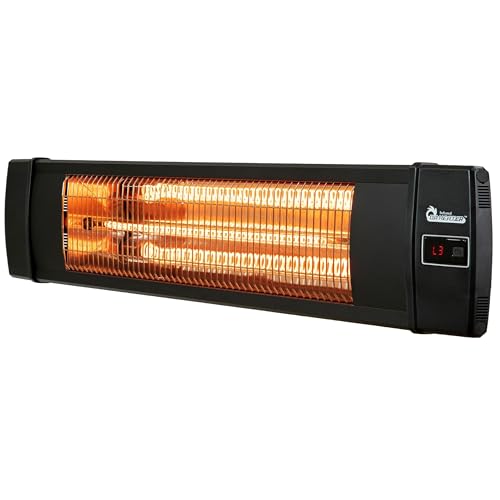
- Dr Infrared Portable Infrared Heater — Check on Amazon
- Briza Infrared Patio Heater — Check on Amazon
- EnerG+ Hanging Infrared Heater — Check on Amazon
- SereneLife Hanging Infrared Heater — Check on Amazon
See 2 more Amazon options
- Heat Storm Tradesman Tripod — Check on Amazon
- Westinghouse Pole-Mounted Infrared Heater — Check on Amazon
Read the full guide ↓
Disclosure: As an Amazon Associate, dailyhomedecorating.com earns from qualifying purchases. Links to Amazon on this page are affiliate links; they cost you nothing extra. Listing details such as price and availability change often, so check the current Amazon listing before you buy.
Shopping for the best patio heater for apartments under $500 begins with a fact that most buying guides bury: in a large share of apartment buildings, the classic propane patio heater is not a purchase option at all. Model fire codes used across the United States — the International Fire Code at section 308.1.4 and NFPA 1 with the same provision — prohibit open-flame devices such as gas-fired patio heaters on the balconies of multifamily buildings, with narrow exceptions that rarely cover an ordinary tenant’s balcony, and most leases and condo rules repeat the ban in plain language. That is why every pick in this guide is electric. An infrared electric heater has no flame, burns no fuel and produces no carbon monoxide, which puts it in a completely different category for building rules, insurers and neighbours. Under $500 covers the entire quality end of this electric category, so the money is not the constraint — the rules, the wiring and the size of your balcony are.
Electric infrared heat works differently from the gas heaters in the other guides in this series, and setting expectations correctly is the difference between a happy purchase and a return. Infrared elements warm people, clothing and furniture directly, the way sunlight does, instead of heating the air — air which, on a balcony, immediately leaves. The warmth is instant and pleasant within a few feet of the element, and modest beyond it. A 1,500-watt heater, which is what a standard household circuit supports, creates a genuine pocket of comfort for one or two people in chairs. It will not turn a January balcony into a summer room, and any listing that promises whole-patio warmth from 1,500 watts is describing a product that does not exist.
Within that honest physics, the six picks here divide by mounting. Freestanding and tripod models need no installation and leave with you when you move — the renter’s default. Wall, ceiling and hanging models keep a small balcony’s floor completely clear and warm a fixed seating spot, at the cost of needing a structure that can carry them and permission to use it. The pole-mounted model mimics the classic patio heater silhouette for people who like the format. Every pick was verified against its maker’s specifications and cross-checked through Amazon’s Creators API, and every pick is a current model from an identifiable brand — because in a rental, the heater you can also use in the next apartment is worth more than a marginal specification advantage.
One more apartment-specific step before the reviews: read your lease and, if your building has one, the balcony rules in your resident handbook, and look at your outdoor outlet. Many balconies have a weatherproof outlet; some do not, and running a cord through a sliding door to an indoor socket defeats the door seal and the safety logic at once. If your building bans even electric heaters — a few do — this guide still helps: it tells you which models are worth proposing to a landlord, and which formats (small, mounted, auto-shutoff equipped) property managers are most likely to accept.
In this guide
Quick picks: best patio heater for apartments under $500
All six picks are electric infrared — no flame, no fuel, no carbon monoxide — because that is what apartment rules actually allow. They divide by how they mount: nothing to install, something to hang, or a pole to stand. The table gives the shape of the choice; the reviews give the detail.
| Pick | Type | Output | Best for | |
|---|---|---|---|---|
| Dr Infrared Portable Infrared Heater | Electric infrared heater | 1,500 W | most apartment balconies and small terraces | Check on Amazon |
| Briza Infrared Patio Heater | Electric infrared heater | 1,500 W | renters who need mounting flexibility | Check on Amazon |
| EnerG+ Hanging Infrared Heater | Electric infrared heater (hanging) | 1,500 W | covered balconies with a structure overhead | Check on Amazon |
| SereneLife Hanging Infrared Heater | Electric infrared heater (hanging) | 1,500 W | exposed covered patios needing weather sealing | Check on Amazon |
| Heat Storm Tradesman Tripod | Electric infrared heater | 1,500 W | zero-installation warmth for temporary spaces | Check on Amazon |
| Westinghouse Pole-Mounted Infrared Heater | Electric infrared heater | 1,500 W | buyers who want the classic pole-heater look, electric | Check on Amazon |
Dr Infrared Portable Infrared Heater — best for most apartment balconies and small terraces. The default apartment pick: a 1,500 W carbon infrared heater with a remote that works freestanding or mounted, from the best-known name in this niche.
Briza Infrared Patio Heater — best for renters who need mounting flexibility. The flexible pick: stand it, wall-mount it or ceiling-mount it as your lease and layout allow — one heater that adapts to the next apartment too.
EnerG+ Hanging Infrared Heater — best for covered balconies with a structure overhead. The overhead pick for covered balconies and pergolas: hangs above the seating with a built-in LED light, keeping the floor entirely clear.
SereneLife Hanging Infrared Heater — best for exposed covered patios needing weather sealing. The weather pick: IP65 sealing — the best in this group — for covered patios that still take wind-driven rain, hung over the table.
Heat Storm Tradesman Tripod — best for zero-installation warmth for temporary spaces. The zero-commitment pick: a tripod heater that sets up in minutes, folds into a closet, and needs no permission from anyone because nothing is installed.
Westinghouse Pole-Mounted Infrared Heater — best for buyers who want the classic pole-heater look, electric. The look-alike pick: the classic pole-heater silhouette with an adjustable-height electric head, tip-over protection and no tank to store.
How these picks were chosen
The first filter for this guide was legal, not thermal: every candidate had to be electric, because combustion heaters are prohibited on most multifamily balconies under the fire-code provisions discussed in the safety section, and recommending a product a reader cannot legally use would be a failure of the guide, not a nuance. Within electric infrared, each pick was verified against the manufacturer’s published specifications — wattage, mounting options, weather rating, safety switches — and cross-checked through Amazon’s Creators API, which confirmed the exact listing for every model before a link was added.
We also checked U.S. Consumer Product Safety Commission recall records for every brand considered. Any model with an active recall was excluded completely — it is not named anywhere in this guide — and the same exclusion applied to the wider series research behind this article. Beyond recalls, selection favoured three apartment-specific qualities: a safety shut-off (tip-over or overheat) on every freestanding model; a weather rating honest about balcony exposure, with splash resistance as the floor and IP65 as the ceiling; and portability or mounting flexibility, because apartment dwellers move, and a heater that only fits one balcony is a poor investment.
What was excluded is as important. All propane and natural gas heaters, however excellent, are out for the reason above. Indoor-only space heaters dressed up as patio products are out — a balcony heater needs an outdoor weather rating. And 240-volt heaters, the genuinely powerful electric class, are out for most renters: they appear in the base guide of this series for homeowners who can add a circuit, but a tenant cannot rewire a balcony, and pretending otherwise helps no one.
Safety first: fire, carbon monoxide and tip-over
No heater in this guide is safe on autopilot, and the safety rules are not fine print — they decide where a heater may stand, what it may stand near, and whether it may be used at all. Read this section before the reviews, and read your chosen model’s manual after them; where the two differ, the manual and your local fire code win.
Clearance from anything that can burn. Mushroom and pyramid propane heaters need generous clear space above and around them — as a working rule, keep at least 3 feet from walls, furniture, curtains, umbrellas and overhanging branches on every side, and several feet of open air above the reflector, following the greater distance whenever the manual demands more. Never run a full-height propane heater under a low roof, tent, gazebo canopy or patio umbrella unless the manual explicitly allows the configuration and the clearances still fit. Tabletop units need a stable, heat-tolerant table and open air above them. Electric infrared heaters need the clearance their manuals specify from ceilings, walls and soft furnishings — radiant elements run far hotter than they look.
Carbon monoxide. Every propane heater in this guide burns fuel and produces carbon monoxide. That is why they are outdoor-only appliances: never use one in a garage, tent, enclosed porch, sunroom or any space with a roof and walls that trap air, and never use one indoors for any reason. A covered patio with open sides is the grey zone — if air cannot move freely through the space, treat it as enclosed and choose an electric heater instead. Know the early signs of carbon monoxide exposure — headache, dizziness, nausea, unusual tiredness — and if anyone feels them near a running heater, turn it off if you can do so safely, move everyone to fresh air and seek help. A battery carbon monoxide alarm in any semi-enclosed outdoor room is cheap insurance.
Tip-over and stability. Full-height heaters are tall, top-heavy machines standing in weather. Fill water-ballast bases, use sand or weights where the design allows, stand the heater on level paving rather than grass or decking boards that rock, and move it out of forecast storm winds. Tip-over shut-off switches and anti-tilt valves are backstops, not permissions: they cut the gas when a heater falls, but a falling heater is already an accident in progress. Keep children and pets from leaning, climbing or playing around the pole, and never leave a running heater unattended.
Fuel discipline. Check the hose and regulator for cracks and the connections for leaks with soapy water whenever you change a tank — bubbles mean gas is escaping, and the heater stays off until the connection is fixed. Store spare propane cylinders outdoors, upright, away from the heater and from ignition sources, never indoors and never in a hot car. Turn the cylinder valve off first when you finish for the night, let the burner consume the line gas, then turn the control off. Electric heaters have their own discipline: plug directly into a properly rated outlet, never run one from a lightweight indoor extension cord, keep cords dry and out of walkways, and give a 1,500 W heater a circuit that is not already feeding another heavy load.
The apartment rules: what the fire code actually says
This section is the reason this guide contains only electric heaters, and it is worth reading precisely. The International Fire Code, at section 308.1.4, addresses open-flame devices on balconies: in the model code language adopted, with local amendments, across most of the United States, LP-gas burners and other open-flame devices are prohibited on the balconies of Group R-2 occupancies — the code category that covers apartment buildings — and within 10 feet of combustible construction, subject to limited exceptions such as sprinklered balconies in some editions and jurisdictions. NFPA 1, the other major model fire code, carries the same provision at the same section number. Enforcement is local, wording varies, and your city’s amendments control — but the direction of the rule is unmistakable: a propane patio heater on an ordinary apartment balcony is, in most of the country, a fire-code violation, quite apart from what your lease says.
Leases and building rules usually go further and simpler: many prohibit any fuel-burning appliance on balconies, ban propane storage in the unit or on the balcony, and some restrict even electric heaters or cap their wattage. Condo associations layer their own rules on top. The practical consequences of ignoring all this are not theoretical: a lease violation can mean removal of the heater, fines or worse; an insurer can dispute a fire claim involving a prohibited appliance; and a balcony fire in a multifamily building endangers neighbours who never consented to the risk. So the honest advice of this guide is absolute: do not put a propane or natural gas heater on an apartment balcony, do not store a spare cylinder indoors, and do not treat a neighbour’s heater as evidence that yours is allowed.
Electric infrared heaters avoid the open-flame prohibition entirely — no flame, no fuel, no exhaust — which is why they are the standard answer for balconies. They are not rule-free, though. Keep the clearance from railings, curtains, outdoor rugs and stored items that the manual specifies; plug into a proper outdoor-rated, ground-fault-protected outlet rather than a cord slipped through the door; never leave the heater running unattended or overnight; and if your lease restricts balcony appliances generally, ask the property manager in writing — a small, mounted, auto-shutoff electric heater is the easiest such request to approve, and having the answer in writing protects you. Carbon monoxide, the central hazard of the gas guides in this series, does not arise from these electric picks at all; the electric disciplines in the main safety section — circuits, cords, clearances, tip-over — are the ones that apply.
The six best patio heaters in detail
1. Dr Infrared Portable Infrared Heater
Who it suits. the typical apartment dweller: a balcony with two chairs and a small table, an outdoor outlet, and a wish to stretch the season by an hour in the evening. It suits buyers who want the established brand in this niche and a remote in hand.
This portable infrared heater from Dr Infrared is the electric alternative that anchors the apartment and small-space lists in this series: a 1,500 W carbon infrared unit with a remote control that can be used freestanding or mounted, indoors or out, with no flame, no fuel and no exhaust. Infrared heat warms people and surfaces directly rather than the air, so it feels effective the moment it switches on, within a modest radius. On a standard household circuit it draws what a hair dryer draws, which means it shares badly with other big loads on the same breaker — a real planning point, covered in the how-to-choose section.
Ownership of the Dr Infrared is closer to owning a lamp than a heater: position it, plug it into a suitable outdoor-rated outlet, and use the remote. There is no tank to refill, no pilot to light and no exhaust to think about, which is why it anchors the apartment list. The discipline it does require is electrical — a dedicated-feeling circuit, a dry outlet, and a cord routed where nobody walks. Kept that way, it is the lowest-hassle warmth in this guide.
Pros
- No flame, no fuel and no carbon monoxide — the apartment-safe format
- Remote control and multiple mounting options
- Instant-on infrared warmth at close range
- Runs on a standard household circuit
Honest limitation. 1,500 W warms a small seating pocket, not a patio; wind strips infrared heat quickly, and it needs a properly rated outdoor outlet within cord reach.
Choose it if you want the default, proven electric pick with mounting options and a remote. Skip it if you need to warm four or more people — no 1,500 W heater honestly does that.
2. Briza Infrared Patio Heater
Who it suits. renters whose living situation is not settled — this year’s balcony, next year’s terrace — and who want one heater that can stand, wall-mount or ceiling-mount as the space demands. It suits planners who buy for the next home too.
The Briza is a 1,500 W infrared heater sold with mounting flexibility as its headline: use it on its stand, or mount it to a wall or ceiling, indoors or out. That flexibility is exactly what renters and apartment dwellers need, because the right mounting position changes with the space — over a balcony railing line one season, on a stand by a reading chair the next. Heat is the usual honest 1,500 W story: a person-sized pocket of warmth at close range, delivered instantly, with no flame, no fuel storage and no exhaust to manage.
The Briza’s flexibility is its ownership story. On the stand it is a portable heater for a reading chair or a two-person balcony; wall-mounted over a small dining set it disappears into the background. Buyers should decide the primary position before purchase and buy any extra mounting hardware at the same time. As with all 1,500 W infrared units, satisfaction depends on honest expectations: it warms the people in front of it, not the postcode.
Pros
- Stand, wall or ceiling mounting in one product
- No flame, fuel or exhaust to store or manage
- Instant infrared warmth at close range
- Moves with you between homes and layouts
Honest limitation. At 1,500 W it is a one-or-two-person heater; groups need a second unit or a different format, and the stand takes floor space when used freestanding.
Choose it if flexibility across future homes matters more than any single feature. Skip it if you want a heater that disappears overhead; a hanging model serves that better.
3. EnerG+ Hanging Infrared Heater
Who it suits. apartment and condo owners with a covered balcony, pergola or gazebo structure overhead, who want the floor space back. It suits a fixed seating arrangement — the same two chairs in the same place every evening.
EnerG+’s hanging infrared heater suspends from a pergola beam, gazebo frame or ceiling hook above the seating area and combines a 1,500 W infrared element with an LED light and a remote control. Hanging the heat source overhead solves the two problems of small and rented spaces at once: nothing stands on the floor to be tripped over, and the heat lands on the people below it. The silver housing suits modern pergolas. The installation requirement is a structure above you that is genuinely rated to carry the unit, plus an outdoor-rated power outlet within reach.
The EnerG+ hangs above the seating and largely disappears into the structure of a pergola or gazebo, with the LED light earning its keep after dark. Installation is the whole project: a mount that is genuinely structural, a chain or bracket in good condition, and power routed safely overhead. After that, the remote runs everything. It is a particularly good answer for renters in houses with an existing pergola, provided the lease allows the mounting and the electrics are already in place.
Pros
- Overhead mounting keeps floors and walkways completely clear
- Built-in LED light adds function after dark
- Remote control avoids reaching overhead to adjust heat
- No flame or fuel — the format apartment rules usually allow
Honest limitation. Needs a load-bearing structure overhead and a nearby outdoor outlet; it cannot hang from a lightweight pop-up canopy or umbrella.
Choose it if you have a real structure overhead and a fixed seating spot beneath it. Skip it if your balcony has no load-bearing structure above it — a hanging heater is then impossible, not merely awkward.
4. SereneLife Hanging Infrared Heater
Who it suits. owners of covered but weather-exposed balconies, especially in rainy or coastal climates, who need sealing that tolerates real weather rather than a dry covered porch.
SereneLife’s hanging infrared heater is a 1,500 W unit with an IP65 rating — the strongest weather sealing in the electric group here — a remote control, and a format designed to suspend above a table or seating pocket on a covered patio, gazebo or pergola. IP65 means dust-tight and protected against water jets, so it tolerates exposed positions that would trouble lesser-sealed heaters. Like all 1,500 W infrared units, its honest job is warming the people directly beneath it, and it does that job the moment it is switched on.
SereneLife’s hanging unit is built for covered outdoor rooms that stay set up all season: the IP65 sealing tolerates the damp air and wind-driven drizzle that covered patios still admit. Hung over the main table, it warms the people who linger longest. The remote keeps adjustment at table level. As with every hanging heater, the mount and the power feed deserve more care than the heater itself — they are the installation.
Pros
- IP65 rating is the best weather sealing in this electric group
- Overhead format keeps the floor clear
- Remote control included
- Suitable for gazebos, pergolas and covered patios
Honest limitation. Still needs a genuinely load-bearing mount and an outdoor-rated outlet; IP65 covers the heater, not a careless extension-cord setup.
Choose it if your covered balcony still takes weather and you want IP65 sealing. Skip it if you have no structure to hang from, or no outdoor outlet within safe reach.
5. Heat Storm Tradesman Tripod
Who it suits. renters with strict leases, shared terraces, or temporary living situations — anyone who cannot install anything and may need to pack the heater away between uses or between homes.
Heat Storm’s Tradesman pairs a 1,500 W infrared heater with a tripod stand and a remote control. The tripod is the feature: it sets up in minutes on any flat surface, folds away for storage, and points the heat where the people are rather than where a wall happens to be. Tradesman branding reflects its jobsite heritage, so the housing is built to be knocked about a little. For renters, students and anyone whose outdoor space is borrowed or temporary, a heater that needs no installation at all is often the only realistic option.
The Tradesman is the heater you lend to a neighbour: tripod out, plug in, warm. The tripod footprint is the thing to plan around — it needs a flat patch of ground and a cord route that does not cross a walkway. In return you get heat exactly where the group is, including places a fixed heater cannot reach, like a driveway gathering or a garage workshop session. It stores folded in remarkably little space.
Pros
- Tripod sets up anywhere with zero installation
- Folds flat for closet or garage storage
- Remote control included
- Rugged housing suits garages and workshops as well as patios
Honest limitation. Tripod legs have a wide footprint and can be tripped over in tight spaces; route the cord carefully and keep the legs out of walkways.
Choose it if you cannot install anything at all and need heat that packs away. Skip it if floor space is your scarcest resource and a tripod footprint is too much of it.
6. Westinghouse Pole-Mounted Infrared Heater
Who it suits. buyers who like the presence of a classic pole patio heater — a visible, central warm object — but need it electric, with height adjustment to suit the chairs around it.
Westinghouse’s pole-mounted infrared heater takes the familiar patio-heater silhouette — a pole, a head at the top — and replaces the gas burner with a 1,500 W radiant electric element. The pole height adjusts between roughly 64 and 77 inches, the housing is rated IPX4 against splashing water, and tip-over protection is built in. It is the electric option for people who like the freestanding format but cannot or will not run propane: on a balcony where combustion is banned, or a small patio where a tank and flame feel like too much machinery.
Westinghouse’s pole heater is for buyers who want the ritual of the classic patio heater — a tall, visible warm presence in the middle of the space — without propane. The adjustable pole lets you tune the height to the seating, and tip-over protection guards the format’s obvious risk. Treat IPX4 honestly: it shrugs off splashes, but the heater should live under cover or be stored dry, and the head should never be hosed down.
Pros
- Familiar freestanding pole format without flame or fuel
- Adjustable height between about 64 and 77 inches
- Tip-over protection built in
- IPX4 splash resistance for outdoor use
Honest limitation. IPX4 is splash resistance, not full weatherproofing, so it belongs under cover or in storage between uses; output is the standard 1,500 W pocket of warmth.
Choose it if you want the freestanding pole format without fuel or flame. Skip it if your balcony is fully exposed to rain; IPX4 splash resistance is not enough for permanent exposure.
Comparison table
Because every pick shares the same fuel — electricity — and nearly the same wattage, the differences that matter are mounting, weather rating and safety hardware. The table below compares exactly those, which is why it looks different from the gas-heavy tables in the other guides in this series.
| Model | Type | Output | Standout feature | Main trade-off |
|---|---|---|---|---|
| Dr Infrared Portable Infrared Heater | Electric infrared heater | 1,500 W | Carbon infrared element, remote, freestanding or mounted | 1,500 W warms one or two people, not a group |
| Briza Infrared Patio Heater | Electric infrared heater | 1,500 W | Stand, wall or ceiling mounting in one unit | Stand mode takes floor space on a small balcony |
| EnerG+ Hanging Infrared Heater | Electric infrared heater (hanging) | 1,500 W | Hanging format with built-in LED light | Needs structural mounting and overhead power |
| SereneLife Hanging Infrared Heater | Electric infrared heater (hanging) | 1,500 W | IP65 weather sealing, hanging format | Needs structural mounting and overhead power |
| Heat Storm Tradesman Tripod | Electric infrared heater | 1,500 W | Tripod format, zero installation, folds away | Tripod legs are a trip hazard if placed carelessly |
| Westinghouse Pole-Mounted Infrared Heater | Electric infrared heater | 1,500 W | Adjustable-height pole format, tip-over protection | IPX4 only — needs cover or storage between uses |
How to choose: best patio heater for apartments under $500 explained
Step one: establish what is allowed. Before comparing models, read your lease’s balcony clause and any building rules, and note the fire-code position in the safety section: combustion heaters are prohibited on most multifamily balconies. If your documents are silent, ask the property manager — in writing if the answer matters. This step takes ten minutes and prevents the most expensive mistake in the category, which is buying a heater you must return or, worse, one you use in violation of your lease.
Step two: audit your power. Find the balcony outlet. It should be weatherproof and ground-fault protected; if there is no outdoor outlet, your realistic options narrow to heaters used on a terrace with proper exterior power, because running an extension cord through a sliding door is both a trip hazard and a defeated weather seal. Note what else shares the circuit: a 1,500 W heater draws like a hair dryer, and a second heavy load on the same breaker will trip it mid-evening.
Step three: choose the mounting before the model. On a small balcony, floor area is the scarcest resource you own. If you have a pergola, gazebo frame or solid ceiling, a hanging heater returns the whole floor to you. If walls are usable and your lease allows fixings, a wall mount does the same. If nothing may be installed, the choice is between a compact freestanding unit and a tripod that folds away — and the tripod wins whenever storage is easier than floor space. Measure the seating spot first, then place the heat to serve it: infrared warms what it can see, so the element should face or overhang the chairs, within a few feet.
Step four: read weather ratings honestly. IP65 means dust-tight and protected against water jets — suitable for a covered balcony that still takes weather. IPX4 means splash resistance — suitable under cover, stored dry. No rating at all means the heater is an indoor product in a costume. Match the rating to your balcony’s real exposure, not its exposure on the day you moved in.
Step five: demand the safety hardware. Freestanding heaters need tip-over shut-off; all electric heaters need overheat protection; anything on a balcony benefits from a timer or a remote that encourages switching off rather than leaving on. These features are standard on every pick in this guide, and their absence is a reason to reject a cheaper alternative.
Step six: set the expectation, then buy. A 1,500 W infrared heater buys you a warmer hour or two for the people seated in its beam, in the shoulder seasons and on cool summer nights. It does not defeat deep winter, and it does not warm a crowd. Buy for the evenings you actually have — two chairs, a small table, a drink — and this category delivers exactly what it promises, well inside the $500 ceiling, with money left for the outdoor rug and the blanket that complete the setup.
Common mistakes to avoid
Buying a propane heater for a balcony anyway. The single worst mistake in this category, and the one this guide exists to prevent. It risks a lease violation, an insurance problem and your neighbours’ safety, under a fire-code provision that exists precisely because balcony fires in multifamily buildings hurt people who did not choose the risk. Electric is not a compromise here; it is the correct tool.
Assuming a neighbour’s heater proves yours is allowed. Enforcement is uneven, leases differ by unit and building phase, and one tolerated violation does not amend your contract. Check your own documents.
Running a cord through the sliding door. It defeats the weather seal, pinches and damages the cord, creates a trip line at ankle height, and usually means the heater is plugged into a non-GFCI indoor outlet. If there is no proper outdoor outlet, that is information about what your balcony supports — respect it.
Expecting whole-balcony warmth from 1,500 watts. Infrared heat is a beam, not a climate. Seat the people in the beam, dress for the season, add a blanket, and the heater does its real job. Expect a heated room and you will return a perfectly good product.
Hanging a heater from something decorative. A hanging heater needs structure: a pergola beam, a joist, a rated hook. Umbrella frames, string-light cables and lightweight canopy poles are not structure. If nothing overhead can carry weight, choose a stand or tripod model instead.
Leaving the heater on ‘just while I pop inside’. Unattended operation is how small incidents become building incidents. The remote is for switching off from the chair before you go in — use it that way, every time.
Living with an electric heater on a balcony: costs, neighbours and storage
An electric balcony heater’s running cost is easy to estimate and hard to exaggerate. A 1,500-watt heater draws one and a half kilowatt-hours per hour at full setting — the same order as a hair dryer or a small oven — so an evening’s use costs roughly what running those appliances for the evening would, varying with your local electricity price. There is no fuel to buy, store or run out of, which on a balcony is not merely convenient but regulatory: the same fire-code logic that bans combustion heaters also makes indoor propane storage a lease and safety problem, and electric ownership deletes that entire category of concern. The honest comparison is not cost per hour but cost per comfortable evening, and there the electric heater wins its niche precisely because it is used briefly, at close range, exactly when people are sitting in its beam.
Neighbours are the second consideration, and apartment living makes them part of every purchase. An infrared heater is silent and produces no exhaust, no fuel smell and no flame glow beyond its element’s own light — it is, socially, the least intrusive heater that exists. What neighbours do notice is light spill from a bright element late at night and, on thin balcony partitions, the simple fact of an appliance they may not have. A mounted heater with a timer, switched off at a civilised hour, is the good-neighbour configuration; a heater left glowing at an empty balcony at midnight is how building rules get written. If your building has a residents’ association or a proactive manager, the picks in this guide — small, certified, auto-shutoff equipped — are the easiest category of balcony appliance to have approved, and asking first remains the cheapest insurance in this entire guide.
Storage completes the apartment picture, because a balcony heater competes with everything else a small home must keep. Freestanding and tripod models should be measured against their storage home — a closet corner, the space beside the balcony door — before purchase, and the folding tripod exists precisely for homes where that space is theoretical. Mounted and hanging models solve storage by never needing it, at the cost of the installation conversation with your landlord. Weather covers matter less on a covered balcony than in a garden, but a cover still keeps dust and pollen off an element that will otherwise burn them off, audibly and smellily, at the first lighting of the season.
Finally, plan for the move. Apartment dwellers change homes more often than homeowners, and a balcony heater’s value includes its next balcony. The flexible picks in this guide — stand-or-mount designs, the folding tripod, the portable Dr Infrared — were chosen with that horizon in mind: each can serve a studio balcony this year, a house terrace in three years, and a garage or workshop after that. A heater that only fits one railing in one building is the expensive kind, whatever its ticket price; everything in this guide was selected to avoid being that heater, comfortably inside the $500 ceiling.
Final recommendation
For most apartment balconies, buy the Dr Infrared portable infrared heater: it is the established, flexible, remote-controlled default, and it will move with you to the next home. Renters who cannot install anything should take the Heat Storm Tradesman and its folding tripod; owners with a covered balcony and a structure overhead should hang the EnerG+ — or the SereneLife if the balcony takes real weather — and reclaim the floor. The Briza is the planner’s pick for its mounting flexibility, and the Westinghouse gives the classic pole-heater presence without a molecule of fuel. All six sit well under the $500 ceiling — check the current price on Amazon for each — and all six share the quality that matters most in an apartment: they are heaters you are actually allowed to use.
Frequently asked questions
Are propane patio heaters allowed on apartment balconies?
In most cases, no. The International Fire Code (section 308.1.4) and NFPA 1 prohibit open-flame LP-gas devices on the balconies of multifamily buildings and within 10 feet of combustible construction, with narrow exceptions that rarely apply to an ordinary tenant balcony; local amendments and your lease usually reinforce the ban. Treat propane on a balcony as prohibited unless your fire marshal and your landlord have both said otherwise in writing — and expect that they will not.
Why are all the picks in this guide electric?
Because electric infrared heaters have no flame, burn no fuel and produce no carbon monoxide, they fall outside the open-flame prohibitions that rule out gas heaters on balconies. They are the only patio-heater format most apartment dwellers can use legally and safely, which is why this guide compares electric models against each other rather than pretending gas is an option.
How much of a balcony will a 1,500 W infrared heater warm?
A pocket, honestly described: the people seated within a few feet of the element, facing it or beneath it. Infrared warms people and surfaces directly rather than the air, so it feels effective instantly at close range and fades with distance. For two chairs and a small table it is genuinely useful; for a crowd or a large terrace it is not, and no 1,500 W product is, whatever its listing claims.
Can I run a balcony heater from an extension cord through the door?
You should not. It damages the cord in the door track, defeats the weather seal, creates a trip hazard, and usually bypasses ground-fault protection. Use a proper outdoor-rated, GFCI-protected outlet on the balcony itself. If your balcony has no such outlet, raise it with your landlord — it is a reasonable request — rather than improvising around it.
Will a 1,500 W heater trip my breaker?
It can, if the circuit is already carrying another heavy load. A 1,500 W heater draws about the same current as a hair dryer. Balcony outlets often share a circuit with the living room; if the breaker trips, the fix is to move the other load to a different circuit, not to defeat the breaker or use a heavier cord. Persistent tripping is a job for an electrician, arranged through your landlord.
Do I need my landlord’s permission for an electric balcony heater?
It depends on your lease. Many leases restrict balcony items generally, and some cap appliance wattage or prohibit heaters of any kind. A small electric infrared heater with tip-over and overheat protection is the easiest category to get approved, and asking in writing protects you if a question arises later. Freestanding models that require no fixings are the simplest case of all.
Can I leave an electric patio heater outside all year?
Only within its rating. An IP65 heater on a covered balcony tolerates year-round exposure far better than an IPX4 splash-resistant model, which should live under cover or be stored dry between uses. In all cases, a fitted cover extends life, and no electric heater should be left running unattended regardless of its weather rating.


